Best Lead Routing Software 2026: 4 Tools Ranked + Priced
The 4 best lead routing software tools of 2026 ranked on routing methods, lead scoring, speed, and real pricing. Lead Distro AI routes both data leads and calls.

Rafael Hernandez
Founder & CEO
Ex-Microsoft SWE · $10M+ PPL ad spend
I hope you enjoy reading this blog post. If you want to try Lead Distro AI for free, click here.
Author: Rafael Hernandez | Founder & CEO of Lead Distro AI
The best lead routing software depends on where the lead goes next. If you sell or deliver leads and calls to outside buyers, as pay-per-lead agencies, pay-per-call agencies, and lead brokers do, the best lead routing software in 2026 is Lead Distro AI. It routes both data leads and inbound calls with four methods (round robin, weighted, priority/waterfall, and ping-post), scores every lead against rules you configure before it moves, and tracks revenue, cost, and margin per buyer in real time. If you route inbound leads to your own sales reps inside a CRM, you are shopping a different category, where Chili Piper, LeanData, Default, and HubSpot's built-in lead rotation are the names to compare. This guide covers both, with prices taken from each vendor's own website as of September 2026.
Speed is what makes a lead routing system worth paying for. Harvard Business Review found that firms that tried to contact a lead within an hour were nearly seven times as likely to qualify it as firms that waited even one hour longer (Harvard Business Review, 2011). The math is sharper for calls: 84% of marketers report phone calls having higher conversion rates with larger order value (Forrester via Invoca, 2025). Lead Distro AI routes leads and calls to buyers in under one second. The four platforms ranked below were evaluated on routing methods (for both data leads and inbound calls), rule-based scoring, CRM integration, pricing transparency, and fit for agency workflows.
Key Takeaways
- The best lead routing software depends on where your leads go. Lead Distro AI is the best pick for routing leads and calls to outside buyers. Chili Piper, LeanData, Default, and HubSpot lead the separate category of routing inbound leads to your own sales reps.
- Lead Distro AI is the best overall lead routing software for pay-per-lead and pay-per-call agencies because it pairs rule-based lead scoring, four routing methods, and real-time profit tracking on one platform.
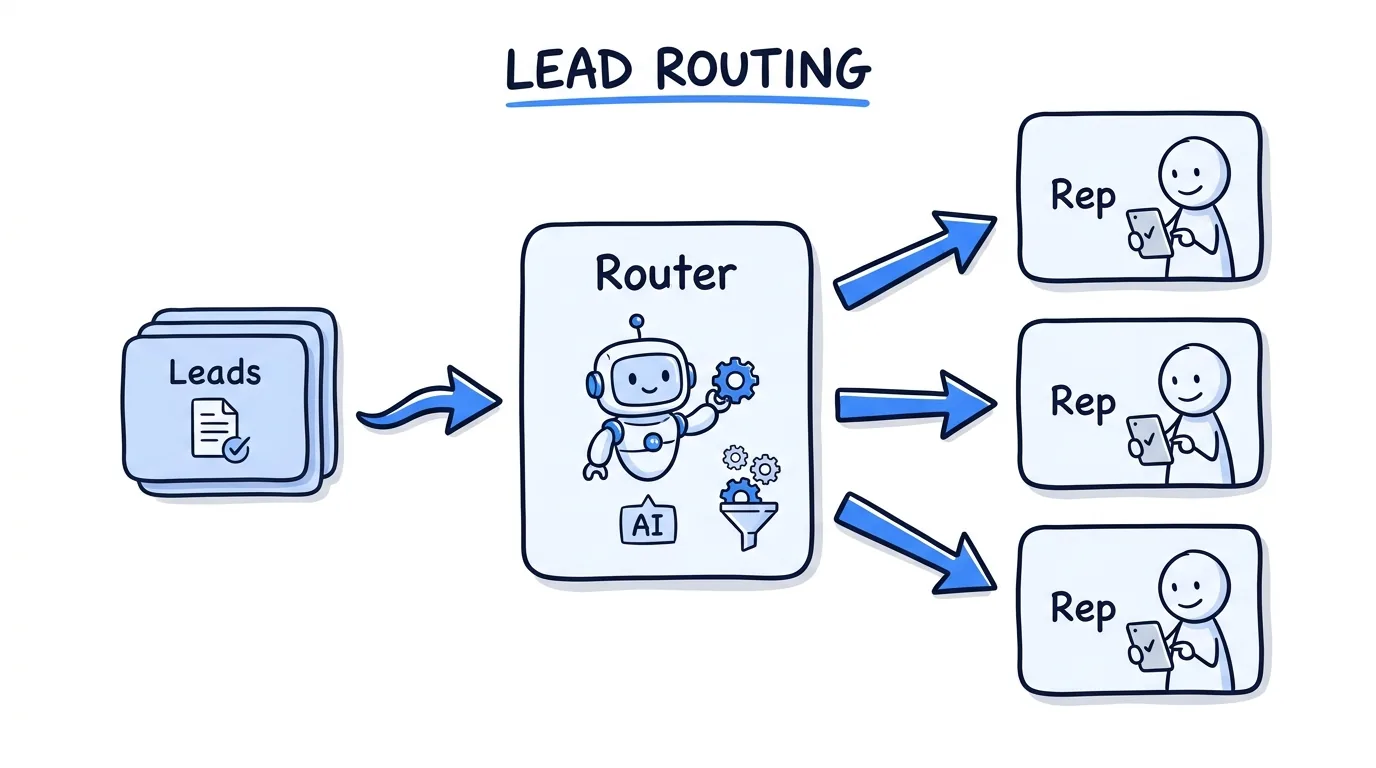
- Automated lead routing replaces manual assignment with rules that run the instant a lead arrives: round robin for fair rotation, weighted to favor top performers, priority/waterfall for tiered buyers, and ping-post to sell to the highest bidder.
- Ping-post routing maximizes revenue in competitive verticals like legal, insurance, and home services. All four platforms ranked here support it: Lead Distro AI (on the Growth plan and up), Boberdoo, LeadProsper, and ClickPoint (through LeadExec).
- For pay-per-call campaigns, Lead Distro AI routes calls and data leads through one engine, so agencies running mixed lead and call inventory do not need a separate call-tracking tool.
- Pricing varies widely. Lead Distro AI starts at $147/mo for call tracking and call routing only and $297/mo for lead distribution, with usage-based call fees on top. Internal routing tools such as Chili Piper and Default start at $1,250/mo.
Two Kinds of Lead Routing Software
Search for lead routing software and you will find two different products sharing one name. Knowing which one you need saves weeks of demos.
| Internal sales lead routing | Lead distribution to buyers | |
|---|---|---|
| Where the lead goes | Your own reps, queues, and territories | Outside buyers who pay per lead or per call |
| Typical user | B2B revenue operations teams | Pay-per-lead and pay-per-call agencies, lead brokers |
| Where it runs | Inside your CRM (Salesforce, HubSpot) | A standalone platform that posts to each buyer's CRM |
| What it measures | Meetings booked and pipeline | Revenue, cost, and margin per lead or call |
| Examples | Chili Piper, LeanData, Default, HubSpot | Lead Distro AI, Boberdoo, LeadProsper, ClickPoint LeadExec |
If a lead never leaves your company, you need internal routing. If you get paid when a buyer accepts a lead or a call, you need lead distribution: internal routing tools are not built to bill buyers, enforce per-buyer caps, or run a ping-post auction. The ranked list below covers the lead distribution side, and the internal tools get their own section after it.
Lead Routing Software Comparison Table (2026)
| Platform | Best For | Routing Methods | Lead scoring | Round Robin | Starting Price (as of September 2026) | Free Trial |
|---|---|---|---|---|---|---|
| Lead Distro AI | Pay-per-lead and pay-per-call agencies, lead brokers | Priority/waterfall, round robin, weighted, ping-post (Growth and up) | Yes (rule-based) | Yes | $147/mo calls only; $297/mo lead distribution | 7 days |
| Boberdoo | High-volume lead operations | Priority (round-robin), weighted, ping post, earnings per lead, best price, waterfall | Yes (leadQC add-on) | Yes (priority / round-robin) | $1,075/mo billed monthly, plus $250 setup | No (live demo) |
| LeadProsper | Compliance-first routing | Waterfall, highest bidder, round robin, weighted round robin, ping-post | Via API Filters (third-party or AI score) | Yes | $500/mo base billed monthly, tiered overage | No |
| ClickPoint (SalesExec + LeadExec) | Sales team routing plus buyer distribution | Priority-based, round robin, ping-post (LeadExec) | Yes (LeadExec: phone and email check) | Yes | $825/mo, or $660/mo on the annual option (LeadExec Growth) | Free Starter plan, up to 250 leads (LeadExec) |
Routing Latency Benchmarks by Method
Routing latency is the time between lead capture and delivery to a buyer or rep. It varies by routing method, and the gap between methods is wider than most agencies realize. Industry-observed time-to-route tiers in 2026 group platforms into four bands: under 1 second is elite, 1 to 2 seconds is strong, 2 to 3 seconds is acceptable, and over 3 seconds is poor for high-intent verticals like legal, insurance, and solar.
Round robin preserves speed by skipping the bidding step. A lead submitted at 10:00:00 reaches its assigned buyer by roughly 10:00:01, putting most round robin systems in the elite tier when the underlying platform is fast.
Waterfall routing trades latency for revenue. Each cascade tier adds a timeout window before the lead is offered to the next buyer. With tier timeouts of 10 seconds (typical for competitive verticals), a lead that cascades through four tiers can arrive 40 seconds old, and through five tiers, 50 seconds old. This is still fast in absolute terms, but a meaningful share of the lead's value erodes during the cascade if no buyer accepts.
Ping-post routing operates in real-time bidding mode. Within roughly 50 milliseconds of form submission, partial lead information is broadcast to multiple buyers, and bids are calculated against competing offers before the winning buyer is posted the full lead. Total round-trip on a well-implemented ping-post system is typically still under one second despite the auction layer.
Weighted routing matches round robin speed (sub-1 second) because the weighting happens at the assignment-rule layer, not at runtime. The platform precomputes which buyer is next; the decision itself is constant-time.
The takeaway for agency buyers: if your vertical is competitive enough that response time materially affects conversion (legal, insurance, solar, home services), pick a routing system that lands in the sub-1-second tier on the methods you use most. See our guide to how ping post systems work for the auction-layer mechanics in detail.
What Faster Routing Looks Like in Practice
Speed alone is not the goal. Speed plus accuracy is. Routing latency only translates to revenue when leads land with the right buyer the first time, with no rework.
For pay-per-lead agencies, the equivalent metric is buyer acceptance rate and return rate. Accuracy at sub-second latency means more accepted leads at higher payouts and fewer reposts due to a returning buyer. A 2026 benchmark study of 573 businesses by Blazeo found that 74% miss the five-minute response window entirely (Blazeo Benchmark Study, 2026). Agencies that close that gap are competing against the bottom three-quarters of the industry, not the top end.
The InsideSales Lead Response Management research, analyzing 55 million sales activities across 5.7 million leads at 400+ companies, found that conversion rates drop by approximately 8x when first contact slips past the 5-minute mark (InsideSales LRM Research). Round robin assignment is implicated specifically: when leads are queued through round robin without an active routing engine, the average first-outreach delay can exceed 24 hours, which is why a fast platform matters more than the routing method label on the box.
Best Lead Routing Software for Pay-Per-Call Campaigns
For pay-per-call campaigns, the best lead routing software is Lead Distro AI, because it routes inbound CALLS the same way it routes data leads: a live caller is ring-treed to the highest-bidding buyer in a priority/waterfall cascade, then connected, all in under a second. Because calls and web form leads run through one system, agencies do not have to hand phone traffic to a separate call-tracking platform and reconcile two systems, two bills, and two sets of reporting.
Pay-per-call inventory deserves a first-class routing engine. Inbound calls convert at roughly 30 to 50 percent versus 2 to 5 percent for standard web leads (iRadius Group, 2025), so a misrouted or slow-routed call wastes a far more valuable asset than a misrouted form fill. Lead Distro AI applies its four routing methods (round robin, weighted, priority/waterfall, and ping-post) to calls and data leads alike, with IVR pre-screening, buyer caps, and publisher payouts built in. See our call tracking software for pay-per-call agencies guide and the best pay-per-call platforms roundup for deeper breakdowns.
Lead Distro AI vs the Call-Routing Platforms
The platforms agencies most often weigh for pay-per-call routing are call-tracking specialists. Here is how they compare honestly on call routing, then on what Lead Distro AI adds.
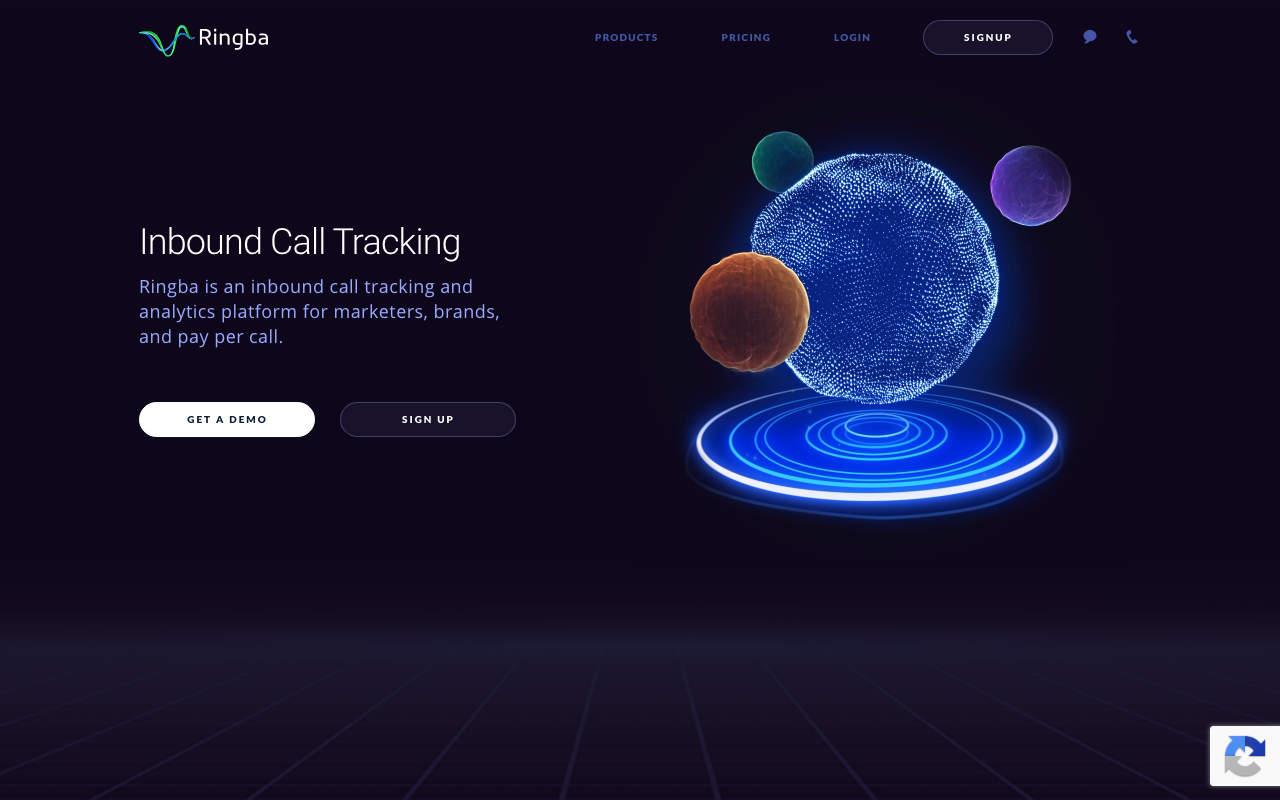
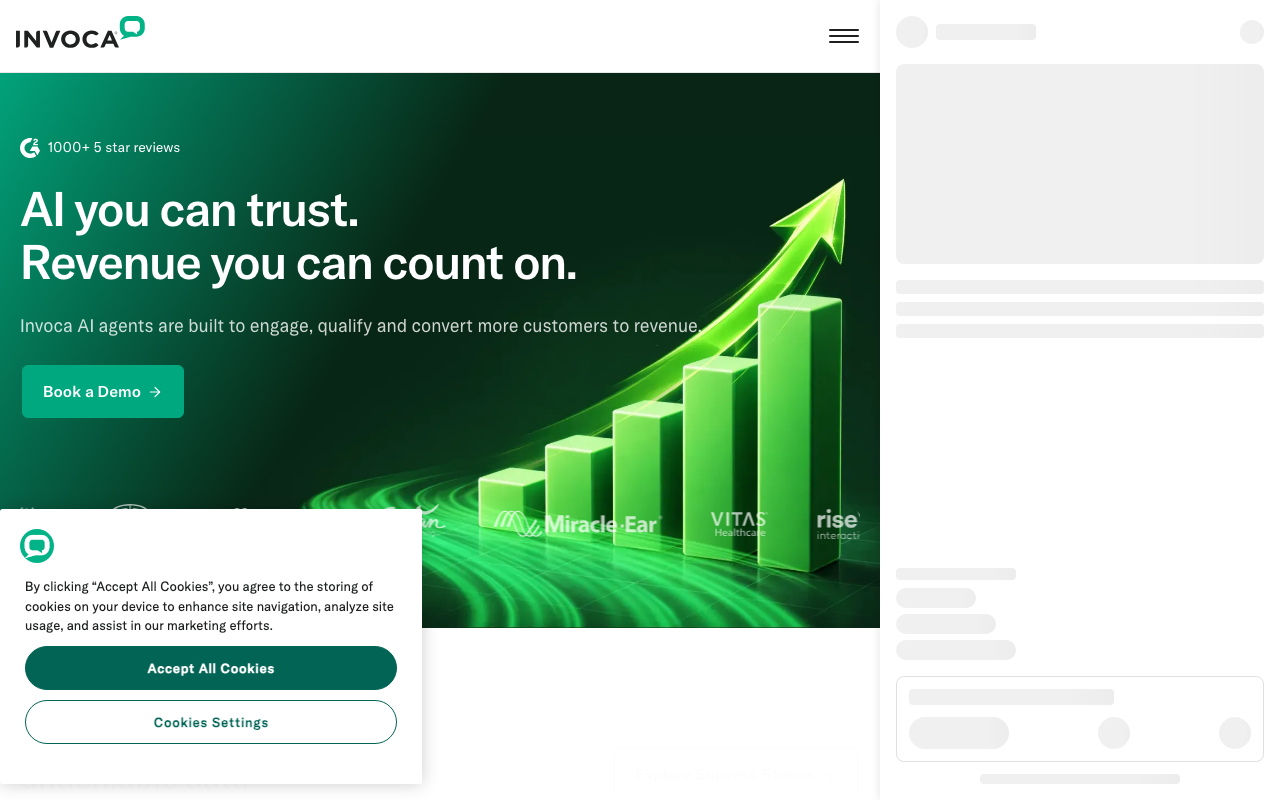
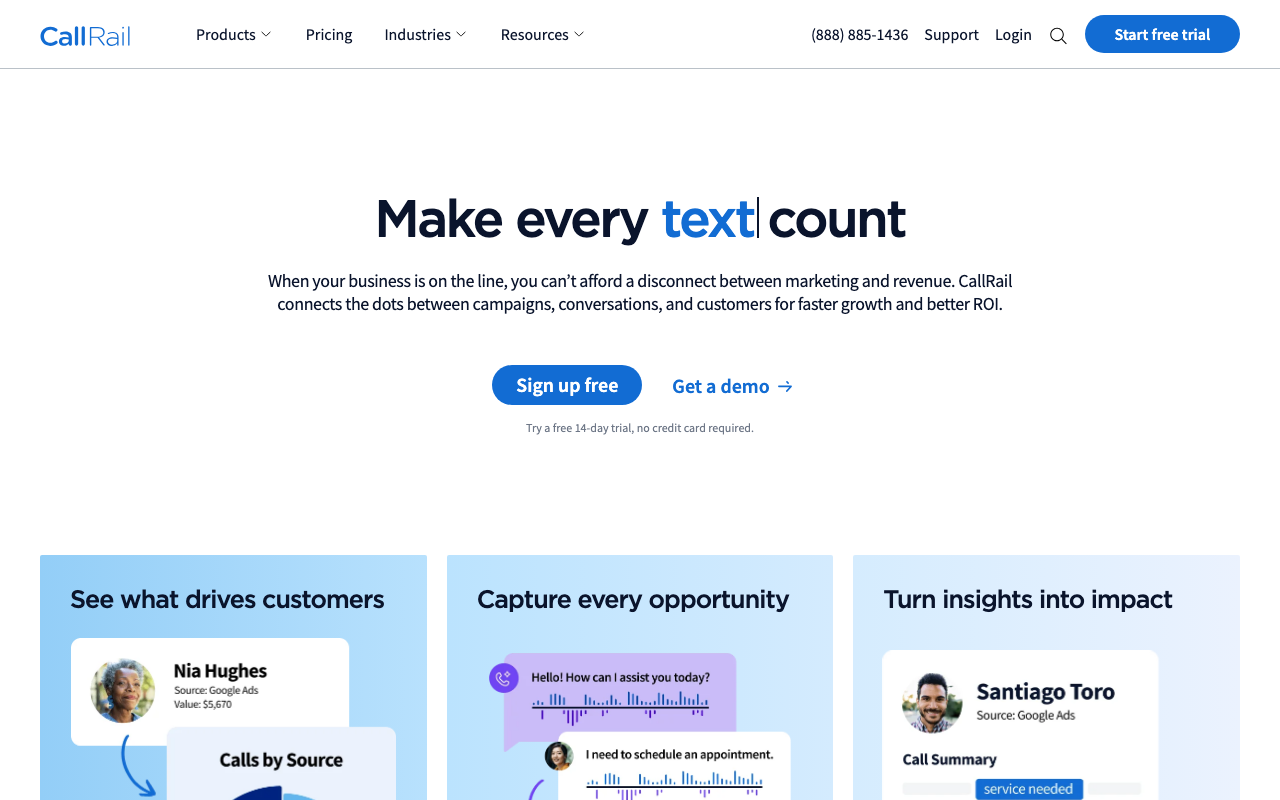
| Platform | Best For | Call Routing | Ping-Post | Publisher Payouts | Starting Price (as of September 2026) |
|---|---|---|---|---|---|
| Lead Distro AI | Pay-per-call AND pay-per-lead agencies running mixed inventory | Priority/waterfall, round robin, weighted; your own ring tree on Growth and up | Yes (calls and leads, Growth and up) | Yes | $147/mo Call Tracking plan + usage; ping-post and own ring tree from $497/mo |
| Ringba | High-volume pay-per-call buyers and networks | Real-time call ring tree and bidding | Yes (calls, Enterprise plan) | Yes | From $147/mo billed monthly + usage |
| Invoca | Enterprise call analytics and conversation intelligence | IVR and AI-driven call routing | Not verified | Yes (payout assignment) | Custom quote, no published prices |
| CallRail | SMB call tracking and attribution | IVR, round robin, geo-routing, simulcall | Not verified | Not verified | From $50/mo billed yearly + usage |
Not verified: we could not confirm this on the vendor's own website as of September 2026. Check with the vendor.
Where the call-tracking platforms win: Ringba is built for pay-per-call ring trees and real-time call bidding at scale. Invoca leads on AI conversation intelligence and enterprise call analytics. CallRail is the simplest on-ramp for SMB call tracking and attribution. If your entire operation is inbound calls and nothing else, a dedicated call-tracking platform is a defensible choice.
What Lead Distro AI offers pay-per-call agencies: it routes inbound calls AND data leads through one engine, with publisher payouts and rule-based lead scoring built in. Call tracking and call routing start at $147/mo on the Call Tracking plan, lead distribution starts at $297/mo on Starter, and ping-post plus running your own ring tree come with Growth at $497/mo. Lead Distro AI's call tracking is usage-based (a per-number monthly fee plus a per-minute rate for inbound calls) layered on top of the flat platform subscription, so you only pay call costs on the calls you actually route. For agencies that sell both leads and calls to the same buyer networks, that unified routing and single P&L is the deciding factor. See the lead and call distribution software guide for how the combined routing pipeline works end to end.
1. Lead Distro AI: Best Lead Routing Software in 2026
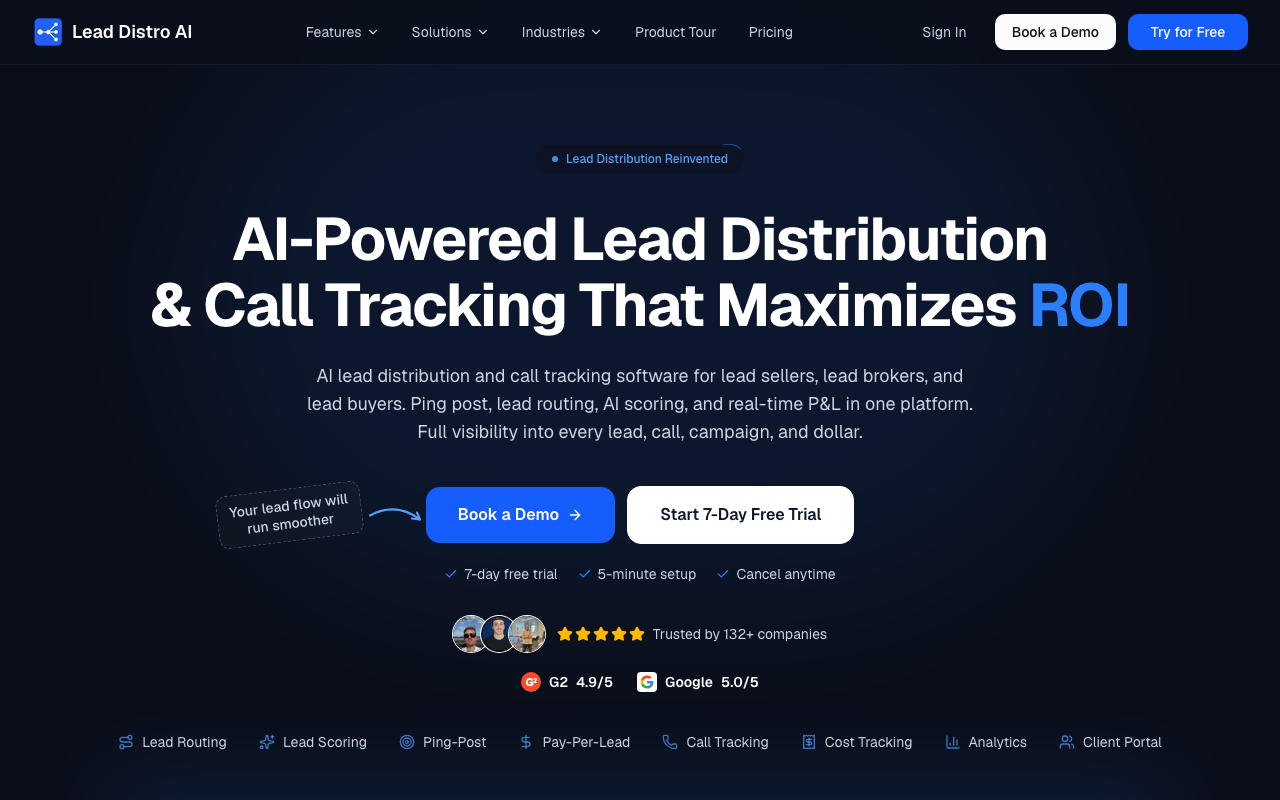
Lead Distro AI is the top-ranked lead routing software for pay-per-lead agencies, lead brokers, and call centers in 2026. It pairs rule-based lead scoring with four distribution methods and real-time revenue tracking in a single system. See the smart lead routing engine for the full routing-method breakdown.
What sets it apart: Every lead that enters Lead Distro AI is scored against the rules you configure before routing begins. The platform evaluates all submitted fields and assigns a quality score in under one second. Buyers can set minimum score thresholds so premium accounts only receive high-quality leads.
Key features:
- Four lead routing methods: priority/waterfall, round robin, weighted, and ping-post (ping-post on Growth and up)
- Rule-based lead scoring on every inbound lead
- Real-time P&L dashboard showing revenue, cost, and margin per source, campaign, and buyer
- Pay-per-call routing with IVR pre-screening and buyer routing
- Duplicate detection and data validation before scoring
- Buyer portal with self-service cap management and lead review
- Salesforce, HubSpot, and custom CRM integration via webhooks and API
- Multi-vertical support: legal, insurance, home services, solar, mortgage
Pricing: $147/mo Call Tracking (call tracking and call routing only, no lead distribution), $297/mo Starter (up to 2,500 leads; round robin, weighted, and priority/waterfall), $497/mo Growth (up to 5,000 leads; adds ping-post and running your own ring tree), and Scale by quote (Talk to sales). Every lead distribution plan includes rule-based lead scoring, and call tracking adds usage-based per-number and per-minute fees. See the full breakdown on the pricing page.
Best for: Pay-per-lead agencies, lead generation companies, call centers, and lead brokers who need enterprise-grade rule-based lead scoring and distribution in one lead routing system.
Start your free trial or take the interactive product tour to see Lead Distro AI's routing engine in action.
2. Boberdoo: Best for Complex High-Volume Routing
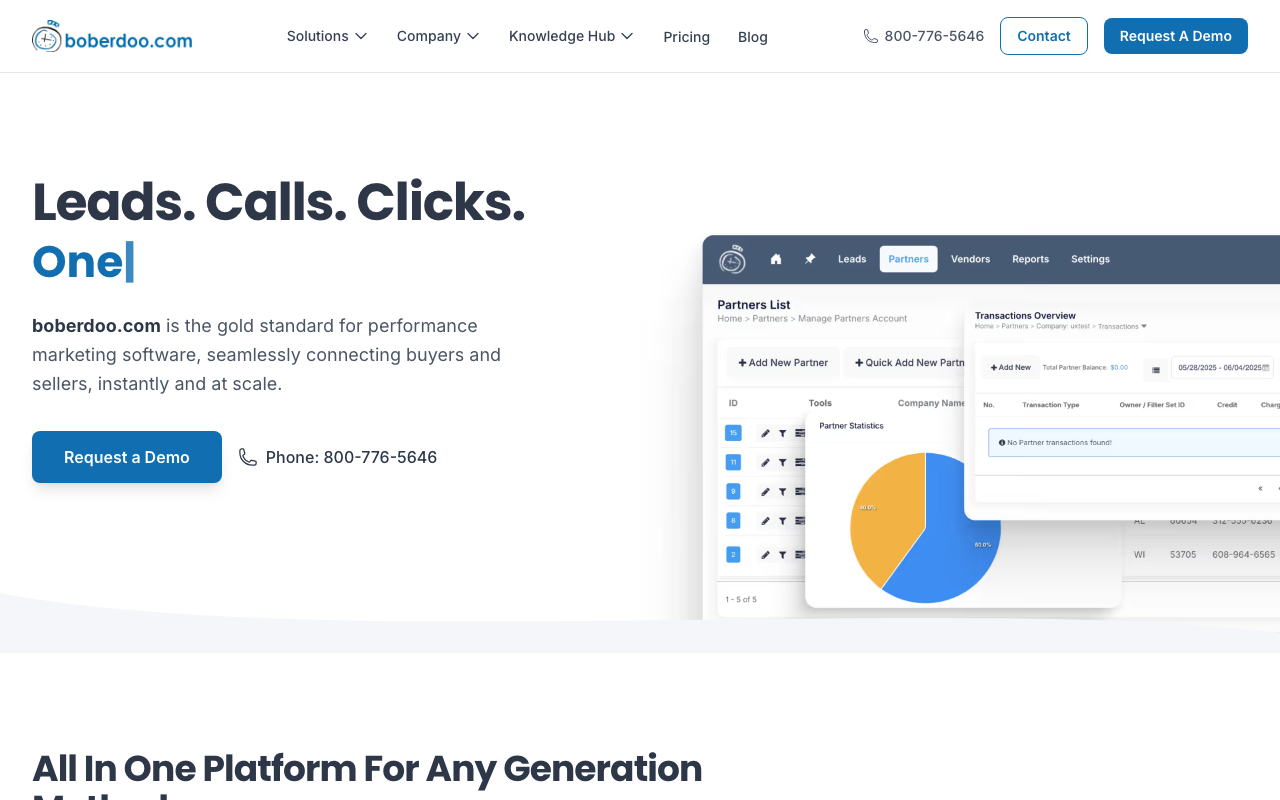
Boberdoo has built lead distribution software since 2001 (25+ years). Its ping tree compares exclusive and shared bids to pick the most profitable path, falls back to the next best bid when a buyer rejects, and maps lead fields to each buyer's CRM requirements.
Key features:
- Ping tree with fallback to the next best bid when a buyer rejects
- Ping post distribution
- Field mapping to each buyer's CRM
- Lists mortgage, insurance, solar, legal, and other verticals
Best for: High-volume lead generators processing 50,000+ leads per month across multiple verticals who need maximum routing customization.
Limitations: Pricing starts at $1,075/mo (up to 25 inbound actions a day), billed month-to-month, plus a $250 one-time setup fee (as of September 2026). No free trial; boberdoo offers a live demo instead. Smaller agencies may find it overkill for their volume.
3. LeadProsper: Best for Compliance-First Routing
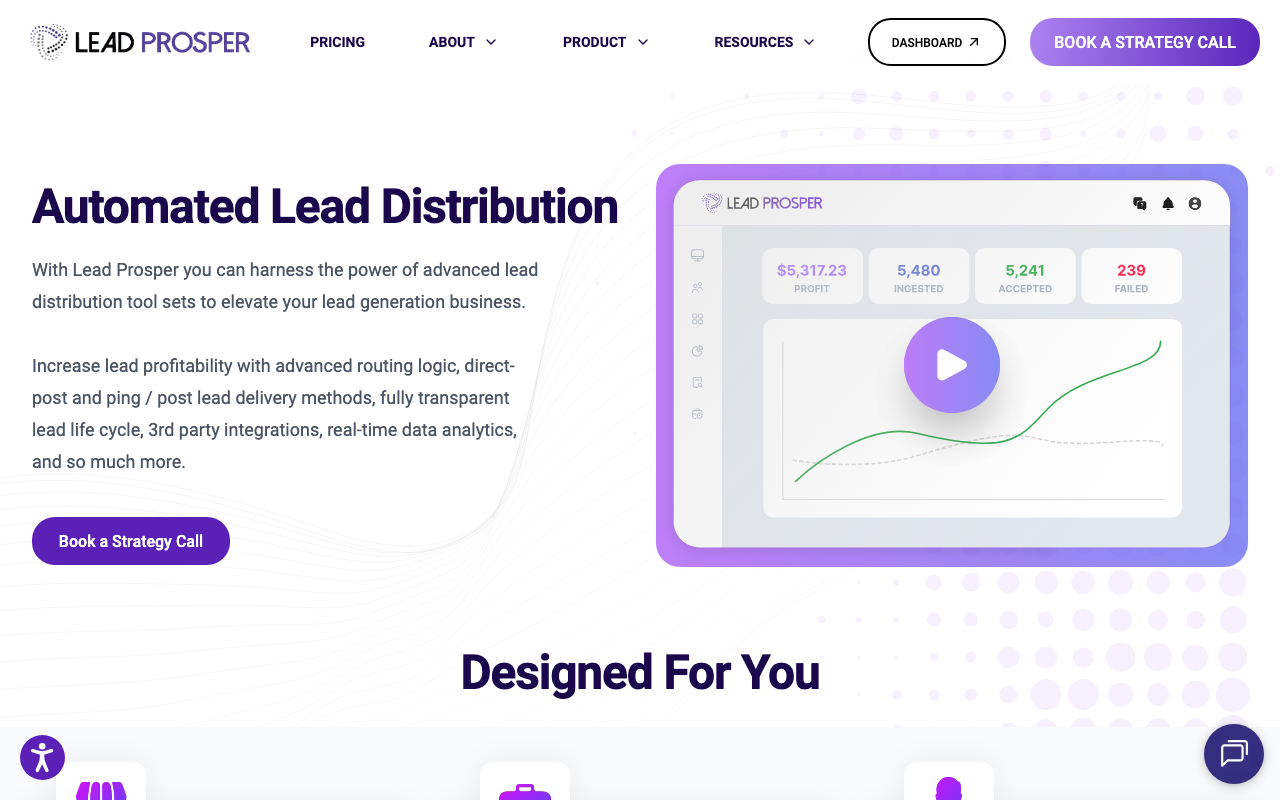
LeadProsper focuses on lead validation and compliance verification before routing. It integrates TrustedForm (an ActiveProspect product) for TCPA consent verification and offers phone and email validation through built-in integrations such as Xverify and Email Oversight, plus pre-ping duplicate checks. Pricing starts at a $500/mo base, billed monthly, which includes 5,000 leads, 200,000 pings, and 200,000 pre-pings, with tiered overage rates above that (as of September 2026).
Key features:
- Phone and email validation through integrations such as Xverify and Email Oversight
- TrustedForm and Jornaya integration for TCPA compliance
- Pre-ping duplicate checking
- Published pricing ($500/mo base with tiered overage)
- Waterfall, round robin, weighted round robin, highest-bidder, and ping-post routing
Best for: Lead generators and agencies focused on compliance-first operations.
Limitations: No free trial; sign-up is through a sales call and billing starts at sign-up. The $500/mo monthly minimum applies even at low volume (as of September 2026).
Watch the head-to-head. This walkthrough opens both platforms and compares routing, pricing, call tracking, and setup speed on screen, including where LeadProsper's compliance stack is worth the $500/mo floor.
For the full breakdown, see the Lead Distro AI vs LeadProsper comparison.
4. ClickPoint Software: Best for Sales-Team Lead Routing
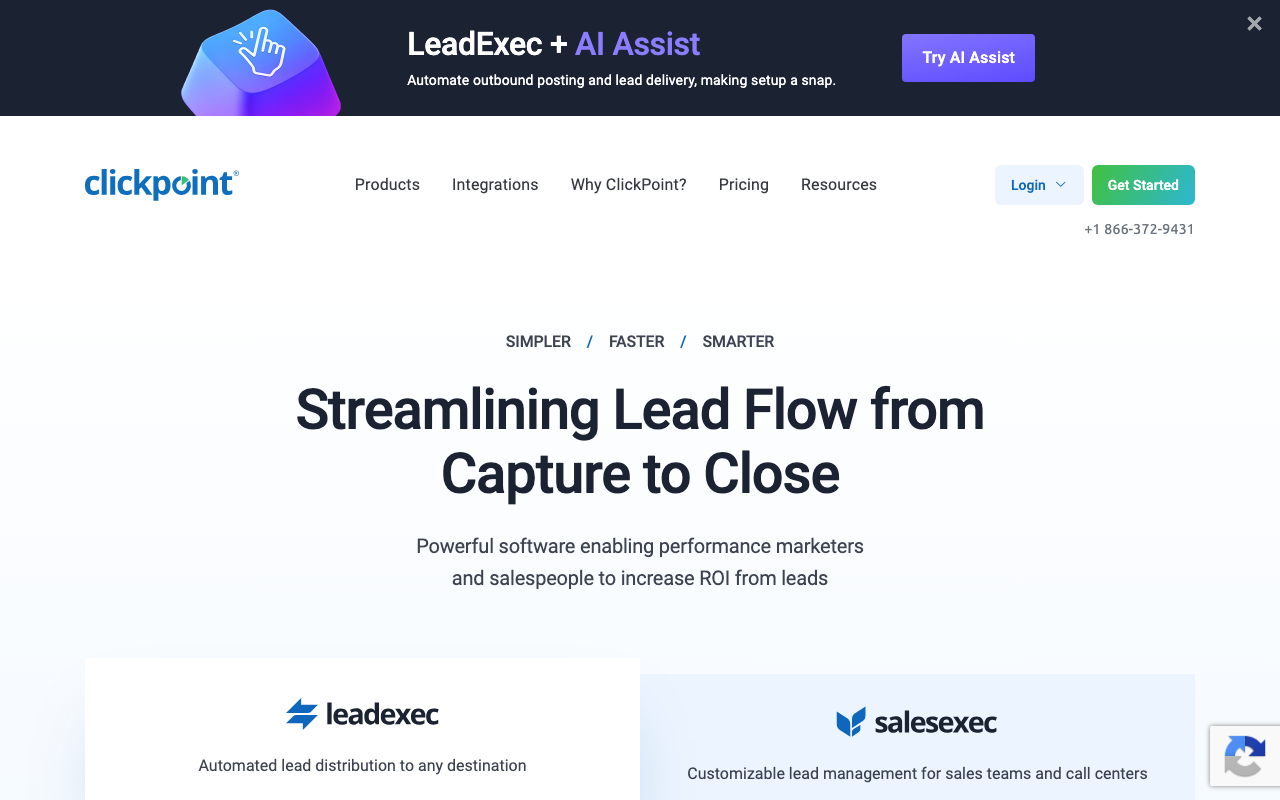
ClickPoint Software ships two products, and which one you want depends on where the lead goes. SalesExec is ClickPoint's lead management and sales engagement platform for sales teams and call centers, routing leads to reps by round robin, skill-ranked percentage, and availability. LeadExec is the separate lead distribution platform for lead sellers and buyers, covering HTTP post, ping-post, and ping tree routing, a branded customer portal, and delivery to CRMs, at $825/mo on Growth, or $660/mo on the annual option, after a free Starter plan for up to 250 leads (as of September 2026).
Key features:
- Skill-ranked percentage delivery (SalesExec)
- Round robin and availability-based assignment (SalesExec)
- Speed-to-lead focus, with ClickPoint citing responses in under 3 seconds (SalesExec)
- Delivery to CRMs including Salesforce, HubSpot, Microsoft Dynamics, and Zoho (LeadExec)
- Direct post, ping post, and ping-tree buyer distribution (LeadExec)
Best for: Companies with internal sales teams that need lead assignment based on rep skill ranking and availability. Operations that sell leads to external buyers want LeadExec rather than SalesExec.
Limitations: Distribution and sales-team routing live in two separate products with separate pricing, so running both means buying both.
Best Lead Routing Software for Internal Sales Teams
If your leads go to your own reps rather than to outside buyers, these are the tools most "lead routing software" roundups compare. They run inside your CRM and measure success in meetings booked, not margin per lead. Prices come from each vendor's own site as of September 2026.
| Tool | What it routes | Routing methods | Published starting price |
|---|---|---|---|
| Chili Piper | Inbound leads and meetings to reps | Inbound lead distribution and round-robin assignment | $1,250/mo with 15 seats, then $45/seat (Chili Piper pricing) |
| LeanData | Leads, contacts, and accounts in Salesforce | Lead-to-account matching; round robin, territory, and account-based rules | Custom quote by features, objects, and Salesforce users (LeanData pricing) |
| Default | Inbound leads to queues and territories | Queues, object routing, round robins | $1,250/mo billed annually, plus $45/user/mo routing seats (Default pricing) |
| HubSpot | Leads and other records to owners via workflows | Load balanced, round robin, random | Sales Hub Professional or Enterprise required (HubSpot docs) |
| LeadAngel | Leads to reps by geography, account, and availability | Account-based, round robin, weighted, territory | Contact vendor; native to Salesforce, HubSpot, and Microsoft Dynamics 365 (LeadAngel) |
When to pick one of these: your leads never leave the company, your reps work inside Salesforce or HubSpot, and the goal is booking meetings fast. Where they stop: they assign leads to your own team. None of their pricing pages lists ping-post auctions, per-buyer billing, or profit per buyer, which is the core of a lead distribution business. Agencies that do both can route from Lead Distro AI into the CRM, where an internal router takes over. Our B2B SaaS lead routing software guide covers the in-house side in depth.
Lead Routing Tools by Use Case
"Lead routing software" and "lead routing tools" describe the same category, but the right pick changes with the job. The four platforms above are the general-purpose picks. Use this map when your situation is narrower.
| Your situation | Start here |
|---|---|
| You are new to the category and want the mechanics first | What is lead routing |
| You want the routing engine to pick the buyer, not a static rule | AI lead routing |
| You route by zip, radius, state, DMA, or area code | Geographic lead routing |
| You need filters, daily caps, quality thresholds, and priority order | Automated lead routing rules for agencies |
| You route inbound demo requests inside a B2B SaaS CRM | B2B SaaS lead routing software |
| You are outgrowing a Salesforce Flow workaround | Salesforce Flow alternatives for lead routing |
| You route live inbound phone calls, not form fills | Call routing software |
Agencies running pay-per-lead and pay-per-call inventory side by side usually need two of these at once: territory rules for the data leads and a ring tree for the calls. Lead Distro AI covers both in one routing engine.
How to Choose the Right Lead Routing Software in 2026
Start by deciding whether leads go to your own reps or to outside buyers (see the two kinds above). Then weigh five factors. Once you choose a platform, the next step is configuring the routing logic itself. See our guide to automated lead routing rules for agencies for a step-by-step walkthrough of geo filters, daily caps, quality thresholds, time-of-day windows, and fallback logic.
1. Routing method requirements. Map out how you currently distribute leads and where you want to go. If you sell leads to external buyers through a competitive bidding process, you need ping-post support. If you assign leads to an internal team, priority-based or round robin lead distribution may be enough.
2. Lead scoring needs. Manual scoring rules break down as volume grows. Configurable rule-based routing evaluates dozens of fields simultaneously against your criteria. If you process more than 500 leads per day, rule-based lead scoring pays for itself by keeping low-quality leads away from your best buyers.
3. Speed of delivery. Every minute of delay between capture and delivery reduces conversion probability. Look for platforms that route in real time, under one second, not in batch intervals.
4. Compliance and validation. For verticals like legal and insurance, TCPA compliance is non-negotiable. Your lead routing system should validate consent, detect duplicates, and verify contact data before routing.
5. Pricing model fit. Per-lead pricing works for low-volume operations. Monthly subscriptions with tiered plans work better for agencies scaling past 1,000 leads per month. Make sure the pricing structure aligns with your margin targets as volume grows.
AI Lead Routing vs Rule-Based Routing
Both approaches replace manual routing, where a person reads each lead and decides who gets it. Manual assignment cannot keep up with leads that arrive around the clock, which is why it is the first thing any lead routing system removes.
Rule-based routing applies logic you configure the instant a lead arrives: send California auto leads to Buyer A, cap Buyer B at 50 a day, reject any lead that fails validation, and offer leads that score above your threshold to premium buyers first. Every decision traces back to a rule, which matters when a buyer disputes a lead. AI lead routing tools use a predictive model to choose the recipient instead, trading that explainability for pattern-finding.
Lead Distro AI takes the rule-based approach. It scores every inbound lead against the rules you configure and routes it by those rules, so you can explain any routing decision to a buyer. Learn more in our lead scoring guide and our explainer on AI lead routing.
Frequently Asked Questions
What is lead routing software?
Lead routing software automatically decides who receives each new lead and delivers it there the instant it arrives, replacing manual assignment. It comes in two kinds. Internal routing tools such as Chili Piper, LeanData, and HubSpot's lead rotation assign inbound leads to your own sales reps inside a CRM. Lead distribution platforms such as Lead Distro AI route leads and calls to outside buyers who pay per lead or per call. Learn more in our complete guide to lead routing.
What is the best lead routing software?
The best lead routing software for pay-per-lead agencies, pay-per-call agencies, and lead brokers is Lead Distro AI, because it routes data leads and inbound calls through one engine with rule-based lead scoring and real-time profit tracking, starting at $297/mo for lead distribution (ping-post, the fourth routing method, is on Growth at $497/mo). For B2B teams routing inbound leads to their own reps, Chili Piper, LeanData, and Default lead the category, and HubSpot users on Sales Hub Professional or Enterprise can rotate leads with built-in workflows.
What is a lead routing system?
A lead routing system is the set of rules plus the software that applies them, deciding which rep, team, or buyer receives each lead. A complete system has four parts: intake (capturing the lead by form, API, or phone), qualification (validation, duplicate checks, and scoring against your rules), assignment (round robin, weighted, priority/waterfall, or ping-post), and delivery with tracking (webhook, CRM post, or live call transfer, then reporting on what each lead earned). Spreadsheets break at the assignment step once volume grows.
What is automated lead routing software?
Automated lead routing software assigns and delivers leads with no human in the loop. The moment a lead arrives, it checks the lead against your filters and caps, scores it, picks the recipient by your chosen method, and delivers it by webhook, API, or CRM post, usually within seconds. Automation matters because leads arrive around the clock and response speed decides conversion. Our guide to automated lead routing rules for agencies walks through geo filters, daily caps, quality thresholds, and fallback logic.
What is round robin lead distribution?
Round robin lead distribution is a routing method that assigns leads to buyers or sales reps in a fixed rotation. Each recipient gets one lead before the cycle repeats. This ensures equal distribution across your buyer network or sales team. Lead Distro AI supports round robin alongside waterfall, weighted, and ping-post methods, giving agencies flexibility to match the routing style to each campaign.
What is the best lead routing software for Salesforce in 2026?
For teams using Salesforce as their primary CRM, the best choice depends on your workflow. For internal sales team routing inside Salesforce, LeanData matches leads to accounts before routing them, LeadAngel integrates natively with Salesforce, HubSpot, and Microsoft Dynamics 365, and ClickPoint SalesExec routes leads to reps by round robin, skill-ranked percentage, and availability. For agencies distributing leads to external buyers who also use Salesforce, Lead Distro AI connects via webhooks and API, delivering scored leads directly into any Salesforce instance in under one second.
How much does lead routing software cost in 2026?
As of September 2026, published pricing starts at $0 for ClickPoint LeadExec's Starter plan (up to 250 leads), $147/mo for Lead Distro AI's calls-only Call Tracking plan and $297/mo for its lead distribution Starter plan, a $500/mo base with tiered overage for LeadProsper, and $1,075/mo for Boberdoo. Internal sales routing tools cost more: Chili Piper and Default both start at $1,250/mo, and LeanData quotes custom pricing. Use our lead pricing calculator to model costs at your volume.
Can lead routing software integrate with my existing CRM?
Yes. Internal routing tools like LeanData, Chili Piper, and HubSpot's lead rotation run inside your CRM, so the lead is assigned where your reps already work. Lead distribution platforms post leads out to each buyer's system instead: Lead Distro AI connects with any system that accepts inbound webhooks or API calls, including Salesforce, HubSpot, and custom CRMs, so each buyer receives leads in their own tools. Check our documentation for setup guides.
What is the difference between lead routing and lead distribution?
Lead routing refers to the logic that decides where a lead goes. Lead distribution is the broader business process of delivering leads from traffic sources to paying buyers, which includes routing, validation, scoring, buyer caps, billing, and profit tracking. Every lead distribution platform routes leads, but most internal lead routing tools never distribute to outside buyers. Read our guide to lead distribution software for a deeper comparison.
What is the best lead routing software for pay-per-call campaigns?
The best lead routing software for pay-per-call campaigns is Lead Distro AI, because it ring-trees inbound calls to the highest-bidding buyer using the same ping-post and priority/waterfall engine it uses for data leads. Lead Distro AI handles calls and web form leads on one platform with publisher payouts. Call tracking and call routing start at $147/mo, running your own ring tree with ping-post starts on Growth at $497/mo, and per-number and per-minute call fees are usage-based. See our pay-per-call platforms guide.
How does call routing differ from data-lead routing?
Call routing connects a live inbound phone call to a buyer in real time, usually through a ring tree that offers the call to buyers in priority order until one answers, while data-lead routing delivers a form submission via webhook or API. Calls are time-sensitive in seconds, so the routing engine must ring-tree and connect before the caller hangs up. Inbound calls convert at 30 to 50 percent versus 2 to 5 percent for web leads (iRadius Group, 2025), which is why pay-per-call routing needs sub-second handling. Lead Distro AI applies all four routing methods to calls and leads alike.
What are the best alternatives to Salesforce Flow for lead routing?
Salesforce Flow is a workflow builder, not a purpose-built lead routing engine. For agencies and lead brokers that need real-time routing across an external buyer network, the best Salesforce Flow alternatives in 2026 are Lead Distro AI (purpose-built for PPL agencies with lead scoring, four routing methods, and webhook-based Salesforce integration), LeadAngel (Salesforce-native round robin and territory routing for in-house sales teams), and Distribution Engine. If you are running a lead distribution operation that pays external buyers, Salesforce Flow is the wrong layer: you need a purpose-built lead distribution platform that posts to Salesforce as one of many destinations.
What is AI lead routing and how is it different from rule-based routing?
AI lead routing is category jargon for software that uses a machine learning model to predict which buyer is most likely to convert a given lead and routes the lead accordingly. Rule-based routing uses configurable logic: if the lead is in California, send it to Buyer A; if the lead scores above 80, prioritize the top buyer. Lead Distro AI takes the rule-based approach, weighing signals like buyer historical conversion rate, time of day, lead score, buyer cap utilization, and lead source quality against the rules you set, and assigning the lead to whichever active buyer your rules point to as the highest-value match, not just the next buyer in a rotation.
Conclusion
The right lead routing software eliminates manual assignment, reduces response time, and increases the revenue you earn per lead. For pay-per-lead agencies and lead brokers in 2026, Lead Distro AI offers the strongest combination of rule-based lead scoring, flexible routing methods (including round robin, waterfall, weighted, and ping-post), and real-time analytics. Its rule-based scoring engine and Salesforce-compatible integrations give agencies a single platform for the entire lead lifecycle.
If your operation is high-volume with complex branching logic, Boberdoo offers deep customization. For compliance-focused operations, LeadProsper offers validation integrations with published pricing from a $500/mo base (as of September 2026). Pay-per-call agencies running calls alongside data leads will get the most from Lead Distro AI's unified ring-tree and ping-post routing on one platform; teams that only route inbound calls and never web leads can evaluate Ringba, Invoca, or CallRail as dedicated call-tracking alternatives, and teams routing to their own reps should compare Chili Piper, LeanData, Default, and HubSpot's lead rotation, or ClickPoint SalesExec for skill-based assignment.
See detailed comparisons: Lead Distro AI vs Boberdoo and vs LeadProsper.
Evaluating routing software for a large operation? Read our enterprise lead distribution software buyer's guide for the 12 features, security checklist, and vendor evaluation questions enterprise buyers should ask.
Start your 7-day free trial of Lead Distro AI and see how rule-based lead routing changes your margins.
Not sure which lead routing method fits your agency? Read our complete guide to lead routing or take the product tour to see waterfall, round robin, weighted, and ping-post routing in action.
About the Author
Founder & CEO of Lead Distro AI & Great Marketing AI
UC Berkeley graduate and former software engineer at Microsoft. Rafael built Lead Distro AI after managing over $10M in ad spend for performance marketing agencies (pay-per-lead and pay-per-call), including running campaigns for Neil Patel. He combines deep software engineering expertise with hands-on performance marketing experience to build tools that help these agencies scale profitably.
About Lead Distro AI
Lead Distro AI: AI-Powered Lead Distribution & Call Tracking That Maximizes ROI
The modern platform for pay-per-lead and pay-per-call agencies. Route, score, and deliver leads with AI-powered automation and real-time P&L tracking. Built for performance marketing agencies and lead buyers across legal, insurance, mortgage, solar, and home services verticals.
4 Distribution Methods
Waterfall, Round Robin, Weighted, Ping-Post
Ping-Post Auctions
Real-time bidding with sub-second routing
Real-Time P&L Reporting
Track revenue, costs, and profit per campaign
Call Tracking
Assign tracking numbers, record calls, and attribute conversions
Lead Scoring
Score every lead before routing to maximize conversion
Partner Portal
Self-serve dashboard for buyers to track leads