Call Routing Software: How Pay-Per-Call Agencies Route Calls
Call routing software directs inbound calls to the right buyer using IVR, geo and skill rules, concurrency caps, and buyer waterfalls. Here is how it works.

Rafael Hernandez
Founder & CEO
Ex-Microsoft SWE · $10M+ PPL ad spend
I hope you enjoy reading this blog post. If you want to try Lead Distro AI for free, click here.
Author: Rafael Hernandez | Founder & CEO of Lead Distro AI
Last Updated: June 24, 2026
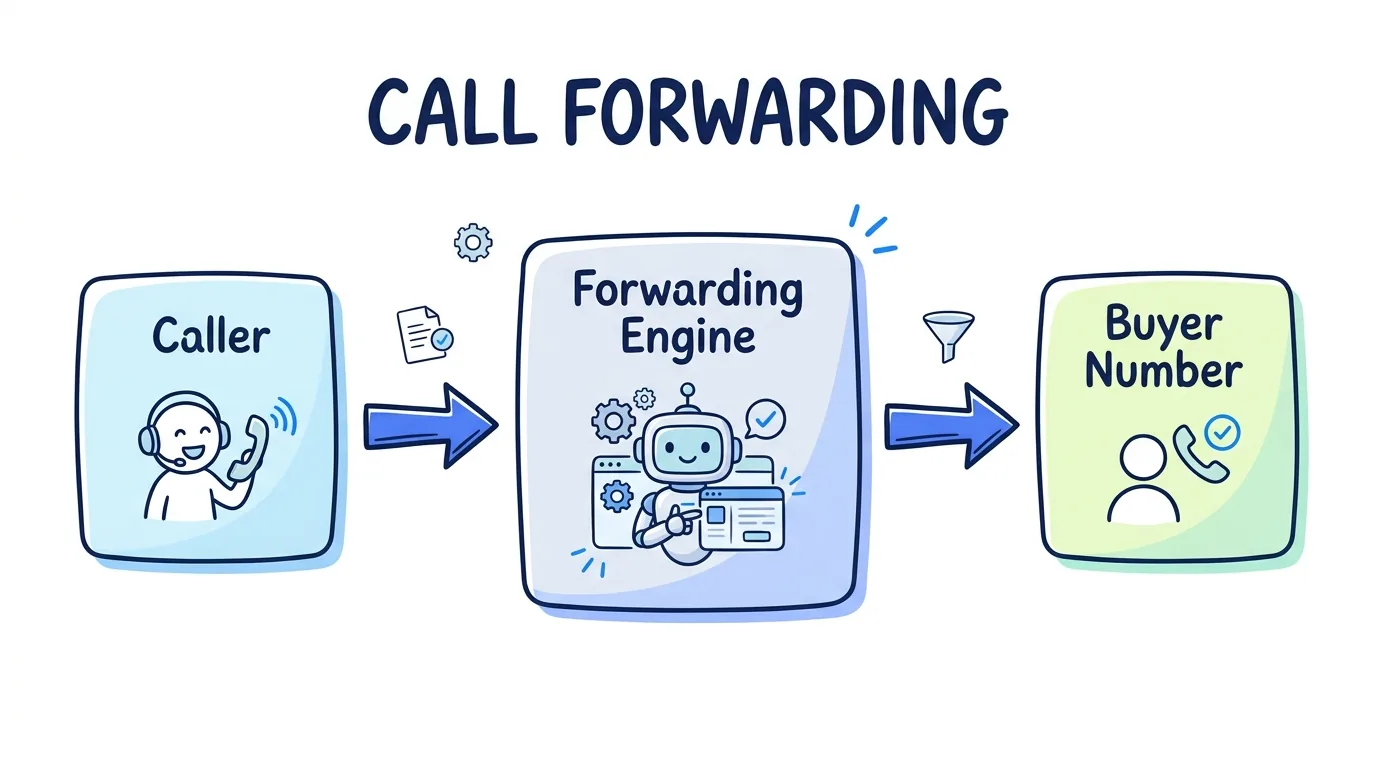
Call routing software is the system that decides where every inbound phone call goes the instant it rings, sending each caller to the right buyer, agent, or call center based on rules like geography, skill, availability, and how much a buyer will pay for that call. For pay-per-call agencies, this is the engine that turns a ringing phone into billable revenue. The platform answers the call, runs an IVR menu or qualifying question, checks which buyers want that call type in that region, respects each buyer's concurrency cap and daily limit, then connects the call in under a second. Get the routing logic right and you bill the most you can per call while keeping buyers happy enough to keep buying.
The stakes are high because inbound calls convert far better than web leads. According to Focus Digital's 2025 conversion report, inbound referral calls convert at 25.56% versus 9.38% for cold outreach, and the broader pay-per-call market is projected to surpass $12 billion by 2025. When a single call is worth $40 to $200, mis-routing it is expensive. Lead Distro AI handles call routing software and lead distribution in one platform so agencies can route inbound calls to the right buyer without stitching together separate tools.
Key Takeaways
- Call routing software directs each inbound call to the best buyer or agent using IVR, geo, skill, time, and bid-based rules applied in real time.
- Pay-per-call routing adds a buyer waterfall on top of standard call center logic, pinging buyers in priority order until one accepts the call at the agreed price.
- Dynamic targets add real-time bidding to the waterfall: the platform pings buyers live for a per-call bid (the model platforms like Ringba call a ring tree) and skips any buyer closed for the day before the auction runs.
- Concurrency caps and daily limits protect buyers from receiving more live calls than their team can answer, which keeps acceptance rates and renewals high.
- Call tracking is usage-based, with a per-number monthly fee plus a per-minute rate for inbound calls layered on top of the platform subscription.
- Lead Distro AI combines call routing and lead distribution in one platform starting at $297/month, with a 7-day free trial that requires a credit card.
What Call Routing Software Does
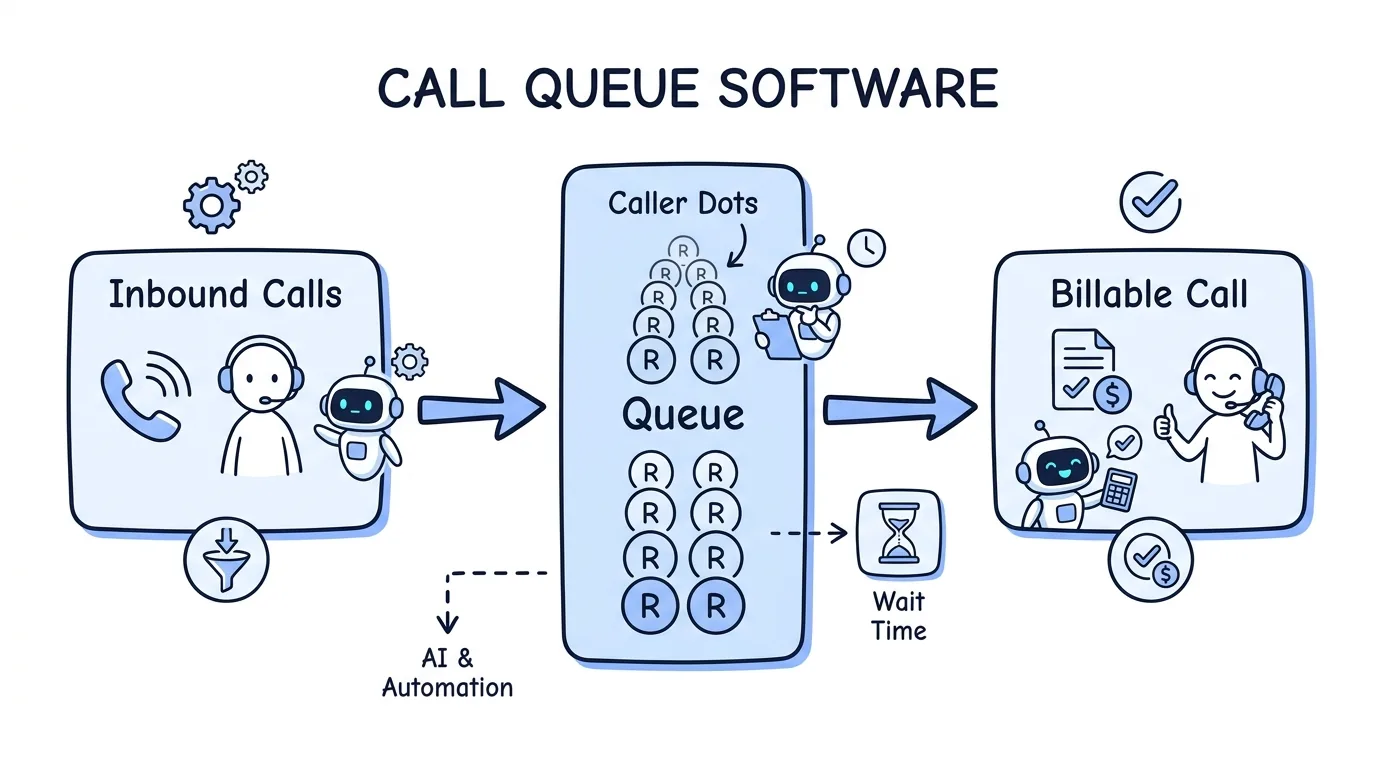
Call routing software answers an inbound call and decides, in milliseconds, where to send it. It sits between your tracking numbers (the DIDs you advertise) and your buyers or agents. The moment a call connects, the platform reads the caller's data, applies your routing rules, and bridges the call to the chosen destination. Routing typically follows a three-phase process of qualifying, queueing, and distribution, where each phase moves the caller closer to the right human. The queue stage is handled by call queue software that holds overflow calls instead of dropping them, and a call whisper briefs the buyer with the campaign and caller details the moment before they connect.
For a pay-per-call agency, the destination is usually a buyer's call center rather than your own team. You are not answering the call yourself. You are selling the live caller to an insurance carrier, a law firm, or a home services contractor and billing them per qualified call. That changes the routing math: instead of "who is free?" the question becomes "which buyer wants this caller, in this state, right now, at this price?"
IVR and Caller Qualification
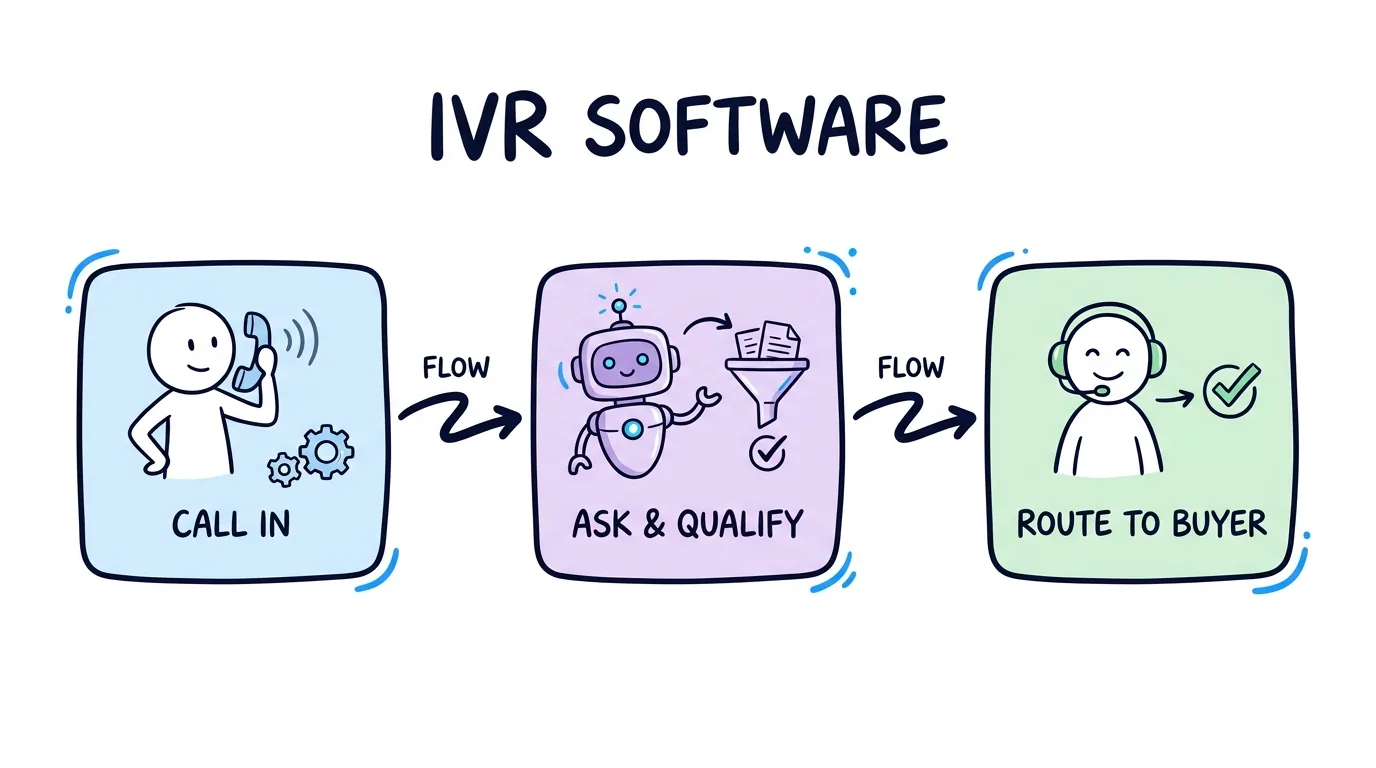
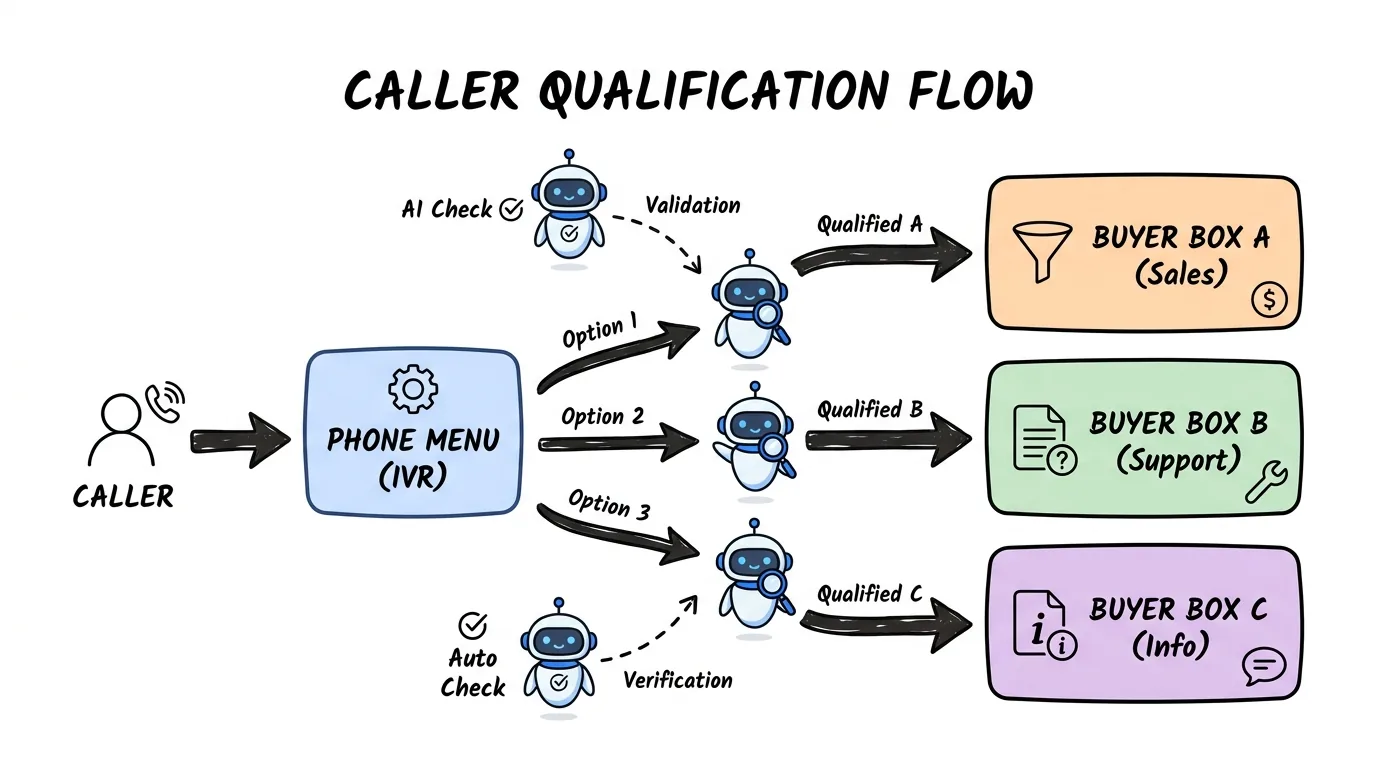
The first routing decision usually happens through an IVR (Interactive Voice Response), the automated menu that greets the caller. As Kixie explains, an IVR collects information through pre-recorded prompts so the system can route without human intervention. A pay-per-call IVR might ask "Were you injured in the last two years?" or "What state are you calling from?" to qualify the caller before anyone pays for them.
Qualification matters because buyers only pay for calls that meet their criteria. A call that fails the IVR screen can be dropped, sent to a lower-tier buyer, or routed to a fallback. This is the call equivalent of the screening logic you see in ping-post lead distribution, where data is checked against buyer filters before a sale is offered. Good IVR design lifts acceptance rates because buyers receive only the callers they actually want, which protects your billing and your reputation.
Geo Routing and Skill-Based Routing
Geographic routing uses the caller's area code or stated location to send the call to the right destination. Per AvidTrak's routing guidance, systems can sort calls by state, city, county, or country using area code data. In pay-per-call this is essential because most buyers operate in specific territories. A personal injury firm licensed in Texas does not want calls from Ohio, and routing them anyway tanks your acceptance rate.
Skill-based routing matches the caller to an agent or buyer with the right expertise, language, or product knowledge rather than whoever answers first. For agencies serving Spanish-speaking markets, language routing is a revenue feature: a Spanish-speaking caller routed to a bilingual intake team converts, while the same caller routed to an English-only line hangs up. Layering geo and skill rules together lets you sell the same tracking number to multiple buyers and route each call to the one best positioned to close it, which is the same multi-buyer logic behind lead and call distribution software.
Concurrency Caps and Daily Limits
Concurrency caps limit how many live calls a buyer can receive at the same time, and daily caps limit the total per day. These are not optional niceties. If you flood a buyer's call center with more simultaneous calls than they have agents, calls go unanswered, the buyer disputes the charges, and you lose the account. A concurrency cap of three means the platform will never route a fourth live call to that buyer until one of the active calls ends.
Daily caps work the same way over a longer window. A buyer who wants 50 calls a day stops receiving them at call 51, and the routing engine automatically diverts overflow to the next buyer in line. You can explore how caps and rules are configured inside the platform. Caps are what let you oversell a tracking number safely: you can have five buyers competing for the same call type, each with their own cap, and the routing engine balances supply against each buyer's real capacity.
The Buyer Waterfall
The buyer waterfall (also called priority or sequential routing) is what separates pay-per-call routing from ordinary call center routing. Instead of sending the call to one destination, the platform pings buyers in a ranked order and connects the call to the first one that accepts at the agreed price.
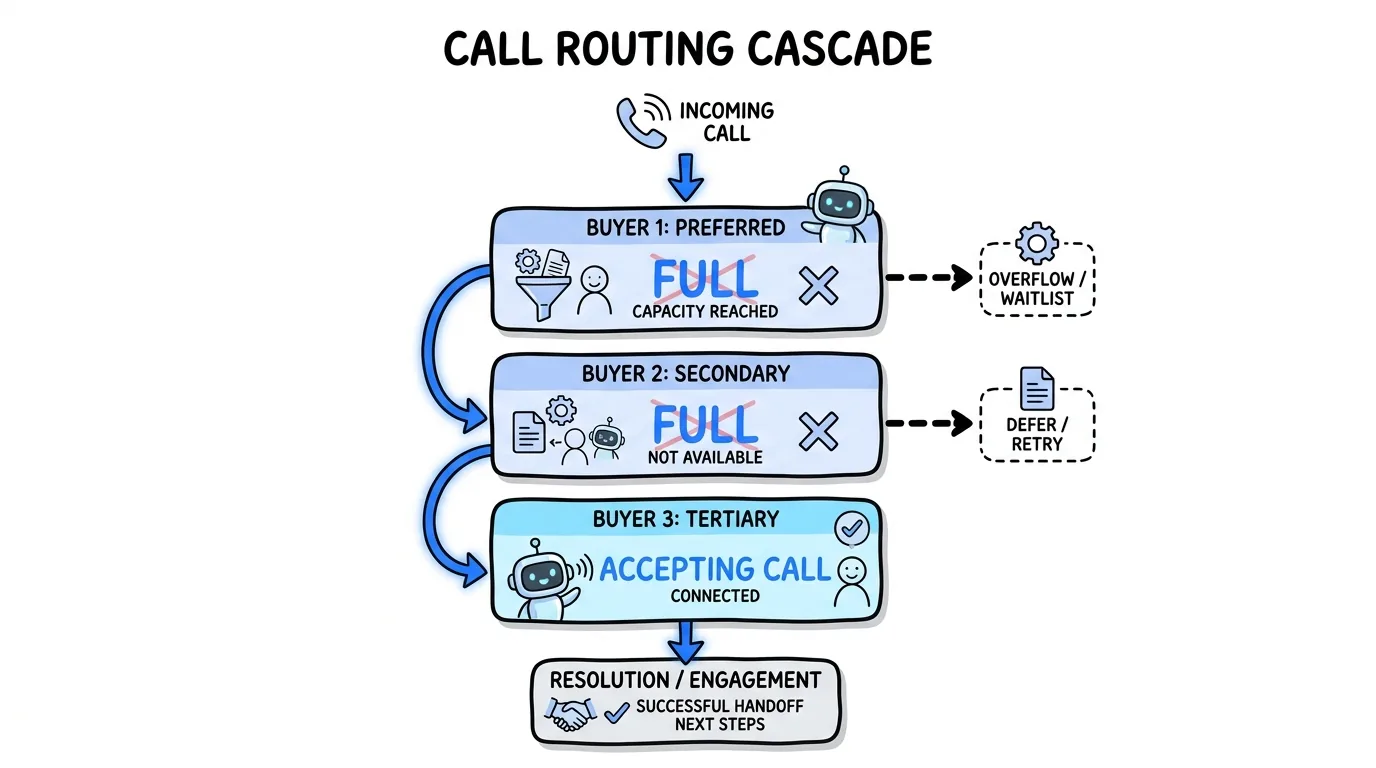
Ranking can be by bid price (highest payout first), by performance, or by a custom priority you set. If buyer one is at their concurrency cap, the waterfall skips to buyer two, then buyer three, until a buyer with open capacity accepts. This maximizes your revenue per call because the highest-value buyer always gets first refusal, and it minimizes dropped calls because the system keeps trying down the stack. It is the call-side mirror of the bid-based logic in real-time lead bidding, applied to a live human on the line instead of a form fill.
Static vs Dynamic Targets: How Real-Time Call Bidding Works
A routing destination is either static or dynamic, and the difference is the whole reason real-time call bidding exists. A static target is a destination you hardcode: a buyer's phone number or SIP address with a payout you negotiated in advance. The platform already knows everything about it, so routing a call there is a simple yes-or-no decision based on caps and eligibility.
A dynamic target is decided live. The moment a qualifying call comes in, the platform sends a real-time request to the buyer's server asking, in effect, "I have a caller matching this profile, do you want the call, and how much will you pay for it?" The buyer's system answers with a bid, and a destination if it wins. That outbound request is the ping, and the price is set per call instead of fixed ahead of time.
| Static target | Dynamic target (real-time bid) | |
|---|---|---|
| Destination | Fixed, hardcoded in advance | Returned live, per call |
| Payout | Negotiated flat rate | A bid that can change call to call |
| Decision | Caps and eligibility only | Caps, eligibility, then an auction |
| Best for | Steady, known buyers | Competitive demand, max revenue per call |
When you stack several dynamic targets into one ranked auction, the industry calls it a ring tree, and each bidding endpoint is sometimes labeled a real-time target (RTT). Platforms like Ringba use this terminology directly. A ring tree is simply a ping tree applied to a live phone call instead of a form lead: the same real-time bidding (RTB) auction that programmatic advertising made famous, adapted to a caller on the line. If you are weighing platforms that lead with this model, our Ringba vs Retreaver comparison breaks down how each one implements it.
Why hours of operation run before the ping, not after
Every ping is a live API call to a buyer's system: it costs time, adds latency before the caller connects, and consumes the buyer's resources. Pinging a buyer who is closed is wasted effort, because they cannot take the call no matter what they bid. So the routing engine checks each dynamic target's configured hours of operation first and treats a closed buyer as ineligible, skipping the ping entirely. The eligibility filter runs before the auction, not after.
That ordering protects you twice. You avoid burning latency on buyers who cannot answer, which gets the caller to a live buyer faster, and you avoid the worst case where a closed buyer's server still returns a bid, wins the auction, and dead-ends the call in an empty room. Because those hours are your configuration based on what each buyer told you, confirm their real staffing windows, including lunch and shift breaks, so the filter reflects reality rather than a stated schedule.
Routing Logic vs Call Tracking
Call routing and call tracking are related but distinct. Call tracking platforms like Ringba and CallRail attribute calls to marketing sources, record them, and report on duration and outcome. Call routing is the decision layer that sends the call somewhere. Many pay-per-call agencies need both, which is why they often compare a dedicated call tracking platform like Ringba against a distribution-first platform.
| Capability | Call Routing Software | Call Tracking Software | Lead Distro AI |
|---|---|---|---|
| Best for | Sending calls to buyers | Attribution + recording | Pay-per-call agencies, call centers, lead brokers |
| Buyer waterfall | Yes | Sometimes | Yes |
| Concurrency + daily caps | Yes | Limited | Yes |
| Lead + call distribution together | Varies by vendor | Varies by vendor | Yes |
| Pricing model | Platform fee | Usage-based per call | $297/mo + usage-based call tracking |
Lead Distro AI's call tracking is usage-based: a per-number monthly fee plus a per-minute rate for inbound calls, layered on top of the flat platform subscription. That keeps the base predictable while letting call volume scale. For a deeper comparison of routing platforms built for agencies, see our guide to the pay per call software for agencies.
How Lead Distro AI Routes Calls and Leads Together
Most agencies run both call and form-lead campaigns, and splitting them across two tools creates reconciliation headaches. Lead Distro AI applies the same routing engine to both: a phone call and a web lead can flow into the same buyer waterfall, respect the same caps, and post to the same buyer portal. This is the core idea behind treating routing as one system, covered in our pay per call marketing guide. To see how platforms compare on routing data leads as well as calls, read our ranking of the best lead routing software.
The platform supports Round Robin, Weighted, Priority/Waterfall, and Ping-Post distribution methods, so you can route a high-intent live call through a priority waterfall while routing lower-tier web leads round-robin. Ping-Post is the same real-time bid model described above, applied to calls and form leads alike, so a dynamic per-call auction and a form-lead ping run on one engine. Buyers see calls and leads in one portal, billing reconciles in one place, and you manage caps for both from one screen. Plans start at $297 per month (Ping-Post from $497 per month), and the 7-day free trial requires a credit card so you can route a live call during the trial window.
FAQ
What is call routing software?
Call routing software is a platform that decides where each inbound phone call goes the moment it connects, directing the caller to a buyer, agent, or call center based on rules like geography, skill, time of day, availability, and bid price. In pay-per-call, it answers the call, runs an IVR to qualify the caller, checks which buyers want that call type, and bridges the call to the chosen destination in real time, usually in under a second.
How does call routing software work for pay-per-call agencies?
For pay-per-call agencies, call routing software answers the inbound call, qualifies the caller through an IVR, then runs a buyer waterfall that pings buyers in ranked order until one accepts the call at the agreed price. It enforces concurrency caps and daily limits so no buyer receives more live calls than their team can handle. The agency bills the buyer per qualified call rather than answering calls themselves.
What is the difference between routing and call tracking?
Routing is the decision layer that sends a call to a destination, while call tracking attributes calls to marketing sources, records them, and reports on duration and outcome. Pay-per-call agencies typically need both. Call tracking pricing is usually usage-based, charging a per-number monthly fee plus a per-minute rate for inbound calls, often on top of a platform subscription. Lead Distro AI combines routing and tracking in one platform.
What is a buyer waterfall in call routing?
A buyer waterfall, also called priority or sequential routing, pings buyers in a ranked order and connects the call to the first buyer who accepts at the agreed price. If the top buyer is at their concurrency cap or declines, the system cascades to the next buyer until one with open capacity accepts. This maximizes revenue per call because the highest-value buyer gets first refusal, and it minimizes dropped calls by continuing down the stack.
How much does call routing software cost?
Pricing varies by platform and model. Many call tracking and routing tools charge usage-based fees: a per-number monthly fee plus a per-minute rate for inbound calls. Lead Distro AI starts at $297 per month for the platform, with usage-based call tracking layered on top, and includes a 7-day free trial that requires a credit card. Because pay-per-call leads convert 30 to 50% higher than standard web leads, the routing layer typically pays for itself quickly.
What is a ring tree in pay-per-call?
A ring tree is a ranked auction of dynamic call buyers. When a qualifying call comes in, the platform pings each buyer's system in real time to ask whether they want the call and what they will pay, then routes the caller to the highest eligible bidder. It is the call-side version of a ping tree used in lead distribution, and platforms like Ringba use the ring tree label for it. Each bidding endpoint is sometimes called a real-time target, or RTT.
What is the difference between a static and a dynamic call target?
A static target is a fixed destination with a payout you negotiated in advance, so the routing engine only checks caps and eligibility before sending the call. A dynamic target is decided live: the platform pings the buyer's server when the call arrives, the buyer returns a bid, and the price can change from one call to the next. Static targets suit steady, known buyers, while dynamic targets maximize revenue per call when several buyers compete for the same caller.
Conclusion
Call routing software is the revenue engine of any pay-per-call operation. The platform that answers the call, qualifies the caller, respects every buyer's caps, and runs a clean buyer waterfall is the one that bills the most per call while keeping buyers renewing. Geo and skill rules put each caller in front of the buyer most likely to close, and concurrency caps keep that buyer happy enough to keep buying. Lead Distro AI brings call routing and lead distribution into one platform so you manage calls and form leads from a single buyer portal, with usage-based call tracking and predictable $297-per-month base pricing.
Ready to route a live call to the right buyer in seconds? Start your 7-day free trial and connect your first tracking number to a buyer waterfall today.
About the Author
Founder & CEO of Lead Distro AI & Great Marketing AI
UC Berkeley graduate and former software engineer at Microsoft. Rafael built Lead Distro AI after managing over $10M in ad spend for performance marketing agencies (pay-per-lead and pay-per-call), including running campaigns for Neil Patel. He combines deep software engineering expertise with hands-on performance marketing experience to build tools that help these agencies scale profitably.
About Lead Distro AI
Lead Distro AI: Capture, Route, and Sell Every Lead, Call, and Appointment
The modern platform for pay-per-lead and pay-per-call agencies. Route, score, and deliver leads with AI-powered automation and real-time P&L tracking. Built for performance marketing agencies and lead buyers across legal, insurance, mortgage, solar, and home services verticals.
4 Distribution Methods
Waterfall, Round Robin, Weighted, Ping-Post
Ping-Post Auctions
Real-time bidding with sub-second routing
Real-Time P&L Reporting
Track revenue, costs, and profit per campaign
Call Tracking
Assign tracking numbers, record calls, and attribute conversions
Lead Scoring
Score every lead before routing to maximize conversion
Partner Portal
Self-serve dashboard for buyers to track leads