Google Ads for Lead Generation: A 2026 Playbook for Agencies
Google Ads for lead generation in 2026: search vs Performance Max, campaign structure, conversion tracking, and how to route and sell the leads you buy.

Rafael Hernandez
Founder & CEO
Ex-Microsoft SWE · $10M+ PPL ad spend
I hope you enjoy reading this blog post. If you want to try Lead Distro AI for free, click here.
Author: Rafael Hernandez | Founder & CEO of Lead Distro AI
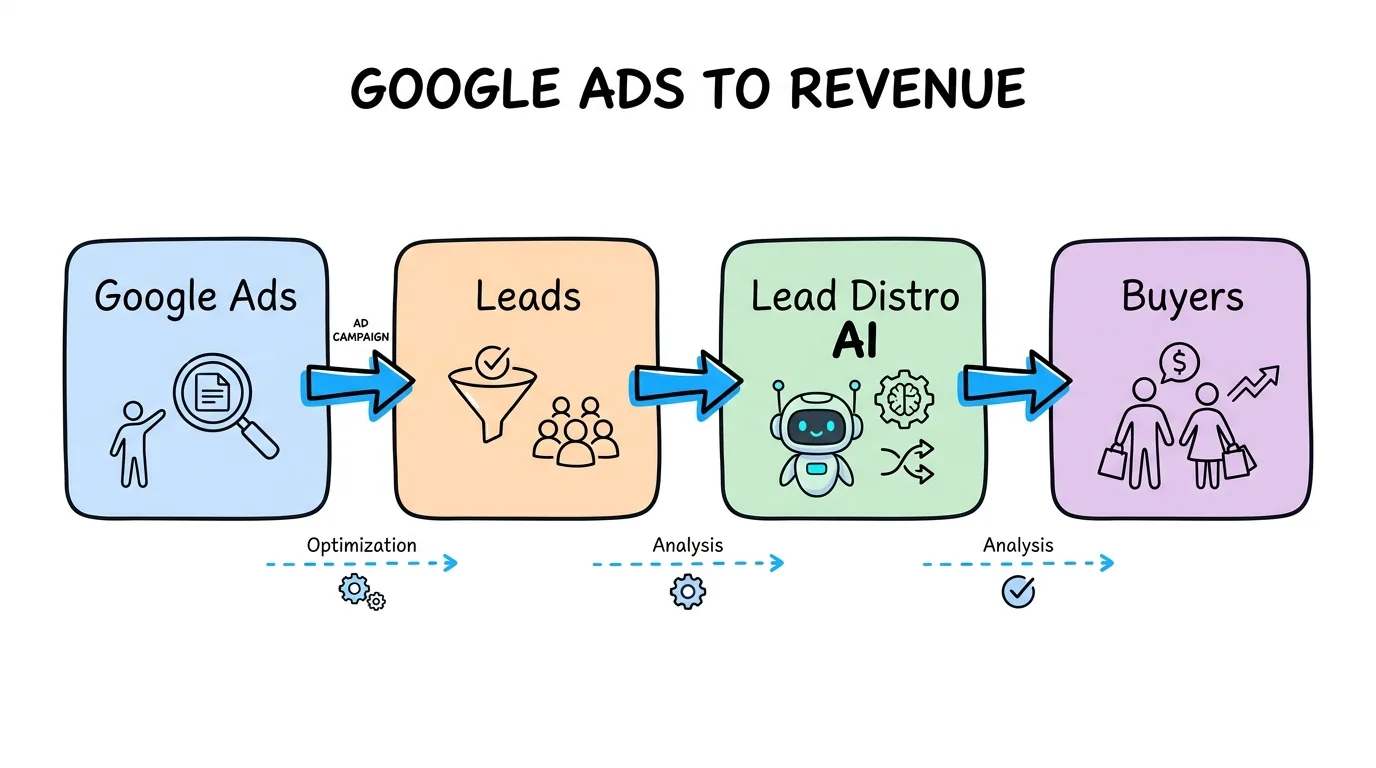
Google Ads for lead generation is the practice of using Google's search and AI-driven campaign types to capture high-intent prospects, then feeding those leads into a system that scores, routes, and sells them. For agencies, brokers, and lead sellers, Google Ads is one of the most dependable top-of-funnel channels because it catches people at the exact moment they search for a solution, not while they scroll a feed. The 2026 playbook is straightforward: run Search campaigns for your highest-intent keywords, layer in Performance Max to scale reach, capture demand with lead form assets or a fast landing page, and track conversions all the way to the sale rather than just the form fill.
The channel only pays off when every lead is qualified and delivered to the right buyer in seconds. That last mile, routing and monetizing the volume, is where most Google Ads lead generation programs quietly leak money. A cheap cost per lead means nothing if half of those leads get rejected by your buyers. This playbook covers the campaign types that actually generate leads, how to structure them, the conversion tracking that separates winners from losers, and how a distribution layer like Lead Distro AI turns raw ad clicks into billable, sellable leads. If you want the distribution side handled from day one, start your free Lead Distro AI trial.
Key Takeaways
- Google Ads for lead generation works because of intent: search captures people who are actively looking, which is why it produces higher-quality leads than most interruption-based channels.
- Use Search for your money keywords and Performance Max to scale, but keep them in separate campaigns so you can read performance and control spend independently.
- Conversion tracking is the make-or-break step. Optimizing to form fills teaches Google to find cheap clickers; importing accepted-lead outcomes teaches it to find buyers.
- Lead form assets lower cost per lead by keeping the submission on Google, but a fast landing page usually wins on lead quality and gives you room to qualify.
- The distribution layer is what monetizes the volume. Scoring, routing, and ping-post billing turn Google Ads lead generation from a spend center into a margin business.
Why Google Ads Is Built for Lead Generation
Search advertising is intent advertising. When someone types "personal injury lawyer near me" or "commercial solar quote," they are raising their hand at the moment of need, and Google Ads for lead generation lets you put your offer in front of that hand. This is the structural advantage over social channels, where you interrupt people who were not looking. For a lead-gen agency, that intent translates directly into acceptance rates: buyers pay more for a lead who was searching than for one who filled out a form to enter a giveaway.
The tradeoff is cost. High-intent keywords in verticals like legal, insurance, and mortgage carry some of the most expensive clicks in all of paid media, so wasted spend compounds fast. That is why the discipline below matters. In PPC lead generation you are not just buying clicks; you are buying the right to talk to a motivated prospect, and every dollar has to convert into a lead a buyer will actually accept and pay for.
Which Google Ads Campaign Types Generate Leads
Not every campaign type is built for lead capture. In 2026 three carry the load, and each plays a distinct role in a lead generation ads program.
Search Campaigns
Search is the foundation. You bid on the exact queries your buyers want, write ads that promise the outcome, and send traffic to a form. Search gives you the tightest control over intent, keyword match, and negative keywords, so it is where your highest-value, best-converting leads come from.
Performance Max
Performance Max is Google's goal-based campaign that serves across Search, Display, YouTube, Gmail, and Discover from a single setup (Google Ads Help, 2026). It scales reach and finds pockets of demand Search misses, but it hands more control to Google's automation, so it needs strong conversion signals to stay on track.
Demand Gen
Demand Gen fills the mid-funnel across YouTube and Discover for prospects who are not yet searching. It is a supporting act for lead generation, useful for building volume in a defined audience, but rarely your primary source of high-intent leads.
| Campaign type | Best for | Intent level | Control |
|---|---|---|---|
| Search | Money keywords, highest-quality leads | High | High |
| Performance Max | Scaling reach and volume | Mixed | Low |
| Demand Gen | Mid-funnel awareness and retargeting | Lower | Medium |
How to Structure a Lead Generation Campaign in 2026
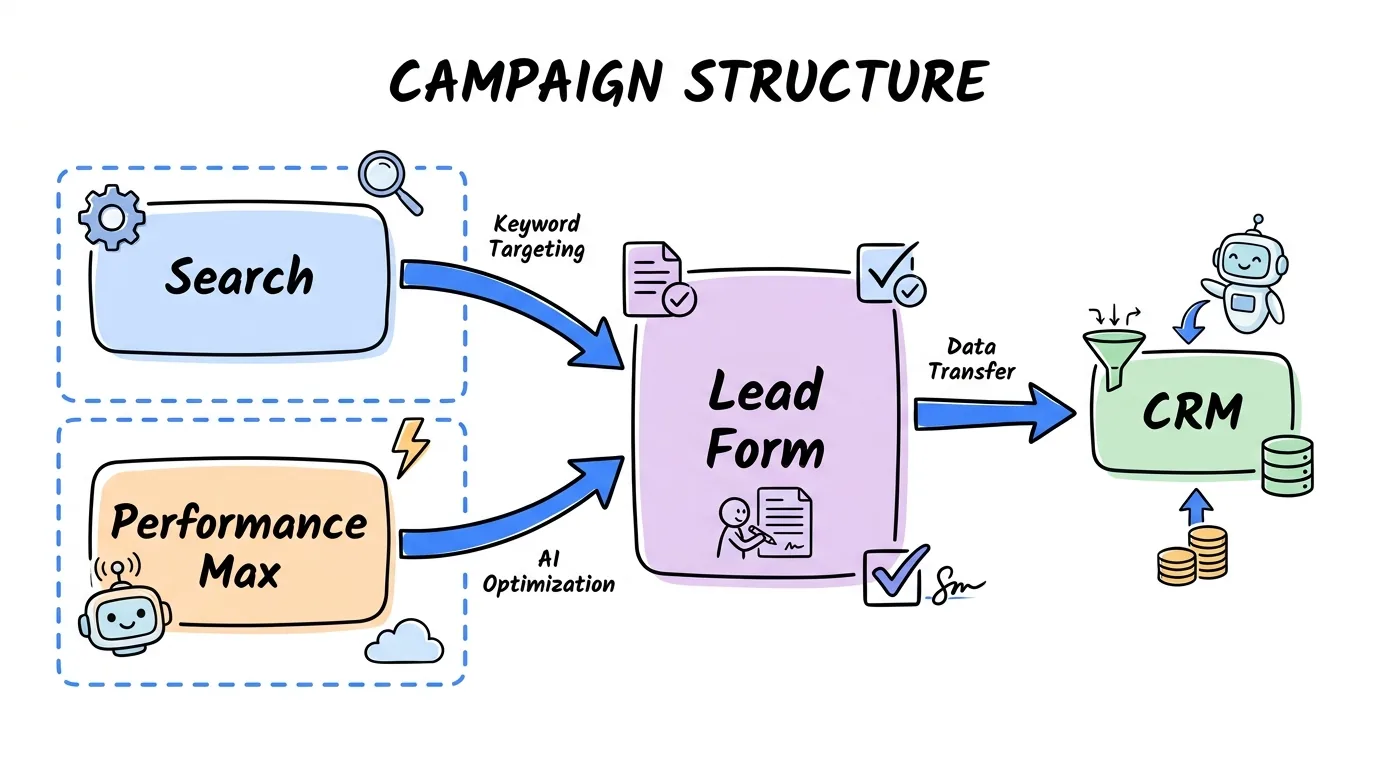
Structure is what keeps a Google Ads for lead generation account readable and controllable. Separate your Search and Performance Max efforts into distinct campaigns so you can see what each one costs and turn either down without touching the other. Inside Search, group ad groups tightly by theme, one intent per ad group, so your keywords, ads, and landing pages all match.
Capture happens one of two ways. Lead form assets attach a form directly to your ad, letting people submit without leaving Google, which lowers friction and cost per lead (Google Ads Help, 2026). A landing page costs more per lead but gives you space to pre-qualify with the right form fields and typically produces leads buyers accept at a higher rate. Most serious lead generation ads programs run landing pages for their core verticals and reserve lead form assets for high-volume, lower-ticket sub-verticals. Whichever you choose, the form should ask the qualifying questions your buyers care about, because a shorter form that produces junk is not cheaper, it is more expensive.
Conversion Tracking: The Part Most Agencies Get Wrong
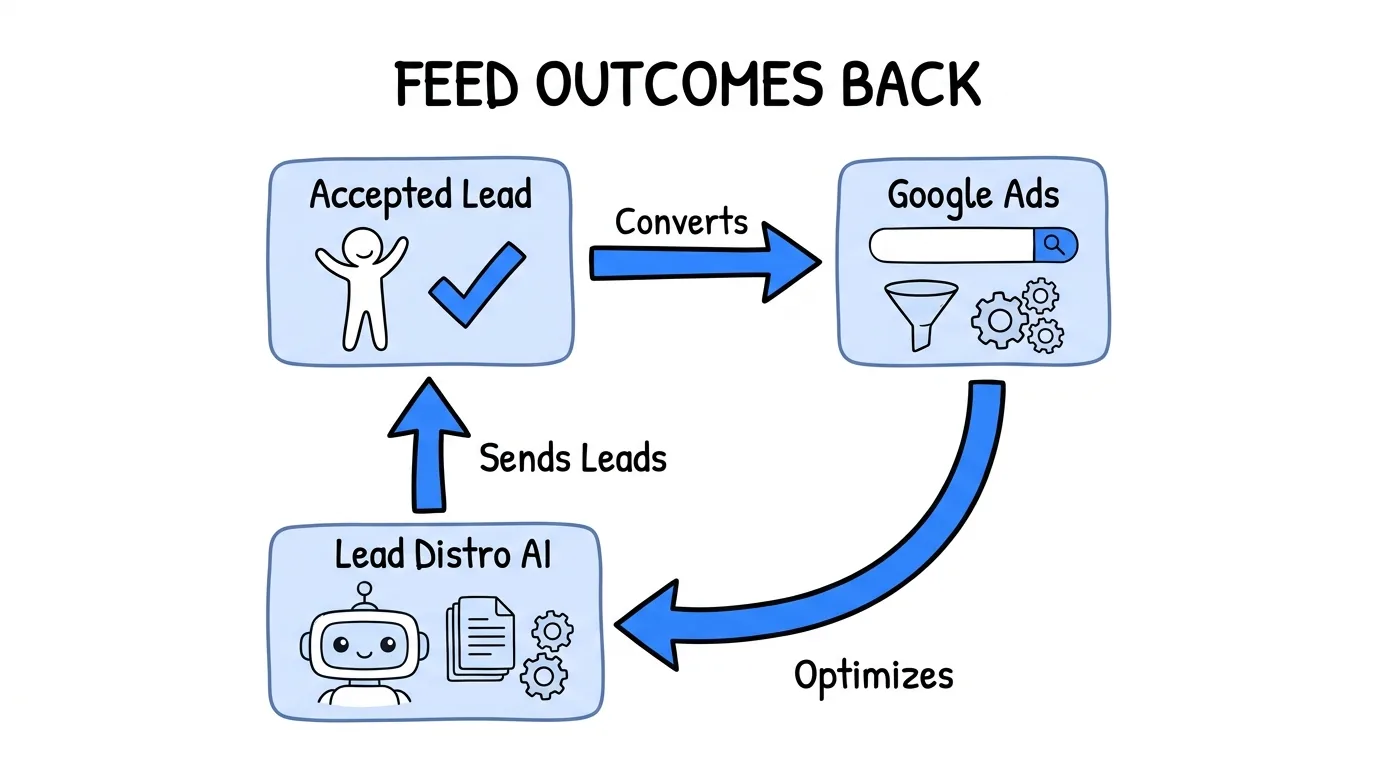
This is where good accounts and losing accounts split. If you optimize Google Ads toward the form submission, you are teaching the algorithm to find the cheapest possible form-filler, which is exactly the wrong target. The fix is to feed real outcomes back to Google. Enhanced conversions for leads and offline conversion import let you send the downstream result, the accepted or sold lead, back into Google Ads using the user-provided data captured at submission (Google Ads Help, 2026).
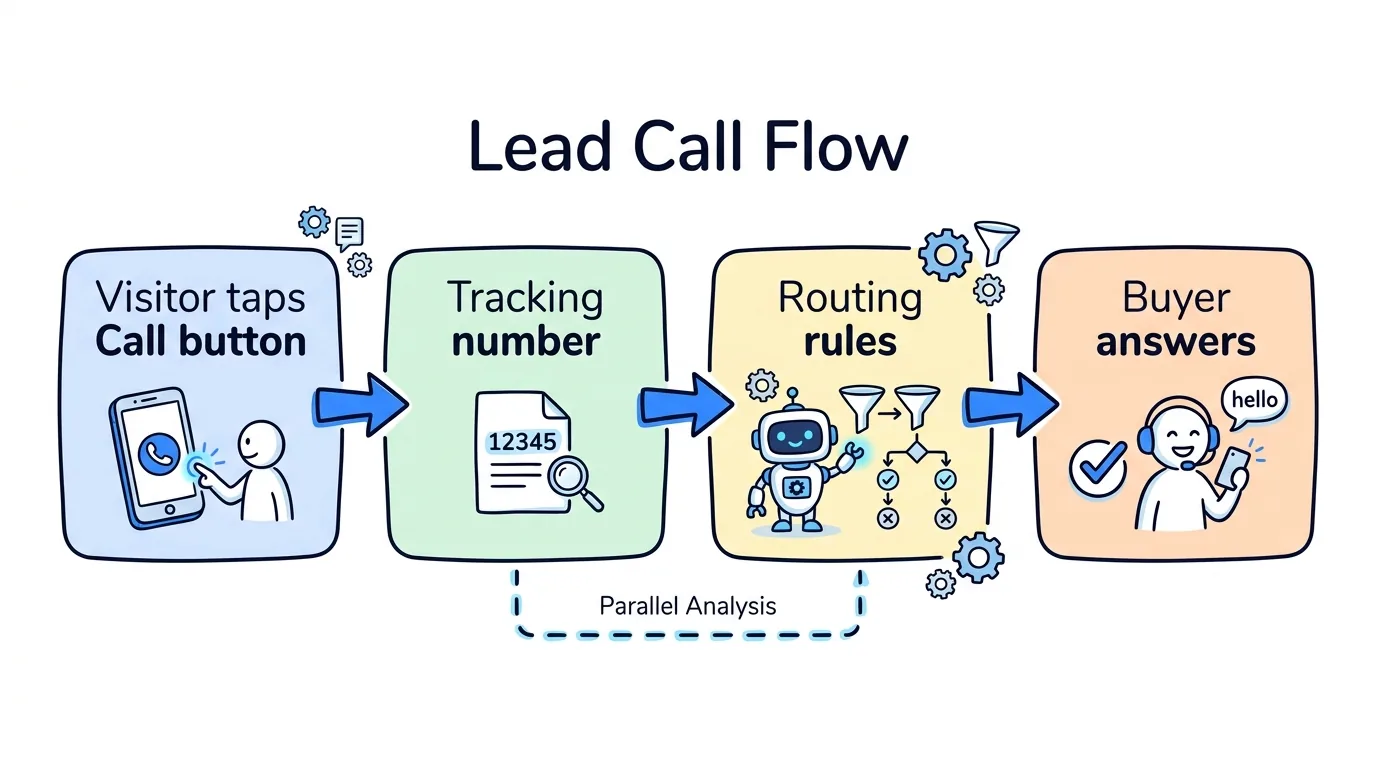
The pattern mirrors what smart media buyers already do on Meta with the Meta Conversions API feedback loop: capture the lead, score it, let the buyer mark whether it was accepted, then fire that outcome back to the ad platform. Once Google Ads bids on accepted leads instead of raw submissions, it starts finding people who look like the ones your buyers pay for. Pair this with call tracking so phone leads count too. Our pay-per-call lead generation guide and Google Ads call tracking setup cover the phone side in depth.
Turning Ad Clicks Into Revenue With Distribution
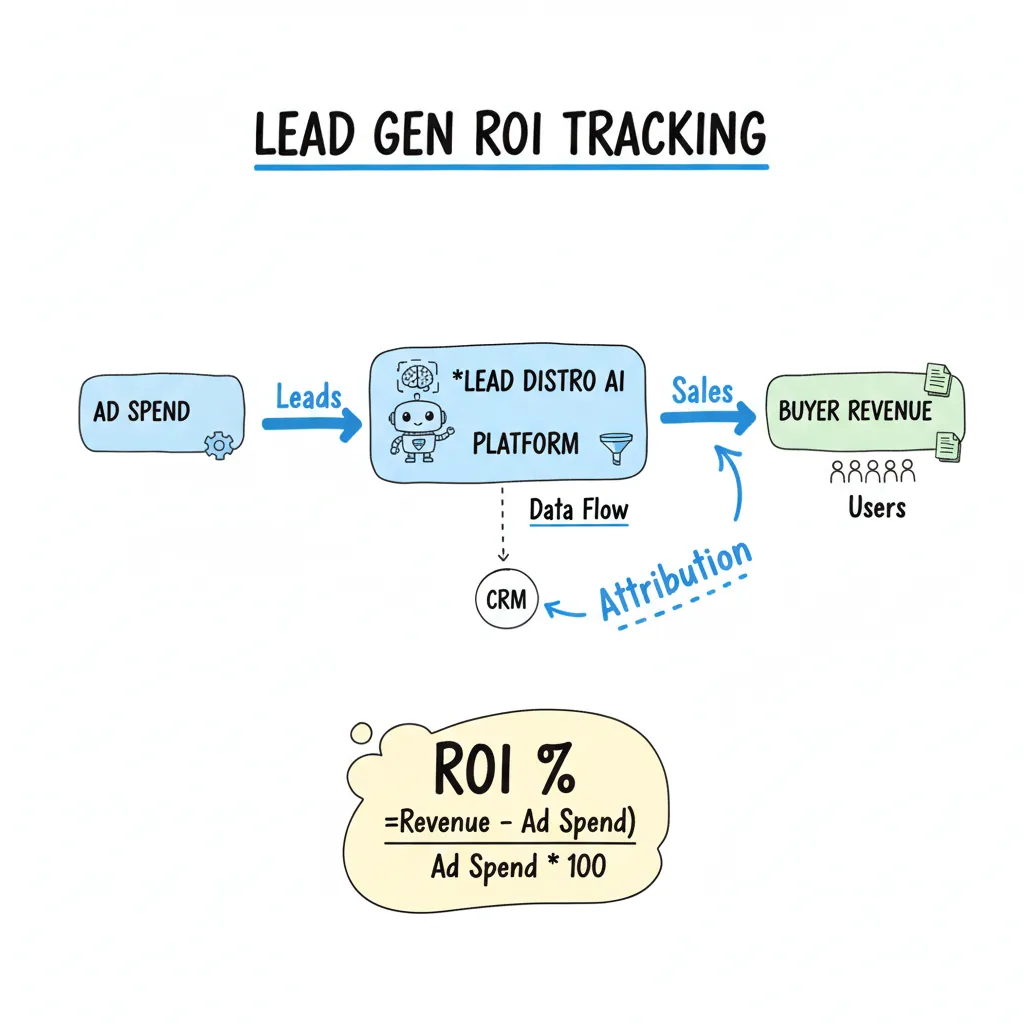
Generating leads is only half the business. The margin comes from what happens in the seconds after the form fires. A lead that sits in an inbox for ten minutes is worth a fraction of one delivered instantly, so speed-to-lead and routing are not nice-to-haves, they are the P&L. This is the layer Google Ads does not touch and the reason a distribution platform sits underneath every profitable PPC lead generation program.
Lead Distro AI checks each inbound lead against your scoring rules the moment it lands, filters out invalid or duplicate submissions, and routes the good ones to the right buyer by vertical, geography, and price using round robin, weighted, priority, or ping-post models. It then feeds accepted-lead outcomes back to your ad platforms so your Google Ads bidding gets smarter over time. For agencies choosing a platform, our buyer's guide to lead generation software and best lead distribution software comparison break down the category. You can also see how Lead Distro AI routes and bills leads before you commit. Google Ads for lead generation buys the demand; the distribution layer is what turns that demand into revenue you can bank.
FAQ
What is Google Ads for lead generation?
Google Ads for lead generation is using Google's advertising platform, mainly Search and Performance Max campaigns, to capture prospects who are actively looking for a product or service and convert them into leads. Instead of selling directly, you collect contact details through a lead form asset or a landing page. The strength of the channel is intent: because people are searching at the moment of need, the leads tend to be higher quality than those from interruption-based channels, which is why agencies, brokers, and lead sellers rely on it as a core top-of-funnel source.
Is Google Ads or Facebook better for generating leads?
Neither is universally better; they solve different problems. Google Ads captures existing demand from people already searching, so it produces higher-intent leads at a higher cost per click. Facebook and other social channels create demand by interrupting people who were not looking, which can generate cheaper leads at greater volume but lower average quality. Most mature lead generation programs run both and let conversion data decide the split. The deciding factor is not the channel but whether you track accepted-lead outcomes and feed them back so each platform optimizes for buyers, not form-fillers.
Should I use lead form assets or a landing page?
Use lead form assets when you want the lowest friction and cheapest volume, since the form stays on Google and the prospect never leaves the ad. Use a landing page when lead quality matters more than cost, because a page lets you ask qualifying questions, add proof, and pre-filter the traffic your buyers will actually accept. Many agencies run both: landing pages for core, higher-ticket verticals and lead form assets for high-volume, lower-ticket sub-verticals. Whichever you pick, the qualifying fields on the form drive downstream acceptance rate more than any other single factor.
How do I track lead quality in Google Ads instead of just form fills?
Use enhanced conversions for leads or offline conversion import to send the downstream outcome, whether a lead was accepted or sold, back into Google Ads. You capture user-provided data at submission, mark the outcome when your buyer accepts or rejects the lead, then upload that result so Google bids on accepted leads instead of raw form fills. A lead distribution platform like Lead Distro AI automates the scoring and the outcome feedback, so Google's algorithm learns which audiences become buyers and shifts spend toward them over the following weeks.
How does a lead distribution platform fit with Google Ads?
Google Ads generates the leads; a lead distribution platform decides what happens in the seconds after. It scores each inbound lead, removes duplicates and invalid submissions, and routes the qualified ones to the right buyer by vertical, geography, and price using models like round robin, weighted, priority, and ping-post. It then feeds accepted-lead outcomes back to Google so bidding improves over time. Without this layer, agencies bleed margin on slow delivery and rejected leads. With it, Google Ads for lead generation becomes a repeatable, sellable operation rather than a spend center.
Conclusion
Google Ads for lead generation wins on intent: it puts your offer in front of people at the exact moment they are searching for a solution. But intent alone does not make money. The programs that profit are the ones that structure Search and Performance Max cleanly, capture demand with the right form, track accepted-lead outcomes instead of vanity form fills, and route every lead to a buyer in seconds. Get those four things right and Google Ads becomes one of the most reliable lead sources you can run. Skip the last mile, and even cheap leads turn into rejected volume and lost buyers.
The distribution layer is what closes that gap. If you want lead scoring, instant routing, ping-post billing, and accepted-lead feedback wired into your Google Ads program from the start, start your 7-day free trial and turn your ad spend into leads buyers actually pay for.
Running Google Ads but leaking margin on slow delivery and rejected leads? Start your 7-day free trial and have lead scoring, routing, and buyer billing live inside an afternoon.
About the Author
Founder & CEO of Lead Distro AI & Great Marketing AI
UC Berkeley graduate and former software engineer at Microsoft. Rafael built Lead Distro AI after managing over $10M in ad spend for performance marketing agencies (pay-per-lead and pay-per-call), including running campaigns for Neil Patel. He combines deep software engineering expertise with hands-on performance marketing experience to build tools that help these agencies scale profitably.
About Lead Distro AI
Lead Distro AI: AI-Powered Lead Distribution & Call Tracking That Maximizes ROI
The modern platform for pay-per-lead and pay-per-call agencies. Route, score, and deliver leads with AI-powered automation and real-time P&L tracking. Built for performance marketing agencies and lead buyers across legal, insurance, mortgage, solar, and home services verticals.
4 Distribution Methods
Waterfall, Round Robin, Weighted, Ping-Post
Ping-Post Auctions
Real-time bidding with sub-second routing
Real-Time P&L Reporting
Track revenue, costs, and profit per campaign
Call Tracking
Assign tracking numbers, record calls, and attribute conversions
Lead Scoring
Score every lead before routing to maximize conversion
Partner Portal
Self-serve dashboard for buyers to track leads