Geographic Lead Routing: Route Leads by Zip, State, and Radius
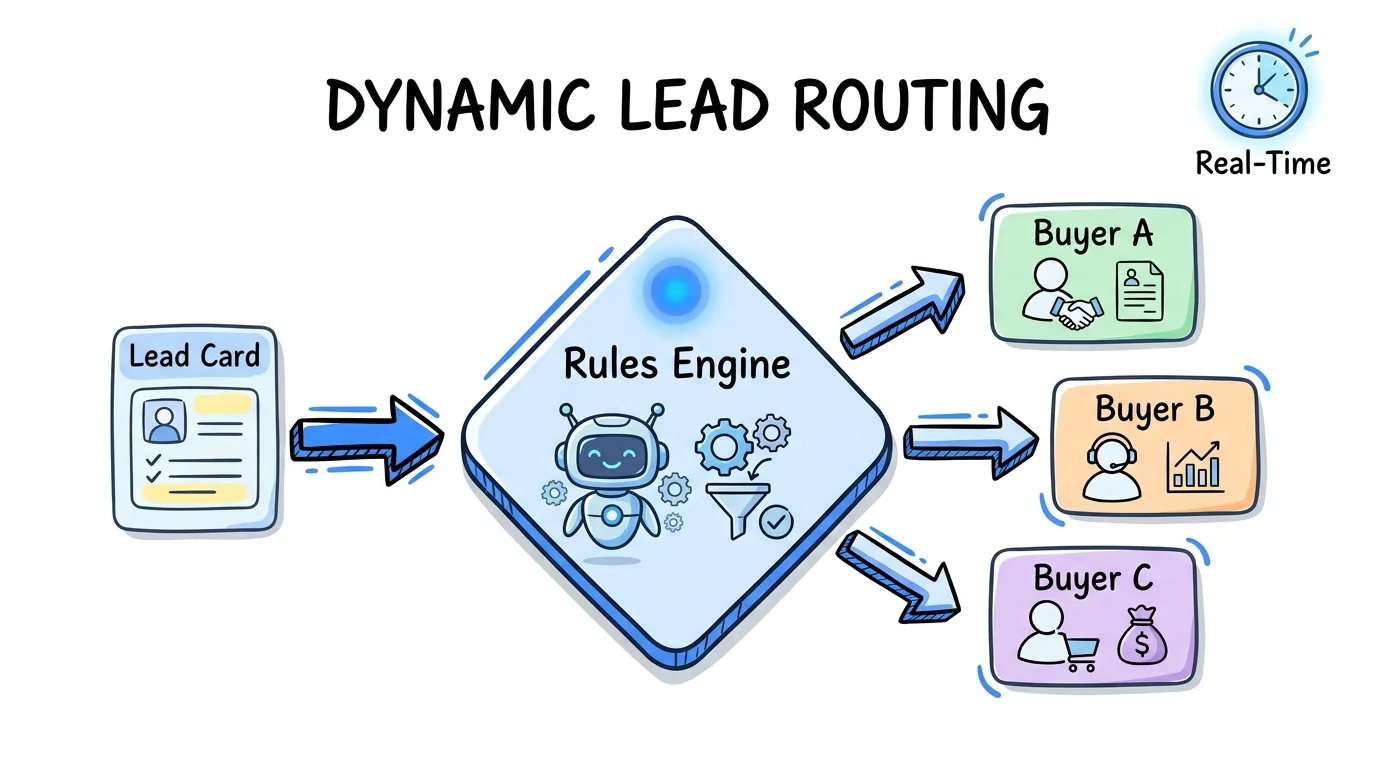
Geographic lead routing sends each lead or call to the right buyer by location: zip code, radius, state, DMA, and area code. Here is how geo routing works and how to set it up.

Rafael Hernandez
Founder & CEO
Ex-Microsoft SWE · $10M+ PPL ad spend
I hope you enjoy reading this blog post. If you want to try Lead Distro AI for free, click here.
Author: Rafael Hernandez | Founder & CEO of Lead Distro AI
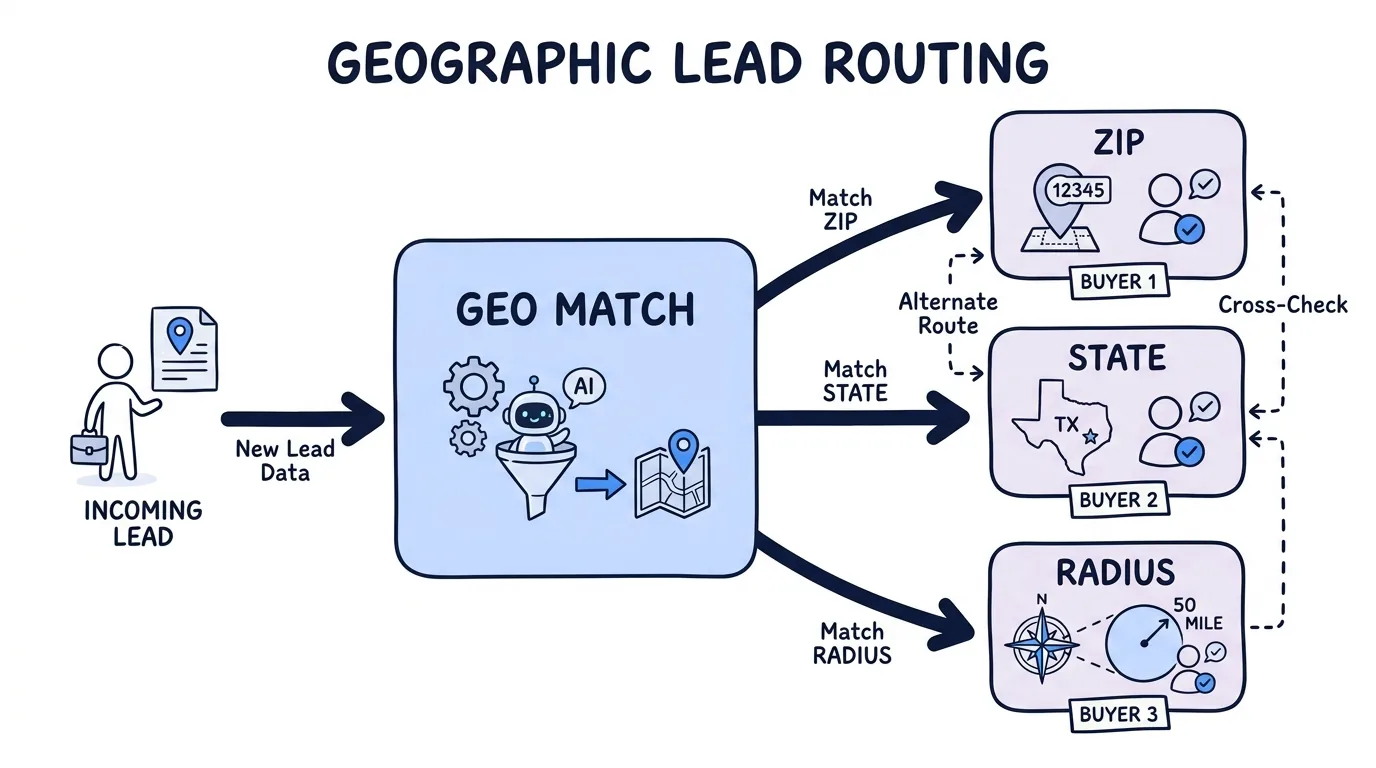
Geographic lead routing is the automated process of sending each inbound lead or call to the buyer whose service area covers the lead's location, using rules built on zip code, radius, state, DMA, or area code. Instead of assigning a Texas lead to a buyer who only sells in California, a geographic routing engine reads the lead's location the instant it arrives and matches it to buyers licensed and active in that territory, in under one second. For pay-per-lead and pay-per-call agencies, this is the difference between a billable delivery and a rejected, refunded lead.
Location is the single most common filter in any routing setup, because it protects three things at once: buyer satisfaction, compliance with state licensing rules, and payout, since a locally matched lead converts far better than an out-of-area one. This guide covers every geographic method (zip, radius, state, DMA, area code), how geo routing works step by step, how it applies to inbound calls, and how to set up coverage rules without leaking leads. For the full picture of how location fits alongside other rules, see the lead routing methods pillar guide.
Key Takeaways
- Geographic lead routing matches each lead to buyers by location using five inputs: zip code, radius, state, DMA, and area code. Location is evaluated first, before caps, quality, or bid rules.
- Local matching lifts payout and conversion. A buyer receiving in-territory leads books more appointments, returns fewer leads, and pays more per lead than one receiving out-of-area traffic.
- State-based lead routing is a compliance requirement, not just a preference. In licensed verticals like insurance and legal, a lead sent to a buyer not licensed in that state is a liability, not a sale.
- Radius and zip-code routing win local-service verticals. Solar, home services, and clinics cover service areas that ignore state lines, so
lead routing by zip codeand radius rules are more accurate than a state filter. - Geo routing applies to calls too. Pay-per-call agencies route inbound calls by the caller's area code and zip before the live transfer connects.
- Consolidate geo rules on one platform. Lead Distro AI enforces zip, state, radius, and area-code routing natively across all four distribution methods. Start with a 7-day free trial (credit card required, $297/mo after trial; ping-post from $497/mo).
What Geographic Lead Routing Actually Does
Geographic lead routing answers one question for every incoming lead: which buyers are allowed to receive this lead based on where it came from? A buyer's coverage map defines the territory they buy in, and the routing engine only considers buyers whose map includes the lead's location. Everyone else is skipped before the auction or waterfall even begins.
This is different from a rejection. When a buyer fails a geo filter, they never see the lead at all, so there is no rejected-lead cleanup, no refund, and no buyer complaint about receiving traffic outside their service area. A California-only buyer with a state filter set to CA simply does not appear in the candidate list for a Texas lead.
The location itself comes from the lead's submitted data: the zip code on a web form, the billing state, or the area code of an inbound phone number. The engine normalizes that into a geographic attribute, then checks it against each buyer's coverage rules. Because this runs in milliseconds, geo routing never adds latency to delivery. It is the first and cheapest filter to apply, which is why it belongs at the top of every routing stack.
The Five Geographic Routing Methods
There are five ways to define a buyer's territory, and most agencies combine several. Each method trades precision for simplicity differently, so the right one depends on the vertical and how the buyer defines their coverage.
| Method | How it matches | Best for | Precision |
|---|---|---|---|
| State | Lead's state equals a buyer's licensed state list | Insurance, legal, multi-state buyers | Low, but compliance-safe |
| Zip code | Lead's zip is in the buyer's zip list | Home services, solar, local clinics | High |
| Radius | Lead falls within X miles of a buyer point (lat/long) | Contractors, dealerships, single-location buyers | Highest |
| DMA | Lead's zip maps to a Designated Market Area | Media buying, regional TV/radio verticals | Medium |
| Area code | Inbound call's number prefix matches a buyer region | Pay-per-call, quick call qualification | Medium |
State routing is the coarsest but the most important for licensed verticals, since a state license is legally required to work a lead there. Lead routing by zip code is the workhorse for local-service verticals where a buyer covers 30 zips but not the whole state. Radius routing, built on latitude and longitude (lat/long), is the most precise: "send any lead within 50 miles of ZIP 90210." DMA routing groups zips into media markets, and area code routing gives pay-per-call agencies a fast proximity match before a call connects.
Why Local Matching Lifts Payout and Compliance
The business case for geographic lead routing is not tidiness, it is money and risk. A locally matched lead is worth more on both sides of the transaction. Buyers who receive in-territory leads book more appointments because the prospect is reachable and serviceable, which means they return fewer leads and are willing to pay a higher rate per lead. That directly raises your billable rate and margin.
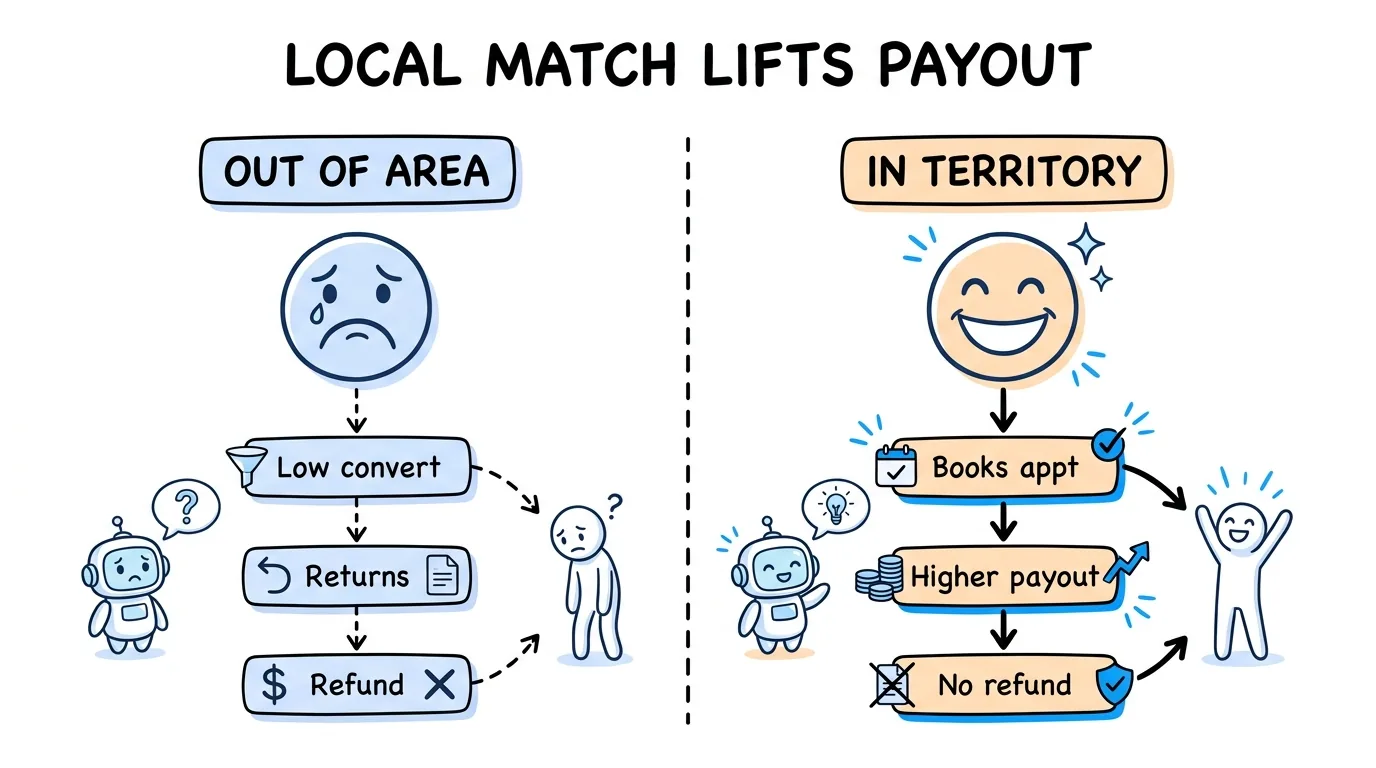
The compliance angle is just as concrete. In insurance and legal, working a lead in a state where the buyer is not licensed exposes both the agency and the buyer to regulatory penalties. State based lead routing makes that impossible by construction: an unlicensed buyer never enters the candidate pool. A multi-state buyer simply lists every state they are licensed in, and the engine handles the rest.
Geographic exclusivity is the third lever. Some buyers pay a premium for geo exclusivity, the guarantee that they are the only buyer receiving leads from a given zip or DMA. A geographic routing engine enforces that by treating the territory as owned, skipping all other buyers for leads inside it. Pair this with automated lead routing rules like caps and quality thresholds, and location becomes the foundation the rest of the logic layers on top of. If you are still choosing a platform to run these rules on, start with the best lead routing software comparison.
How to Set Up Geographic Routing Rules
Setting up geo routing follows a consistent order regardless of platform. Getting the sequence right prevents the two most common failures: leads leaking to the wrong buyer, and leads vanishing when no buyer covers the area.
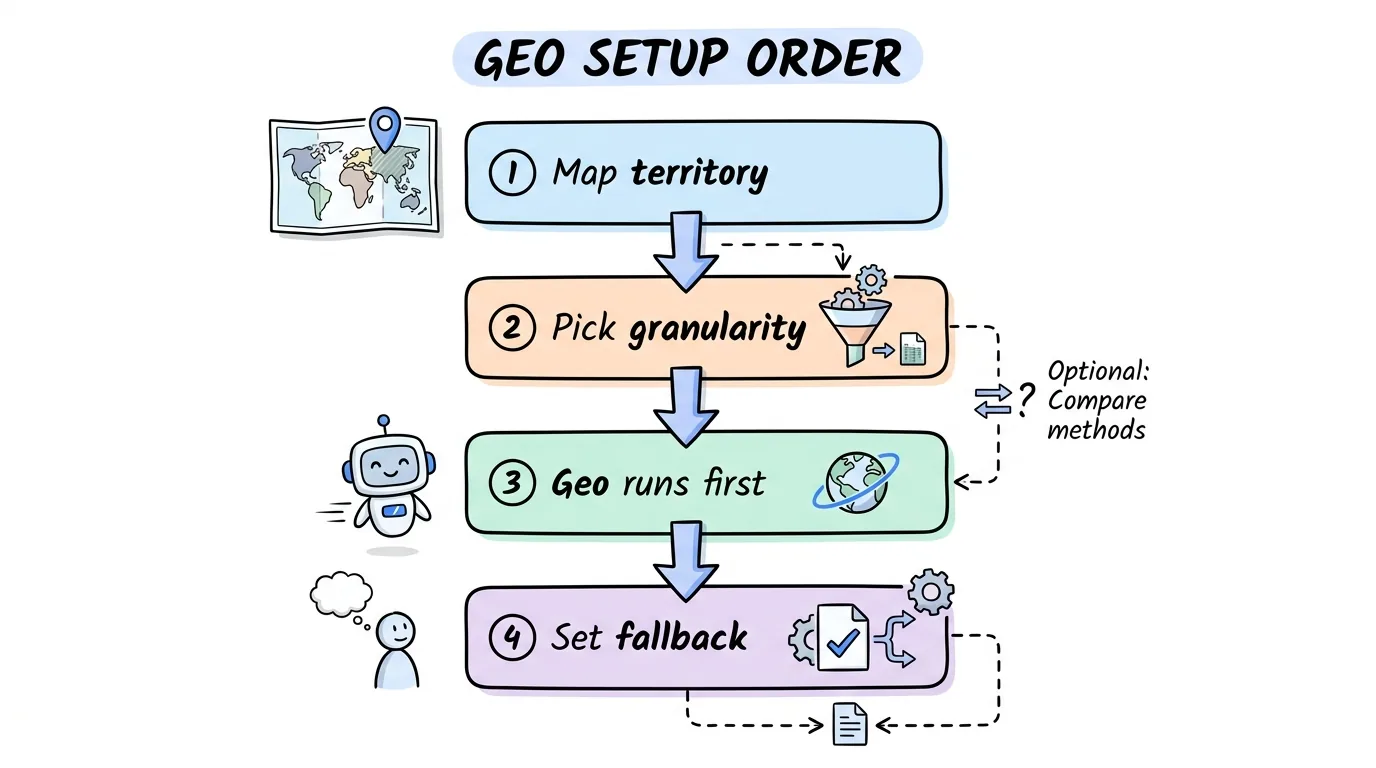
- Map each buyer's territory. Collect the exact coverage from every buyer: licensed states, target zips, or a center point plus radius. Store it as their
coverage rules, not a note in a spreadsheet. - Pick the right granularity per vertical. Use state filters for licensed verticals, zip or radius for local-service verticals, DMA for media-driven ones. Do not force a state filter onto a buyer who really covers a metro.
- Set evaluation order. Geo runs first. A lead that fails every buyer's geo filter should never reach the caps or quality stage.
- Define a fallback buyer. This is the step most setups skip. When no buyer covers a lead's location, the lead must route to a
fallback buyeror a park-and-retry queue, never disappear. Ageo capcan also throttle how many leads a single territory sends.
Test the setup with sample leads from edge zips and border states before going live. Lead Distro AI supports state, zip, radius, and area-code rules in one builder, so you configure all five methods without stitching tools together. When you are ready to build coverage maps, you can route calls and leads in real time with Lead Distro AI on a 7-day trial.
Geographic Routing for Inbound Calls
Geo routing is not limited to web-form leads. Pay-per-call agencies apply the same location logic to live phone calls, matching the caller to a buyer before the transfer connects. The caller's postal code or area code becomes the routing input, and the engine checks it against each buyer's territory the moment the call rings.
This matters because a mismatched call is worse than a mismatched form lead: the caller is on the line right now, and a buyer who does not serve that region either declines the transfer or wastes the caller's time. Routing by area code or by a zip captured in the IVR keeps calls flowing to buyers who can actually service them, which protects your call payout. Call tracking itself is usage-based, billed per number and per minute on top of the platform subscription, so routing every call to a serviceable buyer keeps that spend productive.
For the full mechanics of routing live phone traffic, including IVR menus and concurrency caps, see the guide to call routing for pay-per-call. The geographic layer described here is the first filter that runs inside that larger call-routing flow, the same way it runs first for data leads.
Geo Routing vs Territory Management Software
Buyers researching this topic often land on territory management software, a CRM-adjacent category built to divide an internal sales team's accounts by region. That is a related but different problem. Territory management assigns owned accounts to reps inside one company; geographic lead routing distributes inbound leads and calls across an external network of buyers who pay per lead.
The overlap is the map: both draw boundaries by geography. The difference is what happens at the boundary. A CRM territory tool updates an account owner field. A lead distribution platform makes a real-time delivery decision, respects buyer caps and bids, handles ping-post, and bills the transaction. If you are routing leads to outside buyers rather than assigning accounts to salaried reps, location based routing inside a distribution platform is the correct tool, not a sales-team territory feature bolted onto a CRM. Choosing the distribution-native path keeps geo rules, buyer coverage map data, caps, and billing in one system instead of two.
Frequently Asked Questions
What is geographic lead routing?
Geographic lead routing is the automated matching of each inbound lead or call to buyers whose service area covers the lead's location. It reads the lead's zip code, state, area code, or coordinates the instant it arrives and only routes to buyers active in that territory. It is the first filter in most routing setups because location determines whether a delivery is even valid before caps, quality, or bid rules apply.
How is lead routing by zip code different from state routing?
State routing matches a lead to any buyer licensed in that state, which is coarse but required for licensed verticals like insurance. Lead routing by zip code is far more precise: it matches the lead's exact zip against a buyer's target zip list, which suits local-service verticals like solar or home services where a buyer covers a metro area, not a whole state. Many agencies layer both, using state for compliance and zip for accuracy.
What is radius-based geo routing?
Radius routing matches a lead when it falls within a set distance of a buyer's location, using latitude and longitude. A buyer sets a center point and a mileage, such as 50 miles from their office, and any lead inside that circle is eligible. It is the most precise geographic method and works well for single-location buyers like contractors and dealerships whose real coverage is a drive-time radius, not a political boundary.
Why does local matching increase lead payout?
A locally matched lead converts better because the prospect is reachable and serviceable by the buyer, so the buyer books more appointments and returns fewer leads. Fewer returns and higher conversion let buyers pay more per lead, which raises your billable rate and margin. Out-of-area leads produce refunds, buyer complaints, and churn, all of which cut revenue even when the raw delivery count looks the same.
Can geographic routing handle inbound phone calls?
Yes. Pay-per-call agencies route live calls by the caller's area code or a zip captured in the IVR, checking it against each buyer's territory before the transfer connects. The logic is identical to data-lead routing, applied to a phone number instead of a form field. This keeps every call flowing to a buyer who can service the caller's region, which protects call payout and reduces declined transfers.
Conclusion
Geographic lead routing is the foundation every other routing rule builds on, because location decides whether a delivery is valid before caps, quality, and bids ever come into play. Matching each lead to buyers by zip, radius, state, DMA, or area code lifts payout, protects state licensing compliance, and eliminates the refunds and buyer churn that out-of-area traffic creates. Whether you route web-form leads or live pay-per-call traffic, the same principle holds: send it local or do not send it at all. Consolidate all five geographic methods on one platform, define a fallback for uncovered areas, and you turn location from a source of leaks into a source of margin. Build your coverage maps now, or watch competitors capture the local buyers you could have matched.
About the Author
Founder & CEO of Lead Distro AI & Great Marketing AI
UC Berkeley graduate and former software engineer at Microsoft. Rafael built Lead Distro AI after managing over $10M in ad spend for performance marketing agencies (pay-per-lead and pay-per-call), including running campaigns for Neil Patel. He combines deep software engineering expertise with hands-on performance marketing experience to build tools that help these agencies scale profitably.
About Lead Distro AI
Lead Distro AI: AI-Powered Routing for Your Leads, Calls, and Appointments
The modern platform for pay-per-lead and pay-per-call agencies. Route, score, and deliver leads with AI-powered automation and real-time P&L tracking. Built for performance marketing agencies and lead buyers across legal, insurance, mortgage, solar, and home services verticals.
4 Distribution Methods
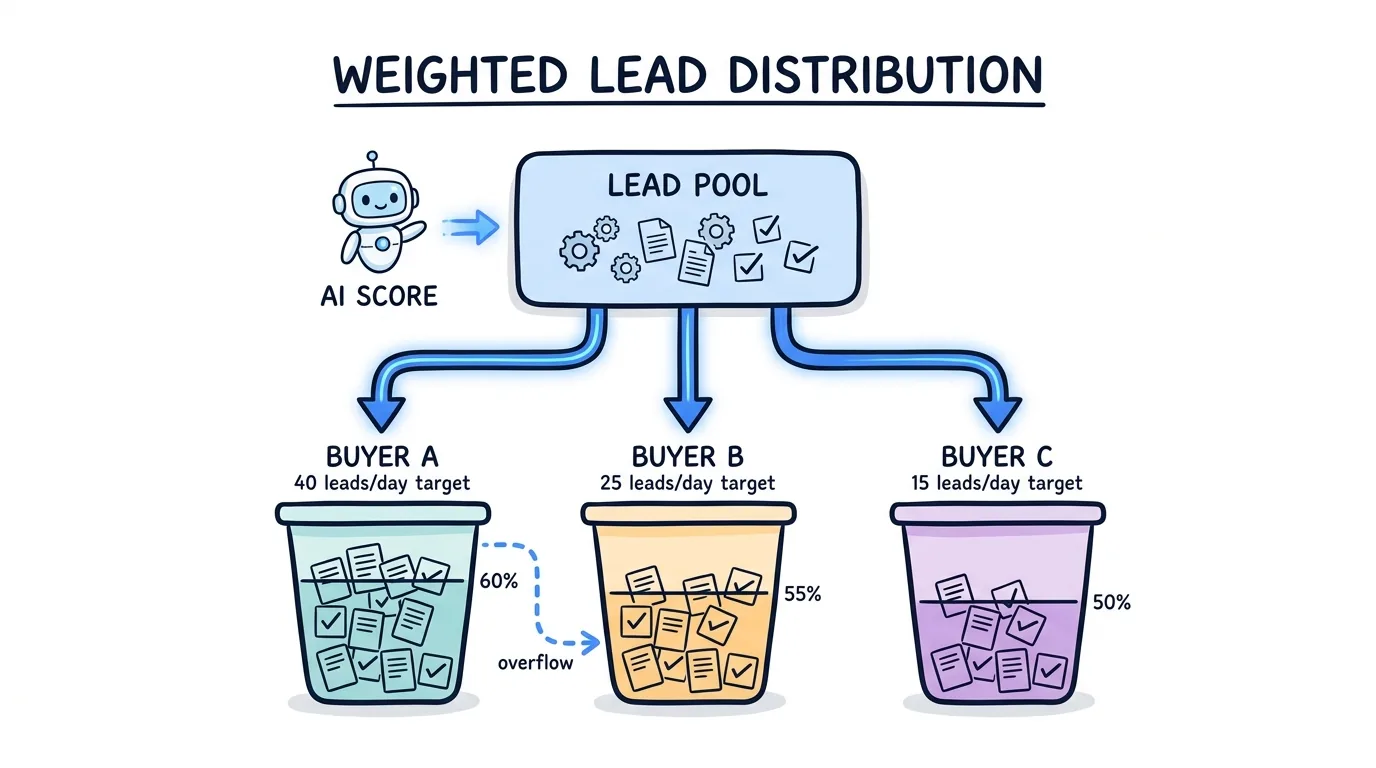
Waterfall, Round Robin, Weighted, Ping-Post
Ping-Post Auctions
Real-time bidding with sub-second routing
Real-Time P&L Reporting
Track revenue, costs, and profit per campaign
Call Tracking
Assign tracking numbers, record calls, and attribute conversions
Lead Scoring
Score every lead before routing to maximize conversion
Partner Portal
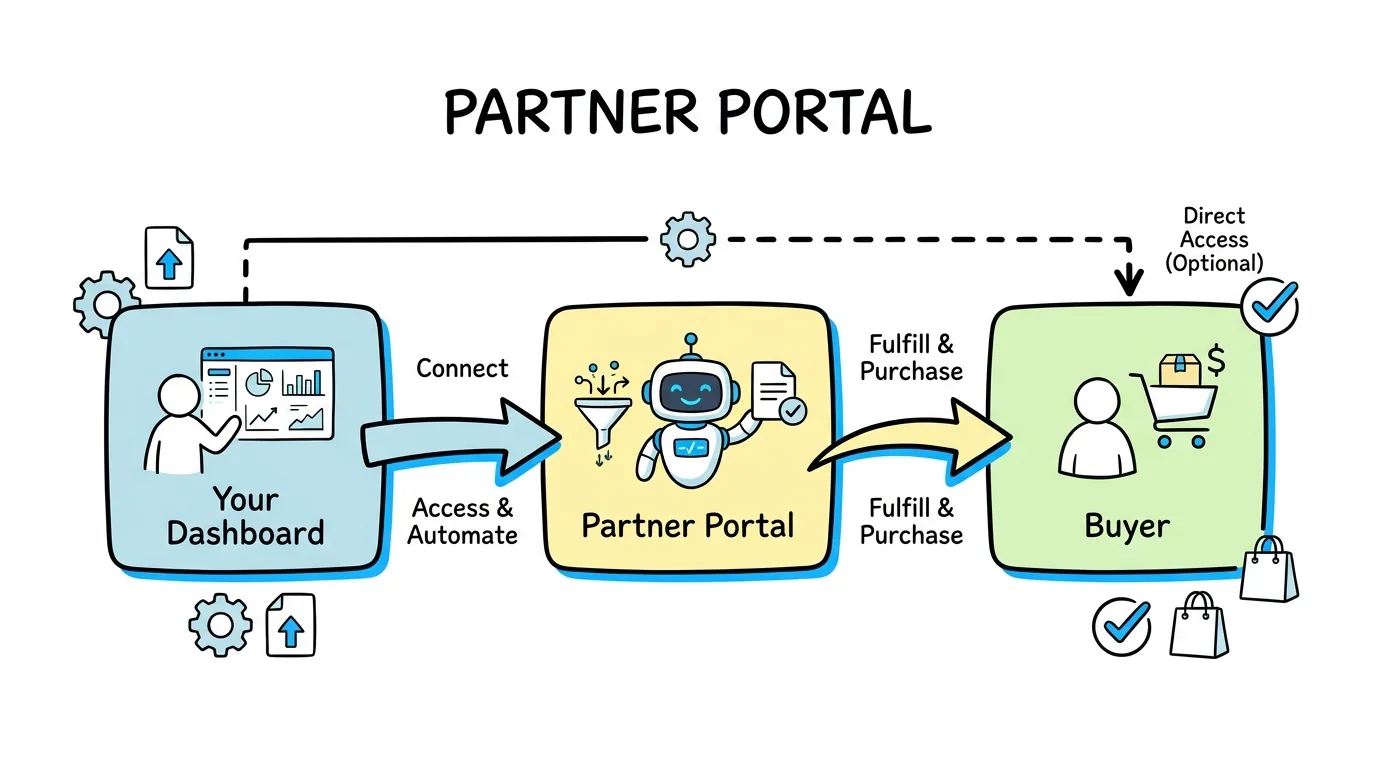
Self-serve dashboard for buyers to track leads