Pest Control Pay Per Call: A Guide to Selling Calls
Pest control pay per call guide for 2026: how seasonal peaks, termite urgency and recurring revenue set call value, plus routing, buyer caps and billing.

Rafael Hernandez
Founder & CEO
Ex-Microsoft SWE · $10M+ PPL ad spend
I hope you enjoy reading this blog post. If you want to try Lead Distro AI for free, click here.
Author: Rafael Hernandez | Founder & CEO of Lead Distro AI
Pest control pay per call is a buying model where a pest control company pays only when a qualified phone call from a homeowner or business connects, instead of buying a shared form that several competitors race to answer. It works well in this trade because the caller usually has something crawling, chewing, or swarming in the house right now. The U.S. structural pest control industry reported $13.416 billion in service revenue in 2025, up 6% from $12.654 billion in 2024, according to the National Pest Management Association (NPMA).
This guide is for operators who generate pest control inbound calls and sell them, and for buyers who want to know what they pay for. New to the model? Start with the pay-per-call by vertical guide. Or start a free 7-day trial of Lead Distro AI and build the routing as you read.
Key Takeaways
- A pest control call is worth more than the first service. NPMA reports that recurring revenue made up 85.4% of residential service revenue in 2025, so one booked call can turn into years of billing for the buyer.
- Seasons drive volume. Termite swarms peak in spring and summer, drywood termites swarm late summer and fall, and rodents move indoors as the weather cools, so buyer caps and hours must flex across the year.
- Urgency varies by pest. Termite and bed bug callers are often ready to book; a call about a few ants may not be. Score and price them differently.
- Service-area routing protects margin. A technician cannot profit on a call outside the drive radius, so state and ZIP matching must gate every call.
- Buyers are the scarce resource. In many local markets there are more
pest control call leadsavailable than companies willing to take them, so buyer hours, caps, a buyer portal, and fair rotation decide who stays. - Call tracking is usage-based. A per-number monthly fee plus a per-minute inbound rate sits on top of the $297 per month Starter plan.
What Pest Control Pay Per Call Means
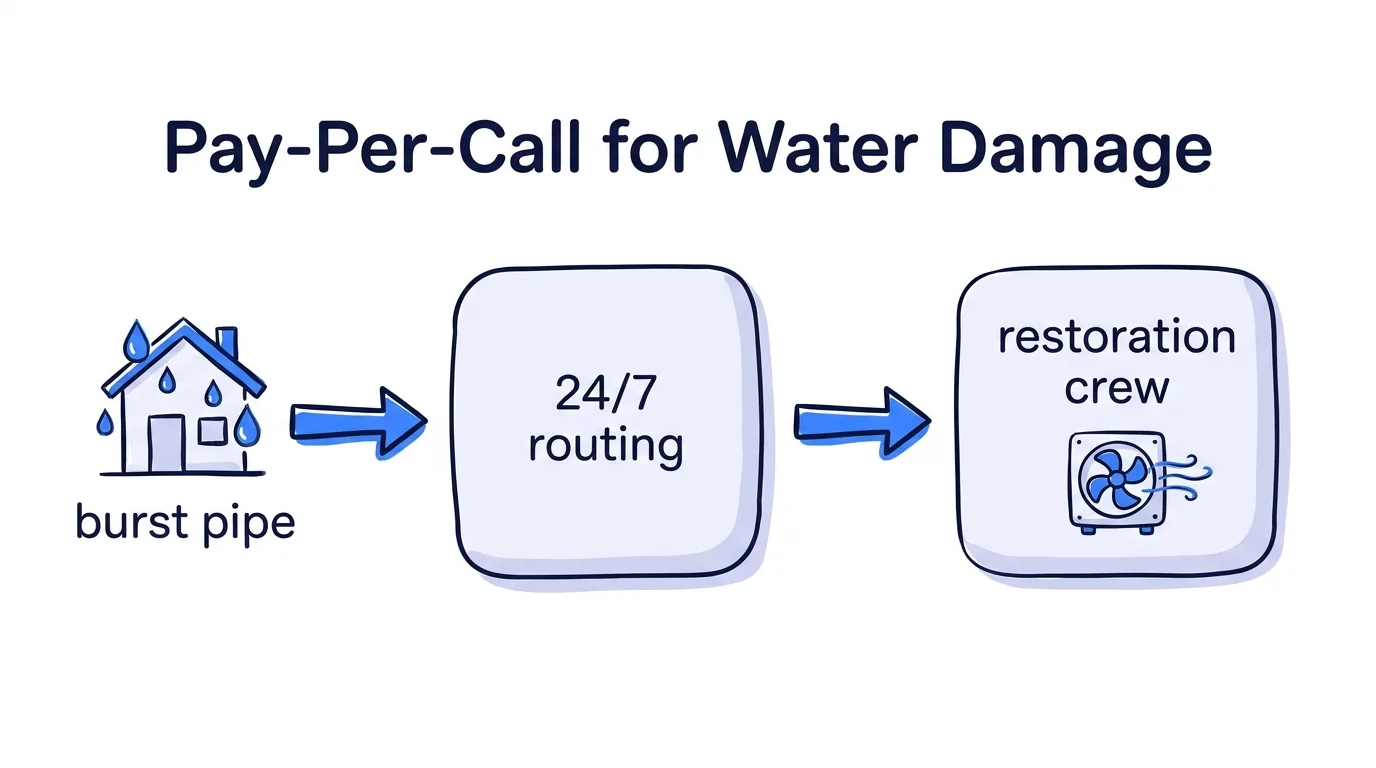
Pest control pay per call describes the arrangement between a publisher and a pest control company. The publisher runs traffic, such as search ads or local SEO, and sends callers to a tracking number. A call tracking platform records the call, measures its length, and checks it against the buyer's rules. Only a call that passes those rules bills the buyer, so a hang-up costs the company nothing.
The buyer side is a fragmented market. NPMA reported more than 17,000 pest control firms operating in the U.S. in 2024, per its 2024 industry report. Many are small local operators and natural buyers of exterminator leads in call form, because a live call lets them book a visit without a callback race.
A platform like Lead Distro AI's pay-per-call distribution sits between the traffic and the buyer. It tracks each call and routes it to a buyer whose hours, caps, and territory match.
Why Pest Control Pay Per Call Is Worth More Than the First Job
The first service visit is rarely the whole value. Pest control is a recurring business: NPMA reports that recurring revenue was 85.4% of residential service revenue in 2025, up from 85.2% in 2024, in the same 2025 industry report. A homeowner on quarterly service keeps paying long after the first treatment.
That changes what a buyer can afford to pay. A company that books a recurring plan from a call is buying a stream of future invoices, not a single job. In our view, buyers can justify paying more per qualified call than the one-time price suggests. The exact figure depends on each buyer's plan prices and how long customers stay, so ask for their numbers instead of trusting a market average. Use the lead pricing calculator to test what payout still leaves you margin after traffic and tracking costs.
Seasonality and Urgency in Pest Control Pay Per Call
Spring and summer: termites and insects. Orkin notes that most subterranean termite species swarm in the spring and summer, while drywood termites typically swarm from late summer through fall, per its termite season guide. A swarm is often the first sign a homeowner sees. NPMA says termites cause more than $5 billion in property damage each year, typically not covered by homeowners insurance, per its spring termite release.
Fall and winter: rodents. NPMA estimates that rodents invade 21 million U.S. homes each winter, per its 2024 rodent release. That is NPMA's own estimate, but the pattern holds: rodent calls rise as temperatures drop.
Year round: bed bugs and cockroaches. These callers want a technician fast and often will not wait for a callback.
| Pest | Typical timing | Caller urgency | Routing note |
|---|---|---|---|
| Termites | Spring and summer swarms; drywood late summer into fall | High | Route to buyers who handle termite work and have open capacity |
| Bed bugs | Year round | High | Prioritize buyers with same-day availability |
| Rodents | Rises in fall and winter | Medium to high | Raise caps for rodent-focused buyers in season |
| Ants and general pests | Often rises as temperatures warm | Lower | Favor buyers selling recurring plans |
A flat cap set in March will not fit October, so review buyer caps at each season change.
Residential and Commercial Calls
Residential and commercial callers behave differently, so tag them differently. A residential caller is a homeowner with a specific problem and a short decision cycle. Commercial callers, such as restaurants, property managers, and offices, often want recurring protection. NPMA reported that commercial service revenue rose nearly 7.0% in 2025, so this segment is growing alongside residential.
Many buyers specialize. One company may only want homeowners in a few ZIP codes; another may chase commercial accounts across a metro area. Use IVR (keypad menu) qualification to ask one question first, such as "Press 1 for your home, press 2 for a business," so each call reaches the buyer who wants it. Our home services vertical page shows how the same approach applies to other trades.
Routing Pest Control Pay Per Call by Service Area and Hours
A technician only profits inside a drive radius, and a call from far outside it becomes a refund request. Geographic routing by state and ZIP code checks each call against the buyer's territory before it connects. Lead Distro AI supports these routing methods:
- Round Robin spreads calls evenly across buyers with similar capacity.
- Weighted sends more calls to the buyer who closes best.
- Priority/Waterfall tries buyers in ranked order until one answers.
- Ring tree rings a set of phones for one buyer, one after another.
- Real-time bidding (RTB) lets buyers bid on each call, so the highest bid in that ZIP wins it.
Buyer hours matter as much as territory. An office that closes at 5 p.m. should not receive a call at 9 p.m. Set hours per buyer and let the waterfall move the call to a buyer who is open. The plumbing pay-per-call guide covers the same logic for another urgent trade.
Finding and Keeping Buyers
For many operators the hard part is not getting calls. It is finding buyers who will take all of them. A common pattern in local call markets is that call supply outruns the buyers who will absorb it. Then the operator with reliable buyers earns the margin. Keep buyers by making the relationship easy to trust.
- Respect caps and hours. Never push calls past a buyer's cap. A buyer who feels flooded will leave.
- Rotate fairly. Use Round Robin or Weighted so no buyer feels shut out of good ZIP codes.
- Give buyers a window into their own calls. A buyer portal lets each company see its own calls, so there is less back and forth.
- Handle returns cleanly. Buyer billing and returns let you credit a bad call without a long email thread.
The guide to starting a pay-per-call agency covers how new operators find their first buyers.
Filtering, Billing, and Tracking Pest Control Pay Per Call
Filtering keeps a pest control pay per call program profitable. The main lever is a minimum call duration: a call becomes billable only after it runs a set number of seconds, which screens out hang-ups and wrong numbers. Duplicate caller detection stops one homeowner from billing twice on a callback.
Rule-based call scoring goes further. You write rules describing a good caller, for example a homeowner in the service area with an active pest problem, and each call is scored against them. Call recording settles disputes, and real-time P&L reporting shows margin per campaign and buyer.
One cost note: call tracking is usage-based. You pay a per-tracking-number monthly fee plus a per-minute inbound rate, on top of the $297 per month Starter plan. Model your number count and minutes before you scale.
FAQ
What is pest control pay per call?
Pest control pay per call is a model where a pest control company pays only for qualified inbound phone calls from people who need service. A tracking number records each call and its length, and only calls that meet agreed rules, such as a minimum duration, bill the buyer. It replaces shared forms that several companies chase at once, so the buyer reaches a live customer who is ready to talk about booking a visit, which is why the model suits urgent pest problems.
Are pest control inbound calls worth more than other home service calls?
They can be, because pest control is a recurring business. NPMA reports that recurring revenue was 85.4% of residential service revenue in 2025, so one booked call may become years of billing for the buyer. The actual value depends on each buyer's plan prices and how long customers stay. Ask every buyer for its own numbers before you set a payout, and test your margin in a calculator before you commit to traffic spend.
How does seasonality affect pest control call leads?
Demand shifts across the year. Subterranean termites mostly swarm in spring and summer, drywood termites in late summer and fall, and rodents move indoors as temperatures drop. Buyer caps and hours set for one season rarely fit the next. Review caps at each seasonal change so you capture surge volume without sending calls to buyers who are already full or closed for the day. Seasonal planning is the cheapest way to avoid refunds.
How do I find buyers for exterminator leads?
Start with local pest control companies in the ZIP codes where your calls originate, and offer a short trial of calls with clear caps and hours. Keep them by rotating fairly, honoring caps, and giving them a buyer portal to see their own calls. In many markets calls outnumber buyers, so a reliable buyer roster is worth protecting. Handle returns quickly and fairly so buyers trust the numbers, because a buyer who trusts your reporting keeps taking calls.
Does Lead Distro AI charge per call?
Call tracking on Lead Distro AI is usage-based: a per-tracking-number monthly fee plus a per-minute rate for inbound calls, on top of the Starter plan at $297 per month. You can estimate the tracking cost from your number count and expected minutes before you scale. A 7-day free trial is available so you can test routing, caps, and buyer hours before you commit to a campaign. Start with one campaign and a few numbers.
Conclusion
Pest control pay per call rewards operators who respect how the trade works. Calls carry recurring-revenue value, demand moves with the seasons, and each buyer has a territory, hours, and a capacity limit. Route by state and ZIP, review caps each season, filter with a minimum duration and duplicate detection, and give buyers a portal so they trust the numbers. Then your pest control call leads become a steady book of business instead of a pile of unsold calls.
To build your own pest control pay per call program, start your free 7-day trial of Lead Distro AI or take the product tour. For a related trade, read the plumbing pay-per-call guide.
Ready to route your first pest control call to a buyer whose rules it matches? Start your 7-day free trial and set up routing, caps, and buyer hours in minutes.
About the Author
Founder & CEO of Lead Distro AI & Great Marketing AI
UC Berkeley graduate and former software engineer at Microsoft. Rafael built Lead Distro AI after managing over $10M in ad spend for performance marketing agencies (pay-per-lead and pay-per-call), including running campaigns for Neil Patel. He combines deep software engineering expertise with hands-on performance marketing experience to build tools that help these agencies scale profitably.
About Lead Distro AI
Capture, Route, and Sell Every Lead, Call, and Appointment
Capture, route, and sell leads, calls, and appointments from one platform, with funnels, call tracking, ping-post, and billing built in. Set it all up in minutes by chatting with AI.
Funnels
Quiz, form, appointment, VSL, and webinar templates
Call Tracking
Tracking numbers, call recordings, and per-call billing
4 Distribution Methods
Priority/Waterfall, Round Robin, Weighted, Ping-Post
Ping-Post and Live Bidding
Sell each lead and call to the highest bid
Real-Time P&L
Revenue, cost, and profit per campaign
Partner Portal
Your Destinations see their own leads and results