Pay-Per-Call for Plumbing: How Plumbers Buy Inbound Calls
Pay per call plumbing leads guide for 2026: what plumbing calls cost, how emergency intent and after-hours routing work, plus how to filter and bill them.

Rafael Hernandez
Founder & CEO
Ex-Microsoft SWE · $10M+ PPL ad spend
I hope you enjoy reading this blog post. If you want to try Lead Distro AI for free, click here.
Author: Rafael Hernandez | Founder & CEO of Lead Distro AI
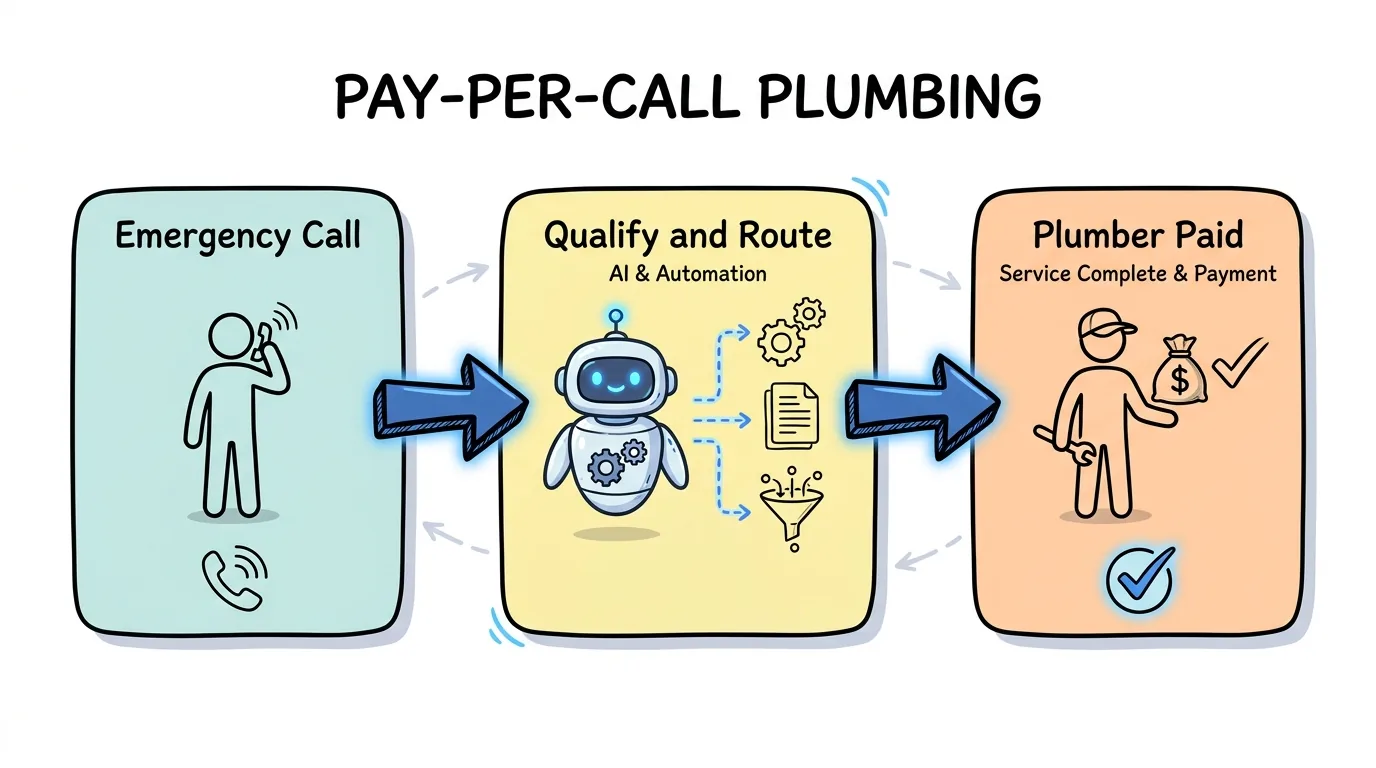
Pay per call plumbing leads are inbound phone calls from homeowners who need plumbing work, where a plumber pays only when a qualified call connects instead of buying a shared form that four competitors race to call back. The model fits plumbing better than almost any trade because the homeowner with a burst pipe or a flooded basement is mid-emergency, not browsing, and that urgency shows up in the close rate. Per Invoca's 2025 home services call conversion benchmarks, drawn from over 60 million analyzed calls, plumbing is one of the strongest-converting home services categories precisely because the caller cannot delay the hiring decision. A homeowner standing in two inches of water hires the first plumber who answers, which is exactly what a live call delivers and a form lead does not.
This guide is the plumbing-specific companion to the pay-per-call by vertical guide. It covers what a plumbing call is worth, why emergency intent makes live calls outperform shared leads, how after-hours and geographic routing keep pay per call plumbing leads from going to voicemail, and how to filter, route, and bill them so margin survives a 2am sewer backup.
Key Takeaways
- Emergency intent is the defining plumbing trait. A burst-pipe caller is mid-crisis with the hiring decision already made, so a live
inbound callconverts far above a shared form sold to four plumbers at once. - Plumbing call payouts track the underlying lead cost. Exclusive plumbing calls commonly run $35 to $150 each, scaled by exclusivity, urgency, and job type, because the homeowner is already on the line.
- After-hours routing is non-negotiable. A flooding call at midnight is the highest-intent call you will ever buy, so routing must follow the on-call buyer down a priority order, never to voicemail.
- Geographic call routing protects close rates. A service-area business only profits on calls inside its drive radius, so ZIP and radius matching must gate every plumbing call before it connects.
- Call tracking pricing is usage-based. A per-number monthly fee plus a per-minute inbound rate sits on top of the flat $297 platform subscription, so model your number count and call minutes before scaling a campaign.
- Pay-per-call beats shared plumbing leads on intent. A live caller outranks a form sold to several contractors, which is why emergency call intent converts at multiples of the rate of the average plumbing web lead.
What Pay-Per-Call Means for Plumbing
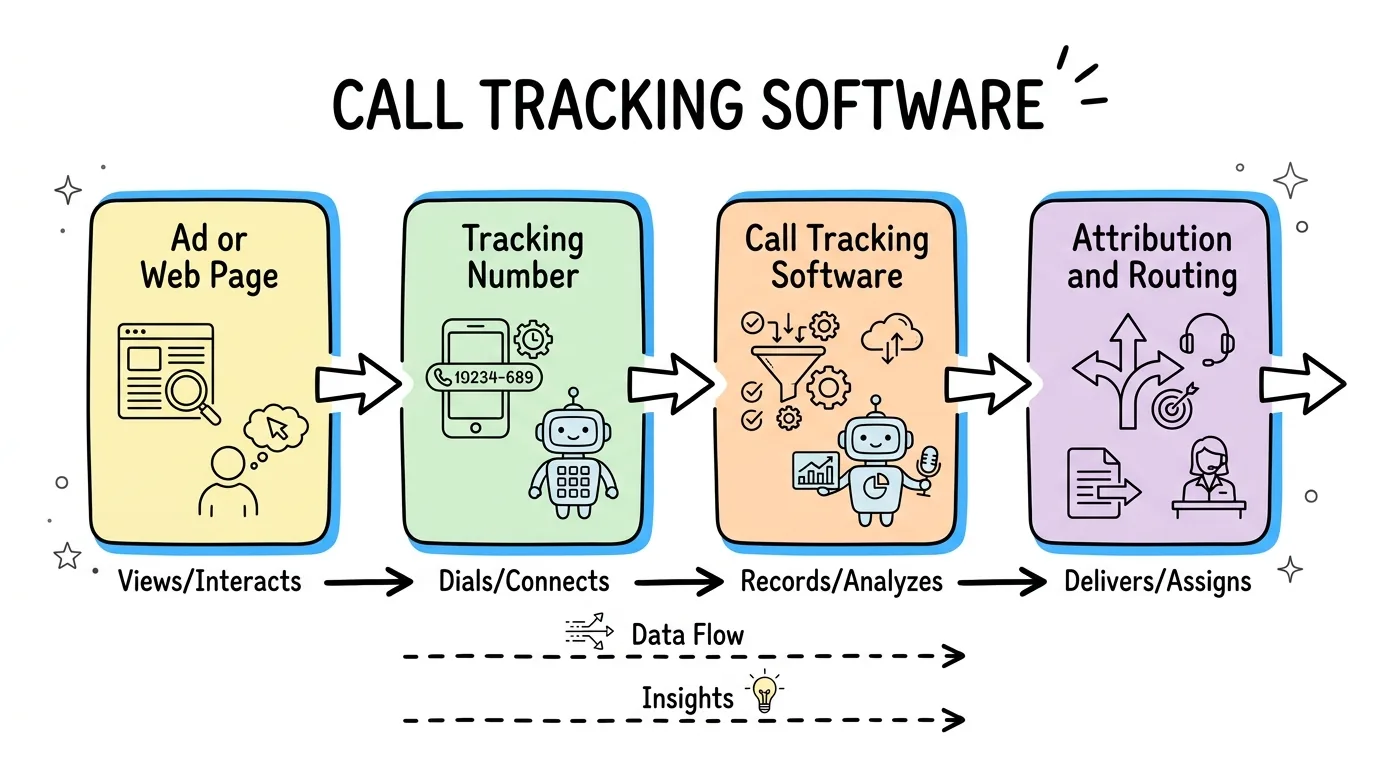
Pay per call plumbing leads describe a buying model where a publisher generates plumber inbound calls through Google search ads, Local Services Ads, SEO, or call placements, and a plumber or network buys those calls on a cost-per-call basis. A call tracking platform assigns a unique tracking number to each campaign, records the call, and measures duration and outcome. Only calls that pass the agreed quality bar bill the buyer, so a ten-second hang-up never costs the plumber anything.
The intent advantage is why plumbing leans on this model. A homeowner who dials after searching "emergency plumber near me" is ready to book, not comparing brands, which is the gap that makes plumbing call leads convert above standard web traffic. The U.S. plumbing industry generated $134.1 billion in 2024 per IBISWorld, with more than 130,000 plumbing businesses competing for a finite pool of service requests, so winning the live call matters. A platform like Lead Distro AI's pay-per-call distribution sits between the traffic and the plumber, scoring and routing each inbound call in real time so the right buyer answers a live, ready-to-book homeowner.
What a Plumbing Call Is Worth
Plumbing call payouts track the cost of generating the call and the value of the job behind it. Plumbing carries strong commercial value: Google Ads CPCs for plumbing average $64.66, the highest among common home services sub-verticals, and competitive query CPCs run $35 to $65 per click. When clicks cost that much, a live, qualified call clears a premium because the homeowner is already past the click and on the phone.
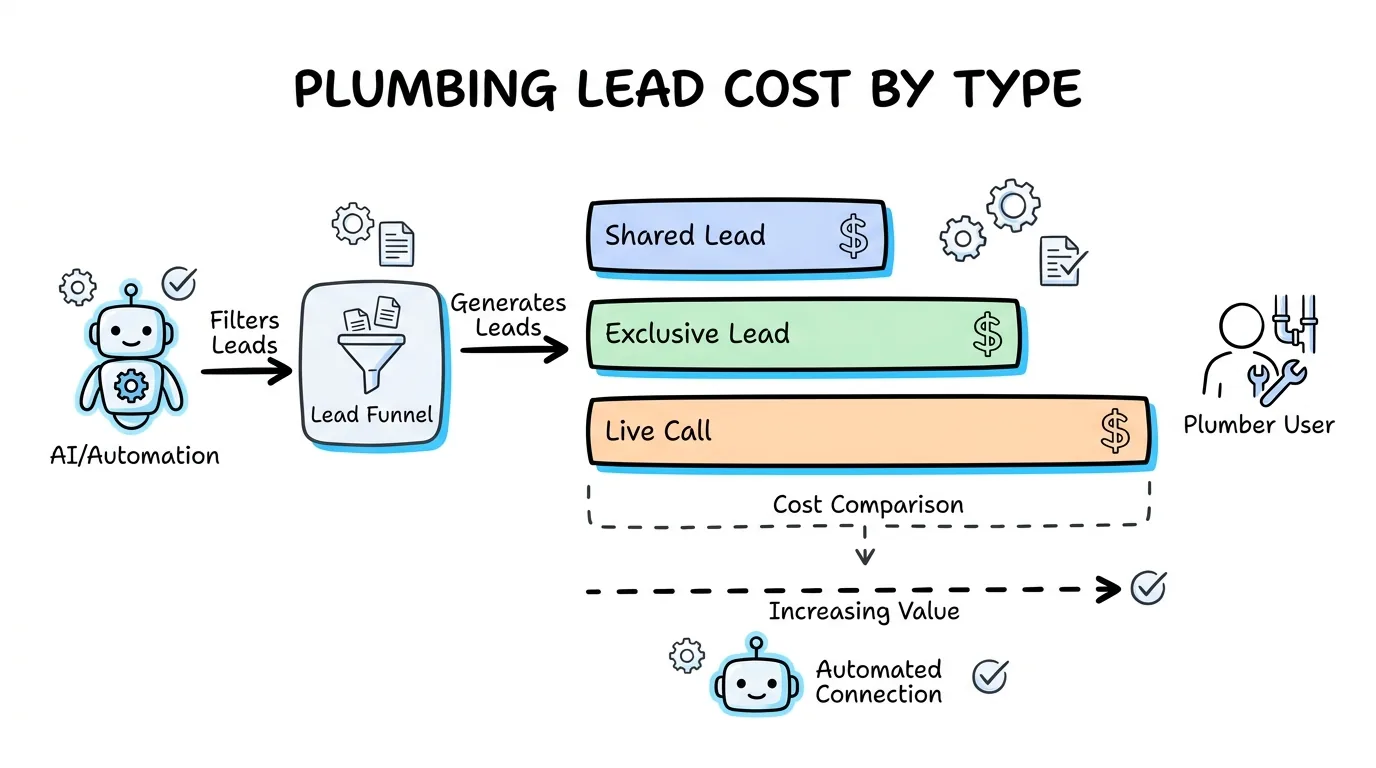
Exclusive plumbing call leads typically run $35 to $150 per call, scaled by exclusivity, urgency, and job type. An emergency sewer backup or burst-pipe call at 1am clears far higher than a scheduled fixture install, and live-transfer emergency plumbing leads commonly run $55 to $90 with commercial jobs reaching $80 to $150. Shared form leads are cheaper but split across three to five plumbers, so cost per booked job, not cost per lead, is the metric that matters. The best plumbing call leads are exclusive and live, so the lead pricing calculator models cost per call against booked-job value across distribution models.
Emergency Intent: Why Live Calls Beat Shared Plumbing Leads
Emergency intent is the trait that separates plumbing from softer home trades. A homeowner with a flooding basement is not filling out a form and waiting for callbacks; they are dialing the first plumber who can come now. Per InsideSales.com research (now XANT), leads contacted within five minutes convert at 21 times the rate of those reached after 30 minutes, and plumbing compresses that window further because a pay per call plumbing caller will stop dialing the moment one plumber answers.
That speed advantage is the entire case for buying live calls over shared web leads. A shared emergency plumbing leads packet sold to four plumbers triggers a callback race the buyer usually loses, while a live intent-qualified call reaches one plumber with the homeowner already connected. Pay-per-call removes the callback race by construction. The trade-off is that you pay only for connected, qualified calls, so the call duration filter and duplicate detection discussed below are what keep that premium honest. For agencies routing this across many plumbing clients, the same logic that powers plumbing lead generation at scale applies to calls.
After-Hours and Emergency Call Routing
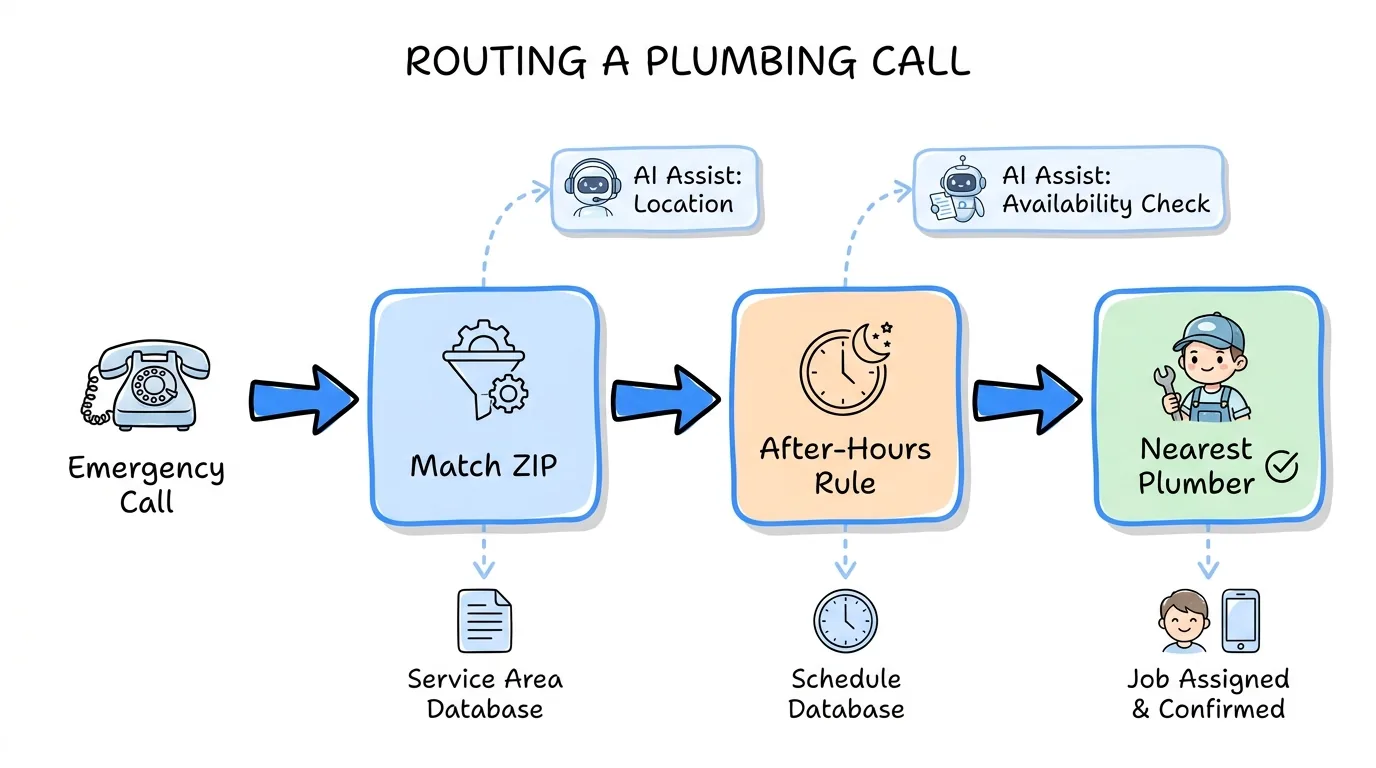
The highest-intent plumbing call you will ever buy is a sewer-backup call at midnight, and it is also the easiest to waste. A missed emergency plumbing call converts elsewhere within minutes because the homeowner keeps dialing. After-hours routing solves this by following the on-call buyer instead of office hours: when the daytime buyer's line closes, the live call rolls down a priority/waterfall order to the next available plumber, then to an answering service, never to voicemail. That is how plumber inbound calls after midnight still find a buyer.
Live transfer and call whisper make this work in practice. A whisper announces the campaign and job type before the call connects, so a plumber woken at 2am knows it is a paid emergency call, not a robocall, and can decide to take it. The on-call plumber gets context in the two seconds before they say hello: the trade, the campaign, and whether it is in their area. For agencies coordinating after-hours coverage across a roster of plumbers, ring-tree routing and call whisper are what turn a chaotic night queue into a clean handoff to whichever buyer can answer.
Geographic Routing for Service-Area Businesses
A plumber only profits on calls inside its drive radius, so geographic routing is the second non-negotiable after after-hours coverage. A burst-pipe call routed 40 miles outside a buyer's service-area business radius is a refund and a wasted truck roll, so ZIP-code and radius matching must gate every campaign before the call connects. The same geographic routing rule prevents a downtown plumber from paying for a call in a suburb they will not drive to.
Good routing layers geographic routing with call routing rules per campaign. Distribution methods like round robin, weighted distribution, and priority/waterfall each suit a different buyer mix: round robin spreads volume across equal-capacity plumbers, weighted distribution favors the best close rate, and waterfall sends each call down a ranked list until one accepts. Ping-post and real-time bidding let buyers compete for each live call so the highest bidder in that ZIP wins it. The sibling guides on pay per call for insurance and pay per call for solar show how the same routing logic adapts to other call verticals.
Filtering, Billing, and Tracking Plumbing Calls
Filtering is what keeps a pay per call plumbing program profitable instead of refund-heavy. The core lever is the call duration filter: a call only bills once it crosses a minimum connected time, usually 60 to 120 seconds, which screens out wrong numbers, hang-ups, and quote-shoppers. An IVR prompt can qualify the caller before the plumber's phone rings, confirming the issue is plumbing and the job is in-area, and duplicate detection stops the same homeowner from billing three campaigns at once. Clean filtering is why exclusive plumbing call leads hold their conversion rate at scale.
Billing fires on the rules you set, typically a flat per-call price once thresholds are met, with automatic buyer billing credit-back on calls flagged duplicate or out-of-area. One cost note that trips up new operators: call tracking pricing is usage-based. A per-number monthly fee plus a per-minute inbound rate sits on top of the flat platform subscription, which starts at $297 per month, so model your number count and call duration filter thresholds before a ramp. Compliance still applies to inbound calls, so TCPA one-to-one consent and TrustedForm documentation should travel with the call record. You can stand up your first campaign on a free 7-day trial of Lead Distro AI, which requires a credit card and can be canceled anytime inside the trial.
Comparison Table: Plumbing Lead Types
| Plumbing lead type | Typical cost | Conversion | Exclusivity | Best for |
|---|---|---|---|---|
| Live pay-per-call (emergency) | $55 to $150 per call | Highest, live intent | Exclusive | Plumbers who answer 24/7 and close on the phone |
| Exclusive call (scheduled) | $35 to $90 per call | High | Exclusive | Buyers with fast callback teams |
| Exclusive form lead | $25 to $45 per lead | Medium to high | Exclusive | Buyers who follow up within minutes |
| Shared form lead | $5 to $15 per lead | Lower | Shared (3 to 5 buyers) | High-volume buyers tolerant of callback races |
Cost ranges are drawn from plumbing pay-per-call networks and home services lead benchmarks and vary by market, job type, and buyer competition; treat them as planning ranges, not fixed prices.
FAQ
What are pay per call plumbing leads?
Pay per call plumbing leads are live inbound phone calls from homeowners needing plumbing service, where the plumber pays only when a qualified call connects and clears a duration and quality threshold. Unlike a shared form lead sold to several plumbers, a pay-per-call lead reaches one buyer with a homeowner already on the line. The model converts well in plumbing because the caller is mid-emergency, not comparison shopping, so close rates beat web leads by a wide margin.
How much do plumbing calls cost?
Exclusive plumbing calls typically run $35 to $150 each, scaled by urgency, exclusivity, and job type, with emergency burst-pipe and sewer calls clearing the top of that range. Live-transfer emergency plumbing leads commonly run $55 to $90, and commercial jobs reach $80 to $150. Because Google Ads CPCs for plumbing average $64.66, a live qualified call is rational math: you skip the click waste and pay for a connected homeowner. The metric that matters is cost per booked job, not raw price per call.
How does after-hours routing work for emergency plumbing calls?
After-hours routing follows the on-call buyer instead of office hours, so a flooding call at midnight rolls to the next available plumber in a priority order rather than dropping to voicemail. A call whisper announces the campaign and job type before the call connects, so the plumber knows it is a paid emergency. This matters because a missed emergency plumbing call converts elsewhere within minutes, and the homeowner stops dialing the moment one plumber answers.
Why do live calls beat shared plumbing leads?
A shared plumbing lead is sold to three to five plumbers at once, triggering a callback race the buyer often loses, while a live pay-per-call lead reaches one plumber with the homeowner already connected. Per InsideSales.com research, leads contacted within five minutes convert at 21 times the rate of those reached after 30 minutes, and plumbing emergencies shrink that window further. Pay-per-call removes the callback race because the homeowner is on the phone, not waiting for the fastest contractor to call back.
Does Lead Distro AI charge per call?
Call tracking on Lead Distro AI is usage-based: a per-tracking-number monthly fee plus a per-minute rate for inbound calls, layered on top of the flat platform subscription that starts at $297 per month. You can model the call-tracking cost against your number count and expected minutes before scaling. A 7-day free trial is available with a credit card required, and you can cancel anytime inside the trial.
Conclusion
Pay per call plumbing leads reward the plumbers and agencies that respect what makes plumbing different: emergency intent, late-night flooding calls, and tight service radii. Buy the live call, score it on intent, route it by ZIP and after-hours rules to a buyer who can answer and close, and bill only on calls that clear your duration bar, and the urgency that defines plumbing turns into booked jobs instead of refunds. Get the routing and filtering right before you scale spend, not during it, because a flood of unqualified calls is how a pay-per-call program leaks margin. To see routing, scoring, after-hours rules, and ping-post bidding in a plumbing workflow, start a free 7-day trial of Lead Distro AI or see the Lead Distro AI product tour, and read the full pay-per-call by vertical guide for how the other trades compare.
Ready to route emergency plumbing calls to the right buyer before the next 2am flood? Start your free 7-day trial and route your first live call in minutes.
About the Author
Founder & CEO of Lead Distro AI & Great Marketing AI
UC Berkeley graduate and former software engineer at Microsoft. Rafael built Lead Distro AI after managing over $10M in ad spend for performance marketing agencies (pay-per-lead and pay-per-call), including running campaigns for Neil Patel. He combines deep software engineering expertise with hands-on performance marketing experience to build tools that help these agencies scale profitably.
About Lead Distro AI
Lead Distro AI: AI-Powered Lead Distribution & Call Tracking That Maximizes ROI
The modern platform for pay-per-lead and pay-per-call agencies. Route, score, and deliver leads with AI-powered automation and real-time P&L tracking. Built for performance marketing agencies and lead buyers across legal, insurance, mortgage, solar, and home services verticals.
4 Distribution Methods
Waterfall, Round Robin, Weighted, Ping-Post
Ping-Post Auctions
Real-time bidding with sub-second routing
Real-Time P&L Reporting
Track revenue, costs, and profit per campaign
Call Tracking
Assign tracking numbers, record calls, and attribute conversions
Lead Scoring
Score every lead before routing to maximize conversion
Partner Portal
Self-serve dashboard for buyers to track leads