Pay-Per-Call for Home Services: HVAC, Plumbing, Roofing & More (2026)
Pay per call home services guide for 2026: what HVAC, plumbing, roofing, appliance repair, and pest control calls are worth, how to filter for quality, and how to route, bill, and track them.

Rafael Hernandez
Founder & CEO
Ex-Microsoft SWE · $10M+ PPL ad spend
I hope you enjoy reading this blog post. If you want to try Lead Distro AI for free, click here.
Author: Rafael Hernandez | Founder & CEO of Lead Distro AI
Pay per call home services is a model where a marketer or network generates inbound phone calls from homeowners who need a trade, such as HVAC repair or a plumber, and a contractor pays only when a qualified call connects. The payout per call is set by trade, urgency, and call duration: emergency plumbing and HVAC calls clear the highest because the homeowner is ready to book, while scheduled-service calls clear lower. For agencies, this is a high-margin model because home-services calls convert at rates most verticals envy. Plumbing inbound calls convert at 15.61%, pest control at 15.52%, and HVAC sales at 15.11%, according to Invoca's 2025 home services call conversion benchmarks.
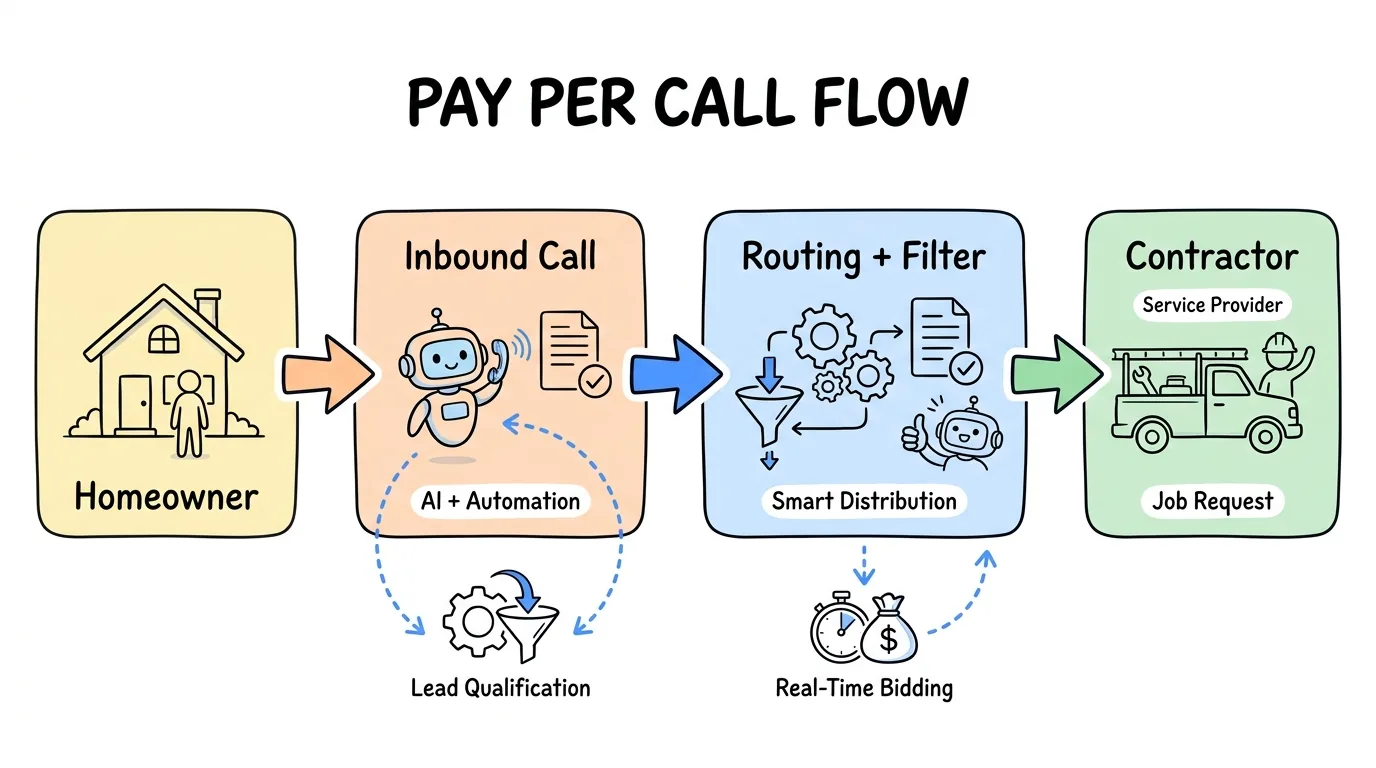
The model works for any home trade where a homeowner picks up the phone: HVAC, plumbing, roofing, appliance repair, pest control, electrical, and water damage restoration. The economics are simple. You buy or generate traffic, a call tracking layer measures which calls qualify, a distribution layer routes each call to the contractor who bid highest for that trade and ZIP code, and billing fires only on calls that meet duration and quality thresholds. The rest of this guide breaks down what each call type is worth, how to filter for quality, how to set up routing and billing, and when pay-per-call beats shared or exclusive leads for contractors.
Key Takeaways
- Pay-per-call payouts are set by trade and urgency. Emergency plumbing and HVAC calls clear the highest; roofing storm calls spike; scheduled appliance-repair and pest-control calls clear lower but convert reliably.
- Home services convert better than almost any vertical. Plumbing, pest control, and HVAC inbound calls convert at over 15%, so the cost-per-acquisition math favors call buyers when filtering is tight.
- Call quality filtering is the whole game. Duration thresholds, IVR qualification, repeat-caller suppression, and business-hours gating separate a billable call from a wasted dial.
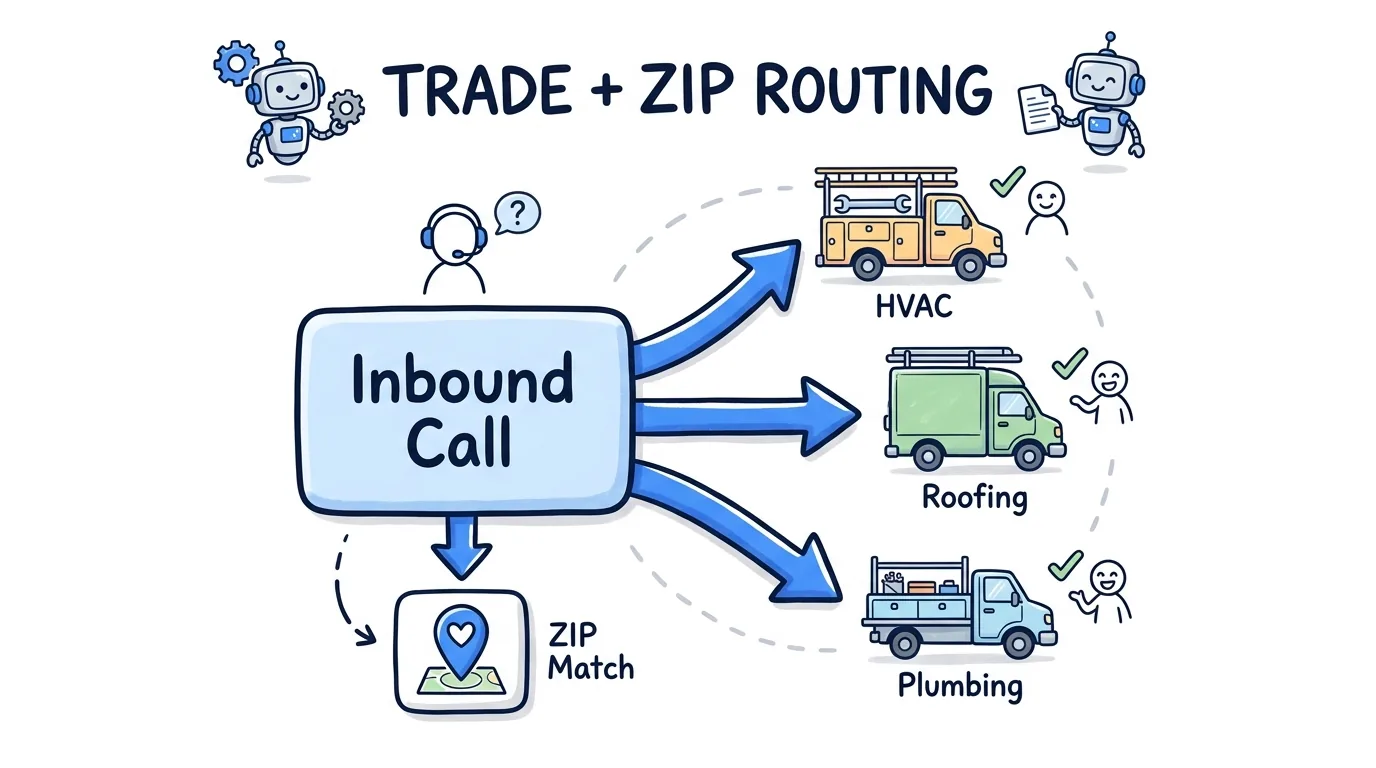
- Routing must match trade and territory. A roofing call sent to an HVAC contractor is a refund and a reputation hit, so trade-and-ZIP routing is non-negotiable.
- Pay-per-call beats shared leads on intent. A homeowner already on the phone outranks a form fill that five contractors are racing to call back.
- Call tracking pricing is usage-based. A per-number monthly fee plus a per-minute inbound rate sits on top of the flat platform subscription, so model your cost per number before you scale.
How Pay-Per-Call Works for Home Services
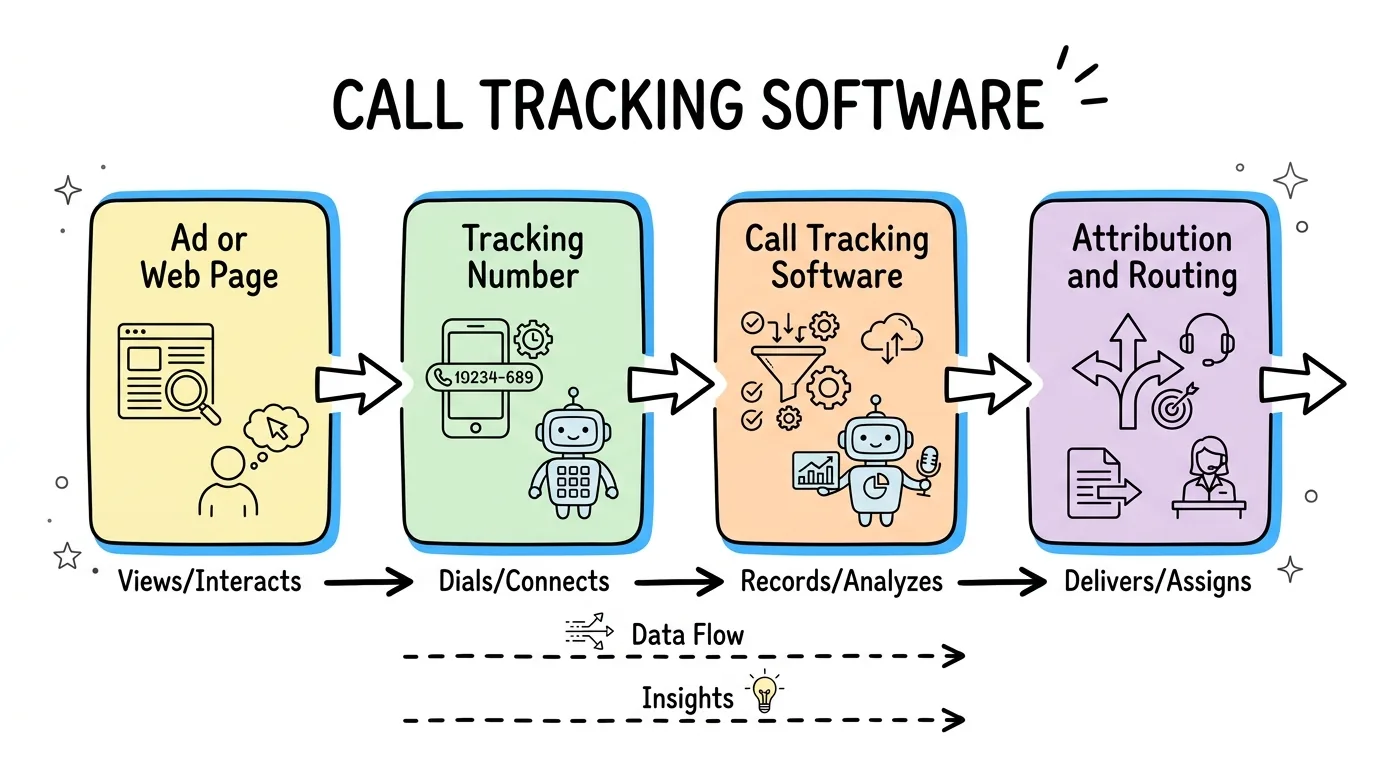
In a pay per call home services program, a publisher generates inbound calls through Google search ads, local service ads, SEO, or call placements on high-intent pages, and a contractor or network buys those calls on a cost-per-call basis. A call tracking platform assigns a unique tracking number to each campaign, records the call, and measures duration and outcome. Only calls that pass the agreed quality bar bill the buyer.
The intent advantage is the reason home services leans on this model. A homeowner who dials a number after searching "AC not cooling" is mid-decision, not browsing. That urgency shows up in conversion data: home-services trades convert phone calls at double-digit rates while web forms in the same trades often sit in the low single digits. The trade-off is volume and price control, which is why the routing, filtering, and billing layers covered below matter more than the traffic source itself. A platform like Lead Distro AI's pay-per-call distribution sits between the traffic and the contractor, scoring and routing each call in real time.
What Each Home-Services Call Type Is Worth
Call payouts track the underlying cost of generating the call and the contractor's job value. Roofing and HVAC command the highest payouts because acquisition costs are high and job tickets run into the thousands. Per LocaliQ's 2025 home services search advertising benchmarks, the average home-services cost-per-click hit $7.85 in 2025, with Roofing & Gutters at $10.70 and Electricians at $12.18 among the most expensive clicks, which pushes the call payouts that recover that spend higher in those trades.
Lead-level costs vary widely by trade tier. WebFX's home services marketing benchmarks put premium services like roofing at $350 to $500 per lead for B2B and $250 to $328 for B2C, standard services like HVAC at $100 to $264, and high-volume services like plumbing and pest control at $76 to $100. Call payouts sit inside those ranges, scaled down because a call is a partial commitment, not a closed job.
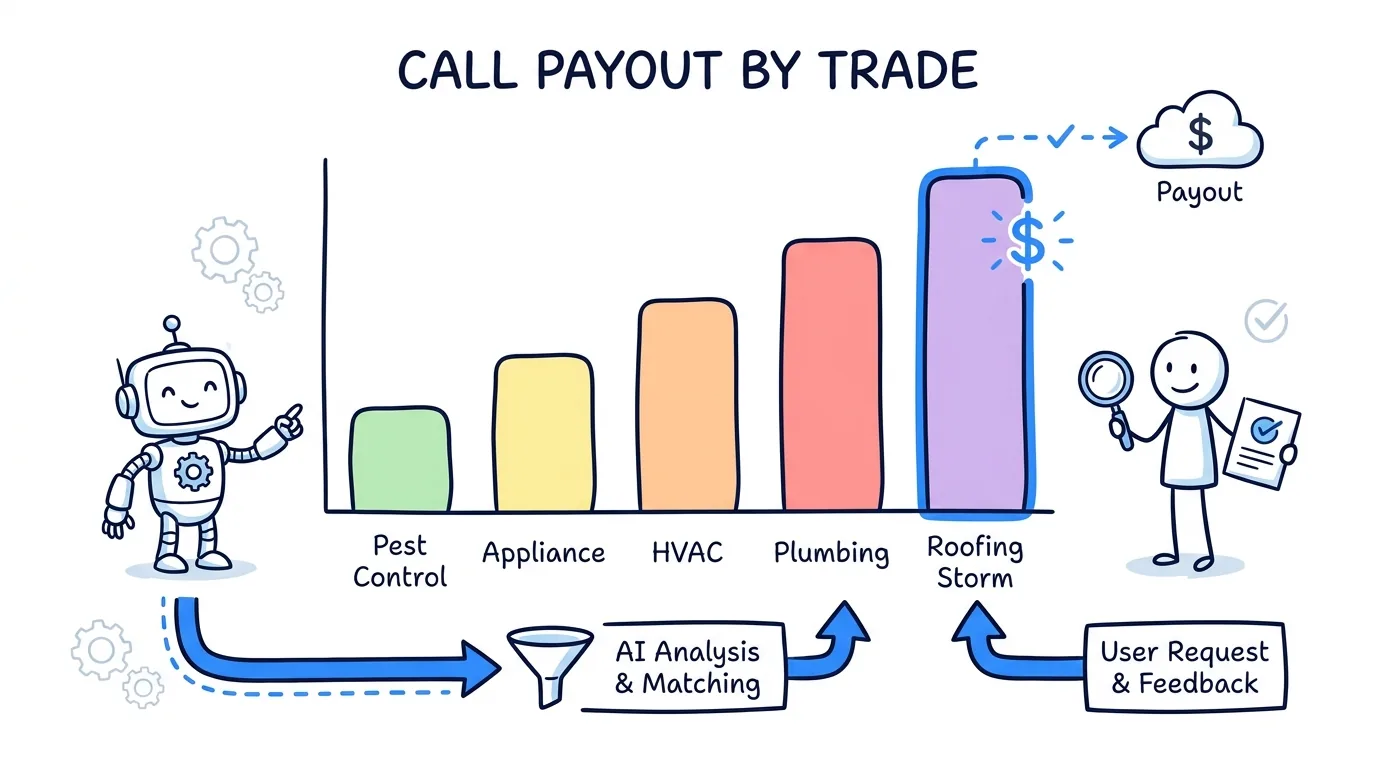
Comparison Table: Home-Services Call Types
| Call type | Typical payout range | Buyer intent | Urgency tier | Notes |
|---|---|---|---|---|
| Roofing (storm/leak) | $$$ Highest | Very high | Emergency / surge | Spikes 5-10x after hailstorms |
| Plumbing (burst/leak) | $$$ High | Very high | Emergency | Converts at 15.61% |
| HVAC (no heat/cool) | $$ High | High | Emergency / seasonal | Converts at 15.11% |
| Appliance repair | $$ Mid | High | Same-day | Steady, lower acquisition cost |
| Pest control | $$ Mid | Medium-high | Scheduled | Converts at 15.52%, recurring revenue |
| Electrical | $$ Mid | High | Mixed | High CPC inflates payout |
Payout ranges are relative tiers, not fixed prices; actual numbers depend on your market, traffic source, and buyer competition.
Call Quality and Filtering
Filtering is what separates a profitable pay per call home services operation from a refund-heavy one. The core lever is the duration threshold: a call only bills the buyer once it crosses a minimum connected time, typically 60 to 120 seconds, which screens out wrong numbers, hang-ups, and quote-shoppers who bounce in ten seconds. On top of duration, an IVR (interactive voice response) prompt can qualify the caller before the contractor's phone rings, asking whether the issue is an emergency, what trade it falls under, and whether the caller is the homeowner.
Repeat-caller suppression matters because the same homeowner dialing three campaigns should not bill three times. A quality layer also gates by business hours and geography, so a call from outside the contractor's service area never connects and never bills. Lead response time then compounds quality: per Martal's 2026 lead generation benchmarks, following up within five minutes makes a lead 9 times more likely to convert, yet 42% of sales reps feel too busy to move that fast. Pay-per-call sidesteps that gap entirely because the homeowner is already connected live, with no callback race to lose.
Routing, Billing, and Tracking Setup
The plumbing of a home-services call program is three layers: routing, billing, and tracking. Routing decides which contractor receives each live call based on trade, ZIP code, bid, and capacity. A roofing call must reach a roofer in that territory, never an HVAC buyer, so trade-and-ZIP matching is the first rule. Distribution methods like Round Robin, Weighted, Priority/Waterfall, and Ping-Post each suit a different buyer mix, and a strong platform lets you run them per campaign rather than forcing one model on every trade.
Billing fires on the rules you set, usually a flat per-call price once the duration and quality thresholds are met, with automatic credit-back on calls flagged as duplicate or out-of-area. Tracking ties it together: each campaign gets a tracking number, every call is recorded and scored, and a dashboard reconciles what billed against what delivered. One note on cost structure that trips up new operators: call tracking pricing is usage-based. A per-number monthly fee plus a per-minute inbound rate sits on top of the flat platform subscription, so model your number count and call minutes before you scale a high-volume roofing campaign. You can stand up your first campaign on a 7-day free trial of Lead Distro AI, which requires a credit card and can be canceled anytime inside the trial.
Pay-Per-Call vs Shared and Exclusive Leads for Contractors
For a contractor deciding where to spend, the choice is rarely pay-per-call versus nothing; it is pay-per-call versus shared form leads versus exclusive form leads. Shared leads are the cheapest and the worst: the same homeowner's form is sold to four or five contractors who all call back, and the homeowner books the first one to reach them. Speed-to-lead data shows why that race is brutal, and most contractors lose it. Exclusive form leads fix the competition problem but still require a callback, and a callback can go to voicemail.
A live call removes both problems. The homeowner is on the phone, has chosen to call, and is not being pitched by four competitors at once. That is why call intent outperforms form intent in home services, where plumbing converts inbound calls at 15.61% per Invoca. The honest trade-off: pay-per-call costs more per unit than a shared lead and gives you less volume control, so it rewards contractors who can answer live and close on the phone. For agencies, the best pay-per-call software for agencies handles the routing and billing that make this margin work, and a pay-per-call network aggregates buyers so a publisher's calls always find a home. For agencies scaling this across clients, see call tracking for agencies, and for the highest-payout call vertical, compare pay-per-call for insurance.
Per-Vertical Breakdown: HVAC, Plumbing, Roofing, Appliance Repair, Pest Control
Each trade behaves differently, so a one-size auction underprices some calls and overpays for others.
HVAC
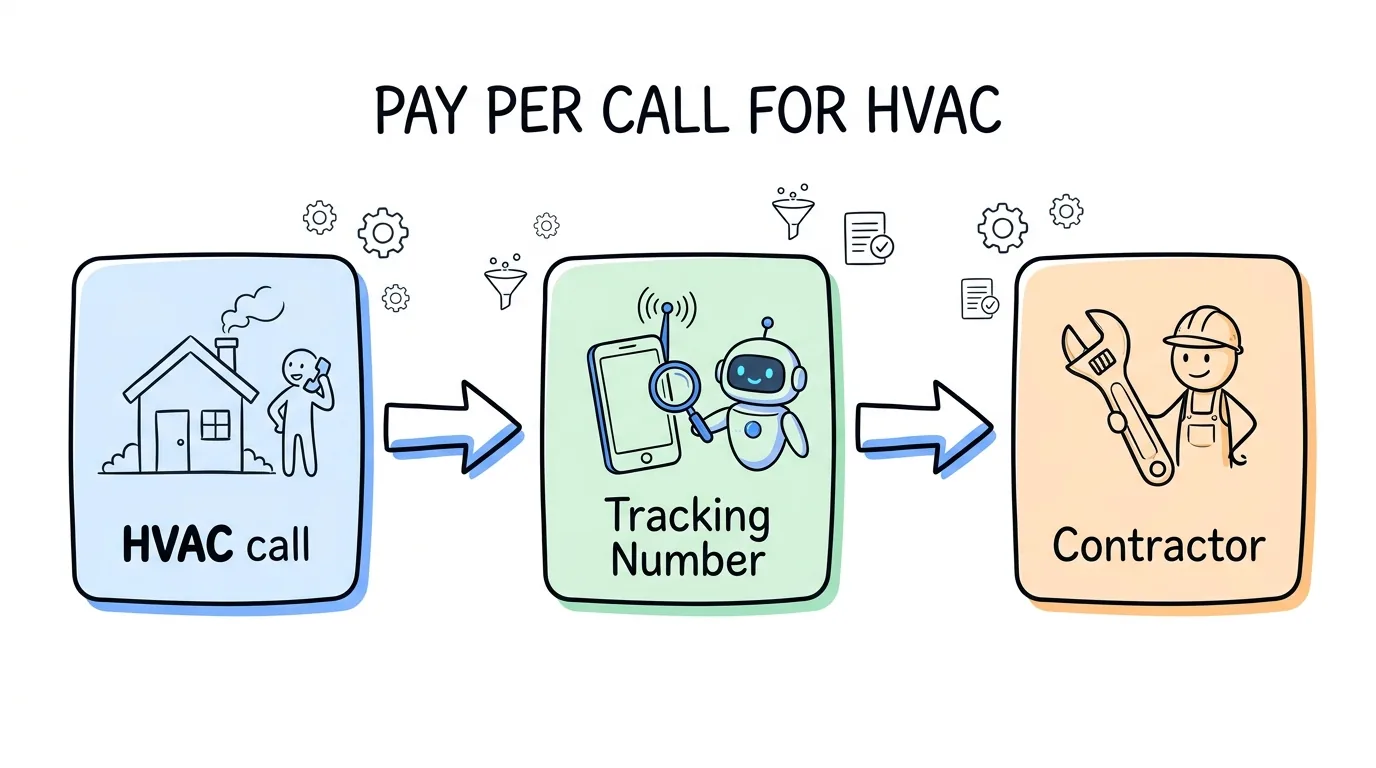
HVAC calls are seasonal and urgency-driven. A "no cooling" call in a July heatwave or a "no heat" call in a January cold snap is an emergency the homeowner needs solved today. HVAC converts inbound calls at 15.11%, and WebFX pegs HVAC leads at $100 to $264 in the B2B tier. Route emergency HVAC calls to contractors with on-call dispatch, and keep a separate scheduled-maintenance pool for lower-urgency tune-up calls. See our HVAC lead generation guide for the demand-generation side, and the full pay-per-call for HVAC playbook for routing, payouts, and call quality.
Plumbing
Plumbing produces the highest call conversion rate in home services at 15.61%, because a burst pipe or a backed-up main is a now-problem. WebFX places plumbing in the high-volume tier at $76 to $100 per lead, so the math favors buyers when filtering is tight. Emergency plumbing calls should route to whoever can dispatch fastest, and duration thresholds screen out the quote-shoppers who call five plumbers in a row. See the full pay-per-call for plumbing breakdown for emergency routing and lead economics.
Roofing
Roofing is the storm-surge trade. A single hailstorm can produce 5 to 10 times normal roofing call volume in 48 hours, and roofing carries the highest acquisition cost, with WebFX putting premium-tier leads at $350 to $500. Roofing also has the highest search CPC among the trades LocaliQ measured at $10.70. The routing system has to absorb surges without dropping calls and let buyers raise bids per ZIP to capture storm pricing. Our roofing leads for contractors guide covers the storm-chasing demand pattern in depth, and the pay-per-call for roofing guide details storm-surge call routing and per-ZIP bidding.
Appliance Repair and Pest Control
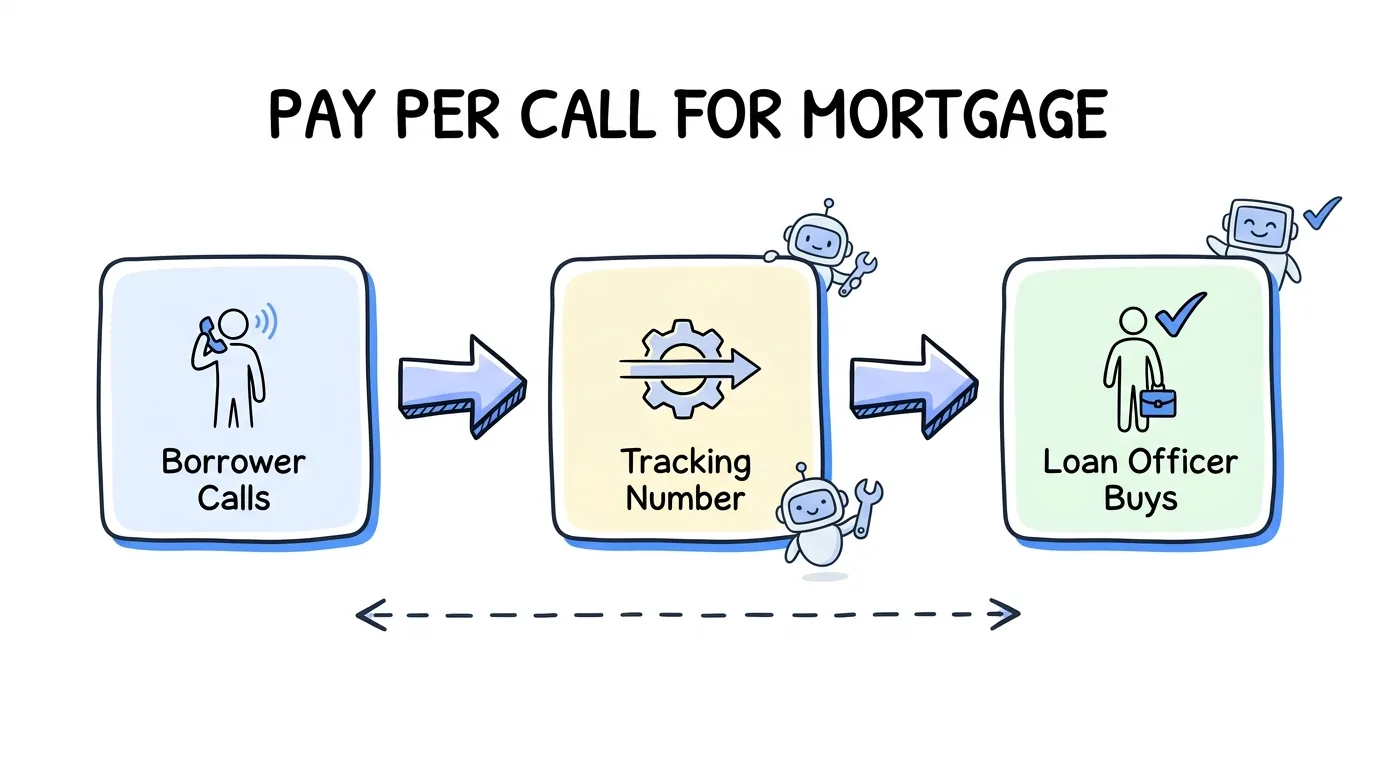
Appliance repair runs steady and same-day: a broken refrigerator or washer is urgent but lower-ticket, so payouts sit in the mid tier with reliable volume. Pest control is the recurring-revenue trade, converting calls at 15.52% and rewarding contractors who turn a one-time call into an annual service contract, which is why pest-control buyers often bid aggressively despite the lower per-job value. Both trades pair well with a call tracking layer built for pay-per-call agencies so every billable minute is measured, and home-services sellers routing data leads alongside calls can compare options in our best ping post software for home services roundup. Buyers and sellers can browse the full home services lead distribution setup to see how trade pools, ZIP routing, and emergency-vs-scheduled auctions fit together. Pay-per-call works beyond the trades too: agencies in financial verticals can apply the same routing model to refinance and purchase-intent calls in our pay-per-call for mortgage guide.
"In home services, the contractor who is already talking to the homeowner has effectively won the job. Pay-per-call converts better than any form-based channel we run because it collapses the speed-to-lead race down to zero. The operators who win this model treat call quality filtering as their core product, not an afterthought."
Rafael Hernandez, Founder & CEO of Lead Distro AI
Frequently Asked Questions
What is pay-per-call for home services?
Pay-per-call for home services is a marketing model where a publisher or network generates inbound phone calls from homeowners who need a trade like HVAC, plumbing, or roofing, and the contractor pays only when a qualified call connects and meets agreed quality thresholds. The payout per call is set by trade, urgency, and call duration. Emergency plumbing and HVAC calls clear the highest because the homeowner is ready to book, while scheduled-service calls clear lower. It works because home-services calls carry high buyer intent and convert at over 15% in trades like plumbing, pest control, and HVAC.
How much is a home-services pay-per-call lead worth?
Payouts track the trade's acquisition cost and job value. Roofing and HVAC command the highest payouts because clicks are expensive and job tickets run into the thousands; LocaliQ measured roofing search CPC at $10.70 and electricians at $12.18 in 2025. WebFX places roofing leads at $350 to $500 per lead in the premium tier, HVAC at $100 to $264 in the standard tier, and plumbing and pest control at $76 to $100 in the high-volume tier. Call payouts sit inside those ranges, scaled down because a call is a partial commitment rather than a closed job, and the exact number depends on your market and buyer competition.
How do you filter pay-per-call leads for quality?
The core filter is a connected-duration threshold, usually 60 to 120 seconds, so only calls that pass a minimum talk time bill the buyer. That screens out wrong numbers, hang-ups, and ten-second quote-shoppers. On top of duration, an IVR prompt can qualify the caller before the contractor's phone rings, repeat-caller suppression stops the same homeowner from billing multiple campaigns, and business-hours and geographic gating block out-of-area or after-hours calls. Tight filtering is what separates a profitable program from a refund-heavy one, so treat it as the core product rather than a setting.
Does call tracking for home services have per-call fees?
Call tracking pricing is usage-based, which means a per-number monthly fee plus a per-minute rate for inbound calls sits on top of the flat platform subscription. The platform subscription itself starts at $297 per month, and the call tracking usage is an additional layer that scales with how many tracking numbers you run and how many minutes your campaigns generate. Model your number count and expected call minutes before scaling a high-volume campaign like storm-season roofing, because a 10x surge week raises your usage bill alongside your revenue.
Is pay-per-call better than shared leads for contractors?
For most home-services contractors, yes, on a per-conversion basis. Shared form leads are sold to four or five contractors who all call back, and the homeowner books whoever reaches them first, which is a speed-to-lead race most contractors lose. A live pay-per-call connection removes the callback entirely: the homeowner is already on the phone and is not being pitched by competitors simultaneously. The trade-off is that pay-per-call costs more per unit and offers less volume control, so it rewards contractors who answer live and close on the phone rather than those relying on callbacks.
Which home-services trades work best for pay-per-call?
The trades with the highest call conversion and clearest urgency perform best: plumbing converts inbound calls at 15.61%, pest control at 15.52%, and HVAC at 15.11%, per Invoca's 2025 benchmarks. Roofing is the highest-payout trade because of storm-driven surges and high acquisition costs, appliance repair runs steady and same-day at mid-tier payouts, and electrical carries high CPCs that inflate call value. Any trade where a homeowner picks up the phone with a now-problem fits the model, which is why home services is one of the strongest pay-per-call verticals overall.
The Bottom Line
Pay-per-call is one of the strongest models in home services because the homeowner is already on the phone with a now-problem, which collapses the speed-to-lead race that shared and exclusive form leads lose. The payout per call is set by trade and urgency: roofing storm calls and emergency plumbing and HVAC clear the highest, while appliance repair and pest control deliver steady mid-tier volume that converts reliably. The operators who win treat call quality filtering, trade-and-ZIP routing, and usage-based cost modeling as the core of the business rather than afterthoughts. Get those three layers right and the double-digit conversion rates in plumbing, pest control, and HVAC turn high-intent calls into the highest-margin channel a contractor or agency can run.
To stand up your first home-services campaign, start a 7-day free trial of Lead Distro AI and route your first HVAC, plumbing, or roofing call today.
Home-services pay-per-call routing, call tracking, and trade-and-ZIP distribution are included on every Lead Distro AI plan. Walk through the product tour to see emergency-vs-scheduled call pools, AI scoring, and usage-based call tracking in one dashboard.
About the Author
Founder & CEO of Lead Distro AI & Great Marketing AI
UC Berkeley graduate and former software engineer at Microsoft. Rafael built Lead Distro AI after managing over $10M in ad spend for performance marketing agencies (pay-per-lead and pay-per-call), including running campaigns for Neil Patel. He combines deep software engineering expertise with hands-on performance marketing experience to build tools that help these agencies scale profitably.
About Lead Distro AI
Lead Distro AI: AI-Powered Lead Distribution & Call Tracking That Maximizes ROI
The modern platform for pay-per-lead and pay-per-call agencies. Route, score, and deliver leads with AI-powered automation and real-time P&L tracking. Built for performance marketing agencies and lead buyers across legal, insurance, mortgage, solar, and home services verticals.
4 Distribution Methods
Waterfall, Round Robin, Weighted, Ping-Post
Ping-Post Auctions
Real-time bidding with sub-second routing
Real-Time P&L Reporting
Track revenue, costs, and profit per campaign
Call Tracking
Assign tracking numbers, record calls, and attribute conversions
AI Lead Scoring
Score every lead before routing to maximize conversion
Partner Portal
Self-serve dashboard for buyers to track leads