How to Start a Pay Per Call Agency in 2026 (Complete Guide)
Step-by-step guide to launching a pay per call agency. Covers vertical selection, call tracking setup, traffic sources, buyer acquisition, and scaling.

Rafael Hernandez
Founder & CEO
Ex-Microsoft SWE · $10M+ PPL ad spend
I hope you enjoy reading this blog post. If you want to try Lead Distro AI for free, click here.
Author: Rafael Hernandez | Founder & CEO of Lead Distro AI
Starting a pay per call agency requires choosing high-value verticals, setting up call tracking infrastructure, driving phone traffic through paid or organic channels, and finding buyers willing to pay for qualified inbound calls. The business model is one of the most profitable in performance marketing because phone calls convert 10 to 15 times more frequently than web form leads, according to BIA Advisory Services. That conversion gap means buyers will pay $50 to $400 per qualified call depending on the vertical, compared to $5 to $50 for a typical web lead.
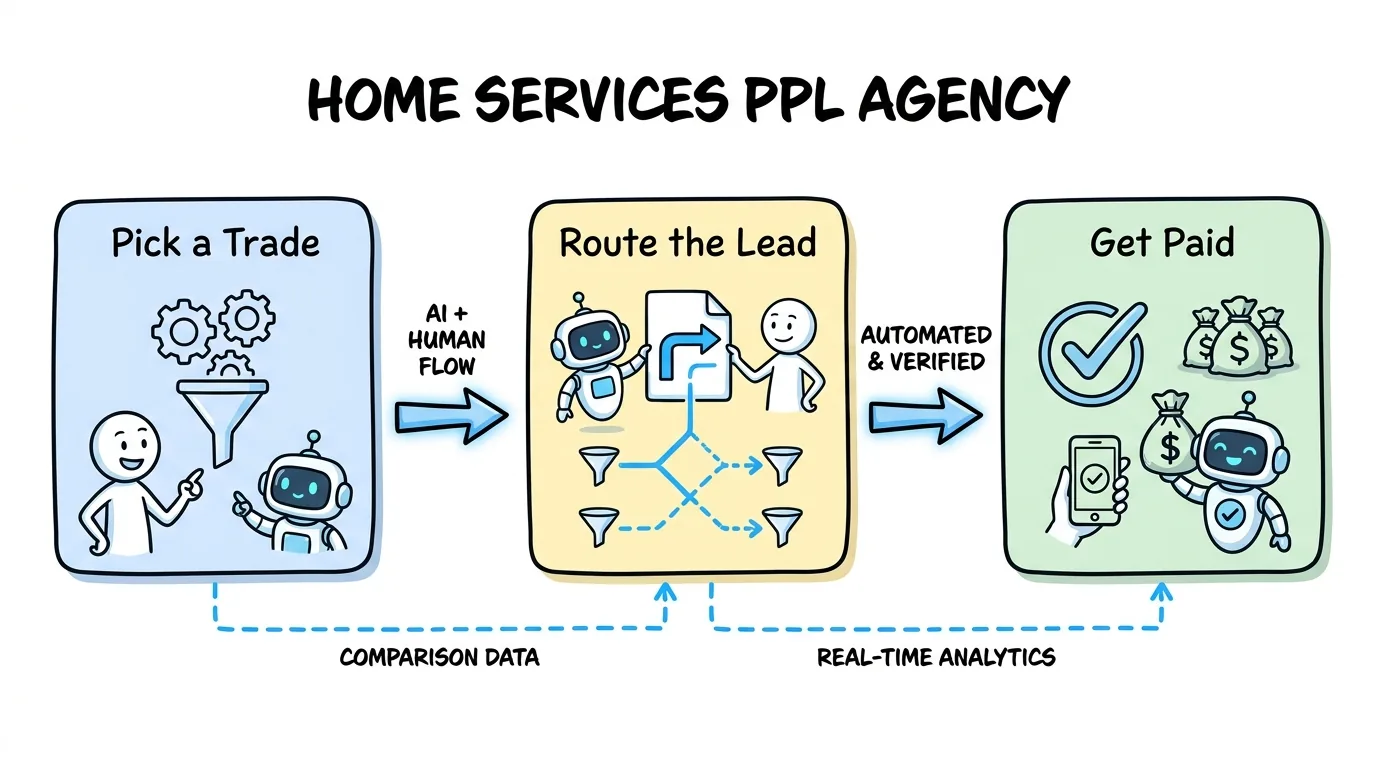
A pay per call agency acts as the bridge between advertising (Google Ads, Facebook, local SEO) and service businesses that need inbound phone calls to close deals. You generate the calls, qualify them through IVR filters and duration thresholds, then route them to buyers using distribution software like Lead Distro AI. This guide walks through every step of launching your agency from scratch, including vertical selection, infrastructure, traffic acquisition, compliance, and scaling with automation.
Key Takeaways
- Pay per call agencies earn $50 to $400 per qualified call depending on the vertical, with legal and insurance commanding the highest payouts.
- You need three core components to launch: call tracking software, a traffic source (paid ads or SEO), and at least one call buyer.
- Legal, insurance, home services, and healthcare are the four highest-paying verticals for pay per call because each inbound call represents a potential high-ticket client.
- TCPA compliance is non-negotiable. Every call must follow consent rules, recording disclosure laws, and Do Not Call list protocols.
- Technology separates profitable agencies from struggling ones. Automated call routing, call scoring, and real-time reporting let you scale past 100 calls per day without adding headcount.
- Starting capital is low compared to other agency models. You can launch with $2,000 to $5,000 in ad spend plus a call tracking subscription.
What Is a Pay Per Call Agency?
A pay per call agency is a performance marketing business that generates inbound phone calls for advertisers and gets paid a fixed fee for each qualified call delivered. Unlike traditional marketing agencies that charge retainers or management fees, pay per call agencies operate on pure performance: no qualified call, no payment.
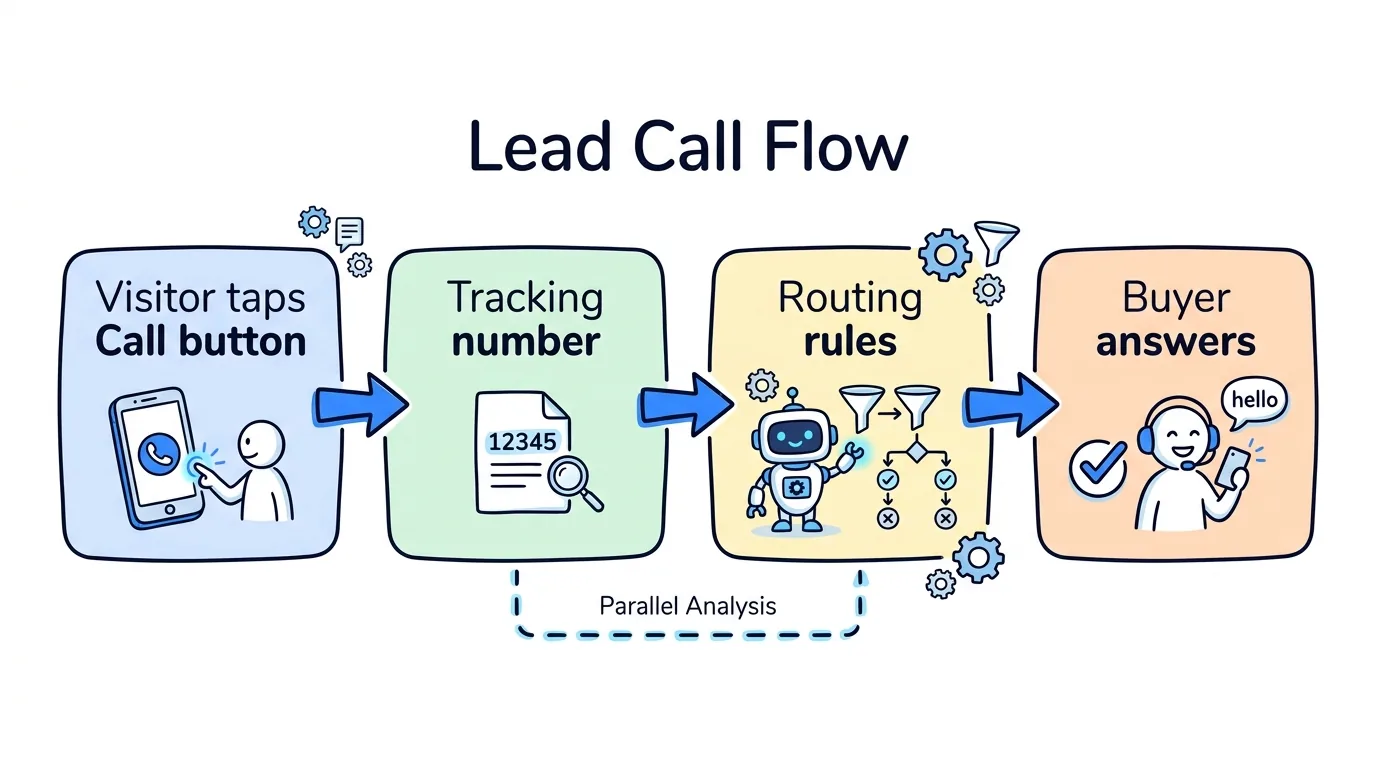
The agency owns the traffic generation process. You build landing pages, run Google Ads with call extensions, create Facebook click-to-call campaigns, or rank local SEO pages. When a prospect dials your tracking number, the call routes through your platform, gets qualified against buyer criteria, and transfers to the advertiser. If the call meets duration and quality thresholds, you earn your payout.
This model works for both pay per call and pay per lead agencies because the infrastructure overlaps. Many agencies run both call and form-based campaigns across their verticals, using the same distribution platform to manage both channels.
Pay Per Call vs Pay Per Lead: Key Differences
Understanding where pay per call fits among lead generation business models helps you decide whether to focus on calls, form leads, or both.
| Factor | Pay Per Call Agency | Pay Per Lead Agency |
|---|---|---|
| Average payout | $50 to $400 per call | $5 to $50 per lead |
| Conversion rate for buyer | 25% to 50% | 5% to 15% |
| Ease of entry | Moderate (needs call tracking) | Lower (web forms only) |
| Scalability | High (automated routing) | High (automated distribution) |
| Tech requirements | Call tracking, IVR, routing | Form capture, ping post, CRM |
| Buyer trust | Higher (real-time conversation) | Lower (stale lead risk) |
| Volume needed for $10K/mo | 50 to 200 calls | 500 to 2,000 leads |
Pay per call commands premium payouts because the buyer speaks directly with a prospect who is actively seeking help.
Step 1: Choose High-Value Verticals
The vertical you choose determines your revenue ceiling. Focus on industries where a single customer is worth thousands of dollars to the business receiving the call, because those buyers will pay the most per qualified call.
Top verticals by average call payout:
- Legal (personal injury, mass tort): $150 to $400 per call. Law firms pay aggressively because a single case can generate $100,000 or more in fees.
- Insurance (auto, health, Medicare): $25 to $80 per call. High volume with consistent demand year-round, especially during open enrollment.
- Home services (HVAC, plumbing, roofing): $30 to $100 per call. Seasonal spikes create urgency and willingness to pay premium rates.
- Healthcare (rehab, dental, elective): $50 to $150 per call. Sensitive verticals with strict compliance requirements but strong payouts.
Start with one vertical. Build expertise in what converts, what buyers want, and what compliance rules apply before expanding.
Step 2: Set Up Call Tracking Infrastructure
Your call tracking infrastructure is the operational backbone of your pay per call agency. You need dynamic number insertion for web traffic, dedicated tracking numbers for offline campaigns, IVR menus for pre-qualification, and a call routing engine that distributes calls to buyers based on rules you define.
Essential components:
- Tracking numbers. Purchase local or toll-free numbers from a telephony provider or your distribution platform. Use dynamic number insertion on landing pages to attribute calls to specific campaigns.
- IVR (Interactive Voice Response). Set up automated menus that filter callers by intent, location, and case type before they reach a buyer. This protects your buyers from unqualified calls and keeps your conversion rates high.
- Call recording. Required for dispute resolution and quality assurance. Always disclose recording per state law.
- Distribution platform. Lead Distro AI handles call routing with sub-second transfers, geographic targeting, time-of-day rules, and capacity management so you never send more calls than a buyer can handle.
Step 3: Drive Call Traffic
Traffic generation is where your marketing skills translate directly to revenue. Every call that meets buyer criteria earns you a payout, so optimizing for call volume and call quality simultaneously is the core challenge.
Primary traffic sources for pay per call:
- Google Ads call extensions and call-only campaigns. The highest-intent paid channel. Searchers typing "emergency plumber near me" or "personal injury lawyer free consultation" are ready to call. According to Google's internal data published in Think with Google, 70% of mobile searchers have used click-to-call from search results.
- Facebook and Instagram click-to-call ads. Lower intent than search but higher volume and lower CPC. Best for insurance, solar, and home services where broad targeting still produces qualified callers.
- Local SEO. Build city-specific landing pages optimized for "[service] + [city]" keywords. Organic traffic produces the highest-margin calls because there is no ad spend.
- Programmatic display. Banner and native ads with click-to-call work at scale for insurance and legal verticals during high-demand seasons.
Step 4: Find Call Buyers
Your buyers are the advertisers, service businesses, or call centers that pay you for each qualified call. Finding reliable buyers is the revenue bottleneck for most new pay per call agencies.
Where to find call buyers:
- Pay per call networks. Networks connect publishers (you) with advertisers who want call traffic. Start here to generate immediate revenue while building direct relationships.
- Direct outreach to local businesses. HVAC companies, law firms, and dental practices in your target area often pay more per call than networks because you eliminate the middleman.
- Performance marketing forums and communities. STM Forum, AffiliateFix, and industry Slack groups connect publishers with advertisers seeking call traffic.
- Existing lead buyers who want to add calls. If you already sell form leads, pitch your buyers on adding a call channel at higher payouts.
As your volume grows, direct relationships with buyers become more profitable than network offers. Use your distribution platform to manage multiple buyers per vertical, setting priority routing, capacity caps, and payout tiers for each.
Step 5: Set Call Qualification Rules
Qualification rules protect your buyers from junk calls and protect your reputation as a quality traffic source. Every buyer relationship should have clearly defined criteria before you send your first call.
Standard qualification parameters:
- Minimum call duration. The most common threshold is 90 to 120 seconds. Calls shorter than this are typically wrong numbers, hangups, or unqualified prospects.
- IVR pre-screening. Route callers through automated questions ("Press 1 if you were in an accident in the last 30 days") to filter before connecting to a buyer.
- Geographic targeting. Buyers only want calls from prospects in their service area. Use caller ID and IVR zip code collection to enforce geographic rules.
- Time-of-day windows. Most buyers can only accept calls during business hours. Configure your routing to send calls to voicemail or overflow buyers outside those windows.
- Duplicate suppression. Block the same caller from generating multiple payouts within a rolling window (typically 30 to 90 days).
Step 6: Price Your Calls
Pricing your calls correctly determines whether your agency is profitable or burning through ad spend. Your pricing must cover your cost per call (traffic cost divided by calls generated) plus a healthy margin.
Typical CPA ranges by vertical (2025-2026):
| Vertical | Publisher Payout | Buyer Pays (Direct) | Your Margin |
|---|---|---|---|
| Personal Injury | $150 to $300 | $200 to $400 | 30% to 50% |
| Auto Insurance | $25 to $50 | $40 to $80 | 35% to 45% |
| HVAC / Plumbing | $30 to $75 | $50 to $100 | 25% to 40% |
| Medicare | $30 to $60 | $50 to $90 | 30% to 40% |
| Rehab / Addiction | $50 to $100 | $80 to $150 | 30% to 50% |
When working through networks, expect 20% to 40% lower payouts compared to direct buyer relationships. That network margin is the cost of lead liquidity and buyer access while you scale.
Step 7: Ensure Compliance
Pay per call agencies must follow federal and state regulations governing phone marketing. Non-compliance can result in fines of $500 to $1,500 per violation under the Telephone Consumer Protection Act (TCPA), which adds up quickly at scale. If you place outbound calls, caller ID reputation matters too: our guide to STIR/SHAKEN for pay-per-call explains why calls get labeled Spam Likely and how to fix it.
Compliance essentials:
- TCPA consent. If you are initiating outbound calls or texts to generate inbound callbacks, you need prior express written consent. Inbound calls initiated by the consumer are generally exempt, but your marketing must not be misleading.
- Call recording disclosure. Twelve U.S. states require all-party consent for recording (California, Connecticut, Florida, Illinois, Maryland, Massachusetts, Michigan, Montana, New Hampshire, Oregon, Pennsylvania, Washington). Your IVR must include a recording disclosure in those states.
- Do Not Call (DNC) compliance. Scrub all outbound lists against the National DNC Registry. Inbound-only agencies have lower DNC exposure but must still honor consumer opt-out requests.
- State licensing. Some states require licenses for lead generation in regulated industries (insurance, legal). Verify requirements in each state where you operate.
The FTC's Telemarketing Sales Rule and the TCPA are the two governing frameworks. Consult a compliance attorney before scaling past your initial market.
Step 8: Scale with Technology
Manual call management breaks past 50 to 100 calls per day. Scaling a pay per call agency profitably requires automation at every stage: call routing, buyer management, reporting, and quality assurance.
Technology stack for scaling:
- Automated call distribution. Route calls to the highest-paying available buyer in real time based on geography, capacity, and time of day. Lead Distro AI's weighted and priority routing handles this without manual intervention.
- Call scoring. Transcription and sentiment analysis automatically flag high-quality calls and identify which campaigns produce the best prospects.
- Real-time dashboards. Monitor spend, revenue, and margin by campaign, vertical, and buyer in real time. Catch unprofitable campaigns within hours, not weeks.
- Multi-buyer distribution. As you add buyers in the same vertical, route calls based on priority tiers, performance history, and available capacity. This maximizes fill rate and revenue per call.
Neil Patel, co-founder of NP Digital, emphasizes the compounding value of long-tail marketing for performance agencies: "The agencies that win are the ones that build systems, not just campaigns. When you automate qualification and routing, you can scale traffic without scaling headcount."
Best Pay Per Call Networks to Join
While building direct buyer relationships, joining established networks gives you immediate revenue and access to tested offers. Here are the top pay per call networks for new agencies in 2026:
- Ringba. Call tracking software with self-serve signup, real-time bidding (Enterprise plan), call analytics, and publisher management. Ringba also runs a private referral network of call buyers and sellers through PayPerCallNetworks.com (as of September 2026).
- Invoca. Enterprise-focused platform with AI-powered call tracking and conversation intelligence, plus quote-based plans for pay-per-call and affiliate marketing. Best for agencies working with larger advertisers.
- Retreaver. Call tracking and routing software with real-time bidding that routes calls to the highest-bidding buyers. Full API access for tech-savvy publishers.
- Aragon Advertising. A performance network to evaluate for pay per call offers. Confirm its current verticals and terms directly.
- Digital Market Media. A performance network to evaluate for pay per call offers. Confirm its verticals, payouts, and payment terms directly.
Start by running 2 to 3 network offers in your chosen vertical to learn what converts, what call durations are realistic, and what buyer expectations look like. Then use that data to pitch direct buyer relationships at higher payouts.
FAQ
How much can you earn with a pay per call agency?
A pay per call agency generating 10 to 20 qualified calls per day in a high-value vertical like personal injury can earn $1,500 to $8,000 daily. Annual revenue of $500,000 to $2 million is achievable within 12 to 18 months for agencies that master one vertical before expanding. Your ceiling depends on traffic volume, vertical payouts, and whether you work through networks or maintain direct buyer relationships.
What's the minimum investment to start a pay per call agency?
You can launch with $2,000 to $5,000 covering initial ad spend ($1,500 to $3,000 for testing), a call tracking platform subscription ($99 to $297 per month), and landing page hosting. Some agencies start with as little as $500 by focusing on local SEO pages that generate organic call traffic, eliminating the ad spend requirement entirely.
Which verticals pay the most per call?
Personal injury law leads the pack at $150 to $400 per qualified call, followed by mass tort ($100 to $300), addiction treatment ($50 to $150), auto insurance ($25 to $80), and HVAC or home services ($30 to $100). The highest payouts correlate with the lifetime customer value for the business receiving the call. Legal and healthcare verticals pay the most because a single client is worth tens of thousands.
Do I need my own call center?
No. A pay per call agency generates and routes calls, it does not answer them. Your buyers (law firms, insurance agents, service companies) handle the sales conversation. You focus entirely on generating qualified inbound calls through advertising and routing them to buyers. Some agencies add a thin qualification layer using IVR or live operators for pre-screening, but this is optional.
How do I find call buyers for my pay per call agency?
Start with pay per call networks for immediate access to advertisers. Then cold-call local businesses in your vertical: "I generate 20 qualified calls per week from people searching for [service] in [city]. Would you like to receive some?" Direct outreach to service businesses, joining performance marketing communities, and attending industry conferences like LeadsCon are the three fastest paths to direct buyer relationships.
Is pay per call better than pay per lead?
Pay per call delivers higher per-unit revenue ($50 to $400 per call versus $5 to $50 per lead) and higher buyer satisfaction because calls represent real-time intent. However, pay per lead offers higher volume potential and lower technical barriers to entry. Many successful agencies run both models simultaneously, using the same distribution platform to manage calls and form leads across their verticals.
How long does it take to become profitable?
Most pay per call agencies reach profitability within 60 to 90 days if they start with paid traffic in a proven vertical. The first 30 days typically go toward testing ad creatives, optimizing IVR flows, and finding the right buyer fit. By month two, top-performing campaigns are identified and scaled. Agencies starting with organic SEO traffic take longer (4 to 6 months) but achieve higher margins once pages rank.
Conclusion
Starting a pay per call agency in 2026 is one of the most accessible paths into performance marketing. The model rewards execution over capital: choose a high-value vertical, set up call tracking, drive traffic, find buyers, and automate routing as you scale. Your competitive advantage comes from building systems that qualify and distribute calls faster and more accurately than competitors working manually.
The agencies that scale past six figures build their operations on a distribution platform that handles routing, capacity management, and real-time reporting automatically. Start your 7-day free trial and configure your first call routing campaign in minutes.
For a deeper look at the complementary model, read our guide on how to start a pay per lead agency to see how form-based leads fit alongside your call business.
Ready to route your first pay per call campaign? Start your 7-day free trial and set up automated call distribution, IVR qualification, and multi-buyer routing in one platform.
About the Author
Founder & CEO of Lead Distro AI & Great Marketing AI
UC Berkeley graduate and former software engineer at Microsoft. Rafael built Lead Distro AI after managing over $10M in ad spend for performance marketing agencies (pay-per-lead and pay-per-call), including running campaigns for Neil Patel. He combines deep software engineering expertise with hands-on performance marketing experience to build tools that help these agencies scale profitably.
About Lead Distro AI
Lead Distro AI: AI-Powered Routing for Your Leads, Calls, and Appointments
The modern platform for pay-per-lead and pay-per-call agencies. Route, score, and deliver leads with AI-powered automation and real-time P&L tracking. Built for performance marketing agencies and lead buyers across legal, insurance, mortgage, solar, and home services verticals.
4 Distribution Methods
Waterfall, Round Robin, Weighted, Ping-Post
Ping-Post Auctions
Real-time bidding with sub-second routing
Real-Time P&L Reporting
Track revenue, costs, and profit per campaign
Call Tracking
Assign tracking numbers, record calls, and attribute conversions
Lead Scoring
Score every lead before routing to maximize conversion
Partner Portal
Self-serve dashboard for buyers to track leads