Lead Generation Software: The 2026 Buyer's Guide for Agencies
The 2026 buyer's guide to lead generation software for agencies, brokers, and lead sellers: capture, qualify, and distribute leads, plus how to choose.

Rafael Hernandez
Founder & CEO
Ex-Microsoft SWE · $10M+ PPL ad spend
I hope you enjoy reading this blog post. If you want to try Lead Distro AI for free, click here.
Author: Rafael Hernandez | Founder & CEO of Lead Distro AI
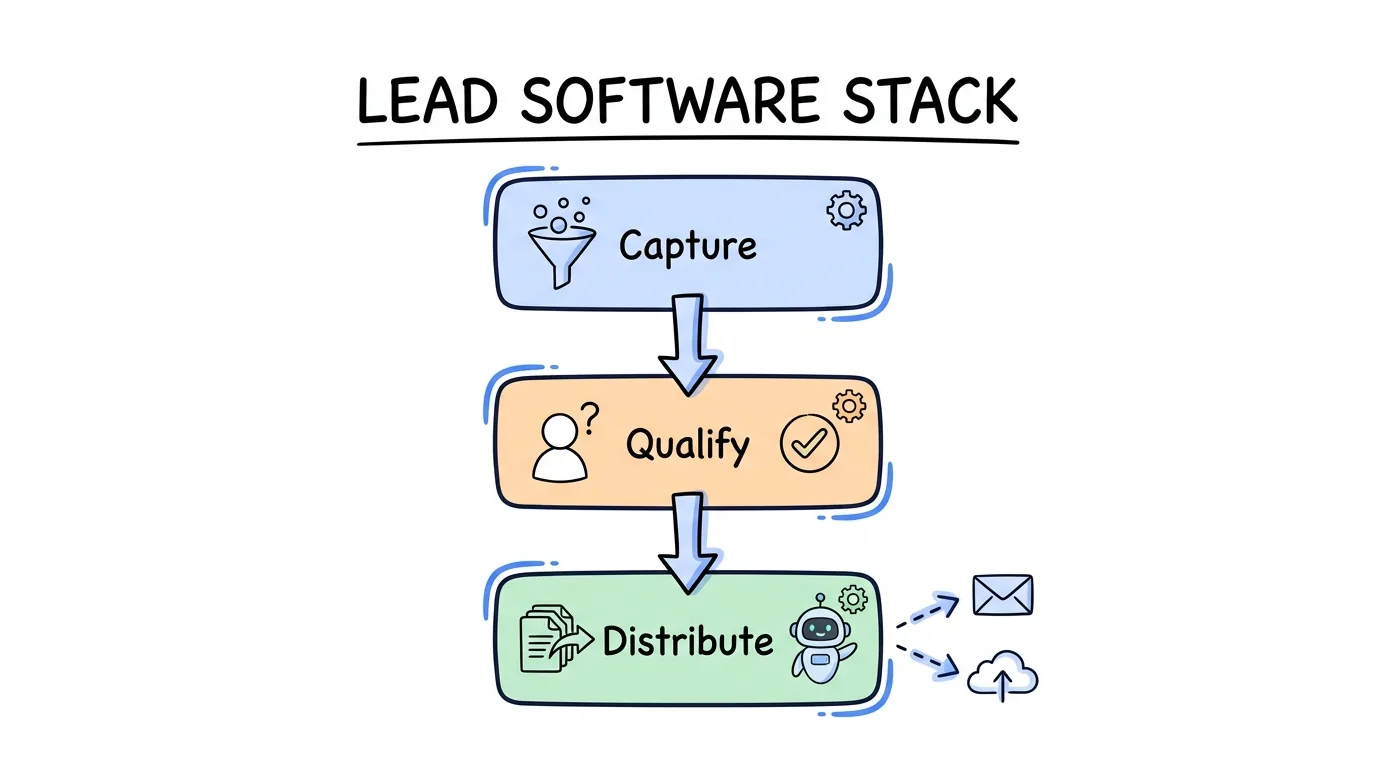
Lead generation software is any platform that helps you capture, qualify, and route the people who raise their hand for an offer. For agencies, brokers, and lead sellers, the category splits into three layers: capture tools that collect the lead, qualification tools that score and validate it, and distribution tools that deliver it to the right buyer or sales team. Most guides only cover the first layer because they are written for small businesses generating leads for themselves. If you resell leads or run leads for clients, the distribution layer is where your margin lives, and it is the piece generic roundups ignore.
According to Grand View Research, the global lead management market was valued in the billions and is projected to grow at a double digit compound annual rate through 2030 (Grand View Research). That growth is why the software landscape is crowded and confusing. This guide breaks lead generation software into clear categories, shows which tools fit agencies versus solo operators, and gives you a buying checklist so you pick the right stack the first time. If you already generate leads and need the distribution layer, you can start your free trial and route your first lead in minutes.
Key Takeaways
- Lead generation software spans three layers: capture, qualification, and distribution. Agencies and lead sellers need all three, not just a form builder.
- Most "best lead generation software" lists are built for SMBs self generating leads, so they skip the distribution and buyer billing layer that resellers actually need.
- The best lead generation platform for an agency routes leads to multiple buyers, tracks profit per source, and handles returns and duplicate detection automatically.
- Lead gen software pricing ranges from free form builders to enterprise distribution platforms; Lead Distro AI starts at $297 per month with a 7 day free trial.
- Lead Distro AI is lead generation software for agencies built for the distribution layer: four routing methods, real time profit reporting, and an AI assistant you run in plain English.
What Lead Generation Software Actually Does
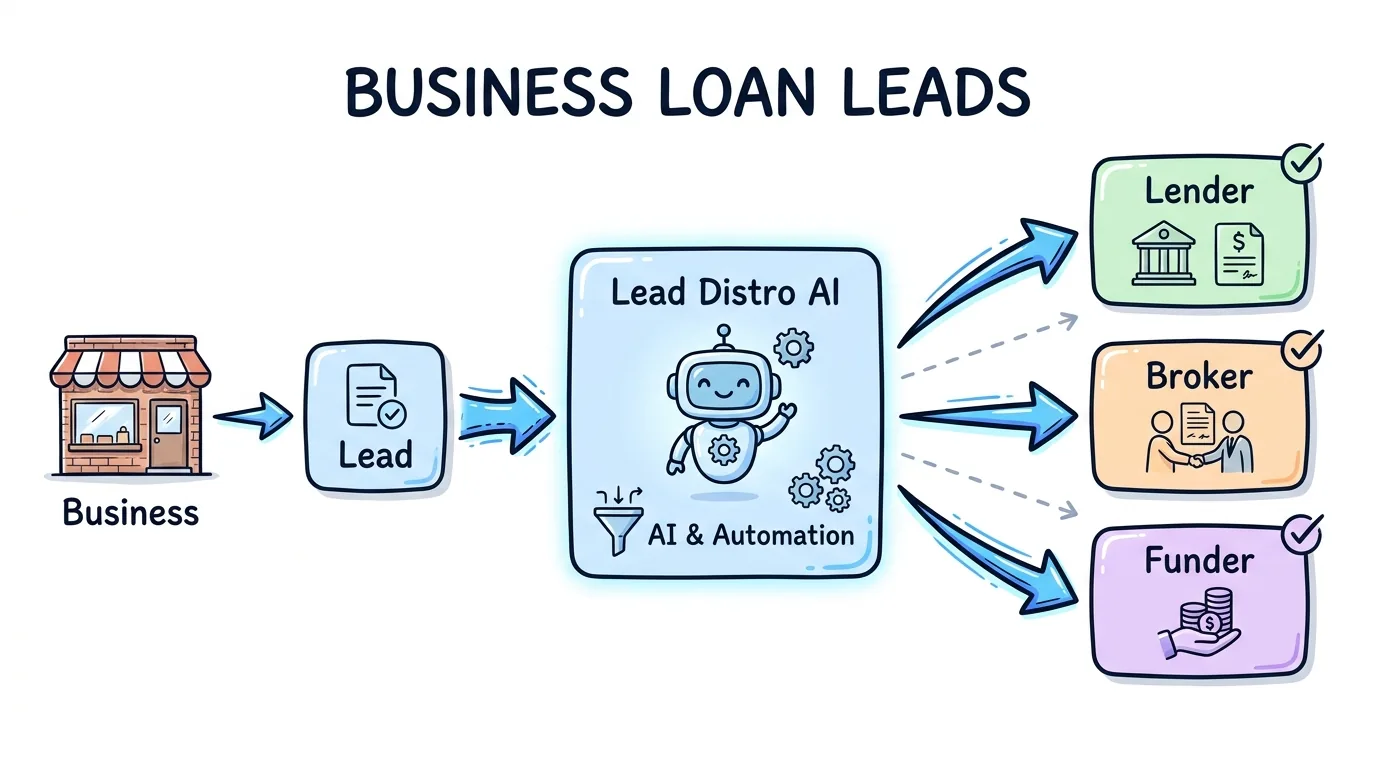
Lead generation software is a category, not a single product. At its core, this software automates three jobs that used to run on spreadsheets, email, and manual data entry. It captures inbound interest, it checks whether that interest is real and qualified, and it moves the record to whoever should act on it next.
The confusion starts because vendors all call themselves "lead generation software" while doing very different jobs. A landing page builder and a lead distribution platform both wear the label, yet they sit at opposite ends of the pipeline. Understanding the layers is the fastest way to shop without wasting money on overlapping tools.
Here is how the category maps out for anyone who buys, sells, or runs leads at scale.
| Layer | What it does | Example tools | Who needs it |
|---|---|---|---|
| Capture | Collects the lead via forms, landing pages, chat, and ad integrations | Unbounce, Typeform, native ad forms | Everyone generating leads |
| Qualification | Validates, scores, and enriches the lead before it moves | TrustedForm, Jornaya, enrichment APIs | Agencies protecting quality |
| Distribution | Routes the lead to the right buyer or rep and bills for it | Lead Distro AI, Boberdoo, LeadProsper | Agencies, brokers, lead sellers |
The Three Layers of a Lead Generation Stack
A complete lead generation stack moves a lead left to right without a human touching it. The capture layer creates the record, the qualification layer decides if it is worth passing on, and the distribution layer delivers it while there is still intent to act on. Speed matters at every handoff because lead value decays by the minute.
The capture layer is the most commoditized. Form builders, landing page tools, and native ad forms from Meta and Google all do the same core job of turning a click into a contact record. Pick the one that integrates with your ad channels and move on; this is not where you win.
The qualification layer is where quality control lives. Consent certificates from TrustedForm and Jornaya prove the lead opted in, which matters under the TCPA (FCC). Duplicate detection and field validation stop you from paying for or delivering junk. For resellers, this layer directly protects margin.
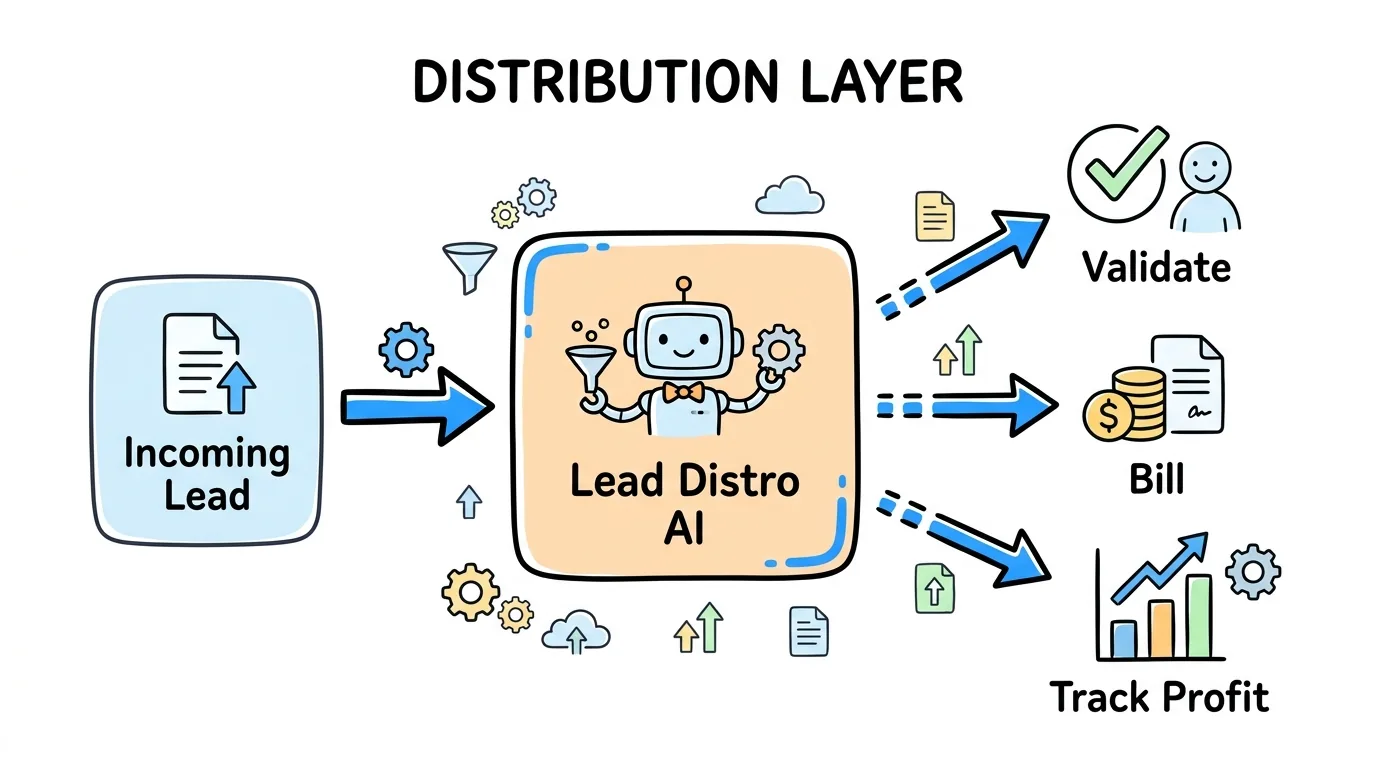
The distribution layer is where agencies and lead sellers make or lose money. This is the software that decides which buyer gets which lead, at what price, and what happens when a lead is returned. It is also the layer generic guides skip, which is exactly why so many operators outgrow their first tool.
Lead Generation Software for Agencies vs SMB Tools
The single biggest mistake buyers make is choosing lead generation software built for the wrong business model. An SMB generating leads for its own sales team has completely different needs than an agency generating leads for twelve clients or a broker reselling leads to a dozen buyers.
SMB focused tools optimize for self service capture and a single pipeline. They assume one company, one sales team, and one destination for every lead. That works until you need to split leads across buyers, bill each buyer differently, or prove to a client exactly which source produced their leads.
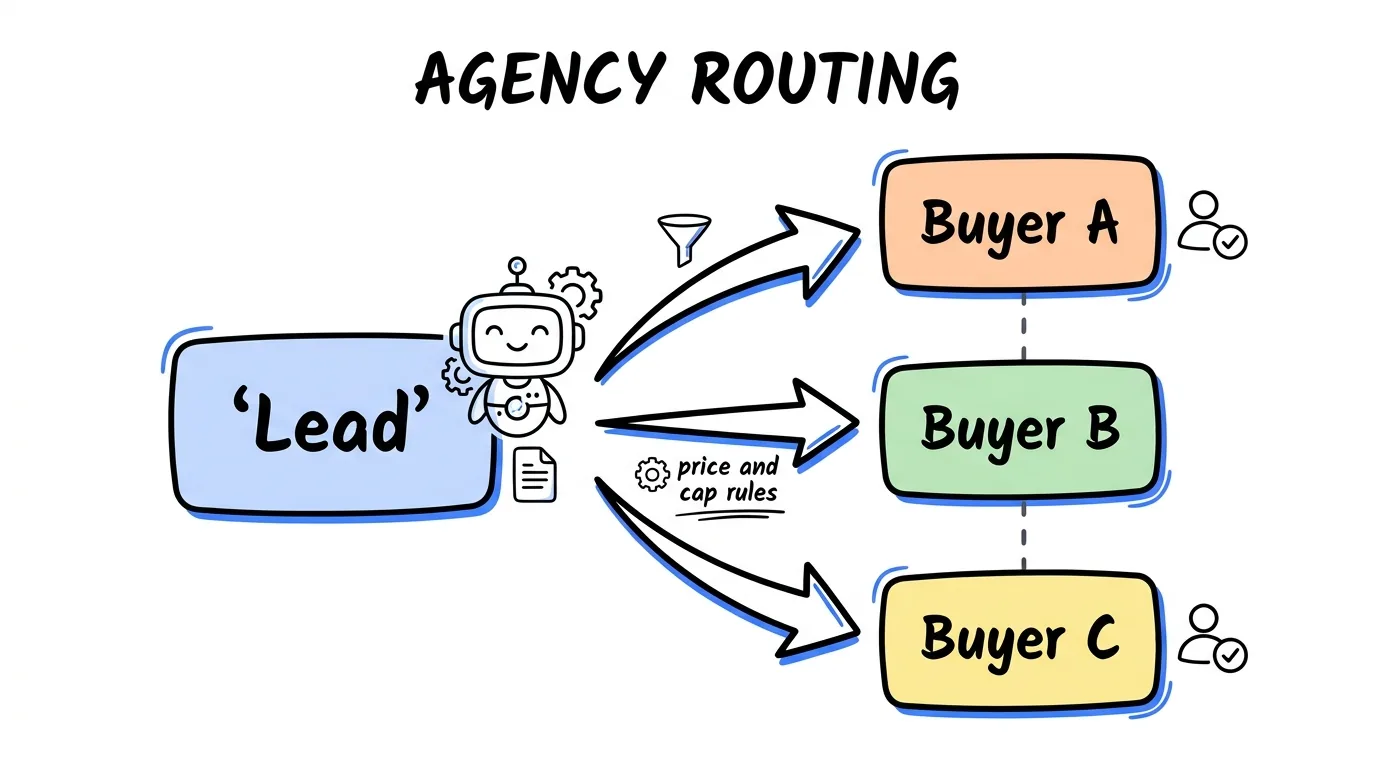
Lead generation software for agencies has to do more. It needs multi buyer routing, per buyer billing and wallets, source level profit tracking, and a return process. When you evaluate lead gen software as an agency, treat any tool that cannot answer "which buyer gets this lead and how do I bill them" as a capture tool, not a distribution platform. If you are still deciding which business model you are running, our breakdown of lead generation business models maps the broker, partnership, and full stack paths and the tools each one requires.
Best Lead Generation Software by Category in 2026
There is no single best lead generation software because the right pick depends on which layer you are buying for. The honest answer is to choose the best tool per layer, then make sure they connect through webhooks or an API. Below is how the market breaks down for agencies and resellers in 2026.
For capture, landing page and form tools like Unbounce and Typeform are common choices for SMBs, while native Meta and Google lead forms win on cost and speed for paid traffic. For qualification, TrustedForm and Jornaya are widely used for consent certification, and most agencies layer in phone and email validation on top.
For distribution, the reseller focused platforms are Lead Distro AI, Boberdoo, LeadProsper, and LeadByte. These are the tools that route to multiple buyers, meter billing, and report profit. Boberdoo is a long running platform (building lead distribution software since 2001) with deep conditional routing. LeadProsper and LeadByte are established mid market options. Lead Distro AI is the newer AI native platform with an AI assistant, real time profit reporting, and a $297 entry price. To see the full distribution category compared head to head, read our guide on what lead distribution software is and how it differs from a CRM.
How to Choose Lead Generation Software
Choosing lead generation software comes down to matching the tool to your business model, your volume, and your margin math. Run every candidate through the same short checklist before you look at a demo, because a slick capture UI hides nothing about whether the distribution layer will scale with you.
Start with these buying criteria:
- Business model fit: Does it serve self generators or resellers? Agencies and brokers need multi buyer routing, not a single pipeline.
- Routing methods: Can it do round robin, weighted, priority or waterfall, and ping post? More methods means more control over who gets which lead.
- Billing and wallets: Does it bill each buyer accurately, hold prepaid balances, and handle returns without manual credits?
- Reporting: Can you see profit per source, campaign, and buyer in real time, not in a monthly export?
- Compliance: Does it validate consent certificates at ingest so bad leads never reach a buyer?
- Pricing model: Is billing flat and predictable, or does it meter every ping and pre ping until the invoice balloons?
Volume matters too. A solo operator running one campaign can start with a free form and a spreadsheet, but the moment you add a second buyer or a client, manual distribution breaks. Our lead generation statistics roundup shows how fast response time and speed to lead affect conversion, which is the case for automating distribution early rather than late.
Where Lead Distro AI Fits in Your Stack
Lead Distro AI is a lead generation platform built specifically for the distribution layer, which is the piece most buyers discover they are missing after they already have capture handled. It is designed for pay per lead and pay per call agencies, lead brokers, and lead sellers who need to move leads to buyers and get paid accurately.
The platform ships all four distribution methods in one product: round robin, weighted, priority or waterfall, and ping post. It validates consent with native TrustedForm and Meta Conversions API support at ingest, applies configurable duplicate detection so you never pay twice for the same person, and gives every buyer a self serve portal with prepaid wallets. A real time profit and loss dashboard shows revenue, cost, and margin per source, campaign, and buyer, so you always know which lead flow is actually profitable.
The differentiator is the AI assistant. Using the Model Context Protocol, you connect Lead Distro AI to Claude in about a minute, then create campaigns, set routing rules, add buyers, and pull performance answers by typing plain English. "Lead Distro AI gives you the distribution and billing layer ready to run, instead of something you build by hand," says Rafael Hernandez, Founder and CEO of Lead Distro AI. "You can hand the AI a signed contract and it parses the terms and stands up the campaign, instead of waiting on a developer." You can walk through the whole platform with the interactive product tour before you commit.
On pricing, Lead Distro AI starts at $297 per month with a 7 day free trial, and billing meters only leads rather than charging per ping or pre ping. Call tracking is available on top with usage based pricing, a per number monthly fee plus a per minute rate for inbound calls. If you are still picking a vertical to focus on, our guide to the most profitable lead generation niches pairs well with the distribution setup, and our walkthrough on how to start a lead generation company covers the full build from first campaign to first buyer.
FAQ
What is lead generation software?
Lead generation software is any platform that helps a business capture, qualify, or distribute the people who show interest in an offer. The category spans three layers: capture tools like landing page and form builders, qualification tools that validate and score leads, and distribution tools that route leads to the right buyer or sales rep. Agencies, brokers, and lead sellers usually need software from all three layers, while a small business self generating leads may only need capture and a simple CRM.
What is the best lead generation software for agencies?
The best lead generation software for agencies is a distribution platform that routes leads to multiple buyers, tracks profit per source, and handles billing and returns automatically. Capture only tools cannot do this. Lead Distro AI, Boberdoo, LeadProsper, and LeadByte are the reseller focused options. Lead Distro AI fits agencies that want four routing methods, real time profit reporting, and an AI assistant in one platform starting at $297 per month (ping-post from $497).
How much does lead generation software cost?
Lead generation software costs range widely by layer. Capture tools like form and landing page builders start free and run to roughly $100 per month. Qualification and consent tools bill per lead or per lookup. Distribution platforms for agencies and resellers vary widely: Lead Distro AI starts at $297 per month, and pricing across the category runs up to custom enterprise quotes for high volume operations. Match the spend to the layer you actually need rather than paying for overlapping tools.
Is lead generation software the same as a CRM?
No. A CRM manages relationships and deals after a lead is in your pipeline, while lead generation software focuses on capturing, qualifying, and distributing leads before and as they enter. Agencies and brokers reselling leads need a distribution platform that a CRM does not replace, because a CRM assumes one company owns every lead rather than routing leads out to many buyers with separate billing.
What is the best lead gen software for reselling leads?
For reselling leads, you need a lead distribution platform rather than a capture tool. The best lead gen software here routes to multiple buyers using round robin, weighted, priority, and ping post methods, meters billing per buyer with prepaid wallets, and reports margin in real time. Lead Distro AI is built for this exact use case, with duplicate detection, consent validation, buyer portals, and an AI assistant for setup and reporting.
Do I need a credit card to try Lead Distro AI?
Yes, the Lead Distro AI free trial runs for 7 days and requires a card to start, so you can see real time profitability during the trial and continue without interruption if it fits. You can cancel anytime during the 7 days and you will not be charged. Setup takes minutes, so you can wire up one campaign, add a buyer, and route live leads well within the trial window.
Conclusion
Lead generation software is not one product but a stack of three: capture, qualification, and distribution. Small business roundups obsess over the capture layer because that is what a self generator needs, but agencies, brokers, and lead sellers make their margin in the distribution layer that those guides ignore. The right move is to pick a solid capture tool, add consent and validation for quality, and choose a distribution platform that routes to buyers, bills accurately, and reports profit in real time.
Lead Distro AI is built for the distribution layer: it combines four routing methods, native compliance, real time profit reporting, and an AI assistant in one platform at a $297 entry price (ping-post from $497). If you already generate leads and the manual routing is capping your growth, now is the time to fix it, before your next campaign floods a spreadsheet.
Ready to see how AI powered lead distribution works? Start your 7 day free trial and route your first lead in minutes.
About the Author
Founder & CEO of Lead Distro AI & Great Marketing AI
UC Berkeley graduate and former software engineer at Microsoft. Rafael built Lead Distro AI after managing over $10M in ad spend for performance marketing agencies (pay-per-lead and pay-per-call), including running campaigns for Neil Patel. He combines deep software engineering expertise with hands-on performance marketing experience to build tools that help these agencies scale profitably.
About Lead Distro AI
Lead Distro AI: AI-Powered Routing for Your Leads, Calls, and Appointments
The modern platform for pay-per-lead and pay-per-call agencies. Route, score, and deliver leads with AI-powered automation and real-time P&L tracking. Built for performance marketing agencies and lead buyers across legal, insurance, mortgage, solar, and home services verticals.
4 Distribution Methods
Waterfall, Round Robin, Weighted, Ping-Post
Ping-Post Auctions
Real-time bidding with sub-second routing
Real-Time P&L Reporting
Track revenue, costs, and profit per campaign
Call Tracking
Assign tracking numbers, record calls, and attribute conversions
Lead Scoring
Score every lead before routing to maximize conversion
Partner Portal
Self-serve dashboard for buyers to track leads