What Is Call Tracking? How It Works for Marketers
Call tracking ties every inbound phone call to the ad, keyword, or channel that drove it. Learn how call tracking works, DNI, and how marketers use it.

Rafael Hernandez
Founder & CEO
Ex-Microsoft SWE · $10M+ PPL ad spend
I hope you enjoy reading this blog post. If you want to try Lead Distro AI for free, click here.
Author: Rafael Hernandez | Founder & CEO of Lead Distro AI
Last Updated: November 2, 2026
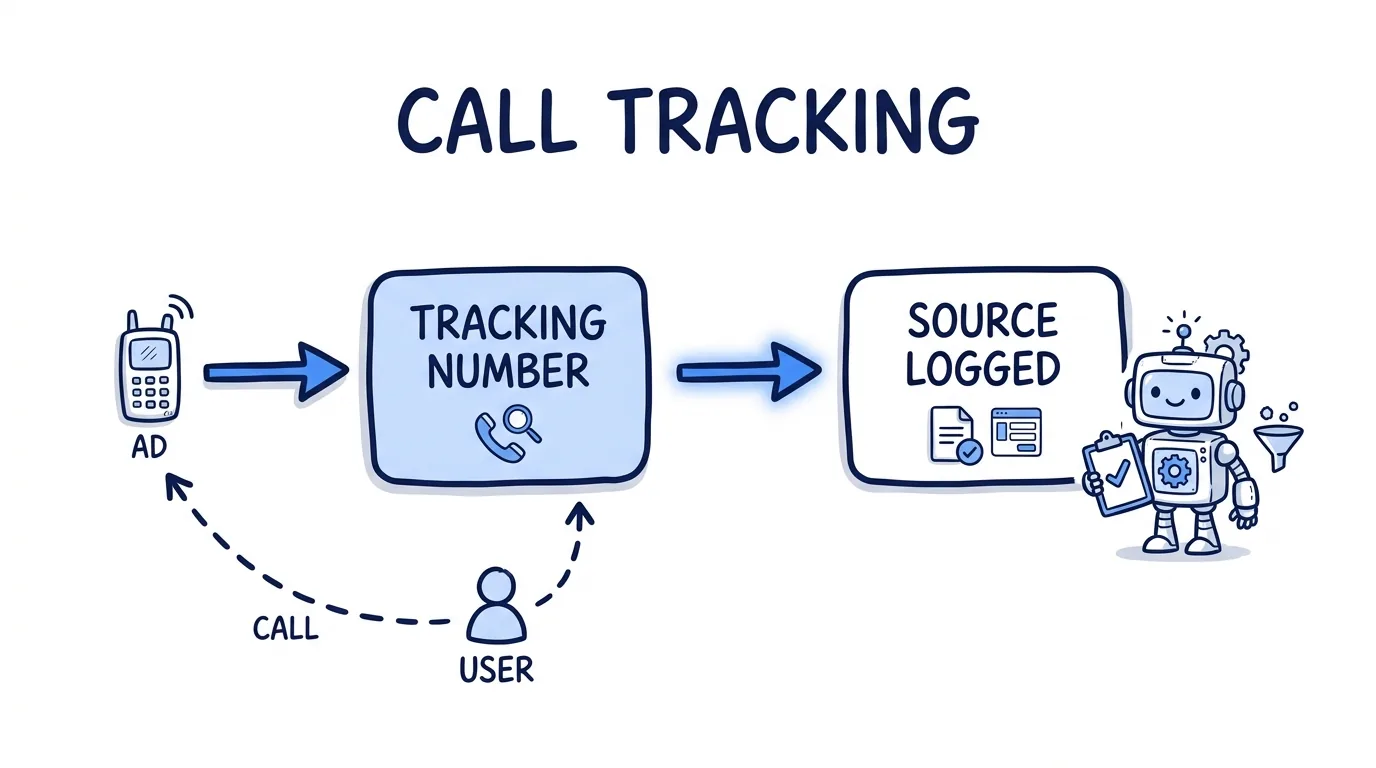
Call tracking is software that ties every inbound phone call back to the marketing that made the phone ring. It gives each ad, landing page, or traffic source a unique phone number, then logs the campaign, keyword, duration, recording, and outcome of every call, so you know which spend produces real calls.
For a lead-generation agency, that link is the whole game. A good call tracking platform captures the call, logs the source, records the conversation, measures duration, and (in pay-per-call setups) routes the live caller to the buyer its rules select in real time. This matters because phone leads convert far better than form fills. According to Invoca's digital marketing statistics, which cite BIA/Kelsey and Forrester research, inbound calls convert to revenue 10 to 15 times more often than web leads, and callers convert 30% faster. BIA/Kelsey data cited by Invoca's DNI guide says calls influenced over $1 trillion in US commerce in 2016. This guide explains what call tracking is, how call tracking works stage by stage, how marketers use it for attribution, and why pay-per-call agencies build their whole business on it. If you also distribute the calls you capture, see how call routing software sends each one to the buyer its rules select, and start your 7-day free trial to see tracking and routing in one place.
Key Takeaways
- Call tracking ties every inbound call to its marketing source using unique phone numbers, so you know which campaign, keyword, or channel produced each call.
- Call tracking works as a five-stage pipeline: number provisioning, dynamic number insertion, routing and IVR screening, attribution, then analytics and billing.
- Dynamic Number Insertion (DNI) swaps the number on your website based on how each visitor arrived, giving session-level attribution down to the exact keyword.
- Marketers push tracked calls back into Google Ads and GA4, so bidding optimizes toward calls instead of only clicks and form fills.
- Pay-per-call agencies rely on call tracking plus scoring and routing to qualify a live caller and connect them to a buyer while they are still on the line.
- Call tracking pricing is usage-based: a per-number monthly fee plus a per-minute rate for inbound calls, layered on top of the platform subscription.
What Is Call Tracking?
Call tracking is the practice of attributing inbound phone calls to the specific marketing source that generated them. Instead of one business phone number, you use many unique tracking numbers, each tied to a campaign, ad group, landing page, or even an individual website visitor. When someone dials a tracking number, the platform records who called, where they came from, how long they talked, and what happened on the call.
The reason agencies care so much is intent. A person who picks up the phone is further along in the buying journey than someone filling out a form. Invoca reports that 84% of marketers say phone calls have higher conversion rates and larger order values. Call tracking turns that high-intent moment into measurable data you can act on, the same way pay-per-call marketing turns a ringing phone into billable revenue. If you run calls for several clients, our guide to call tracking software for pay-per-call agencies covers per-client numbers, reports, and billing.
How Does Call Tracking Work?
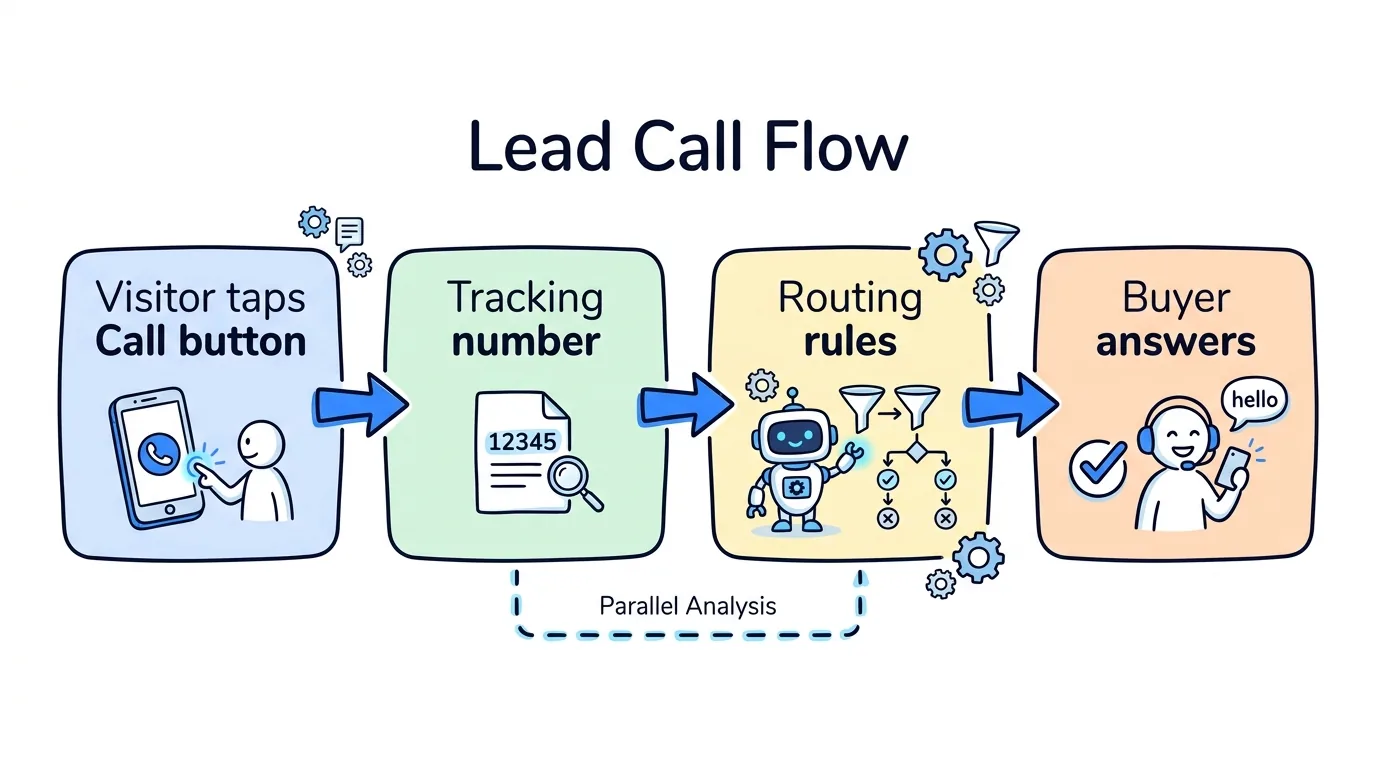
Call tracking works as a five-stage pipeline, and every stage adds a layer of data. Each stage depends on the one before it: skip provisioning and there is nothing to swap, skip attribution and the call is just a ring with no story.
- Number provisioning. You get a pool of tracking numbers (DIDs) from a carrier and tie each one to a source: a Google Ads campaign, a Facebook ad, a billboard, a landing page.
- Dynamic number insertion. The right number shows up wherever that source lives, printed on an ad or swapped onto a web page per visitor.
- Routing and IVR screening. The call is forwarded to your team or a buyer. Routing can be one line or a ring tree split by geography, time of day, and capacity. An IVR (interactive voice response) menu can confirm intent before anyone answers, which filters out misdials.
- Attribution. The platform matches the call to its source, campaign, keyword, and landing page. With Google Ads, the call is tied to the gclid (Google's click ID) so the conversion imports back into the ad account.
- Analytics and billing. Duration, timestamp, caller location, and the recording are logged, the call is scored for quality, and usage charges per number and per minute are recorded.
The capture happens in real time, so by the time the call connects, the source is already attributed.
Dynamic Number Call Tracking (DNI)
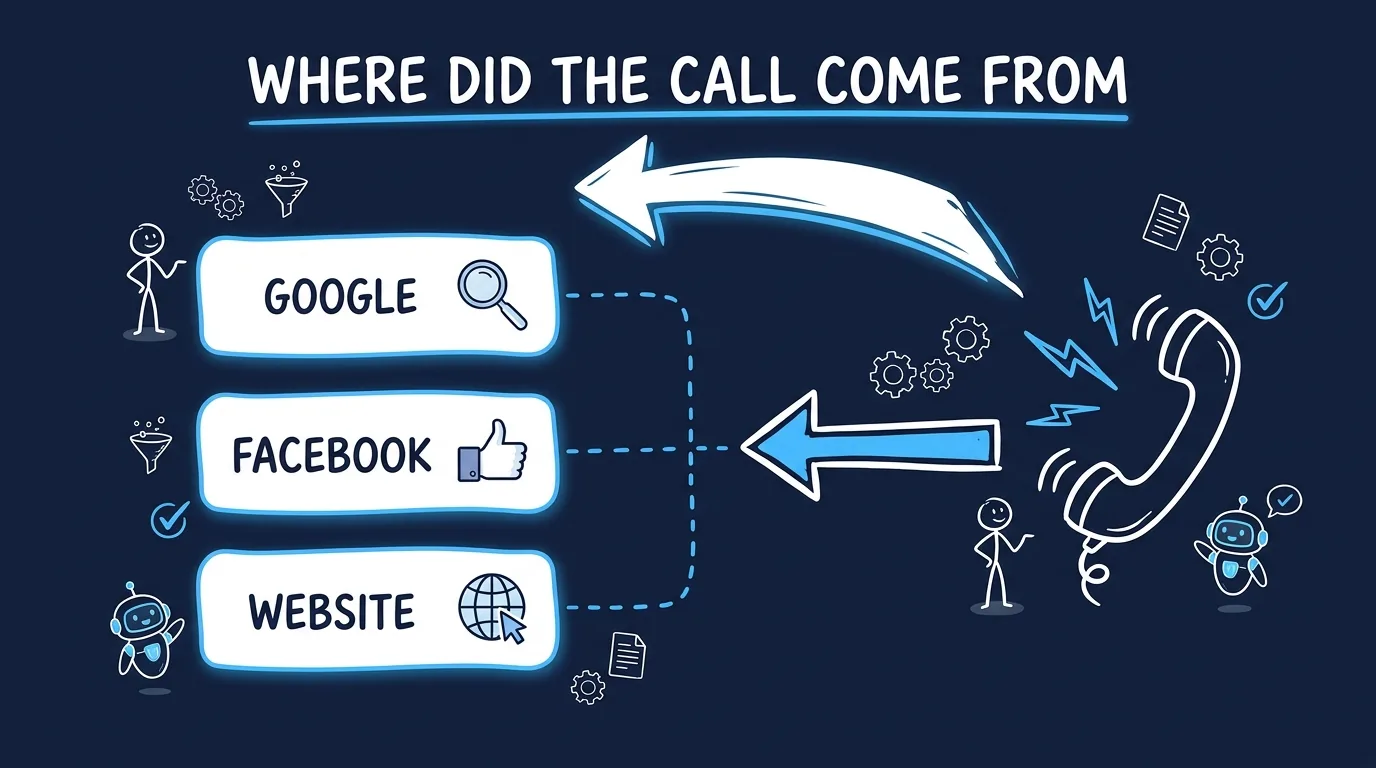
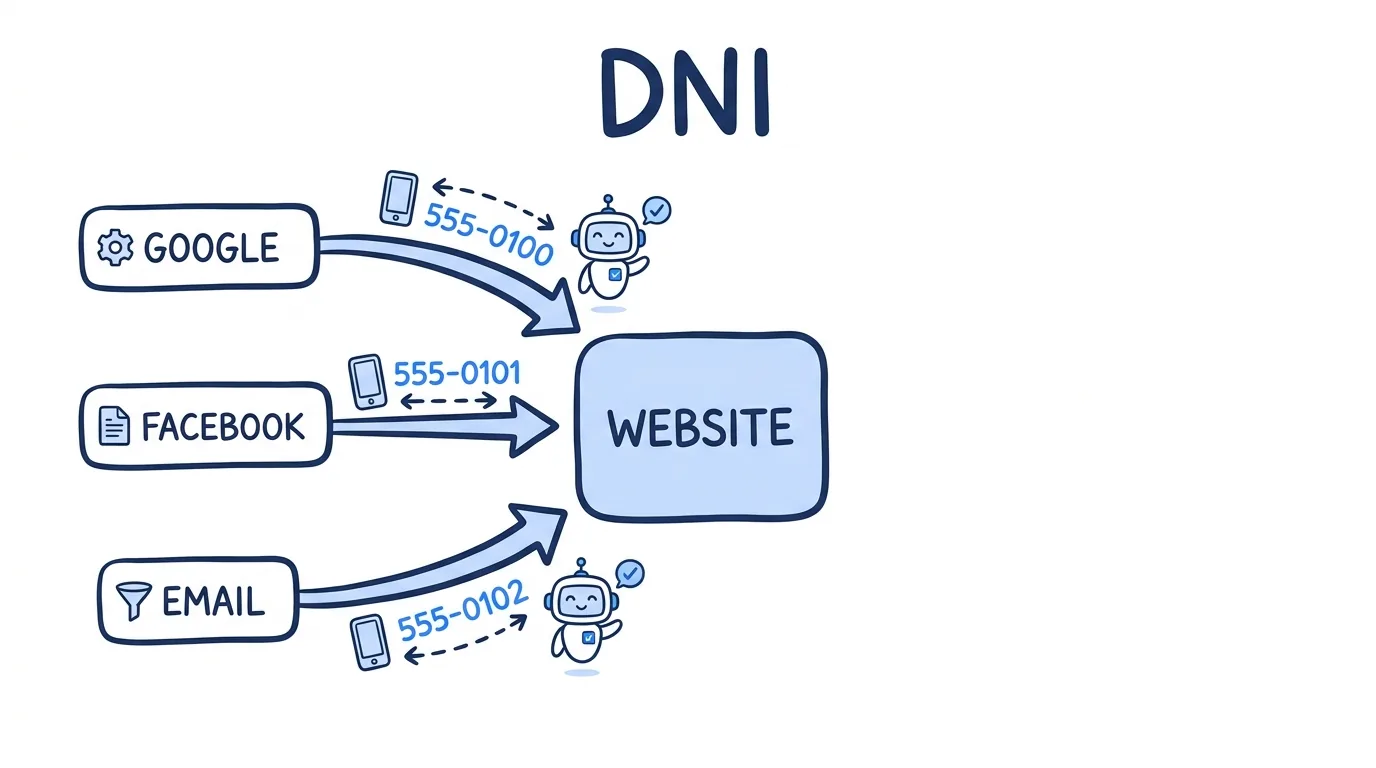
Dynamic Number Insertion is the technology that makes website call tracking precise. Instead of a single static number on your site, DNI uses a small piece of JavaScript to swap the displayed number based on how each visitor arrived. A visitor from a Google search sees one number, a visitor from a Facebook ad sees another. Because two people on the same page see different numbers, a call can be attributed all the way back to the exact source, campaign, and keyword that drove the session. That is why digital attribution needs a pool of numbers, not just one.
| Factor | Static Number | Dynamic Number Insertion |
|---|---|---|
| Best for | Billboards, radio, print | Website and digital traffic |
| Attribution depth | Channel level | Visitor and keyword level |
| Numbers needed | One per channel | A pool of numbers |
| Setup | Paste a number | Install a small script |
| Google Ads optimization | Limited | Full gclid import |
Most agencies use both: static numbers for offline media and DNI for everything driven by clicks. Our guide to dynamic number insertion covers pool sizing and setup step by step. A common worry is whether the number swap hurts rankings. It does not when implemented correctly, as we explain in is call tracking bad for SEO.
Call Tracking for Marketers
Call tracking for marketers answers a question your analytics platform cannot: which campaign produced this phone call? Web forms fire a tag the moment they submit, so attribution is easy. Phone calls leave the website entirely, which is why many teams report on form fills and quietly ignore the higher-value channel.
Marketing call tracking closes that gap with four functions: DNI, source and session capture (campaign, keyword, ad group, landing page, device), recording with consent (the same foundation sales call recording software builds on), and reporting that pushes call conversions back into Google Ads, Meta, and GA4. Google's own call conversion tracking uses the same principle, counting a call as a conversion once it passes a minimum call length you set.
The result is closed-loop attribution. Instead of "we spent $4,000 and got 30 form fills," you see that the same campaign also drove 22 phone calls, 14 of them qualified. That second number often changes which campaigns you scale. For the Google Ads side, see our Google Ads call tracking guide.
| Tracking level | What it tells you | Number pool needed | Best for |
|---|---|---|---|
| Channel-level | Which channel drove the call (paid, organic, social, direct) | Small (one per channel) | Lean budgets, early-stage attribution |
| Campaign-level | Which campaign or ad set drove the call | Medium | Most agencies and marketing teams |
| Keyword-level | Which exact keyword triggered the call | Large (rotating pool) | High-spend paid search accounts |
| Visitor-level | The full session and journey of the individual caller | Largest | Pay-per-call agencies, ROI-per-lead reporting |
Setting Up Call Tracking for Marketing Analytics
Clean call tracking for marketing analytics depends on a few setup decisions teams often get wrong:
- Size the number pool to your traffic. Keyword-level and visitor-level tracking need enough numbers in rotation that two simultaneous visitors never share one. A common rule is one number per simultaneous visitor at peak. Too small a pool recycles numbers before attribution completes; too large a pool raises usage costs.
- Push conversions back to ad platforms. Attribution is only actionable if Google Ads and Meta receive the call conversions, so their algorithms bid toward call-driving keywords.
- Set a sensible minimum call length. A 12-second call is rarely a real conversion. A minimum filters wrong numbers and hang-ups from your conversion counts.
- Handle consent and compliance. Inbound calls carry lighter consent requirements than outbound, but recording disclosure and state two-party-consent rules still apply.
Configured this way, call tracking ties calls to source, campaign, and keyword reliably, which is why marketers trust call data to calculate cost per lead.
Inbound Call Tracking and Attribution
Inbound call tracking is the core use case: measuring the calls coming into your business and tying each to its origin. Attribution is the output. It answers the question every agency owner asks, which is "where do my best calls come from?"
A solid attribution record includes the marketing source, the keyword or campaign, the caller's location, the call duration, a recording, and the outcome (sale, qualified, missed). With that data, you stop spreading budget evenly and start funneling it toward the channels that produce qualified calls. Conversion Sciences notes that mobile callers convert at much higher rates than form submissions, so even a modest shift toward call-driving channels can lift revenue. For agencies selling calls, this same record is also the invoice: it proves the call met the buyer's criteria.
Lead Generation Call Tracking for Pay-Per-Call Agencies
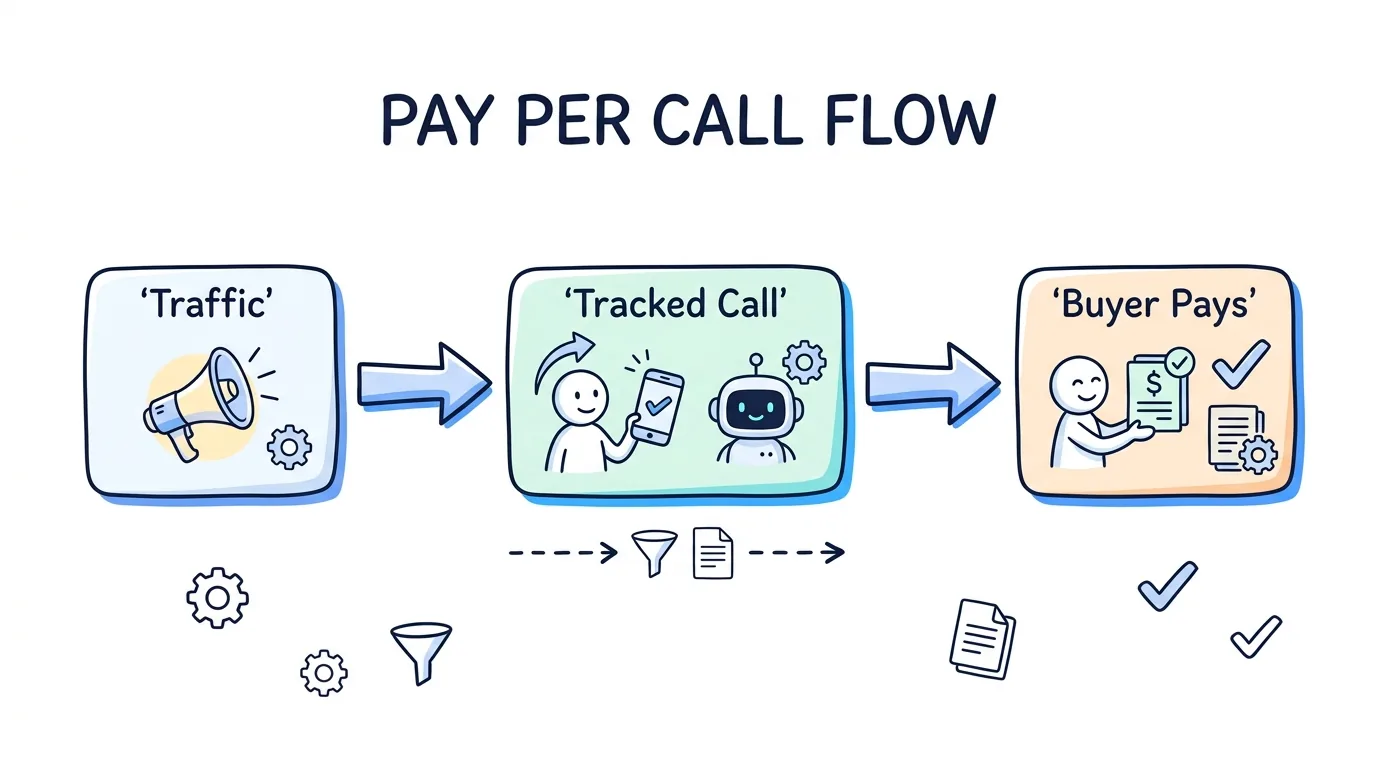
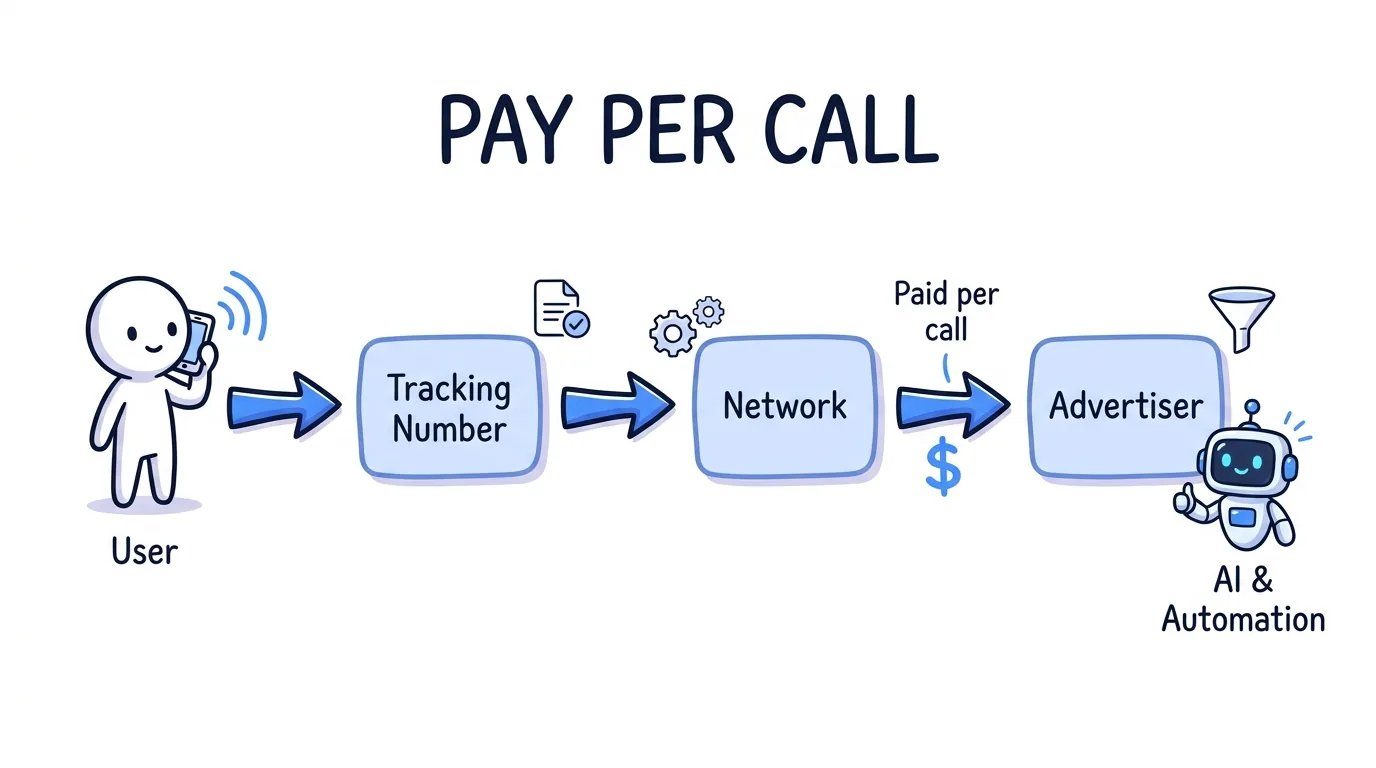
Lead generation call tracking is inbound call tracking applied to a buying-and-selling model. The agency generates phone calls through ads, SEO, or offline channels, then sells each qualified call to a buyer such as a law firm, insurance carrier, or home services contractor. Call tracking is what makes that transaction trustworthy on both sides.
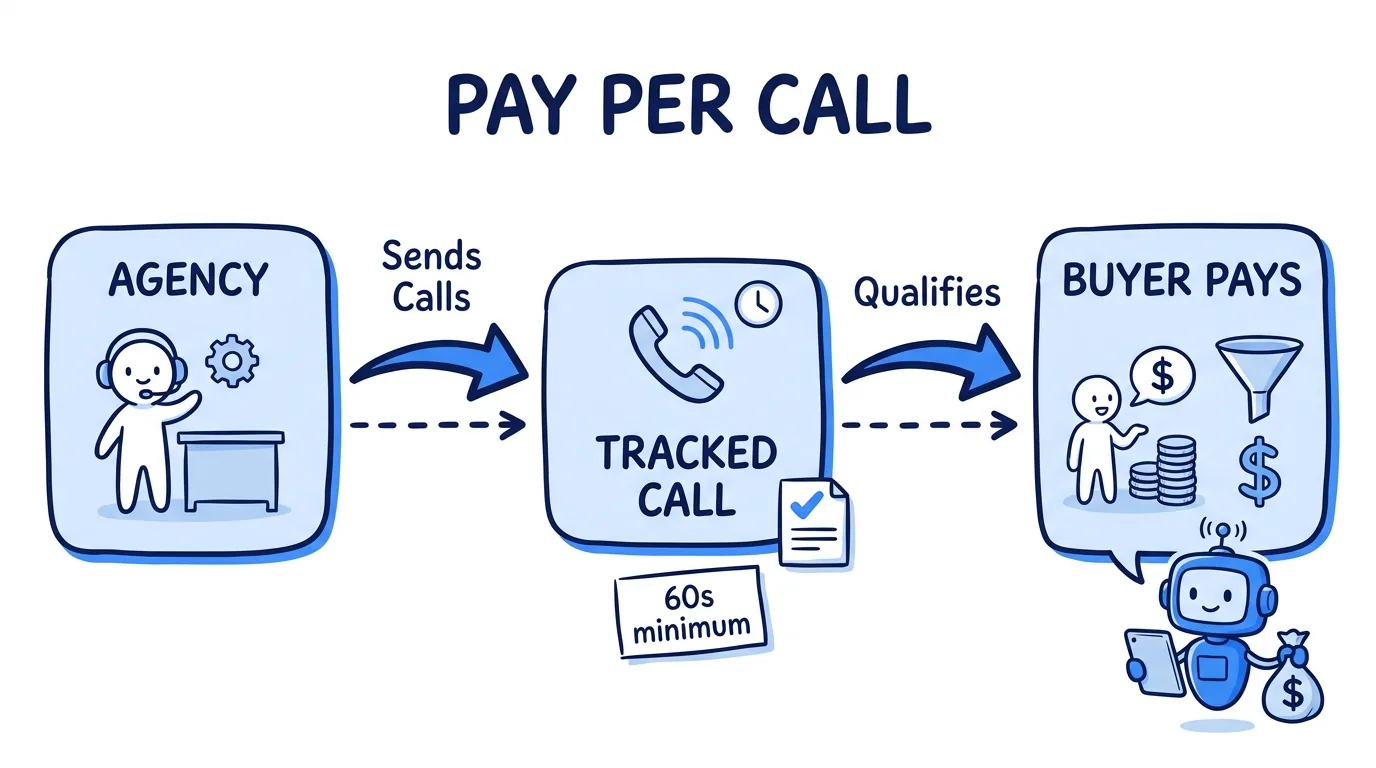
Buyers will only pay for calls that meet their rules, usually a minimum duration and a geographic or qualification filter. Tracking the duration, recording the call, and logging the source is how you prove a call was real and qualified. Attribution alone is half the job, though. A tracked call that rings an unavailable agent or a buyer already at their daily cap is a wasted conversion. Lead Distro AI runs rule-based lead scoring on every lead and every call before routing, so low-quality callers get filtered before a buyer pays for them. It then routes the live call with Round Robin, Weighted, Priority/Waterfall, or Ping-Post, and if the first buyer is unavailable the call moves to the next eligible one instead of dropping. Our guide to the best pay-per-call software for agencies compares the options.
Call Tracking vs Lead Tracking
Call tracking and lead tracking overlap but are not the same. Call tracking focuses on phone calls: numbers, DNI, recording, duration, and call routing. Lead tracking covers form fills, chat, and other digital captures. Agencies that run both want them in one system so calls and web leads reconcile against the same buyers and budgets.
| Capability | Call Tracking | Lead Tracking (Forms) | Lead Distro AI |
|---|---|---|---|
| Best for | Pay-per-call agencies, call centers, lead buyers and sellers | Form-based pay-per-lead agencies | Both pay-per-call and pay-per-lead agencies |
| Dynamic Number Insertion | Yes | No | Yes |
| Call recording and duration | Yes | No | Yes |
| Source attribution | Yes | Yes | Yes |
| Real-time routing to buyers | Sometimes | Sometimes | Yes (Round Robin, Weighted, Priority/Waterfall, Ping-Post) |
| Pricing model | Usage-based per call | Platform fee | $147/mo Call Tracking plan or $297/mo with lead distribution, plus usage-based call tracking |
Running both in one platform means one buyer portal, one billing reconciliation, and one set of caps, which is the core idea behind lead and call distribution software. Explore the call tracking feature to see it in the product.
FAQ
What is call tracking in simple terms?
Call tracking is software that tells you which marketing produced each phone call. Instead of one business number, you use many unique tracking numbers, each tied to an ad, keyword, or page. When someone dials a tracking number, the platform logs the source, records the call, and measures how long it lasted. For lead-generation agencies, this connects ad spend to real, billable calls, so you can scale the campaigns that ring the phone and cut the ones that do not.
How does call tracking work?
Call tracking works by assigning unique phone numbers to your marketing sources and logging every call placed to them. Dynamic number insertion swaps numbers on your website per visitor, so when someone calls, the platform already knows the ad, keyword, or campaign that drove them. The call is then routed, optionally screened by IVR, and recorded with its source, duration, and outcome. That data ties phone conversations back to the marketing that produced them.
How does Dynamic Number Insertion work?
Dynamic Number Insertion (DNI) uses a small piece of JavaScript on your website that swaps the displayed phone number based on how each visitor arrived. A visitor from Google search sees one number, a visitor from a Facebook ad sees another. When the visitor calls, the platform attributes the call to that exact source, campaign, and keyword. This gives session-level and even keyword-level attribution, so you can pause underperforming keywords and double down on the ones that drive calls.
What is inbound call tracking?
Inbound call tracking measures the calls coming into your business and ties each one to the source that produced it. A complete record includes the marketing channel, keyword or campaign, caller location, call duration, a recording, and the outcome. Agencies use inbound call tracking to prove call quality, optimize ad spend toward call-driving channels, and, in pay-per-call, to invoice buyers accurately for calls that meet their duration and qualification rules.
Does call tracking work with Google Ads and GA4?
Yes. Call tracking platforms commonly push call conversions back into Google Ads and GA4. With Google Ads, the platform matches a tracked call to the gclid, the click ID Google attaches to each ad click, and imports the conversion back into the ad account. That lets Smart Bidding optimize toward calls, not just clicks or form fills, which matters most for pay-per-call campaigns where the phone call is the conversion event.
How many tracking numbers do I need?
For offline channels, one static number per channel is enough. For digital traffic using dynamic number insertion, you need a pool sized to your concurrent visitors so each active visitor can hold a unique number. A common rule is one number per simultaneous visitor during peak traffic. Too small a pool causes numbers to recycle too quickly and blurs attribution, while an oversized pool raises your usage-based costs. Smaller budgets can start at channel level and grow the pool later.
Why do pay-per-call agencies need call tracking?
Pay-per-call agencies sell qualified phone calls to buyers like law firms and insurance carriers. Buyers pay only for calls that meet their rules, usually a minimum duration plus a geographic or qualification filter. Call tracking records the duration, the recording, and the source, which proves a call was real and qualified. That record is both the quality check and the invoice. Paired with routing, it sends each live caller to the buyer whose rules it matches in real time.
How much does call tracking cost?
Call tracking pricing is usually usage-based: a per-number monthly fee plus a per-minute rate for inbound calls. That structure scales with call volume rather than a flat fee, and our call tracking pricing comparison works out the monthly bill at three volumes. Lead Distro AI starts at $147 per month for call tracking only ($297 per month once you add lead distribution), with usage-based call tracking layered on top, and includes a 7-day free trial.
Conclusion
Call tracking is the foundation of every serious phone-lead operation. It assigns unique numbers, swaps them dynamically with DNI, routes and screens each call, attributes it to the marketing that made the phone ring, and records it for analytics and billing. For marketers, pushing those tracked calls back into Google Ads and GA4 means budgets follow the campaigns that produce qualified calls, not just clicks. Pay-per-call agencies take it one step further, using the same tracked call to qualify a live caller and route them to a paying buyer in seconds. Lead Distro AI brings call tracking, rule-based lead scoring, and lead-and-call routing into one platform, starting with the $147-per-month Call Tracking plan plus usage-based call tracking.
Want to see which ads actually ring your phone, then route those calls to buyers? Start your 7-day free trial and connect your first tracking number today.
About the Author
Founder & CEO of Lead Distro AI & Great Marketing AI
UC Berkeley graduate and former software engineer at Microsoft. Rafael built Lead Distro AI after managing over $10M in ad spend for performance marketing agencies (pay-per-lead and pay-per-call), including running campaigns for Neil Patel. He combines deep software engineering expertise with hands-on performance marketing experience to build tools that help these agencies scale profitably.
About Lead Distro AI
Capture, Route, and Sell Every Lead, Call, and Appointment
Capture, route, and sell leads, calls, and appointments from one platform, with funnels, call tracking, ping-post, and billing built in. Set it all up in minutes by chatting with AI.
Funnels
Quiz, form, appointment, VSL, and webinar templates
Call Tracking
Tracking numbers, call recordings, and per-call billing
4 Distribution Methods
Priority/Waterfall, Round Robin, Weighted, Ping-Post
Ping-Post and Live Bidding
Sell each lead and call to the highest bid
Real-Time P&L
Revenue, cost, and profit per campaign
Partner Portal
Your Destinations see their own leads and results