What Is Click-to-Call? (And How It Drives More Leads in 2026)
Click-to-call lets website visitors tap a button and instantly connect with your team or trigger lead distribution. Here's how it works and why agencies use it.

Rafael Hernandez
Founder & CEO, Great Marketing AI
Ex-Microsoft SWE · $10M+ PPL ad spend
I hope you enjoy reading this blog post. If you want to try Lead Distro AI for free, click here.
Author: Rafael Hernandez | Founder & CEO of Lead Distro AI
Click-to-call is a feature that turns a phone number or button on a webpage into a one-tap action: a visitor sees your number, taps it on their smartphone, and an outbound call connects instantly, no copying, no dialing required. For desktop users, clicking the button opens the system dialer, triggers a callback request, or routes the visitor into a call queue. The outcome is the same either way: remove every layer of friction between a prospect's purchase intent and their first live conversation with your team or a buyer in your network.
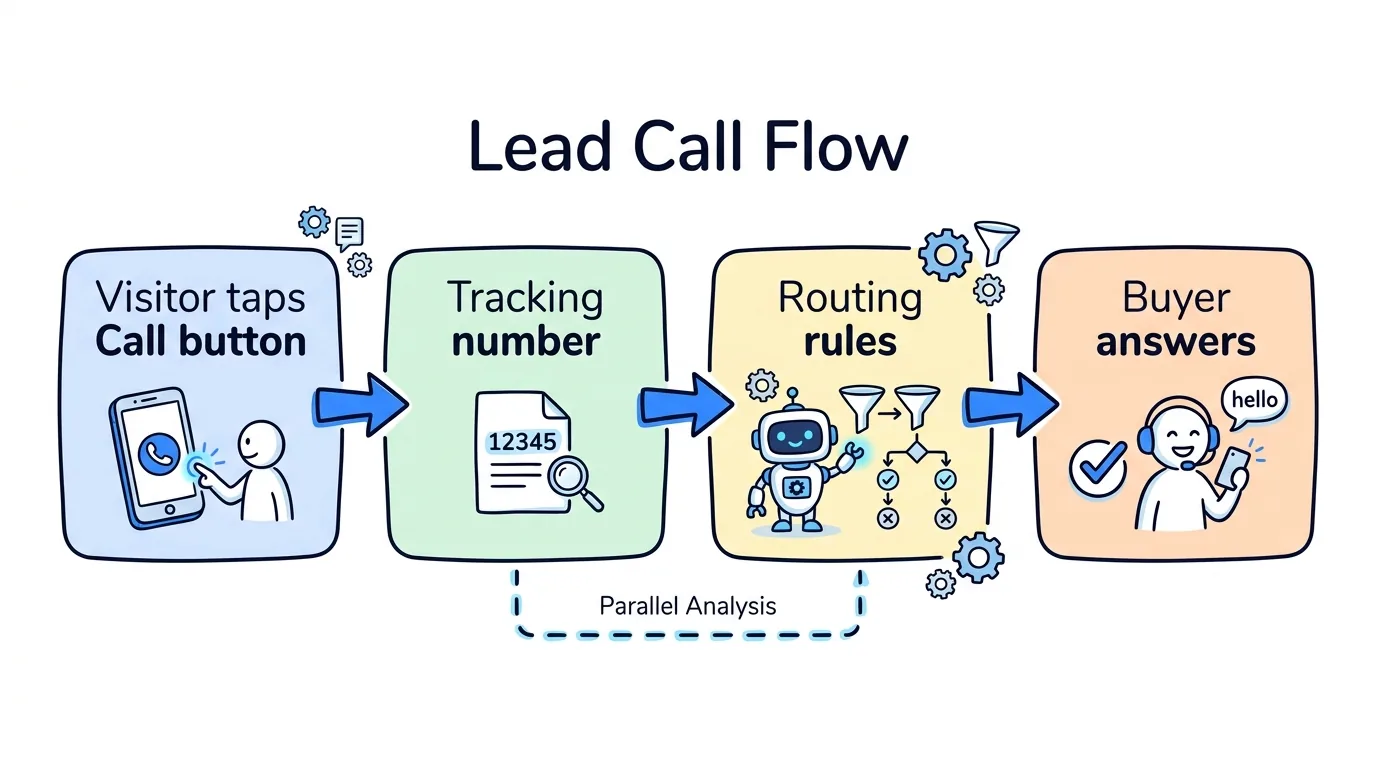
For pay-per-call agencies and lead distribution operations, click-to-call is the bridge between paid traffic and billable revenue. A visitor who taps a call button has declared intent at a level that a web form submission rarely matches. That call immediately enters your lead distribution system, gets timestamped with attribution data including UTM parameters and GCLID, and routes to the qualifying buyer in seconds.
Mobile traffic dominates direct-response campaigns in 2026. According to Google's research published on Think with Google, 70% of mobile searchers say click-to-call is the most important feature during the purchase phase of their search journey (source: Google Think with Google). If your funnel makes calling anything harder than a single thumb tap, you are leaving conversions behind.
Key Takeaways
- Click-to-call converts a phone number into a one-tap mobile action, eliminating friction between search intent and live contact for any visitor on a smartphone.
- Calls convert at 10 to 15 times the rate of web form submissions in high-intent verticals like legal, insurance, and home services, according to Invoca's annual Call Intelligence Benchmark Report.
- Attribution is the hidden advantage of modern click-to-call systems: every tap carries UTM parameters, GCLID, and campaign data, so every call traces back to its paid traffic source.
- Lead Distro AI supports click-to-call natively via a button block with
action: "call"and a sticky mobile CTA bar. Point either one at a Lead Distro AI tracking number and every call is attributed to its source and routed by your call campaign rules. - Call tracking in Lead Distro AI is usage-based: a per-number monthly fee plus a per-minute inbound rate stacks on top of the flat platform subscription, so model your call volume before scaling.
- A 7-day free trial (credit card required) lets you test click-to-call routing end-to-end before committing to a plan.
- Pricing starts at $147/month for Call Tracking Only, with lead distribution and routing on the Starter plan at $297/month and Ping-Post distribution from the Growth plan at $497/month.
How Click-to-Call Works
At the technical layer, click-to-call relies on the tel: URI scheme. When a user taps a link formatted as tel:+15555551234, their device opens its native dialer with the number pre-filled. One additional tap and the call goes through. The same mechanism works in Google Ads call-only campaigns, Meta lead ads with a call CTA, and SMS links.
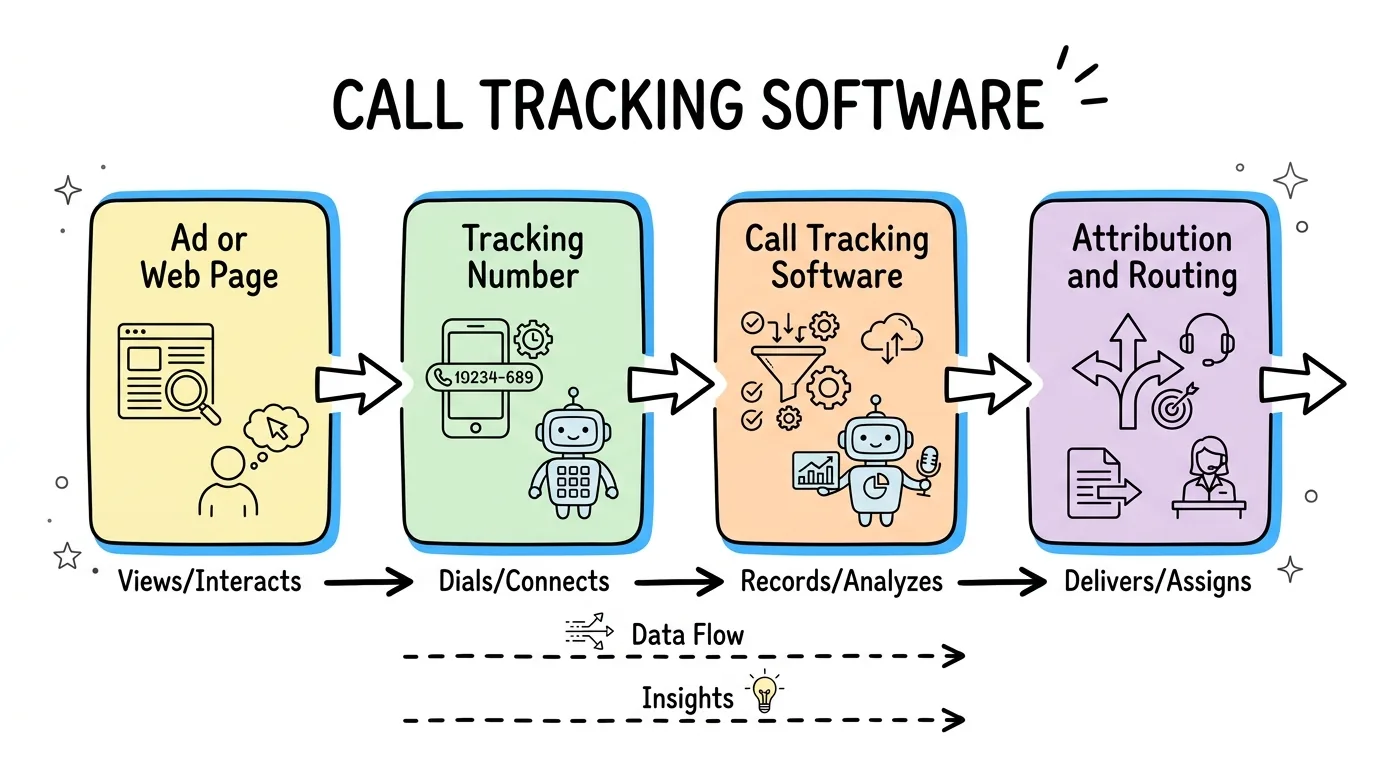
For pay-per-call campaigns, the process is more structured. A unique tracking number is assigned per campaign, ad group, or publisher source. When that number receives an inbound call, the system captures: the caller's number, the specific tracking number dialed (which maps to a campaign and traffic source), call duration (used to determine billability), and UTM parameters and GCLID from the originating URL, passed through the tracking number provisioning layer.
The call then routes in real time to a buyer, ring group, or IVR queue based on distribution rules configured in your platform. BIA Advisory Services projected that 162 billion calls would be made annually to U.S. businesses from smartphones by 2019, a number that has grown substantially with continued smartphone adoption. That call volume is precisely why call tracking infrastructure has become a core requirement for any serious performance marketing operation, alongside web form distribution.
Click-to-Call in Lead Generation Funnels
A funnel built for calls looks different from one built for form submissions. The page is shorter. The primary CTA appears above the fold. The headline states the tangible benefit of calling directly: "Speak with a licensed agent in 60 seconds" outperforms "Call Us Today" because it answers the visitor's implicit question: why act now?
Sticky mobile CTA bars are among the highest-impact UX decisions for call-focused funnels. Rather than requiring a visitor to scroll back to find a button, the bar stays fixed at the bottom of the screen throughout their reading session, so the call action is always one tap away.
The implication for funnel design is clear: in categories where urgency and purchase intent are high, the call button is the primary conversion asset, not a secondary option behind the form.
How Lead Distro AI Powers Click-to-Call Campaigns
Lead Distro AI includes native click-to-call functionality built directly into its funnel builder. The button block supports an action: "call" setting that renders as a tel: link at runtime. Visitors on mobile tap the button and their native dialer opens immediately. No redirect page, no interstitial, no extra step.
The platform also ships a sticky mobile CTA bar that supports the same action: "call" configuration. Set it once at the funnel level and it appears pinned to the bottom of every page in the funnel on mobile devices, which is exactly where pay-per-call traffic concentrates.
The funnel template library includes a call-first template that pre-configures the call button and page layout for inbound calls, so agencies can deploy a working call-generation funnel without building from scratch.
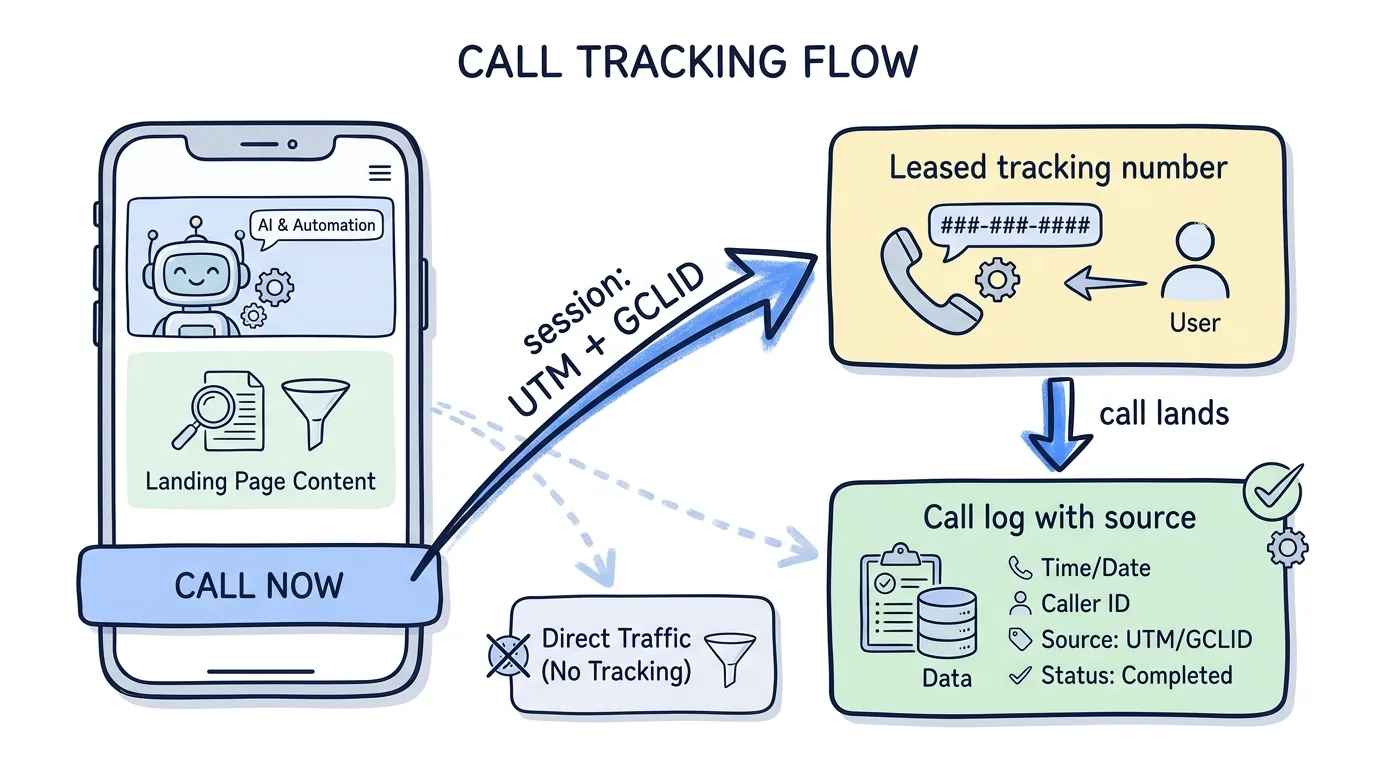
Point the button at a Lead Distro AI tracking number and every tap becomes a tracked inbound call. With dynamic number insertion on the page, the number a visitor sees is leased to their session, so when the call lands it is stamped with that session's attribution (UTM source, medium, campaign, content, and GCLID). Your call campaign's routing rules, such as priority, weighted, or ring-tree routing, then send it to the right buyer without manual triage.
Explore the full funnel builder and call routing configuration in the interactive product tour.
Click-to-Call vs. Web Forms: Which Converts Better?
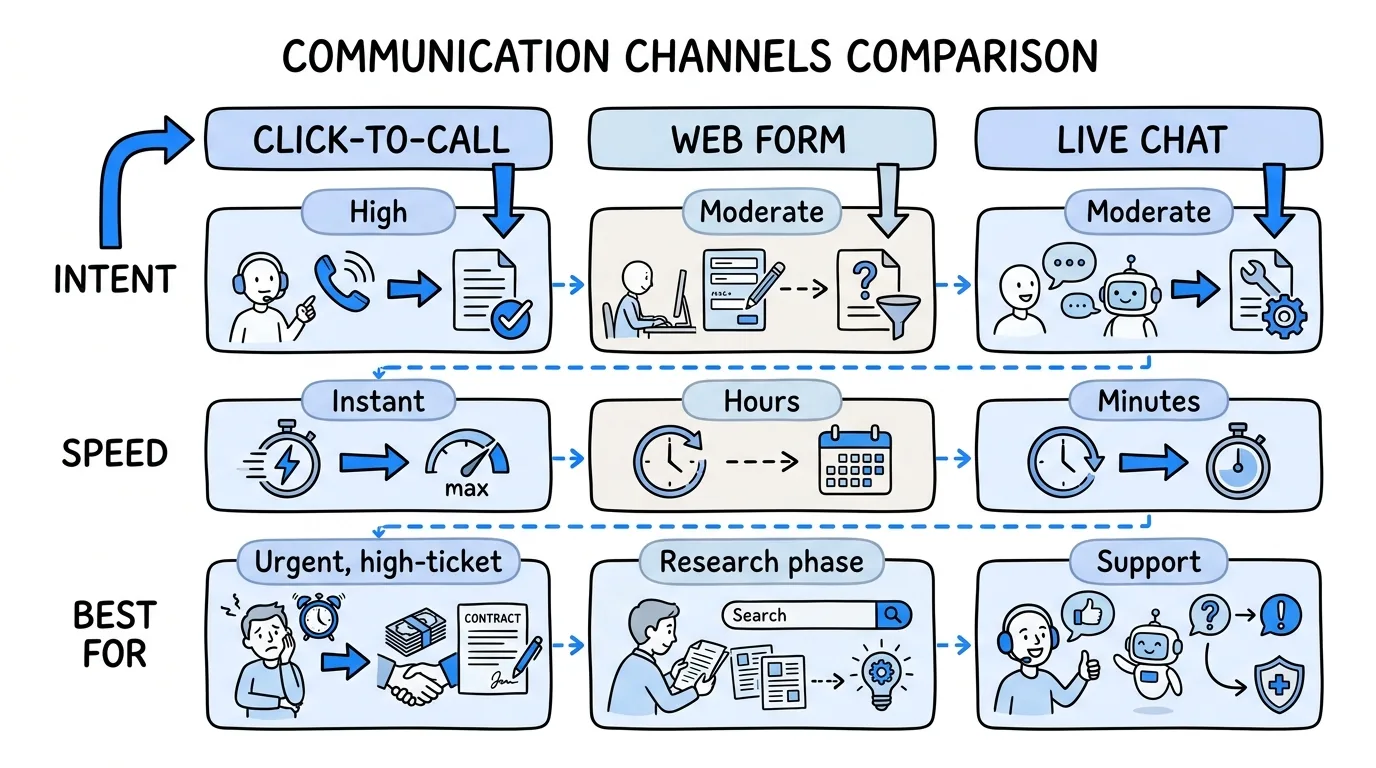
The direct answer: for high-intent verticals including personal injury legal, health insurance, home services, and financial products, click-to-call outperforms web forms on revenue per lead. For research-phase queries or B2B categories with long sales cycles, forms remain appropriate. A mature lead generation operation runs both in parallel and routes each channel to the matching buyer type.
| Feature | Click-to-Call | Web Form | Live Chat |
|---|---|---|---|
| Conversion rate | High (caller has declared immediate intent) | Moderate (lower friction but lower commitment) | Moderate (real-time but text-based) |
| Response speed | Instant | Hours to days without CRM routing | Seconds to minutes |
| Attribution | Full: UTM, GCLID, caller ID, campaign | Full: UTM, cookies, session data | Partial: session-level only |
| Best for | High-ticket, urgent purchases | Research-phase or B2B leads | Support, SaaS, lower-ticket queries |
| Mobile UX | One tap, native dialer | Typing on mobile creates friction | Moderate |
| Buyer preference | Immediate live contact needed | Async follow-up acceptable | Flexible |
"Inbound calls driven by digital advertising convert to customers at 10 to 15 times the rate of web leads," according to Invoca, a call intelligence and analytics platform that has published annual benchmarks across insurance, healthcare, financial services, and home services verticals since 2016 (Invoca Call Intelligence Benchmark Report). For agencies monetizing leads in these categories, that conversion multiplier is the core argument for building call-first funnels.
For a detailed comparison of the leading call tracking platforms that power these workflows, see best call tracking software in 2026.
How to Track Click-to-Call Leads
Tracking click-to-call leads connects three data layers:
1. The tracking number layer. Each campaign, ad group, or publisher source receives a unique phone number. When that number receives an inbound call, the system knows which traffic source generated it. Lead Distro AI's call tracking is usage-based: a per-number monthly fee for each tracking number provisioned, plus a per-minute rate for inbound call duration. For a full breakdown of how per-number and per-minute pricing compares across platforms in the category, see call tracking software pricing.
2. The session layer. For web traffic, Dynamic Number Insertion (DNI) dynamically swaps the tracking number displayed to each visitor. A JavaScript snippet reads the visitor's UTM parameters and GCLID from the URL, stores them in session, and swaps in the matching tracking number automatically. When the visitor calls, the system already knows their campaign source without manual tagging on each link.
3. The call record layer. When a call lands on a Lead Distro AI tracking number, the attribution from the visitor's session (UTM source, UTM medium, UTM campaign, UTM content, and GCLID) is stamped on the call log. That data feeds your reporting and routing, so every call is traceable from ad click to answered call to buyer payout.
For more context on how call-based lead distribution fits into the broader pay-per-call ecosystem, see how pay-per-call networks operate.
Best Practices for Click-to-Call Lead Generation
Lead with the caller's outcome, not your brand. Headlines that promise a specific result in a specific timeframe, "Get a free injury case review in 90 seconds," outperform generic CTAs. Visitors decide whether to call based on what they gain, not who you are.
Place the primary call button above the fold on mobile. Research from the Nielsen Norman Group confirms that mobile users make engagement decisions within the first visible screen. Any CTA that requires scrolling is a CTA that a significant portion of visitors will never see.
Use a sticky CTA bar. The sticky bar eliminates scroll-to-find friction on longer landing pages without cluttering the content. It is the single highest-impact implementation change available in any call-focused funnel builder.
Assign a unique tracking number per traffic source. Running Google Ads, Meta Ads, and organic search simultaneously into a single number makes optimization impossible. Segment by source, ad group, or publisher so you know which traffic produces the highest-quality calls, not just the most calls.
Set a minimum call duration before routing to buyers. Two-second accidental dials are not billable events for most pay-per-call buyers. Configure your minimum billable duration, typically 60 to 90 seconds for most verticals, in your distribution rules before calls reach buyers.
Split-test button copy systematically. "Call Now," "Speak with an Agent," and "Get Your Free Quote" produce different tap rates depending on the vertical and visitor awareness stage. Run each variant with at least 500 sessions before drawing conclusions.
Ready to build your first click-to-call funnel? Start your 7-day free trial (credit card required). The Starter plan at $297/month includes lead distribution routing and live funnels. The Call Tracking Only plan at $147/month covers tracking and attribution without distribution or the funnel builder, useful for agencies that want to measure call volume on their existing pages before wiring up buyer routing.
Frequently Asked Questions
What is click-to-call and how does it work?
Click-to-call is a feature that converts a phone number into a tappable action using the tel: URI scheme on the web, or a native call action inside mobile apps and advertising platforms like Google Ads and Meta. When a visitor taps the button on their smartphone, their device opens the native dialer with the number pre-filled and they complete the call with one additional tap. For pay-per-call campaigns, the number shown is a tracking number tied to the visitor's specific traffic source, so the call is attributed to the campaign, ad, or publisher that generated it and routed to the correct buyer automatically.
How is click-to-call different from standard call tracking?
Standard call tracking assigns unique phone numbers to campaigns and measures call volume and duration. Click-to-call is the front-end mechanism that makes those tracked numbers easy to use on mobile: instead of a static number a visitor has to copy and dial manually, a click-to-call button makes the action one tap. When combined with a distribution platform like Lead Distro AI, every tap that dials a tracking number becomes a fully attributed call that routes to a buyer automatically.
Does Lead Distro AI support click-to-call natively?
Yes. The Lead Distro AI funnel builder includes a button block with an action: "call" setting that renders as a tel: link at runtime on mobile devices. The platform also ships a sticky mobile CTA bar that supports the same call action, persisting across every page in the funnel. Point either one at a Lead Distro AI tracking number to capture attribution and route the call to a buyer.
How does click-to-call attribution work when a caller comes from a Google Ads campaign?
When a visitor clicks a Google Ad and lands on your funnel, their GCLID (Google Click Identifier) is present in the URL. With dynamic number insertion on the page, Lead Distro AI leases a tracking number to that visitor's session and stamps the session's GCLID and UTM parameters on the call when it lands. This connects every call back to its specific Google Ads campaign, ad group, and keyword, giving you the data to optimize bids by call quality and duration rather than click volume alone.
What does click-to-call cost to run in Lead Distro AI?
The Call Tracking Only plan starts at $147 per month and covers call tracking, attribution, and reporting for click-to-call traffic on your own pages, without lead distribution or the funnel builder. The Starter plan at $297 per month adds lead distribution with Round Robin, Weighted, and Priority/Waterfall routing, plus live funnels built in the funnel builder. Ping-Post distribution starts on the Growth plan at $497 per month. Call tracking is usage-based on top of the flat subscription: a per-number monthly fee for each tracking number provisioned, plus a per-minute rate for inbound call duration. A 7-day free trial (credit card required) lets you build and test a click-to-call funnel before committing to a plan.
Click-to-call is not a feature to bolt on after your funnel is built. For any pay-per-call or pay-per-lead operation targeting high-intent mobile searchers, it is the primary conversion mechanism. Getting the button placement, tracking infrastructure, and distribution routing correct from day one determines whether your paid call traffic becomes predictable revenue or disappears into an untracked black hole.
Lead Distro AI gives you the funnel builder, the call tracking pipeline, the attribution system, and the distribution routing in one platform. Start your 7-day free trial and build your first click-to-call funnel today.
Ready to route your first inbound call? Lead Distro AI's funnel builder has click-to-call built in. Start your 7-day free trial (credit card required) and connect your first tracking number in minutes.
About the Author
Founder & CEO of Lead Distro AI & Great Marketing AI
UC Berkeley graduate and former software engineer at Microsoft. Rafael built Lead Distro AI after managing over $10M in ad spend for performance marketing agencies (pay-per-lead and pay-per-call), including running campaigns for Neil Patel. He combines deep software engineering expertise with hands-on performance marketing experience to build tools that help these agencies scale profitably.
About Lead Distro AI
Lead Distro AI: AI-Powered Lead Distribution & Call Tracking That Maximizes ROI
The modern platform for pay-per-lead and pay-per-call agencies. Route, score, and deliver leads with AI-powered automation and real-time P&L tracking. Built for performance marketing agencies and lead buyers across legal, insurance, mortgage, solar, and home services verticals.
4 Distribution Methods
Waterfall, Round Robin, Weighted, Ping-Post
Ping-Post Auctions
Real-time bidding with sub-second routing
Real-Time P&L Reporting
Track revenue, costs, and profit per campaign
Call Tracking
Assign tracking numbers, record calls, and attribute conversions
Lead Scoring
Score every lead before routing to maximize conversion
Partner Portal
Self-serve dashboard for buyers to track leads