What Is Pay Per Call? Complete Guide to Phone Leads
Pay per call is a performance model where advertisers pay only for qualified inbound phone calls. Learn how it works, who's involved, and how to start.

Rafael Hernandez
Founder & CEO
Ex-Microsoft SWE · $10M+ PPL ad spend
I hope you enjoy reading this blog post. If you want to try Lead Distro AI for free, click here.
Author: Rafael Hernandez | Founder & CEO of Lead Distro AI
Pay per call is a performance marketing model where advertisers pay only for qualified inbound phone calls, not for the clicks, impressions, or form fills that may never convert. A publisher drives a consumer to dial a unique tracking number, the call is screened and routed to a buyer in real time, and the advertiser pays an agreed price for every call that meets the qualification rules. In short, pay per call is phone lead monetization: turning a high-intent caller into a billable, trackable product.
The model works because calls convert. Invoca's analysis of 60 million phone calls found that 37% of digital-marketing phone leads convert during the call, well above the close rate of a typical web form. BIA Advisory Services estimates that phone calls influence roughly $1 trillion in U.S. consumer spending. This guide explains what pay per call is, how the model works step by step, who the players are, and how to start as either a buyer or a publisher. If you already run campaigns, Lead Distro AI tracks, routes, scores, and bills calls and data leads in one platform.
Key Takeaways
- Pay per call is a pay-for-performance model where advertisers pay only for qualified inbound phone calls, never for clicks or impressions.
- Calls convert at high rates because callers are high-intent. Invoca found 37% of digital-marketing phone leads convert during the call.
- Three roles run the ecosystem: publishers generate the calls, networks route and qualify them, and advertisers (the buyers) pay per call.
- A call becomes billable only when it passes IVR screening and meets the minimum-duration and qualification rules set in advance.
- You can enter as a buyer or a publisher, and the same infrastructure that powers pay per call also powers pay per call lead generation and data-lead distribution.
How Pay Per Call Works
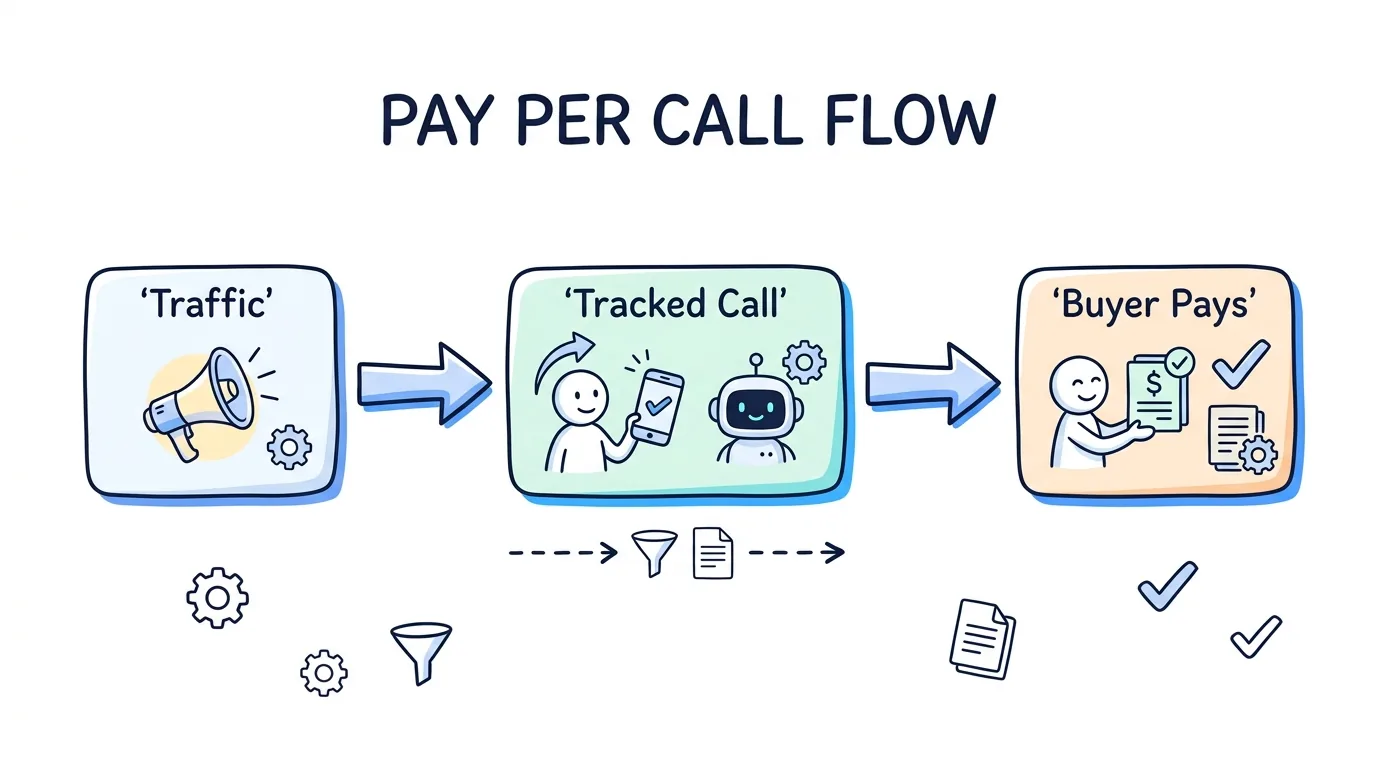
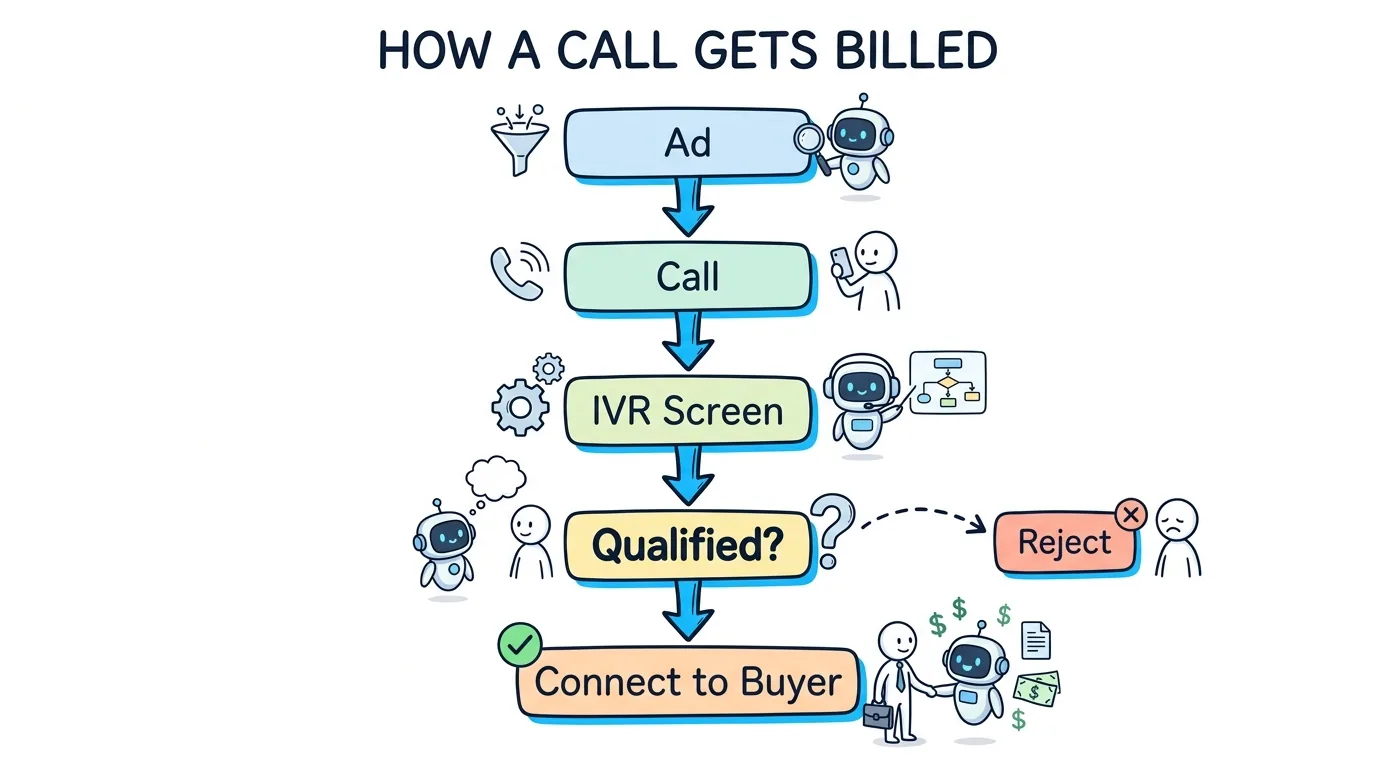
Pay per call follows a repeatable sequence from ad to payout. The publisher promotes a unique tracking number, the consumer calls it, the call is qualified, and the advertiser pays for the ones that count.
- Campaign setup: The advertiser defines the offer, target geography, business hours, billable call duration, and bid price.
- Tracking number: A unique number (also called a CTN or DID) is issued so every call's source and duration are measured.
- Call generation: A publisher drives calls through paid search, SEO, social, display, or offline media like radio and TV.
- Screening and routing: An IVR pre-qualifies the caller, then routes qualified callers to a buyer in real time.
- Payment: The advertiser pays for each call that meets the rules, and the publisher earns a payout.
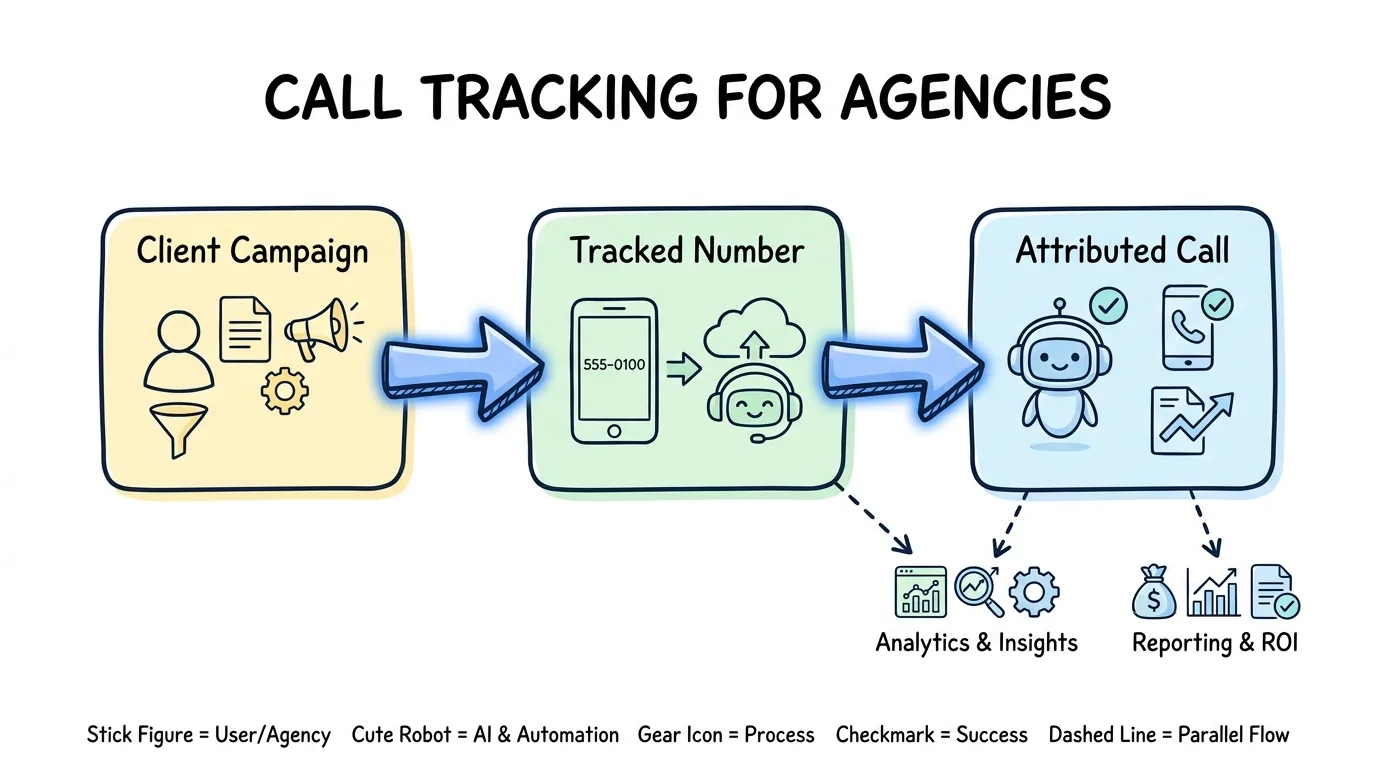
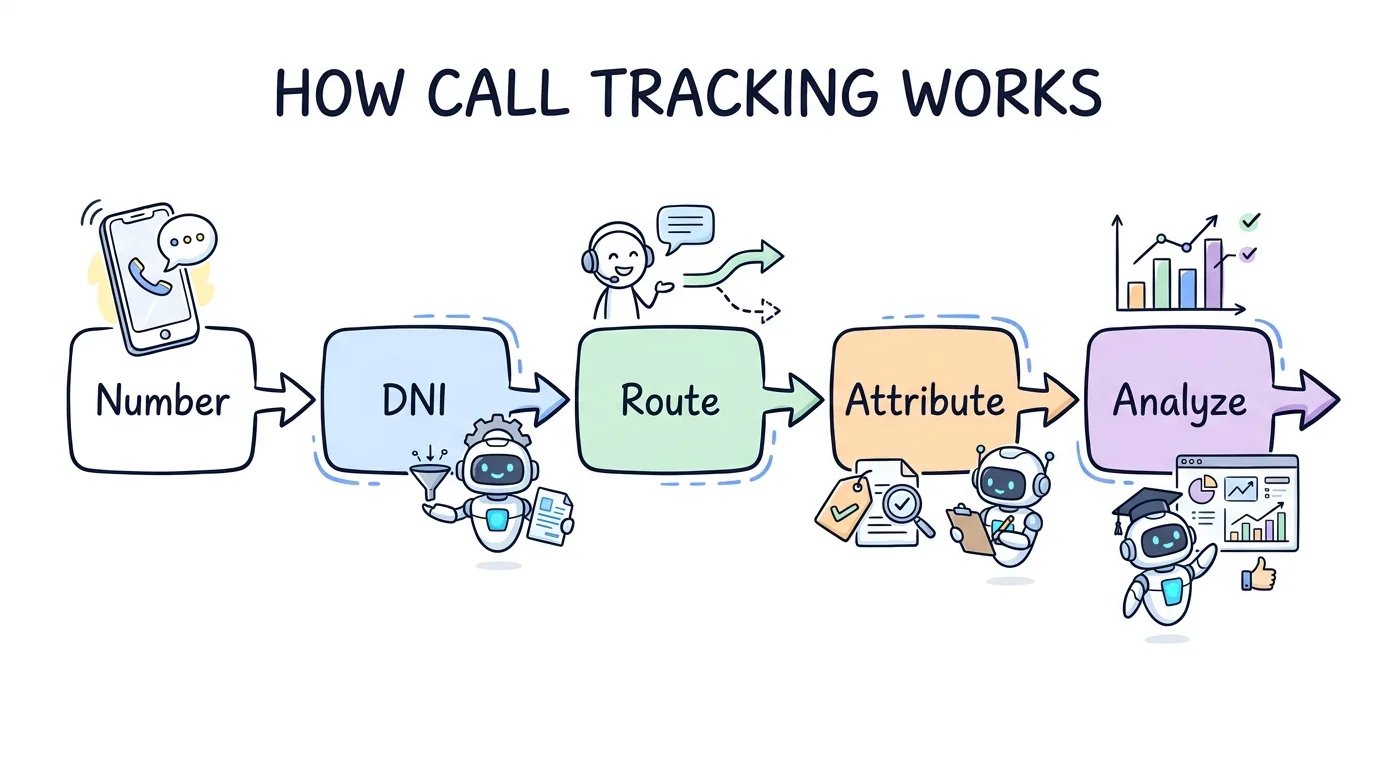
Accurate measurement depends on call tracking software built for pay per call agencies, which ties every billable call back to the source that produced it.
The Pay Per Call Ecosystem: Who Is Who
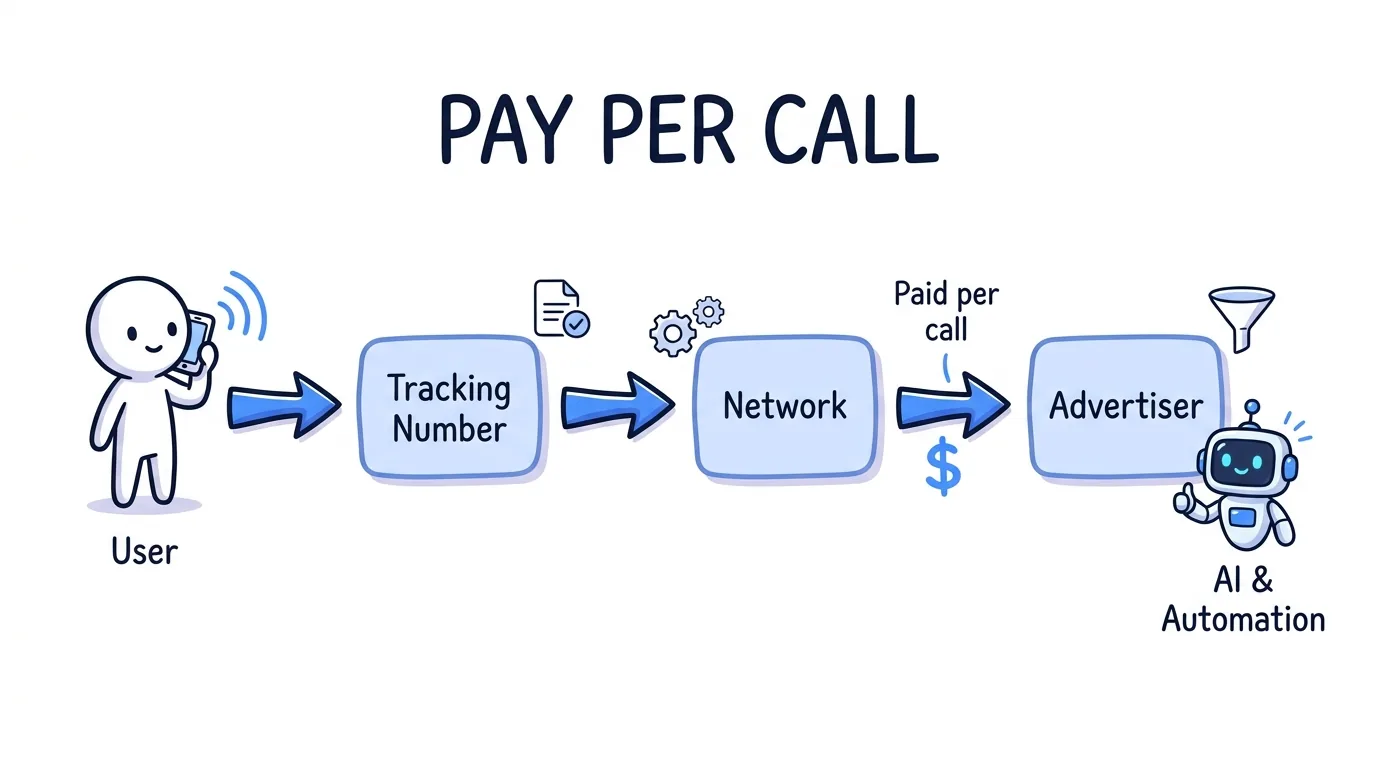
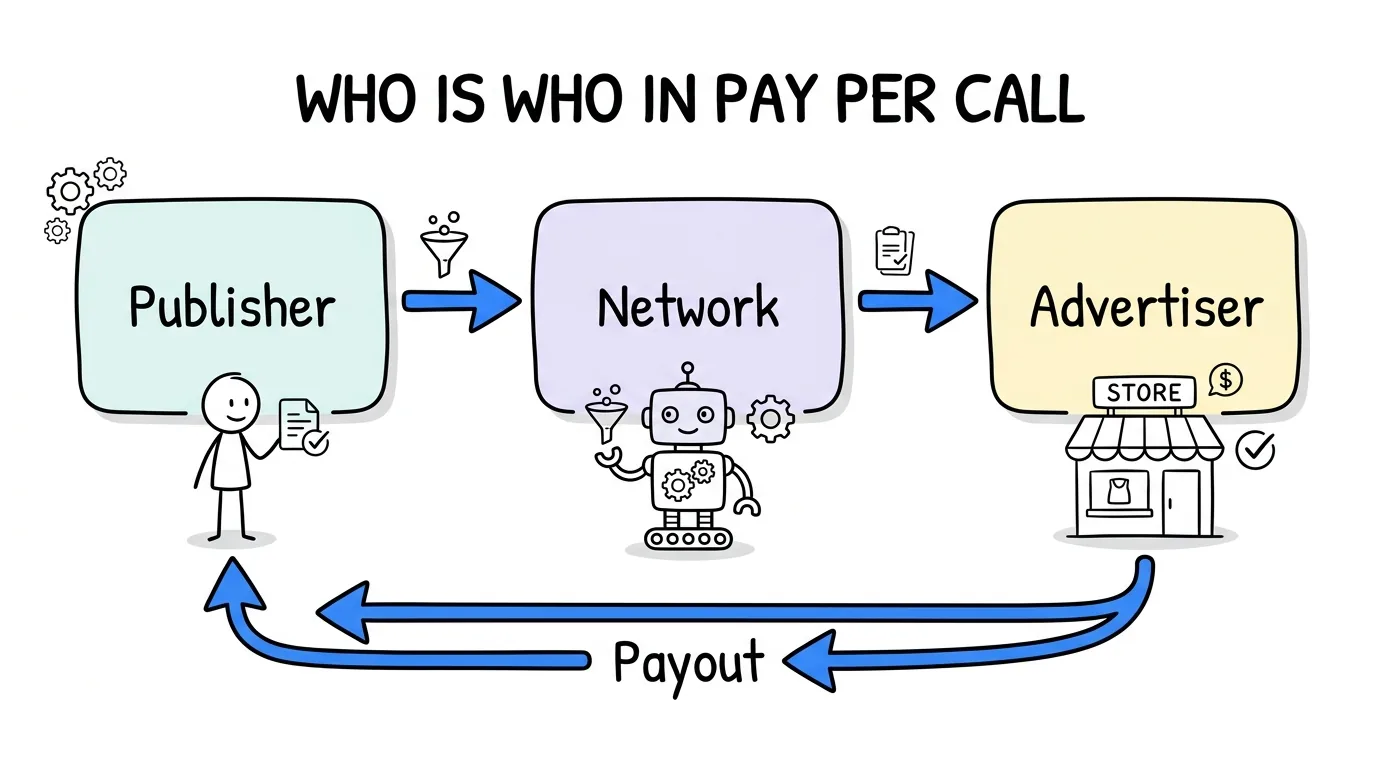
Three roles make pay per call work, and understanding them is the fastest way to find your place in the model.
- Advertisers (buyers): The businesses that want the calls, such as law firms, insurance carriers, and home-services contractors. They set the bid price and the qualification criteria.
- Publishers (affiliates): The marketers who generate the calls. In pay per call affiliate marketing, publishers run the traffic and earn a payout on every qualified call they deliver.
- Networks and platforms: The connective layer that issues tracking numbers, screens calls, routes them, and reconciles payouts between publishers and advertisers.
A pay per call network aggregates many publishers and advertisers into one marketplace, while a self-serve platform lets an individual agency run its own buyers and suppliers directly. Either way, the infrastructure has to attribute, qualify, and bill each call without manual spreadsheets.
Pay Per Call vs Pay Per Lead
Pay per call and pay per lead both monetize consumer intent, but they sell different products. Pay per lead sells a contact record that a buyer must follow up on. Pay per call sells a live caller already on the line, which is why it usually commands a higher price per transaction at lower volume.
| Factor | Pay Per Call | Pay Per Lead |
|---|---|---|
| What is sold | Live inbound call | Contact record |
| Typical price | $40 to $500 per call | $15 to $250 per lead |
| Contact rate | 100% (live on line) | 40% to 60% |
| Volume potential | Moderate | Very high |
| Best vertical fit | Legal, insurance, home services | Solar, mortgage, financial |
Most high-volume operators run both. For a deeper breakdown of margin and conversion, read pay per call vs pay per lead.
What Makes a Call Billable
Not every call counts. A billable call is one that satisfies the rules both sides agreed to before the campaign launched, which protects advertisers from junk and gives publishers a clear target.
- IVR qualification: The caller answers a short menu confirming intent and eligibility (for example, age, location, or coverage need).
- Minimum duration: Many offers only pay for calls that last past a threshold, often 60 to 120 seconds, to filter out misdials and instant hang-ups.
- Duplicate detection: Repeat callers from the same number inside a set window are flagged so a buyer is not billed twice.
- Business hours and caps: Calls outside the buyer's hours or beyond a daily cap are held or rerouted.
These rules are the difference between clean pay per call leads and disputes. A platform should enforce them automatically and show both sides the same numbers. You can see how that screening and routing looks in the product tour.
How to Get Started in Pay Per Call
There are two ways in, and the right one depends on whether you own the demand or the traffic.
As a buyer or advertiser
Start by deciding what a qualified call is worth to you, then set a bid, a billable duration, and your hours. Test with one offer before scaling. The fastest path is to plug into an existing buyer network or run your own campaigns on a platform that handles qualification and billing. Our guide to the best pay per call platforms compares the options.
As a publisher
Publishers profit on the spread between what it costs to generate a call and the payout per qualified call. Pick a vertical with strong call demand, drive traffic to a tracking number, and optimize toward billable pay per call leads, not raw volume. If you want the full operational playbook, read how to start a pay per call agency.
How Lead Distro AI Handles Pay Per Call
Lead Distro AI is built for both pay-per-lead and pay-per-call agencies, plus lead brokers and lead buyers and sellers who need one system instead of a stack of tools. It tracks inbound calls, screens them, and routes them with four distribution methods: round robin, weighted, priority/waterfall, and ping-post.
"A call is the only lead that arrives already talking to you," says Rafael Hernandez, Founder and CEO of Lead Distro AI. "That is why buyers pay a premium for pay per call. There is no chase, no voicemail, no race to dial first. The operators who win treat each call like inventory: screen it, score it, and bill it the moment it qualifies."
Plans start at $297 per month, with call tracking priced on usage (a per-number monthly fee plus a per-minute rate for inbound calls) on top of the flat subscription. Native AI scoring grades every lead in under a second, and a real-time P&L dashboard shows revenue, cost, and margin per source and per buyer. See current tiers on the pricing section or explore call tracking directly.
Frequently Asked Questions
What is pay per call?
Pay per call is a performance marketing model where advertisers pay only for qualified inbound phone calls instead of clicks, impressions, or form submissions. A publisher promotes a unique tracking number, the consumer calls it, and the call is screened and routed to a buyer in real time. The advertiser is billed only when a call meets the agreed rules, such as minimum duration and IVR qualification, which makes pay per call a measurable, high-intent channel.
How does pay per call work?
Pay per call works in five steps: the advertiser sets the offer and bid, a tracking number is issued, a publisher drives calls to it, an IVR screens each caller, and qualified callers are routed to a buyer. The advertiser pays for every call that passes the qualification rules, and the publisher earns a payout. Call tracking software measures each call's source and duration so revenue ties back to the campaign that produced it.
How is pay per call different from pay per lead?
Pay per call sells a live inbound phone conversation, while pay per lead sells a contact record the buyer must call back. Pay per call typically earns more per transaction because the caller is already on the line and ready to talk, but it runs at lower volume. Pay per lead scales to far higher volume at a lower price per unit. Many agencies run both, using pay per call for premium buyers and data leads for volume buyers.
How do publishers get paid in pay per call?
In pay per call affiliate marketing, publishers earn a fixed payout for every qualified call they deliver to an advertiser. The publisher drives traffic to a tracking number through search, social, display, or offline media, and the platform attributes each billable call back to that publisher. Payout only triggers when a call meets the offer's rules, so publishers optimize toward calls that pass IVR screening and the minimum-duration threshold rather than raw call volume.
What industries work best for pay per call?
Pay per call works best in service verticals where consumers prefer to call and where a single sale is valuable. Legal and personal injury, insurance and Medicare, and home services such as HVAC and roofing are the strongest fits because callers are high-intent and buyers close on the phone. These verticals also support pay per call lead generation at scale, since urgent needs push consumers to dial rather than fill out a form.
Does Lead Distro AI support pay per call?
Yes. Lead Distro AI runs pay per call and pay per lead in a single platform, so data leads and inbound calls share one buyer network, one routing engine, and one P&L dashboard. It tracks and screens calls, scores every lead with AI in under a second, and bills accurately by source and buyer. Plans start at $297 per month, with call tracking priced on usage on top of the flat subscription.
The Bottom Line
Pay per call is the cleanest way to monetize phone intent: advertisers pay only for qualified inbound calls, publishers earn on every billable call, and a platform in the middle screens, routes, and reconciles the money. It rewards operators who treat calls like measurable inventory rather than lucky inbounds. Whether you enter as a buyer or a publisher, the model only works when attribution and billing are accurate, which is exactly where modern pay per call marketing separates winners from spreadsheet operators.
Ready to track, route, and bill pay per call and data leads in one place? Start your 7-day free trial of Lead Distro AI or take the product tour to see call screening and routing in action.
About the Author
Founder & CEO of Lead Distro AI & Great Marketing AI
UC Berkeley graduate and former software engineer at Microsoft. Rafael built Lead Distro AI after managing over $10M in ad spend for performance marketing agencies (pay-per-lead and pay-per-call), including running campaigns for Neil Patel. He combines deep software engineering expertise with hands-on performance marketing experience to build tools that help these agencies scale profitably.
About Lead Distro AI
Lead Distro AI: AI-Powered Lead Distribution & Call Tracking That Maximizes ROI
The modern platform for pay-per-lead and pay-per-call agencies. Route, score, and deliver leads with AI-powered automation and real-time P&L tracking. Built for performance marketing agencies and lead buyers across legal, insurance, mortgage, solar, and home services verticals.
4 Distribution Methods
Waterfall, Round Robin, Weighted, Ping-Post
Ping-Post Auctions
Real-time bidding with sub-second routing
Real-Time P&L Reporting
Track revenue, costs, and profit per campaign
Call Tracking
Assign tracking numbers, record calls, and attribute conversions
AI Lead Scoring
Score every lead before routing to maximize conversion
Partner Portal
Self-serve dashboard for buyers to track leads