Best Conversation Intelligence Software for Call Tracking
Compare the best conversation intelligence software for call tracking, see how it differs from call analytics, and pick a tool that scores and routes calls.

Rafael Hernandez
Founder & CEO
Ex-Microsoft SWE · $10M+ PPL ad spend

I hope you enjoy reading this blog post. If you want to try Lead Distro AI for free, click here.
Author: Rafael Hernandez | Founder & CEO of Lead Distro AI
Conversation intelligence software transcribes every phone call, analyzes what was said for intent, sentiment, and outcome, and turns each conversation into data you can score, route, and act on. For call tracking in 2026, the main options are Lead Distro AI for pay-per-call agencies, Invoca for enterprise marketing, CallRail and CallTrackingMetrics for marketing teams, Gong for sales coaching, and Marchex for high-volume analytics.
Instead of a recording nobody listens to, you get a scored record of each call: whether the caller was qualified, what they wanted, whether it converted, and where it should go next. As Invoca defines it, conversation intelligence is "software that uses artificial intelligence (AI) to analyze speech or text in order to derive data-driven insights from conversations between sales agents and customers" (Invoca). The category is growing fast: the global conversation intelligence software market reached $28.54 billion in 2025 and is projected to hit $32.25 billion in 2026, a 13% growth rate (The Business Research Company). It sits on top of call analytics, the layer that measures where each call came from, and the difference between the two is explained below.
For pay-per-lead and pay-per-call agencies, this software is what turns raw call volume into billable, qualified, routable revenue. Phone calls convert to revenue 10 to 15 times more often than web form leads (BIA/Kelsey, via Invoca), so a call you cannot measure is your highest-value lead leaking out. Lead Distro AI scores every lead and call against rules you set, inside its routing layer, so you can start a free Lead Distro AI trial and see every call scored and distributed in one place.
Key Takeaways
Conversation intelligence softwaretranscribes, analyzes, scores, and routes every call, turning untracked conversations into structured, billable data.- Call analytics and conversation intelligence answer different questions. Call analytics tells you where a call came from and what it cost; conversation intelligence tells you what was said and whether the caller qualified.
- Software does what manual review cannot. Traditional call quality assurance grades only 1% to 2% of calls by hand; conversation intelligence scores all of them automatically.
- The 2026 market is large and growing. The category reached $28.54 billion in 2025 and is on track for $32.25 billion in 2026.
- Tools split into two camps. Sales-coaching platforms like Gong analyze internal sales calls, while call-driven platforms like Invoca, CallRail, CallTrackingMetrics, and Lead Distro AI tie conversations to marketing sources and route them.
- For agencies, scoring belongs in the routing layer. Rule-based lead scoring that feeds distribution is what validates a billable call before it reaches a buyer.
- Pricing for call tracking is usage-based. Expect a platform fee plus usage, typically a per-number monthly fee and a per-minute rate on inbound calls. When you compare vendors, ask where those charges show up.
What Is Conversation Intelligence Software?
Conversation intelligence software sits on top of basic call tracking and converts raw audio into decisions. At the floor level, a call tracking tool logs caller ID, duration, and a recording. A real conversation intelligence platform goes further: it runs call transcription on every call, then reads that transcript for the signals that predict value.
It extracts four kinds of insight automatically:
- Intent detection spots what the caller actually wants, a quote, a booking, or just a question.
- Sentiment analysis reads tone and emotion across the conversation.
- Keyword spotting flags spoken phrases that matter, such as a competitor name or a buying signal.
- Outcome tracking records whether the call converted, so each record carries a result.
This is the line between recording and intelligence. Recording stores the audio; conversation analytics tells you what the audio means for revenue. The measurement layer underneath all of this, call analytics, is compared side by side in the next section.
Call Analytics vs Conversation Intelligence
Call analytics and conversation intelligence are two layers of the same stack, and most buyers searching for one need both. Call analytics software measures the call itself: it logs every call (caller ID, timestamp, duration, recording), attributes it to the campaign, keyword, and page that produced it, and turns that into numbers like cost per qualified call and billable-call rate. Conversation intelligence reads what was said on the call: intent, sentiment, objections, and outcome.
Put simply, call analytics answers "where did this call come from, and what did it cost?" Conversation intelligence answers "was this a real buyer, and what happened?" The labels now overlap in vendor marketing because the category merged. As MarTech notes, call analytics has moved "from providing basic analytics to providing conversation intelligence based on AI-driven algorithms that extract and predict caller intent, and measure caller tone, sentiment and emotion" (MarTech, 2024).
| Compare | Call Analytics | Conversation Intelligence |
|---|---|---|
| Question it answers | Where did the call come from, and what did it cost? | What was said, and did the caller qualify? |
| Core data | Caller ID, duration, source, keyword, recording | Transcript, intent, sentiment, objections, outcome |
| Key method | Dynamic number insertion (DNI) | Transcription and conversation analysis |
| Typical output | Cost per qualified call by campaign | A quality score for every call |
The Four Layers of a Call Platform
A complete call platform is best understood as four stacked layers, each adding intelligence to the one beneath it.
- Logging: the raw record of every call, caller ID, timestamp, duration, and recording. This is the data floor.
- Attribution: dynamic number insertion connects each call to the campaign, keyword, and page that generated it.
- Intelligence: transcription and conversation analytics read the call for intent, sentiment, keywords, and outcome.
- Routing: scoring and distribution send each qualified call to the buyer, rep, or department its rules select in real time.
Most legacy tools stop at logging and attribution. The 2026 leaders add intelligence and routing, which is where revenue actually changes. Lead Distro AI runs all four layers in one product and scores every call against your rules, so the routing decision rests on real quality, not just which line rang. For the logging and review layers in depth, see our guides to call logging software and call monitoring software.
Turning Inbound Calls Into Revenue
Conversation intelligence only pays off when each scored call is tied to the marketing that produced it, and that link runs on dynamic number insertion. A small script swaps the phone number on your website for a unique tracking number tied to each visitor's source and session. When that visitor calls, the platform records which Google Ads keyword, Meta campaign, organic page, or email drove the call. Our guide to dynamic number insertion covers the setup.
Without that link, the calls your marketing generates stay invisible in reporting, and you optimize ad spend against an incomplete picture of your conversions. With it, "we got 40 calls" becomes "campaign B produced 22 calls at a $38 cost per qualified call." Add conversation intelligence on top and you also see which of those calls were real buyers, which is the number revenue attribution actually depends on.
The scale problem disappears too. Large language models "automatically summarize conversations, extract action items, and flag deal risks by analyzing patterns like declining engagement or unresolved objections" (Outreach, 2025). An agency reviewing 500 calls a week cannot do that by hand; software does it on every call.
How Conversation Intelligence Software Works

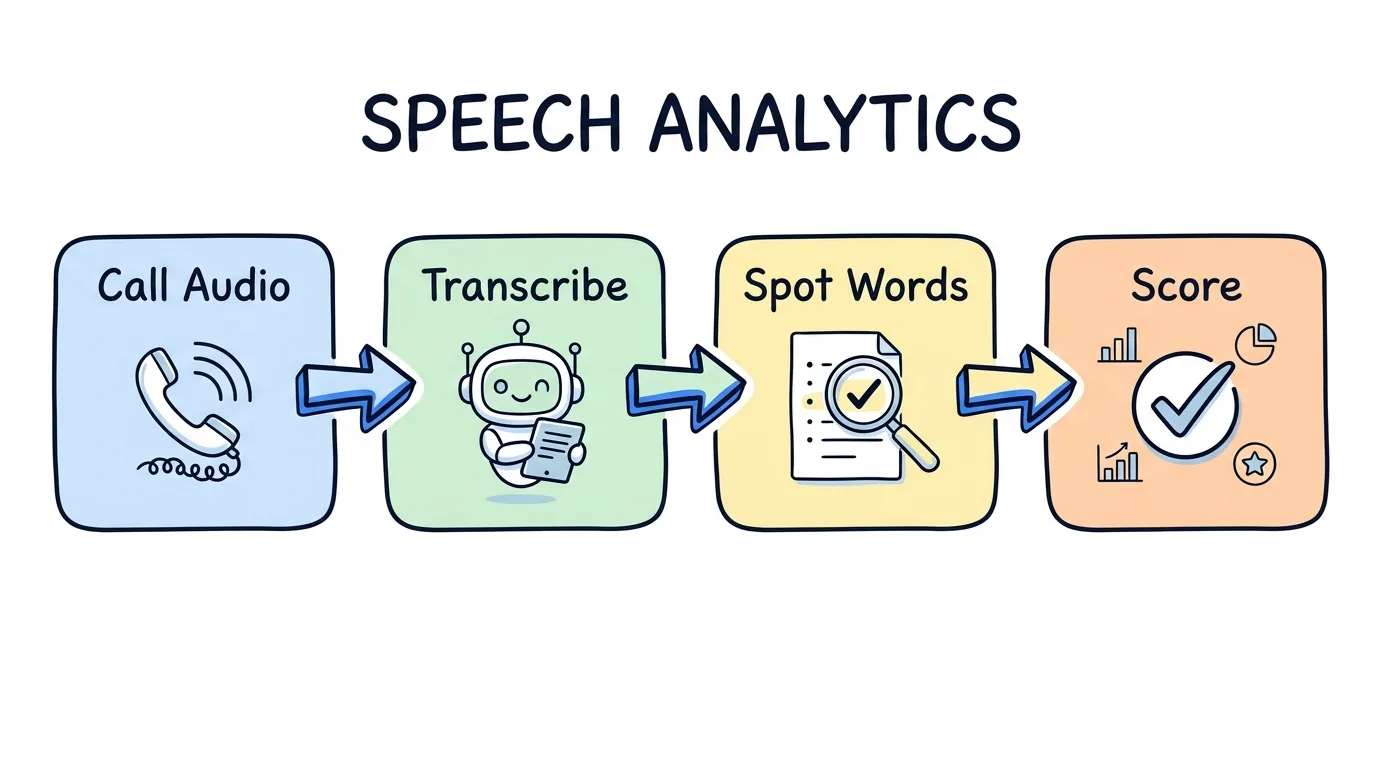
A conversation intelligence software pipeline runs in four stages, and the best platforms complete all four in seconds, not after a manager listens back.
- Capture and transcribe. Real-time transcription converts the live call to text using speech-to-text models.
- Analyze. AI call analysis reads the transcript for intent, sentiment, spotted phrases, and objections.
- Score. The platform applies buyer scorecards to grade call quality and produce call summaries.
- Act. The score drives the next step: route the call, update the CRM, or flag it for review.
The reason this matters is coverage. Traditional quality assurance has a hard ceiling, because supervisors can only grade a random sample. Industry analysis is consistent that manual QA reviews roughly 1% to 2% of calls (Level AI). Automated QA changes the math: software scores close to 100% of calls, so coaching and billing decisions rest on the full picture instead of a sample. To compare the engine that powers this against pure transcription tools, see our coverage of speech analytics software.
What Conversation Intelligence Software Does for Agencies
For agencies, conversation intelligence software earns its keep at the handoff, the moment a call becomes billable or worthless. The single question that decides margin is whether a call was real and qualified, and that answer should come from the transcript, not from duration or a guess.
Here is where the software pays for itself:
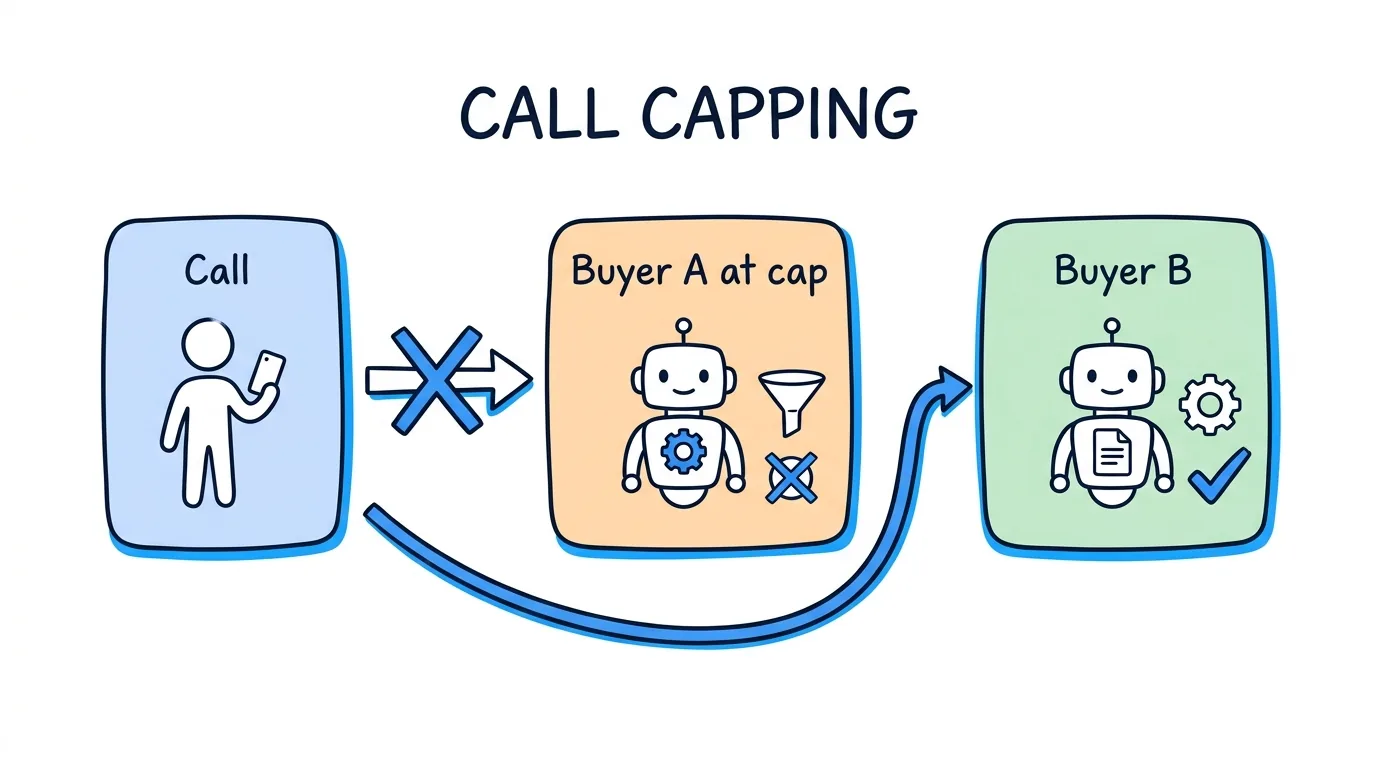
- Lead qualification before routing. A scored call routes to a buyer only when it clears your quality bar.
- Billable-call validation. A transcript-derived score makes your billable-call rate defensible to buyers.
- Fraud detection. Repeated short calls, spoofed numbers, and recycled leads get flagged before you pay for them.
Lead Distro AI applies rule-based lead scoring inside the distribution engine, so the score that grades a call is the same score that decides where it goes, and you can explain every score to a buyer. To be clear about the category: Lead Distro AI is a lead distribution and pay-per-call routing platform with lead scoring built in, not a standalone enterprise sales-coaching suite like Gong. That focus is the point for agencies that route calls to buyers. You can see how call scoring works inside the platform, and pair it with lead scoring software and call tracking for full coverage of form and phone leads.
Best Conversation Intelligence Software in 2026
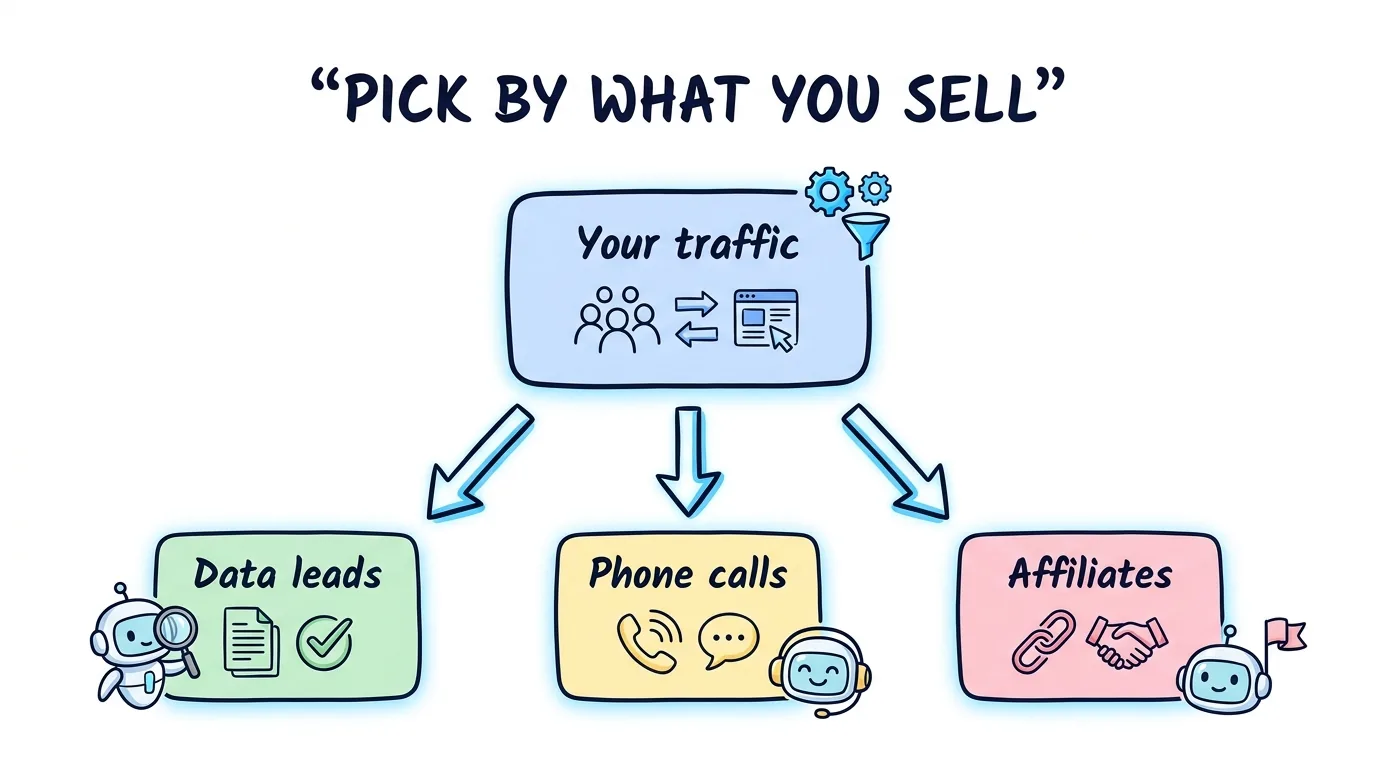
The best conversation intelligence software for your business depends on whether you are coaching a sales team, optimizing marketing spend, or running calls as billable inventory. Sales-coaching tools, marketing call trackers, and agency-focused routing platforms all carry the conversation intelligence label, but they solve different problems.
| Platform | Best For | Transcription + Scoring | Routing to Buyers | Pricing Model (as of September 2026) | Free Trial |
|---|---|---|---|---|---|
| Lead Distro AI | Pay-per-lead AND pay-per-call agencies | Rule-based scoring on every lead and call, built in | Native: 4 distribution methods | From $147/mo (Call Tracking Only) or $297/mo with lead distribution, plus usage-based call tracking (ping-post from $497/mo) | 7 days |
| Invoca | Enterprise marketing | AI conversation intelligence (Signal AI) | In-platform IVR, martech integrations | Custom quote, no published prices | Not verified |
| CallRail | Small-business marketing | AI transcription, keyword spotting, lead scoring | IVR, round robin, geo-routing | Tiered plans (from $50/mo billed yearly) plus usage | 14 days, no card required |
| CallTrackingMetrics | Marketing and contact center teams | Call recording, 1 to 5 star call scoring, keyword spotting (Marketing Pro and up) | IVR menus, Smart Router (Marketing Pro and up) | From $79/mo billed monthly (Marketing Lite) plus usage | First month plan fee waived |
| Gong | Enterprise sales coaching | Not verified | Not verified | Not verified | Not verified |
| Marchex | High-volume call analytics | AI conversation intelligence and sentiment | Not verified | Depends on tracking numbers, call volume, and analytics level | 30-day trial (Marketing Edge, via sales) |
Not verified: we could not confirm this on the vendor's own website as of September 2026. Check with the vendor.
1. Lead Distro AI: Best for Pay-Per-Lead and Pay-Per-Call Agencies
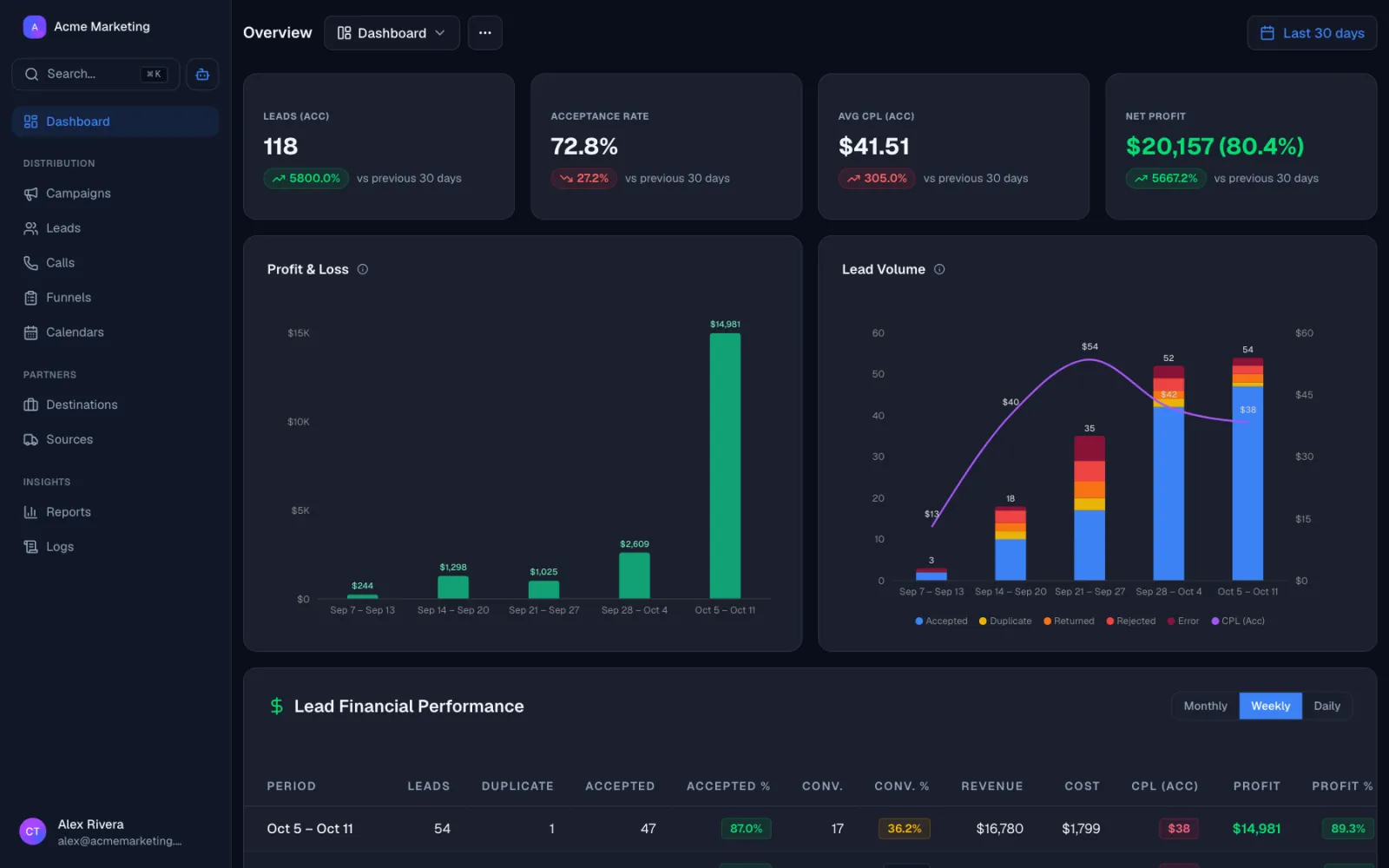
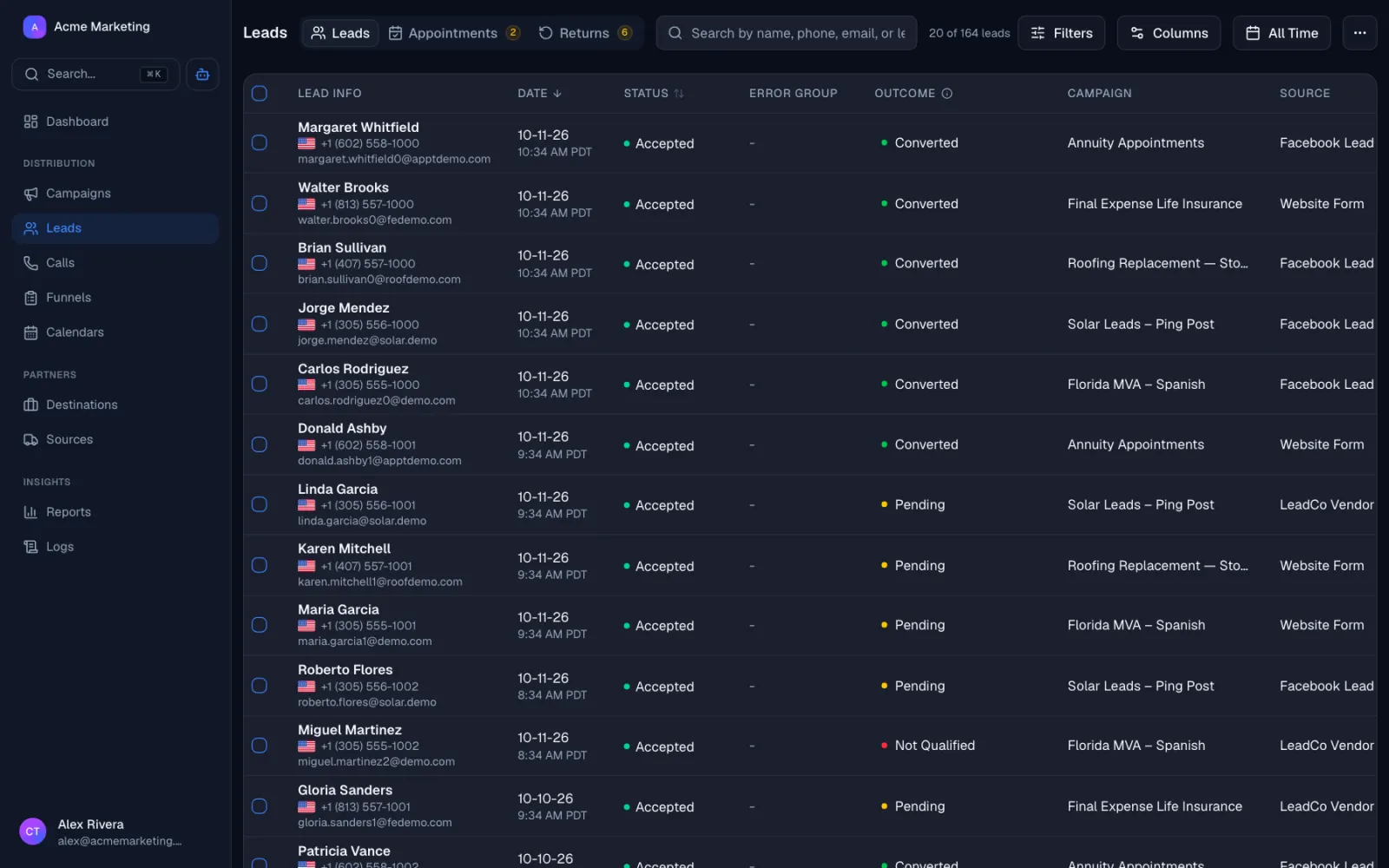
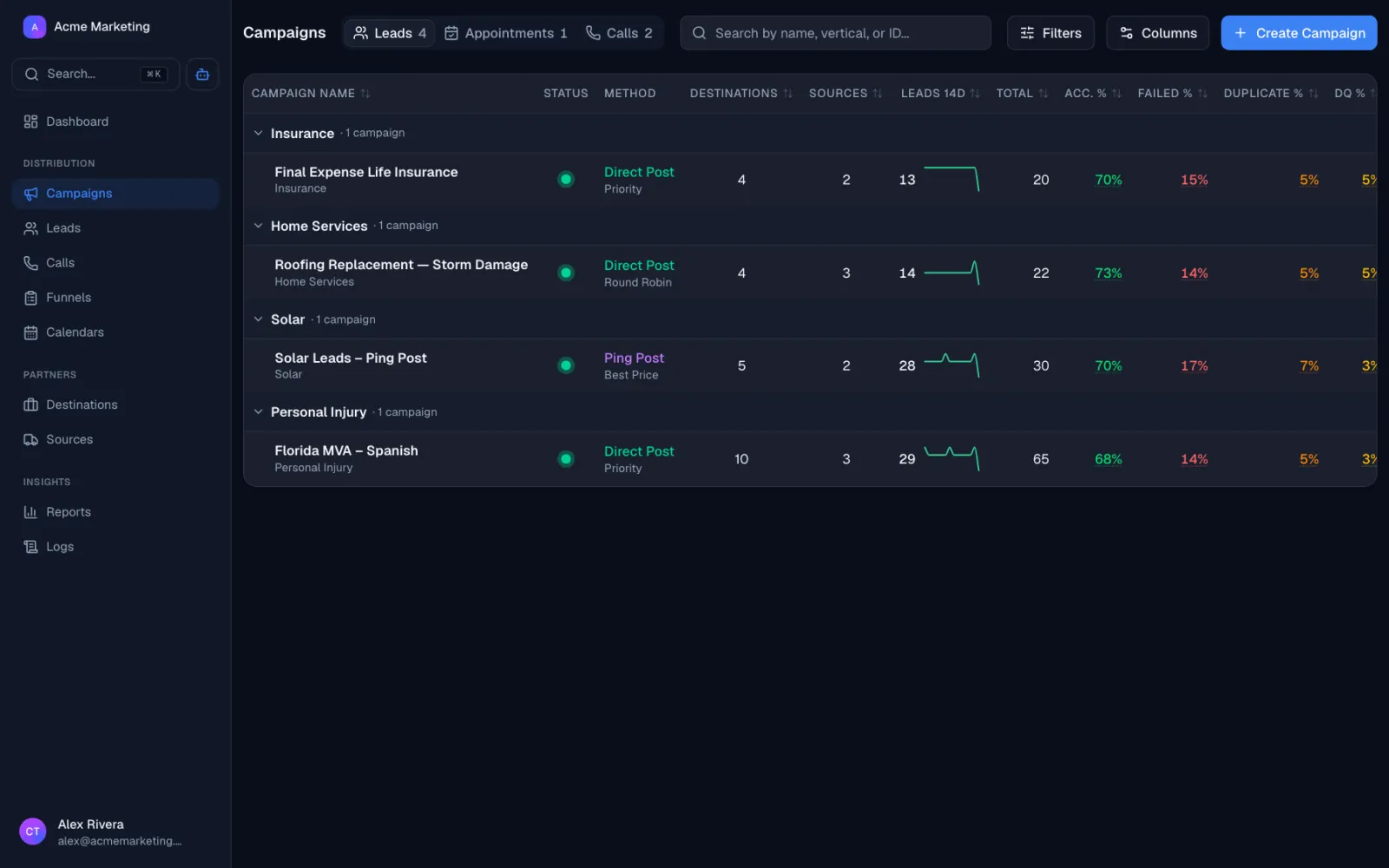
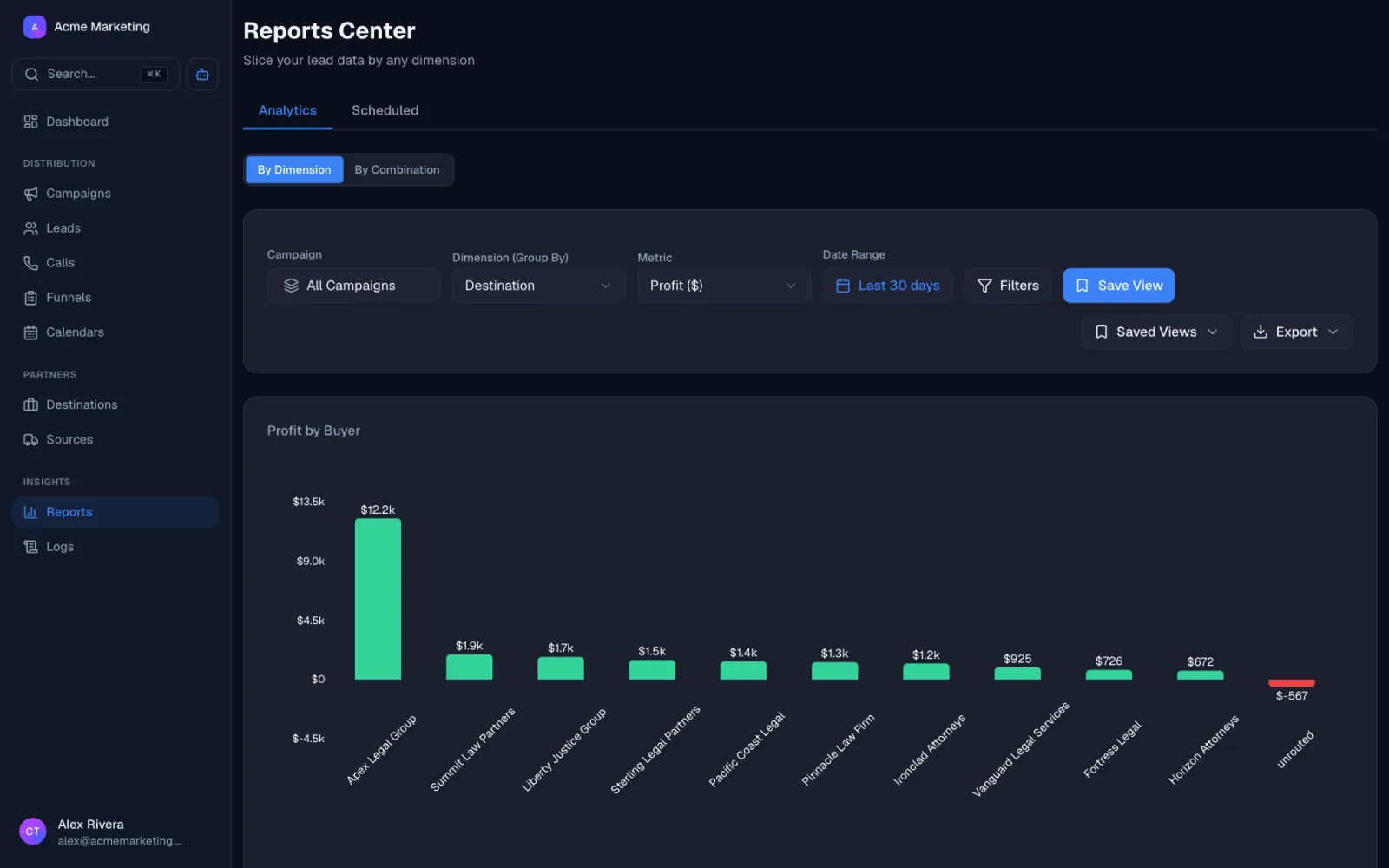
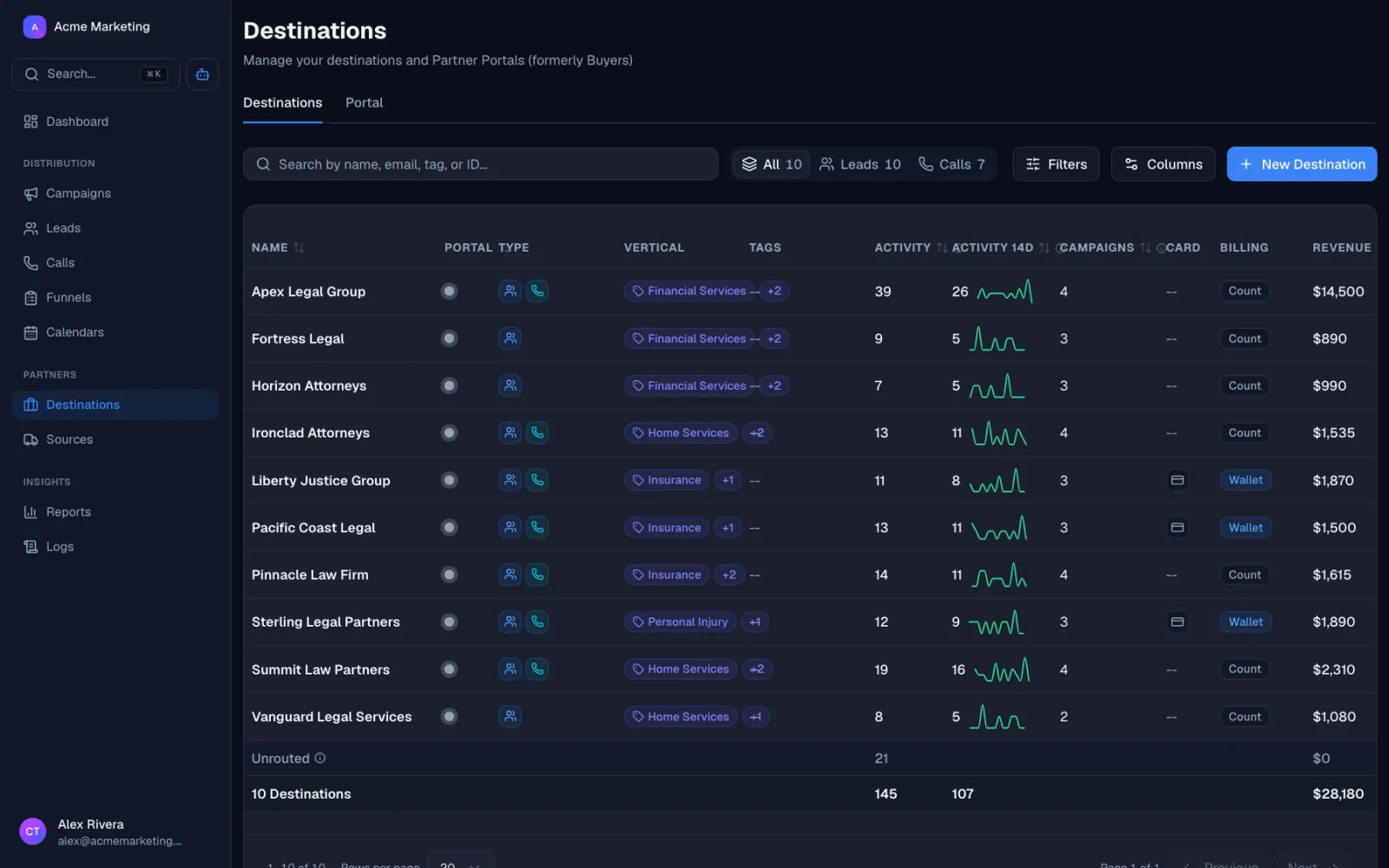
Lead Distro AI is built for agencies that treat calls and leads as inventory. It scores every call against your rules in under a second, then routes it through one of four distribution methods: Round Robin, Weighted, Priority and Waterfall, and Ping-Post. Because scoring lives in the routing layer, a qualified call moves straight to a paying buyer instead of waiting in a separate dashboard. Pricing starts at $147 per month for Call Tracking Only (calls, no lead distribution) or $297 per month with lead distribution, plus usage-based call tracking, with Ping-Post from the $497 Growth plan.
2. Invoca: Best for Enterprise Marketing Teams
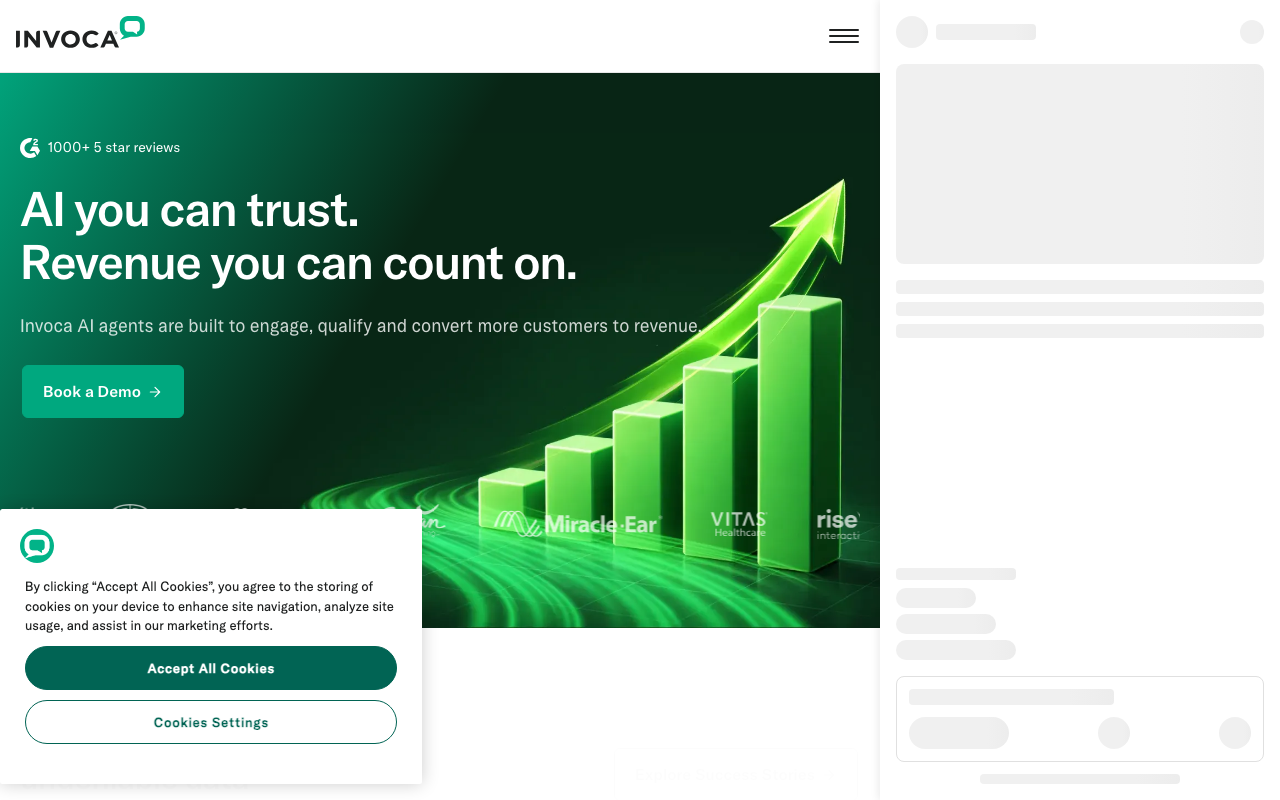
Invoca is an AI-powered revenue execution platform with, in our view, deep conversation intelligence. Its Signal AI analyzes conversations for intent and conversion outcome, and it connects call data to ad platforms such as Google Ads, Microsoft Ads, and Meta Ads. Invoca is priced for the enterprise: it does not publish rates and routes buyers to a sales team for a custom quote (as of September 2026), which in our view signals a premium price point.
3. CallRail: Best for Small-Business Marketing Attribution
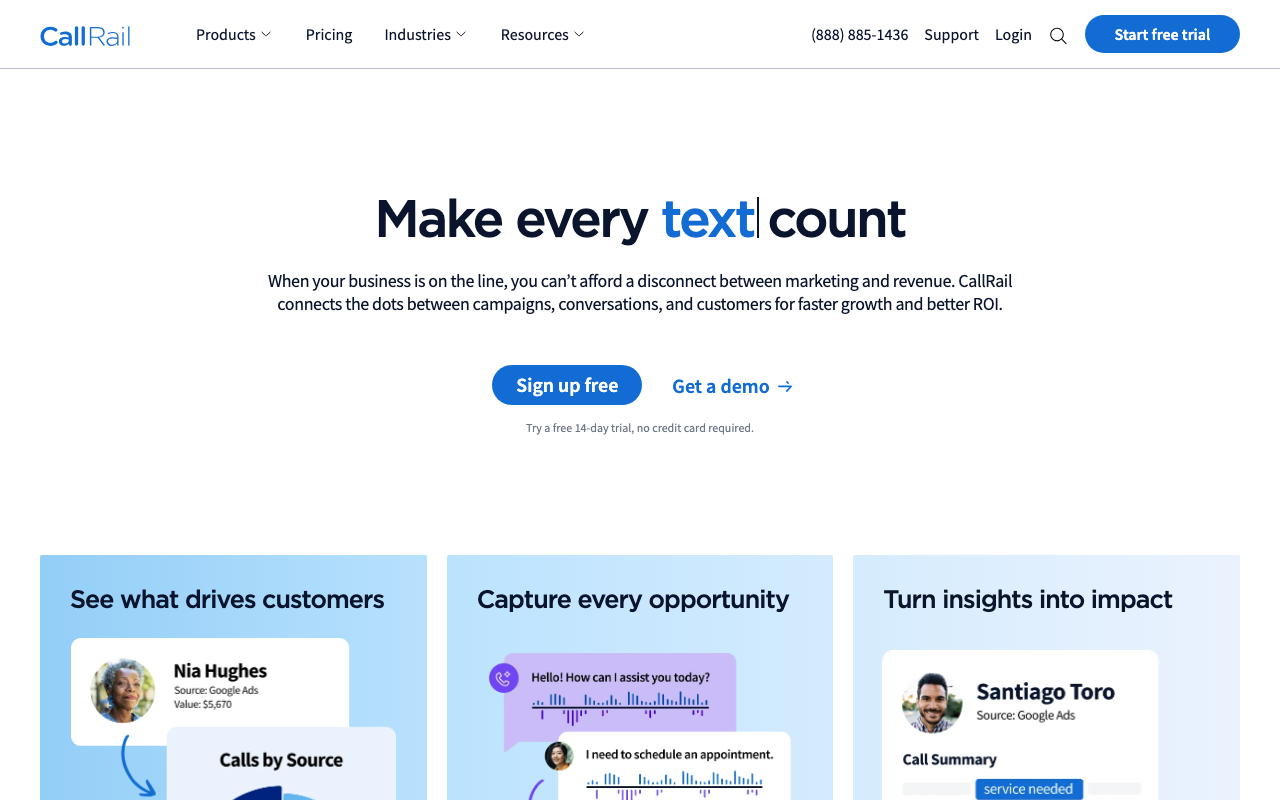
CallRail links inbound calls, texts, and forms back to marketing campaigns, with AI-assisted transcription, keyword tagging, and automated lead scoring on top. It is a strong fit for small and mid-sized marketing teams that want clean attribution without enterprise complexity. Its call flow builder covers IVR menus, round robin, geo-routing, and simulcall, and in our view CallRail shines as a marketing tracker rather than a buyer-routing platform.
4. CallTrackingMetrics: Best for Marketing and Contact Center Teams
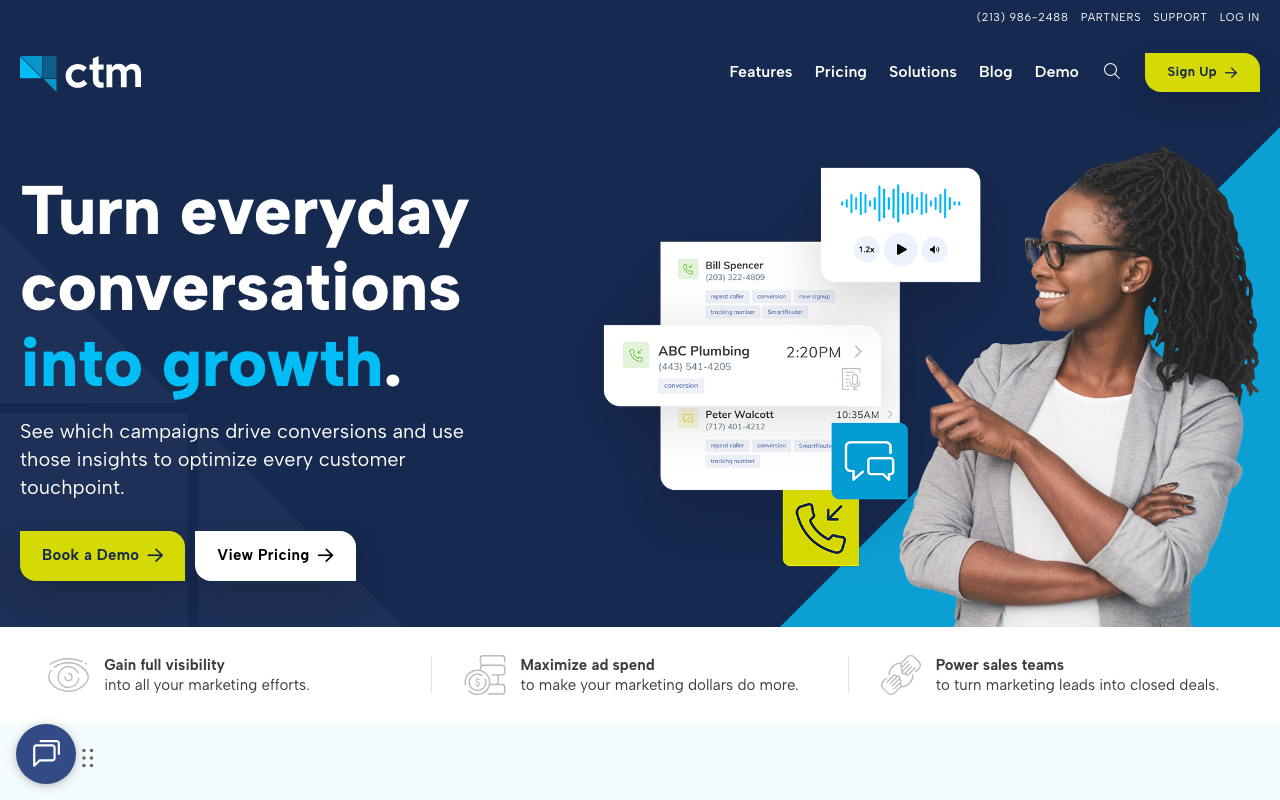
CallTrackingMetrics, which now brands itself as CTM, pairs call tracking with DNI, call recording, and call scoring on every plan, graded on a 1 to 5 star scale. From the Marketing Pro plan up it adds keyword spotting, transcribed minutes, and a Smart Router that sends calls through if/then flows. Pricing starts at $79 per month billed monthly for Marketing Lite, plus usage, and CTM waives the first month's plan fee rather than offering a fixed-length trial (as of September 2026).
5. Gong: Best for Enterprise Sales Coaching

In our view, Gong is the tool to look at when your goal is coaching an internal sales team rather than routing marketing calls to buyers. Check Gong's website for its current features and pricing.
6. Marchex: Best for High-Volume Call Analytics

Marchex offers conversation intelligence and call analytics aimed at call-heavy businesses, with sentiment analysis and intent signals. It is a solid option for marketers and call buyers that need volume-grade analytics, and Marchex says its pricing depends on the number of tracking numbers, call volume, and the level of analytics you need.
How Agencies Use Call Scoring to Protect Margin

Call scoring software is where conversation intelligence turns into protected margin. The original insight from running Lead Distro AI: agencies do not lose money on the calls they bill, they lose it on the calls they cannot measure. Every unscored call is either an unbilled qualified lead or an unflagged junk call you paid for.
"The moment you score every call instead of sampling a few, your billable-call rate stops being an argument and starts being a receipt," says Rafael Hernandez, Founder and CEO of Lead Distro AI.
Here is the worked example we see most. A campaign drives 100 calls in a week. With call scoring, the data shows 71 answered, 44 qualified by transcript, and 28 converted, at a $41 cost per qualified call. The agency now bills 44 calls with proof, disputes nothing with the buyer, and cuts the two ad sets producing only hang-ups. That is source-level margin in real time: Lead Distro AI calculates billable-call rate and cost per qualified call per source, campaign, and buyer, so the decision to scale or cut a campaign is made on data, not on the size of the phone bill. For the numbers that make this possible, see the call tracking metrics that matter.
How to Choose Conversation Intelligence Software
Choosing conversation intelligence software comes down to matching the tool to your business model and confirming it does not gate the features you need behind enterprise tiers.
- Match the model. Coaching a sales floor points to Gong; routing calls to buyers points to an agency platform like Lead Distro AI.
- Confirm true attribution. The tool must support DNI at the keyword and session level, not just track one number.
- Demand scoring on every call. Sampling a few calls is not intelligence; insist that the
call scoring softwaregrades full volume, not a sample. - Check the routing layer. If you run calls as billable inventory, scoring without distribution leaves the most valuable step manual.
- Read the pricing meter. Usage-based call tracking is normal and honest; a vendor hiding the per-minute rate is a red flag.
- Test with live calls. Run real traffic through a trial before you commit.
The fastest way to confirm fit is to route live calls through the platform. You can start a free Lead Distro AI trial and score your first call in seconds.
FAQ
What is conversation intelligence software?
Conversation intelligence software is a platform that uses AI to transcribe phone calls, analyze them for intent, sentiment, and outcome, and turn each conversation into structured data you can score and act on. It goes beyond call recording: recording stores the audio, while conversation intelligence tells you what the audio means for revenue. Modern tools score close to 100% of calls automatically, which lets agencies measure call quality at scale instead of listening to recordings one at a time.
What is the difference between call analytics and conversation intelligence?
Call analytics measures where a call came from and what it was worth: it logs the call, attributes it to a campaign and keyword through dynamic number insertion, and turns that into KPIs like cost per qualified call. Conversation intelligence reads what was said, using transcription to detect intent, sentiment, objections, and outcome. Call tracking is the data floor under both. Most agencies need all three, because a call that is attributed but never qualified, or qualified but never attributed, leaves the revenue picture unfinished.
What is the best conversation intelligence software for call tracking?
The best conversation intelligence software depends on your model. Gong leads for enterprise sales coaching, Invoca for enterprise marketing, and CallRail and CallTrackingMetrics for marketing call tracking. For pay-per-lead and pay-per-call agencies that route calls to buyers, Lead Distro AI is the strongest fit because it builds rule-based lead scoring directly into a distribution layer with four routing methods, so a scored call is routed and sold from the same platform instead of sitting in a separate analytics dashboard.
How does call scoring work?
Call scoring works by transcribing a call in real time, then analyzing the transcript for the signals that predict value: intent, sentiment, keywords spotted, objections, and outcome. The software applies a scorecard to each call and outputs a quality score in seconds. In Lead Distro AI, that scorecard is a set of rules you configure, so every score can be explained to a buyer. The score decides routing and billing: a qualified call routes to a paying buyer while a short hang-up gets flagged and filtered.
Which inbound call tracking tools attribute revenue to specific marketing campaigns?
Any call tracking tool that supports dynamic number insertion at the keyword and session level can tie a call to the campaign that produced it. CallRail reports at the source, campaign, ad group, and keyword level, and CallTrackingMetrics includes DNI and multi-touch attribution on every plan. Revenue attribution needs one more step: knowing which attributed calls converted. Lead Distro AI connects each scored call to its source, campaign, and buyer, so you see billable-call rate and cost per qualified call per source in real time.
How much does conversation intelligence software cost?
Pricing for the call layer is usage-based: a flat platform subscription plus a per-number monthly fee for each tracking number and a per-minute rate on inbound call time. Lead Distro AI starts at $147 per month for Call Tracking Only, or $297 per month with lead distribution, with call tracking billed on usage on top. Enterprise suites price differently: Invoca, for example, publishes no prices and quotes each customer (as of September 2026). Whatever the model, ask each vendor where the telecom cost shows up.
Is conversation intelligence software worth it for pay-per-call agencies?
Yes. For pay-per-call agencies, conversation intelligence is the difference between billing on proof and billing on a guess. It validates which calls were real and qualified, filters junk and fraud before it reaches a buyer, and calculates billable-call rate and cost per qualified call per source in real time. Agencies do not lose money on the calls they bill; they lose it on the calls they cannot measure. Scoring every call closes that leak and makes buyer disputes winnable.
Is there a free trial for conversation intelligence software?
Yes. Lead Distro AI offers a 7-day free trial, so you can run real calls through the platform and see your own transcription, scoring, and routing data before committing. You can cancel anytime during the 7 days and you will not be charged. Running live calls through a trial is the fastest way to confirm fit for your volume and billing model.
Conclusion
Conversation intelligence software has become the engine that turns phone calls into measurable, billable revenue. Call analytics tells you where each call came from; conversation intelligence tells you what was said and whether it qualified, and the 2026 leaders do both: they attribute every call, transcribe it, score it for intent and quality, and surface the data your dashboards, CRM, and routing rules depend on. The right tool depends on your model. Sales teams reach for Gong, enterprise marketers for Invoca, and marketing teams for CallRail or CallTrackingMetrics. For pay-per-lead and pay-per-call agencies that treat calls as inventory, Lead Distro AI leads because it unifies rule-based call scoring with four distribution methods in one platform priced from $297 per month (ping-post from $497). Start a free Lead Distro AI trial and score your next inbound call in seconds.
Ready to see rule-scored conversation intelligence and routing in one platform? Start your 7-day free trial and route your first scored call in minutes.
About the Author
Founder & CEO of Lead Distro AI & Great Marketing AI
UC Berkeley graduate and former software engineer at Microsoft. Rafael built Lead Distro AI after managing over $10M in ad spend for performance marketing agencies (pay-per-lead and pay-per-call), including running campaigns for Neil Patel. He combines deep software engineering expertise with hands-on performance marketing experience to build tools that help these agencies scale profitably.
About Lead Distro AI
Capture, Route, and Sell Every Lead, Call, and Appointment
Capture, route, and sell leads, calls, and appointments from one platform, with funnels, call tracking, ping-post, and billing built in. Set it all up in minutes by chatting with AI.
Funnels
Quiz, form, appointment, VSL, and webinar templates
Call Tracking
Tracking numbers, call recordings, and per-call billing
4 Distribution Methods
Priority/Waterfall, Round Robin, Weighted, Ping-Post
Ping-Post and Live Bidding
Sell each lead and call to the highest bid
Real-Time P&L
Revenue, cost, and profit per campaign
Partner Portal
Your Destinations see their own leads and results