Speech Analytics Software: How It Works and Best Tools
Speech analytics software transcribes, scores, and flags every call. See how it works, compliance basics, and the best tools for pay-per-call agencies in 2026.

Rafael Hernandez
Founder & CEO
Ex-Microsoft SWE · $10M+ PPL ad spend
I hope you enjoy reading this blog post. If you want to try Lead Distro AI for free, click here.
Author: Rafael Hernandez | Founder & CEO of Lead Distro AI
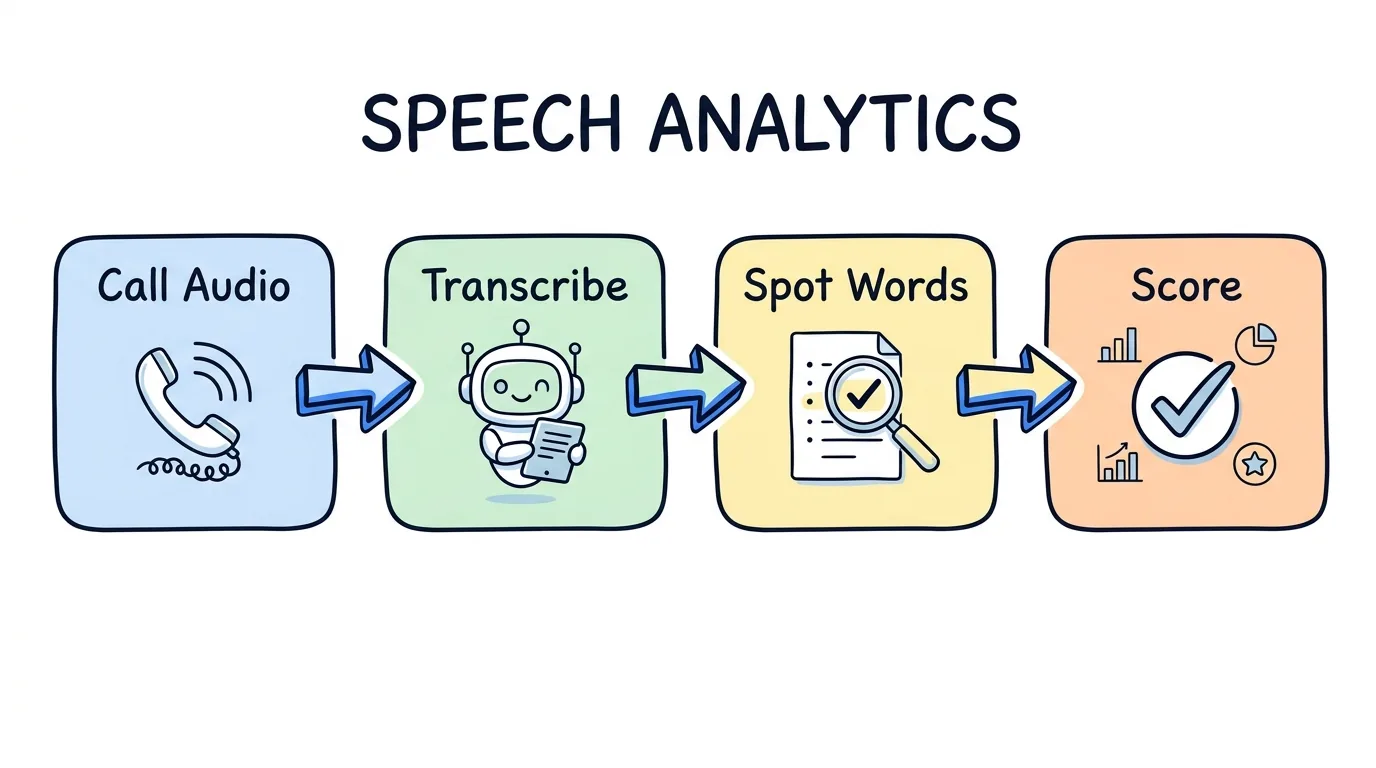
Speech analytics software is a tool that automatically converts recorded and live phone calls into text, then mines that text and the underlying audio for the words, phrases, tone, and outcomes that matter. Instead of a supervisor listening to a handful of calls, the software reads every call: it runs call transcription, spots flagged phrases, scores sentiment, and turns each conversation into structured data you can query and act on. As Wikipedia defines it, speech analytics is the process of analyzing recorded calls to gather information that improves communication and future interactions (Wikipedia). The category is growing fast: the global speech analytics market is expected to reach $3.48 billion in 2025 and grow at a 15.2% annual rate to $7.04 billion by 2030 (Mordor Intelligence). For pay-per-lead and pay-per-call agencies, speech analytics software is what turns raw call volume into billable, defensible, qualified revenue. The bottom line: it scores every call, not a sample, so you bill on proof. Lead Distro AI builds that scoring into its routing layer, so you can start a free Lead Distro AI trial and see every call scored in one place.
Key Takeaways
- Speech analytics software transcribes, scores, and flags every call, turning untracked call audio into structured, billable data.
- It mines audio and text, not just a transcript. Acoustic analysis, phonetic indexing, and keyword spotting catch signals a plain recording misses.
- Coverage is the real upgrade. Manual call review grades only 1% to 2% of calls, while speech analytics scores close to all of them automatically.
- Compliance is part of the job. Two-party consent, PCI redaction, and PHI handling shape how agency-grade tools record and store calls.
- The best speech analytics software depends on your model. Enterprise contact centers reach for Verint, NICE, or CallMiner, while agencies routing calls to buyers reach for Lead Distro AI.
- Pricing for the call layer is usage-based. Expect a flat platform fee plus a per-number monthly fee and a per-minute rate on inbound calls.
What Is Speech Analytics Software?
Speech analytics software sits a layer above basic call recording. A recorder stores the audio; speech analytics reads it. The software ingests each call, runs speech-to-text, and then applies analysis to both the spoken words and the acoustic signal underneath them.
It works on two complementary layers:
- Text analytics reads the transcript for spoken phrases, intent, and topics through keyword spotting and conversation mining.
- Acoustic analysis reads the audio itself for tone, silence detection, talk-to-listen ratio, and signs of escalation.
Some tools also use phonetic indexing, which searches the sounds in a call rather than a full transcript, a faster way to flag specific phrases at scale (Call Centre Helper). The result is call categorization you can query: show every call that mentioned a competitor, every call with a long silence, every call that converted. For agencies, that queryable record is the foundation for call center speech analytics software that grades calls at volume.
How Speech Analytics Software Works
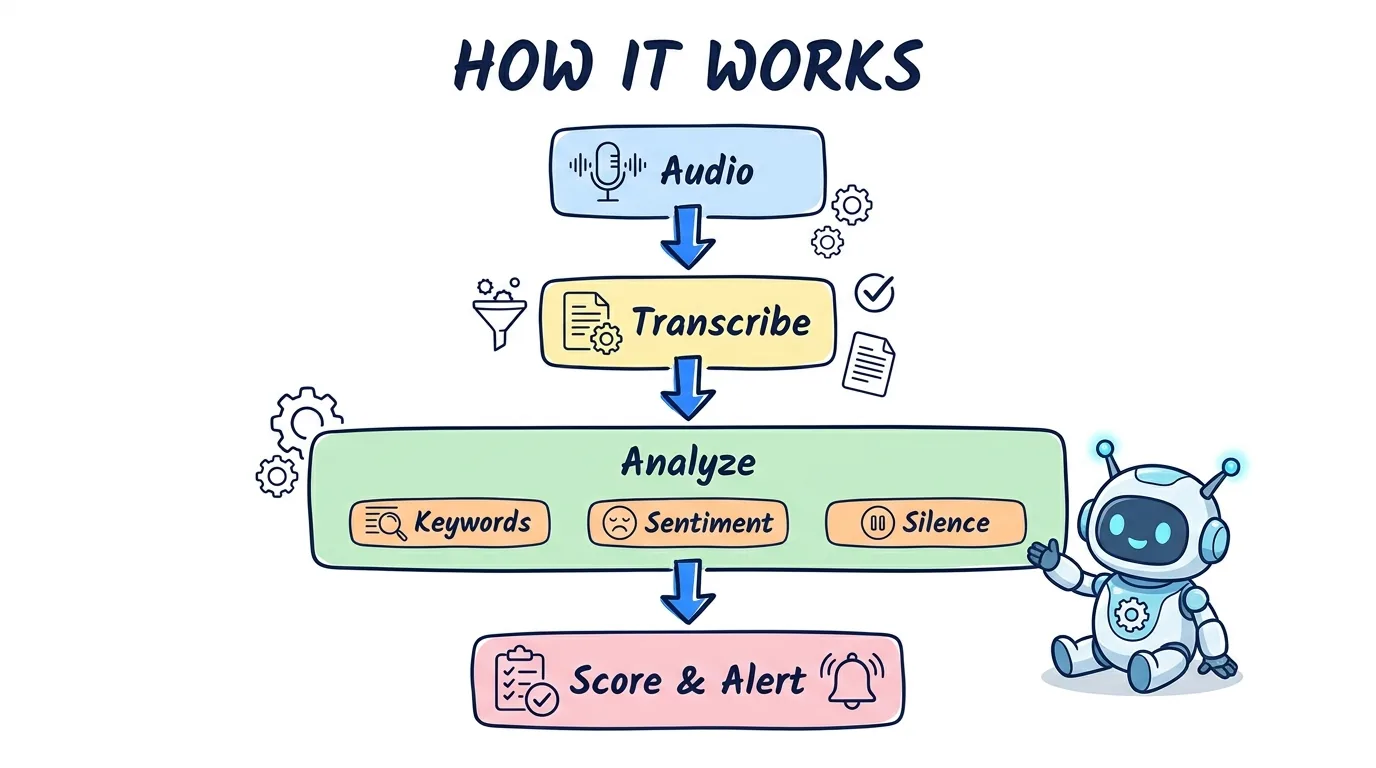
A speech analytics software pipeline runs in four stages, and the strongest platforms finish all four in seconds rather than after a manager listens back.
- Capture and transcribe. Real-time or post-call transcription converts audio to text using speech recognition models.
- Index and spot. The engine runs keyword spotting and phonetic search so flagged words and phrases surface instantly.
- Analyze. Sentiment scoring, intent detection, and acoustic cues like silence and crosstalk get layered onto the transcript.
- Score and alert. A scorecard grades the call and fires real-time alerts for compliance breaches or escalation.
The reason this matters is coverage. Manual quality assurance has a hard ceiling because supervisors can only grade a random sample, and industry analysis puts that at roughly 1% to 2% of calls (Level AI). Automated scoring changes the math: the software grades close to 100% of calls, so coaching, billing, and agent compliance decisions rest on the full picture. To see the measurement layer this sits on, read our guide to call analytics software.
Speech Analytics vs Conversation Intelligence
It is easy to blur speech analytics software with conversation intelligence, and vendors do not help by using the terms loosely. The clean distinction: speech analytics is the engine that mines call audio, while conversation intelligence is the broader category that wraps that engine in scoring, routing, and revenue workflows.
- Speech analytics answers what was said and how. It is acoustic and phonetic mining of the call itself.
- Conversation intelligence answers what to do about it, by tying the analyzed call to a marketing source, a CRM record, or a routing decision.
In practice, speech analytics is a feature inside most conversation platforms. If you are evaluating the wider category and the tools that act on the analysis, start with our pillar guide to conversation intelligence software. For agencies, the engine only earns its keep when its output drives a decision, which is why the analysis and the routing belong together.
Compliance: Consent, Redaction, and Storage
Compliance is not a footnote for speech analytics software; it is part of the recording itself. Because the software captures and stores every call, it has to respect how those calls can legally be recorded and what can be kept.
Three rules shape agency setups:
- Two-party consent. Roughly a dozen states require all parties to consent before a call is recorded, including California, Florida, and Pennsylvania (Justia). Compliant tools announce or log consent.
- PCI redaction. When a caller reads a card number aloud, the software should auto-detect and redact it so payment data never lands in the transcript or recording.
- PHI handling. Health-adjacent verticals need calls stored and access-controlled in line with HIPAA expectations.
Strong call center speech analytics software treats consent, PCI redaction, and PHI as configuration, not afterthoughts. For how recording and retention are handled at the storage layer, see our guide to call recording and compliance.
Best Speech Analytics Software in 2026
The best speech analytics software for your business depends on whether you run a large contact center, a marketing team, or a pay-per-call agency that bills on call quality. Enterprise suites go deep on agent coaching and QA, while agency platforms tie scoring to routing.
| Platform | Best For | Speech Analytics Depth | Routing to Buyers | Pricing Model | Free Trial |
|---|---|---|---|---|---|
| Lead Distro AI | Pay-per-lead AND pay-per-call agencies | Lead scoring on every call, built in | Native: 4 distribution methods | Flat $297/mo plus usage-based call tracking (ping-post from $497/mo) | 7 days (card required) |
| Verint | Enterprise contact centers | Deep speech and interaction analytics | None (analytics, not a router) | Custom (enterprise) | No |
| NICE | Large enterprise CX | Enlighten AI speech analytics | None (CX suite) | Custom (enterprise) | No |
| CallMiner | Conversation analytics at scale | Best-in-class analytics and scoring | None (analytics only) | Custom (enterprise) | No |
| Observe.AI | Contact center QA and coaching | LLM-based analysis and auto QA | None (agent QA) | Custom | No |
1. Lead Distro AI: Best for Pay-Per-Lead and Pay-Per-Call Agencies
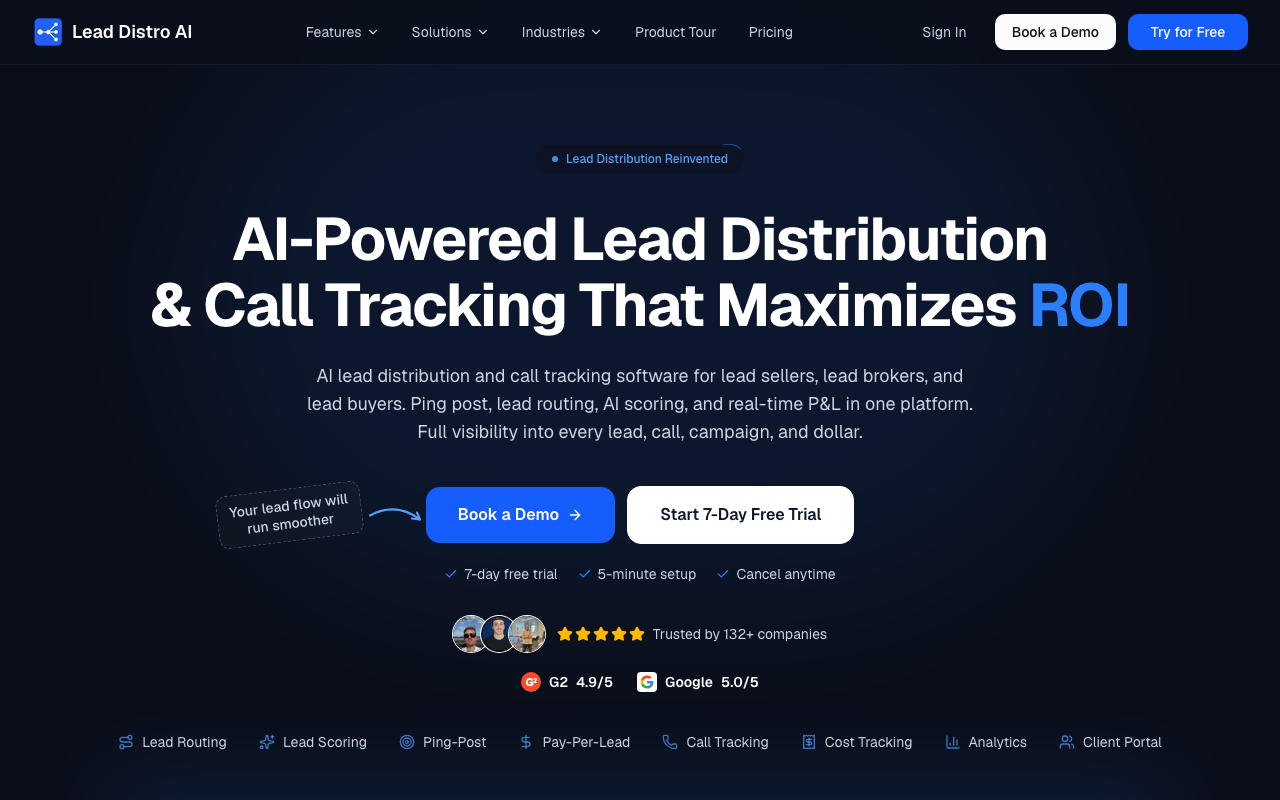
Lead Distro AI is built for agencies that treat calls and leads as inventory. It scores every call against your rules in under a second, then routes it through one of four distribution methods: Round Robin, Weighted, Priority and Waterfall, and Ping-Post. Because scoring lives in the routing layer, a qualified call moves straight to a paying buyer instead of waiting in a separate analytics dashboard. To be clear about the category, Lead Distro AI is a lead distribution and pay-per-call routing platform with lead scoring built in, not a standalone enterprise speech-analytics suite like Verint or NICE. Pricing starts at $297 per month plus usage-based call tracking, with Ping-Post from the $497 Growth plan. You can see how call scoring works inside the platform before you commit.
2. Verint: Best for Enterprise Contact Centers
Verint is a customer experience platform with some of the deepest speech and interaction analytics in the enterprise market. It transcribes and scores calls across large agent teams, layers in sentiment and compliance monitoring, and feeds quality programs at scale. Verint is priced for the enterprise and does not publish rates, routing buyers to a sales team for a custom quote. It is a strong fit for large contact centers, not for agencies that need to route calls to outside buyers.
3. Observe.AI: Best for Contact Center QA and Coaching
Observe.AI focuses on automated quality assurance and agent coaching, using large language models to analyze conversations and auto-score interactions against custom scorecards. It is a popular pick for support and sales teams that want to grade 100% of calls and coach agents from the data. Like the other enterprise tools, Observe.AI is built around internal agent performance rather than routing calls to buyers, so its strength is the QA and coaching layer rather than distribution.
CallMiner and NICE round out the enterprise tier, both offering deep conversation analytics aimed at large contact centers rather than agency routing. The pattern is clear: the heavyweight suites analyze, while an agency platform analyzes and then acts on the score.
How Agencies Use Speech Analytics to Protect Billing
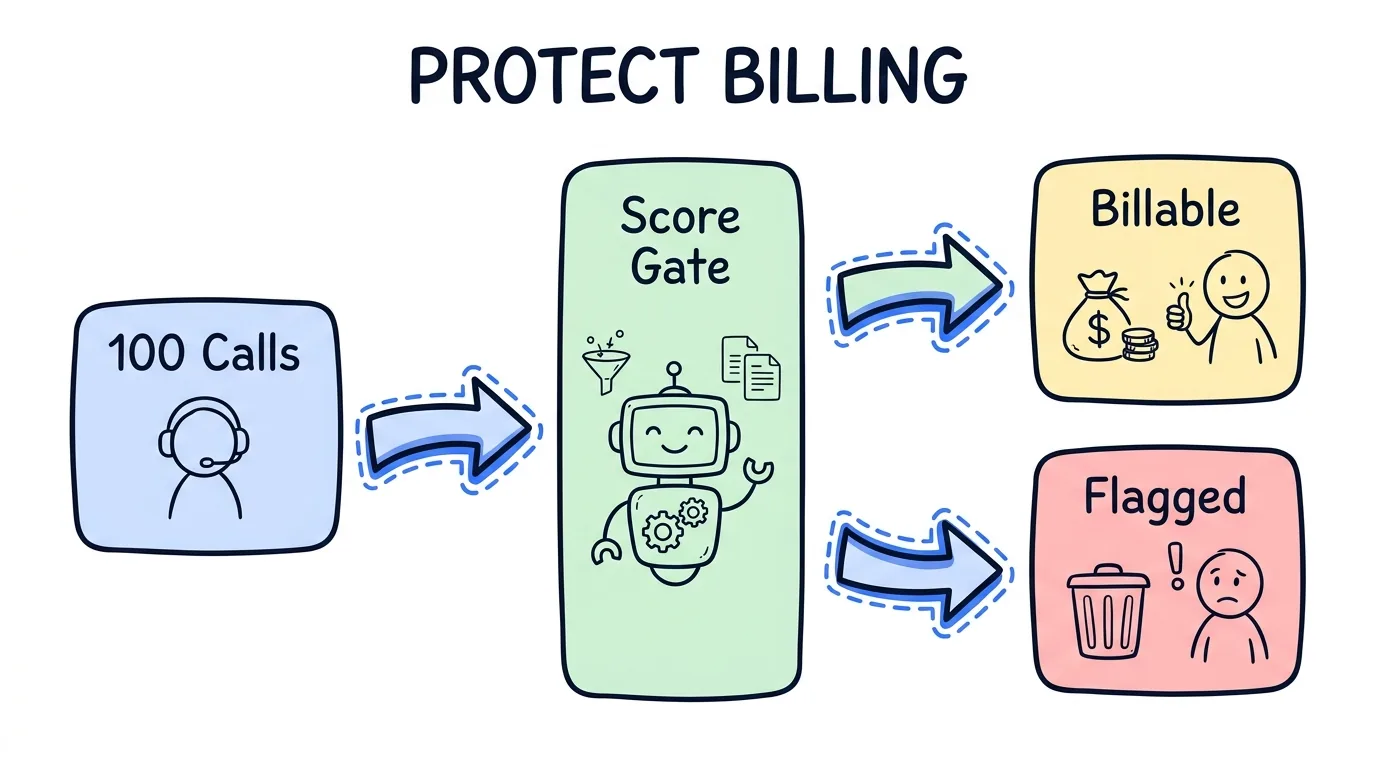
Speech analytics software turns into protected margin at the billing line. The original insight from running Lead Distro AI: agencies do not lose money on the calls they bill, they lose it on the calls they cannot measure. Every unscored call is either an unbilled qualified lead or an unflagged junk call you already paid for.
"Once you score the audio of every call instead of spot-checking a few, your billable-call rate stops being an argument and starts being a receipt," says Rafael Hernandez, Founder and CEO of Lead Distro AI.
Here is the worked example we see most. A campaign drives 100 inbound calls in a week. With speech analytics software scoring every call, the data shows 71 answered, 44 qualified by transcript and intent, and 28 converted, at a $41 cost per qualified call. The agency bills 44 calls with proof, wins any buyer dispute on the recording, and cuts the two ad sets producing only hang-ups. That is source-level margin in real time. Live alerts and QA scorecards also support agent coaching and script adherence, which is where call monitoring software and speech analytics overlap.
How to Choose the Right Platform
Choosing speech analytics software comes down to matching the tool to your business model and confirming it scores every call, not a sample.
- Match the model. A contact center optimizing agents points to Verint, NICE, or CallMiner; an agency routing calls to buyers points to Lead Distro AI.
- Demand full-volume scoring. Insist the tool grades 100% of calls, since sampling is not analytics.
- Check compliance defaults. Confirm two-party consent handling and PCI redaction ship on by default.
- Read the pricing meter. Usage-based call tracking is normal and honest; a vendor hiding the per-minute rate is the red flag.
- Test with live calls. Run real traffic through a trial before committing, since accuracy varies by accent, line quality, and vertical.
The fastest way to confirm fit is to route live calls through the platform and read the scores yourself.
FAQ
What is speech analytics software?
Speech analytics software automatically turns recorded and live calls into text, then mines both the words and the audio for intent, sentiment, spoken keywords, and outcome. It goes beyond call recording: recording stores the audio, while speech analytics tells you what the audio means. Modern tools score close to 100% of calls automatically, so teams can measure quality and compliance at scale instead of listening back to a small random sample of conversations.
What is the best speech analytics software?
The best speech analytics software depends on your model. Verint, NICE, and CallMiner lead for large enterprise contact centers, and Observe.AI is strong for automated QA and agent coaching. For pay-per-lead and pay-per-call agencies that route calls to buyers, Lead Distro AI is the best fit because it builds lead scoring directly into a distribution layer with four routing methods, so a scored call moves straight to the right buyer instead of sitting in a separate analytics dashboard.
What is call center speech analytics software?
Call center speech analytics software is the same core engine applied at contact-center scale: it transcribes and scores every inbound and outbound call across a large agent team, then surfaces compliance breaches, sentiment trends, and coaching opportunities. It powers quality assurance programs that would be impossible by hand, since supervisors can only manually review 1% to 2% of calls. Enterprise suites like Verint and NICE specialize here, grading full call volume against custom scorecards.
How does speech analytics differ from conversation intelligence?
Speech analytics is the engine that mines call audio for words, tone, and signals. Conversation intelligence is the broader category that wraps that engine in scoring, routing, and revenue workflows, tying each analyzed call to a marketing source or a next action. In short, speech analytics tells you what was said and how, while conversation intelligence decides what to do about it. For agencies, the two only pay off when the analysis drives a routing or billing decision.
How much does speech analytics software cost?
Pricing for the call layer is usage-based: a flat platform subscription plus a per-number monthly fee for each tracking number and a per-minute rate on inbound call time. Lead Distro AI starts at $297 per month with call tracking billed on usage on top. Enterprise speech analytics suites like Verint, NICE, and CallMiner do not publish rates and run on custom annual contracts that are typically far higher. Any vendor that markets the per-minute charge away is hiding the meter, not removing the telecom cost.
Is there a free trial for speech analytics software?
Yes. Lead Distro AI offers a 7-day free trial that requires a credit card, so you can run real calls through the platform and see your own transcription, scoring, and routing data before committing. You can cancel anytime during the 7 days and you will not be charged. Most enterprise speech analytics suites do not offer a self-serve trial and require a sales call, so running live calls through a trial is the fastest way to confirm fit for your volume and billing model.
Conclusion
Speech analytics software has become the layer that turns phone calls into measurable, billable revenue. The 2026 leaders go far past call recording: they transcribe every conversation, mine it for intent and compliance, and score it so coaching and billing rest on the full picture instead of a sample. The right tool depends on your model. Enterprise contact centers reach for Verint, NICE, CallMiner, or Observe.AI. For pay-per-lead and pay-per-call agencies that treat calls as inventory, Lead Distro AI leads because it fuses call scoring with four distribution methods in one platform priced from $297 per month (ping-post from $497). Start a free Lead Distro AI trial and score your next inbound call in seconds.
Ready to see rule-scored speech analytics and routing in one platform? Start your 7-day free trial and route your first scored call in minutes.
About the Author
Founder & CEO of Lead Distro AI & Great Marketing AI
UC Berkeley graduate and former software engineer at Microsoft. Rafael built Lead Distro AI after managing over $10M in ad spend for performance marketing agencies (pay-per-lead and pay-per-call), including running campaigns for Neil Patel. He combines deep software engineering expertise with hands-on performance marketing experience to build tools that help these agencies scale profitably.
About Lead Distro AI
Lead Distro AI: AI-Powered Lead Distribution & Call Tracking That Maximizes ROI
The modern platform for pay-per-lead and pay-per-call agencies. Route, score, and deliver leads with AI-powered automation and real-time P&L tracking. Built for performance marketing agencies and lead buyers across legal, insurance, mortgage, solar, and home services verticals.
4 Distribution Methods
Waterfall, Round Robin, Weighted, Ping-Post
Ping-Post Auctions
Real-time bidding with sub-second routing
Real-Time P&L Reporting
Track revenue, costs, and profit per campaign
Call Tracking
Assign tracking numbers, record calls, and attribute conversions
Lead Scoring
Score every lead before routing to maximize conversion
Partner Portal
Self-serve dashboard for buyers to track leads