Call Monitoring Software for Pay-Per-Call Agencies (2026)
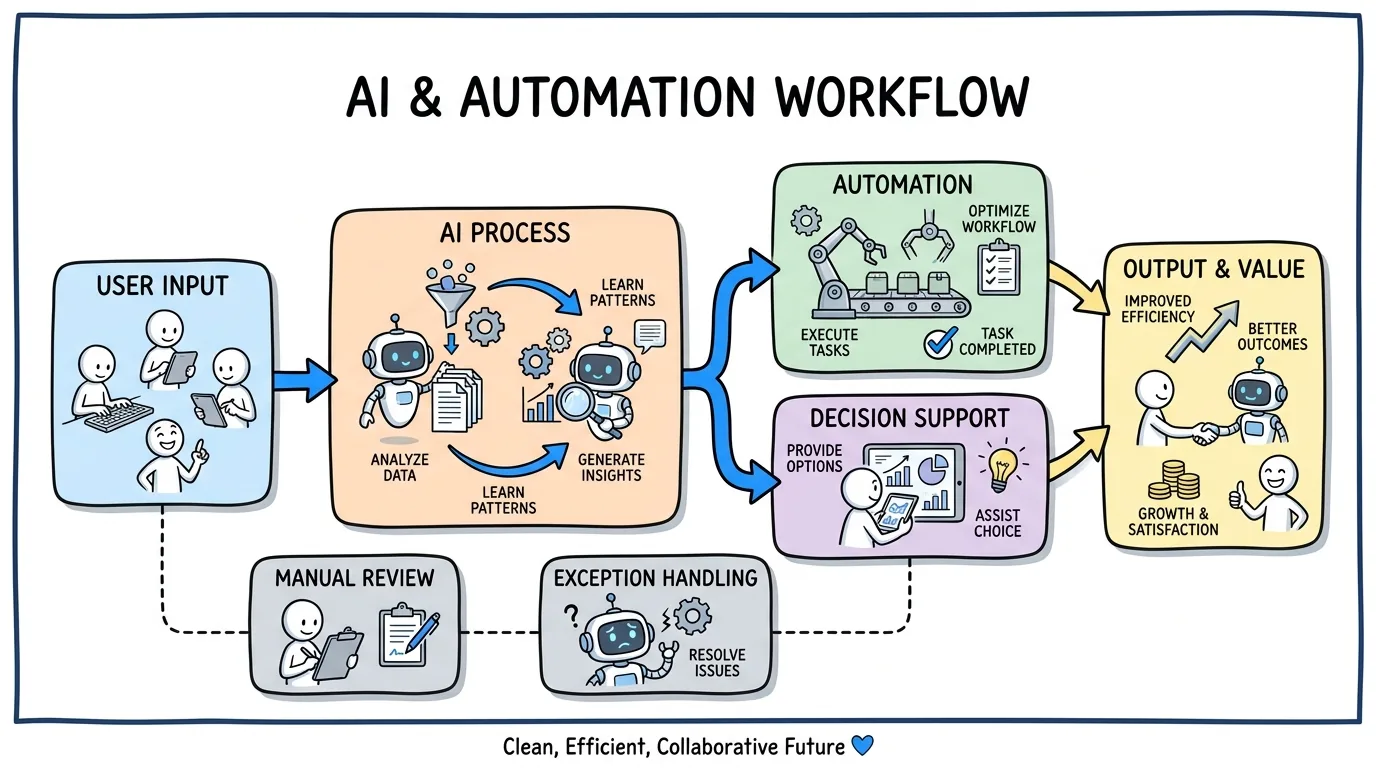
Call monitoring software lets you listen, whisper, and barge into live calls and review recordings to protect billing and lead quality for agencies.

Rafael Hernandez
Founder & CEO
Ex-Microsoft SWE · $10M+ PPL ad spend
I hope you enjoy reading this blog post. If you want to try Lead Distro AI for free, click here.
Author: Rafael Hernandez | Founder & CEO of Lead Distro AI
Call monitoring software is a platform that lets a manager listen to live calls, whisper coaching to an agent, barge into a conversation, and review recorded calls so every billable minute and every routed lead is accountable. For a pay-per-call agency, this is not a customer-service nicety. It is the system of record that decides which calls a buyer actually pays for. When a buyer disputes a $36 call, the monitored recording and timestamped log are the evidence that settles it. According to Invoca's buyer experience research, 68% of consumers prefer to communicate with businesses by phone, and many call specifically because they are making high-stakes purchases. That means call quality, not form fills, drives revenue in verticals like legal, insurance, and home services.
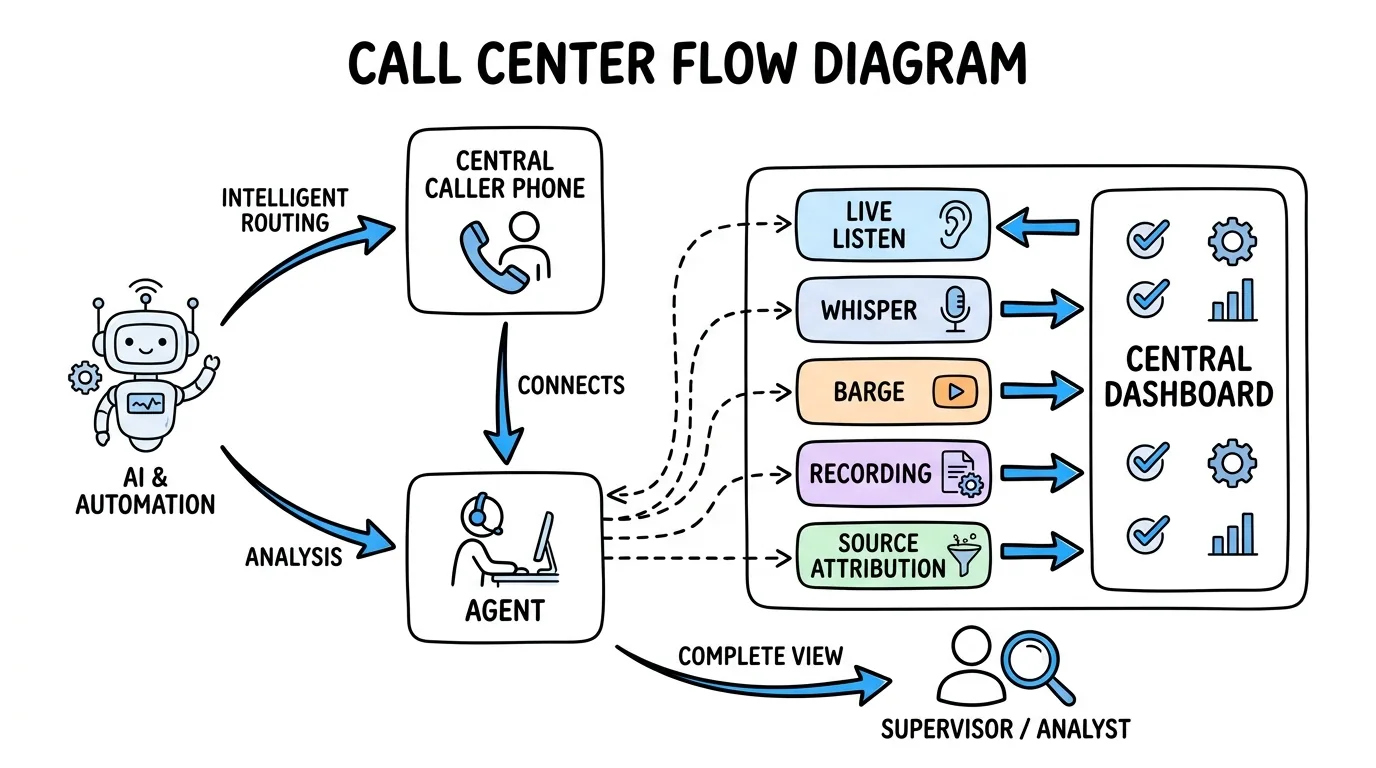
The best call monitoring software for a pay-per-call operation does more than record. It ties each call to its marketing source, scores lead quality, and gives you a real-time dashboard you can hand to a buyer. In this guide you will learn what call monitoring software does, the live and recorded monitoring methods, how the pay-per-call use case differs from generic call-center QA, what to look for, and how Lead Distro AI fits. You can start a free Lead Distro AI trial to see it on your own traffic.
Key Takeaways
- Call monitoring software protects billing and lead quality by recording every call, logging duration, and tying each conversation to its marketing source so buyer disputes are settled with evidence, not arguments.
- Live monitoring has three modes: listen (silent), whisper (coach the agent only), and barge (join the call). Recorded monitoring adds transcription, speech analytics, and after-the-fact QA review.
- Pay-per-call monitoring differs from call-center QA because the goal is attribution and billable-call verification, not just agent coaching. Generic quality monitoring software ignores the source and the buyer relationship.
- Conversation intelligence is the 2026 upgrade: AI transcribes and scores calls automatically, surfacing lead quality signals like intent, qualification, and disposition without a human listening to every minute.
- Call tracking pricing is usage-based: expect a per-number monthly fee plus a per-minute rate for inbound calls, layered on top of a flat platform subscription. Budget by call volume, not headcount.
- Lead Distro AI combines call monitoring with distribution, routing calls by Round Robin, Weighted, Priority (Waterfall), or Ping-Post while recording and attributing every call in one buyer-ready dashboard.
What Call Monitoring Software Does
Phone call monitoring software captures, records, and gives managers visibility into conversations between agents and callers. At a basic level it stores every inbound call with caller ID, duration, timestamp, and the tracking number that received it. From there, supervisors can monitor calls live or review recordings later for quality assurance and coaching.
For an agency, the real value is verification. A monitored call log proves a lead was a real, qualified inbound call and not a wrong number, a robocall, or a sub-30-second hang-up. That evidence is what makes pay-per-call billing defensible. Strong call monitoring software also captures the marketing source behind each call through dynamic number insertion, so you know whether the call came from a Google Ads campaign, an affiliate, or an organic landing page. Pair it with the call tracking metrics that matter to turn raw recordings into billable-call reporting.
Live Call Monitoring: Listen, Whisper, and Barge
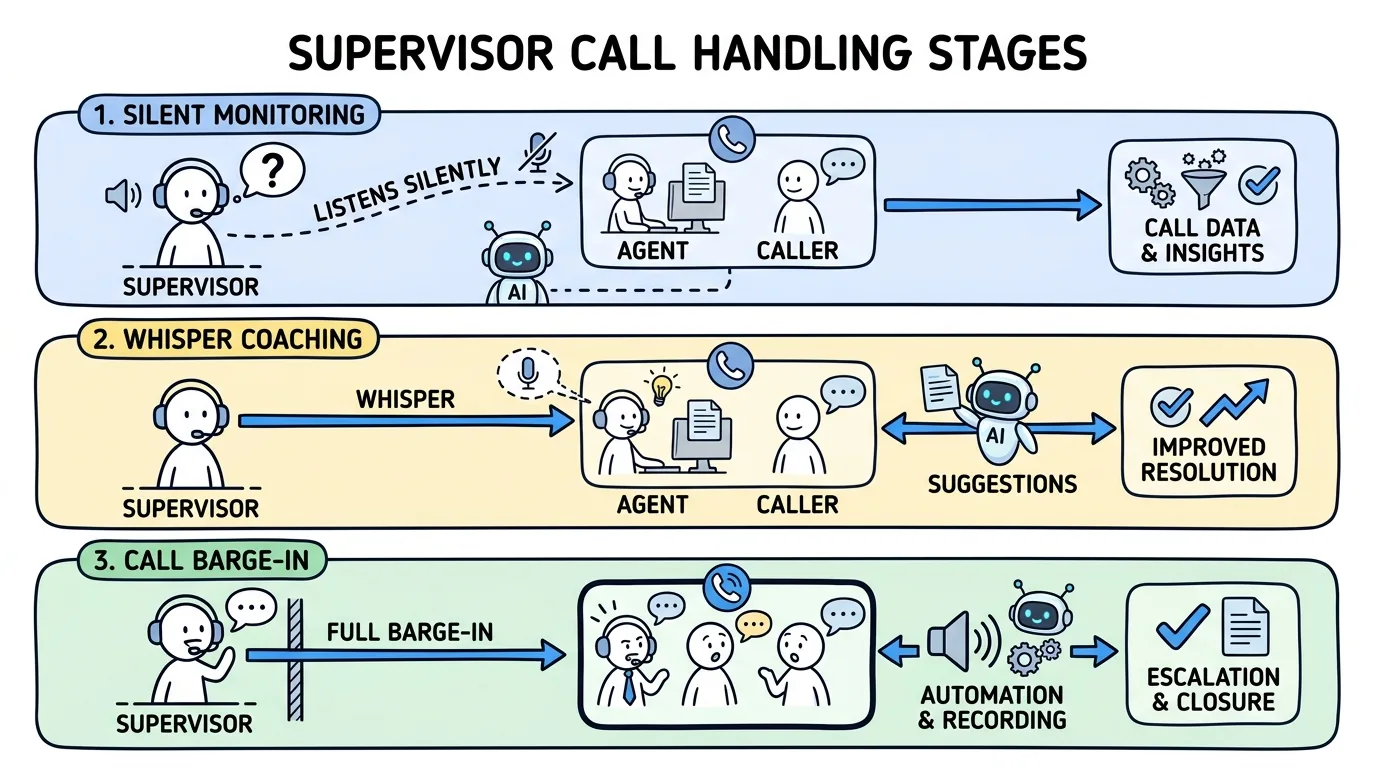
Live call monitoring lets a supervisor observe a conversation while it happens, using three escalating modes. Listen mode is silent: the manager hears the call without the agent or caller knowing, which is the most honest way to assess real-world performance. Whisper mode lets the supervisor speak only to the agent, so they can feed a script correction or an answer mid-call without the caller hearing. Barge mode drops the manager directly into the conversation to speak to both parties when an issue is beyond the agent's reach.
These three modes (listen, whisper, barge) are the backbone of every contact-center monitoring tool, from RingCentral to Dialpad. For a pay-per-call agency, whisper mode also doubles as a buyer-protection tool: a supervisor can flag a low-intent caller before the agent transfers the call to a paying buyer.
Recorded Call Monitoring and Speech Analytics
Recorded call monitoring is the asynchronous half of the discipline. Instead of listening live, managers review stored recordings against a QA scorecard, which scales far better across high call volume. Modern monitoring tools add speech analytics: AI transcribes each call, then flags keywords, sentiment, talk-to-listen ratio, and silence gaps so a reviewer jumps straight to the moments that matter.
This is where conversation intelligence reshapes the workflow. Rather than sampling 2% of calls by hand, AI can score 100% of them automatically. A 2024 Gartner forecast projected that conversational AI would handle a growing share of contact-center interactions through 2026, and the same models now grade calls for qualification and intent. For agencies, automated scoring is the difference between guessing at lead quality and proving it. Recordings also satisfy compliance: many states require two-party consent under the call-recording laws tracked by the Digital Media Law Project, so an automated disclosure and a stored recording protect you under TCPA and state wiretap rules.
Pay-Per-Call Monitoring vs Generic Call-Center QA
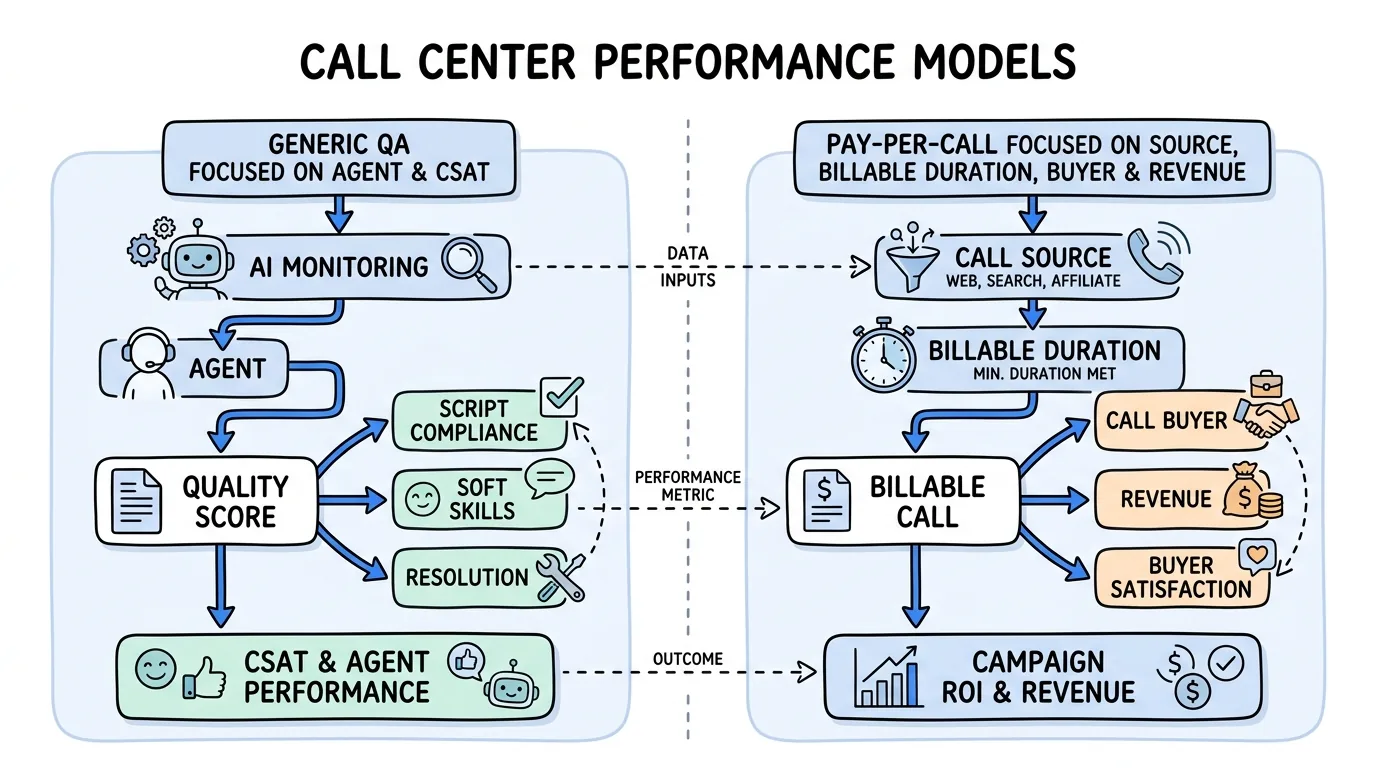
The biggest mistake agencies make is buying generic call center call monitoring software and expecting it to handle pay-per-call. The two share features but solve different problems. Traditional call-center QA exists to coach employees and improve CSAT. Pay-per-call monitoring exists to verify billable calls, attribute revenue, and protect the buyer relationship.
A QA tool will tell you an agent was polite. It will not tell you which affiliate sent the call, whether the call crossed the billable-duration threshold, or whether the lead matched the buyer's filters. Pay-per-call monitoring software starts from the source and the buyer, not the agent. It connects monitoring to attribution and distribution so the same recording that proves quality also justifies the invoice. That is the gap Lead Distro AI was built to close. To understand the plumbing underneath, see how call tracking works.
Comparison: Call Monitoring Tools for Agencies
Most monitoring tools fall into two camps: contact-center suites built for internal teams, and call-tracking platforms built for marketers and agencies. The table below compares representative options on the features that matter to a pay-per-call operation.
| Platform | Best For | Live Monitoring | Source Attribution | Billing / Distribution | Free Trial |
|---|---|---|---|---|---|
| Lead Distro AI | Pay-per-lead and pay-per-call agencies | Listen, whisper, barge | Yes (DNI) | Yes, built-in routing | 7 days |
| Aircall | Internal sales/support teams | Listen, whisper, barge | Limited | No | Yes |
| Dialpad | Contact centers, AI QA | Listen, whisper, barge | Limited | No | Yes |
| RingCentral | Enterprise telephony | Listen, whisper, barge | No | No | Yes |
| CallRail | Marketing call tracking | Recording only | Yes (DNI) | No | Yes |
Note that Lead Distro AI requires a credit card to start its 7-day trial; you can cancel anytime during the trial and you will not be charged. The platform pairs monitoring with four distribution methods, so a monitored call can also be routed to the right buyer in real time.
How to Choose Call Monitoring Software
Choose call monitoring software by working backward from how you get paid. Start with these criteria:
- Source attribution. If the tool cannot tie a call to its marketing source through dynamic number insertion, it cannot defend your billing. This is non-negotiable for an agency.
- Live and recorded monitoring. You want listen, whisper, and barge for coaching plus durable recordings for QA and disputes.
- Conversation intelligence. AI transcription and scoring let you grade 100% of calls instead of a sample, which is how you prove lead quality at scale.
- Billing and distribution. The best call monitoring software for agencies connects monitoring to a billable-call ledger and a routing engine so one record serves quality, attribution, and invoicing.
- Usage-based pricing transparency. Call tracking is usage-based: a per-number monthly fee plus a per-minute inbound rate on top of the flat platform subscription. Model your real call volume before you commit. Use the lead pricing calculator to estimate your numbers.
For most pay-per-call agencies, a marketing-native platform that combines monitoring, attribution, and distribution beats a contact-center suite that only watches agents.
FAQ
What is call monitoring software?
Call monitoring software is a platform that lets managers listen to live calls, whisper coaching to agents, barge into conversations, and review recordings for quality assurance. For agencies, it also records caller ID, duration, and the marketing source of each call, which turns recordings into evidence for billing disputes and lead-quality verification. It is the system of record that proves which calls a buyer should actually pay for.
How does live call monitoring work?
Live call monitoring works through three modes. In listen mode, a supervisor silently hears the call without the agent or caller knowing. In whisper mode, the supervisor speaks only to the agent to coach in real time. In barge mode, the manager joins the call to speak to both parties. These modes let a pay-per-call agency catch a low-quality caller or coach an agent before a call is transferred to a paying buyer.
What is the difference between call monitoring and call recording?
Call recording captures and stores a conversation for later review. Call monitoring is the broader discipline that includes live observation (listen, whisper, barge), recorded review, speech analytics, and QA scoring. Recording is one input; monitoring is the full workflow that turns recordings into coaching, compliance, and billing decisions. A complete tool does both, plus source attribution so each recording is tied to its marketing channel.
Is employee call monitoring legal?
Employee call monitoring is generally legal for business purposes, but consent rules vary by state. Roughly a dozen states require two-party (all-party) consent, meaning every participant must be informed the call is recorded. Best practice is an automated disclosure at the start of every call plus a stored recording. This protects you under TCPA and state wiretap laws and creates the audit trail buyers and compliance teams expect.
How much does call monitoring software cost?
Call monitoring is usually priced on a usage basis. Expect a per-number monthly fee plus a per-minute rate for inbound calls, layered on top of a flat platform subscription. That means your bill scales with call volume, not headcount. Lead Distro AI plans start at $297 per month, with call tracking metered on top. Model your expected call volume before choosing a plan so the per-minute rate does not surprise you.
Conclusion
Call monitoring software is the accountability layer of any serious pay-per-call agency. It is what proves a call was real, qualified, and worth what the buyer paid, and it is what lets you coach agents and protect compliance at the same time. The right tool does not just record; it ties every call to its source, scores quality with conversation intelligence, and connects monitoring to billing and distribution.
Lead Distro AI brings monitoring, attribution, and four distribution methods into one buyer-ready platform, so the same recording that proves quality also routes the call and justifies the invoice. For the full picture of measurement, read our complete guide to call analytics software.
Ready to see call monitoring and distribution work together on your own traffic? Start your 7-day free trial and route your first call in minutes.
About the Author
Founder & CEO of Lead Distro AI & Great Marketing AI
UC Berkeley graduate and former software engineer at Microsoft. Rafael built Lead Distro AI after managing over $10M in ad spend for performance marketing agencies (pay-per-lead and pay-per-call), including running campaigns for Neil Patel. He combines deep software engineering expertise with hands-on performance marketing experience to build tools that help these agencies scale profitably.
About Lead Distro AI
Lead Distro AI: AI-Powered Lead Distribution & Call Tracking That Maximizes ROI
The modern platform for pay-per-lead and pay-per-call agencies. Route, score, and deliver leads with AI-powered automation and real-time P&L tracking. Built for performance marketing agencies and lead buyers across legal, insurance, mortgage, solar, and home services verticals.
4 Distribution Methods
Waterfall, Round Robin, Weighted, Ping-Post
Ping-Post Auctions
Real-time bidding with sub-second routing
Real-Time P&L Reporting
Track revenue, costs, and profit per campaign
Call Tracking
Assign tracking numbers, record calls, and attribute conversions
Lead Scoring
Score every lead before routing to maximize conversion
Partner Portal
Self-serve dashboard for buyers to track leads