What Is Jornaya (LeadiD)? How Lead Buyers Verify Consent
Jornaya LeadiD is a token that fingerprints the lead event so buyers can verify consent. Here is what Jornaya is, how LeadiD works, and how it compares to TrustedForm.

Rafael Hernandez
Founder & CEO
Ex-Microsoft SWE · $10M+ PPL ad spend
I hope you enjoy reading this blog post. If you want to try Lead Distro AI for free, click here.
Author: Rafael Hernandez | Founder & CEO of Lead Distro AI
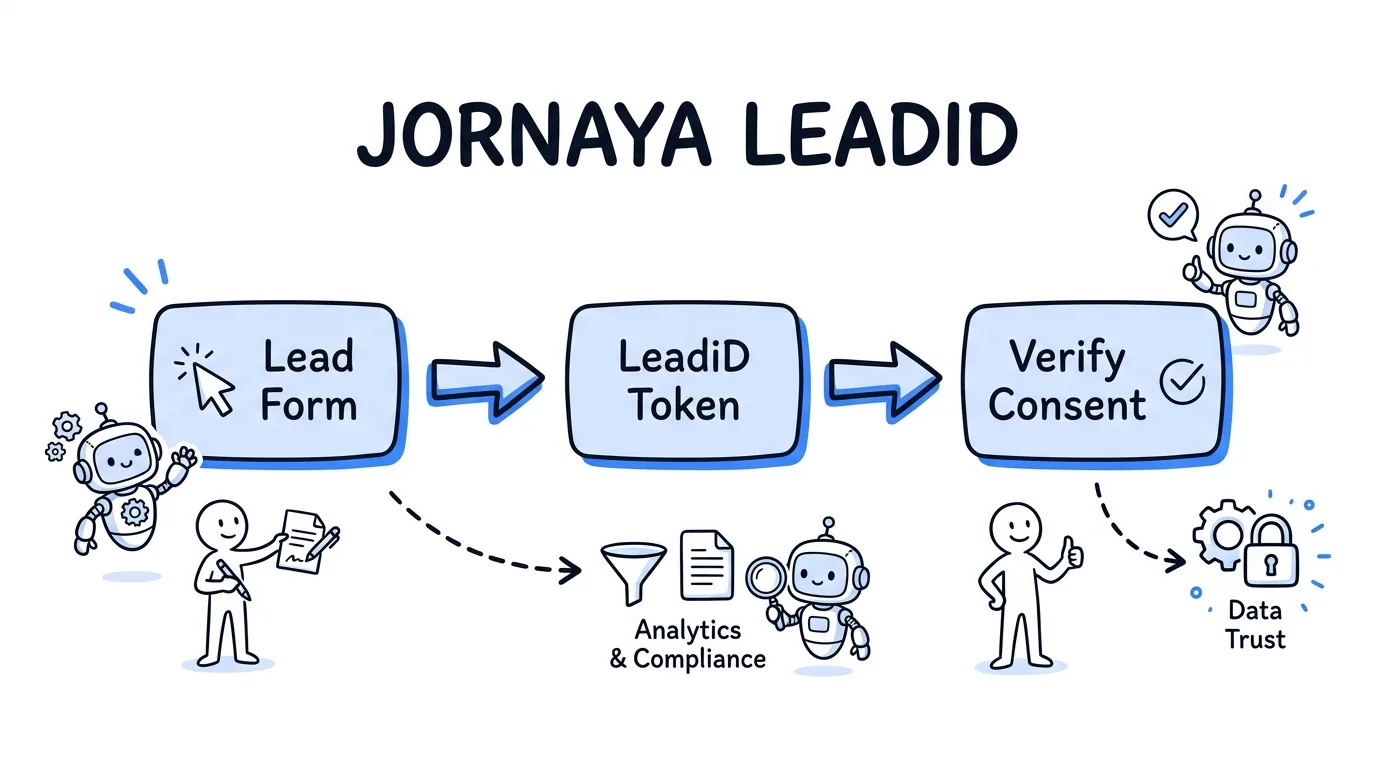
Jornaya LeadiD is a consent verification technology that fingerprints a lead event and issues a unique token, called a LeadiD, so lead buyers and sellers can prove a consumer actually visited a form and agreed to be contacted. Jornaya, formerly named LeadiD, embeds a small piece of JavaScript on the lead form that observes the consumer's behavior on the page, then generates a cryptographic universal LeadiD token that timestamps and identifies that specific submission. Buyers use the token to confirm the lead is real and to pull a visual playback of what the consumer saw and did, which is the kind of evidence the Telephone Consumer Protection Act (TCPA) demands before you dial. Because every unwanted call or text can cost $500 to $1,500 in statutory damages, verifying consent with something like Jornaya LeadiD is a budget decision as much as a legal one. This guide explains what Jornaya LeadiD is, how a LeadiD token works, how buyers use it to verify consent, how it compares to TrustedForm, and how Lead Distro AI validates every token automatically at ingest.
Key Takeaways
- Jornaya LeadiD is a token that fingerprints the lead event, timestamping and identifying each form submission so buyers can prove the consumer was real and consented.
- Jornaya was formerly called LeadiD and rebranded in 2016; its flagship LeadiD token and TCPA Guardian product verify consent and consumer intent across a large publisher network.
- As of January 2026, Jornaya is owned by ActiveProspect, the same company behind TrustedForm, after ActiveProspect acquired Verisk Marketing Solutions.
- Jornaya LeadiD and TrustedForm solve overlapping but distinct problems: LeadiD verifies the consumer journey and intent, while TrustedForm documents the exact consent moment with a session replay.
- Lead Distro AI validates every LeadiD token at ingest using your own Jornaya credentials, matching the token to the lead before it is distributed to a buyer or dialer.
What is Jornaya (LeadiD)?
Jornaya is a consent verification and behavioral data company whose core product is the LeadiD token, a cryptographic identifier assigned to a single lead event. The company was founded as LeadiD and rebranded to Jornaya in 2016, then became part of Verisk Marketing Solutions after Verisk acquired the business in December 2020 and merged it with Infutor. Across that history, the LeadiD token stayed the constant: a universal identifier that follows a lead from the moment a consumer lands on a form.
What sets Jornaya apart from a simple consent record is scale and behavior. Because the LeadiD JavaScript runs across a wide network of lead generation sites, Jornaya observes patterns across the entire consumer journey, not just one page. That lets it flag suspicious behavior, duplicate journeys, and forms designed to hide disclosure language, which is why buyers in insurance, mortgage, and solar treat a LeadiD token as a fraud detection and intent signal, not only a compliance artifact.
How a Jornaya LeadiD token works
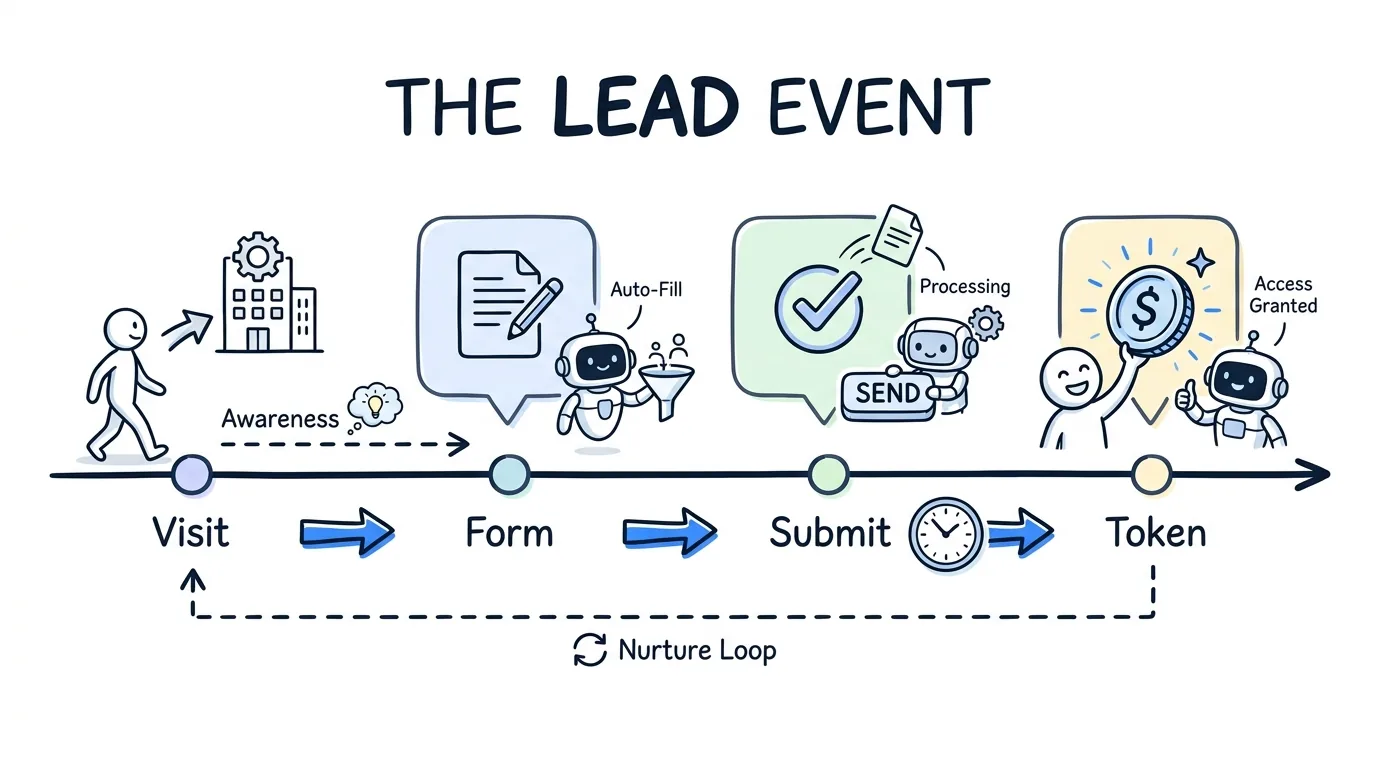
A Jornaya LeadiD token is created the instant a consumer interacts with a lead form that has Jornaya's tracking script installed. The script records behavioral metadata, such as how the consumer arrived, how long they spent on the page, and how they moved through the disclosure and submit button, then issues a universal LeadiD, formatted as a UUID, that uniquely identifies that event. That token travels with the lead through every downstream sale.
The value shows up at verification time. A buyer who receives a lead with a LeadiD token can query Jornaya to confirm the token is valid, check the timestamp, and, through Jornaya's TCPA Guardian product, request a visual playback of the consent event to see exactly what the consumer was shown. According to Verisk, TCPA Guardian gives marketers real-time insight into consumer consent and permission to be contacted before they place a call. The token, in short, turns a claim of consent into something you can independently audit.
What Jornaya verifies: consent, journey, and intent
Jornaya LeadiD verifies three things a raw lead record cannot prove on its own. First, consent: the token confirms a real consumer completed a real form at a specific moment, and TCPA Guardian's visual playback shows the disclosure language they agreed to. Second, the journey: because Jornaya sees behavior across many sites, it can tell whether the lead followed a plausible path or was manufactured, co-registered, or recycled through multiple forms. Third, intent: behavioral signals help distinguish a motivated shopper from a low-quality or incentivized submission.
This is why Jornaya is often described as a fraud detection layer rather than only a consent certificate. A lead buyer purchasing at volume cares not just that a form was filled out, but whether the consumer genuinely wanted the product and whether the same journey has been sold ten times already. Pairing a LeadiD check with duplicate lead detection closes both gaps: the token catches fabricated or suspicious journeys, and dedupe catches records you have already paid for.
How lead buyers use Jornaya to verify consent
For a lead buyer, a Jornaya LeadiD token is the difference between a lead you can legally call and a liability you just funded. When you buy leads without verified consent, you inherit the seller's compliance risk, because you are the party placing the call and the party a TCPA plaintiff names. A LeadiD token lets you check that risk yourself before money changes hands.
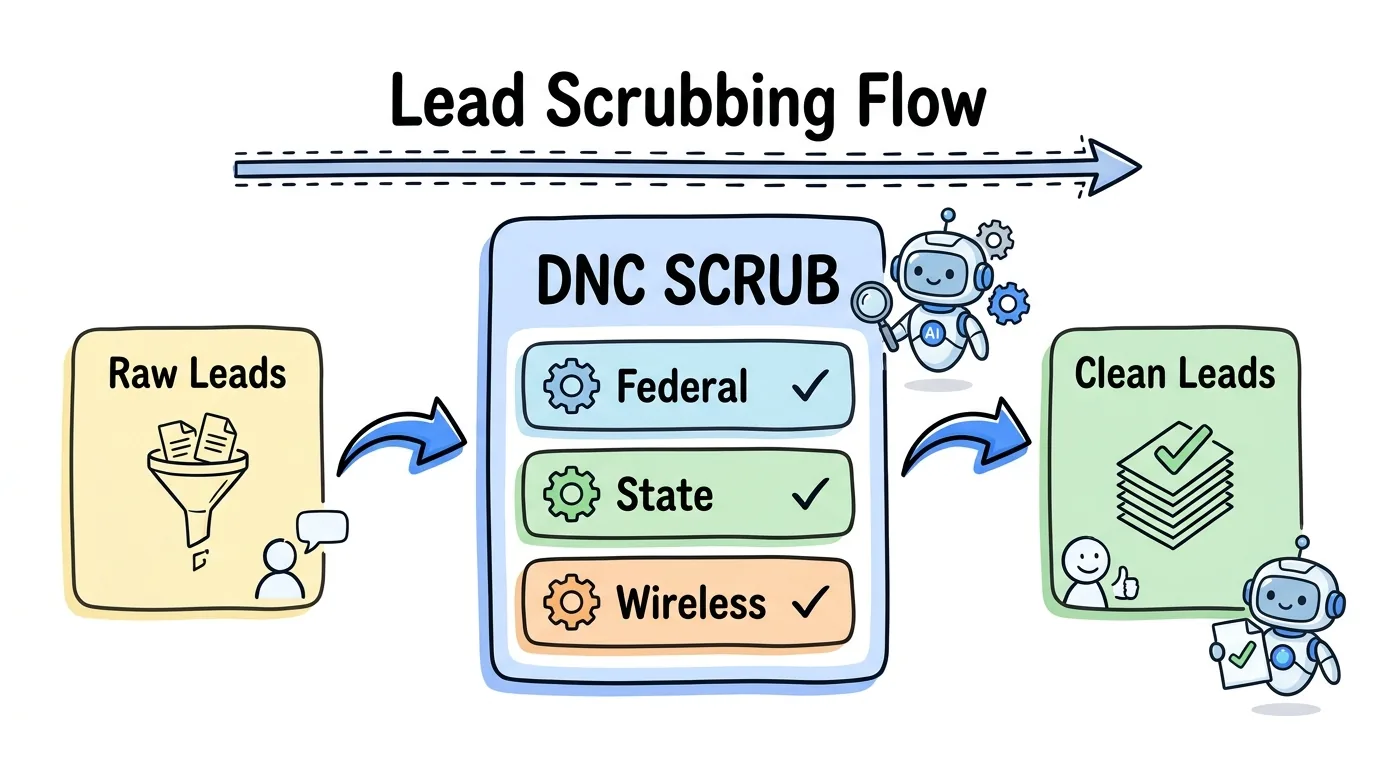
Verification is more than confirming a token exists. A disciplined buyer confirms the LeadiD is valid, that its timestamp is recent, that the consumer's contact details map to the tracked event, and that the visual playback shows clear disclosure rather than a buried or pre-checked consent box. This is the legal counterpart to the budget protection that lead acceptance criteria and DNC scrubbing provide. Buyers who require a LeadiD token on every lead, and actually verify it, build a documented, auditable consent trail across every vendor they work with, which is exactly what holds up when a claim lands.
Jornaya vs TrustedForm (and why they now share an owner)
Jornaya LeadiD and TrustedForm are the two dominant consent verification standards, and in a notable shift, they now sit under one roof. In a deal announced January 8, 2026, ActiveProspect, the company behind TrustedForm, acquired Verisk Marketing Solutions, the owner of Jornaya. Industry coverage from TCPAWorld framed it as the consolidation of both major consent-proof providers. As of this writing the two products still operate as distinct standards, so the comparison below remains practical for anyone deciding what to require from vendors.
| Jornaya (LeadiD) | TrustedForm | |
|---|---|---|
| Historical parent | Verisk Marketing Solutions | ActiveProspect |
| Current owner (2026) | ActiveProspect | ActiveProspect |
| What it produces | Cryptographic universal LeadiD token (a UUID) | Shareable certificate URL, retained up to 5 years |
| What it verifies | The consumer journey, behavior, and intent across a network | The consent moment: page snapshot and session replay |
| Primary strength | Fraud detection and intent signals at scale | Visual proof of what the lead saw and agreed to |
| Best for | Catching manufactured or recycled journeys | Proving exact disclosure in a TCPA dispute |
Many sophisticated operations require both, because a LeadiD token and a TrustedForm certificate verify the lead from two independent angles. For a deeper look at the certificate side, read our companion guide, What Is TrustedForm.
How Lead Distro AI validates Jornaya LeadiD tokens
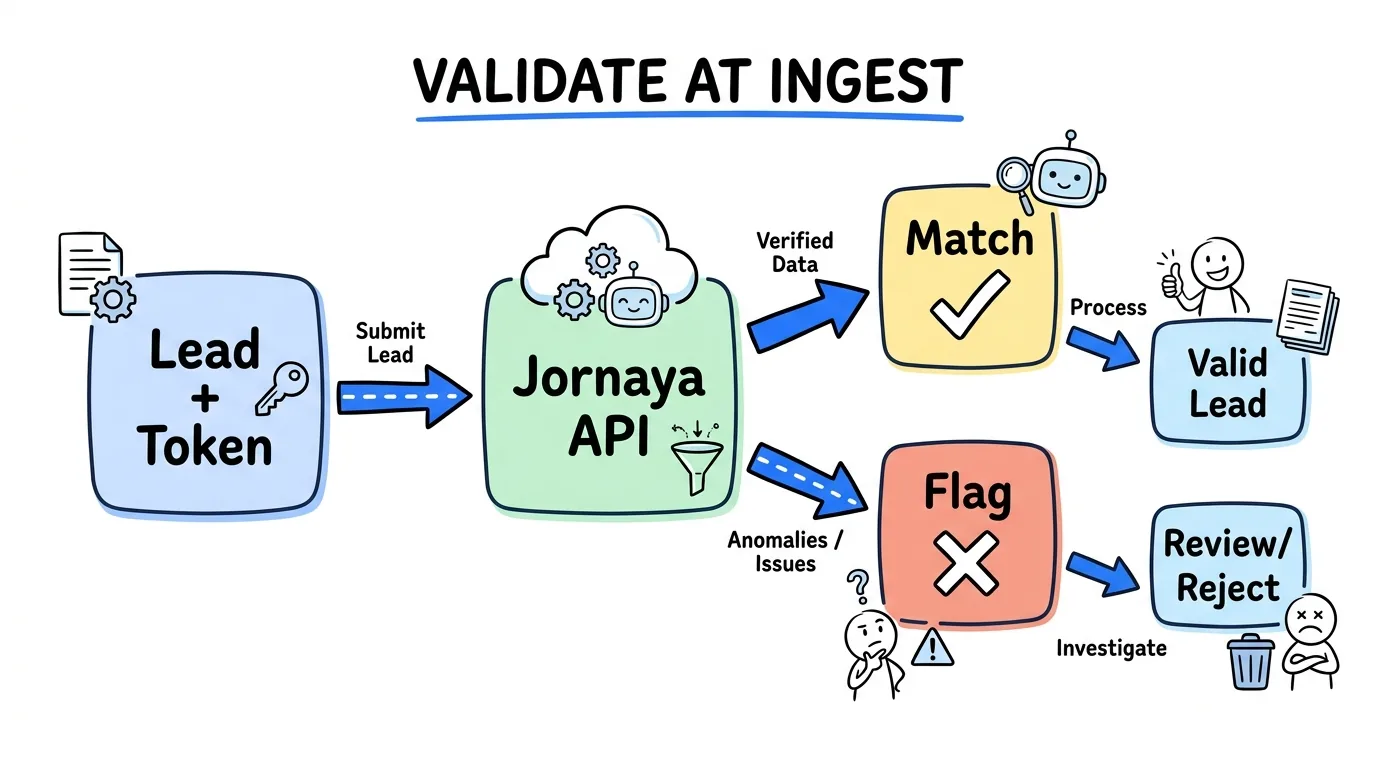
Lead Distro AI validates Jornaya LeadiD tokens automatically so you never have to trust a token on faith. When a supplier sends a lead, they include the LeadiD alongside the contact details. At ingest, Lead Distro AI verifies the token against Jornaya using your own Jornaya credentials, checks the timestamp, and confirms the lead maps to the tracked event, then stores the full result on the lead before it is distributed. A lead with a missing, expired, or mismatched token is flagged before it ever reaches a buyer or your dialer.
This runs alongside the platform's TrustedForm validation, so you can require one standard or both on any campaign. Consent verification then becomes a routing rule instead of a manual spot-check. You can see how it fits into distribution and buyer management in the product tour, or start a free trial, 7 days of full access (credit card required, cancel anytime), and validate your first token-verified lead in minutes.
"Consent verification only protects you if it is actually checked against the lead, and most teams never had time to do it by hand," says Rafael Hernandez, Founder and CEO of Lead Distro AI. "We made LeadiD and TrustedForm checks automatic at ingest so a lead you cannot verify never gets sold or dialed in the first place."
FAQ
What is Jornaya LeadiD?
Jornaya LeadiD is a consent verification token that fingerprints a lead event. When a consumer interacts with a lead form running Jornaya's tracking script, the script records behavioral metadata and issues a unique universal LeadiD, formatted as a UUID, that identifies that submission. Buyers and sellers use the token to confirm the lead is real, check when it was created, and pull a visual playback of the consent event through Jornaya's TCPA Guardian product, so consent becomes something you can independently audit rather than take on trust.
What is the difference between Jornaya and LeadiD?
They are the same company at different points in time. The business was founded as LeadiD and rebranded to Jornaya in 2016, but the core product kept the LeadiD name. So when people say LeadiD today, they usually mean the Jornaya LeadiD token, the cryptographic identifier assigned to each lead event. Jornaya is the company and platform; LeadiD is the token that platform issues. You will still see both names used interchangeably across lead generation contracts and documentation.
Is Jornaya the same as TrustedForm?
No, though as of January 2026 they share an owner, ActiveProspect, which acquired Jornaya's parent, Verisk Marketing Solutions. The products verify consent from different angles. Jornaya LeadiD focuses on the consumer journey, behavior, and intent across a large publisher network, which makes it strong for fraud detection. TrustedForm focuses on documenting the exact consent moment with a session replay of what the consumer saw. Many operations require both for independent, layered proof.
Does Jornaya prove TCPA consent?
Jornaya LeadiD does not make you TCPA compliant by itself, but it provides evidence that compliance depends on. The TCPA requires prior express written consent before many marketing calls and texts, and the burden of proving that consent falls on the business placing the call. A verified LeadiD token, plus TCPA Guardian's visual playback of the disclosure, helps you carry that burden. Consent proof is one control among several, alongside disclosure language and DNC scrubbing, in a defensible program.
How does Lead Distro AI verify Jornaya LeadiD tokens?
Lead Distro AI validates each LeadiD token at ingest using your own Jornaya credentials. It confirms the token is valid, checks the timestamp, and verifies the lead maps to the tracked event, then stores the result on the lead before distribution. Leads with missing, expired, or mismatched tokens are flagged automatically so they are never sold or dialed. TrustedForm certificate validation works the same way, so you can require one standard or both on any campaign.
Conclusion
Jornaya LeadiD is the consent verification layer that proves a lead was a real consumer with real intent, not a manufactured or recycled record. Buyers use the token to verify consent before they pay or call, sellers use it to prove and price the leads they generate, and both sides reduce fraud and legal exposure in the process. Pairing a LeadiD token with a TrustedForm certificate gives you two independent angles on the same lead, and understanding where each fits is the foundation of a defensible program, which our guide to TCPA compliance for lead distribution lays out in full. The piece most teams miss is verification itself: a token only protects you if you actually check it, which is why Lead Distro AI validates every LeadiD at ingest.
Want every lead verified against its Jornaya LeadiD and TrustedForm before it reaches your dialer? Start your 7-day free trial and route your first token-verified lead in minutes.
About the Author
Founder & CEO of Lead Distro AI & Great Marketing AI
UC Berkeley graduate and former software engineer at Microsoft. Rafael built Lead Distro AI after managing over $10M in ad spend for performance marketing agencies (pay-per-lead and pay-per-call), including running campaigns for Neil Patel. He combines deep software engineering expertise with hands-on performance marketing experience to build tools that help these agencies scale profitably.
About Lead Distro AI
Lead Distro AI: AI-Powered Lead Distribution & Call Tracking That Maximizes ROI
The modern platform for pay-per-lead and pay-per-call agencies. Route, score, and deliver leads with AI-powered automation and real-time P&L tracking. Built for performance marketing agencies and lead buyers across legal, insurance, mortgage, solar, and home services verticals.
4 Distribution Methods
Waterfall, Round Robin, Weighted, Ping-Post
Ping-Post Auctions
Real-time bidding with sub-second routing
Real-Time P&L Reporting
Track revenue, costs, and profit per campaign
Call Tracking
Assign tracking numbers, record calls, and attribute conversions
Lead Scoring
Score every lead before routing to maximize conversion
Partner Portal
Self-serve dashboard for buyers to track leads