Pay-Per-Call for Mortgage: How Loan Officers Buy Inbound Calls
Pay per call mortgage leads explained for 2026: how loan officers buy inbound refinance and purchase calls, what they cost, the trigger-lead ban, TCPA compliance, and routing setup.

Rafael Hernandez
Founder & CEO
Ex-Microsoft SWE · $10M+ PPL ad spend
I hope you enjoy reading this blog post. If you want to try Lead Distro AI for free, click here.
Author: Rafael Hernandez | Founder & CEO of Lead Distro AI
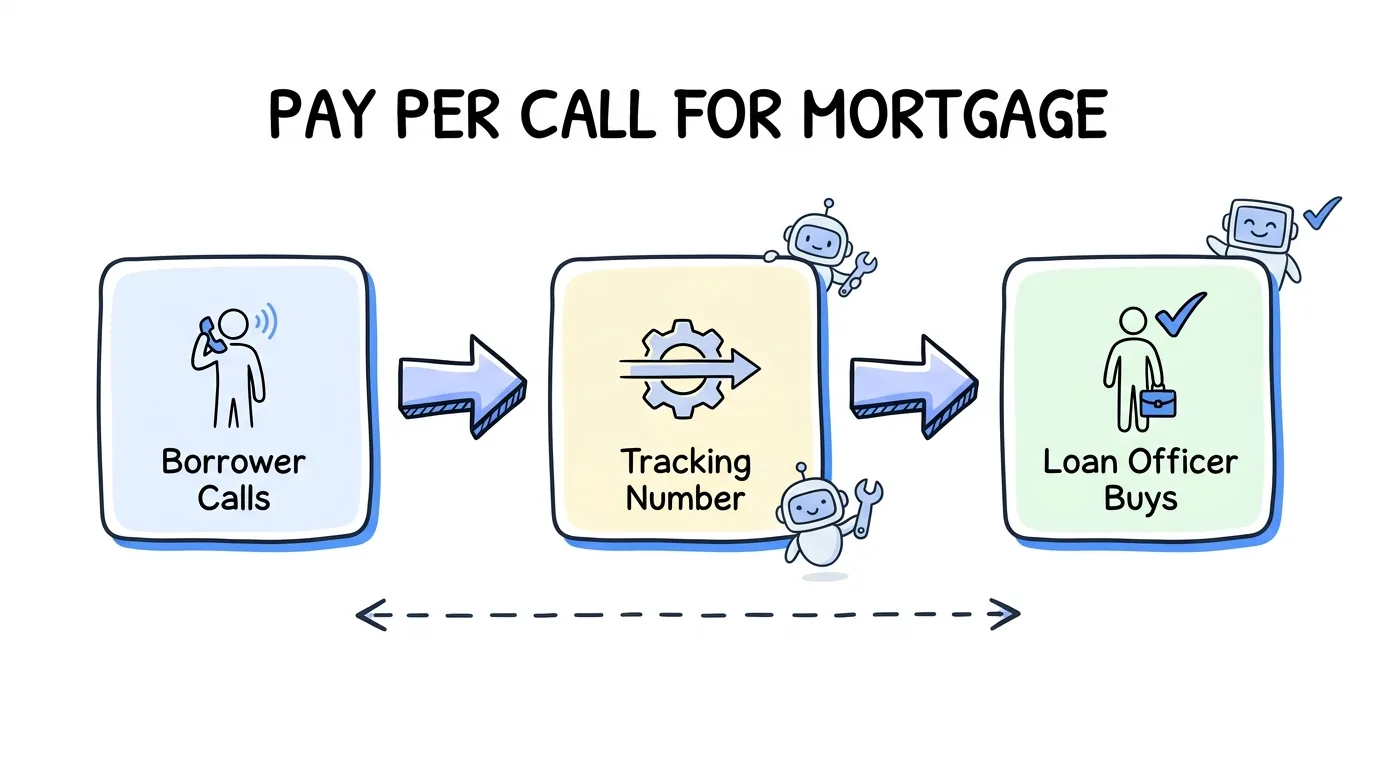
Pay per call mortgage leads are inbound phone calls from consumers shopping for a home loan, sold to a loan officer or call center on a per-qualified-call basis instead of per form fill. A publisher generates the call through search ads, SEO, or a rate-comparison site, a tracking number routes the live caller to a buyer, and the buyer pays an agreed price once the call clears a duration or pre-qualification threshold. For loan officers, this model converts faster than internet leads because the borrower is already on the phone with active intent. For pay-per-call agencies, mortgage is a high-value vertical: paid clicks for pay per call mortgage leads run about $28.48 in DataForSEO's June 2026 data, which signals how much a funded loan is worth to a buyer.
This guide covers how pay per call works for mortgage, what inbound mortgage calls cost and convert at, how the 2026 trigger-lead ban reshaped compliant lead sourcing, the TCPA rules that govern mortgage calls, and how to route, bill, and track calls with Lead Distro AI. It is a spoke in the pay-per-call by vertical guide, so if you also run insurance or solar calls, the same routing logic applies across lines. If you run both calls and data leads, the Lead Distro AI product tour shows one platform handling both.
Key Takeaways
- Pay per call mortgage leads bill per qualified call, not per form fill, which shifts risk toward call quality and away from the low contact rates that plague shared internet mortgage leads.
- Inbound mortgage calls convert far better than internet leads. Average internet mortgage leads close at roughly 2 to 4 percent, while live, phone-ready callers convert at multiples of that because intent is immediate.
- The trigger-lead ban changed sourcing in 2026. The Homebuyers Privacy Protection Act took effect March 5, 2026, banning credit bureaus from selling mortgage trigger leads, which pushes buyers toward consented, compliant inbound calls.
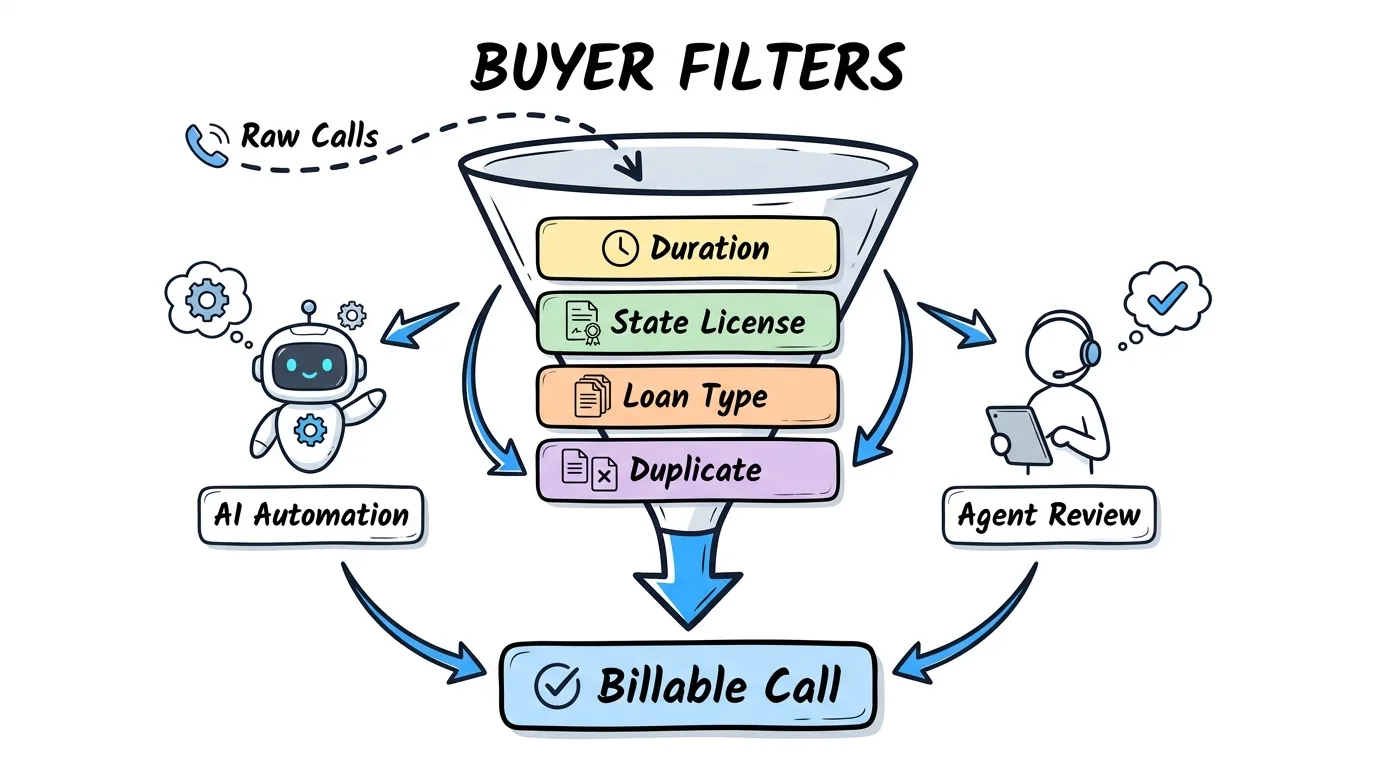
- Call quality is enforced with buyer filters: minimum call duration, IVR pre-qualification, state and license matching, loan-type matching, and duplicate suppression decide whether a call bills.
- TCPA governs mortgage calls: the law requires prior express written consent for autodialed or prerecorded telemarketing, so document consent and scrub Do-Not-Call lists rather than relying on a vacated rule.
- Routing, billing, and tracking run on a distribution platform using Round Robin, Weighted, Priority/Waterfall, or Ping-Post, with usage-based call tracking layered on the flat subscription.
How Pay-Per-Call Works for Mortgage
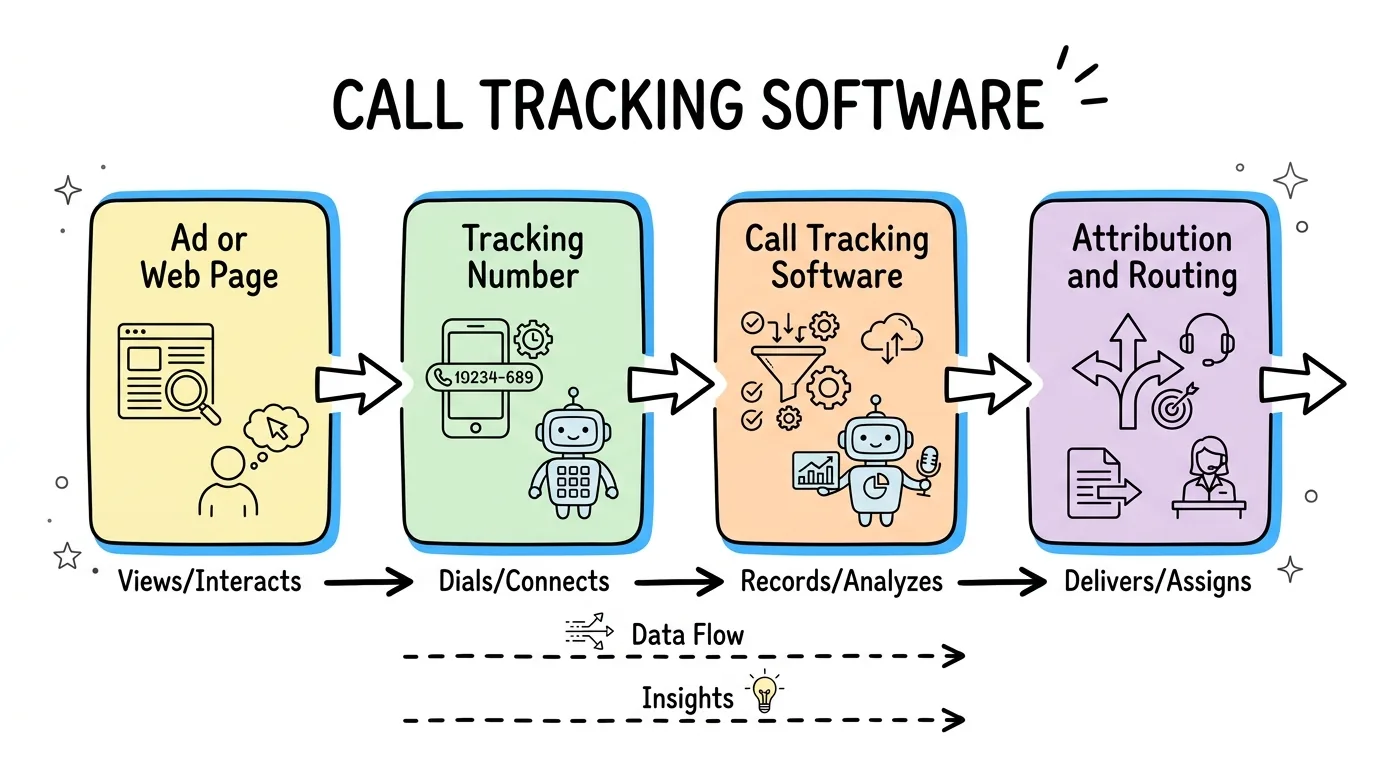
Pay per call inserts a tracked phone number between a publisher and a buyer. The publisher runs a mortgage campaign (a Google search ad for "refinance rates today," a purchase-loan pre-approval landing page, a rate-comparison site) and displays a tracking number. When a borrower calls, the platform's Dynamic Number Insertion (DNI) ties that call to its source, scores it, and routes the live caller to a buyer based on rules the buyer set: loan type, state, time of day, and bid.
The buyer only pays when the call clears a threshold, usually a minimum connected duration (commonly 60 to 120 seconds) plus any IVR pre-qualification answers. That billable event protects buyers from junk calls and pushes publishers to send genuinely interested borrowers. The result is a marketplace where loan officers buy live intent at a known unit cost, and pay-per-call agencies monetize call inventory across multiple lenders without originating the loan themselves. The same model powers pay per call for insurance and pay per call for solar, so an agency can run mortgage calls beside other high-value lines.
What Inbound Mortgage Calls Cost and Convert At
Mortgage pay-per-call economics turn on one fact: a live caller converts at a multiple of an internet lead. The average internet mortgage lead closes at roughly 2 to 4 percent, meaning a lender buys 100 form leads to fund 2 to 4 loans, according to mortgage lead conversion benchmarks. A borrower already on the phone is mid-decision, not browsing, so close rates on qualified calls run well above that.
Cost per call follows loan value and quality, not call volume. Rather than quote an invented average, here is honest positioning from Lead Distro AI buyer data: refinance calls tend to clear lower than purchase calls because refi volume swings with interest rates, while purchase and HELOC calls hold steadier per-call value. Exclusive calls (one buyer) cost more than shared calls (several buyers) because the lender is not racing competitors on the same borrower. For a sense of scale, paid search for the term pay per call mortgage leads runs about $28.48 per click in DataForSEO's data, and a live transferred call is worth far more than a single click because it skips the form-to-contact drop-off entirely.
The Trigger-Lead Ban and Why It Matters
The biggest 2026 shift in mortgage lead sourcing is the trigger-lead ban. A trigger lead was generated when a borrower applied for a mortgage and a lender pulled credit; the credit bureau then sold that inquiry, with the borrower's contact details, to competing lenders who solicited within hours. The National Association of Mortgage Brokers reports borrowers could field more than 100 contacts in the first 24 hours after applying.
The Homebuyers Privacy Protection Act, signed September 5, 2025 and effective March 5, 2026, amended the Fair Credit Reporting Act (FCRA) to prohibit credit reporting agencies from furnishing mortgage trigger leads except in narrowly defined cases (National Mortgage Professional coverage). A trigger lead is now permitted only when the requesting creditor already has a qualifying relationship with the consumer or the consumer affirmatively opted in.
For pay-per-call agencies, the ban is a tailwind. Trigger leads were never consented, which carried TCPA and FCRA exposure. Consented inbound calls, where the borrower dialed a tracking number after seeing an ad, sit on far firmer compliance footing and now face less competition from cheap, non-consented trigger data.
Call Quality and Buyer Filters
In pay per call, quality is not a vibe, it is a set of enforced rules that decide whether a call bills. The most common filters mortgage buyers apply are:
- Minimum call duration. A call must stay connected for a set time (often 60 to 120 seconds) before it counts as billable, screening out hang-ups and accidental dials.
- IVR pre-qualification. An interactive voice response menu asks one or two questions (loan type, state, credit-band self-report) before transfer, so only matching borrowers connect.
- State and license matching. Mortgage origination is licensed state by state, so calls route only to loan officers licensed in the caller's state. An out-of-state call wastes spend and creates compliance risk.
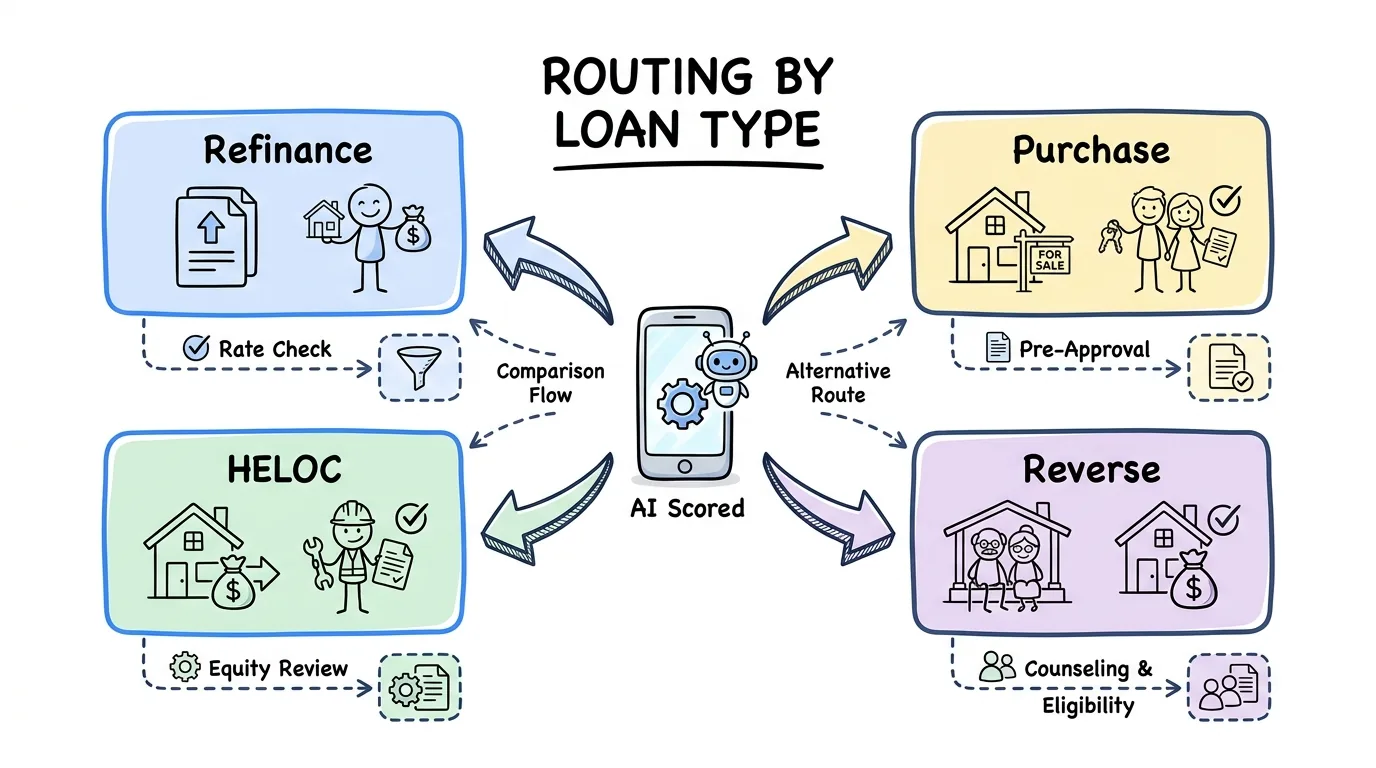
- Loan-type matching. Refinance, purchase, HELOC, and reverse-mortgage callers route to buyers who want that product, since a refi buyer should not pay for a purchase call.
- Duplicate suppression. The same caller within a defined window is blocked from billing twice, protecting buyers from repeat dials.
An original insight from running mixed call-and-lead operations: the single biggest driver of mortgage pay-per-call profitability is the gap between gross calls and billable calls. Two publishers quoting the same per-call price deliver very different net economics once duration, duplicate suppression, and loan-type mismatches are applied. Buyers who measure billable-rate by publisher, not raw volume, consistently pay less for better calls.
TCPA and Compliance for Mortgage Calls
Mortgage is one of the most heavily regulated pay-per-call verticals, so compliance is a buying decision, not an afterthought. The governing federal law is the Telephone Consumer Protection Act (TCPA), which works alongside the FCRA-based trigger-lead ban: the ban controls what bureaus can sell, while the TCPA controls how companies contact a borrower once they have the data.
The TCPA requires prior express written consent before making autodialed or prerecorded or artificial-voice telemarketing calls and texts, and it restricts calls to numbers on the National Do-Not-Call Registry (FCC, Telemarketing and Robocalls). Statutory damages run from $500 to $1,500 per violating call or text, which is why documented consent is the foundation of any compliant mortgage call program.
One development is widely misreported, so state it accurately: the FCC's 2023 "one-to-one consent" rule, which would have required separate consent for each individual seller, was vacated by the U.S. Court of Appeals for the Eleventh Circuit in Insurance Marketing Coalition Ltd. v. FCC on January 24, 2025, before it took effect (Eleventh Circuit decision coverage, Kelley Drye). The pre-existing prior-express-written-consent standard remains in force. Do not market a "one-to-one consent required" rule as current law.
"Consent documentation is the single most decisive factor in TCPA litigation. Companies that retain granular, per-lead consent records resolve claims far faster than those relying on blanket attestations," says Eric Troutman, founder of TCPAWorld and a nationally recognized TCPA defense attorney.
This is general information, not legal advice. Confirm current requirements with qualified counsel before launching mortgage calling campaigns.
Mortgage Call Types Compared
Mortgage pay-per-call inventory splits into buyer-defined loan categories. Each behaves differently on rate sensitivity, per-call value, and the filters buyers apply before a call bills.
| Mortgage Call Type | Borrower Intent | Rate Sensitivity | Typical Per-Call Value | Primary Buyer Filters |
|---|---|---|---|---|
| Refinance | High, lower payment or cash out | Very high | Lower, swings with rates | State, loan balance, credit band |
| Purchase | High, pre-approval to buy | Moderate | Higher, steadier | State, price range, timeline |
| HELOC | Moderate to high, tap equity | Moderate | Higher | State, equity, credit band |
| Reverse Mortgage | Moderate, age 62+ equity | Low | Higher | Age 62+, state, home value |
The pattern that matters: refinance sends the most calls when rates dip but its per-call value swings with the market, while purchase, HELOC, and reverse-mortgage calls hold steadier value because they are less rate-driven. A pay-per-call agency building a mortgage book usually anchors on purchase and HELOC for predictable margin, then scales refinance opportunistically when rates fall. Routing each loan type to the right buyer is what protects that margin, the same logic covered in pay per call for home services.
Routing, Billing, and Tracking With Lead Distro AI
Once calls are flowing, the platform layer decides who gets each call, how it bills, and how it is tracked. Lead Distro AI handles mortgage pay-per-call with four distribution methods:
- Round Robin spreads calls evenly across a buyer pool so no single loan officer is starved or flooded.
- Weighted sends a higher share of calls to your best-performing or highest-paying buyers.
- Priority/Waterfall offers each call to the top buyer first and falls down the list if they decline or are capped (the same model often called a waterfall).
- Ping-Post broadcasts the call's qualifying attributes to multiple buyers in real time, collects bids, and routes the live caller to the highest bidder, the revenue-maximizing model for high-value purchase and HELOC calls.
Every inbound call is scored against your rules before routing, so buyers receive pre-qualified callers rather than raw volume. Tracking runs on Dynamic Number Insertion, attributing each call to its publisher and campaign, and billing is reconciled per buyer in real time with P&L by source.
On pricing: the platform subscription starts at $297 per month flat. Call tracking is billed separately and is usage-based, a per-tracking-number monthly fee plus a per-minute rate for inbound calls, layered on top of the subscription. A 7-day free trial is available with a credit card required. To see routing, scoring, and ping-post bidding in a mortgage workflow, start a free 7-day trial of Lead Distro AI or see the Lead Distro AI product tour.
FAQ
What are pay per call mortgage leads?
Pay per call mortgage leads are inbound phone calls from consumers shopping for a home loan, sold to a loan officer or call center on a per-qualified-call basis rather than per form fill. A publisher generates the call through ads, SEO, or a rate-comparison site, a tracking number routes the live caller to a buyer, and the buyer pays once the call clears a duration or pre-qualification threshold. The model favors speed-to-contact because the borrower is already on the phone with active intent.
How much do inbound mortgage calls cost?
Cost per call follows loan value and call quality, not volume, so refinance calls tend to clear lower than purchase or HELOC calls, and exclusive calls cost more than shared calls. Rather than a fixed average, treat per-call price as a range that scales with how well the call qualifies. For context on demand value, paid search for "pay per call mortgage leads" runs about $28.48 per click, and a live transferred call is worth more than a single click because it skips the form-to-contact drop-off.
Does the trigger-lead ban affect pay per call mortgage leads?
Yes, and it helps. The Homebuyers Privacy Protection Act took effect March 5, 2026, amending the FCRA to ban credit bureaus from selling mortgage trigger leads except in narrow cases. Trigger leads were never consented, which carried compliance risk. Consented inbound calls, where the borrower dialed a tracking number after seeing an ad, sit on firmer footing and now face less competition from cheap non-consented data.
Are mortgage pay per call campaigns TCPA compliant?
Pay per call can be fully TCPA compliant when consent and Do-Not-Call rules are followed. The TCPA requires prior express written consent for autodialed or prerecorded telemarketing calls and texts and restricts calls to numbers on the National Do-Not-Call Registry. The FCC's 2023 one-to-one consent rule was vacated by the Eleventh Circuit in January 2025 and never took effect, so the prior written-consent standard governs. Retain per-lead consent records and scrub DNC lists. This is general information, not legal advice.
How do I route and bill mortgage calls?
Mortgage calls are routed and billed on a distribution platform. Lead Distro AI supports Round Robin, Weighted, Priority/Waterfall, and Ping-Post distribution, scores each call against your rules before routing, and attributes calls with Dynamic Number Insertion. The platform subscription starts at $297 per month flat, and call tracking is usage-based on top of that, a per-number monthly fee plus a per-minute inbound rate. A 7-day free trial is available with a credit card required.
How is mortgage call quality enforced?
Call quality is enforced with buyer filters applied before a call bills: a minimum connected duration (often 60 to 120 seconds), IVR pre-qualification, state and license matching, loan-type matching, and duplicate suppression. These rules decide whether a call counts as billable, which protects buyers from junk inventory and pushes publishers to send genuinely interested borrowers. Measuring billable-rate by publisher, not raw volume, is the clearest way to control mortgage pay-per-call margin.
Conclusion
Pay per call is the fastest path to live mortgage intent. A borrower already on the phone converts at a multiple of an internet lead, and the 2026 trigger-lead ban pushed the market toward exactly this kind of consented, compliant inbound call. The economics turn on call quality and compliance: enforce buyer filters before routing, document consent under the current TCPA standard, and match each call to a licensed buyer who wants that loan type, with Ping-Post earning the most on high-value purchase and HELOC calls.
If you want to run mortgage calls and data leads from one dashboard with lead scoring and real-time P&L, start a free 7-day trial of Lead Distro AI and route your first call in under an hour, or see the Lead Distro AI product tour to watch ping-post bidding work end to end.
Building a mortgage pay-per-call book? Start your 7-day free trial and see how Lead Distro AI scores, routes, and bills refinance, purchase, and HELOC calls from one platform. Credit card required.
About the Author
Founder & CEO of Lead Distro AI & Great Marketing AI
UC Berkeley graduate and former software engineer at Microsoft. Rafael built Lead Distro AI after managing over $10M in ad spend for performance marketing agencies (pay-per-lead and pay-per-call), including running campaigns for Neil Patel. He combines deep software engineering expertise with hands-on performance marketing experience to build tools that help these agencies scale profitably.
About Lead Distro AI
Lead Distro AI: AI-Powered Lead Distribution & Call Tracking That Maximizes ROI
The modern platform for pay-per-lead and pay-per-call agencies. Route, score, and deliver leads with AI-powered automation and real-time P&L tracking. Built for performance marketing agencies and lead buyers across legal, insurance, mortgage, solar, and home services verticals.
4 Distribution Methods
Waterfall, Round Robin, Weighted, Ping-Post
Ping-Post Auctions
Real-time bidding with sub-second routing
Real-Time P&L Reporting
Track revenue, costs, and profit per campaign
Call Tracking
Assign tracking numbers, record calls, and attribute conversions
Lead Scoring
Score every lead before routing to maximize conversion
Partner Portal
Self-serve dashboard for buyers to track leads