Life Insurance Leads: How to Sell, Price, and Distribute Them
A 2026 guide for agencies that generate life insurance leads: the lead types, real cost per lead, who buys them, and how lead distribution software routes them.

Rafael Hernandez
Founder & CEO
Ex-Microsoft SWE · $10M+ PPL ad spend
I hope you enjoy reading this blog post. If you want to try Lead Distro AI for free, click here.
Author: Rafael Hernandez | Founder & CEO of Lead Distro AI
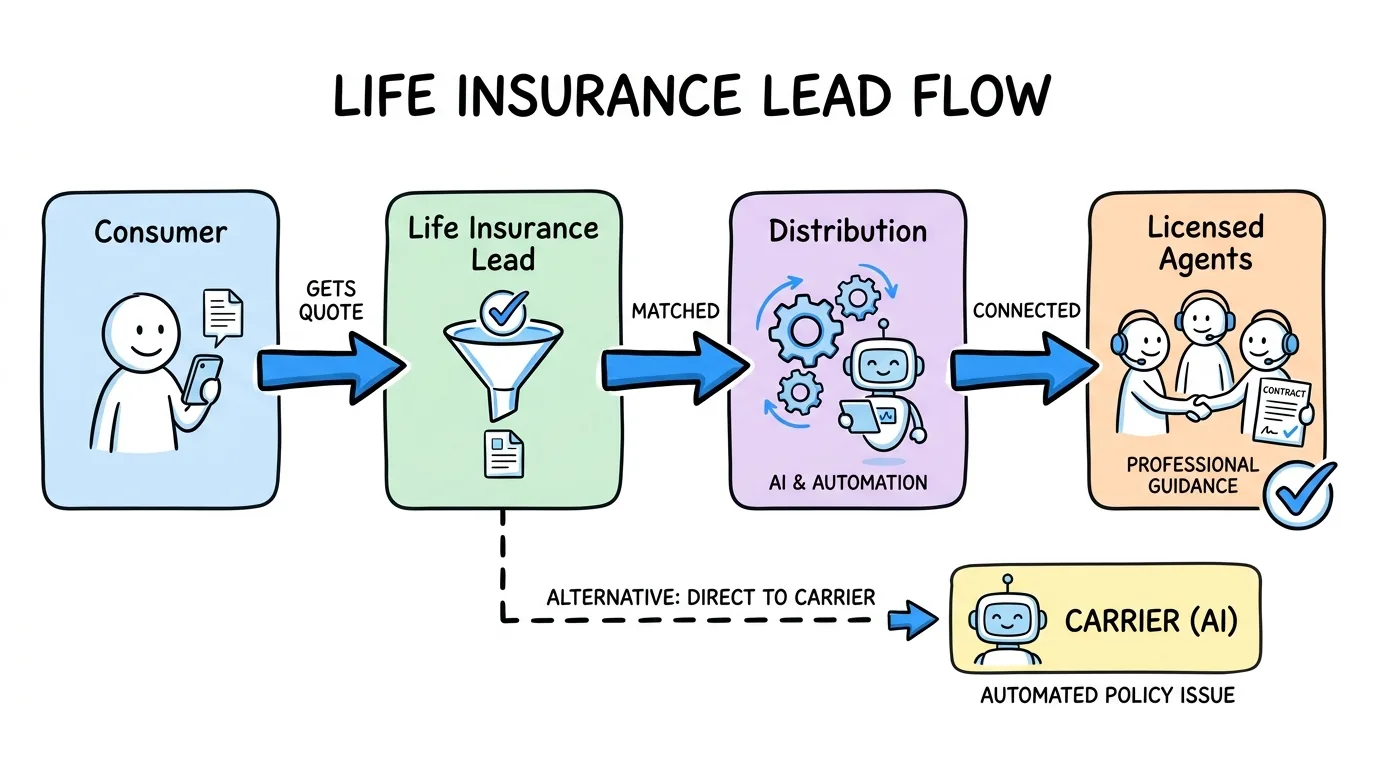
Life insurance leads are consumer inquiries from people shopping for term, whole, final expense, or indexed universal life coverage, sold to the agents and agencies who write the policies. For pay-per-lead and pay-per-call agencies, they are one of the deepest, most durable verticals in the lead market. According to the LIMRA 2025 Insurance Barometer Study, just 51% of Americans own life insurance, down from 63% in 2011, and roughly 100 million adults say they need coverage or more of it. That gap is the buyer pool, and it does not shrink. The challenge is rarely demand. It is sourcing quality leads, routing each one to a licensed agent before it goes cold, and staying TCPA-compliant on every transfer. This guide breaks down the lead types, what they actually cost in 2026, where to buy and sell them, and how a lead distribution platform automates routing, capping, and billing. If you buy or resell leads, you can start a 7-day free Lead Distro AI trial (credit card required) and route your first life insurance lead in minutes.
Lead Distro AI does not sell leads. It is software for the companies that generate life insurance leads and route them to buyers. If you are an agent looking to buy leads, this guide will help you judge price and quality, but you will need a lead vendor to buy from.
Key Takeaways
- Life insurance leads come in five forms: real-time exclusive, real-time shared, aged, live transfer, and by product line (term, whole, final expense, IUL), each trading price against contact rate.
- Cost per lead ranges from $0.25 to $200+: aged leads run $0.25 to $4, shared leads $8 to $20, exclusive life insurance leads $15 to $150, and live transfers $25 to $200, per 2026 vendor pricing.
- Cheaper leads are not always cheaper clients. Once you factor close rate, a $1.50 aged lead and a $25 exclusive lead can land within a few hundred dollars of each other on effective cost per issued policy.
- Speed to lead decides conversion. MIT research found the odds of qualifying a lead drop 21x when you call at 30 minutes instead of 5, so distribution automation is a revenue lever, not a convenience.
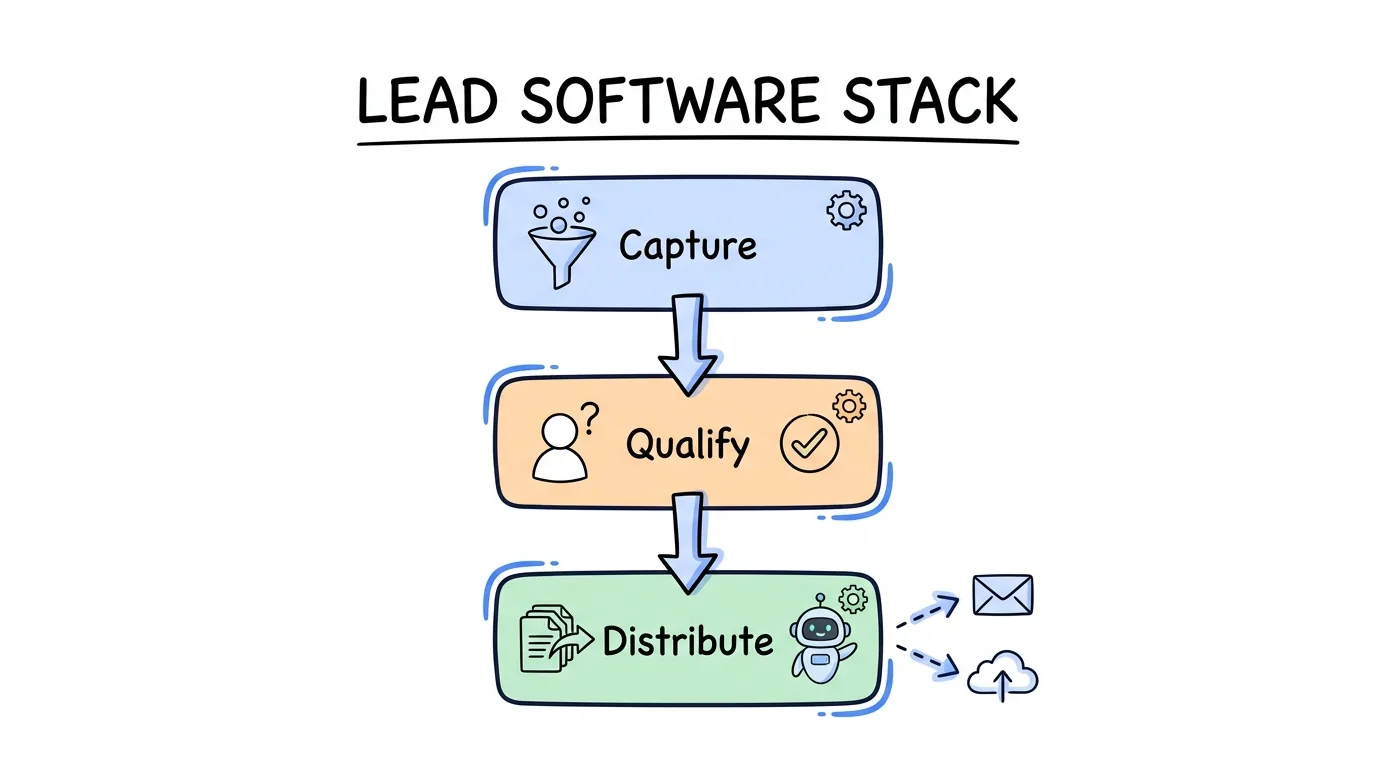
- Lead distribution software is the routing layer, not a CRM. It ingests, scores, deduplicates, caps, and ping-posts each lead to the right buyer in real time, then tracks margin per source and per buyer.
The Five Types of Life Insurance Leads
Every life insurance lead falls into one of five categories, and the category determines your margin more than any other factor.
- Real-time exclusive leads go to a single agent the moment a consumer submits a quote form. Contact rates run 35% to 55% because the prospect is engaged. They cost the most but waste no spend on competition.
- Real-time shared leads sell to two to eight agents at once. The first to dial usually wins, so contact rates fall to 20% to 35% and prices drop sharply.
- Aged leads are 15 to 90 days old and previously worked. They are cheap and reward a disciplined follow-up cadence.
- Live transfers are inbound calls a call center has already qualified, then patches to the agent live. Contact is effectively 100%.
- By product line, term, whole, final expense, and IUL leads each behave differently. Final expense leads target adults 50 to 85 buying small whole life policies, a tighter and faster-closing niche than the broader life insurance market. Our final expense leads guide covers that sub-vertical in depth.
What Life Insurance Leads Cost in 2026
The price of these leads spans two orders of magnitude, so a single "cost per lead" number is meaningless without the type attached. Based on 2026 pricing published by lead vendors such as Aged Lead Store, here is the working range:
| Lead Type | Typical Cost Per Lead | Contact Rate | Best For |
|---|---|---|---|
| Real-time exclusive | $15 to $150 | 35% to 55% | Agents who dial immediately |
| Real-time shared | $8 to $20 | 20% to 35% | High-volume dialer teams |
| Aged (15 to 90 days) | $0.25 to $4 | 5% to 15% | Follow-up-heavy closers |
| Live transfer (call) | $25 to $200 | ~100% | Closers wanting pre-qualified consumers |
The trap is judging a lead by its sticker price. What matters is the effective cost per issued policy, which folds in close rate. Using illustrative conversion assumptions, a $25 exclusive lead at an 8% lead-to-application rate and 70% issue rate costs about $446 per issued policy, while a $1.50 aged lead at a 1.5% combined rate costs about $100, but only if you have the dialer capacity to work the volume. For pricing your own offers, our guide to how much to charge for leads walks through the full margin math.
Where to Buy and Sell Life Insurance Leads
There are three approaches to life insurance lead generation, and most serious operators use a blend of all three.
Buy from marketplaces and vendors. Aggregators sell exclusive and shared inventory by line and geography. It is the fastest way to start but the most exposed to quality variance, so demand TrustedForm or Jornaya certificates and a clear lead return policy before you commit budget.
Generate your own. Running paid search, social, and SEO for life insurance lead generation gives you the cleanest, most exclusive inventory and the best long-term margin, at the cost of upfront media spend and a steeper learning curve.
Buy to resell. Lead brokers and sellers buy in bulk, then redistribute to a buyer network at a markup. This is where a distribution platform earns its keep, because the margin lives in routing the right lead to the highest bidder without manual handling. If you operate on the buy side, our solutions for lead buyers and the broader insurance lead distribution vertical page show how the workflow maps to a platform.
How Lead Distribution Routes Life Insurance Leads
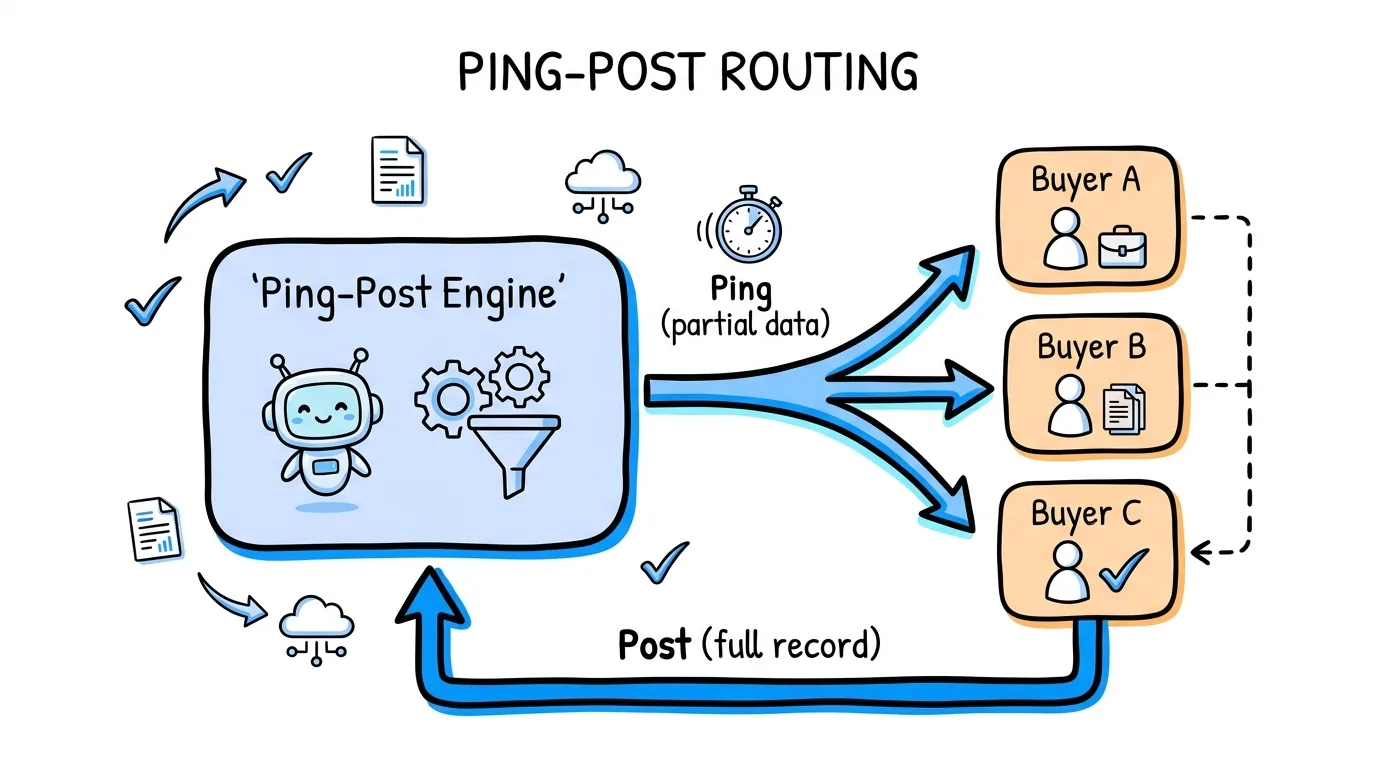
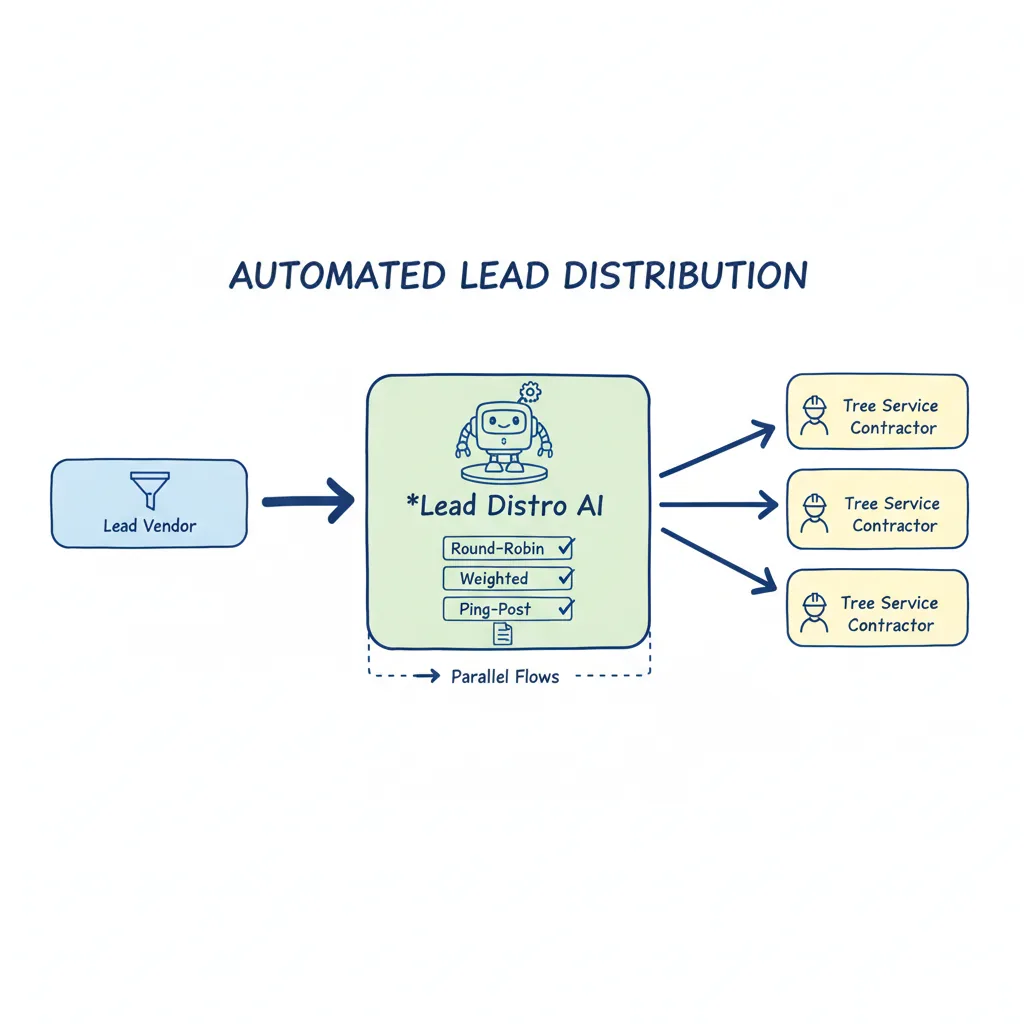
Lead distribution software is the routing layer that sits between your lead sources and your buyers. It is not a CRM and does not replace one; it decides who gets each lead and on what terms. Lead Distro AI supports all four distribution methods, Round Robin, Weighted, Priority/Waterfall, and Ping-Post, in a single account.
For resold inventory, ping-post is the standard. The platform sends a ping with partial data (state, age band, coverage type) to eligible buyers, collects bids in seconds, then posts the full record only to the winner. That structure prevents cherry-picking and enforces each buyer's caps, filters, and suppression lists automatically.
Speed is the other half. MIT's Lead Response Management study found the odds of qualifying a lead drop 21x when contact slips from 5 minutes to 30. Automated routing closes that gap. You can see how lead distribution works end to end in the product tour.
Lead Scoring, Caps, and Deduplication
Volume without quality control destroys margin on bought leads, so the routing layer has to do more than forward records.
- Lead scoring ranks each lead on fit and likely intent before it routes, so your best buyers see the best inventory first. Lead Distro AI scores every lead in under a second.
- Daily caps stop you from overselling an agent who can only work 25 leads a day, which protects contact rates and your buyer relationships.
- Deduplication catches the same consumer arriving from two sources, configurable by phone alone or any field combination so you do not reject genuinely distinct leads.
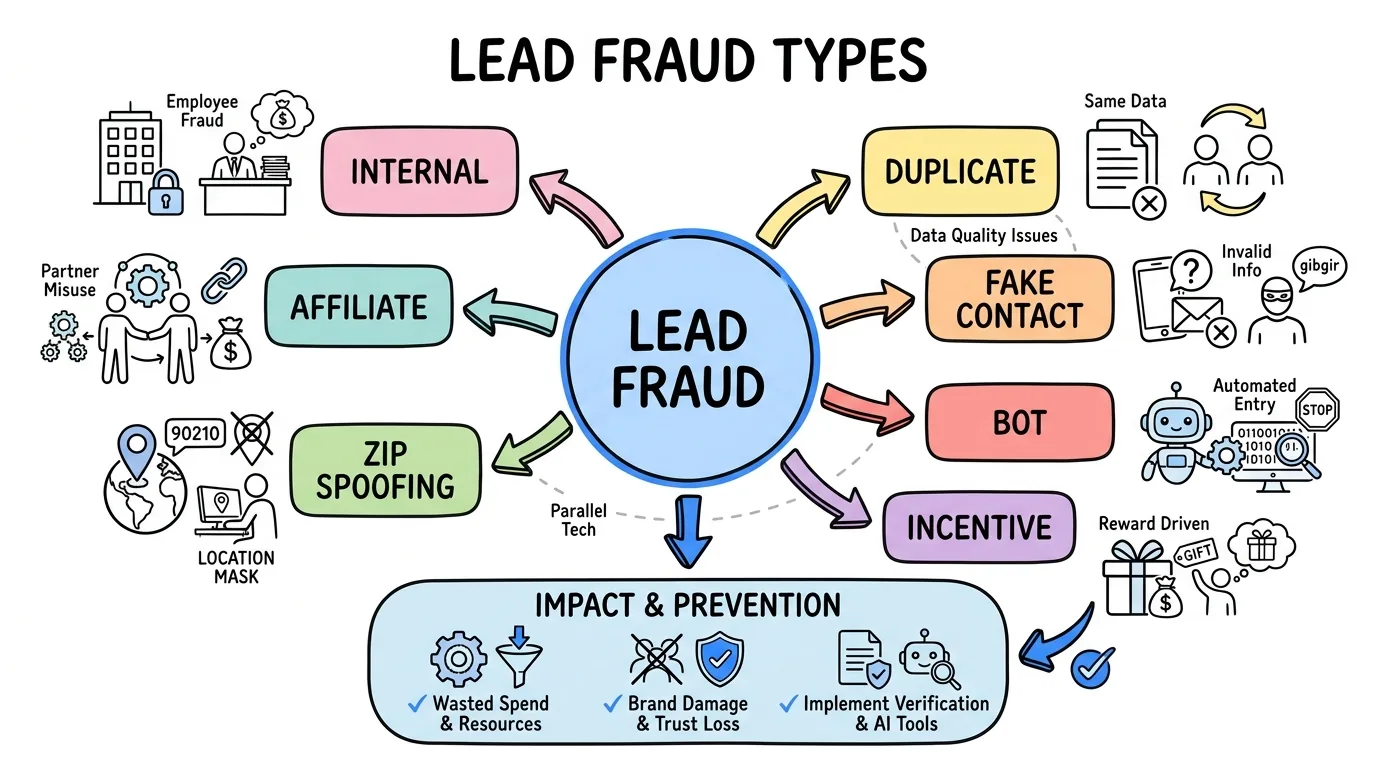
- Suppression lists keep DNC, prior-purchaser, and litigator numbers out of the flow before they ever reach a buyer.
These controls are why a platform beats spreadsheets and webhooks at scale. They also feed a real-time P&L view so you see revenue, cost, and margin per source and per buyer, which is the difference between a lead business and a guessing game.
TCPA Compliance for Life Insurance Lead Buyers
Life insurance sales lean on outbound calls to mobile phones, which puts nearly every dial under the Telephone Consumer Protection Act (TCPA). Violations run $500 to $1,500 per call under the FCC's TCPA rules, and class-action exposure is real in insurance because the audience skews older.
The non-negotiables for anyone buying or reselling these leads:
- Written prior express consent at capture, naming the seller or buyer category, not buried in terms of service.
- A documented consent trail. TrustedForm or Jornaya certificates should travel with the lead to every buyer. Note that the FCC's one-to-one consent rule was vacated by the 11th Circuit in Insurance Marketing Coalition v. FCC in January 2025, but many buyers and several state mini-TCPA laws still require single-seller consent in practice.
- DNC scrubbing within 31 days of any dial, and time-of-day limits (no calls before 8 a.m. or after 9 p.m. local).
A distribution platform that validates consent at ingest and resolves time zone from the lead's state turns compliance into a default instead of a daily fire drill.
Build a Life Insurance Lead Business on a Distribution Platform
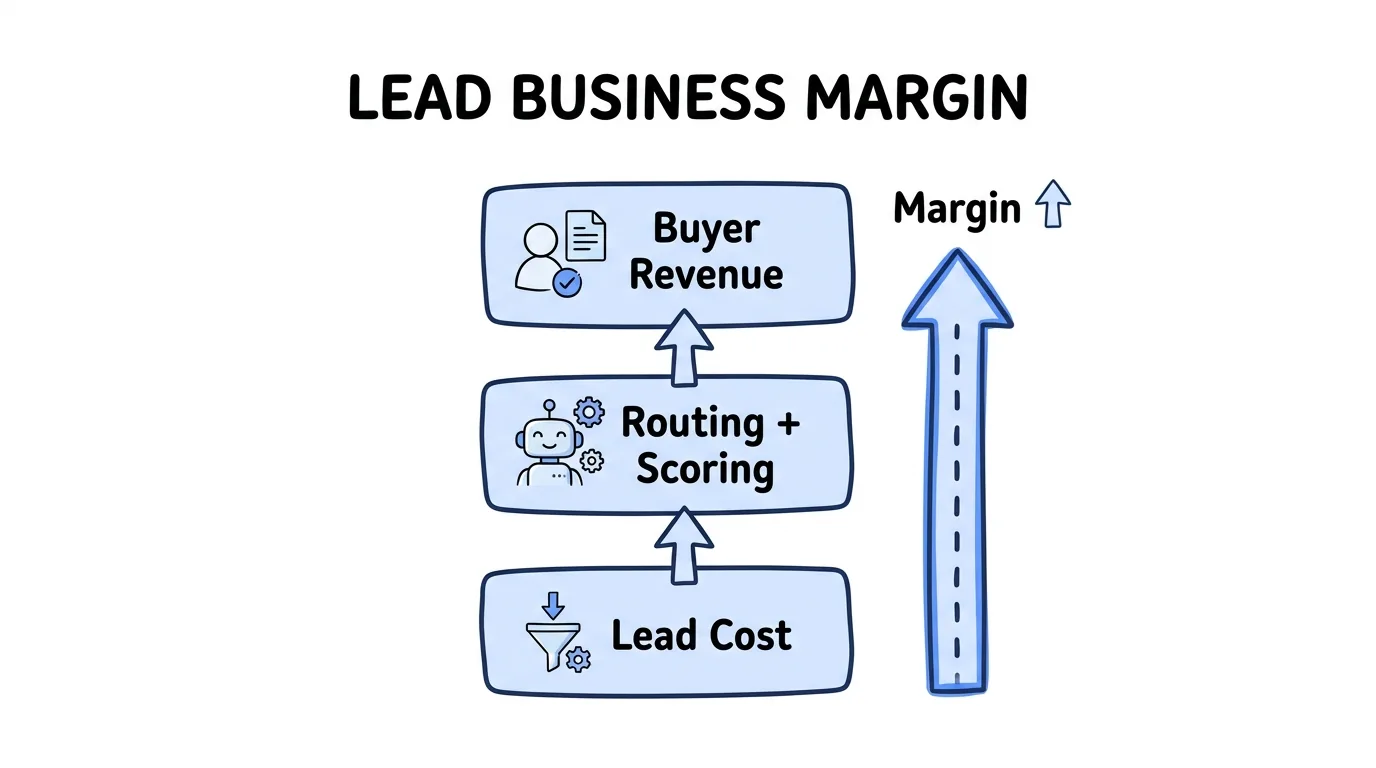
The agencies that win with life insurance leads treat distribution as the profit center, not an afterthought. "The margin in a lead business is made in routing, not in buying," says Rafael Hernandez, Founder and CEO of Lead Distro AI. "If you can put the right lead in front of the right buyer in under a second and prove the margin on every source, the rest takes care of itself."
That same engine powers every high-value vertical, which is why a life insurance pillar sits alongside guides for auto insurance leads, business loan leads, and moving leads, with merchant cash advance, pest control, and credit repair guides on the way. Related insurance niches like Medicare leads follow the same playbook. Plans start at $297 a month; see the full pricing tiers for volume-based options as you scale.
FAQ
What are life insurance leads?
Life insurance leads are contact records from consumers actively shopping for life coverage, including term, whole, final expense, and indexed universal life policies. They are sold to licensed agents and agencies that write policies. Leads arrive as real-time exclusive, real-time shared, aged, or live-transfer inventory, and quality is driven by how recently the consumer inquired, how many agents receive the lead, and whether consent is documented with a TrustedForm or Jornaya certificate.
How much do exclusive life insurance leads cost?
Exclusive life insurance leads typically cost $15 to $150 each in 2026, depending on product line, geography, and exclusivity window, with live transfers reaching $200 or more. Exclusive leads sell to a single agent, so contact rates run 35% to 55% and there is no competition on the dial. Shared leads cost less, $8 to $20, but go to several agents at once. Always weigh sticker price against close rate to find your true cost per issued policy.
What is the difference between final expense and life insurance leads?
Final expense leads are a sub-type of life insurance leads. They target adults aged 50 to 85 buying small whole life policies, usually $5,000 to $25,000, to cover burial costs, so they close fast and price between $15 and $65 for exclusives. Broader life insurance inventory spans term, whole, and IUL across all adult ages, with wider price ranges and longer sales cycles. Most agencies run both, routing each lead type to agents configured for that product.
How does lead distribution software route life insurance leads?
Lead distribution software ingests leads through API, web form, or ping-post, then applies rules to send each one to the right buyer in real time. For resold inventory, ping-post is standard: the platform pings buyers with partial data, collects bids, and posts the full record to the winner in milliseconds. It also enforces daily caps, deduplication, suppression lists, and lead scoring, then reports margin per source and per buyer so you can see profit instead of guessing at it.
Can I sell life insurance leads to other agents?
Yes. Many lead brokers and sellers buy these leads in bulk or generate their own, then redistribute them to a buyer network at a markup. A distribution platform makes this profitable by automating ping-post bidding, buyer caps, billing, and per-buyer reporting, so the margin lives in routing rather than manual handling. You can manage buyers, set bid floors, and bill automatically inside one platform instead of stitching together spreadsheets, webhooks, and invoices.
Conclusion
Life insurance leads remain one of the most reliable revenue verticals in the lead market because the coverage gap is structural, not cyclical. Winning is less about life insurance lead generation alone and more about routing leads fast, scoring them well, and proving margin on every source. That is exactly what a lead distribution platform delivers, whether you buy, generate, or resell. The agencies that move first on automation capture the contact-rate advantage that speed to lead creates, and that lead compounds. Start now, or watch a faster competitor win the buyers you could have served.
Ready to route, score, and bill your life insurance leads in one place? Start your 7-day free trial (credit card required) and route your first lead in minutes.
About the Author
Founder & CEO of Lead Distro AI & Great Marketing AI
UC Berkeley graduate and former software engineer at Microsoft. Rafael built Lead Distro AI after managing over $10M in ad spend for performance marketing agencies (pay-per-lead and pay-per-call), including running campaigns for Neil Patel. He combines deep software engineering expertise with hands-on performance marketing experience to build tools that help these agencies scale profitably.
About Lead Distro AI
Lead Distro AI: AI-Powered Lead Distribution & Call Tracking That Maximizes ROI
The modern platform for pay-per-lead and pay-per-call agencies. Route, score, and deliver leads with AI-powered automation and real-time P&L tracking. Built for performance marketing agencies and lead buyers across legal, insurance, mortgage, solar, and home services verticals.
4 Distribution Methods
Waterfall, Round Robin, Weighted, Ping-Post
Ping-Post Auctions
Real-time bidding with sub-second routing
Real-Time P&L Reporting
Track revenue, costs, and profit per campaign
Call Tracking
Assign tracking numbers, record calls, and attribute conversions
Lead Scoring
Score every lead before routing to maximize conversion
Partner Portal
Self-serve dashboard for buyers to track leads