Call Forwarding Software for Pay-Per-Call Agencies
Call forwarding software delivers a live call to a buyer number using conditional, geo, and failover rules. Here is how a pay-per-call agency uses it.

Rafael Hernandez
Founder & CEO
Ex-Microsoft SWE · $10M+ PPL ad spend
I hope you enjoy reading this blog post. If you want to try Lead Distro AI for free, click here.
Author: Rafael Hernandez | Founder & CEO of Lead Distro AI
Last Updated: July 7, 2026
Call forwarding software is the layer that takes a live inbound call and delivers it to a different destination number based on rules you set, such as which buyer is open, what state the caller is in, or whether the first destination answered. For a pay-per-call agency, forwarding is the mechanism that actually connects a caller to the buyer you are billing, after your routing logic has picked who should get the call. A consumer uses a call forwarding service to send a personal cell to voicemail; an agency uses call forwarding software to hand a qualified caller to an insurance carrier or law firm and get paid for the connection. According to Focus Digital's 2025 conversion report, inbound calls convert at 25.56% versus 9.38% for cold outreach, so delivering the call cleanly is where the revenue lives. This guide explains how forwarding works, the conditional, geo, and failover modes that matter for buyer delivery, and how it differs from call routing.
Key Takeaways
- Call forwarding software delivers a live call to a destination number, applying conditional, geo, and failover rules the instant the call needs to be handed off.
- A call forwarding service for agencies is not consumer forwarding, it delivers a qualified caller to a paying buyer instead of sending a personal line to voicemail.
- Conditional forwarding uses if/then logic to send the call elsewhere when a buyer is busy, does not answer within a set ring timeout, or is unreachable.
- Geo routing and failover forwarding protect revenue by matching callers to in-territory buyers and rerouting instantly when the first destination fails.
- Forwarding is the delivery step; call routing is the decision step, and pay-per-call platforms combine both so a call gets to the right buyer and connects reliably.
- Lead Distro AI forwards calls and leads in one platform starting at $297/month, with a 7-day free trial that requires a credit card.
What Call Forwarding Software Does
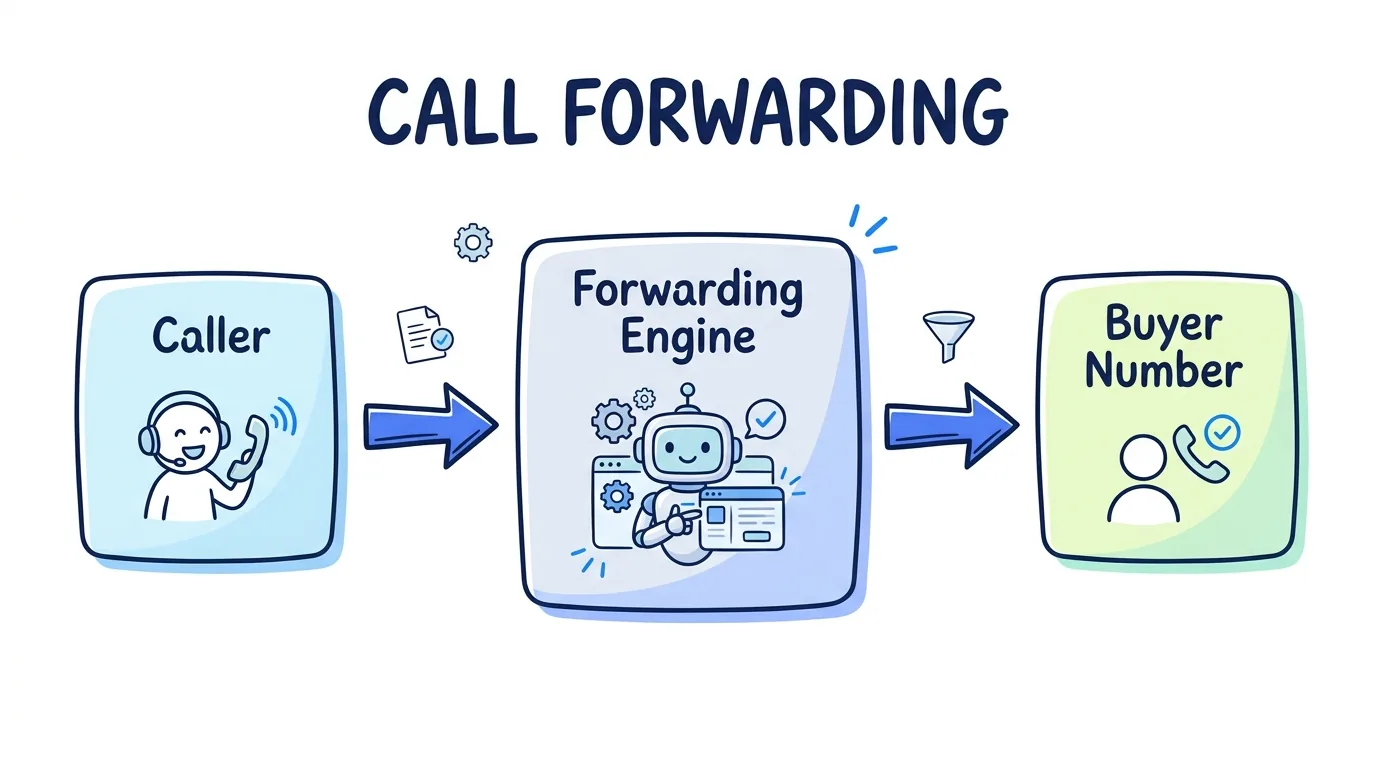
Call forwarding software answers an inbound call on a tracking number you advertise, then bridges that call to another phone number or SIP address. It sits at the delivery end of the pipeline, taking the destination your rules selected and completing the connection. The moment a caller dials your DID number, the platform reads the call, confirms the target is eligible, and forwards the audio to the buyer's line.
For a pay-per-call agency, the destination is usually a buyer's call center, not your own desk. You are not answering the phone. You are using a call forwarding service to deliver a live, qualified caller to a buyer and bill them per connected call. That reframes forwarding from a convenience feature into a billing event: a clean forward that the buyer answers is revenue, and a forward that drops is a dispute. Every forwarding rule exists to make sure the right buyer picks up.
Call Forwarding vs Call Routing: Where the Line Is
The terms overlap, so agencies mix them up, but they solve different problems. Call routing is the decision: which buyer, agent, or campaign should get this specific caller, based on IVR answers, bids, and buyer caps. Call routing software for pay-per-call runs that logic, including the buyer waterfall that pings buyers in priority order. Forwarding is the delivery: once routing names a winner, forwarding is the act of connecting the call to that number and handling what happens if it fails.
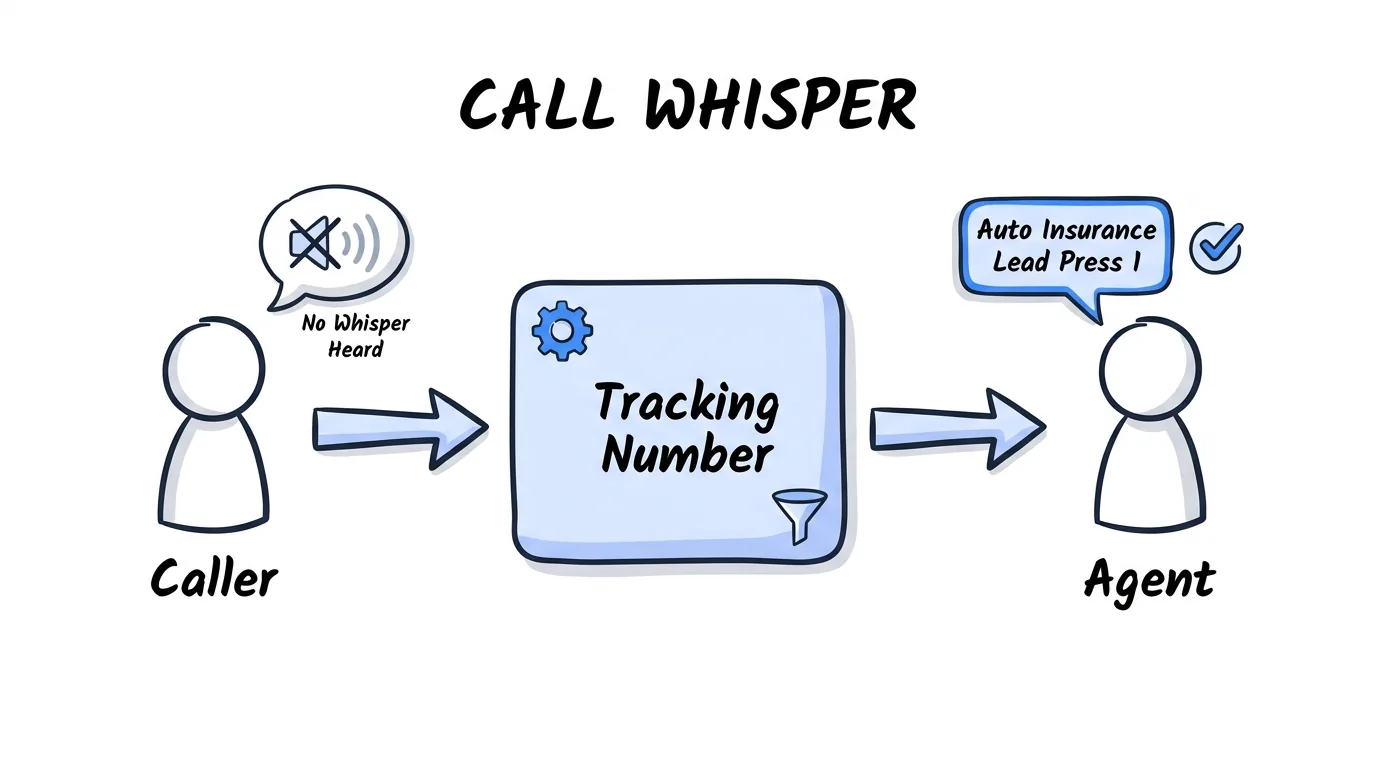
Think of it as decide, then deliver. Routing chooses the destination; call forwarding software executes the handoff and manages the call transfer to the live buyer. A blind call transfer sends the caller straight through, while an attended call transfer briefs the buyer with a call whisper first. You need both layers, which is why most agencies run forwarding and routing inside one platform rather than stitching a standalone forwarder to a separate router and watching connections drop at the seam.
Conditional, Geo, and Failover Forwarding
Three forwarding modes carry almost all of the value for a pay-per-call operation, and a serious forwarding platform supports every one.
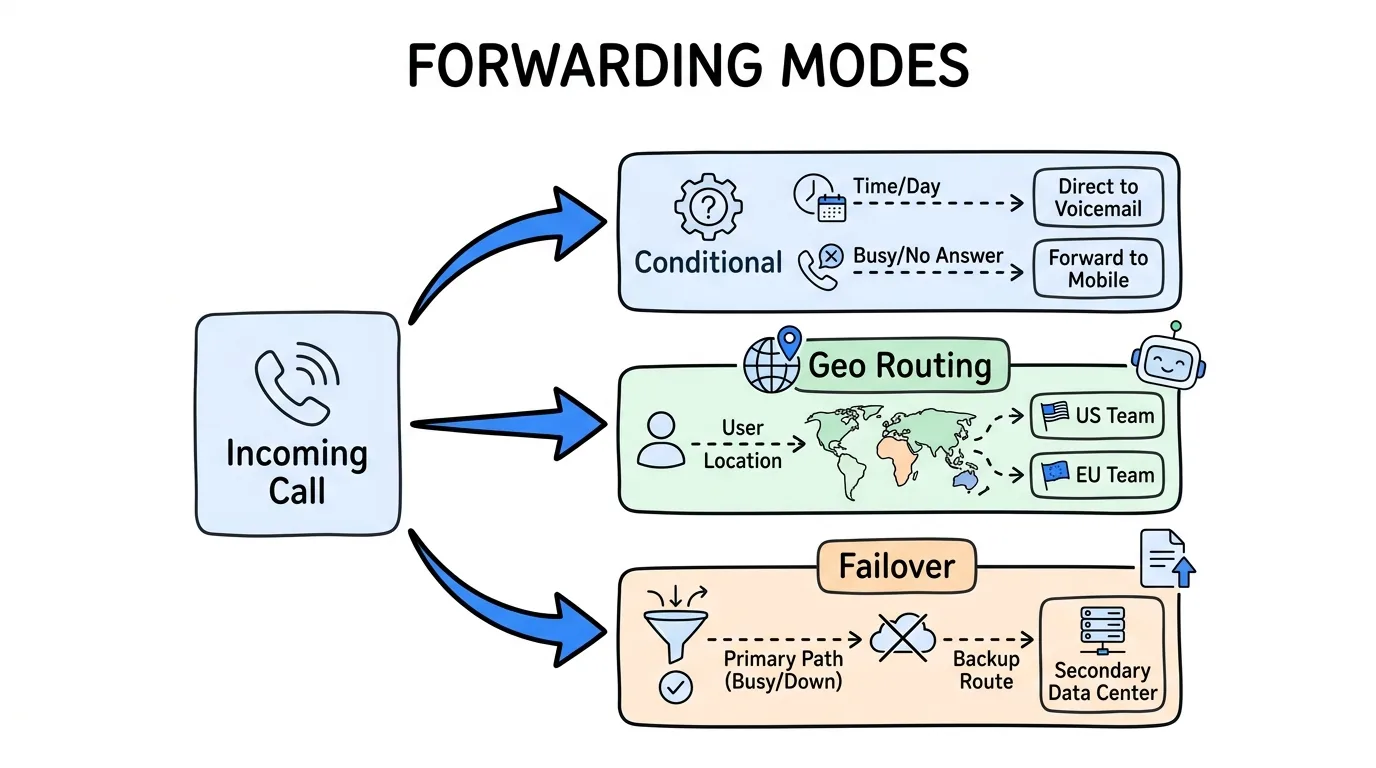
- Conditional forwarding applies if/then logic. As Nextiva explains, the call reroutes only when a condition is met: the buyer is busy, does not answer within the
ring timeout, or is unreachable.Conditional forwardingis what keeps a caller moving instead of dying on a full line. - Geo routing uses the caller's area code or stated location to pick an in-territory destination. A buyer licensed only in Texas should never receive an Ohio caller, and
geo routingprevents the mismatch that tanks acceptance rates.Geo-forwardingis essential when you sell the same number to buyers in different states. - Failover forwarding is the safety net. Per Global Call Forwarding,
failover routingautomatically reroutes a call to a backup destination when the primary route fails, with no manual step. Pair it withvoicemail fallbackso no billable caller is ever lost.
Simultaneous Ring, Sequential Ring, and Concurrency
Beyond the three modes, the platform controls how it rings destinations. Simultaneous ring dials several buyer numbers at once and connects whoever answers first, which is fast but risks over-delivering to buyers who did not expect the call. Sequential ring dials destinations one at a time in a set order, waiting out each ring timeout before moving to the next, which mirrors a buyer waterfall on the delivery side.
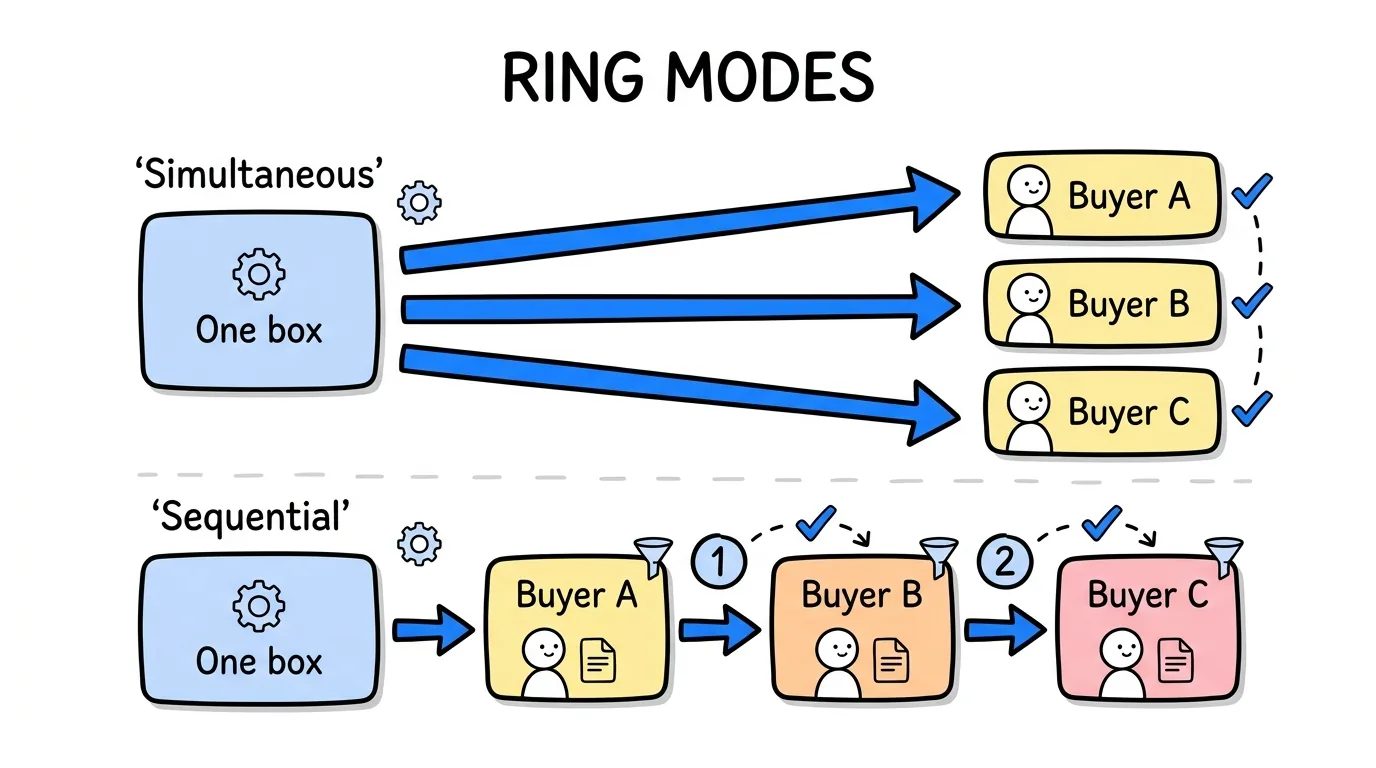
Concurrency is the guardrail that makes forwarding safe. A concurrency cap limits how many live calls a single buyer receives at once, so call forwarding software never bridges a fourth simultaneous call to a buyer capped at three. Instead it forwards the overflow to the next eligible destination in the ring group. Without caps, simultaneous ring floods a buyer's call center, calls go unanswered, and the buyer disputes the charges. You can see how caps and forwarding rules are configured inside a platform, and the same discipline underpins how pay per call works end to end.
Choosing a Call Forwarding Service: Features That Matter
Most "best call forwarding service" roundups rank tools on consumer features like mobile apps and voicemail transcription. A pay-per-call agency needs a different checklist, because the job is buyer delivery and billing, not personal call management. The table below compares the forwarding capabilities that actually move agency revenue.
| Feature | Consumer forwarding | Agency call forwarding software |
|---|---|---|
| Destination type | One personal number | Many buyer numbers and SIP endpoints |
| Conditional rules | Busy or no-answer only | Busy, timeout, geo, buyer eligibility |
| Geo routing | Rarely available | Built in, by state or area code |
| Failover | Voicemail | Backup buyer plus voicemail fallback |
| Concurrency caps | Not applicable | Per-buyer caps and daily limits |
| Billing | Flat carrier fee | Per-connected-call billing and P&L |
The pattern is clear: a general consumer forwarder handles one line and one destination, while agency-grade call forwarding software handles many buyers, real rules, and the billing that turns a connection into revenue. Track those connections with call tracking software, and remember that call tracking is usage-based, with a per-number monthly fee plus a per-minute rate for inbound calls layered on the platform subscription.
How Lead Distro AI Forwards Calls and Leads to Buyers
Lead Distro AI runs forwarding and routing in one place, so the decision and the delivery never fall out of sync. You define buyers once, set each buyer's geo territory, concurrency cap, and ring timeout, and the platform handles conditional, geo, and failover forwarding automatically on every call. If the top buyer is capped or silent past the timeout, forwarding falls through to the next buyer, then to voicemail fallback, so a billable caller is never dropped at the handoff.
Because leads and calls share one system, you get real-time P&L on every connected call: revenue, cost, and margin per source, campaign, and buyer. Setup takes minutes rather than a dev backlog, and you can connect the platform to Claude through MCP and build a campaign or buyer spec just by asking. When you are ready to route calls and leads in real time with Lead Distro AI, the forwarding layer is already wired to your buyers. Agencies scaling volume can also study running a pay per call network to plan buyer supply before turning on ad spend.
FAQ
What is call forwarding software?
Call forwarding software is a system that answers an inbound call and delivers it to a different destination number based on rules. For a pay-per-call agency, it connects a live, qualified caller to a paying buyer's line and applies conditional, geo, and failover logic so the call reaches a buyer who is open, in-territory, and able to answer.
How is a call forwarding service different from call routing?
A call forwarding service handles delivery: connecting the call to a chosen destination and managing failures. Call routing handles the decision: choosing which buyer or agent should receive the caller using IVR answers, bids, and caps. Routing decides, forwarding delivers, and pay-per-call platforms run both together so the right buyer gets a call that actually connects.
What is conditional call forwarding?
Conditional forwarding uses if/then logic to reroute a call only when a condition is met, such as the destination being busy, not answering within the ring timeout, or being unreachable. Agencies use it to keep a caller moving down the buyer stack instead of losing the caller on a full line, which protects acceptance rates and billable connections.
Does call forwarding help with geo routing?
Yes. Geo routing uses the caller's area code or stated location to forward the call to an in-territory buyer. Since most pay-per-call buyers operate in specific states, geo-forwarding prevents mismatched calls that get rejected, which raises acceptance rates and lets you sell one tracking number to multiple buyers across different regions.
Is call forwarding software expensive for a small agency?
Lead Distro AI starts at $297 per month and includes forwarding, routing, and lead distribution in one platform, with a 7-day free trial that requires a credit card. Call tracking itself is usage-based, meaning a per-number monthly fee plus a per-minute inbound rate on top of the subscription, so costs scale with the call volume you actually forward.
Conclusion
Call forwarding software is the delivery engine of a pay-per-call operation: it takes the buyer your routing logic selected and connects the live caller to them, using conditional, geo, and failover rules to make sure the handoff succeeds. Treat forwarding as a revenue step, not a phone setting, and the difference between a consumer call forwarding service and agency-grade forwarding becomes obvious. The agencies that win are the ones that pair smart routing with reliable forwarding inside one platform, so no qualified caller is ever lost at the connection. Start now, because every dropped forward is a call a competitor bills instead of you.
About the Author
Founder & CEO of Lead Distro AI & Great Marketing AI
UC Berkeley graduate and former software engineer at Microsoft. Rafael built Lead Distro AI after managing over $10M in ad spend for performance marketing agencies (pay-per-lead and pay-per-call), including running campaigns for Neil Patel. He combines deep software engineering expertise with hands-on performance marketing experience to build tools that help these agencies scale profitably.
About Lead Distro AI
Lead Distro AI: AI-Powered Routing for Your Leads, Calls, and Appointments
The modern platform for pay-per-lead and pay-per-call agencies. Route, score, and deliver leads with AI-powered automation and real-time P&L tracking. Built for performance marketing agencies and lead buyers across legal, insurance, mortgage, solar, and home services verticals.
4 Distribution Methods
Waterfall, Round Robin, Weighted, Ping-Post
Ping-Post Auctions
Real-time bidding with sub-second routing
Real-Time P&L Reporting
Track revenue, costs, and profit per campaign
Call Tracking
Assign tracking numbers, record calls, and attribute conversions
Lead Scoring
Score every lead before routing to maximize conversion
Partner Portal
Self-serve dashboard for buyers to track leads