Call Tracking Software: How It Works and How to Choose
Call tracking software ties every inbound phone call back to the ad, keyword, or page that drove it. Learn how it works, the core features, and how to choose.

Rafael Hernandez
Founder & CEO
Ex-Microsoft SWE · $10M+ PPL ad spend
I hope you enjoy reading this blog post. If you want to try Lead Distro AI for free, click here.
Author: Rafael Hernandez | Founder & CEO of Lead Distro AI
Call tracking software is a platform that assigns unique phone numbers to your marketing sources so every inbound call can be traced back to the exact ad, keyword, campaign, or web page that produced it. When someone lands on your site or taps an ad, the software swaps in a tracking number, records and measures the call, and ties that call to its source, then reports on volume, duration, and outcome. It gives phone leads the same clarity that analytics already gives clicks and form fills. This matters because calls are where high-intent buyers convert: more than 100 billion calls are made to businesses each year, and inbound phone calls convert to revenue 10 to 15 times more often than web leads, according to BIA/Kelsey research. This guide explains what a call tracking system is, how it works, the core features to expect, how to choose a platform, who uses it, and what it costs, with links to deeper guides on each topic.
Key Takeaways
- Call tracking software assigns unique phone numbers to your ads, keywords, and pages so every inbound call is traced back to the marketing that produced it.
- The engine is dynamic number insertion (DNI), which swaps the number a visitor sees based on where they came from, then records, scores, and routes the call.
- The market splits into three types: marketing attribution tools, pay-per-call routing platforms, and unified lead-and-call distribution systems.
- Pricing is usage-based on top of a subscription, so expect a flat platform fee plus per-number and per-minute charges for the calls you track.
- Pay-per-lead and pay-per-call agencies need routing and billing, not just attribution, which is where Lead Distro AI fits, alongside or in place of a pure call tracking tool.
What Call Tracking Software Is
A call tracking system is software that connects phone calls to the marketing that caused them. Traditional analytics stops at the click or the form, leaving the phone call as a blind spot. Call tracking closes that gap by giving each source its own number, then recording what happens on the call. As Wikipedia's definition puts it, the technology associates inbound calls with performance-based advertising such as paid search, SEO, and display, while supplying analytics about the calls themselves.
In practice, the software answers three questions for every call: where it came from, what was said, and what it was worth. That is why agencies treat it as a measurement layer, not just a phone bill. For the foundational concepts, see our primer on what call tracking is. The rest of this guide builds on that base toward the buying decision.
How Call Tracking Software Works
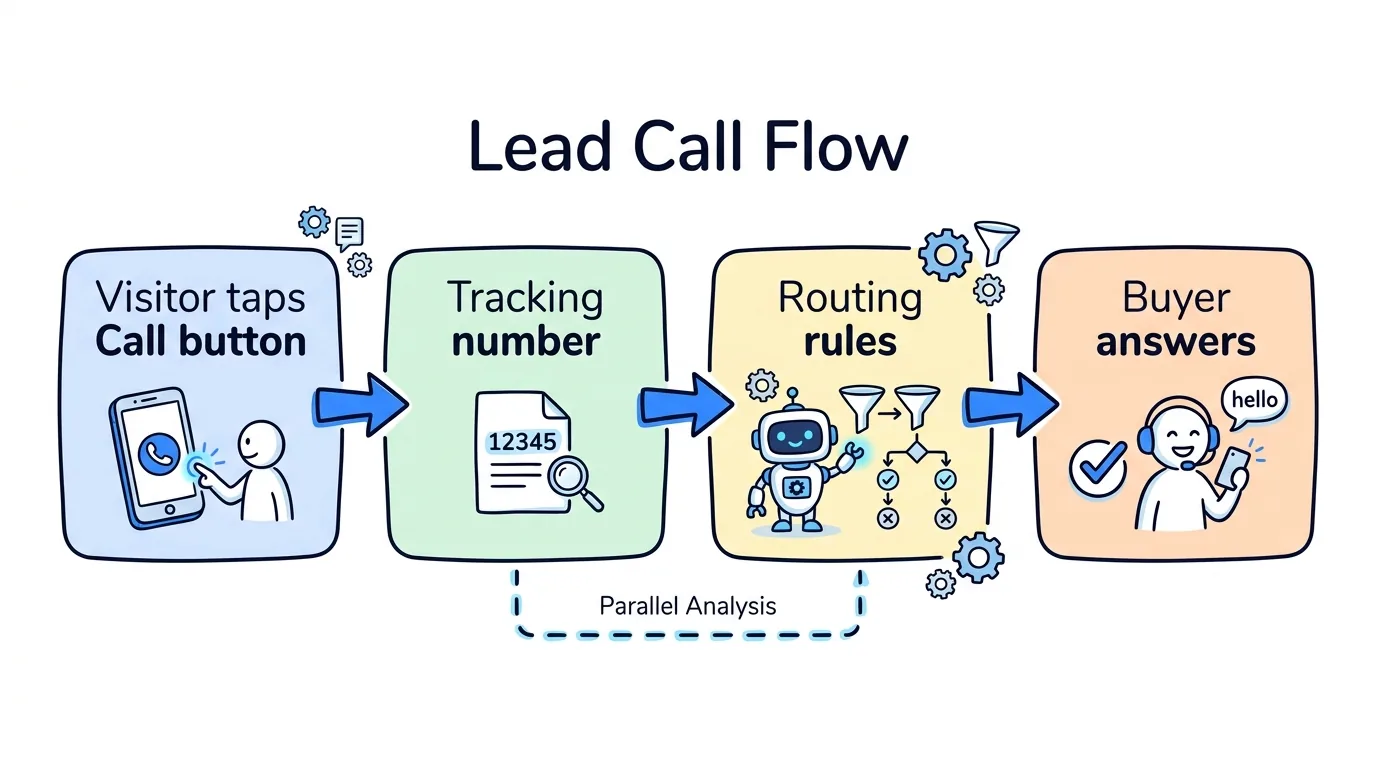
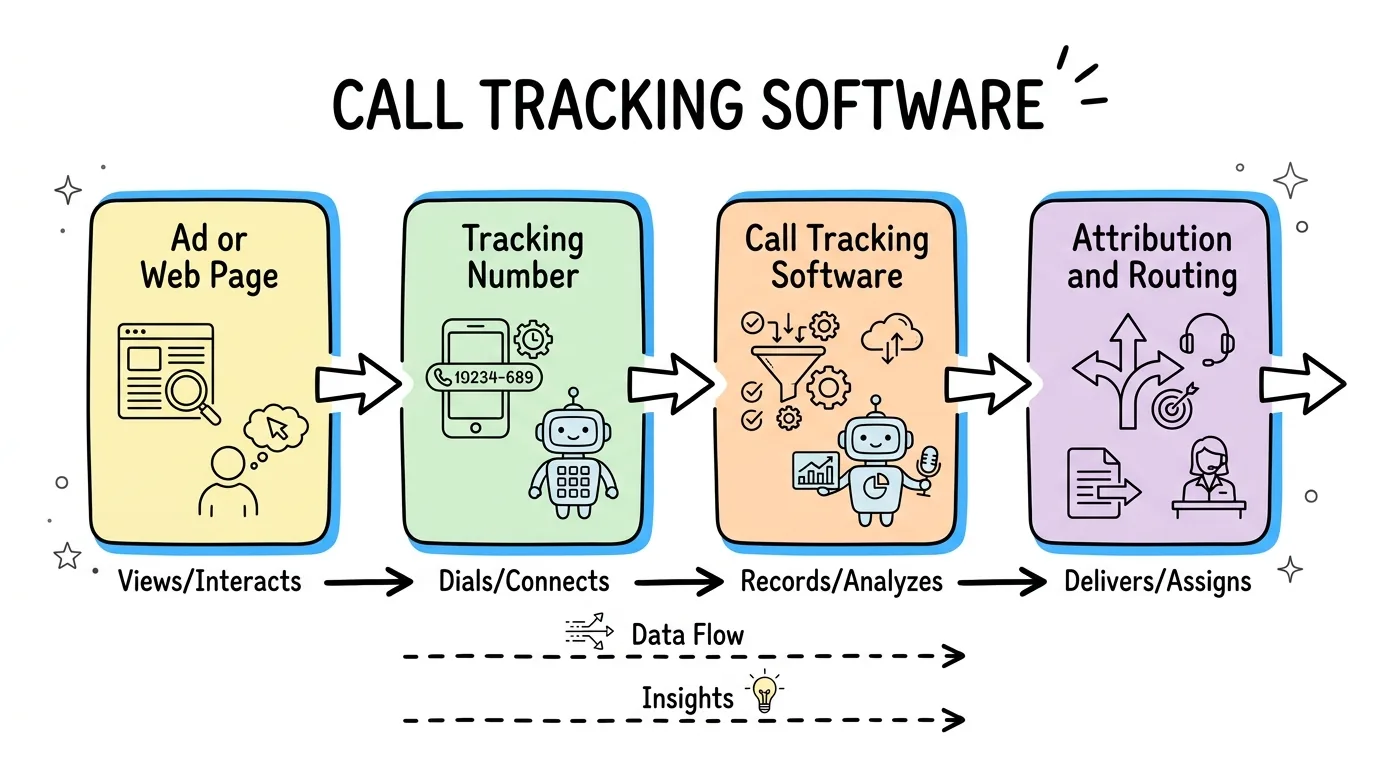
Call tracking works in four stages: number assignment, the swap, the call, and attribution. First, you provision a pool of tracking numbers and map each to a source, a campaign, a keyword, or a landing page. Then, when a visitor arrives, dynamic number insertion swaps the displayed number to match how that visitor found you. For a deeper look at the mechanics, read how call tracking works.
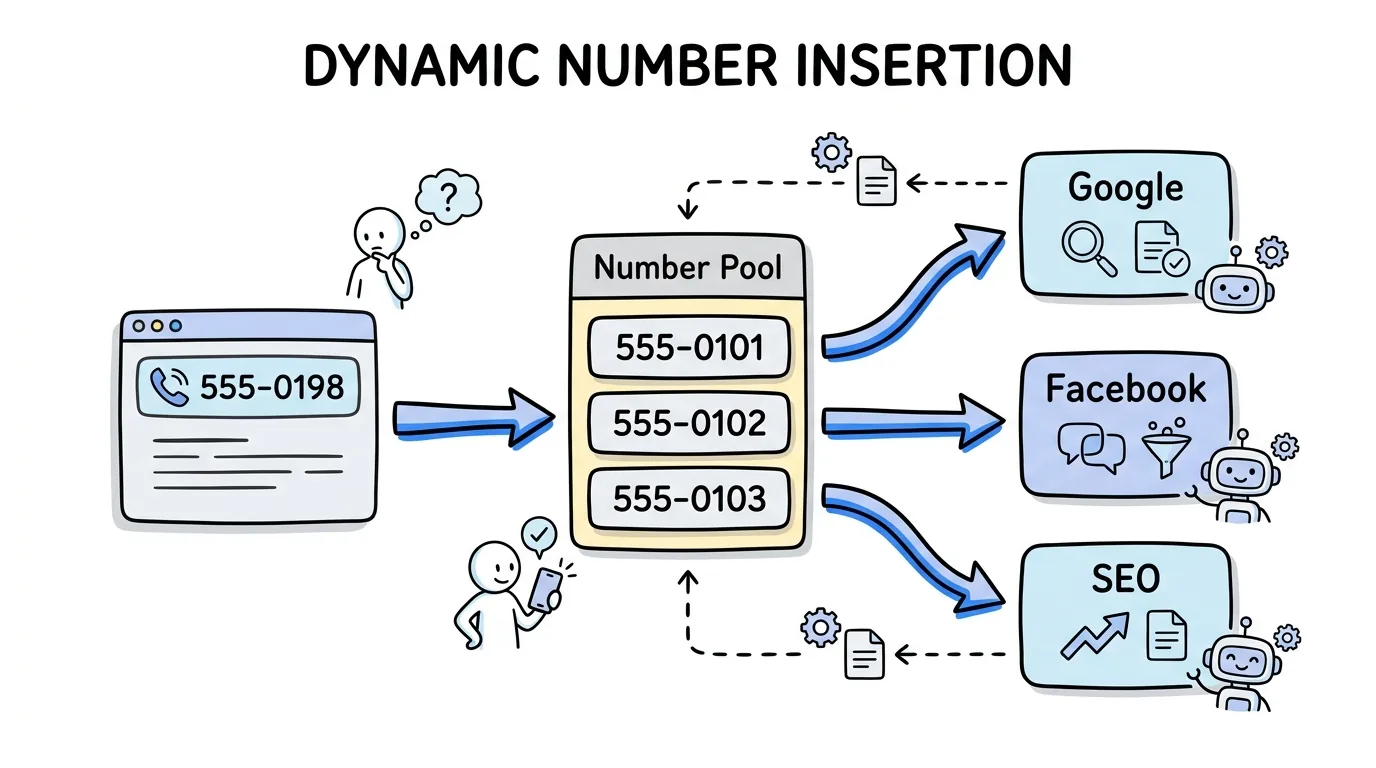
When the call connects, the platform records the audio, captures caller ID and duration, and may screen or route the call with an IVR menu or a whisper message. Finally, it stitches the call back to its source and pushes that data into your reports and your CRM. Dynamic number insertion is the piece that makes keyword-level and visitor-level attribution possible, rather than a single static number per channel.
The Core Features to Look For
Every platform shares a common feature set, and the gaps between products show up in how deep each feature goes. The non-negotiables are number provisioning, dynamic number insertion, call recording, and source attribution. Beyond that, the features that separate a basic tool from a revenue platform are the ones that act on the call, not just measure it.
- Dynamic number insertion for channel, keyword, and visitor-level tracking
- Call recording and transcription for quality review and conversation intelligence
- Call routing and IVR to send each caller to the right destination
- Attribution and reporting that ties calls to cost per call and ROI
- CRM and ad-platform integrations via webhook or API
- Lead scoring to grade call quality before it is acted on
- Billing and buyer management for agencies that resell calls
Inbound call tracking software that only attributes calls leaves money on the table. A complete call tracking solution also helps you respond faster and route smarter, which is where conversion actually happens.
Three Types of Call Tracking Platforms
Not every call tracking platform solves the same problem, and choosing the wrong category is the most common buying mistake. The market splits into three types, and your business model decides which one fits.
| Type of platform | Optimizes for | Example tools | Best fit |
|---|---|---|---|
| Marketing attribution call tracking | Tying calls to ads, keywords, and campaigns | CallRail, CallTrackingMetrics, Invoca | In-house marketers and SMBs proving channel ROI |
| Pay-per-call routing platforms | Routing, billing, and reselling inbound calls | Ringba, Retreaver, TrackDrive | Pay-per-call networks and affiliates |
| Unified lead and call distribution | Scoring, routing, and billing data leads and calls together | Lead Distro AI | Pay-per-lead and pay-per-call agencies with mixed inventory |
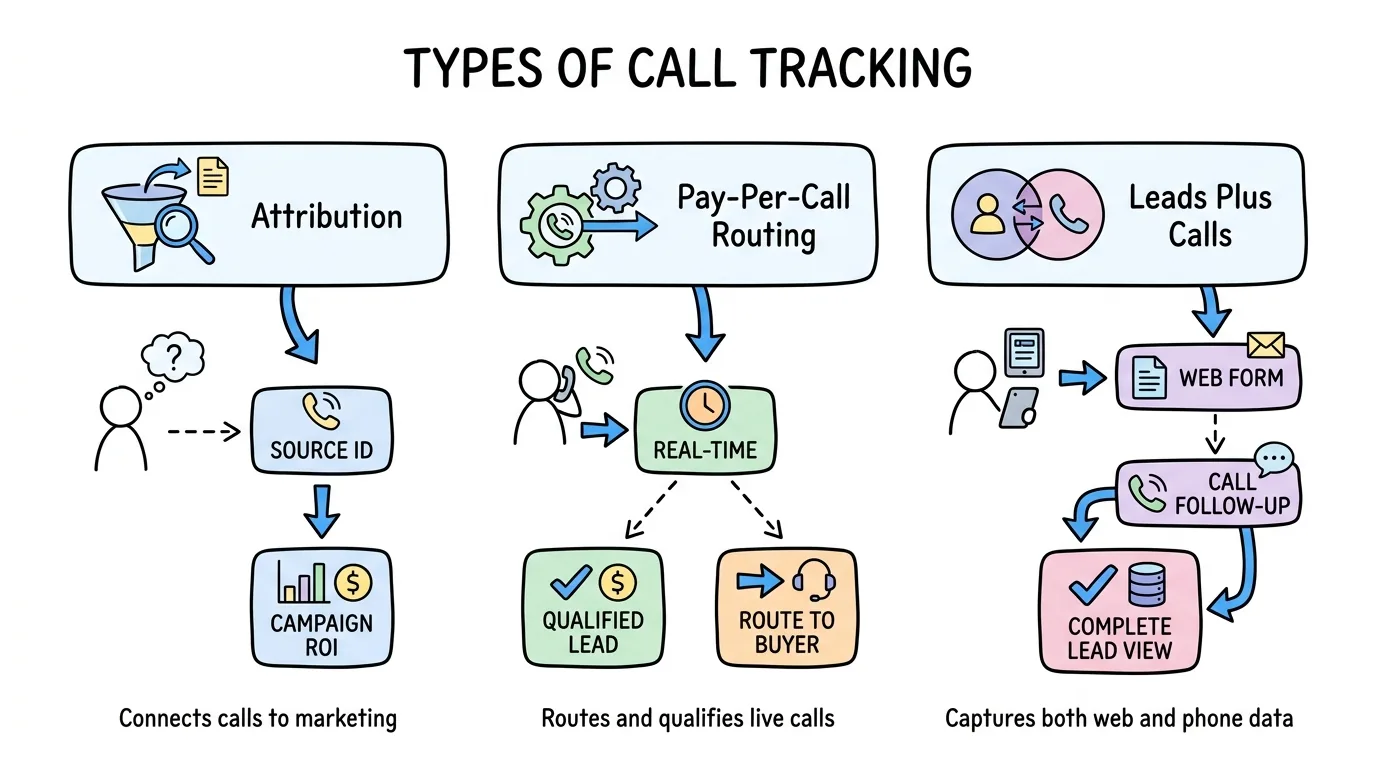
If you only need to prove which campaign drove a call, a marketing attribution tool is enough. If you buy and sell calls, you need a routing platform. If you run both data leads and calls, you need a system that distributes and bills both. For the ranked head-to-head of specific products, see our guide to the best call tracking software.
How to Choose Call Tracking Software
Choosing a call tracking solution comes down to matching the platform to how you make money, not to a feature checklist alone. After evaluating these tools with dozens of pay-per-lead and pay-per-call agency operators, the same seven questions decide the fit. Work through them in order.
- What is the pricing model? Flat subscription, per-minute, per-number, or per-lead changes your unit economics at volume.
- Do you need to route and bill calls, or only measure them? Attribution alone will not run a pay-per-call operation.
- Does it score call quality? Grading a call before it is sold protects buyer relationships.
- Can it handle calls and data leads together? A second dashboard is a hidden cost.
- How fast is setup? Days waiting on a developer is margin lost.
- How clean are the integrations? Native ingest beats brittle Zapier glue.
- Is the reporting real-time and accurate? If the numbers do not match, you cannot trust the P&L.
"Most agencies obsess over cost per click, but the call is where the money actually changes hands," says Rafael Hernandez, Founder and CEO of Lead Distro AI. "Call tracking software closes the loop. It tells you which source produced the call, and the better platforms then score and route that call to the buyer most likely to close it." You can explore the platform in an interactive tour to see what scoring and routing look like in practice.
Who Uses Call Tracking, and Why
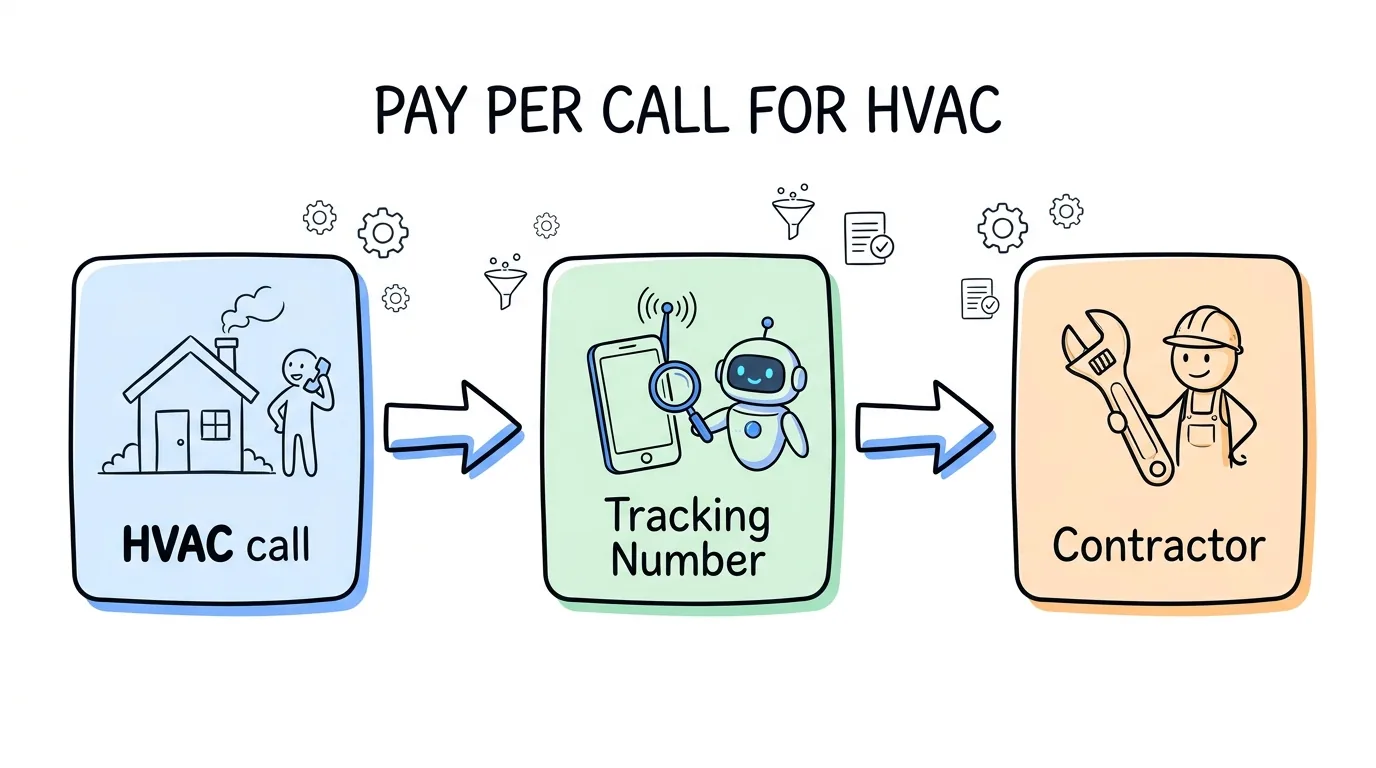
Phone call tracking software is used by anyone whose revenue depends on the phone. Local service businesses, from law firms to HVAC contractors, use it to learn which ads drive booked jobs. According to BIA/Kelsey data reported by Search Engine Journal, mobile search is the single largest source of calls to businesses, which is why a missed attribution on mobile is so costly.
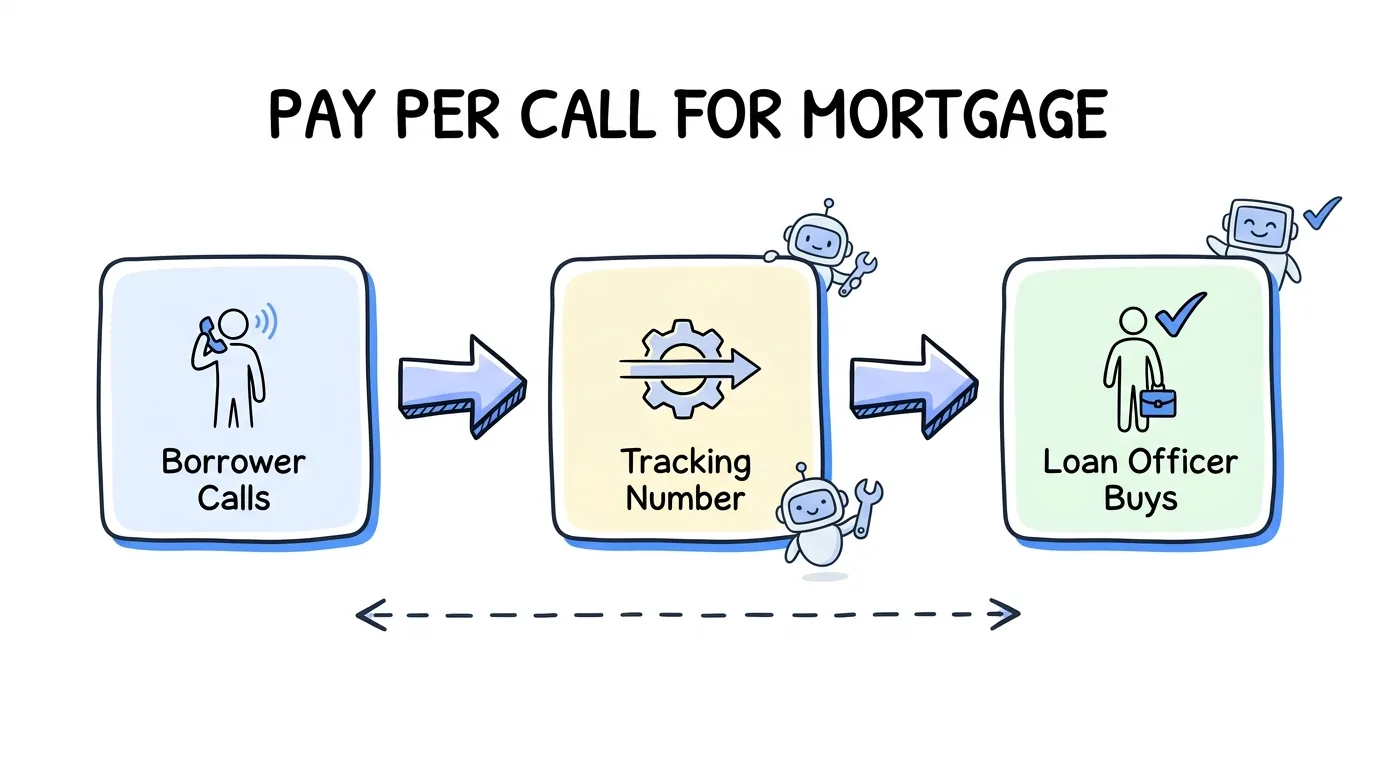
Agencies are the heaviest users. A marketing agency uses marketing call tracking to prove ROI to clients across every channel. Pay-per-call agencies and networks go further: they buy inbound calls from publishers and resell them to advertisers, so tracking, routing, and billing each call is the entire business. That is why call tracking software for pay-per-call agencies is its own category, with ring-tree routing and buyer management built for reselling calls. Speed compounds the value: Harvard Business Review found that responding within five minutes makes you 100 times more likely to connect than waiting 30 minutes.
What Call Tracking Software Costs
Call tracking pricing is usage-based, layered on top of a platform fee. The flat subscription covers the software, and the call tracking itself is metered: a per-number monthly fee, commonly $1 to $5 per number, plus a per-minute rate for inbound calls, commonly $0.03 to $0.10. Track 50 numbers and 5,000 minutes in a month and the usage portion alone runs a few hundred dollars before the subscription. Anyone who tells you a tracking tool has no per-minute or per-call fees is hiding them in the plan price.
Lead Distro AI starts at $297 per month, with volume-based pricing tiers above that, and call tracking billed as usage on top of the flat platform fee. For a full breakdown of how the major platforms meter calls, read our guide to call tracking software pricing. The market itself is growing from $9.79 billion in 2025 to $10.84 billion in 2026 and a projected $15.33 billion by 2030, per The Business Research Company, so pricing competition is unlikely to slow down.
Where Lead Distro AI Fits
Lead Distro AI is honest about its lane. It is the lead-distribution and pay-per-call routing layer, with lead scoring on every lead and call, that agencies run alongside or instead of a pure call tracking tool. It is not a full enterprise call tracking suite in the mold of Invoca, and it does not try to be. What it does that an attribution-only tool cannot is route, score, and bill both data leads and inbound calls in one platform, across four distribution methods: round robin, weighted, priority (also called waterfall), and ping-post.
That unified model is the point. Pay-per-lead and pay-per-call agencies running mixed inventory usually stitch a call tracking tool to a separate distribution tool with brittle middleware. A unified phone call tracking software and lead distribution system removes the second dashboard and the integration risk. If you already run GoHighLevel or a CRM, Lead Distro AI sits on top of it as the distribution and billing layer, not a replacement. You can start a 7-day free trial and route your first call in minutes.
FAQ
What is call tracking software?
Call tracking software is a platform that assigns unique phone numbers to your marketing sources, then records and measures the resulting calls so each one is attributed to the ad, keyword, or page that produced it. It gives phone leads the same source-level reporting that web analytics gives clicks and form submissions, and the better platforms also route, score, and bill those calls rather than only measuring them.
How does a call tracking system work?
A call tracking system provisions a pool of tracking numbers and maps each to a source. When a visitor arrives, dynamic number insertion swaps the displayed number to match how that visitor found you. When the call connects, the platform records it, captures duration and caller ID, optionally screens or routes it, and then ties the call back to its source in your reports and CRM. The full path runs from ad to attribution in seconds.
How much does call tracking software cost?
Call tracking software pricing is usage-based on top of a platform subscription. Expect a flat monthly software fee plus metered charges: a per-number monthly fee, commonly $1 to $5 per number, and a per-minute rate for inbound calls, commonly $0.03 to $0.10. Lead Distro AI starts at $297 per month with volume-based tiers above that and call tracking billed as usage. No reputable tool is truly free of per-minute or per-call fees.
Is call tracking software different from call tracking?
Yes. Call tracking is the activity of tying phone calls to their marketing source, while a call tracking platform is the software that performs it at scale. You could place one static number per channel and track calls manually, but software adds dynamic number insertion, recording, routing, scoring, and reporting so attribution works at the keyword and visitor level across thousands of calls.
What is the best call tracking software for agencies?
The best inbound call tracking software for an agency depends on the model. In-house marketing teams often choose attribution tools like CallRail, while pay-per-call networks need routing platforms like Ringba. Agencies that distribute both data leads and calls fit a unified system like Lead Distro AI. See our ranked comparison of the best call tracking software for the full breakdown by use case.
Conclusion
Call tracking software turns the phone from a blind spot into a measurable, routable revenue channel. The right call tracking platform does more than tell you which campaign drove a call; it scores that call, routes it to the buyer most likely to close, and bills it accurately, all in real time. Start by identifying which of the three platform types matches your business model, then weigh pricing, routing, and integration depth. For pay-per-lead and pay-per-call agencies that run both leads and calls, the unified approach removes a dashboard and protects margin. Start your 7-day free trial and route your first lead in minutes.
Ready to see how AI-powered call tracking and lead distribution work together? Start your 7-day free trial and route your first call in minutes.
About the Author
Founder & CEO of Lead Distro AI & Great Marketing AI
UC Berkeley graduate and former software engineer at Microsoft. Rafael built Lead Distro AI after managing over $10M in ad spend for performance marketing agencies (pay-per-lead and pay-per-call), including running campaigns for Neil Patel. He combines deep software engineering expertise with hands-on performance marketing experience to build tools that help these agencies scale profitably.
About Lead Distro AI
Lead Distro AI: AI-Powered Lead Distribution & Call Tracking That Maximizes ROI
The modern platform for pay-per-lead and pay-per-call agencies. Route, score, and deliver leads with AI-powered automation and real-time P&L tracking. Built for performance marketing agencies and lead buyers across legal, insurance, mortgage, solar, and home services verticals.
4 Distribution Methods
Waterfall, Round Robin, Weighted, Ping-Post
Ping-Post Auctions
Real-time bidding with sub-second routing
Real-Time P&L Reporting
Track revenue, costs, and profit per campaign
Call Tracking
Assign tracking numbers, record calls, and attribute conversions
Lead Scoring
Score every lead before routing to maximize conversion
Partner Portal
Self-serve dashboard for buyers to track leads