IVR Software: How It Routes Pay-Per-Call Traffic
IVR software greets, qualifies, and routes inbound pay-per-call traffic to the right buyer. See how interactive voice response works and how to pick a system.

Rafael Hernandez
Founder & CEO
Ex-Microsoft SWE · $10M+ PPL ad spend
I hope you enjoy reading this blog post. If you want to try Lead Distro AI for free, click here.
Author: Rafael Hernandez | Founder & CEO of Lead Distro AI
Last Updated: July 6, 2026
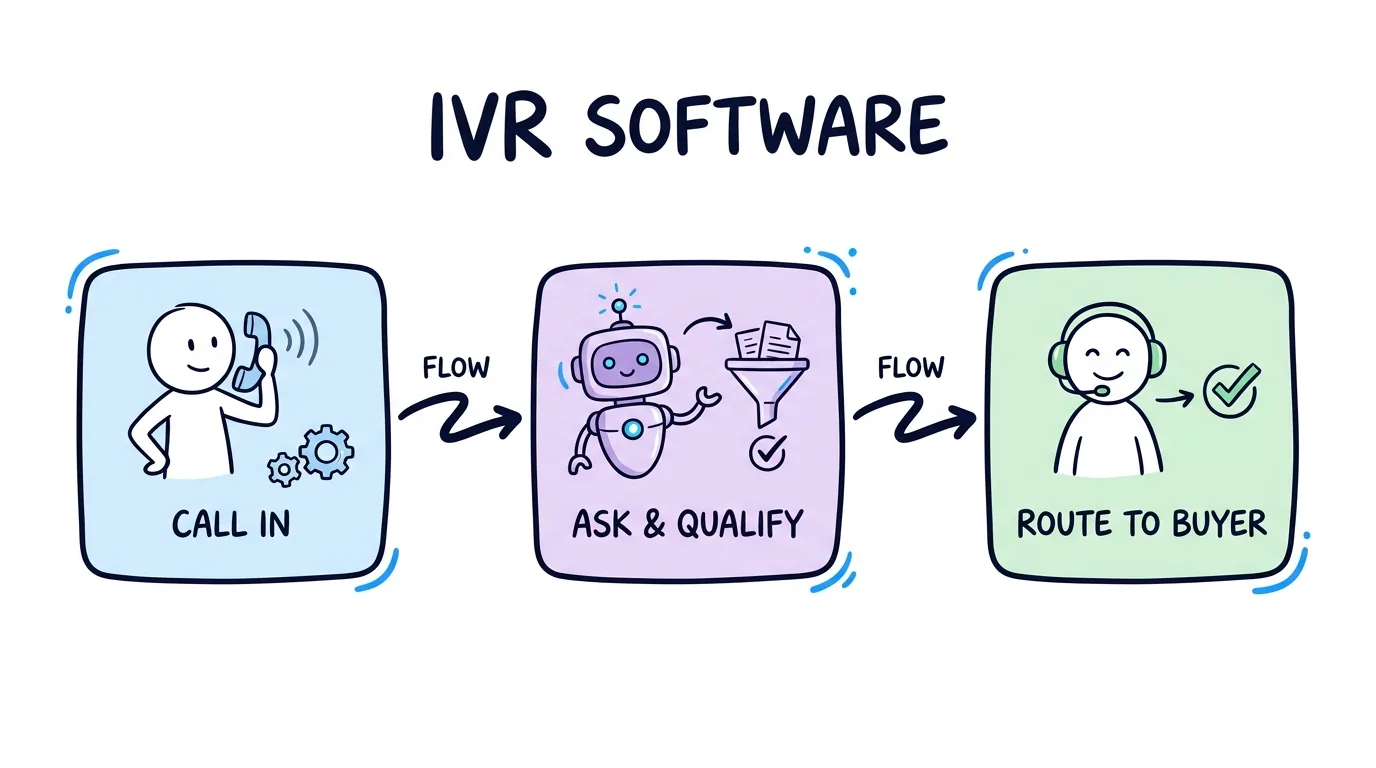
IVR software is the automated phone system that answers an inbound call, plays a menu or asks a qualifying question, then routes the caller to the right destination based on their responses. IVR stands for Interactive Voice Response, and for pay-per-call agencies it is the first and most important routing decision: it screens every caller before a buyer ever pays for them. A caller presses a key or speaks an answer, the system reads that input, and it sends qualified callers to the buyer who wants that call type in that region while dropping or re-routing the ones who do not fit.
That screening is worth real money. According to Focus Digital's 2025 conversion report, inbound calls convert at 25.56% versus 9.38% for cold outreach, and the pay-per-call market is projected to surpass $12 billion by 2025. When a single call is worth $40 to $200, a good IVR menu protects your billing by handing buyers only the callers they actually want. This guide explains how IVR software works, the types available, and how to build a call flow that qualifies pay-per-call traffic.
Key Takeaways
- IVR software answers, qualifies, and routes inbound calls automatically using pressed keys or spoken answers, so the right buyer gets the right caller without a human touching the call.
- In pay-per-call, the IVR is a revenue filter, not just a menu: it screens callers against buyer criteria before anyone is billed, which lifts acceptance rates and renewals.
- Interactive voice response software comes in two input styles, touch-tone (DTMF) and speech recognition, and two hosting models, cloud-hosted or on-premise.
- IVR call routing pairs with a buyer waterfall, so a qualified caller can be pinged to buyers in priority order until one accepts the call at the agreed price.
- Call tracking is usage-based, with a per-number monthly fee plus a per-minute rate for inbound calls layered on top of the platform subscription.
- Lead Distro AI combines IVR routing and lead distribution in one platform starting at $297 per month, with a 7-day free trial that requires a credit card.
What Is IVR Software?
It is a telephony application that interacts with callers through recorded prompts and collects their input to decide where the call goes. Interactive voice response lets a system gather information and route calls without a live agent, using either keypad tones or natural speech. The caller hears "Press 1 for auto accident, press 2 for a home services quote," and the response tells the system how to route.
For a pay-per-call agency, that makes interactive voice response software the front door of the whole operation. It sits between your tracking numbers and your buyers, greets each caller, asks the questions a buyer requires, and only then decides where to send the live transfer. This is the same qualification logic that runs across every call the pillar guide on call routing software describes, applied at the very first second of the call before any billing happens.
How IVR Software Routes Pay-Per-Call Traffic
In pay-per-call, the IVR does not just send a caller to a department. It sorts callers into buyer-ready buckets. A caller who says they were injured in the last two years qualifies for a legal buyer; a caller outside the covered states routes to a fallback or drops. Because buyers only pay for calls that meet their criteria, the IVR protects your revenue by filtering out the callers no buyer will accept.
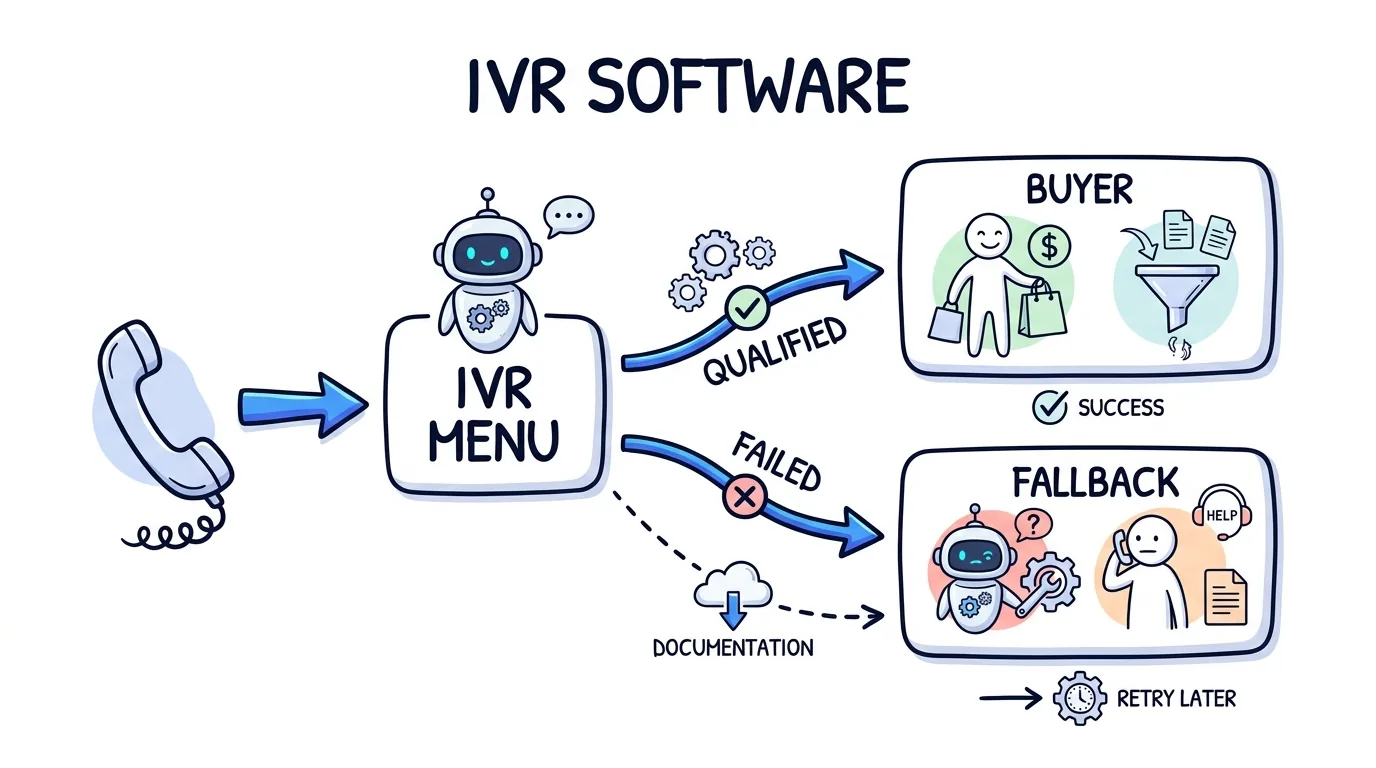
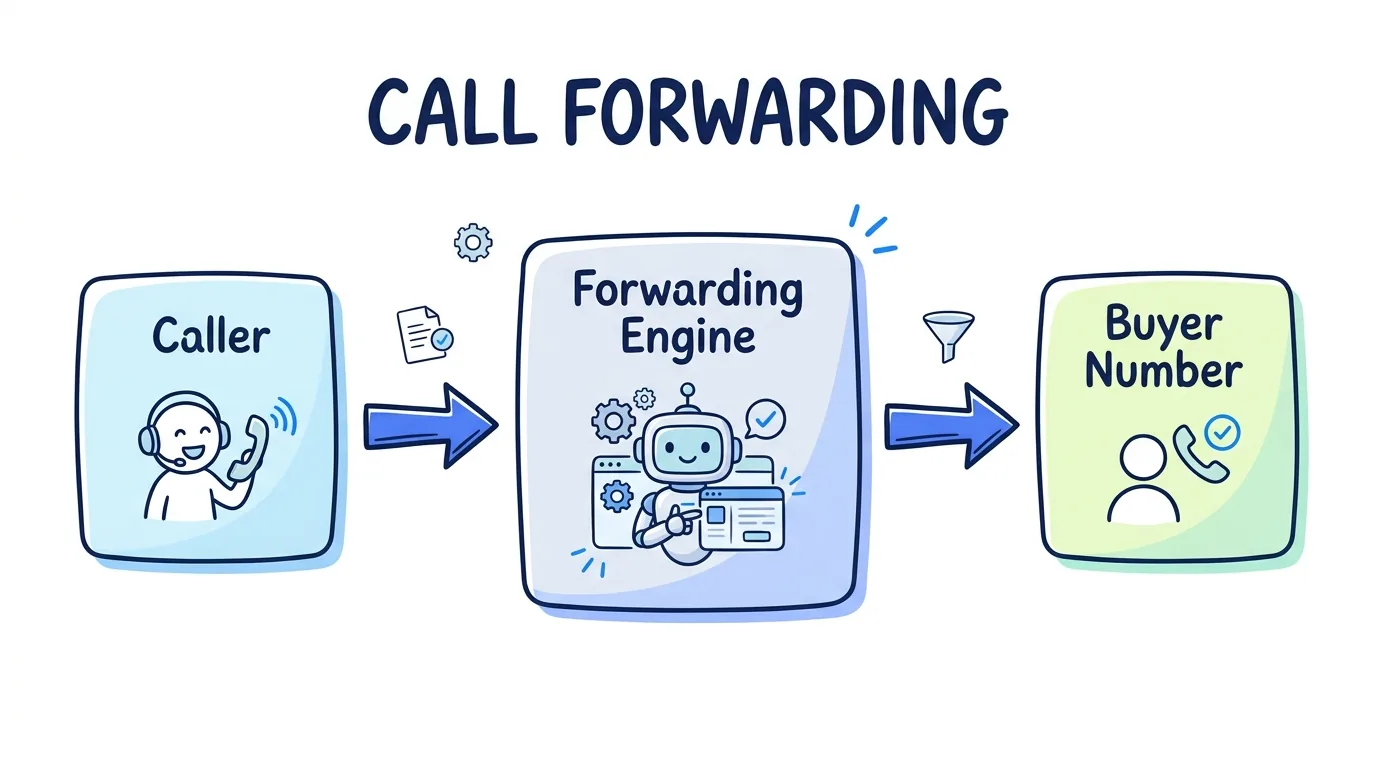
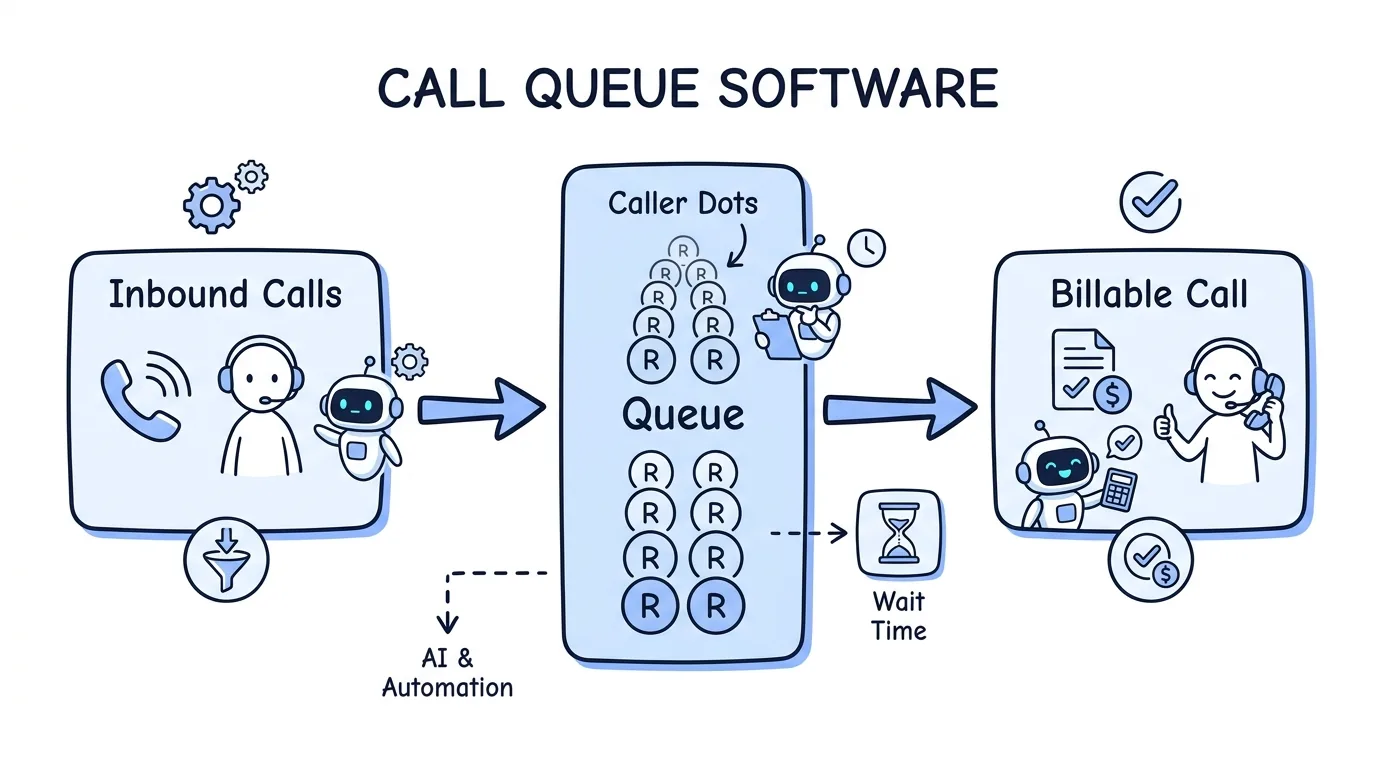
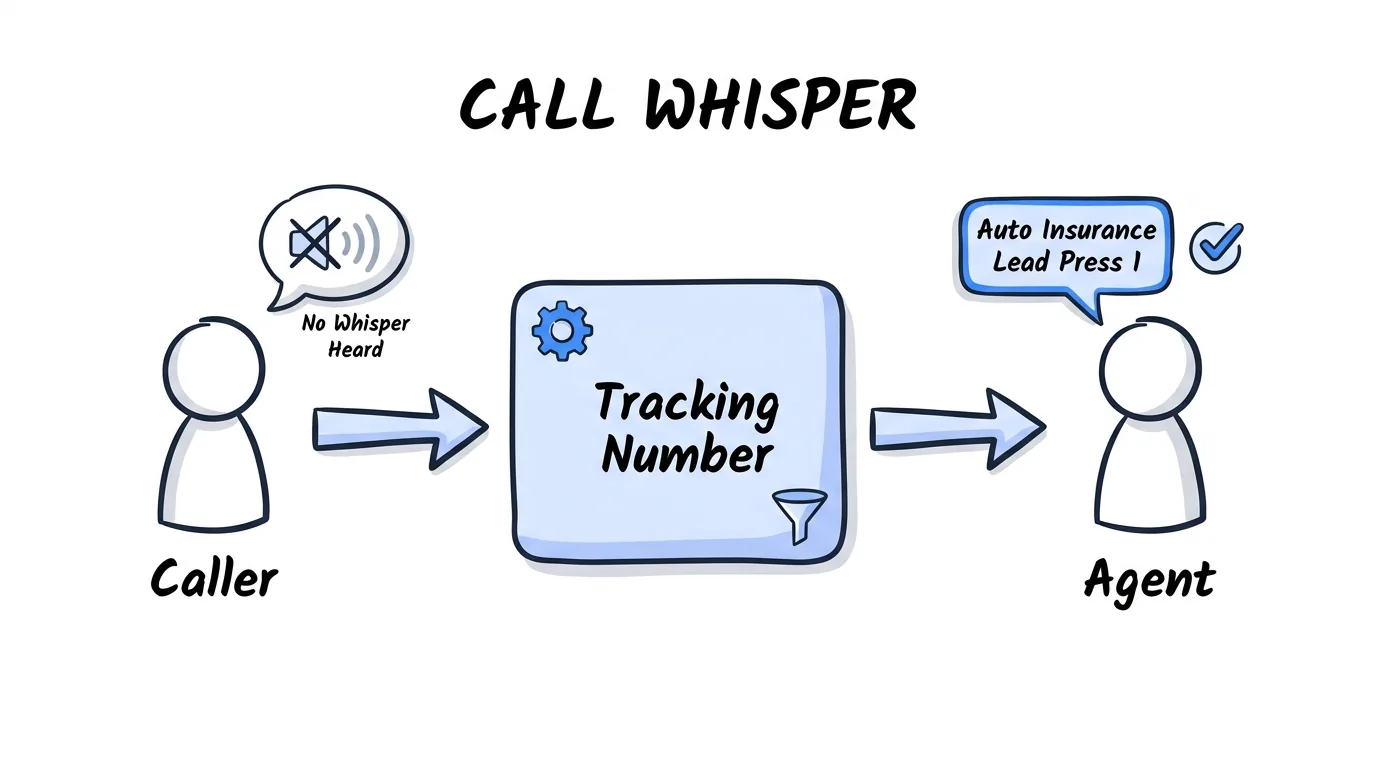
Once a caller qualifies, the IVR hands off to the next routing stage. Overflow callers wait in call queue software instead of hearing a busy signal, and a call whisper briefs the buyer on the campaign and caller details in the half-second before they connect. The IVR is where the money decision starts; the waterfall and whisper finish it.
Touch-Tone vs Speech: How Callers Respond
IVR accepts caller input in two ways. Touch-tone IVR reads DTMF (Dual-Tone Multi-Frequency) signals, the tones a phone sends when a caller presses a key on the keypad. Speech-recognition IVR uses automated speech recognition so the caller can simply say "auto accident" or "California" instead of pressing a number. Modern IVR increasingly blends both, letting callers respond however is fastest for them.
For pay-per-call, touch-tone is simpler and more reliable across noisy mobile connections, which is why most agencies start there. Speech recognition shines when a menu would otherwise be long. The trade-off is accuracy: a misheard state or injury type can misroute a billable call, so many operators keep the highest-value screens on touch-tone and reserve speech for lower-stakes branches.
Hosted IVR vs On-Premise IVR Systems
IVR software runs in one of two places. A hosted IVR lives in the provider's cloud, so you configure call flows in a dashboard and pay as you use it, with no hardware to maintain. An on-premise IVR system runs on servers you own, which suits large enterprises with strict data-control needs but carries heavy setup and maintenance costs. Call routing is often described as a three-phase process of qualifying, queueing, and distribution, and a hosted platform handles all three without a telecom team.
Almost every pay-per-call agency should choose the hosted route. You need to spin up campaigns fast, adjust qualifying questions per buyer, and scale numbers as campaigns turn on and off, all of which cloud platforms do in minutes. Remember that the calls themselves carry a usage cost: call tracking is usage-based, with a per-number monthly fee plus a per-minute rate for inbound calls on top of your platform subscription.
Best IVR Software for Pay-Per-Call Routing
The right platform for a pay-per-call agency is the one that qualifies callers and routes them to buyers in the same system. Generic contact-center IVR handles internal call flows well but rarely understands buyer waterfalls, per-call bidding, or concurrency caps. The table below compares common options through a pay-per-call lens.
| Platform | Best For | IVR + Buyer Routing | Starting Price |
|---|---|---|---|
| Lead Distro AI | Pay-per-call and pay-per-lead agencies | IVR qualification plus buyer waterfall in one platform | $297/mo |
| Ringba | High-volume pay-per-call buyers | IVR builder plus Ring Trees (Professional) and real-time bidding (Enterprise) | $147/mo billed monthly + usage (as of September 2026) |
| Genesys | Enterprise contact centers | Not verified | Not verified |
Not verified: we could not confirm this on the vendor's own website as of September 2026. Check with the vendor.
Lead Distro AI is built for the pay-per-call model, so the IVR that qualifies a caller feeds straight into dynamic buyer routing without stitching tools together. You can route calls with Lead Distro AI and see the qualifying-to-billing path end to end, or explore it in the interactive product tour.
How to Build a Pay-Per-Call IVR Call Flow
A strong pay-per-call IVR call flow follows four steps. First, greet and identify the campaign so the caller knows they reached the right place. Second, ask the one or two questions a buyer requires, such as injury timeframe or state, using touch-tone for the highest-value screens. Third, branch the routing: qualified callers go to the buyer waterfall, and failed callers route to a fallback buyer or a polite decline. Fourth, log everything so you can see which prompts leak billable calls.
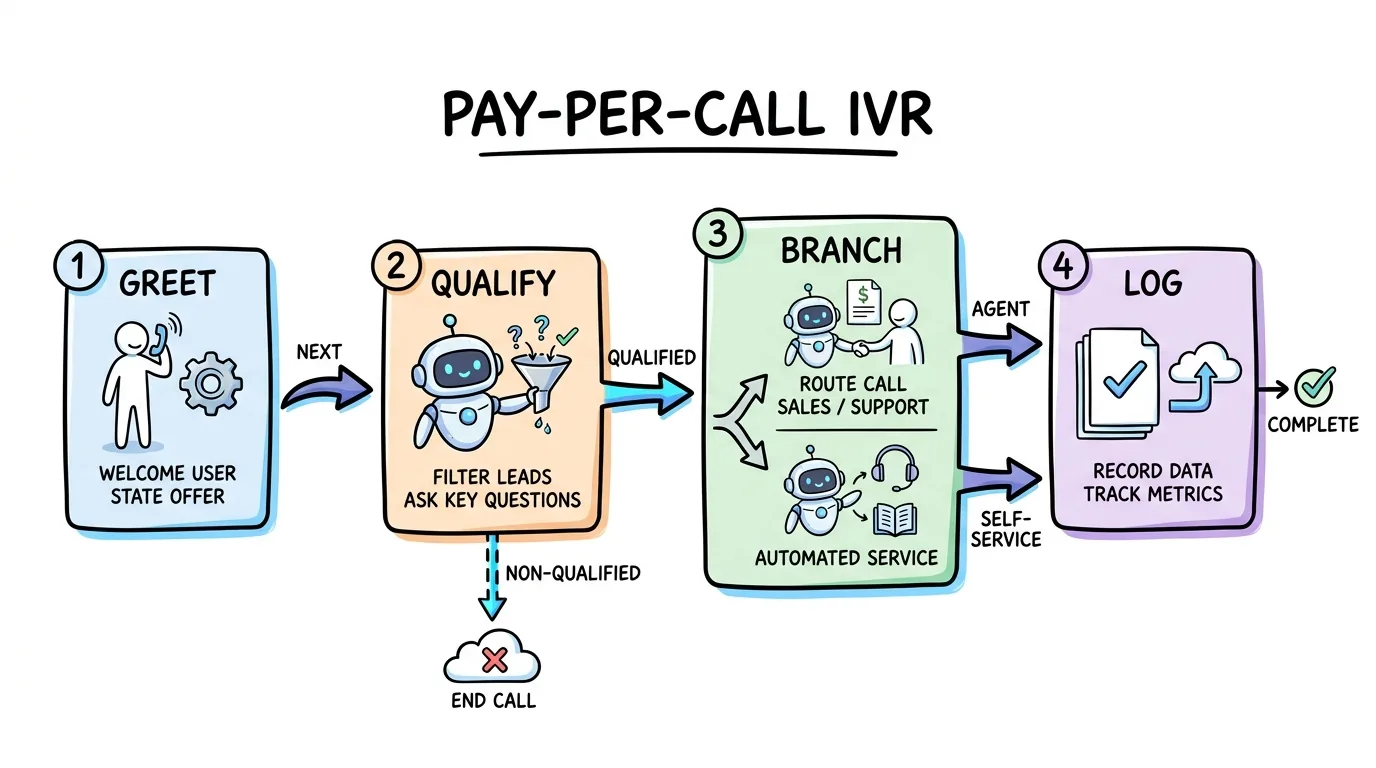
Keep the menu short. Every extra prompt loses callers, so ask only what a buyer actually filters on. Because this qualifying logic mirrors the screening in the pay-per-call model, the same discipline applies: fewer, sharper questions qualify more callers. Test each branch by calling your own numbers before a campaign goes live.
FAQ
What is IVR software?
IVR software is an automated phone system that answers inbound calls, plays recorded menus or questions, and routes each caller based on the keys they press or the words they speak. IVR stands for Interactive Voice Response. In pay-per-call, it qualifies callers against buyer criteria before anyone is billed, so buyers receive only the callers who match what they are paying for.
How does IVR call routing work?
IVR call routing works by collecting caller input through a menu, then applying rules to decide the destination. The system reads a pressed key (a DTMF tone) or a spoken answer, matches it to a routing branch, and sends the caller to the buyer, agent, or fallback that fits. For pay-per-call, the qualified caller then enters a buyer waterfall that pings buyers in priority order until one accepts the call.
What is the difference between hosted IVR and an on-premise IVR system?
A hosted IVR runs in the provider's cloud, so you configure call flows in a dashboard and pay as you use it, with no hardware to maintain. An on-premise IVR system runs on servers you own and control, which suits large enterprises with strict data rules but carries high setup and maintenance costs. Most pay-per-call agencies choose it because it deploys in minutes and scales on demand.
Does interactive voice response software support speech recognition?
Yes. Interactive voice response software accepts input two ways: touch-tone, which reads the DTMF tones from a phone keypad, and speech recognition, which lets callers answer by voice. Many platforms blend both. Touch-tone is more reliable on noisy mobile connections, so agencies often keep the highest-value qualifying screens on keypad input and use speech for longer or lower-stakes menus.
How much does IVR software cost for a pay-per-call agency?
IVR is usually bundled into a call routing platform subscription that starts around $297 per month. On top of that, call tracking is usage-based, with a per-number monthly fee plus a per-minute rate for the inbound calls the IVR handles. Budget for both the platform and the per-minute call cost when you estimate margin on each billable call.
Conclusion
IVR software is the first and most valuable routing decision in a pay-per-call operation, because it qualifies every caller before a buyer is billed. Get the menu tight, choose a cloud system for speed, and connect the qualifying logic straight to your buyer waterfall so no billable call slips through. The agencies that win treat the IVR as a revenue filter, not a phone-tree afterthought. Lead Distro AI runs IVR routing and lead distribution in one platform, so the caller your IVR qualifies is instantly matched to the buyer willing to pay the most for that call.
Ready to see how IVR routing feeds a real buyer waterfall? Start your 7-day free trial and route your first qualified call in minutes.
About the Author
Founder & CEO of Lead Distro AI & Great Marketing AI
UC Berkeley graduate and former software engineer at Microsoft. Rafael built Lead Distro AI after managing over $10M in ad spend for performance marketing agencies (pay-per-lead and pay-per-call), including running campaigns for Neil Patel. He combines deep software engineering expertise with hands-on performance marketing experience to build tools that help these agencies scale profitably.
About Lead Distro AI
Lead Distro AI: AI-Powered Routing for Your Leads, Calls, and Appointments
The modern platform for pay-per-lead and pay-per-call agencies. Route, score, and deliver leads with AI-powered automation and real-time P&L tracking. Built for performance marketing agencies and lead buyers across legal, insurance, mortgage, solar, and home services verticals.
4 Distribution Methods
Waterfall, Round Robin, Weighted, Ping-Post
Ping-Post Auctions
Real-time bidding with sub-second routing
Real-Time P&L Reporting
Track revenue, costs, and profit per campaign
Call Tracking
Assign tracking numbers, record calls, and attribute conversions
Lead Scoring
Score every lead before routing to maximize conversion
Partner Portal
Self-serve dashboard for buyers to track leads