Call Center Call Recording Software: Tools and Compliance Guide
Call center call recording software, the must-have features, the compliance rules (two-party consent, PCI, HIPAA, TCPA), and how to compare tools in 2026.

Rafael Hernandez
Founder & CEO
Ex-Microsoft SWE · $10M+ PPL ad spend
I hope you enjoy reading this blog post. If you want to try Lead Distro AI for free, click here.
Author: Rafael Hernandez | Founder & CEO of Lead Distro AI
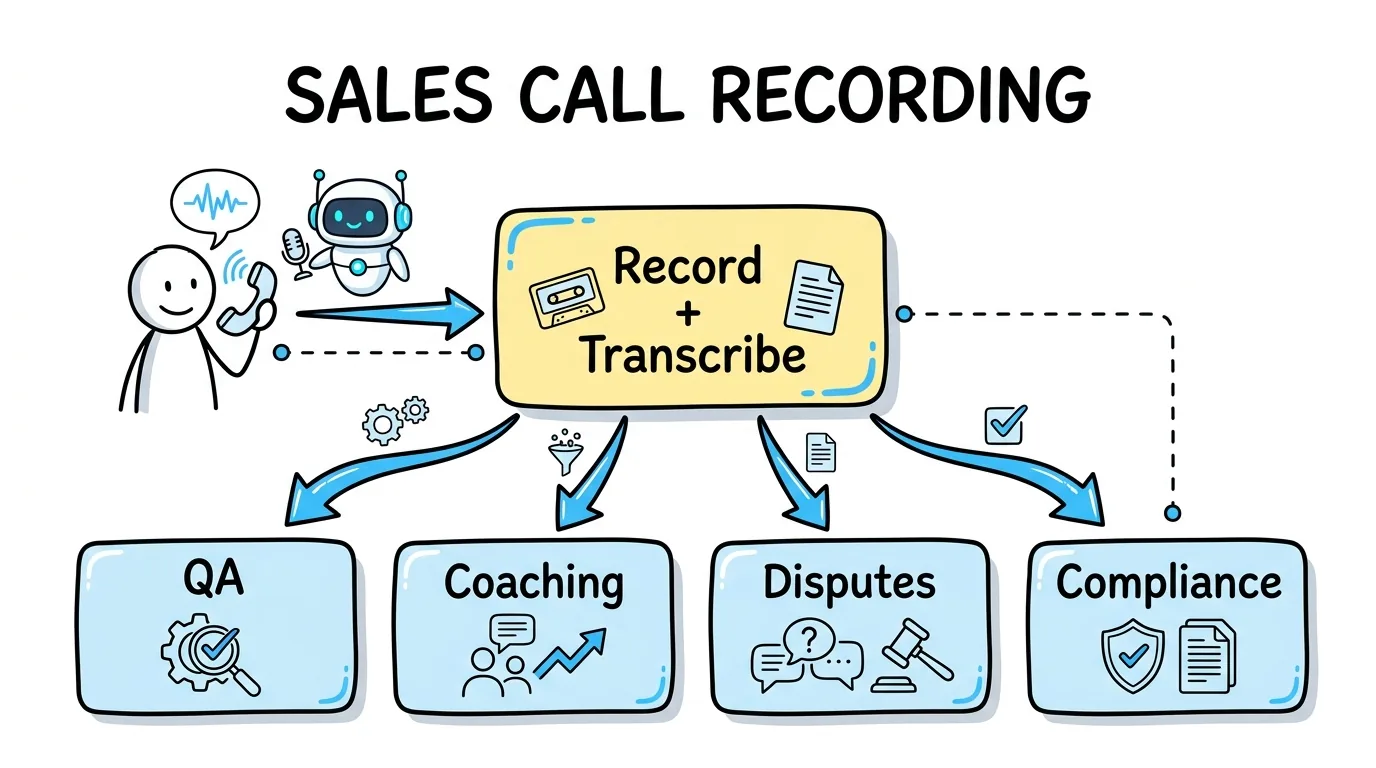
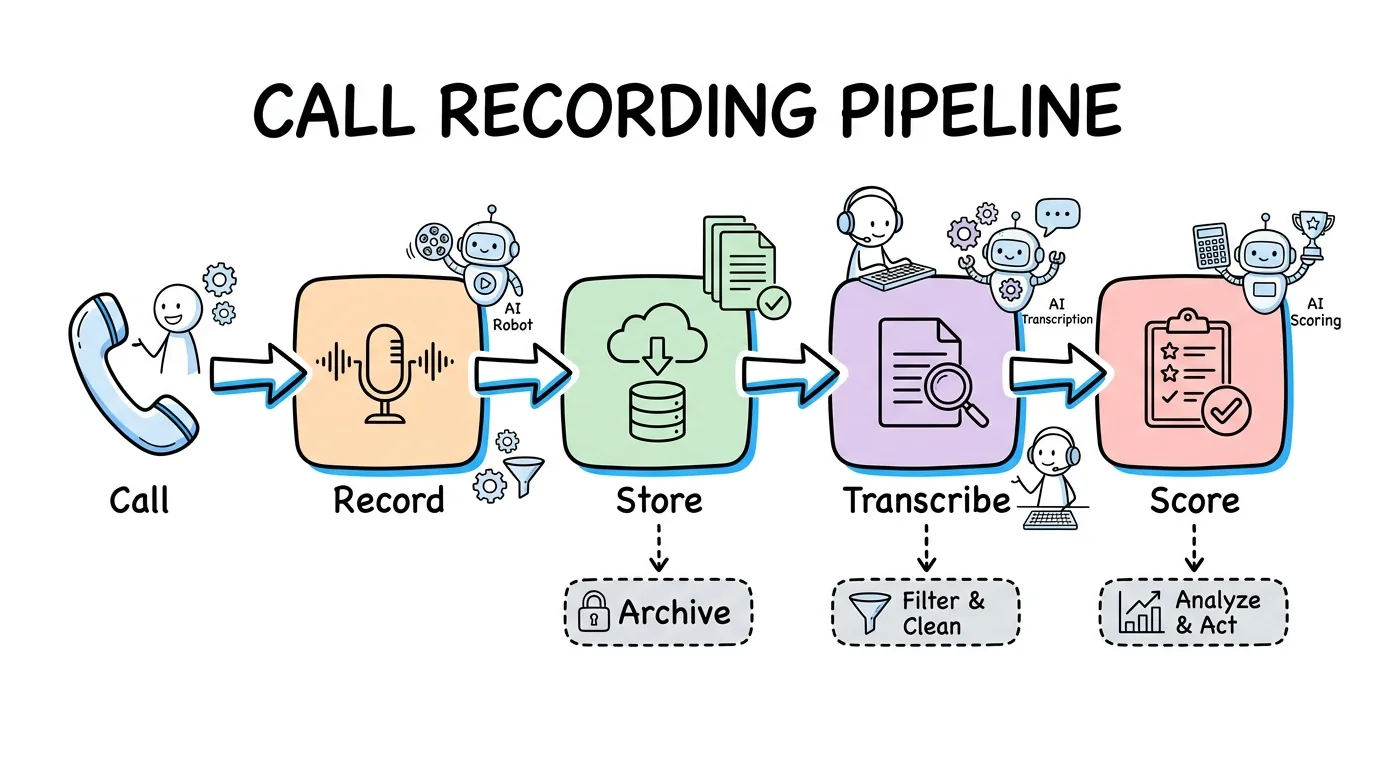
Call center call recording software is a platform that captures, stores, transcribes, and analyzes inbound and outbound phone calls so a call center, contact center, or pay-per-call agency can prove what was said, score call quality, and stay compliant with recording-consent law. The best call recording software for call centers does five jobs at once: it records the audio, stores it securely, transcribes it to searchable text, redacts sensitive data like card numbers, and runs quality-assurance (QA) scoring so you can grade every agent and every call. According to Grand View Research, the global call center software market was valued at roughly $42 billion in 2023 and is projected to grow at a 23% compound annual growth rate through 2030, and call recording sits at the center of that spend because it is the system of record for both coaching and legal defense. The hard part is rarely the recording itself. It is call recording compliance: federal and state law decides whether you can record a call at all, and a single all-party-consent state like California can turn a careless recording into a lawsuit. This guide covers the features that matter, the compliance rules in plain English, and how compliant call recording fits an agency that also routes and bills the calls it records. Start your 7-day free trial to see recorded, scored, and routed calls in one platform.
Key Takeaways
- Call center call recording software records, stores, transcribes, redacts, and QA-scores calls so you have one auditable system of record for coaching, billing, and legal defense.
- The compliance layer is the real differentiator. Eleven-ish "two-party" (all-party) consent states require every party to agree before you record, so
compliant call recordingmust support automated consent announcements and per-state rules. - PCI DSS and HIPAA force redaction. If a caller reads a credit card number or shares health information, the recording has to pause, mute, or redact that audio, or you inherit a data-breach liability.
- TCPA governs the call, not just the recording. Outbound dialing and consent rules under the TCPA (47 U.S.C. § 227) apply alongside
call recording compliance, and the penalties stack. - For pay-per-call agencies, recording is most valuable when it lives next to routing and billing. A recorded, scored, and billable call in one platform removes the second dashboard and the reconciliation gap.
What Call Center Call Recording Software Actually Does
Call center call recording software captures every phone conversation and turns it into structured, reviewable data. At a basic level it records the audio of inbound and outbound calls and saves the file. Modern call recording software for call centers goes much further: it transcribes the audio to searchable text, tags calls by agent, campaign, and outcome, and applies QA scorecards so supervisors grade calls against a rubric instead of listening blind.
The data layer is what makes recording worth paying for. Transcription feeds keyword spotting, so you can search "cancel" or "refund" across thousands of calls. Sentiment analysis flags angry callers for callback. The result is a call center recording archive that doubles as a coaching library and a compliance vault. Phone calls convert to revenue 10 to 15 times more than web form leads (Invoca, 2024), so for any team paid on call outcomes, the recording is the receipt.
Must-Have Features in Call Recording Software for Call Centers
The strongest call recording software for call centers combines capture, intelligence, and governance. When you evaluate tools, weigh these against your actual workflow rather than a feature checklist.
- Recording and storage: dual-channel (separate agent and caller tracks) recording, encrypted storage, and retention controls so you keep calls exactly as long as policy and law require, not forever.
- Transcription and search: accurate speech-to-text with speaker labels and full-text search across the archive.
- Redaction: automatic pause-and-resume or masking when a caller reads a payment card or shares protected health information.
- QA scoring: customizable scorecards and AI-assisted grading so 100% of calls get reviewed, not the 2% a human can listen to.
- Consent management: automated recording announcements and per-state consent rules for
compliant call recording.
A 2024 analysis from the Telemarketing Sales Rule guidance by the FTC underscores why governance features are not optional: regulators expect documented consent and accurate records, and a recording system that cannot produce them is a liability, not an asset. If you also route calls to buyers, look at how recording connects to call routing software so the same call is captured and distributed without a handoff gap.
The Compliance Angle: Two-Party Consent, PCI, HIPAA, and TCPA
Call recording compliance is where most agencies get exposed, because the rules are layered and state-specific. The bottom line: whether you can legally record a call depends on which state the parties are in, and what is said on the call decides what you must redact.
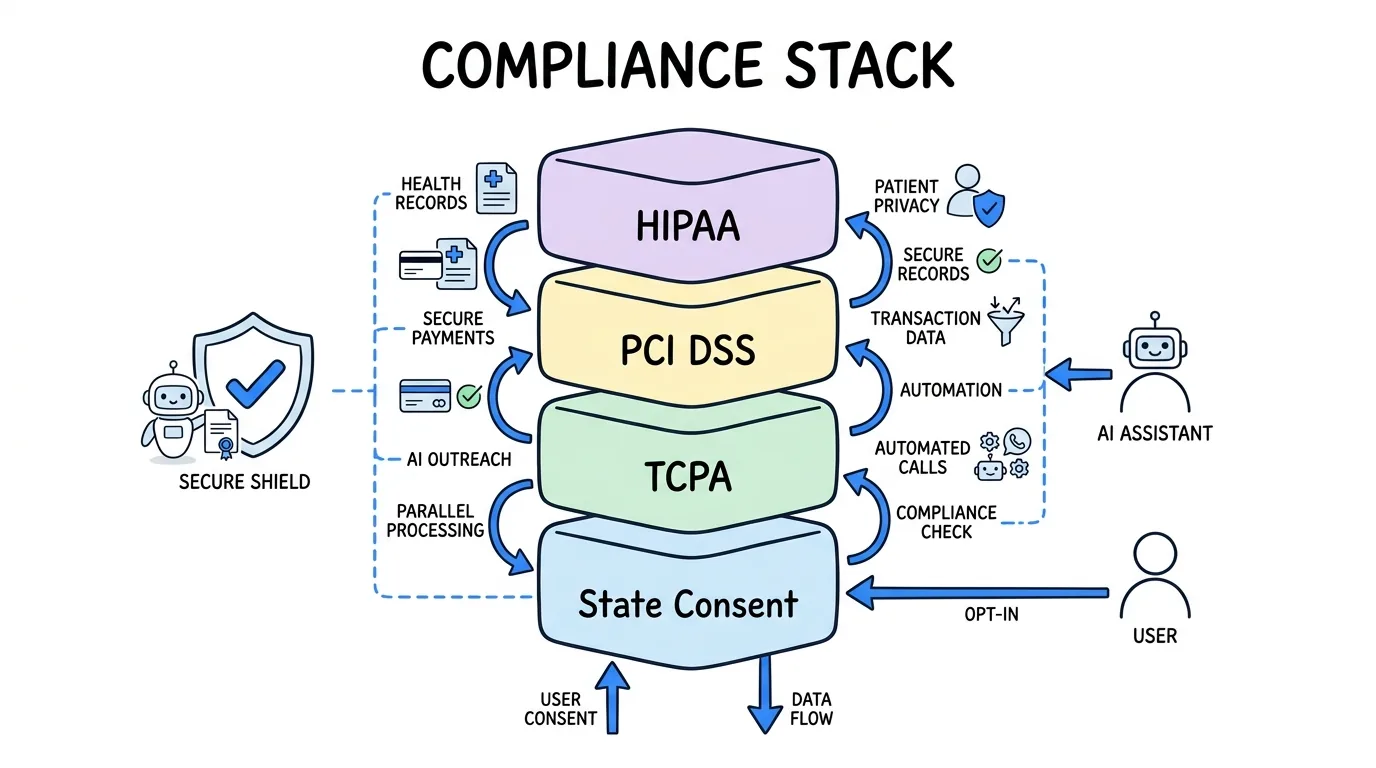
State consent law (one-party vs all-party). Federal law, the Wiretap Act at 18 U.S.C. § 2511, permits recording with one-party consent, meaning one participant (often your agent) can agree. But roughly a dozen states, including California, Florida, Pennsylvania, Illinois, and Washington, require all-party (two-party) consent. A current 50-state breakdown is maintained in the recording-consent chart by Matthiesen, Wickert & Lehrer. When parties are in different states, the safest rule is to follow the strictest applicable law and announce that the call is recorded.
PCI DSS. If callers read payment card numbers, the Payment Card Industry Data Security Standard (PCI DSS), published by the PCI Security Standards Council, prohibits storing the card verification code in any recording. Your software must mute or redact that audio segment.
HIPAA. Calls that include protected health information fall under HIPAA, so recordings need encryption, access controls, and a business associate agreement with the vendor.
TCPA. The Telephone Consumer Protection Act (47 U.S.C. § 227) governs how you dial and contact consumers, separate from recording consent, and its statutory damages run $500 to $1,500 per violation.
Call Center Call Recording Software Compared
For commercial buyers, the practical question is which tool fits which job. Below is a feature-and-fit comparison of common categories of call center call recording software, including where a routing-plus-recording platform like Lead Distro AI fits for pay-per-call agencies.
| Tool | Best For | Recording + QA | Redaction | Built-in Routing/Billing | Starting Price |
|---|---|---|---|---|---|
| Lead Distro AI | Pay-per-lead and pay-per-call agencies | Recording + AI call scoring | Roadmap | Yes (4 routing methods + buyer billing) | $297/mo (call tracking usage-based on top) |
| CallRail | SMB marketing attribution | Recording + transcription | Yes | No | Per-number + usage |
| CallTrackingMetrics | Mid-market contact centers | Recording + QA + DNI | Yes | Limited | Per-number + usage |
| Invoca | Enterprise conversation intelligence | Advanced AI QA | Yes | No | Custom (enterprise) |
| Five9 | Large outbound/inbound call centers | Full CCaaS + QA | Yes | No (CRM-dependent) | Custom per seat |
The pattern is clear: dedicated call-tracking and CCaaS tools are deep on recording intelligence but stop at the call. They do not route the call to a buyer or bill for it. That gap matters for agencies, which is exactly the seam Lead Distro AI is built for. For a deeper look at how pricing works across this category, see our guide to call tracking software pricing.
How Recording Fits an Agency That Also Routes and Bills Calls
For a pay-per-call agency, a call center recording is not a coaching artifact. It is the proof behind an invoice. You get paid on billable, qualified calls, so the recording is what settles a buyer dispute over whether a call qualified. This is why standalone recording tools leave money on the table for agencies: they capture the call, but the routing, qualification, and billing happen somewhere else, and the two systems never reconcile.
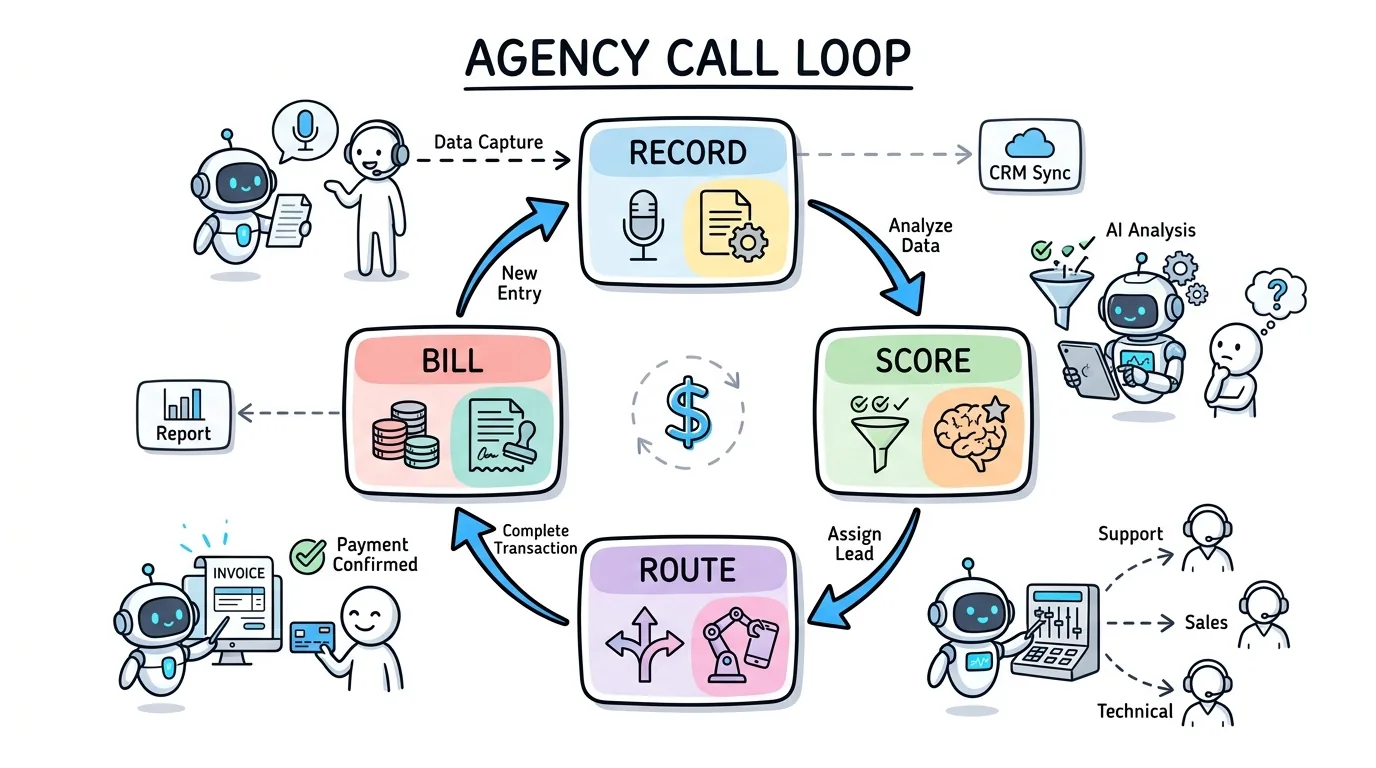
Lead Distro AI closes that loop. The same inbound call is recorded, scored by Claude AI for qualification, routed to the right buyer using one of four distribution methods (Round Robin, Weighted, Priority/Waterfall, or Ping-Post), and billed in real time, all in one platform. Call tracking is usage-based, a per-number monthly fee plus a per-minute inbound rate on top of the flat subscription, so the cost scales with the volume you actually run. Explore the routing engine in the interactive product tour, or read how the broader system works in our overview of marketing call tracking and the foundational guide to what call tracking is. For agencies specifically, the call tracking software for pay-per-call agencies breakdown shows how recording, routing, and billing combine into one margin-protecting workflow.
"The moment a recorded call becomes a billable, routed call in the same system, you stop reconciling two dashboards and start trusting one number," says Rafael Hernandez, Founder & CEO of Lead Distro AI. "That single source of truth is the difference between an agency that scales and one that leaks margin on every dispute."
FAQ
What is call center call recording software?
Call center call recording software is a platform that captures inbound and outbound phone calls, then stores, transcribes, redacts, and QA-scores them so a contact center or pay-per-call agency has one auditable record of every conversation. It supports coaching, dispute resolution, and call recording compliance. The best tools add AI transcription, sentiment analysis, and per-state consent management so you can search calls, grade agents at scale, and prove consent when regulators or buyers ask.
Is recording calls legal, and what is two-party consent?
It depends on the states involved. Federal law under the Wiretap Act allows recording with one-party consent, but about a dozen all-party (two-party) consent states, including California and Florida, require every participant to agree first. The safest approach for compliant call recording is to announce that the call is recorded at the start and follow the strictest applicable state law. A reputable tool automates that consent announcement and applies per-state rules so your agents do not have to track the map themselves.
How does call recording software handle PCI and HIPAA?
Call recording software for call centers handles PCI by automatically muting or redacting audio when a caller reads a payment card number, since PCI DSS prohibits storing the card security code in any recording. For HIPAA, it encrypts recordings that contain protected health information, restricts access with role-based permissions, and the vendor signs a business associate agreement. These redaction and encryption features are not extras; they are the controls that keep a recording from becoming a reportable data breach.
What is the difference between call recording and call tracking?
Call center recording captures and stores the audio of a conversation for review, QA, and compliance. Call tracking measures where calls come from, which campaign or keyword drove them, and how they convert, usually through dynamic number insertion. Most platforms bundle both, because the source data from tracking plus the audio from recording is what lets an agency prove a call was qualified and bill for it. Lead Distro AI adds the routing and billing layer on top so the same call is recorded, attributed, and invoiced.
Does Lead Distro AI offer a free trial for call recording and routing?
Yes. Lead Distro AI offers a 7-day free trial, and a credit card is required to start it. During the trial you can record and score inbound calls, route them to buyers with any of the four distribution methods, and watch real-time profit and loss before you commit. The platform subscription is flat starting at $297 per month, with call tracking billed on a usage basis (a per-number fee plus a per-minute inbound rate), so your recording and routing costs scale with the volume you actually run.
Conclusion
Call center call recording software earns its keep when it does more than press record: it transcribes, redacts, QA-scores, and proves consent, turning every conversation into a compliant, searchable, billable record. For agencies, the biggest upgrade is consolidating recording with routing and billing so a single platform records the call, scores it, sends it to the right buyer, and invoices for it without a reconciliation gap. Get the compliance layer right first, two-party consent, PCI, HIPAA, and TCPA, because the penalties are real and they stack. Then choose the tool that fits how you actually operate.
Ready to record, score, route, and bill calls in one platform? Start your 7-day free trial and route your first call in minutes.
About the Author
Founder & CEO of Lead Distro AI & Great Marketing AI
UC Berkeley graduate and former software engineer at Microsoft. Rafael built Lead Distro AI after managing over $10M in ad spend for performance marketing agencies (pay-per-lead and pay-per-call), including running campaigns for Neil Patel. He combines deep software engineering expertise with hands-on performance marketing experience to build tools that help these agencies scale profitably.
About Lead Distro AI
Lead Distro AI: AI-Powered Lead Distribution & Call Tracking That Maximizes ROI
The modern platform for pay-per-lead and pay-per-call agencies. Route, score, and deliver leads with AI-powered automation and real-time P&L tracking. Built for performance marketing agencies and lead buyers across legal, insurance, mortgage, solar, and home services verticals.
4 Distribution Methods
Waterfall, Round Robin, Weighted, Ping-Post
Ping-Post Auctions
Real-time bidding with sub-second routing
Real-Time P&L Reporting
Track revenue, costs, and profit per campaign
Call Tracking
Assign tracking numbers, record calls, and attribute conversions
AI Lead Scoring
Score every lead before routing to maximize conversion
Partner Portal
Self-serve dashboard for buyers to track leads