What Is a Pay Per Lead Marketing Agency? (How the Model Works in 2026)
A pay per lead marketing agency generates qualified leads and sells them to buyers on a cost-per-lead basis. Here is how the model works, what tools you need, and how to start one in 2026.

Rafael Hernandez
Founder & CEO
Ex-Microsoft SWE · $10M+ PPL ad spend
I hope you enjoy reading this blog post. If you want to try Lead Distro AI for free, click here.
Author: Rafael Hernandez | Founder & CEO of Lead Distro AI
A pay per lead marketing agency generates qualified leads through advertising or content, then sells those leads to businesses on a cost-per-lead (CPL) basis. Instead of charging clients a monthly retainer, the agency earns revenue every time it delivers a qualified lead. The agency owns the traffic, the landing pages, and the lead flow. The buyer (a law firm, insurance agency, or mortgage broker) pays only for leads that meet agreed-upon criteria.
This is fundamentally different from a traditional marketing agency, which charges for time and services regardless of results. In the PPL model, the agency carries the campaign risk. That is why PPL leads command a premium: a qualified personal injury lead sells for $200 to $600. A Medicare lead sells for $40 to $80. A mortgage refinance lead sells for $25 to $75.
If you are evaluating whether to build a PPL agency or switch your existing agency to this model, this guide covers how the model works, what infrastructure you need, how to price leads, and which verticals deliver the highest margins.
Key Takeaways
- A pay per lead marketing agency runs advertising at its own cost and sells qualified leads to buyers on a per-lead basis, rather than charging a monthly retainer.
- Revenue scales with volume: agencies that automate lead distribution process 3x to 5x more leads per day than those routing manually through spreadsheets.
- The most profitable PPL verticals are personal injury legal, Medicare and health insurance, mortgage, and home services, where lead prices range from $40 to $600+.
- Lead distribution software is the core infrastructure: it routes leads to the right buyer instantly, runs ping post auctions, manages buyer caps, and automates payouts.
- The pay per lead model differs from retainer primarily in who carries campaign risk: the agency, not the client.
How a Pay Per Lead Agency Works
The model has five sequential steps:
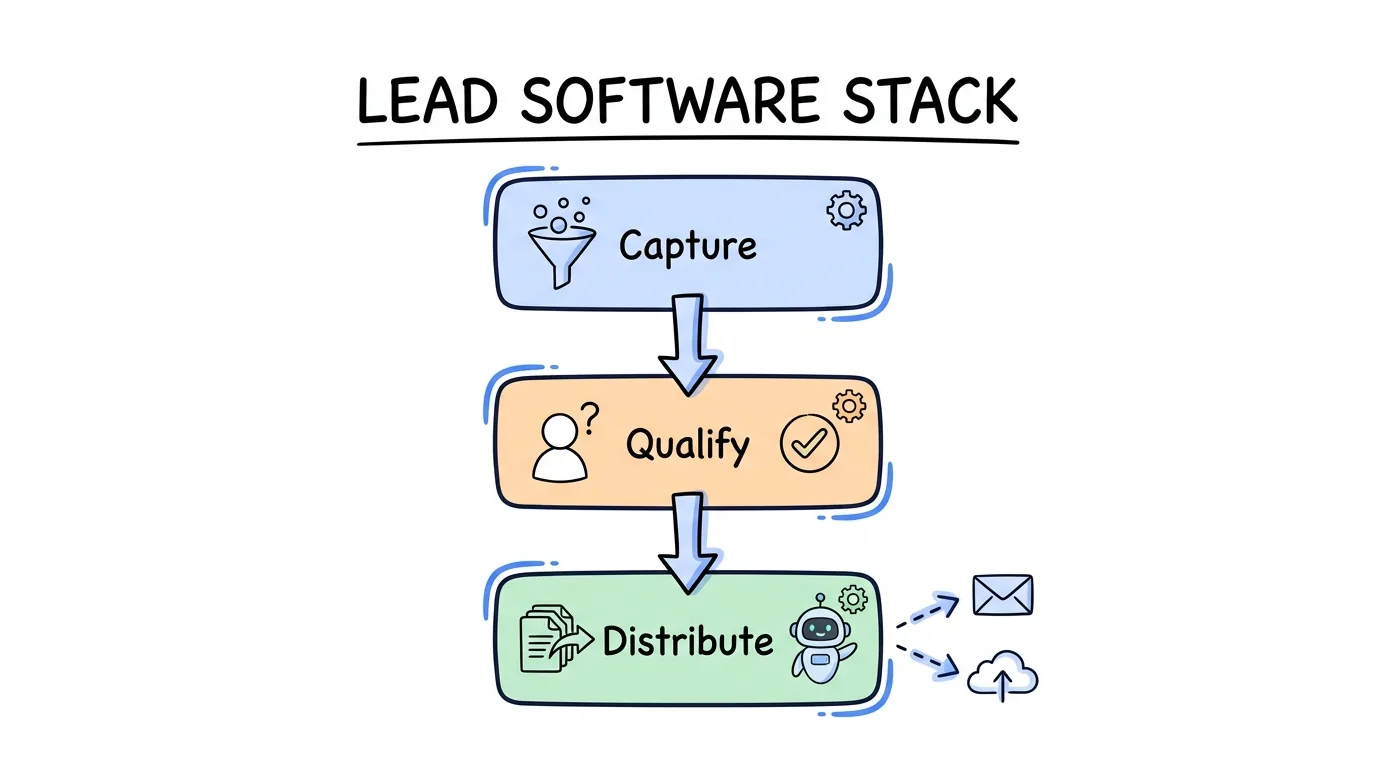
Step 1: Traffic acquisition. The agency runs paid ads (Google, Meta, TikTok, programmatic) or builds organic traffic (SEO, content) that attracts people searching for a specific service. A personal injury PPL agency might run "car accident lawyer near me" ads.
Step 2: Lead capture. Traffic lands on an agency-owned landing page with a form or a call tracking number. The lead fills out the form or calls in. The agency now owns that lead data, not the client.
Step 3: Lead qualification. The agency filters out bad leads: wrong geography, wrong intent, duplicate submissions, or invalid contact information. This step protects buyer relationships and reduces dispute volume.
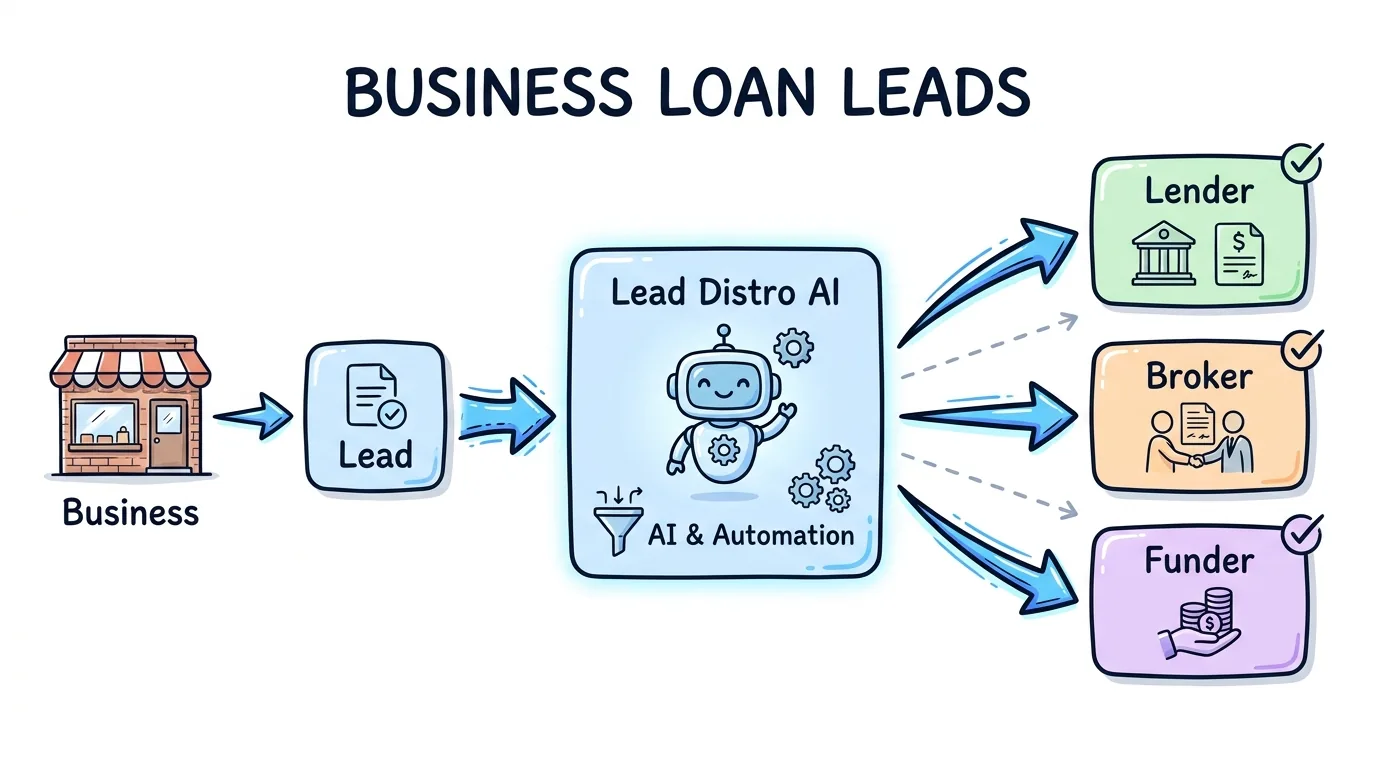
Step 4: Lead distribution. Qualified leads route to buyers in real time through lead distribution software. The software can run a ping post auction (sending lead details to multiple buyers simultaneously so they compete on price), or route directly to a single buyer based on territory or capacity. For a full walkthrough of how ping post auctions work, see ping post lead distribution.
Step 5: Buyer payout. When a lead is accepted, the buyer's account is debited automatically. The agency earns the margin between ad cost and lead sale price.
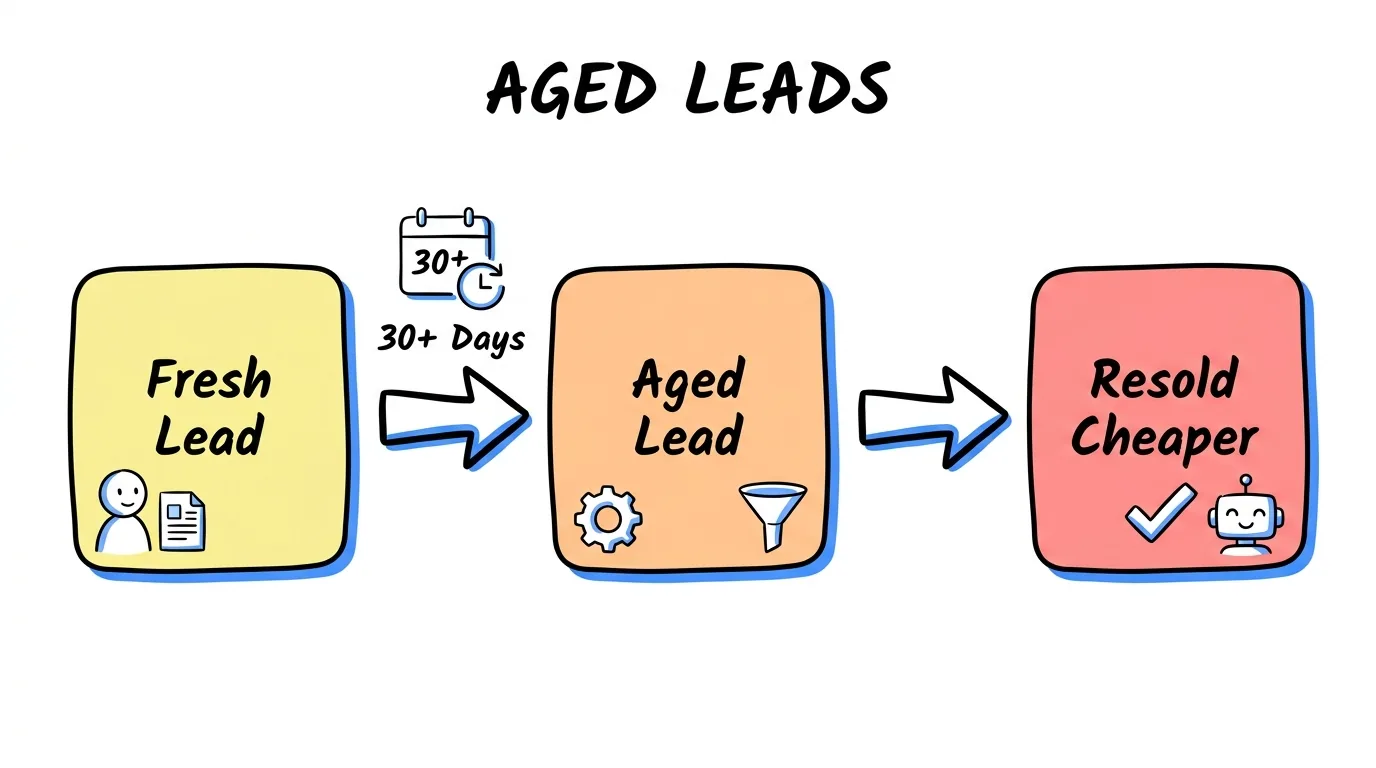
The cycle from form submission to buyer delivery takes under 3 seconds in modern platforms. Manual routing via email takes hours; by then, most leads have gone cold.
PPL Agency vs Retainer Agency
| Dimension | Retainer Agency | Pay Per Lead Agency |
|---|---|---|
| Revenue model | Monthly fee regardless of results | Per qualified lead delivered |
| Risk holder | Client | Agency |
| Revenue ceiling | Client count x retainer size | Volume x lead price (no ceiling) |
| Time to first revenue | Invoice on signing | After first profitable campaign |
| Margins at scale | Fixed | Improve as ad efficiency improves |
| Buyer relationship | Ongoing strategic partner | Performance-based supplier |
The tradeoff: retainer agencies have predictable revenue but a hard ceiling tied to headcount. PPL agencies have variable income but no ceiling. The best PPL agencies eventually build retainer-like stability by locking buyers into volume contracts and exclusive territories.
For a deeper comparison of these models for law firm clients specifically, see retainer vs pay per lead.
What Tools Does a PPL Agency Need?
Lead distribution software is the infrastructure layer. It handles buyer management, routing logic, ping post auctions, payouts, compliance flags, and reporting. Without it, you are routing leads manually and losing 60% to 80% of lead value to contact-rate decay. Lead Distro AI is built specifically for PPL agencies and includes automated payouts starting at $297/month, plus ping post and real-time buyer bidding from the $497/month Growth plan. For a side-by-side comparison of platforms, see best lead distribution software for agencies.
Ad platform accounts. Google Ads for search intent. Meta for interruption-based awareness. Most PPL agencies run both.
Agency-owned landing pages. Not client websites. The agency controls the funnel, the form fields, and the consent language.
Call tracking. For verticals where phone calls convert better than forms (legal, Medicare insurance). Call tracking ties inbound calls to their source and routes them to the right buyer.
Compliance tooling. TCPA-compliant consent language on every form. TrustedForm or Jornaya for insurance and mortgage verticals where TCPA litigation risk is highest.
For terminology you will encounter while building a PPL agency, see the lead generation glossary.
How to Price Your Leads
Lead pricing is a function of vertical, intent strength, exclusivity, and market competition.
| Vertical | Exclusive Lead Price | Shared Lead Price |
|---|---|---|
| Personal injury legal | $200 to $600 | $50 to $150 |
| Medicare / health insurance | $40 to $80 | $10 to $25 |
| Mortgage refinance | $25 to $75 | $8 to $20 |
| Home services (HVAC, roofing) | $20 to $60 | $5 to $15 |
| Solar | $30 to $80 | $8 to $25 |
Exclusive leads go to one buyer only. Shared leads sell to 2 to 5 buyers simultaneously. PPL agencies that run ping post auctions maximize revenue per lead by letting buyers compete in real time.
Target margin: 30% to 50% of lead sale price after advertising cost. Personal injury agencies often operate at higher margins because search intent is measurable and urgent.
Common PPL Verticals
Choosing the right vertical is the most important decision a PPL agency owner makes. For a full ranked list of the lead generation niches that pay the most, including LTV data and buyer-pool size across all 40 verticals, see our complete tier list.
Personal injury legal. Highest CPL in the market. Attorneys pay $200 to $600 per exclusive MVA or slip-and-fall lead. Spanish-language leads command a premium in markets with large Hispanic populations.
Health and Medicare insurance. High volume, compliance-heavy. AEP (October 15 to December 7) and ACA OEP (November 1 to January 15) create seasonal demand spikes that require scalable distribution infrastructure.
Mortgage. Interest-rate sensitive. When rates drop, inbound lead volume spikes within 48 hours. PPL agencies in mortgage need burst-capacity distribution that handles 5x normal volume without manual intervention.
Home services. Lower CPL but high volume. HVAC, roofing, plumbing, solar. Geographic routing is critical: a roofing lead in Phoenix has no value to a roofer in Cleveland.
Solar. Growing vertical driven by federal ITC changes and state rebate programs. Compliance requirements vary by state.
How to Set Up Lead Distribution
Setting up automated lead distribution is the operational step that separates agencies doing $50K/month from those doing $500K/month. Manual routing does not scale.
A complete setup guide lives at how to start a pay per lead agency. For distribution specifically:
- Choose a platform with ping post support and buyer management.
- Add your buyers with accepted geographies, verticals, caps, and bid prices.
- Connect lead sources (form webhooks, call tracking numbers, API integrations).
- Configure routing logic: ping post for maximum revenue, direct post with waterfall for buyers with exclusivity agreements.
- Set up compliance filters: duplicate detection, geography restrictions, and consent verification.
- Test end-to-end with a sample lead before going live.
For routing logic design, see automated lead routing rules for agencies.
FAQ
What is the difference between a PPL agency and a lead broker?
A lead broker aggregates leads from multiple sources and resells them, sometimes without running ads directly. A PPL agency typically generates its own leads through advertising or content and sells them directly to end buyers. In practice the terms overlap; both models rely on lead distribution software to route and sell leads at scale.
What is a typical profit margin for a PPL agency?
Well-run PPL agencies target 30% to 50% gross margin on lead revenue after ad spend. At scale, margins can compress slightly as ad inventory competition increases. Agencies with proprietary SEO traffic or exclusive buyer contracts typically maintain 40%+ margins.
How many buyers do I need to start?
Start with 2 to 5 buyers per vertical to create competition and fill capacity. One buyer means no fallback when they reduce their cap. Five buyers lets you run ping post auctions and route overflow to secondary buyers automatically.
Is pay per lead legal?
Yes, with proper TCPA compliance. Each lead must include written disclosure that the consumer may be contacted by a third party, and consent must be documented. TrustedForm and Jornaya are the industry-standard tools for consent certification in insurance, mortgage, and legal verticals.
What is the best lead distribution software for a PPL agency?
Lead Distro AI is built specifically for pay per lead agencies, with ping post auctions, buyer management, real-time routing, and automated payouts. It starts at $297/month, with ping post auctions from the $497/month Growth plan, and a 7-day free trial (credit card required). See the full platform comparison for a side-by-side against alternatives.
Can I run a PPL agency part-time to start?
Yes, but the manual work of routing, billing, and quality control will consume most of your available time if you are not using distribution software. Most founders who start part-time invest in automation early: landing pages, call tracking, and a lead distribution platform, so the business scales without proportional labor.
Conclusion
A pay per lead marketing agency is a high-leverage model: build the traffic asset once, sell the leads repeatedly. The margin between ad cost and lead price is the business. At scale, automated lead distribution is what drives that margin. Agencies routing leads manually through email leave 50% to 80% of lead value on the table through contact-rate decay and missed auction opportunities.
The infrastructure to run a PPL agency professionally is now accessible at $297/month, with ping post from the $497/month Growth plan. If you are building a PPL agency or converting an existing agency to performance-based pricing, Lead Distro AI provides the distribution, buyer management, and ping post infrastructure to run it.
Ready to run your first PPL campaign? Start a 7-day Lead Distro AI free trial and connect your first lead source in under 10 minutes. Or take the product tour to see how buyer management, ping post auctions, and automated routing work together. Credit card required.
About the Author
Founder & CEO of Lead Distro AI & Great Marketing AI
UC Berkeley graduate and former software engineer at Microsoft. Rafael built Lead Distro AI after managing over $10M in ad spend for performance marketing agencies (pay-per-lead and pay-per-call), including running campaigns for Neil Patel. He combines deep software engineering expertise with hands-on performance marketing experience to build tools that help these agencies scale profitably.
About Lead Distro AI
Lead Distro AI: Capture, Route, and Sell Every Lead, Call, and Appointment
The modern platform for pay-per-lead and pay-per-call agencies. Route, score, and deliver leads with AI-powered automation and real-time P&L tracking. Built for performance marketing agencies and lead buyers across legal, insurance, mortgage, solar, and home services verticals.
4 Distribution Methods
Waterfall, Round Robin, Weighted, Ping-Post
Ping-Post Auctions
Real-time bidding with sub-second routing
Real-Time P&L Reporting
Track revenue, costs, and profit per campaign
Call Tracking
Assign tracking numbers, record calls, and attribute conversions
Lead Scoring
Score every lead before routing to maximize conversion
Partner Portal
Self-serve dashboard for buyers to track leads