What is Pay Per Lead? The Definitive Guide for Agencies
Pay per lead is a pricing model where advertisers pay only for qualified leads. Learn how it works, how it compares to other models, and how to scale with it.

Rafael Hernandez
Founder & CEO
Ex-Microsoft SWE · $10M+ PPL ad spend

I hope you enjoy reading this blog post. If you want to try Lead Distro AI for free, click here.
Author: Rafael Hernandez | Founder & CEO of Lead Distro AI
Pay per lead (PPL) is a performance-based pricing model where advertisers pay a fixed fee for each qualified lead delivered, rather than paying for impressions, clicks, or retainers. Under a pay per lead agreement, the advertiser only pays when a prospective customer submits their contact information and meets a predefined quality threshold, such as geographic location, income level, or verified intent signals. Typical PPL rates in 2026 range from $15 to $300 per lead depending on vertical, with legal and mortgage leads at the top of the range and home services and auto insurance at the bottom.
In short: You pay for results, not effort. If no qualified lead is delivered, no money changes hands.
The model now powers a $3.96 billion global lead management market (2025), projected to grow at 12.7% CAGR to $9.10 billion by 2032, per Fortune Business Insights. Grand View Research tracks parallel growth in lead-management software, with the segment expanding 12.3% CAGR through 2030 on the back of performance-based pricing adoption. Adoption is accelerating: 84% of B2B marketers now identify lead generation as their most important content marketing goal, according to the Content Marketing Institute 2024 B2B Benchmarks report. Pay per lead sits at the center of this shift because it transfers media risk from the advertiser to the lead generator. See our full lead generation statistics roundup for 60+ industry benchmarks.
Last updated: May 19, 2026
Key Takeaways
- Pay per lead is a performance-based model where advertisers pay only for qualified prospects, not for ad spend or impressions.
- PPL pricing typically ranges from $15 to $300 per lead in 2026, depending on vertical, exclusivity, and quality requirements.
- The global lead management market is on track to hit $9.10 billion by 2032 (12.7% CAGR), with PPL as the dominant pricing model.
- The model works best in high-value verticals: legal, insurance, mortgage, real estate, and home services.
- Lead Distro AI is built specifically for pay per lead agencies, automating distribution, tracking conversions, and reporting P&L in real time.
- Compared to retainer and pay per click models, pay per lead marketing aligns agency and client incentives around actual business outcomes.
How Pay Per Lead Works
The pay per lead model follows a straightforward three-step flow: generate, qualify, deliver.
Step 1: Generation. A lead generator, sometimes called a lead supplier, drives traffic to a landing page through paid ads, SEO, or affiliate partnerships. The visitor fills out a form, submits a phone number, or completes a call. That submission becomes a raw lead.
Step 2: Qualification. The lead is validated against the buyer's criteria. This may include real-time TCPA compliance checks (verifying the consumer gave express written consent), duplicate detection (filtering leads already in the buyer's CRM), and data verification (confirming the phone number and email are valid). Leads that fail validation are rejected and typically not billed.
Step 3: Delivery. Qualified leads are routed to the buyer in real time via webhook, API, or email. Distribution methods include waterfall routing (first buyer who accepts gets the lead), round robin (even distribution across buyers), weighted routing (higher-spend buyers receive a larger share), and ping post (real-time auction where multiple buyers bid simultaneously). Speed of delivery directly drives conversion: leads contacted within five minutes of submission are 21 times more likely to qualify than leads contacted after 30 minutes, per the Harvard Business Review lead response study, and modern PPL platforms are built around sub-second delivery for that reason.
To explore how Lead Distro AI handles this entire flow, take the interactive product tour and see live routing in action.
Pay Per Lead vs. Other Pricing Models
Understanding how pay per lead marketing compares to other models helps you decide which structure fits your agency.
| Model | How You Pay | Risk Holder | Best For |
|---|---|---|---|
| Pay Per Lead (PPL) | Fixed fee per qualified lead | Lead generator | Agencies needing predictable cost per lead |
| Cost Per Click (CPC) | Fee per click, regardless of quality | Advertiser | Brand awareness, top-of-funnel campaigns |
| Cost Per Acquisition (CPA) | Fee per sale or signed contract | Lead generator | Mature funnels with trackable conversions |
| Retainer | Fixed monthly fee | Advertiser | Long-term agency relationships with stable volume |
| Pay Per Call | Fee per inbound call above minimum duration | Lead generator | High-intent verticals (legal, insurance, HVAC) |
For a deeper look at how retainer models stack up against performance pricing, read our guide on retainer vs pay per lead. If calls are part of your distribution mix, the pay per call vs pay per lead breakdown covers how to combine both models profitably.
As Rafael Hernandez, Founder and CEO of Lead Distro AI, explains: "The pay per lead model forces lead generators to care about quality, not just volume. When your payout depends on the lead meeting a buyer's criteria, you have every incentive to optimize targeting upstream."
Benefits of Pay Per Lead for Agencies
Pay per lead marketing offers distinct advantages for both lead sellers and lead buyers.
For lead sellers (agencies and publishers):
- Revenue scales with output. You earn based on volume and quality, not hours billed. A well-optimized campaign can generate 10x the revenue of a retainer arrangement.
- Diversified buyer base. Selling the same lead to multiple non-competing buyers in different geographic territories multiplies revenue per lead.
- Transparent performance metrics. Conversion rate per buyer and revenue per lead are trackable in real time, allowing you to optimize campaigns based on data rather than estimates.
For lead buyers (law firms, insurance agencies, mortgage brokers):
- Zero media risk. You pay only for leads, not for ad spend that may not convert.
- Predictable cost per acquisition. With a known cost per lead and a measured close rate, CAC is calculable and scalable.
- Faster ramp. A lead buyer can start receiving qualified leads within 24-48 hours of setting up a distribution agreement, without needing to build any marketing infrastructure.
To manage the pricing and margin math across multiple buyers and campaigns, use the lead pricing calculator to model scenarios before committing to a payout structure.
Pay Per Lead by Vertical
Pay per lead real estate, legal, insurance, and mortgage are the four highest-volume verticals in the PPL ecosystem. Each has its own standard pricing, qualification criteria, and compliance requirements.
Legal (Personal Injury, MVA, Mass Tort): Leads typically range from $50 to $300 each. Buyers (law firms) require TCPA-compliant opt-in proof, specific case type (motor vehicle accident, workers compensation, mass tort), and geographic jurisdiction. Conversion rates average 5-15% from lead to retained case.
Insurance (Health, Auto, Home, Life): Leads range from $15 to $75 depending on line of business. Health insurance leads spike during open enrollment. Auto leads are year-round. Qualification often includes age, state, and existing coverage status.
Mortgage (Purchase and Refinance): Mortgage leads range from $25 to $150. The FCC's 2024 one-to-one consent rule significantly tightened qualification requirements before being vacated by the Eleventh Circuit in 2025, though prior-express-written-consent standards still apply. Buyers require the borrower's loan type, estimated credit score, and property zip code.
Real estate: Pay per lead real estate programs average $20 to $50 per lead in most markets, though luxury and commercial leads command significantly higher payouts. Geographic targeting is the primary qualification variable, with buyers typically capping at specific zip codes or counties.
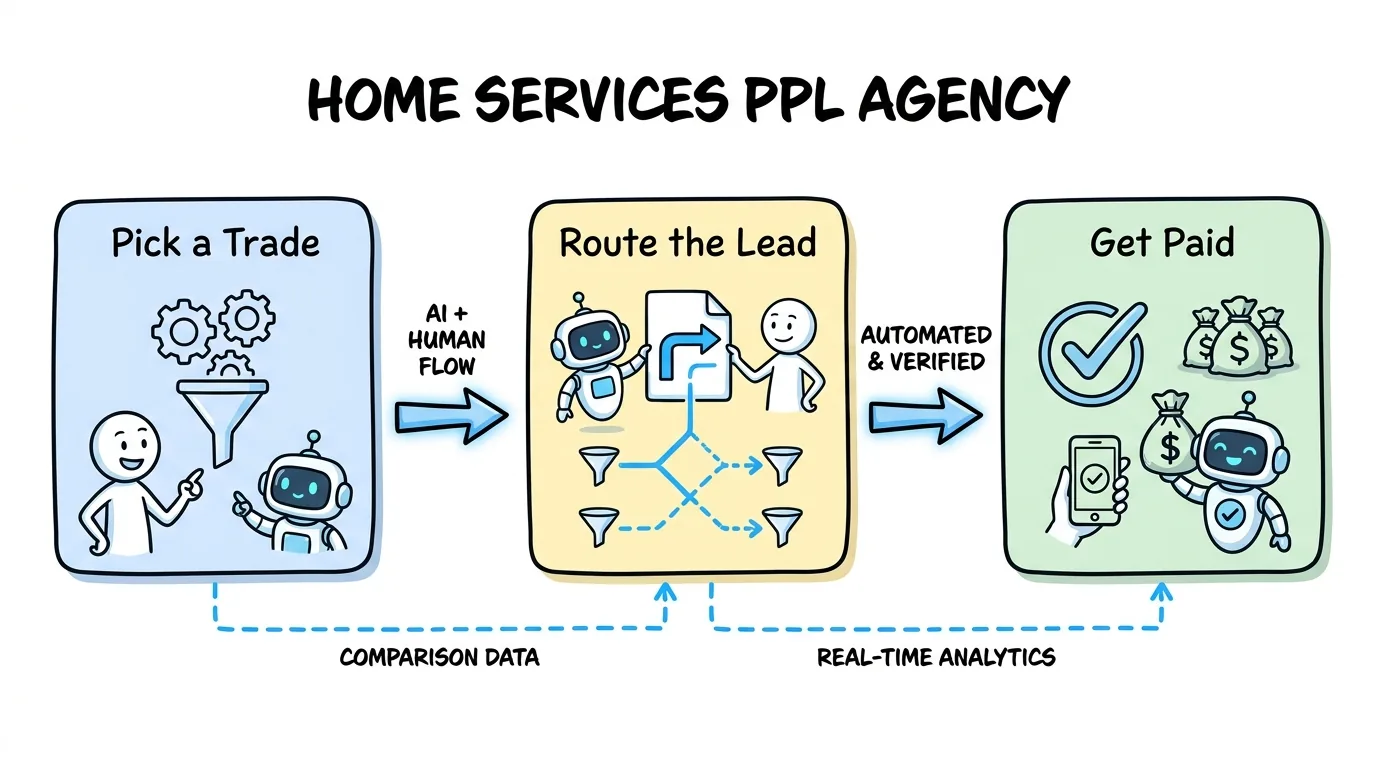
Home Services (HVAC, Roofing, Plumbing, Solar): Leads in home services range from $15 to $100. Buyers value homeownership status, property type (single-family vs. multi-family), and geographic distance from the service provider.
For a full breakdown of how to set pricing across these verticals, read how to price leads.
How to Get Started with Pay Per Lead
Launching a pay per lead operation requires four foundational components: traffic, a qualification system, a distribution platform, and buyers.
-
Build or buy traffic. Most PPL agencies run paid ads (Meta, Google) or work with affiliate networks to generate volume. Your traffic source determines your cost per lead, which sets your floor for pricing.
-
Set qualification criteria. Define what a billable lead looks like: geographic area, demographic filters, form fields, phone number validation, and TCPA consent language. The stricter your criteria, the higher the payout you can command.
-
Set up distribution. A distribution platform routes qualified leads to buyers, tracks delivery confirmation, manages caps, and handles returns for non-qualifying leads. This is where Lead Distro AI replaces spreadsheets, GoHighLevel workarounds, and manual Zapier flows with a purpose-built system.
-
Sign buyers. Start with one to three buyers who have clear criteria and a track record of receiving leads. Track their conversion rates from week one so you can optimize supplier-side targeting to match buyer-side outcomes.
Plans start at $297/month. See all pricing tiers and choose the plan that fits your current lead volume.
FAQ
What is pay per lead in digital marketing?
Pay per lead in digital marketing is a performance pricing model where an advertiser pays a fixed fee for each contact who meets predefined qualification criteria, such as submitting a form, making a call, or completing a specific action. Unlike pay per click, where advertisers pay for every visitor regardless of intent, pay per lead ties the cost directly to a prospect who has expressed interest. The model is common in high-value verticals including legal, insurance, mortgage, real estate, and home services, where a single converted lead can generate hundreds or thousands of dollars in revenue for the buyer.
How much does pay per lead cost?
Pay per lead pricing varies widely by vertical and qualification requirements. Legal leads for personal injury cases typically range from $50 to $300 each. Insurance leads run $15 to $75. Mortgage leads are priced between $25 and $150. Home services leads average $15 to $100. Exclusive leads (sold to only one buyer) command a 2x to 3x premium over shared leads (sold to multiple buyers). Your cost per lead is determined by the vertical, the strictness of qualification criteria, exclusivity terms, and the supplier's traffic quality and volume.
What is the difference between pay per lead and cost per lead?
Pay per lead and cost per lead describe similar concepts but from different perspectives. Pay per lead is a commercial agreement: you pay a fixed amount when a supplier delivers a qualifying contact. Cost per lead is a performance metric: it measures how much you spent (in total ad spend, platform fees, or both) to generate each lead internally. A business running its own paid campaigns tracks cost per lead as an internal KPI, while a business buying leads from a supplier pays a negotiated pay per lead rate. Both ultimately measure efficiency of lead acquisition, but one is a pricing model and the other is a reporting metric.
Is pay per lead performance-based marketing?
Yes. Pay per lead is one of the most common forms of performance based marketing because compensation is tied directly to a measurable output: a qualified lead. Other performance-based pricing structures include pay per call (payment triggered by an inbound call above a minimum duration), pay per acquisition (payment triggered by a completed sale), and revenue share (a percentage of the revenue generated by the lead). Among these, pay per lead is the most widely adopted because it balances risk between the supplier and the buyer without requiring the supplier to track downstream conversions after lead delivery.
How does Lead Distro AI support pay per lead agencies?
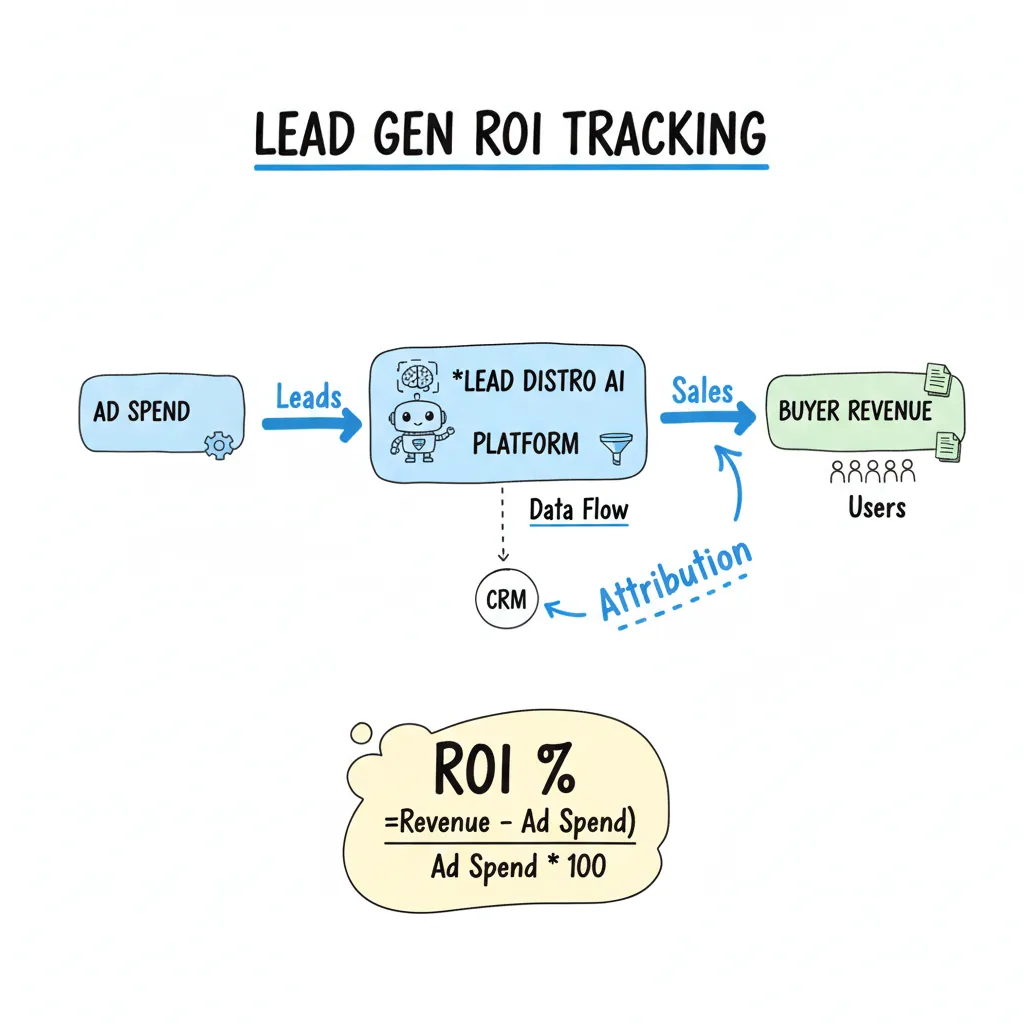
Lead Distro AI is a distribution platform built specifically for pay per lead agencies. It handles the full lead lifecycle: receiving leads from multiple suppliers, running real-time qualification and duplicate detection, routing leads to buyers using waterfall, round robin, weighted, or ping post methods, tracking conversion rates per buyer and supplier, and generating daily P&L reports. The platform also integrates with Meta's Conversions API to send conversion events back to ad platforms when leads are marked as converted, closing the attribution loop and enabling media buyers to optimize campaigns based on actual revenue outcomes rather than lead volume alone.
Is pay per lead legal?
Yes. Pay per lead is legal in the United States, Canada, the United Kingdom, the EU, and Australia, provided the underlying lead collection complies with consumer-consent and data-privacy law. In the US, the most important rule is the Telephone Consumer Protection Act (TCPA), which the FCC tightened in 2024 with a one-to-one consent requirement that took effect January 27, 2025 and was later vacated in a Eleventh Circuit ruling, but consent and disclosure standards still apply per the FCC's current TCPA guidance. Lead generators must capture express written consent identifying the specific seller, disclose how the consumer's data will be used, and retain proof of consent for at least four years. Buyers are equally liable, so reputable distribution platforms enforce TCPA validation at the point of acceptance.
What is a good conversion rate for pay per lead?
A "good" pay per lead conversion rate depends on the vertical and where in the funnel you measure. From lead delivery to contact (a buyer successfully reaches the prospect), 30 to 60 percent is typical. From contact to qualified appointment or quote, expect 15 to 30 percent. From appointment to closed sale, conversion rates vary dramatically: 5 to 15 percent for personal injury legal leads, 8 to 20 percent for mortgage refinance leads, 10 to 25 percent for auto insurance, and 20 to 40 percent for home services like roofing and HVAC. If your closed-sale conversion rate sits below the bottom of the range for your vertical for two consecutive months, the lead quality is the issue, not your sales process. Renegotiate qualification criteria with your supplier or switch to exclusive (single-buyer) leads at a premium.
Conclusion
Pay per lead is the pricing model that aligns agencies and clients around results. When your revenue depends on delivering qualified prospects, every part of the operation: traffic, targeting, qualification, and distribution, gets optimized around what actually converts. Compare the two models side by side with our PPL vs retainer calculator, or use the lead ROI calculator to project your returns.
The agencies that scale fastest are the ones that treat their distribution infrastructure as a competitive advantage, not an afterthought. Start your free trial of Lead Distro AI and route your first lead in minutes.
Ready to run your PPL agency on a purpose-built platform? Start your 7-day free trial and see real-time P&L, rule-based lead scoring, and automated distribution in one place.
About the Author
Founder & CEO of Lead Distro AI & Great Marketing AI
UC Berkeley graduate and former software engineer at Microsoft. Rafael built Lead Distro AI after managing over $10M in ad spend for performance marketing agencies (pay-per-lead and pay-per-call), including running campaigns for Neil Patel. He combines deep software engineering expertise with hands-on performance marketing experience to build tools that help these agencies scale profitably.
About Lead Distro AI
Lead Distro AI: AI-Powered Lead Distribution & Call Tracking That Maximizes ROI
The modern platform for pay-per-lead and pay-per-call agencies. Route, score, and deliver leads with AI-powered automation and real-time P&L tracking. Built for performance marketing agencies and lead buyers across legal, insurance, mortgage, solar, and home services verticals.
4 Distribution Methods
Waterfall, Round Robin, Weighted, Ping-Post
Ping-Post Auctions
Real-time bidding with sub-second routing
Real-Time P&L Reporting
Track revenue, costs, and profit per campaign
Call Tracking
Assign tracking numbers, record calls, and attribute conversions
Lead Scoring
Score every lead before routing to maximize conversion
Partner Portal
Self-serve dashboard for buyers to track leads