Roofing Leads: How Agencies Price, Sell, and Distribute Them in 2026
How lead agencies generate, price, and distribute roofing leads to contractors in 2026. Covers pricing by lead type, ping post bidding, and distribution platforms.

Rafael Hernandez
Founder & CEO
Ex-Microsoft SWE · $10M+ PPL ad spend
I hope you enjoy reading this blog post. If you want to try Lead Distro AI for free, click here.
Author: Rafael Hernandez | Founder & CEO of Lead Distro AI
Last Updated: May 27, 2026
Roofing leads for contractors are contact records from homeowners who need roofing work, including storm damage repairs, full replacements, inspections, and commercial roofing jobs. The U.S. roofing industry is projected to reach $27.3 billion in 2025, according to IBISWorld, with average full-replacement project values of $8,000 to $15,000 making roofing among the highest-ticket trades in home services. For contractors, a reliable pipeline of qualified leads is the difference between a booked crew and an idle one. For lead agencies, roofing is one of the most commercially attractive verticals in the home services space, with CPCs above $40 and a clear event-driven demand pattern tied to storm activity that creates predictable lead surges.
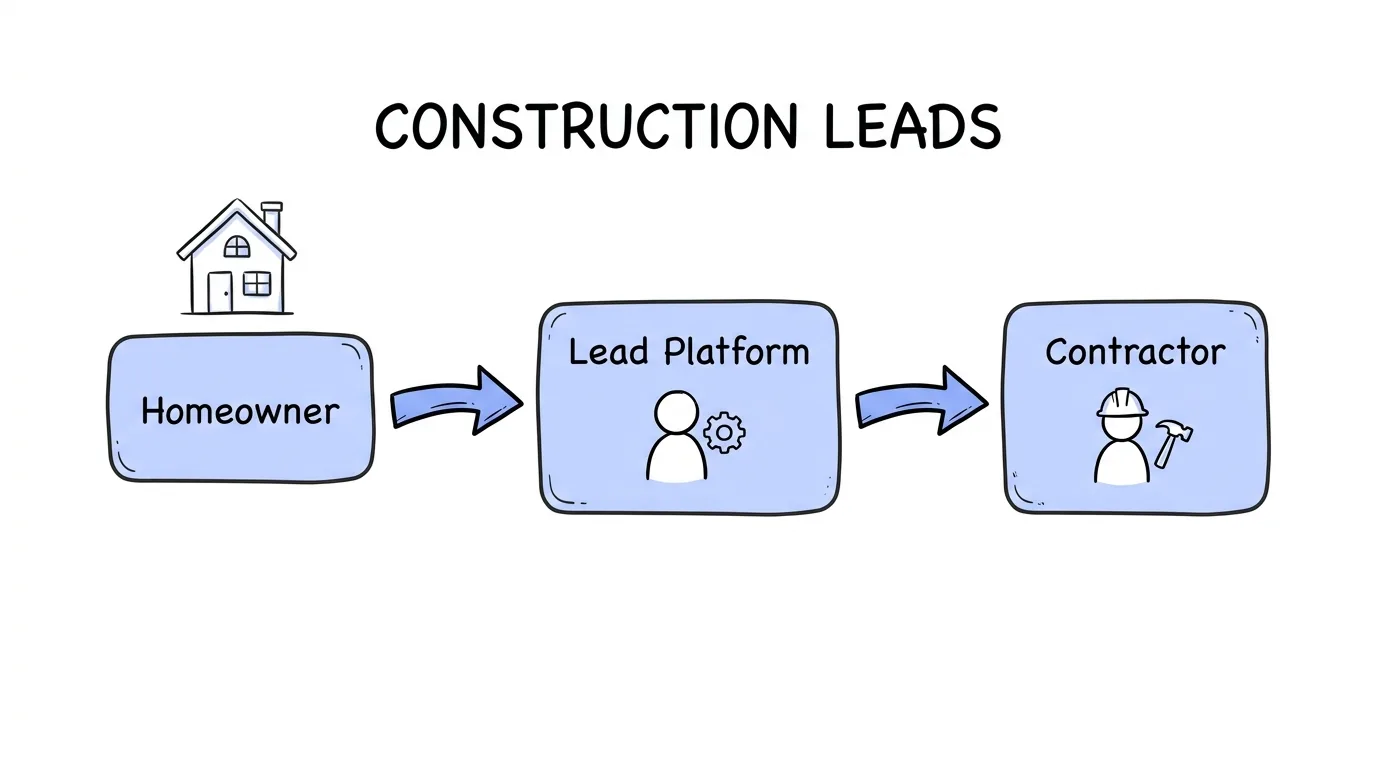
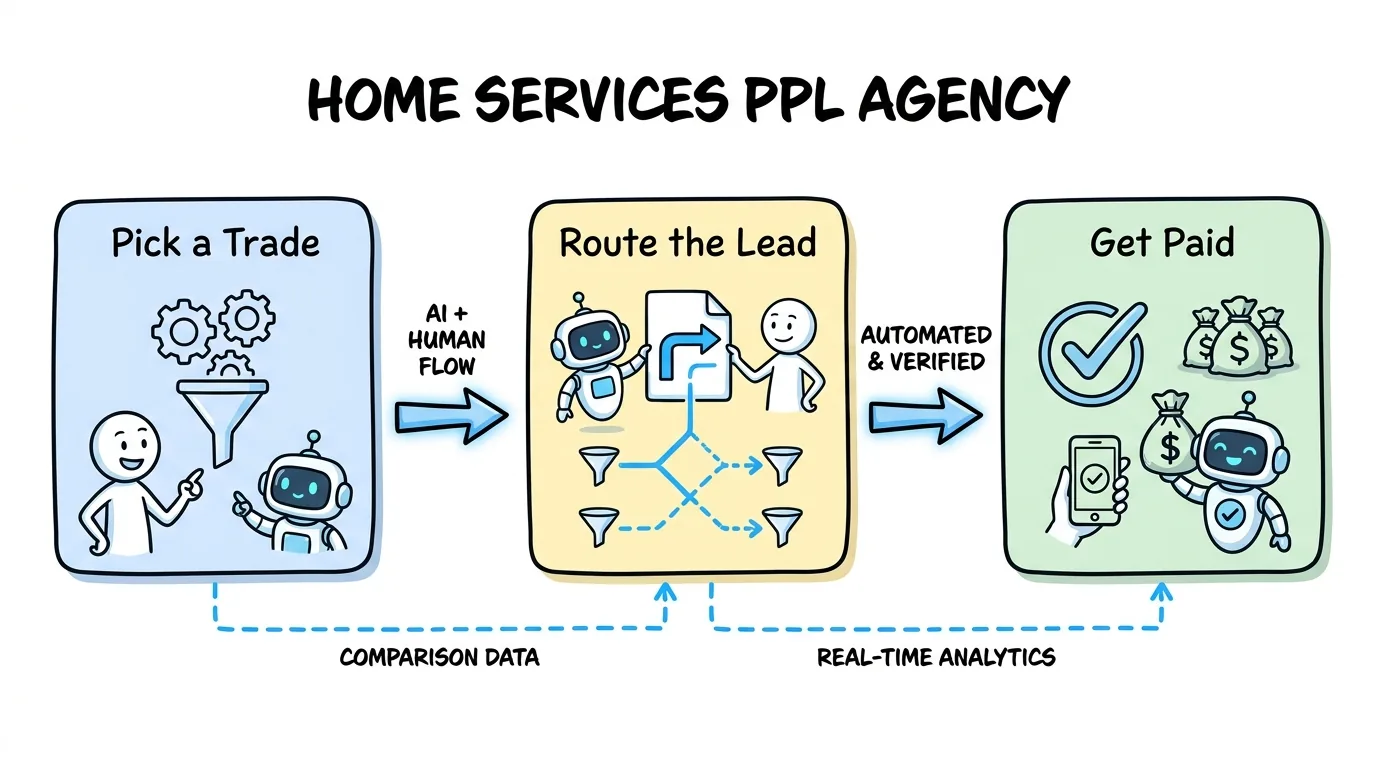
Lead Distro AI does not sell leads. It is software for the companies that generate roofing leads and route them to buyers. If you are a roofer looking to buy leads, this guide will help you judge price and quality, but you will need a lead vendor to buy from.
This guide is your complete reference for roofing leads for contractors in 2026: lead types, pricing benchmarks, sources, distribution strategies, and how to use ping post bidding to maximize revenue per lead. If you are building a full home services portfolio, read the home services lead generation guide alongside this one.
Key Takeaways
- Storm damage leads are the highest-converting roofing lead type, driven by insurance claims and homeowners who have no choice but to act quickly.
- Roofing lead prices range from $10 (shared) to $100 (exclusive live transfer), with geographic and seasonal variation driving the spread.
- Spring and summer are peak roofing season, but hail storms can spike demand in any market year-round. Agencies need surge-routing capability to capitalize on weather events.
- Ping post bidding consistently yields 50% to 100% more revenue per roofing lead compared to fixed-price shared distribution because storm-chasing contractors will bid above market rates for fresh leads in affected zip codes.
- Exclusive roofing leads close at 3x to 4x the rate of shared leads, making the premium cost rational for any contractor whose average job value exceeds $5,000.
- Speed is the entire game. A roofing contractor who calls within 5 minutes of lead submission wins the job most of the time. Distribution platforms that deliver in real time determine contractor profitability.
Types of Roofing Leads: Storm Damage, Residential, Commercial
Understanding lead type is critical for pricing, routing, and setting buyer expectations in your contractor lead generation operation.
Storm damage leads are triggered by hail, high winds, or severe weather events. These are the most urgency-driven and highest-converting roofing leads. A homeowner who just discovered hail damage on a $12,000 roof is not comparison shopping. They need a contractor with an insurance claim process and are ready to commit. Storm leads must route to buyers immediately, preferably within seconds of intake. Hail storm events in Texas, Oklahoma, Colorado, and the Midwest create concentrated lead surges where the same geographic market generates 10x to 50x normal lead volume over 24 to 72 hours.
Residential replacement and inspection leads include aging roofs (typically 20+ years old), winter damage, and homeowner-initiated inspection requests. These leads have a longer decision window of 1 to 3 weeks but are still commercially valuable. Average project values for full replacements are $9,000 to $18,000 depending on roof size and material.
Commercial roofing leads come from property managers, commercial real estate owners, and facilities managers. These jobs are larger, often $25,000 to $250,000, but require contractors with commercial experience and bonding. Commercial leads are sold at the highest prices and are best distributed to specialist buyers only.
New construction roofing leads come from builders who need subcontractors for new home developments. These are high-volume, lower-margin per job but create predictable recurring revenue when the contractor lands the builder relationship.
How Much Do Roofing Leads Cost in 2026?
The table below is based on aggregated pricing data from home services lead marketplaces and the Lead Distro AI platform. These are the current roofing lead pricing benchmarks you should use when building your agency's pricing model.
| Lead Type | Shared Lead | Exclusive Lead | Live Transfer |
|---|---|---|---|
| Storm Damage (insurance claim) | $15 - $30 | $35 - $70 | $65 - $100 |
| Residential Full Replacement | $12 - $25 | $25 - $55 | $50 - $85 |
| Residential Inspection / Repair | $10 - $20 | $18 - $40 | $35 - $65 |
| Commercial Roofing | $25 - $50 | $55 - $100 | $90 - $150 |
| New Construction (builder) | $8 - $18 | $15 - $35 | $30 - $55 |
Geographic premium: leads in major metro areas like Dallas, Houston, Denver, Chicago, and the Southeast hail belt command 30% to 50% above the ranges above. Seasonality: spring (April through June) and summer (July through August) are peak seasons and support top-of-range pricing. Late fall and winter leads in northern markets can be priced at the lower bands.
"The roofing market is one of the most predictable in home services from a demand perspective," says Rafael Hernandez, Founder and CEO of Lead Distro AI. "Storm tracking data tells you exactly where lead volume will spike 48 hours before homeowners start calling. Agencies that pre-position their buyer networks for storm surges capture the highest CPLs of any home services vertical."
Where to Buy Roofing Leads: Top Sources Compared
| Lead Source | Lead Type | Avg. CPL | Exclusivity | Best For |
|---|---|---|---|---|
| Google Local Services Ads | Replacement, Repair, Inspection | $20 - $55 | Exclusive | Direct contractor lead gen |
| Google Ads (Paid Search) | All types | $18 - $50 | Exclusive | Agencies with landing pages |
| Facebook / Instagram Ads | Replacement, Inspection | $15 - $35 | Exclusive | Visual damage content, before/after |
| Angi / HomeAdvisor | All types | $10 - $30 | Shared (3-5 buyers) | Volume, market testing |
| Storm Lead Vendors | Storm Damage | $25 - $60 | Exclusive or shared | Post-storm surges |
| Insurance Adjuster Partnerships | Storm Damage, Full Replacement | $0 - $50 referral fee | Exclusive | High-trust, high-conversion |
Google LSAs produce the strongest ROI for roofing lead generation because they display above all other results and the homeowner is already in purchase mode. For agencies, building owned landing pages for "hail damage roof repair [city]" and "emergency roof repair [city]" keywords and driving Google Ads traffic is the most reliable way to generate exclusive leads at scale.
Exclusive vs. Shared Roofing Leads: Which Is Worth It?
The exclusive vs. shared decision depends on your average job value and how fast your contractors respond to leads.
Shared leads are sold to 3 to 5 contractors. The homeowner receives multiple calls and usually hires the first contractor who responds with a strong offer. For a $10,000 roofing job, shared lead math looks like this: a contractor buys 5 shared storm leads at $20 each ($100 total), wins 1, and generates $10,000 in revenue. That is a 100x return on lead spend. Shared leads work when contractors have fast response systems in place.
Exclusive leads are sold to one contractor only. Conversion rates are 3x to 4x higher. For the same $10,000 storm replacement job, an exclusive lead at $50 that closes at 35% costs $143 per closed job. Three shared leads at $20 each with a 12% close rate cost $167 per closed job. Exclusive wins on a per-closed-job basis for high-ticket roofing work. For repairs and inspections where job values are lower, shared leads are often the more economical choice.
For agencies, premium-pricing exclusive storm damage leads and using shared pricing for repair and inspection volume is the optimal blend. Explore how this compares to other distribution models in our exclusive vs shared leads deep dive.
How Roofing Lead Distributors Use Ping Post to Maximize Revenue
Ping post lead distribution transforms a fixed-price lead sale into a real-time auction. Here is the process for roofing lead agencies:
- A homeowner submits a roofing inquiry through your intake form, specifying the service type (storm damage, replacement, inspection), address or zip code, and contact details.
- Your platform sends the ping, a partial record with service type and location but not the homeowner's contact information, to all active buyers simultaneously.
- Each buyer submits a bid within 500 milliseconds based on their current capacity in that zip code and the commercial value of the job type.
- The platform posts the full lead to the winning bidder. For shared distribution, the top N bidders each receive the lead.
- The contractor calls within seconds. The homeowner gets a fast response. You capture the maximum bid value.
Storm events make ping post especially valuable for roofing. When a hail storm hits the Denver metro, contractors in that market are willing to pay 2x to 3x their normal bid price for leads in affected zip codes because they know their close rates will be exceptional. An agency with a fixed-price model leaves that margin on the table. An agency running ping post captures it automatically.
The best ping post software for home services supports dynamic floor pricing so you never sell a storm damage lead below market value, even if only one buyer is online at 2 AM.
How to Distribute Roofing Leads to Multiple Contractors
Distributing roofing contractor lead generation to a contractor network requires four operational layers:
Geographic Assignment: Map each contractor's service area by zip code. A roofing contractor in Austin cannot serve a homeowner in San Antonio. Lead Distro AI enforces service-area boundaries automatically and routes each lead only to contractors who cover the origin zip code.
Capacity Management: Roofing crews have finite capacity. A 4-person crew can install 1 to 2 roofs per day. When a contractor hits their weekly cap, leads route to the next qualified buyer. This prevents contractor complaints about lead overflow and maintains high close rates across your network.
Lead Type Segmentation: Storm damage leads need different buyers than commercial new construction leads. Configure separate routing rules for each lead type so contractors only receive lead categories they can service and close.
Urgency-Based Routing: Storm damage leads and emergency repair leads should route on a priority track, meaning they skip the standard queue and go directly to the first available qualified buyer. Lead Distro AI supports separate routing pipelines for different urgency levels.
Start your free trial to see how the full distribution workflow functions for roofing lead agencies.
Roofing Lead Quality: How to Filter Bad Leads Before You Pay
Lead quality problems generate refund requests and damage contractor relationships. Build these five quality filters into your intake process.
Ownership Verification: Ask "Do you own the home?" on every intake form. Renters cannot authorize a roof replacement. Homeowners close at 3x the rate of renters for roofing jobs.
Project Scope: Collect whether the homeowner needs a full replacement, repair, or inspection. Scope determines which contractors receive the lead and what bid price is justified.
Insurance Claim Status: For storm damage leads, ask whether the homeowner has already filed an insurance claim or is in the process of filing. Insurance-claim leads are higher value because the budget is effectively pre-approved by the insurer.
Timeline: "When are you looking to start?" filters out leads from homeowners who are 12+ months from action. Contractors want to close, not nurture.
Phone Verification: Use real-time phone validation on intake forms to reject invalid numbers before the lead enters your system. Invalid contact information is the most common refund trigger.
How Lead Distro AI Handles Roofing Lead Distribution
Lead Distro AI is the best lead distribution software for home services for agencies that want to run contractor lead generation services across multiple trades including roofing. The platform handles the full distribution stack:
- Ping post bidding engine: Real-time auction between buyers, configurable floor prices, and transparent bid history.
- 4 distribution methods: Round Robin, Weighted, Priority/Waterfall, and Ping Post. Roofing agencies typically use Ping Post for storm leads and Weighted routing for standard residential volume.
- Geographic routing: Zip code and radius matching, service-area enforcement, and multi-market support.
- Lead scoring: Flags high-quality leads based on job scope, timeline, and contact verification signals.
- Real-time P&L reporting: Track revenue per lead, buyer close rates by trade and geography, and net margin per campaign.
Explore every feature in the interactive product tour. Pricing starts at $297/month (ping post from $497/month on Growth), and the trial includes full access to all distribution methods including ping post.
FAQ
How much do roofing leads cost in 2026?
Roofing lead prices range from $10 for a shared residential inspection lead to $150 for an exclusive commercial live transfer. Storm damage exclusive leads run $35 to $70, full replacement exclusives cost $25 to $55, and shared leads for standard residential jobs run $10 to $25. Geographic premiums add 30% to 50% in major storm-belt markets. Seasonality drives the upper range of prices in spring and summer. Use the pricing benchmarks table in this article as your baseline when setting buyer prices for your agency.
How do I generate exclusive roofing leads?
The most reliable sources for exclusive roofing leads are Google Local Services Ads and owned landing pages with Google Ads traffic. LSAs charge per verified lead and display the Google Guaranteed badge, which drives higher trust and conversion. For storm damage specifically, build landing pages targeting "hail damage roof repair [city]" and "emergency roof repair [city]" keywords in your primary markets. Pre-position your Google Ads campaigns with high-budget settings so you can capture surge traffic immediately after a storm event hits a market you cover.
What is a good close rate for roofing leads?
For exclusive storm damage leads, a 25% to 40% close rate is achievable. For shared residential leads, 8% to 15% is typical because multiple contractors are competing for the same homeowner. Commercial roofing leads close at 15% to 25% given longer sales cycles and larger project scope. Contractors who respond to leads within 5 minutes consistently achieve the top of these ranges. Delayed follow-up is the single biggest close rate killer in roofing lead generation.
How does ping post work for roofing leads?
Ping post sends a partial lead record (without contact information) to multiple buyers simultaneously, collects real-time bids, and delivers the full lead to the highest bidder. For roofing, the ping includes the lead type (storm damage, replacement, inspection), zip code, and property type. Buyers bid based on their current capacity and how much they want that specific lead. The entire process completes in under 500 milliseconds. Ping post consistently generates 50% to 100% more revenue per lead than fixed-price shared distribution for high-value lead types.
What is the best roofing lead source for contractors?
Google Local Services Ads are the highest-quality source because the homeowner initiates the contact, is already in purchase mode, and the Google Guaranteed badge increases trust. For storm damage specifically, a combination of LSAs in your core market plus purchased storm leads from specialty vendors during surge events produces the best volume-quality balance. Buying from aggregators like Angi and HomeAdvisor provides volume but yields shared leads with lower close rates. For most roofing contractor lead generation operations, the optimal source mix is 60% owned (LSAs, paid search, local SEO) and 40% purchased to fill capacity gaps.
Conclusion
Roofing leads for contractors are among the most commercially valuable in home services because of high average job values, event-driven demand from storm activity, and homeowner urgency that compresses the decision cycle. Whether you are a roofing contractor building your own lead pipeline through Google LSAs and local SEO, or a lead agency selling storm damage and residential replacement leads to a contractor network, the operational fundamentals are consistent: generate quality leads, segment by type and urgency, price based on exclusivity and job value, and distribute instantly.
Ping post bidding is the mechanism that converts good lead generation into exceptional agency margin, particularly during storm surge events when contractor demand spikes and buyers will outbid each other for fresh leads in affected zip codes. Combined with geographic routing, capacity caps, and real-time P&L tracking, it creates a distribution operation that scales with demand rather than against it.
This post is part of the home services cluster. See our plumbing lead generation and HVAC lead generation guides for the other high-volume trades, and the home services lead generation pillar for the full strategy overview.
Ready to try Lead Distro AI free for 7 days and distribute roofing leads for contractors with real-time ping post bidding? Set up geographic routing, buyer caps, and your first ping post campaign in under 10 minutes. Credit card required.
About the Author
Founder & CEO of Lead Distro AI & Great Marketing AI
UC Berkeley graduate and former software engineer at Microsoft. Rafael built Lead Distro AI after managing over $10M in ad spend for performance marketing agencies (pay-per-lead and pay-per-call), including running campaigns for Neil Patel. He combines deep software engineering expertise with hands-on performance marketing experience to build tools that help these agencies scale profitably.
About Lead Distro AI
Lead Distro AI: AI-Powered Routing for Your Leads, Calls, and Appointments
The modern platform for pay-per-lead and pay-per-call agencies. Route, score, and deliver leads with AI-powered automation and real-time P&L tracking. Built for performance marketing agencies and lead buyers across legal, insurance, mortgage, solar, and home services verticals.
4 Distribution Methods
Waterfall, Round Robin, Weighted, Ping-Post
Ping-Post Auctions
Real-time bidding with sub-second routing
Real-Time P&L Reporting
Track revenue, costs, and profit per campaign
Call Tracking
Assign tracking numbers, record calls, and attribute conversions
Lead Scoring
Score every lead before routing to maximize conversion
Partner Portal
Self-serve dashboard for buyers to track leads