Local Lead Generation Business: Rank and Rent vs PPL
Start a local lead generation business: compare rank and rent with pay per lead and pay per call, see the break-even math, and follow a 90-day plan.

Rafael Hernandez
Founder & CEO
Ex-Microsoft SWE · $10M+ PPL ad spend
I hope you enjoy reading this blog post. If you want to try Lead Distro AI for free, click here.
Author: Rafael Hernandez | Founder & CEO of Lead Distro AI
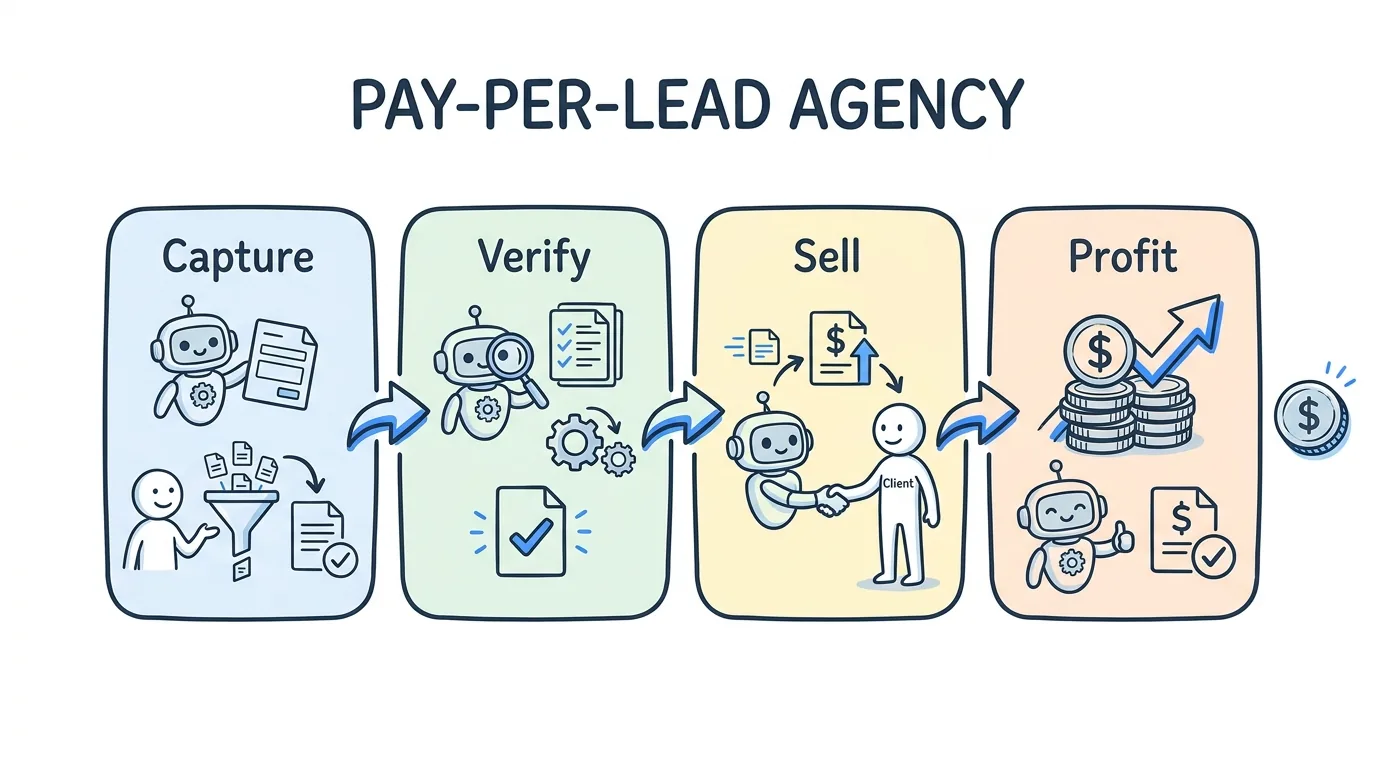
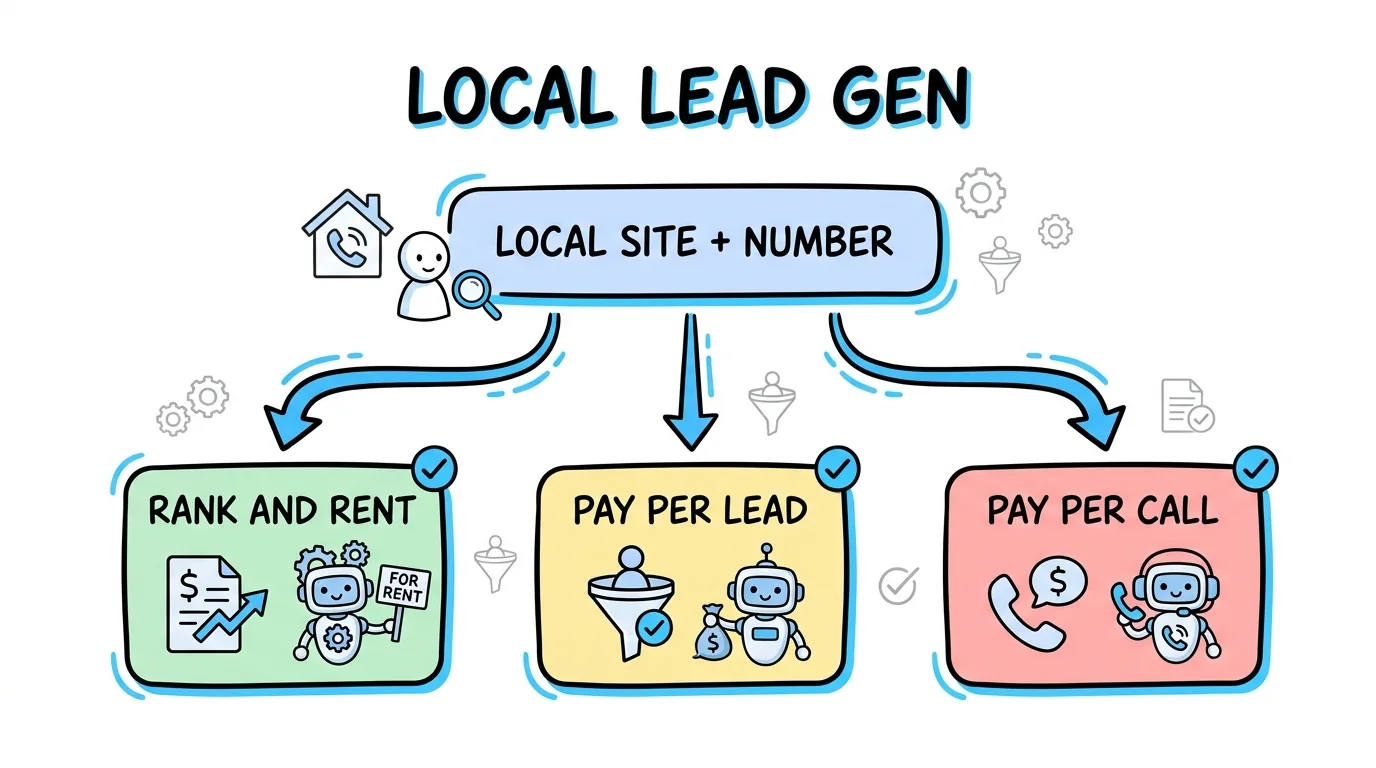
A local lead generation business builds websites and phone numbers that attract searches for one trade in one city, then earns money from the inquiries they produce. You can rent the whole site to a single business (rank and rent), or sell each lead or call to one or several buyers (pay per lead and pay per call).
Both models run on the same asset, a page that ranks and a number that rings. The money comes from how you package the output. The Lead Response Management Study, run with MIT's James Oldroyd on InsideSales.com data, found a 21-fold drop in the odds of qualifying a prospect when the response stretched from 5 to 30 minutes (Lead Response Management). Speed matters under either model, and it is the first thing that breaks when a site grows past one buyer. This guide compares the two models, shows the break-even math, and ends with a 90-day plan. If you want the wider picture first, start with our guide on how to start a lead generation company.
In short: rank and rent gives you steady, flat income from one tenant. Pay per lead and pay per call give you more upside per site, but you must route, cap, bill and handle returns for every buyer.
Key Takeaways
- A local lead generation business sells outcomes, not websites. The product is a call, a form fill or a booked appointment from a searcher in one city.
- Rank and rent is one buyer, one flat fee. It is simple to run and capped at the rent one tenant will pay.
- Pay per lead and pay per call sell to one or many buyers. Revenue scales with accepted leads, and so does the operations work.
- Break-even is a simple ratio. Pay per lead beats a flat rent once accepted leads per month exceed the rent divided by your price per lead.
- Routing, caps and returns become the bottleneck at three or more buyers. That is the point where spreadsheets stop working.
What a Local Lead Generation Business Sells
A local lead generation business owns a traffic source and sells what that source produces. The source is usually a site or page built for one search, such as "emergency plumber in Tampa", plus a tracking phone number and a form. A homeowner finds the page, calls or submits, and a local service business pays for that contact.
You can package the output three ways. You can rent the entire site and number to one business for a flat monthly fee. You can sell each form lead at a price per lead. Or you can sell each qualified inbound call at a price per call. A fourth option, selling booked meetings, is covered in our guide to pay per appointment lead generation.
This is the full-stack end of the three models in our breakdown of lead generation business models: you own the traffic, so you carry the cost and keep the margin.
Rank and Rent vs Pay Per Lead vs Pay Per Call
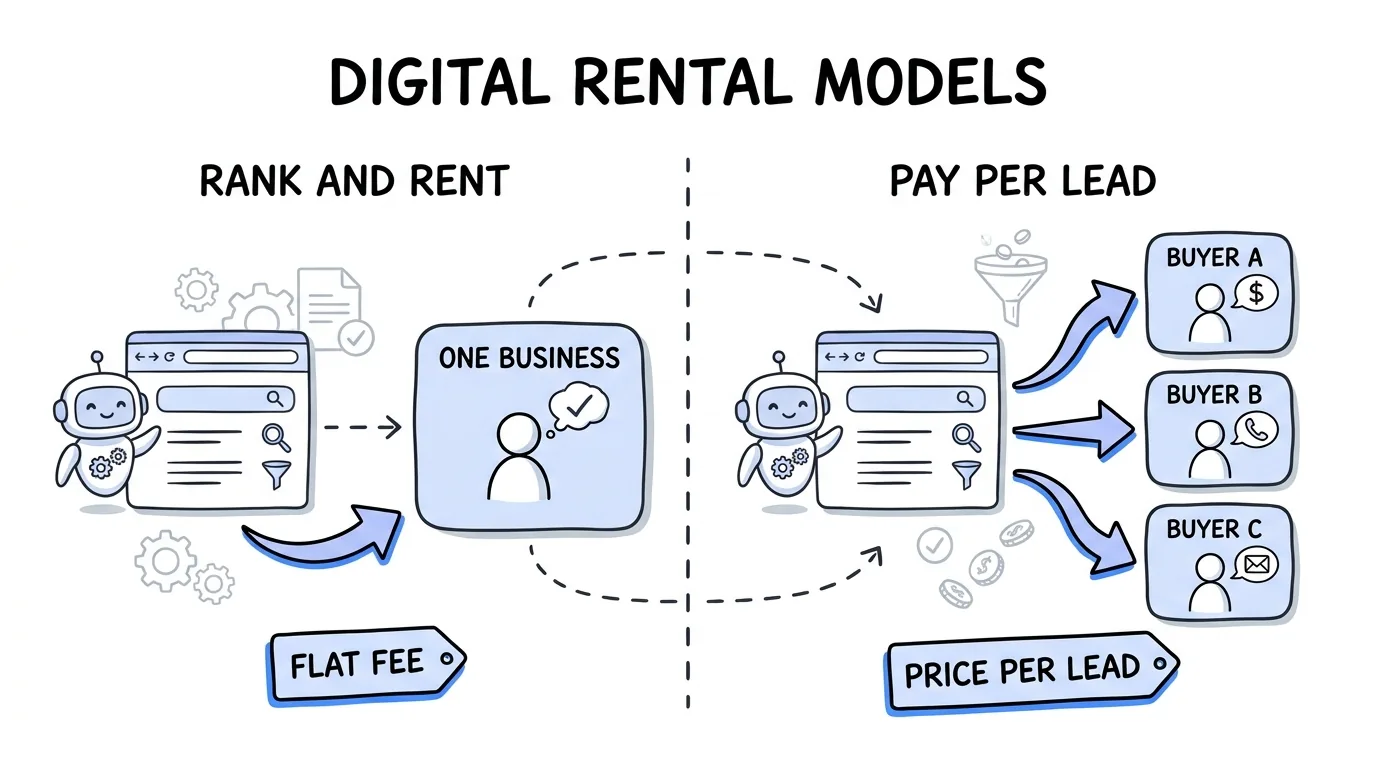
The three models share a front end and differ in how they sell the result. Rank and rent hands the whole asset to one tenant. Pay per lead and pay per call keep the asset and sell its output.
| Rank and rent | Pay per lead | Pay per call | |
|---|---|---|---|
| What the buyer gets | The whole site and number | Each form lead | Each qualified inbound call |
| How you bill | Flat monthly fee | Price per accepted lead | Price per call over a minimum length |
| Buyers per site | One | One or several | One or several |
| Revenue ceiling | The rent one tenant will pay | Volume times price | Volume times price |
| Main risk | Tenant cancels, site loses the ranking | Returns and disputes | Call quality and short calls |
| Best fit | Slow, steady income, little ops work | Sellers who can route and invoice | Trades where the phone closes the job |
Rank and rent searchers are mostly SEO freelancers who want passive income from a site. The sellers who build a durable business tend to graduate to per-lead or per-call billing once a site proves it can deliver volume. For the pricing side, see how to price leads.
Local Lead Gen Economics Side by Side
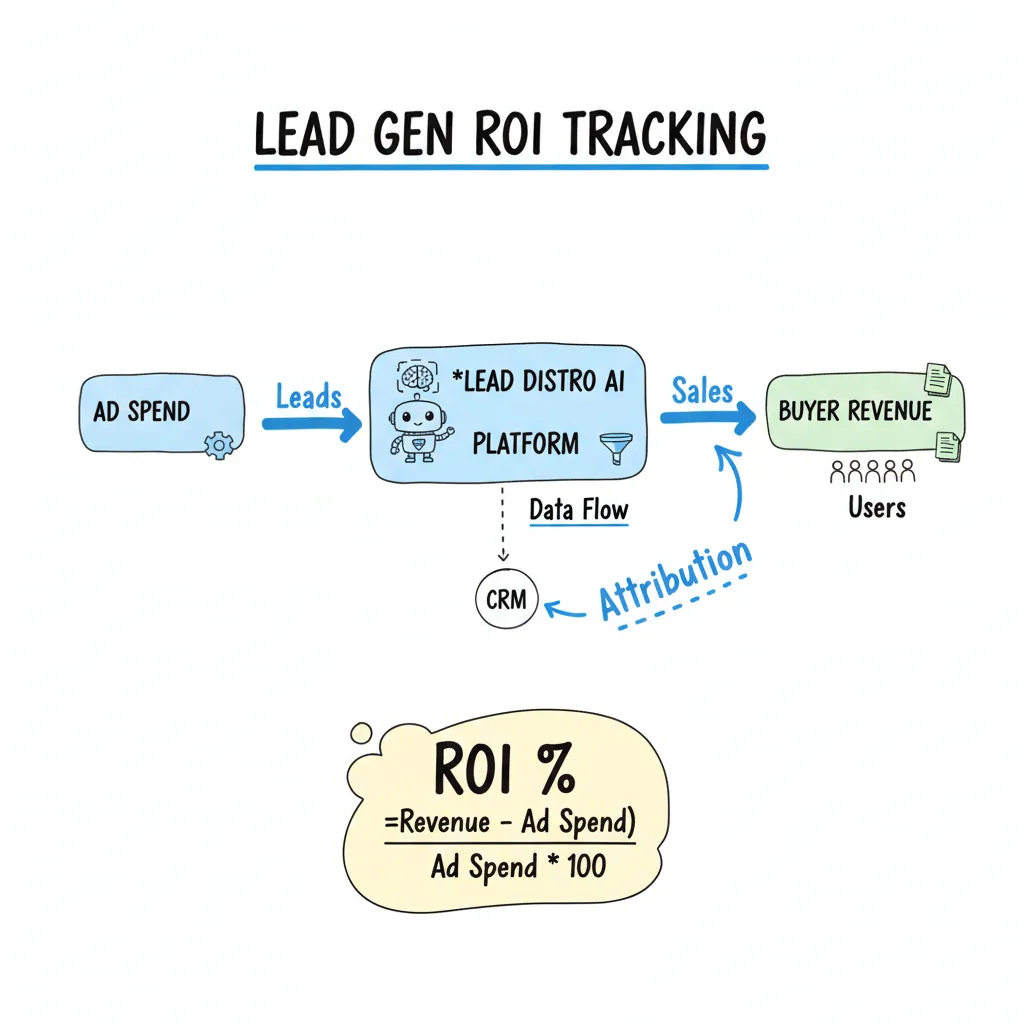
Local lead gen economics reduce to two formulas, so you can compare the models without guessing at benchmarks. For rank and rent, monthly revenue is the flat fee times the number of tenants, and with one tenant per site that is just the fee. For per-lead billing, monthly revenue is accepted leads times the price per lead, after returns.
That gives you a break-even point: accepted leads per month = flat rent divided by price per lead. With round numbers for arithmetic only, a $1,000 rent and a $50 price per lead break even at 20 accepted leads a month. If your site reliably delivers more than that, selling by the lead earns more. If it delivers fewer, the rent is safer.
Two costs sit outside the formula. Pay per lead adds returns, which cut accepted volume, and the work of billing every buyer. Rank and rent adds churn risk, because one tenant leaving takes 100% of the revenue with it. Track both, and measure your real numbers per site rather than trusting any outside average.
What Google Allows: Rank and Rent SEO Risks
Rank and rent SEO lives or dies on staying inside Google's rules. Two policies matter most.
First, Google Business Profile. Google's guidelines say to create a profile for your "actual, real-world location" and state that P.O. boxes or mailboxes at remote locations are not acceptable, and that service-area businesses cannot list a virtual office unless it is staffed during business hours (Google Business Profile guidelines). A lead site with an invented storefront address is a policy risk. The map listing belongs to the real business that rents or buys from you.
Second, doorway pages. Google's spam policies say "doorway abuse is when sites or pages are created to rank for specific, similar search queries," and list multiple domains or pages aimed at specific cities that funnel users to one page as an example (Google Search Central spam policies). Search Engine Journal's Roger Montti notes that renting ranking domains is old, at least fifteen years by his account (Search Engine Journal), so expect scrutiny of rented ranking sites. Build pages that help a visitor, not a hundred copies with the city name swapped.
Pay Per Lead SEO: Building Pages That Earn Leads
Pay per lead SEO, in the sense that matters here, means building your own ranking pages and selling the leads they produce. You own the asset, and your cost per lead falls as pages mature. The trade-off is time: months pass before a new page ranks, so cash flow starts slow.
Buyers who search for pay per lead services are hunting for a vendor that bills per lead. Your local pages are the product that vendor would run, which is why a good page answers the buyer's customer, not the buyer. Give the homeowner a clear service description, real service-area detail, a visible phone number and a short form.
Track every lead back to its page and query so you know which pages earn their keep. A call tracking number per site, with dynamic number insertion for source-level attribution, does this for phone leads. Our pay-per-call software page covers recording, routing and per-source reporting. Calls are billed on usage: a monthly fee per number plus a per-minute rate on inbound calls.
Choosing a Niche and a City for Your Local Lead Generation Business
Pick the trade and the city together, because the pair decides everything: what buyers will pay, how hard the page is to rank, and how many buyers you can find. Look for trades where one job is worth a lot to the buyer and the customer calls instead of browsing. Roofing, HVAC, plumbing, water damage and personal injury all fit that pattern, and they differ widely in competition and compliance.
Run three checks before you build. First, read the search results for your target phrase: if the top results are strong local brands with deep sites, expect a long climb. Second, count the local buyers in the city. A niche with only one possible buyer forces you into rank and rent. Third, ask two or three buyers what they would pay, in writing, before you spend on the site.
For a ranked view of verticals, see our guide to the best lead generation niches.
When One Site Has Several Buyers: Routing, Caps, Billing and Returns
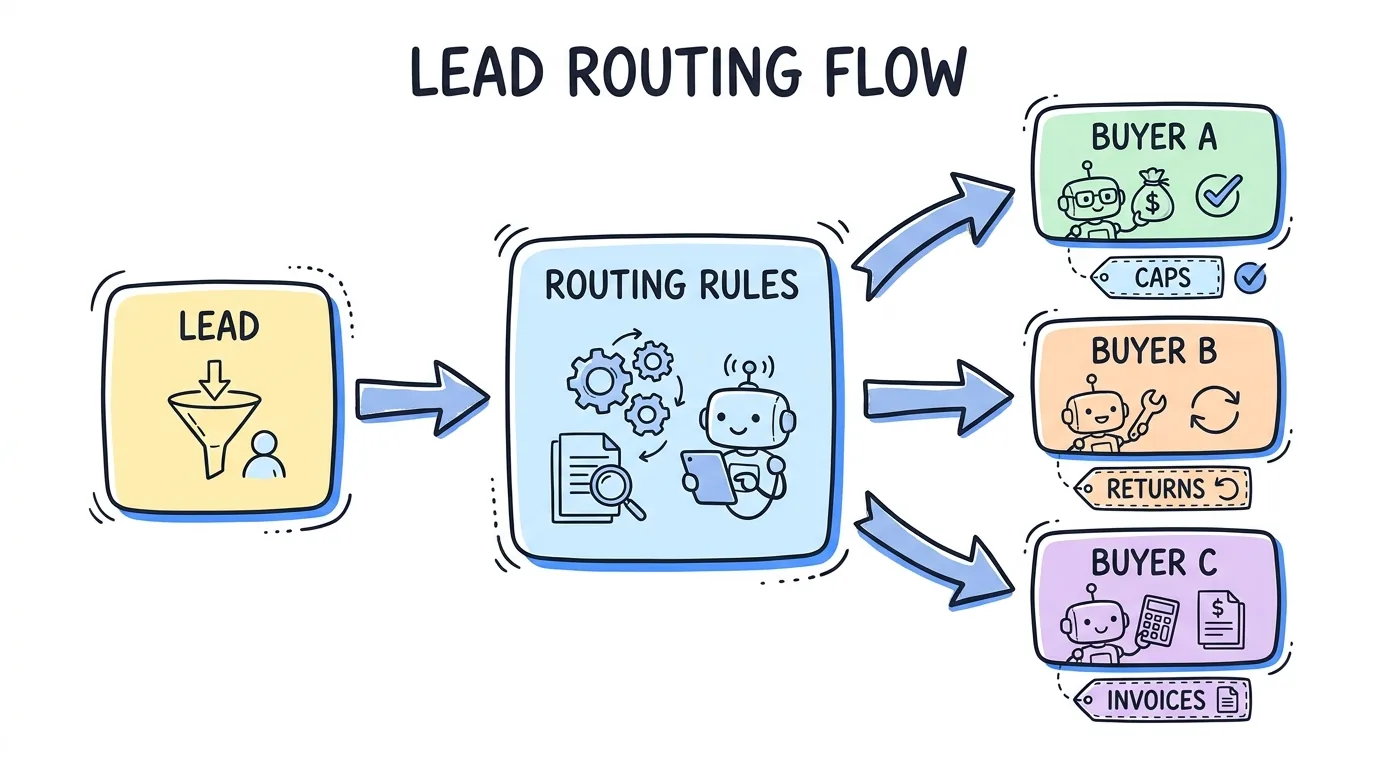
The moment a site serves three or more buyers, manual delivery breaks. Someone has to decide which buyer gets the next lead, stop a buyer who hit their daily cap, mark a bad lead as returned, and invoice everyone at month end. Doing that in spreadsheets costs you speed, and speed is where the 21-fold qualification gap from the Lead Response Management Study bites.
A distribution platform handles this in four jobs: routing, caps and hours, returns, and billing. Round robin lead distribution rotates leads equally among buyers. Weighted and priority (waterfall) routing favor your best-paying buyers first.
On Lead Distro AI, Starter at $297 a month includes round robin, weighted and priority routing for up to 20 buyers. Ping-post, running your own ring tree and white-label start at Growth, $497 a month. Call Tracking Only at $147 a month covers calls without lead distribution. Every plan starts with a 7-day free trial.
Your First 90 Days Checklist
Use this order. It puts the buyer before the build, which is the cheapest way to avoid a site nobody wants.
- Days 1 to 14: choose the trade and city, read the search results, and talk to at least three local buyers about price and lead definition.
- Days 15 to 30: write the buyer terms, covering what counts as a lead, return rules, caps and payment timing.
- Days 31 to 45: build the site with a tracking number, a short form and service pages written for the homeowner.
- Days 46 to 60: launch, route the first leads by hand, and time your response to every inquiry.
- Days 61 to 90: measure leads, accepted leads and returns per buyer, then decide per site: keep renting, sell by the lead, or shut it down.
Do not scale to a second city until one site has covered its costs.
FAQ
What is a local lead generation business?
A local lead generation business builds sites, pages and phone numbers that rank for a service in one area, then sells the leads or calls they produce to local companies. Some operators rent the whole site to one company for a flat fee. Others sell each lead or call to one or several buyers. The seller owns the traffic source and takes on the cost of getting it, which means the margin is whatever is left after ads, hosting, tracking and any returns. Buyers are local trades and service firms such as roofers, plumbers and law firms.
How does a local lead gen business make money?
It earns revenue in one of two ways. In rank and rent, one business pays a flat monthly fee for the site and number. In pay per lead or pay per call, buyers pay for each accepted lead or qualified call. Pay per lead scales with volume but needs routing, caps, billing and a return process. Rank and rent has fewer moving parts but a lower ceiling. Many sellers start with one model and move to the other once a site proves its volume.
Is rank and rent still worth it?
It can work when a site reliably ranks and a tenant pays every month, but all your revenue depends on one tenant and one ranking. Google's rules on doorway pages and fake business addresses add risk. Compare it with pay per lead using the break-even formula: accepted leads per month equals rent divided by price per lead. If your site clears that number, sell by the lead. If it never does, a flat rent is the safer choice, because running pay per lead services for several buyers adds billing work.
What is pay per lead SEO?
Pay per lead SEO usually means building your own ranking pages and selling the leads they produce. You own the pages, so your cost per lead falls as they mature, though results take months. It can also mean hiring an SEO vendor that bills per lead, which needs written terms on what counts as a lead, who tracks it, and how duplicates and returns are handled. Without those terms, attribution disputes are the usual way it fails.
How much should you charge for each lead?
Price from the buyer's side first: what a closed job is worth to them and how many leads it takes to win one. Then check your own floor, which is your cost per lead divided by one minus your target margin. The price must sit between the two, with room for returns. Review it monthly using return rate and fill rate by buyer. Our guide to how to price leads walks through the full method with a worked example.
What is the 5 minute rule for leads?
It is the idea that contacting a lead within five minutes sharply improves your odds of reaching and qualifying them. The Lead Response Management Study reported a 21-fold decrease in the odds of qualifying a prospect when response time stretched from 5 to 30 minutes. For a seller with several buyers, automatic routing is how you hit that window every time, even at night or when one buyer is slow to answer. A manual process cannot do that.
Conclusion
A local lead generation business is a choice between a steady rent and a scalable per-lead or per-call business. Rank and rent suits one tenant and a quiet life. Pay per lead and pay per call suit sellers who will build the routing, caps, billing and returns that several buyers need.
Start with the buyer, price with the break-even formula, and keep your pages helpful enough to survive Google's spam rules. When a site serves more than two buyers, start a free trial of Lead Distro AI and route your first leads automatically.
Ready to route leads and calls from your first local site? Start your 7-day free trial and send your first lead to a buyer in minutes.
About the Author
Founder & CEO of Lead Distro AI & Great Marketing AI
UC Berkeley graduate and former software engineer at Microsoft. Rafael built Lead Distro AI after managing over $10M in ad spend for performance marketing agencies (pay-per-lead and pay-per-call), including running campaigns for Neil Patel. He combines deep software engineering expertise with hands-on performance marketing experience to build tools that help these agencies scale profitably.
About Lead Distro AI
Capture, Route, and Sell Every Lead, Call, and Appointment
Capture, route, and sell leads, calls, and appointments from one platform, with funnels, call tracking, ping-post, and billing built in. Set it all up in minutes by chatting with AI.
Funnels
Quiz, form, appointment, VSL, and webinar templates
Call Tracking
Tracking numbers, call recordings, and per-call billing
4 Distribution Methods
Priority/Waterfall, Round Robin, Weighted, Ping-Post
Ping-Post and Live Bidding
Sell each lead and call to the highest bid
Real-Time P&L
Revenue, cost, and profit per campaign
Partner Portal
Your Destinations see their own leads and results