How Does Call Tracking Work? A Technical Breakdown
How does call tracking work? A step-by-step technical breakdown of phone call tracking: tracking numbers, dynamic number insertion, routing, and attribution.

Rafael Hernandez
Founder & CEO
Ex-Microsoft SWE · $10M+ PPL ad spend
I hope you enjoy reading this blog post. If you want to try Lead Distro AI for free, click here.
Author: Rafael Hernandez | Founder & CEO of Lead Distro AI
Call tracking works by assigning a unique phone number to each marketing source, then recording what happens on every call placed to those numbers. When a visitor lands on your site, dynamic number insertion swaps in a tracking number tied to how they arrived (a Google ad, an organic search, a Facebook campaign), the call routes to your team or buyer, and the platform logs the source, duration, and outcome. That data is what turns an anonymous ring into attributable revenue. In short, phone call tracking is the bridge between the click that started a journey and the conversation that closed it.
This matters because phone calls still convert. Invoca's analysis of 60 million calls found that 61% of callers reach a live person and 37% of digital-marketing phone leads convert during the call, while BIA Advisory Services estimates that phone calls influence roughly $1 trillion in U.S. consumer spending. This technical breakdown walks through every stage of how phone call tracking works: number provisioning, dynamic number insertion, routing, attribution, and analytics. If you run campaigns, Lead Distro AI handles all five stages alongside data-lead distribution in one platform.
Key Takeaways
- Call tracking assigns a unique number to each source so every inbound call can be traced back to the ad, keyword, or campaign that produced it.
- Dynamic number insertion (DNI) is the engine that swaps numbers on your website per visitor, enabling visitor-level phone call tracking.
- Routing and IVR decide where the call goes and whether it qualifies before a person ever answers.
- Attribution closes the loop by matching the call record to the original click, which is how marketers prove phone ROI.
- Analytics and billing turn calls into data: duration, recording, AI scoring, and usage-based charges per number and per minute.
The Call Tracking Pipeline
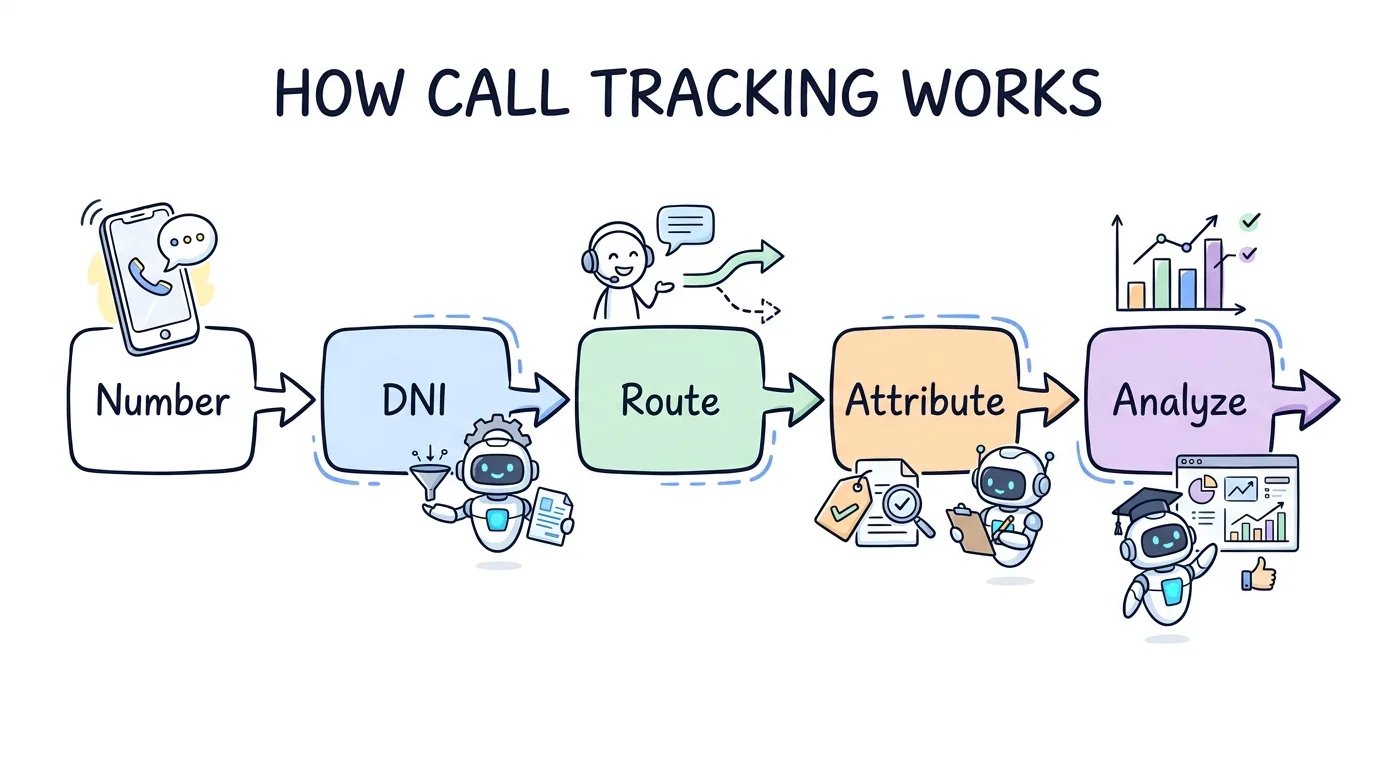
Phone call tracking is not one feature but a five-stage pipeline, and every stage adds a layer of data. Understanding the stages is the fastest way to evaluate any call tracking system.
- Number provisioning: Unique tracking numbers (DIDs) are assigned to sources or visitors.
- Dynamic number insertion: Numbers are swapped on the page based on traffic source.
- Routing and IVR: The call is screened and sent to the right destination.
- Attribution: The call is matched back to its source, campaign, and keyword.
- Analytics and billing: Duration, recording, scoring, and charges are recorded.
Each stage depends on the one before it. Skip provisioning and there is nothing to swap; skip attribution and the call is just a ring with no story. For the plain-English version of the concept first, read what is call tracking.
Tracking Numbers and Dynamic Number Insertion
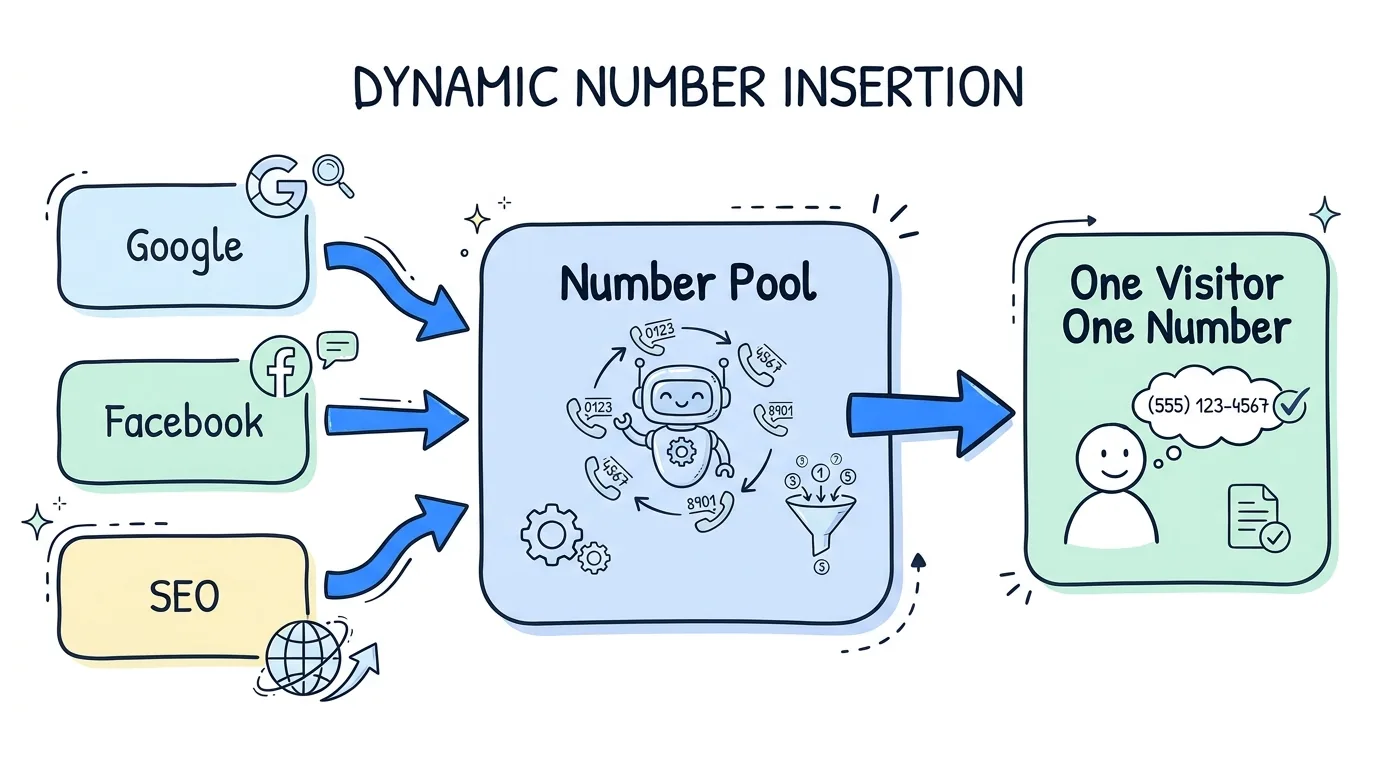
The first two stages create the identity of every call. Number provisioning assigns phone numbers (called DIDs) from a carrier pool. Each call tracking number maps to a source: you can use a static call tracking number for a single channel like a billboard, or a pool of numbers for digital traffic.
Dynamic number insertion (DNI) is what makes visitor-level phone call tracking possible. A small script on your site detects how each visitor arrived and shows them a number from the pool, so two people on the same page see different numbers. When either one calls, the platform already knows the source. This is why a pool of numbers, not just one, is required for accurate digital attribution. For the deep dive, see our guide to dynamic number insertion.
Call Routing and IVR Screening
Once a call comes in, routing decides where it goes and IVR decides whether it should. Routing can be as simple as forwarding to one line or as advanced as a ring tree that tries multiple buyers in sequence or splits calls by geography, time of day, and capacity. IVR (interactive voice response) plays a short menu that confirms intent and eligibility before connecting the caller, which filters out misdials and unqualified traffic.
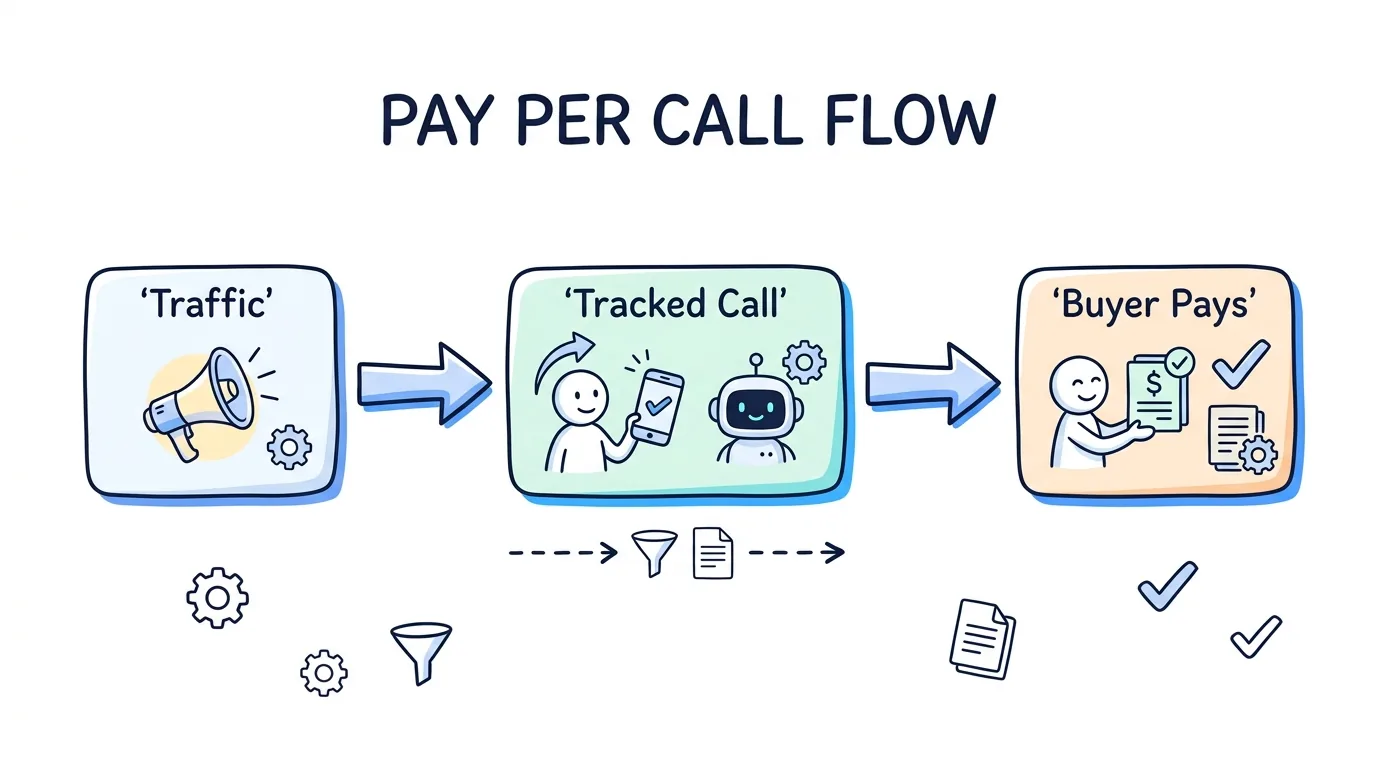
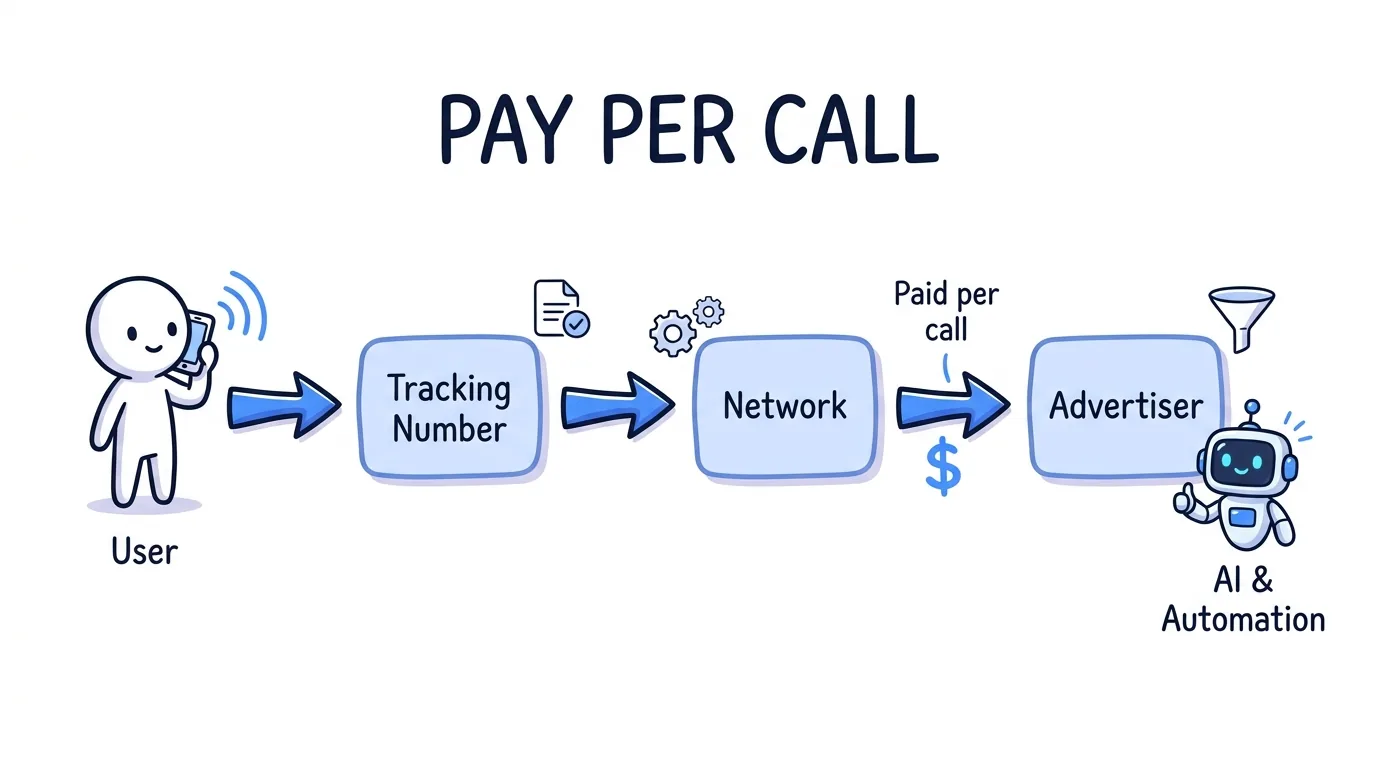
For pay-per-call operations, this stage is where a call becomes billable or gets rejected. A modern platform applies the same four distribution methods used for data leads (round robin, weighted, priority/waterfall, and ping-post) to live calls. See how routing logic is built in our guide to call routing software.
Attribution: Tying Each Call to Its Source
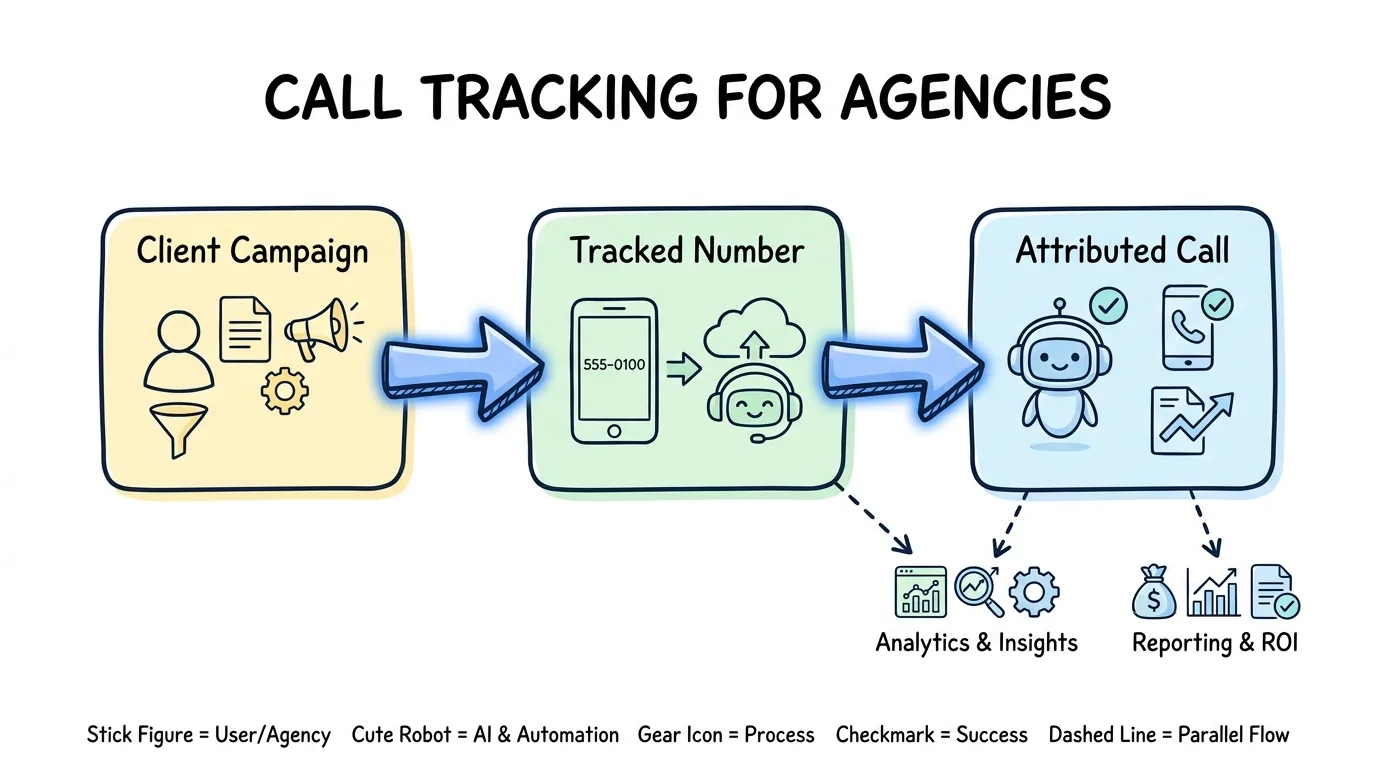
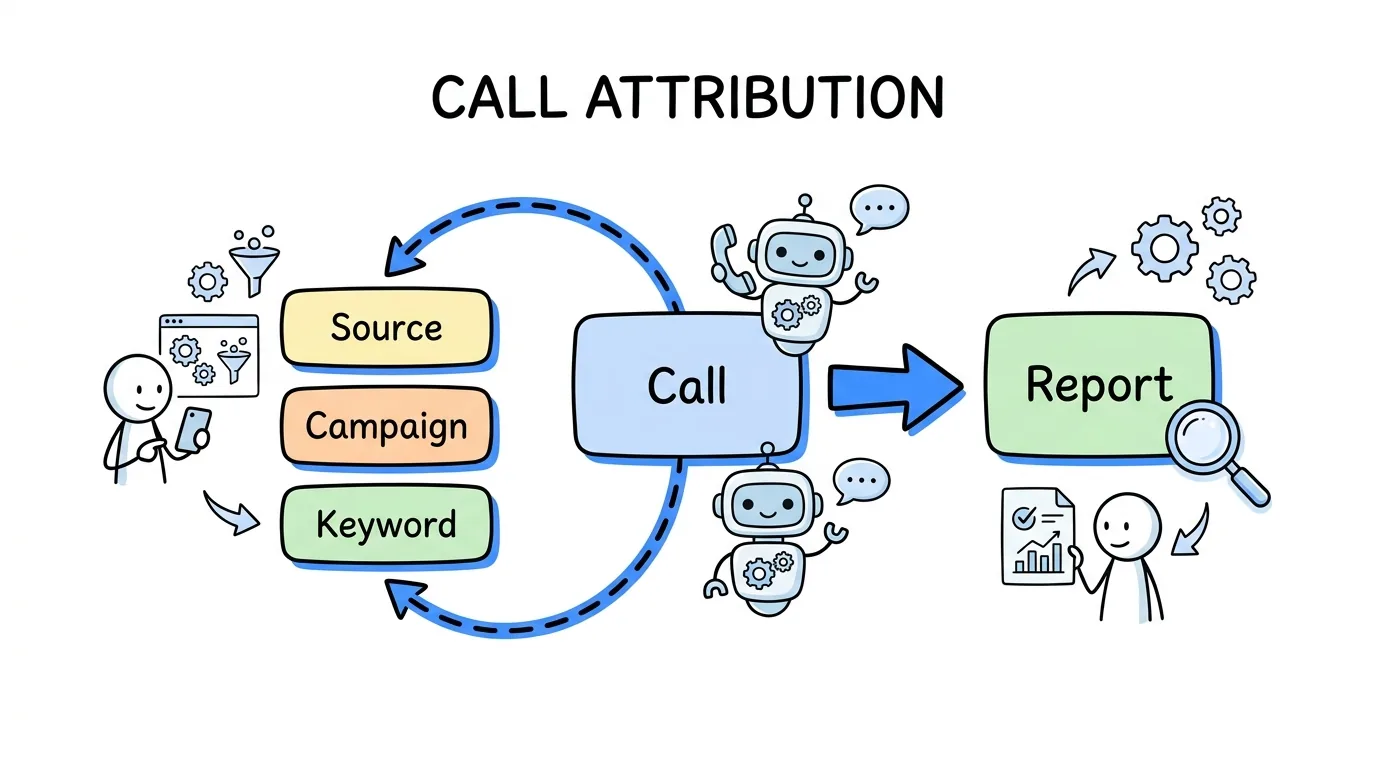
Attribution is the stage that proves marketing ROI. Because DNI tagged the visitor with a source at the start, the platform can match the completed call back to the exact ad, campaign, keyword, and landing page that drove it. With Google Ads, the call is tied to the gclid so conversions import back into the ad account and Smart Bidding can optimize toward calls, not just clicks.
This is the difference between knowing you got 50 calls and knowing which campaign produced the 12 that closed. Marketers who track phone conversions calculate cost per lead far more accurately, since calls are often the highest-converting channel. Our guide to marketing call tracking covers campaign-level attribution in depth.
Analytics, Scoring, and Billing
The final stage turns calls into usable data. The platform records duration, timestamp, caller location, and recording or transcription, then rolls them into call analytics and can score the call for quality. AI scoring grades a call in real time so low-quality calls are flagged before a buyer is billed for them.
This stage is also where call tracking costs live. Pricing is usage-based: a per-number monthly fee plus a per-minute rate for inbound calls, charged on top of the platform subscription. Budgeting accurately means watching both your number pool size and your call minutes. For a full pricing comparison across vendors, read call tracking software pricing.
Static Numbers vs Dynamic Number Insertion
The biggest setup choice in call tracking is whether to use static numbers or DNI. Static numbers are simple and fine for offline channels; DNI is required for visitor-level digital attribution.
| Factor | Static Number | Dynamic Number Insertion |
|---|---|---|
| Best for | Billboards, radio, print | Website and digital traffic |
| Attribution depth | Channel level | Visitor and keyword level |
| Numbers needed | One per channel | A pool of numbers |
| Setup | Paste a number | Install a small script |
| Google Ads optimization | Limited | Full gclid import |
Most agencies use both: static numbers for offline media and DNI for everything driven by clicks.
How Lead Distro AI Tracks Calls
Lead Distro AI is built for both pay-per-lead and pay-per-call agencies, plus lead brokers and lead buyers and sellers, so calls and data leads run through one system instead of two. It provisions numbers, performs dynamic number insertion, screens calls with IVR, and routes them with four distribution methods, then scores each call with AI in under a second.
"Most teams treat a phone call like a black box," says Rafael Hernandez, Founder and CEO of Lead Distro AI. "Call tracking opens the box. Once you can see the source, the duration, and the quality of every call, you stop guessing which campaign actually pays and start routing budget to it."
Plans start at $297 per month, with call tracking priced on usage (a per-number monthly fee plus a per-minute inbound rate) on top of the flat subscription. A real-time P&L dashboard shows revenue, cost, and margin per source and per buyer. Explore call tracking or see current pricing tiers.
Frequently Asked Questions
How does call tracking work?
Call tracking works by assigning unique phone numbers to your marketing sources and logging every call placed to them. Dynamic number insertion swaps numbers on your website per visitor, so when someone calls, the platform already knows the ad, keyword, or campaign that drove them. The call is then routed, optionally screened by IVR, and recorded with its source, duration, and outcome. That data ties phone conversations back to the marketing that produced them.
What is dynamic number insertion in call tracking?
Dynamic number insertion (DNI) is a script that shows each website visitor a different tracking number based on how they arrived. Two visitors on the same page see different numbers, so a call can be attributed to a specific source, campaign, and keyword rather than just a channel. DNI requires a pool of numbers and is the core technology behind visitor-level phone call tracking, especially for paid search where keyword-level attribution matters.
Does phone call tracking work with Google Ads?
Yes. Phone call tracking integrates with Google Ads through the gclid, the click identifier Google attaches to each ad click. When a tracked call comes in, the platform matches it to the gclid and imports the conversion back into Google Ads. That lets Smart Bidding optimize toward calls, not just clicks or form fills, which is essential for pay-per-call campaigns where the phone call is the conversion event.
How many tracking numbers do I need?
For offline channels, one static number per channel is enough. For digital traffic using dynamic number insertion, you need a pool sized to your concurrent visitors so each active visitor can hold a unique number. A common rule is one number per simultaneous visitor during peak traffic. Too small a pool causes numbers to recycle too quickly and blurs attribution, while an oversized pool raises your usage-based costs.
Is call tracking accurate?
Call tracking is highly accurate when the number pool is sized correctly and DNI is installed properly. Errors usually come from pools that are too small, which force numbers to recycle before attribution completes. Properly configured, call tracking ties calls to source, campaign, and keyword reliably, and IVR plus duration thresholds filter out misdials. Accuracy is why marketers trust call data to calculate cost per lead and optimize ad spend.
How does Lead Distro AI track calls?
Lead Distro AI runs the full call tracking pipeline in one platform: it provisions numbers, performs dynamic number insertion, screens calls with IVR, routes them with four distribution methods, and scores each call with AI in under a second. Calls and data leads share one buyer network and one real-time P&L dashboard. Plans start at $297 per month, with call tracking priced on usage (per number and per minute) on top of the flat subscription.
The Bottom Line
How does call tracking work? It runs a five-stage pipeline: provision unique numbers, swap them with dynamic number insertion, route and screen the call, attribute it to a source, then record and bill it. Each stage adds data, and together they turn a phone call from an untraceable ring into the most measurable, highest-intent lead you have. The agencies that win treat phone call tracking as core infrastructure, not an add-on, because the call is often where the money is actually made.
Want call tracking and data-lead distribution in one platform? Start your 7-day free trial of Lead Distro AI or take the product tour to see number pools, routing, and call scoring in action.
About the Author
Founder & CEO of Lead Distro AI & Great Marketing AI
UC Berkeley graduate and former software engineer at Microsoft. Rafael built Lead Distro AI after managing over $10M in ad spend for performance marketing agencies (pay-per-lead and pay-per-call), including running campaigns for Neil Patel. He combines deep software engineering expertise with hands-on performance marketing experience to build tools that help these agencies scale profitably.
About Lead Distro AI
Lead Distro AI: AI-Powered Lead Distribution & Call Tracking That Maximizes ROI
The modern platform for pay-per-lead and pay-per-call agencies. Route, score, and deliver leads with AI-powered automation and real-time P&L tracking. Built for performance marketing agencies and lead buyers across legal, insurance, mortgage, solar, and home services verticals.
4 Distribution Methods
Waterfall, Round Robin, Weighted, Ping-Post
Ping-Post Auctions
Real-time bidding with sub-second routing
Real-Time P&L Reporting
Track revenue, costs, and profit per campaign
Call Tracking
Assign tracking numbers, record calls, and attribute conversions
AI Lead Scoring
Score every lead before routing to maximize conversion
Partner Portal
Self-serve dashboard for buyers to track leads