Pay Per Call vs Pay Per Lead: Which Pays More in 2026?
Pay per call vs pay per lead: pay per call earns $10-15 more per transaction; PPL scales 10-50x volume. Compare conversion, margin, and compliance.

Rafael Hernandez
Founder & CEO
Ex-Microsoft SWE · $10M+ PPL ad spend
I hope you enjoy reading this blog post. If you want to try Lead Distro AI for free, click here.
Author: Rafael Hernandez | Founder & CEO of Lead Distro AI
Pay per call and pay per lead are the two dominant monetization models in performance marketing. Pay per lead sells a contact record (name, phone, email, and intent data). Pay per call sells a live inbound phone conversation. Both models generate revenue from consumer intent, but they differ dramatically in pricing, conversion rates, compliance requirements, and operational complexity. According to BIA Advisory Services, businesses earn an average of $10-15 more revenue per inbound call than per form submission, but pay per lead campaigns can operate at 10-50x the volume. Neither model is universally better. The right choice depends on your vertical, buyer network, and infrastructure.
Start your free trial of Lead Distro AI. It handles both models in a single dashboard.
Key Takeaways
- Pay per call converts at 3-5x the rate of pay per lead but requires live infrastructure and higher buyer budgets
- Pay per lead scales to higher volume at lower cost per acquisition; pay per call is lower volume at higher margin per transaction
- Legal, insurance, and home services are the strongest pay per call verticals; solar, mortgage, and financial services work well for both
- TCPA compliance differs: pay per call operates under inbound call rules; pay per lead triggers outbound contact rules
- Most high-volume agencies run both models simultaneously: pay per call for premium buyers, pay per lead for volume buyers
What Is Pay Per Lead?
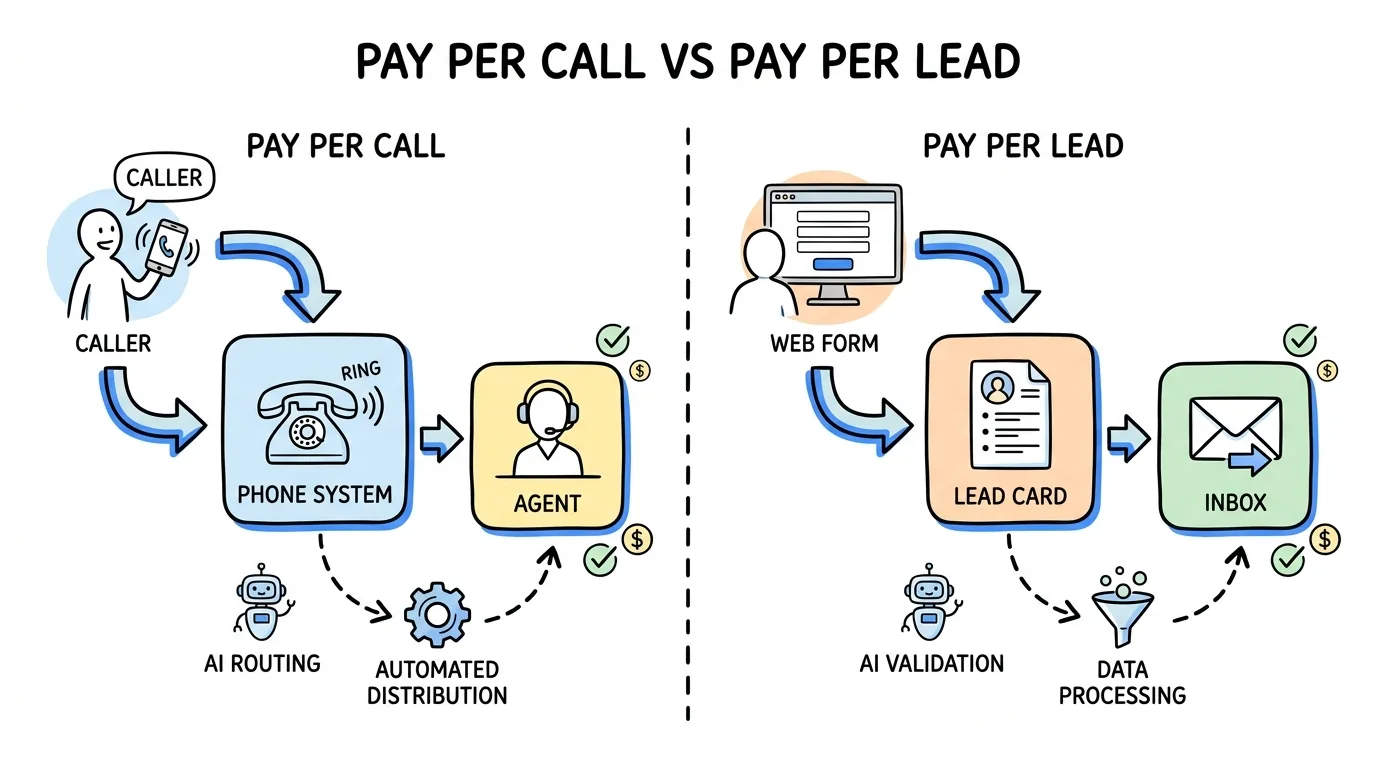
Pay per lead (PPL) is a performance marketing model where publishers drive consumers to submit a form or provide contact information, and buyers pay a fixed price per submitted lead. The buyer receives a contact record and is responsible for outreach.
How the transaction works:
- Consumer submits a web form or Facebook Lead Ad
- Lead is scored, deduplicated, and routed to a buyer
- Buyer pays a fixed price per delivered lead
- Buyer's sales team contacts the lead (within minutes to maximize contact rate)
Who buys pay per lead: Law firms, insurance agents, mortgage lenders, solar installers, home services contractors, and any business that has a dedicated outreach team.
What Is Pay Per Call?
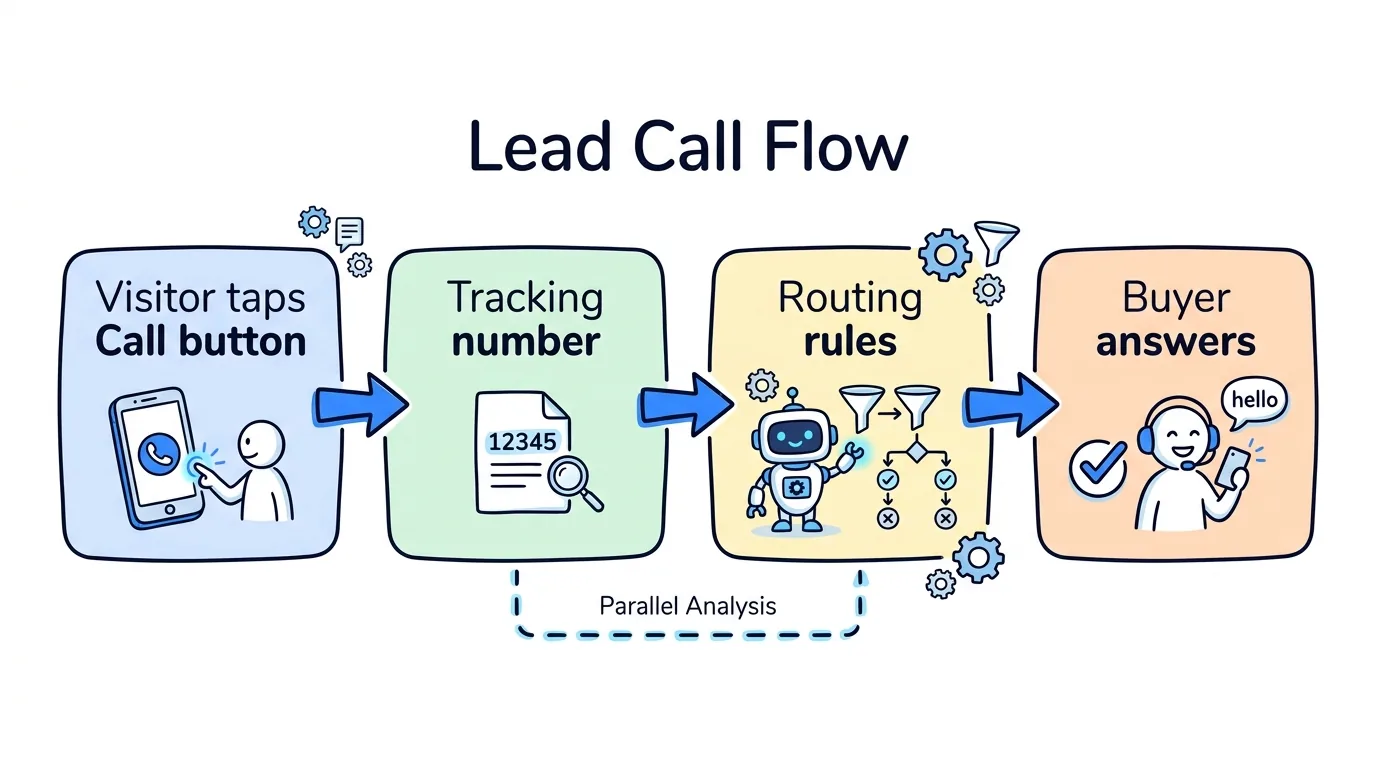
Pay per call (PPC) is a performance marketing model where publishers drive inbound phone calls to a tracking number, and buyers pay per qualified call. The buyer receives a live consumer already on the line. For the complete breakdown of the model, the players, and how to start as a buyer or publisher, see what is pay per call.
How the transaction works:
- Consumer clicks a call button, dials a tracking number, or is connected via a live transfer
- An IVR pre-screens the caller to verify intent and eligibility
- Qualified callers are connected to a buyer's agent in real time
- Buyer pays per call that meets qualification criteria (minimum duration, IVR completion)
Who buys pay per call: Law firms, insurance carriers, mortgage lenders, solar companies, home services contractors. These are the same buyers as PPL, but typically at higher budgets and lower volume.
Side-by-Side Comparison
| Factor | Pay Per Lead | Pay Per Call |
|---|---|---|
| Typical price range | $15-250 per lead | $40-500 per call |
| Conversion rate | 5-15% (lead to closed) | 20-40% (call to closed) |
| Contact rate | 40-60% | 100% (live on line) |
| Buyer infrastructure needed | Outreach team, CRM | Agents available to answer |
| Volume potential | Very high | Moderate |
| Consumer intent at delivery | Submitted form (may shop multiple) | Called in (high intent) |
| TCPA regime | Outbound contact rules apply | Inbound call rules (less restrictive) |
| Publisher traffic source | SEO, social, email, display | Search (call extensions), radio, TV |
| Best vertical fit | Solar, mortgage, insurance, financial | Legal/PI, insurance, home services |
| Margin per transaction | Lower | Higher |
| Operations complexity | Moderate | High |
Revenue Model Comparison
Pay Per Lead Economics
A typical PPL agency buying from multiple sources and selling to multiple buyers might look like:
- Cost per lead (from publisher): $20
- Sell price to buyer: $45
- Margin per lead: $25 (56%)
- Daily volume: 200 leads
- Daily gross margin: $5,000
At scale, PPL operates on margin efficiency across volume. Optimization is about source quality, buyer pricing, and cap management.
Pay Per Call Economics
A typical pay per call operation might look like:
- Cost per call (media spend to generate): $80
- Sell price to buyer: $200
- Margin per call: $120 (60%)
- Daily volume: 25 calls
- Daily gross margin: $3,000
Pay per call has higher margin per transaction but requires more infrastructure (call centers, IVR, real-time routing) and lower volume ceiling at early stages.
Learn more about how to price leads by vertical.
Compliance: A Critical Difference
Pay per lead compliance is governed primarily by TCPA outbound contact rules. When a buyer calls a lead from a form submission, they must have documented prior express written consent from the consumer authorizing calls and texts. Penalties: $500-$1,500 per violation. This is why consent documentation and timestamp logging are critical in PPL operations.
Pay per call compliance is simpler for the inbound call itself, since consumers who call in consent to the call by initiating it. However, TCPA still applies to any outbound follow-up the buyer makes after the call, and the lead capture page that drove the call must have proper disclosures.
Read the full TCPA compliance guide for a complete breakdown.
Which Verticals Favor Each Model
Strong Pay Per Call Verticals
- Legal/Personal Injury: Law firms pay $200-500 per qualified PI live transfer. The consumer is injured and wants immediate help; phone is the natural contact channel. Learn more about legal lead distribution.
- Home Services (emergency): HVAC breakdown, roof leak, burst pipe. Homeowners with urgent needs call immediately. Contact rate is 100%.
- Medicare/Insurance: Open enrollment consumers actively comparing plans convert dramatically better on a live call with a licensed agent.
Strong Pay Per Lead Verticals
- Solar: Installation timelines are 2-6 weeks; consumers research before committing. Appointment-setting model works well with data leads.
- Mortgage (refinance): Rate shoppers submit to multiple lenders; the first to call wins. High volume, fast response.
- Financial services: Credit cards, personal loans, debt settlement. High volume, lower price per lead, works at scale.
Both Models Work Well
- Insurance (health/auto): Both models are widely used. Live transfers for Medicare Advantage; data leads for auto insurance volume.
- Mortgage (purchase): Time-sensitive buyers respond to calls, but volume requires data leads too.
What LeadsCon 2026 Showed About the Call Shift
At LeadsCon 2026 in Las Vegas, the clearest trend I heard on the floor was demand moving toward calls. I walked the entire conference and talked with buyers and suppliers, and a recurring message from buyers was that they only want inbound calls now. The reasoning was simple: when they buy a form lead they still have to chase the consumer down, but an inbound caller is already on the line with higher intent.
The call demand was strongest in a few verticals. Insurance, final expense, and debt consolidation were the niches where buyers leaned hardest toward calls over forms. That lines up with the table above: these are buyers who close on a live conversation with a licensed agent, so a call is worth more to them than a contact record they have to work.
This is the case for running both models. Buyers who want calls and buyers who want volume data leads often sit in the same niche, which is why the operators winning at LeadsCon were not picking just one. They sold premium buyers live calls and volume buyers data leads from the same traffic. Lead Distro AI runs pay per call and pay per lead in one platform, so you can serve both without maintaining two systems. For the deeper niche-by-niche read from the same conference, see our best lead generation niches breakdown.
Running Both Models Together
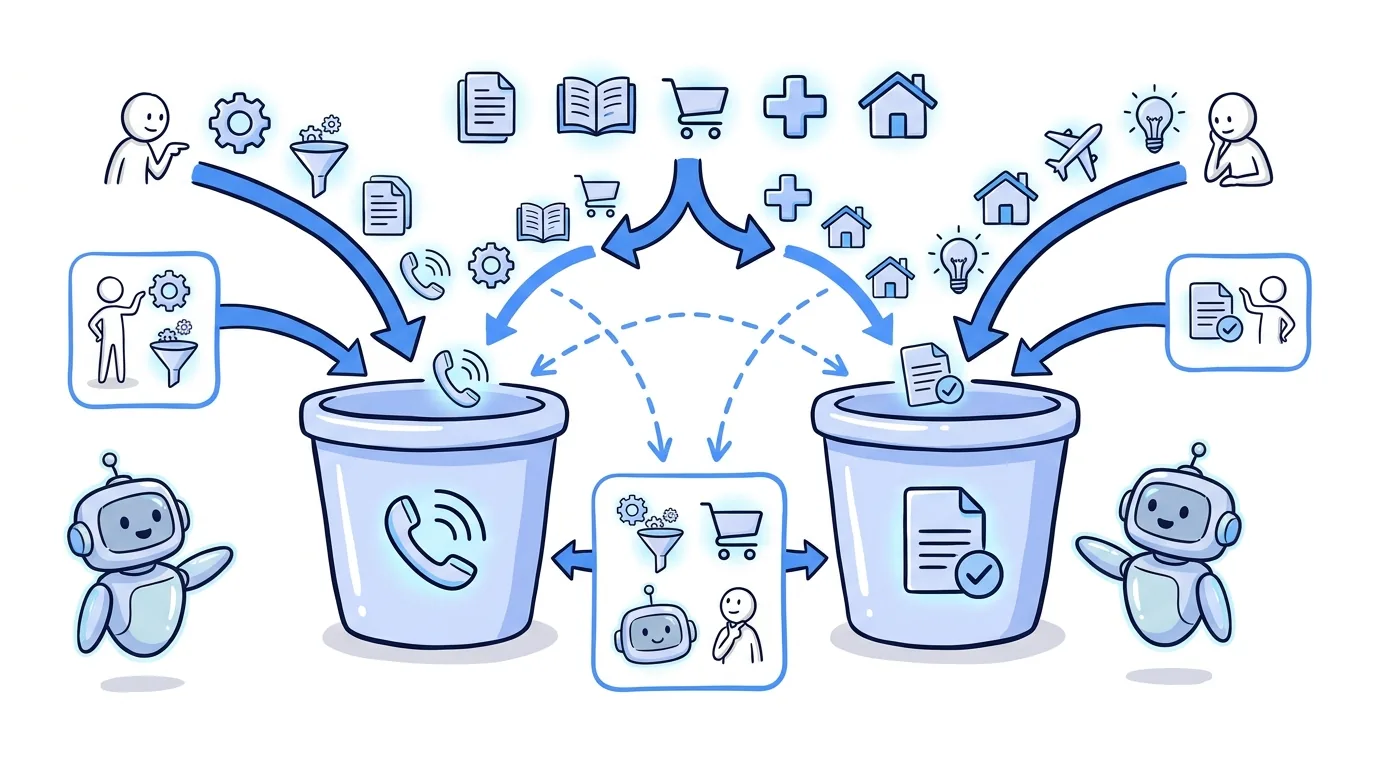
The highest-margin agencies run pay per call and pay per lead simultaneously. Premium buyers (willing to pay $200+ per contact) get inbound call campaigns. Volume buyers (paying $30-75 per contact) get data leads. The agency optimizes margin by matching buyer type to delivery method.
This requires a platform that handles both in one system: one buyer network, one P&L dashboard, one routing engine. Lead Distro AI handles both pay per call and pay per lead in a single platform, so you do not need to maintain two separate systems.
Take the product tour to see how both models work together.
Frequently Asked Questions
Is pay per call more profitable than pay per lead?
Per transaction, yes: pay per call typically has higher margin per unit. But pay per lead operates at much higher volume, so total monthly profit depends on scale. Agencies running both models simultaneously typically generate more total profit than agencies running only one.
What is the minimum budget to start a pay per call campaign?
Pay per call media (search ads with call extensions, display with call-to-action) requires higher CPCs than form-based campaigns. A realistic minimum test budget is $2,000-5,000/month to generate enough call volume to measure performance. Pay per lead can be tested at $500-1,000/month at smaller scale.
Which model has better TCPA compliance risk?
Pay per call carries lower TCPA risk for the initial contact because the consumer initiates the call (inbound). Pay per lead carries higher TCPA risk because any outbound call to a lead requires documented prior express written consent. Both models require careful compliance management for follow-up contacts.
Can I convert pay per lead campaigns to pay per call?
Yes. Web-to-call conversion (adding a phone number and click-to-call button to your lead capture form) can generate call leads from the same traffic. Many agencies run both simultaneously: form submissions for data leads, click-to-call for live transfers from the same landing page.
Does Lead Distro AI support both pay per call and pay per lead?
Yes. Lead Distro AI handles both models in a single platform. Data leads and inbound calls share the same buyer network, routing engine, and P&L dashboard. You do not need separate software for each model.
The Bottom Line
Pay per call and pay per lead are not competitors, they are complementary monetization layers. Start with the model that matches your current traffic sources and buyer relationships, then add the other as you scale. The agencies that win in performance marketing run both.
Ready to run pay per call and pay per lead in a single platform? Start your free trial of Lead Distro AI or tour the call routing dashboard to see ring trees and pay-per-call routing in action.
About the Author
Founder & CEO of Lead Distro AI & Great Marketing AI
UC Berkeley graduate and former software engineer at Microsoft. Rafael built Lead Distro AI after managing over $10M in ad spend for performance marketing agencies (pay-per-lead and pay-per-call), including running campaigns for Neil Patel. He combines deep software engineering expertise with hands-on performance marketing experience to build tools that help these agencies scale profitably.
About Lead Distro AI
Lead Distro AI: AI-Powered Lead Distribution & Call Tracking That Maximizes ROI
The modern platform for pay-per-lead and pay-per-call agencies. Route, score, and deliver leads with AI-powered automation and real-time P&L tracking. Built for performance marketing agencies and lead buyers across legal, insurance, mortgage, solar, and home services verticals.
4 Distribution Methods
Waterfall, Round Robin, Weighted, Ping-Post
Ping-Post Auctions
Real-time bidding with sub-second routing
Real-Time P&L Reporting
Track revenue, costs, and profit per campaign
Call Tracking
Assign tracking numbers, record calls, and attribute conversions
Lead Scoring
Score every lead before routing to maximize conversion
Partner Portal
Self-serve dashboard for buyers to track leads