VSL Funnel: What It Is and How to Build One for Lead Gen
What is a VSL funnel? A short sales video placed before the form. Learn the anatomy, examples, how it compares to a squeeze page, and how to route its leads.

Rafael Hernandez
Founder & CEO
Ex-Microsoft SWE · $10M+ PPL ad spend
I hope you enjoy reading this blog post. If you want to try Lead Distro AI for free, click here.
Author: Rafael Hernandez | Founder & CEO of Lead Distro AI
A VSL funnel is a lead or sales funnel built around a video sales letter: a short pitch video that explains the problem, the offer, and the next step, with one call to action placed under it. The visitor watches first, then fills out a form, books a call, or taps to call.
That is the whole VSL funnel meaning in one line, and most guides stop there because they are written for course creators selling a product on the next page. If you run paid traffic for pay-per-lead or pay-per-call offers in solar, insurance, debt relief, or legal, the video has a different job. It decides who reaches your form, which changes the quality of every lead you deliver to a buyer. This guide covers the anatomy, how to build one, VSL funnel examples by vertical, how it compares to a squeeze page, and how to route the leads it produces. If you want to build along, the Lead Distro AI funnel builder has a video block made for this layout.
Key Takeaways
- A VSL funnel puts a short sales video in front of a single call to action, usually a form, a booking calendar, or a call button.
- In lead generation, the video is a filter. It trades some raw lead volume for visitors who already understand the offer before they give their phone number.
- Judge the funnel by accepted leads, not opt-ins. Cost per lead a buyer keeps is the number that pays your media bill.
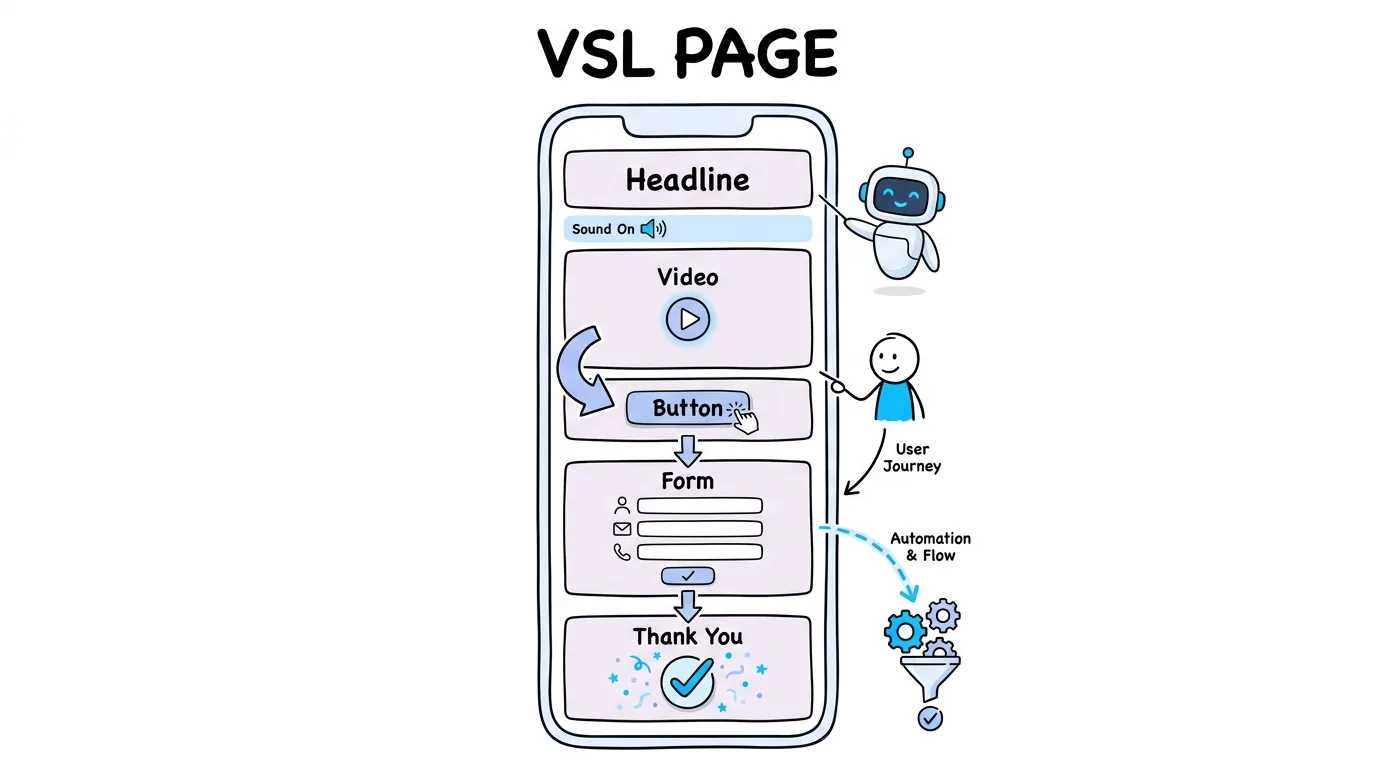
- What is a VSL funnel built from? A headline, the video, one call to action, a qualifying form, and a thank-you page that sets expectations.
- The leads still need routing. Map form answers to buyer fields, verify the phone, and send each lead to a buyer the moment it submits.
What Is a VSL Funnel?
It is a sequence of pages where a video sales letter carries the persuasion that a long sales page would normally do in text. VSL stands for video sales letter, the video version of the classic direct response sales letter.
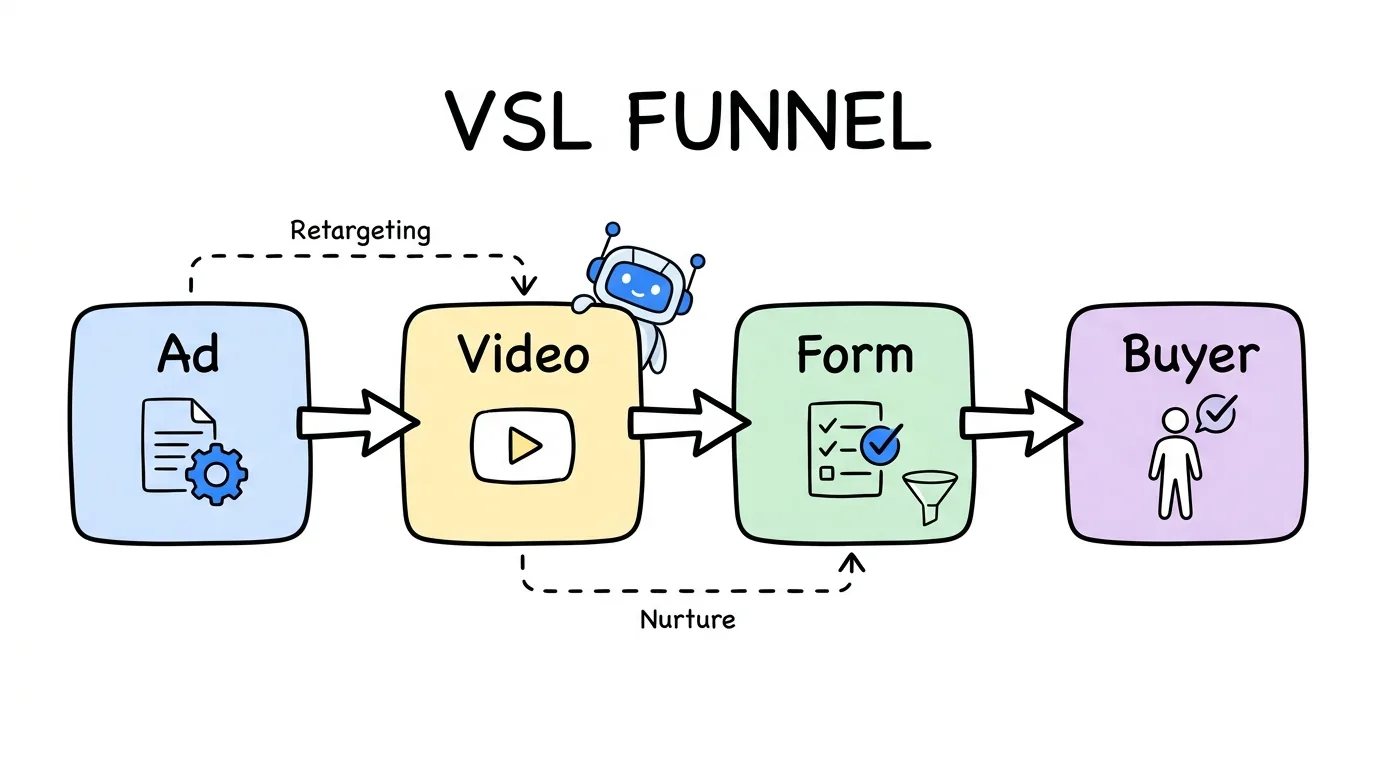
The structure is simple. An ad sends the visitor to a page with a headline and a video. The video names a problem, shows why it is costly, presents the offer, and tells the viewer exactly what to do next. A button or form under the video captures that action, and a thank-you page confirms what happens now.
So what is a VSL funnel in practice for a lead seller? It is the same flow with the form as the finish line. A solar homeowner watches 90 seconds on how net metering works in their state, then answers four questions and enters their phone number. The buyer gets a homeowner who already knows why the installer is calling.
The Anatomy of a VSL Funnel
Every video-first page that sells leads has five parts, and each one has a specific job:
- The headline. A promise that matches the ad, so the visitor knows they are in the right place and presses play.
- The video. Problem, cost of the problem, offer, proof, and one clear next step. Short wins for cold traffic: Wistia's analysis of more than 13 million videos found that videos under a minute average a 52% engagement rate, and that engagement declines after the five-minute mark.
- The call to action. One button under the video, worded as the next step ("See if my home qualifies"), not a generic "Submit".
- The qualifying form. The questions your buyer filters on, then name, phone, and consent.
- The thank-you page. Who will call, from what number, and how soon. Clear expectations reduce the "I never asked for this" returns that eat margin.
A sound prompt matters more than most builders admit. Google's Chrome team states that muted autoplay is always allowed, while autoplay with sound needs the visitor to interact first. That is why VSL pages put a "turn your sound on" bar above the player.
Why Put a Video Before the Form in Lead Generation
A video in front of the form makes the visitor spend a minute before they spend their phone number. Some people leave. The ones who stay have heard the offer, the eligibility rules, and who will contact them.
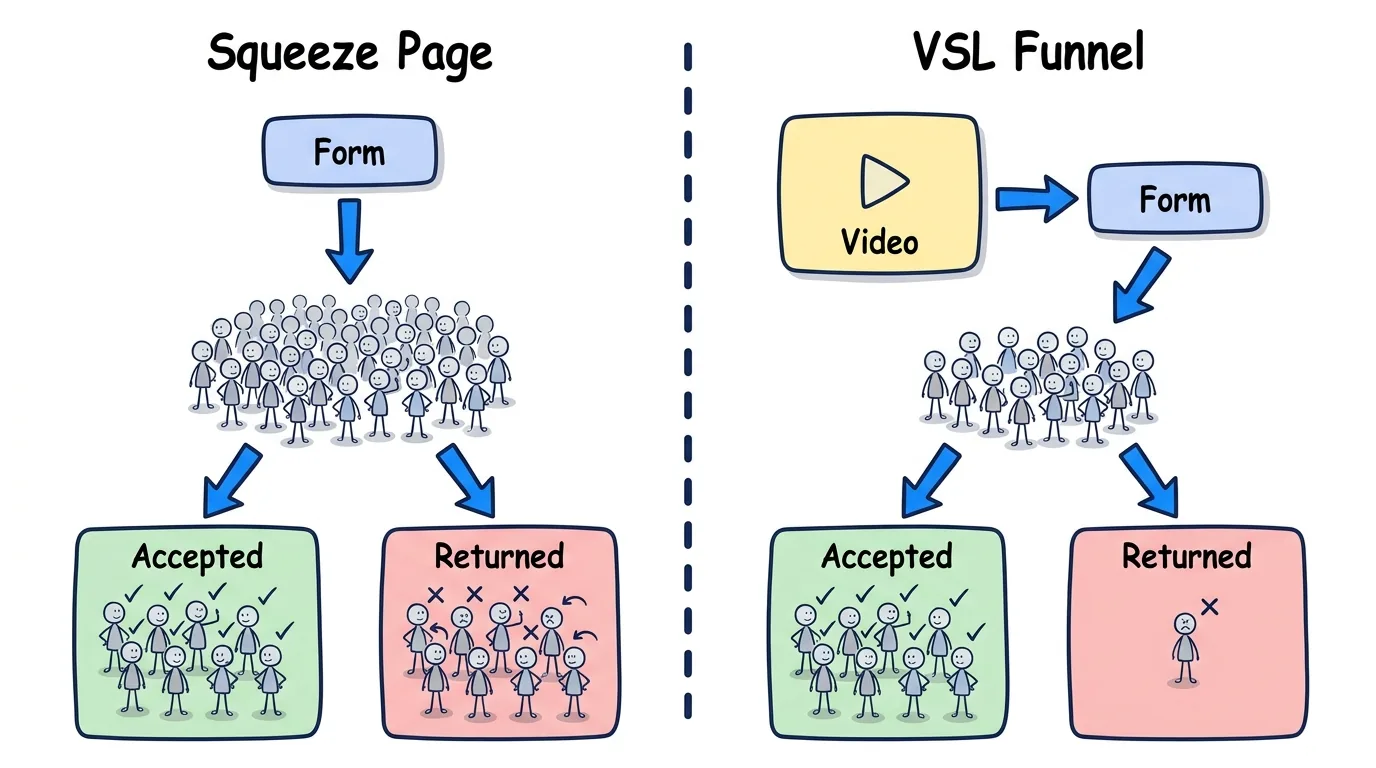
For a lead seller that changes the economics. Raw opt-in rate often falls, while the share of leads a buyer accepts and works can rise, because fewer visitors submit by accident or without understanding the offer. Whether the trade pays depends on your vertical and your buyers, so measure it instead of assuming it.
Here is the math to run, with round numbers for illustration only. A form-first page turns 1,000 clicks into 120 leads, and buyers accept 72. A VSL version turns the same 1,000 clicks into 90 leads, and buyers accept 72. Same accepted leads, 30 fewer phone verifications to pay for, 30 fewer returns to process, and a buyer who sees a higher acceptance rate from you. If the VSL version gets 80 accepted, it wins outright. If it gets 50, the video is filtering out good leads and needs a shorter cut.
How to Build a VSL Funnel, Step by Step
Step 1: Write the script backward from the buyer
List what your buyer filters on: homeownership, coverage amount, debt size, accident date. The video should explain those requirements in plain words, so a visitor who does not qualify knows it before the form.
Step 2: Record a short, specific video
Aim for one to three minutes for cold paid traffic. Host it on YouTube, Vimeo, or Wistia, or use a direct mp4 link, then embed it on the page.
Step 3: Put the form one tap below the video
Keep the call to action in view. Split the form into short steps: HubSpot reports a single-step form saw a 59.2% increase in conversions after it was converted into a multi-step form. Our guide to multi-step forms for lead generation covers question order.
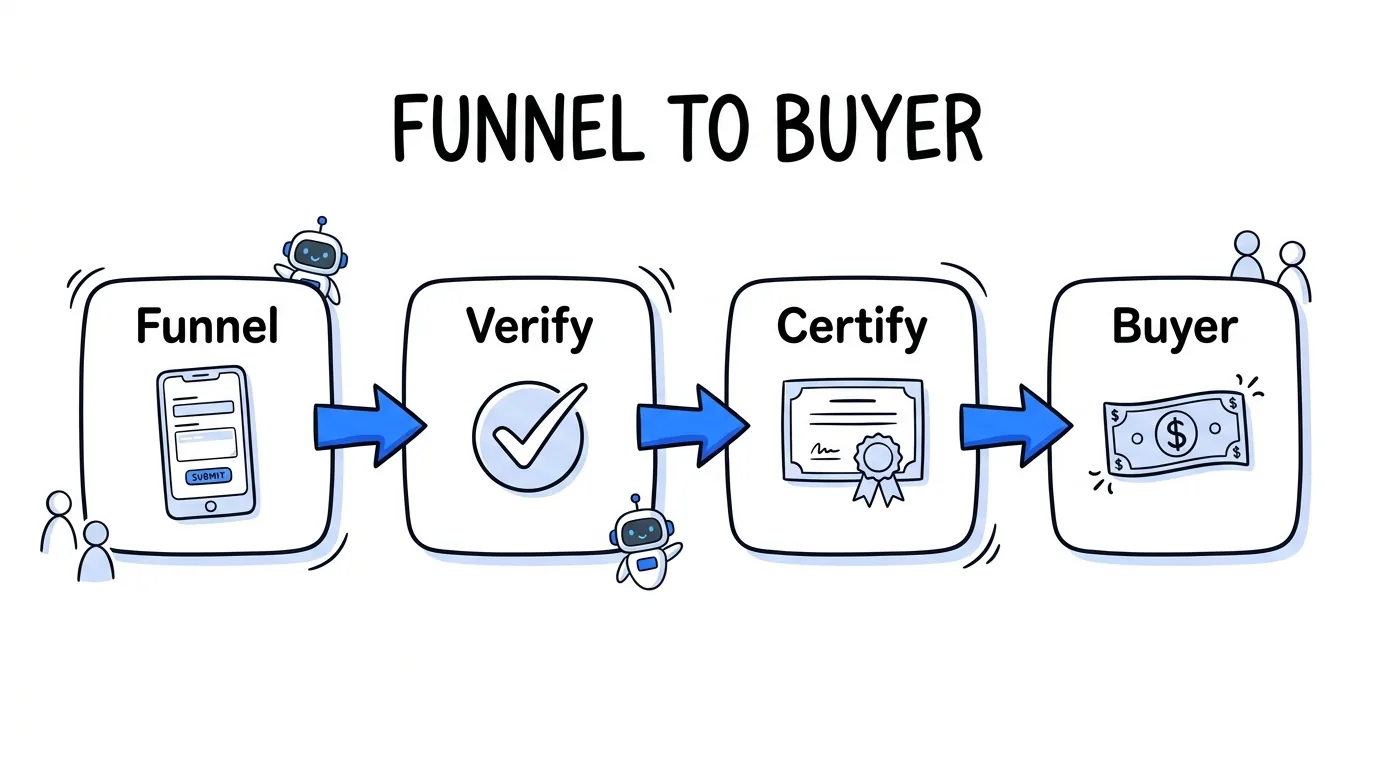
Step 4: Verify and certify before you sell
Verify the phone by text and capture a consent certificate. ActiveProspect says businesses use TrustedForm to certify over 2.5 billion leads per year, with each certificate documenting the landing page, timestamp, and consent language shown. Read what TrustedForm is for how buyers check it.
Step 5: Test one variable at a time
Run the VSL version against a form-first control, and compare accepted leads per 1,000 clicks.
VSL Funnel Examples for Pay-Per-Lead and Pay-Per-Call Offers
These VSL funnel examples show how the video and the form split the work by vertical.
| Vertical | What the video explains | Call to action | What the form or call qualifies |
|---|---|---|---|
| Solar | How savings and incentives work, who qualifies | "See if my home qualifies" | Homeowner, monthly bill, zip code |
| Final expense insurance | What the coverage pays for, how quotes work | "Check my rate" | Age range, coverage amount, state |
| Debt relief | How a program works, typical timeline, who it is not for | "See my options" | Unsecured debt amount, state |
| Personal injury (legal) | What a free case review covers, time limits to act | "Start my free case review" | Accident type, date, injury, already represented |
| Pay-per-call offers | Why a quick call gets a faster answer | A call button | Live caller, routed to a buyer |
A useful VSL funnel template follows the same order on every row: headline, video with a sound prompt, one button, a short form, and a thank-you page. The legal and insurance question sets above match the ready-made funnel templates many lead sellers start from.
VSL vs Squeeze Page, Quiz Funnel, and Webinar Funnel
A squeeze page asks for contact details immediately, usually with a headline and a short form. A video sales letter page makes the visitor watch first. The question of VSL vs squeeze page is really a question of where you want the filtering to happen: before the form, or after delivery.
| Funnel type | What comes first | Lead volume | Lead understanding | Best for |
|---|---|---|---|---|
| Squeeze page | The form | Highest | Lowest | Simple offers the visitor already understands |
| VSL funnel | A 1 to 3 minute video | Medium | High | Offers that need explaining, like solar or debt relief |
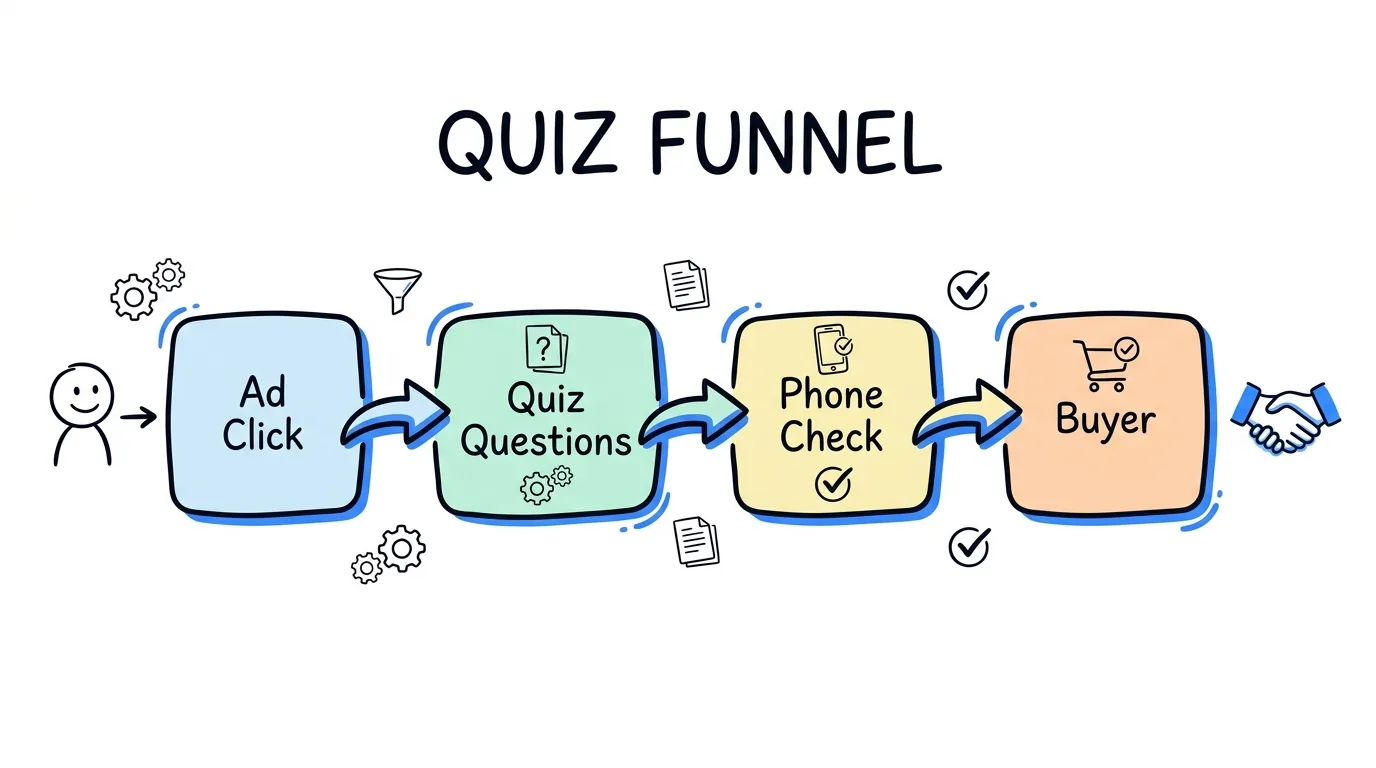
| Quiz funnel | Qualifying questions | Medium to high | Medium | Eligibility offers with clear filters |
| Webinar funnel | A registration, then a long session | Lowest | Highest | High-ticket offers with a long sales cycle |
The formats also combine well. A short VSL above a quiz is a common hybrid: the video sets expectations, and the quiz does the qualifying.
Routing the Leads a VSL Funnel Produces
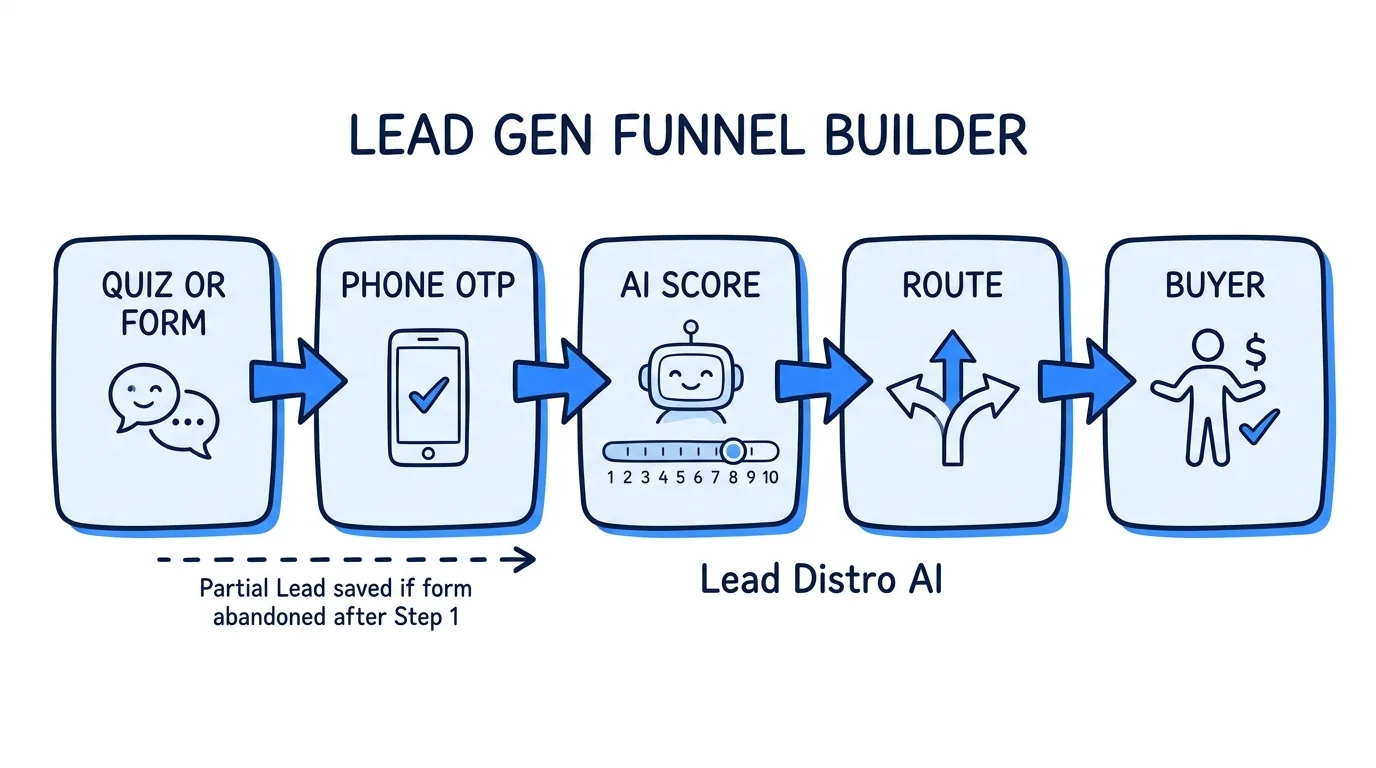
A video-first funnel that ends in a spreadsheet loses the advantage it just earned. Speed and fit decide whether a buyer keeps the lead, so the submit should hand it straight to distribution.
In Lead Distro AI, the funnel's video block takes a YouTube, Vimeo, or Wistia link, an mp4 link, or a pasted embed code. You can set a custom thumbnail, turn on autoplay, and add an attention bar above the player that tells the visitor to turn their sound on. A button under the video moves the visitor to the next step, and a video testimonials block adds proof.
On submit, each answer writes to a campaign field your buyer expects. The lead is checked against duplicates, scored against the rules you set, filtered by buyer criteria and service area, and delivered. Ping post to the highest bidder starts on the Growth plan. Funnels are included from Starter ($297/mo, 5 live funnels) and Growth ($497/mo, 20 live funnels); Scale has no funnel limit. See every tier on the pricing page.
Keep the VSL Claims Honest
A VSL makes promises out loud, so it needs the same care as written ad copy. The FTC's endorsement guidance says that if an advertiser has no proof the endorser's experience represents what people will generally achieve, the ad must make the generally expected results clear. That matters most in debt relief and legal offers, where a single big result in a testimonial can mislead.
Three habits keep the page safe for you and your buyers. Say who will contact the visitor and how. Put the consent language next to the submit button, not under the video. Use a countdown only when the deadline is real.
FAQ
What is a VSL funnel?
A VSL funnel is a funnel built around a video sales letter, a short pitch video placed before a single call to action. The visitor watches the video, then fills out a form, books a call, or taps to call. For lead sellers, the video explains the offer and its eligibility rules up front, so the leads that reach the form understand what they are asking for and are more likely to be accepted by a buyer.
What is the VSL funnel meaning in marketing?
In marketing, the VSL funnel meaning is a funnel where video does the selling instead of a long text sales page. VSL stands for video sales letter. The page usually has a headline, the video, one button, and a form or checkout, then a thank-you page. Course creators use it to sell a product, while lead generation agencies use it to warm and filter paid traffic before the visitor gives contact details.
What is a good VSL funnel template?
A good VSL funnel template has five blocks in this order: a headline that matches the ad, the video with a sound-on prompt above it, one button worded as the next step, a short multi-step form with your buyer's qualifying questions, and a thank-you page that says who will call and when. Keep the video to one to three minutes for cold traffic, and keep the button in view under the player so nobody has to scroll to find the next step.
What is the difference between a VSL and a squeeze page?
A squeeze page asks for contact details right away, so it usually collects more leads at a lower cost per opt-in. A VSL page asks the visitor to watch a short video first, so it collects fewer leads who understand the offer better. For lead sellers, the right choice depends on which version produces more accepted leads per 1,000 clicks, which you can only learn by testing both against each other.
How long should a VSL video be?
For cold paid traffic, one to three minutes is a practical range, long enough to explain the offer and short enough to keep attention. Wistia's data shows videos under a minute average a 52% engagement rate and that engagement declines after five minutes. Longer VSLs can work for high-ticket offers with warm audiences, but a lead generation page should get to the form before most viewers drift away.
Does a video sales letter work for pay-per-call campaigns?
Yes. Replace the form with a call button and let the video explain why a short call gets the visitor a faster answer. The caller arrives already knowing the offer, which helps the buyer convert the call. In Lead Distro AI, a funnel's call buttons can use a call tracking number pool, so each call is tracked and routed like any other call source. Call tracking is billed by usage on top of your plan.
Conclusion
A VSL funnel is a trade: fewer leads at the form in exchange for visitors who understand the offer before they give a phone number. For lead sellers, that trade only pays if you measure accepted leads, not opt-ins, and if the leads reach a buyer quickly. Build a short video around your buyer's requirements, put a short form under it, verify and certify every lead, and test it against your current page. If you want the video, the form, and the routing in one place, start a 7-day trial and build your first one; a credit card is required, and you can cancel anytime during the trial without being charged.
About the Author
Founder & CEO of Lead Distro AI & Great Marketing AI
UC Berkeley graduate and former software engineer at Microsoft. Rafael built Lead Distro AI after managing over $10M in ad spend for performance marketing agencies (pay-per-lead and pay-per-call), including running campaigns for Neil Patel. He combines deep software engineering expertise with hands-on performance marketing experience to build tools that help these agencies scale profitably.
About Lead Distro AI
Lead Distro AI: Capture, Route, and Sell Every Lead, Call, and Appointment
The modern platform for pay-per-lead and pay-per-call agencies. Route, score, and deliver leads with AI-powered automation and real-time P&L tracking. Built for performance marketing agencies and lead buyers across legal, insurance, mortgage, solar, and home services verticals.
4 Distribution Methods
Waterfall, Round Robin, Weighted, Ping-Post
Ping-Post Auctions
Real-time bidding with sub-second routing
Real-Time P&L Reporting
Track revenue, costs, and profit per campaign
Call Tracking
Assign tracking numbers, record calls, and attribute conversions
Lead Scoring
Score every lead before routing to maximize conversion
Partner Portal
Self-serve dashboard for buyers to track leads