Speed to Lead: Why Response Time Decides Who Wins
Speed to lead is the gap between a lead arriving and your first contact. See the data on the 5-minute window and how instant routing wins deals.

Rafael Hernandez
Founder & CEO
Ex-Microsoft SWE · $10M+ PPL ad spend

I hope you enjoy reading this blog post. If you want to try Lead Distro AI for free, click here.
Author: Rafael Hernandez | Founder & CEO of Lead Distro AI
Last Updated: June 2, 2026
Speed to lead is the elapsed time between the moment a prospect submits an inquiry and the moment your team makes first contact. It is the single most controllable variable in lead conversion, and the data is brutal: the firm that responds first usually wins the deal. According to the Lead Response Management Study led by Dr. James Oldroyd at MIT and published through InsideSales.com, contacting a inbound lead within five minutes makes you 100 times more likely to connect and 21 times more likely to qualify it than waiting just 30 minutes. Yet Harvard Business Review found the average company takes 42 hours to respond. That gap between what works and what most teams actually do is where revenue leaks out. For pay-per-lead and pay-per-call agencies, every minute of lead response time is margin: leads you paid for that decay into dead records. This guide breaks down the benchmark data, the math behind lead decay, and how instant lead distribution closes the window automatically.
Key Takeaways
- Speed to lead is the strongest controllable conversion lever, with the five-minute window delivering up to 100x higher contact odds per the MIT Lead Response Management Study.
- Most teams are far too slow, averaging 42 hours to first contact according to Harvard Business Review, while 78% of buyers purchase from the first responder.
- Lead decay is exponential, not linear: contact odds and qualification rates drop sharply between the 5-minute and 30-minute marks, then collapse after the first hour.
- Manual assignment is the bottleneck. Round-robin and instant webhook delivery in a
lead distributionplatform compress speed to lead from hours to seconds. - Lead Distro AI routes inbound leads in real time to the right buyer or rep the instant they arrive, so no lead waits in a queue while its value evaporates.
What Speed to Lead Actually Measures
Speed to lead, also called speed-to-contact, measures the clock from lead capture to your first genuine outreach attempt, whether that is a phone dial attempt, a text, or an email. It is distinct from total sales cycle length: it isolates the very first touch, because that touch disproportionately decides the outcome. The metric matters because buyer intent is perishable. A person who fills out a form is, in that moment, actively shopping. Wait too long and they have moved on, contacted a competitor, or cooled off entirely. Research compiled across studies by Harvard Business Review, MIT, and InsideSales consistently shows the same curve: response value falls off a cliff within the first hour. Treating speed to lead as a core KPI, alongside cost per lead and lead conversion rate, forces teams to confront the first contact delays that quietly destroy pipeline.
The Data Behind the 5-Minute Rule
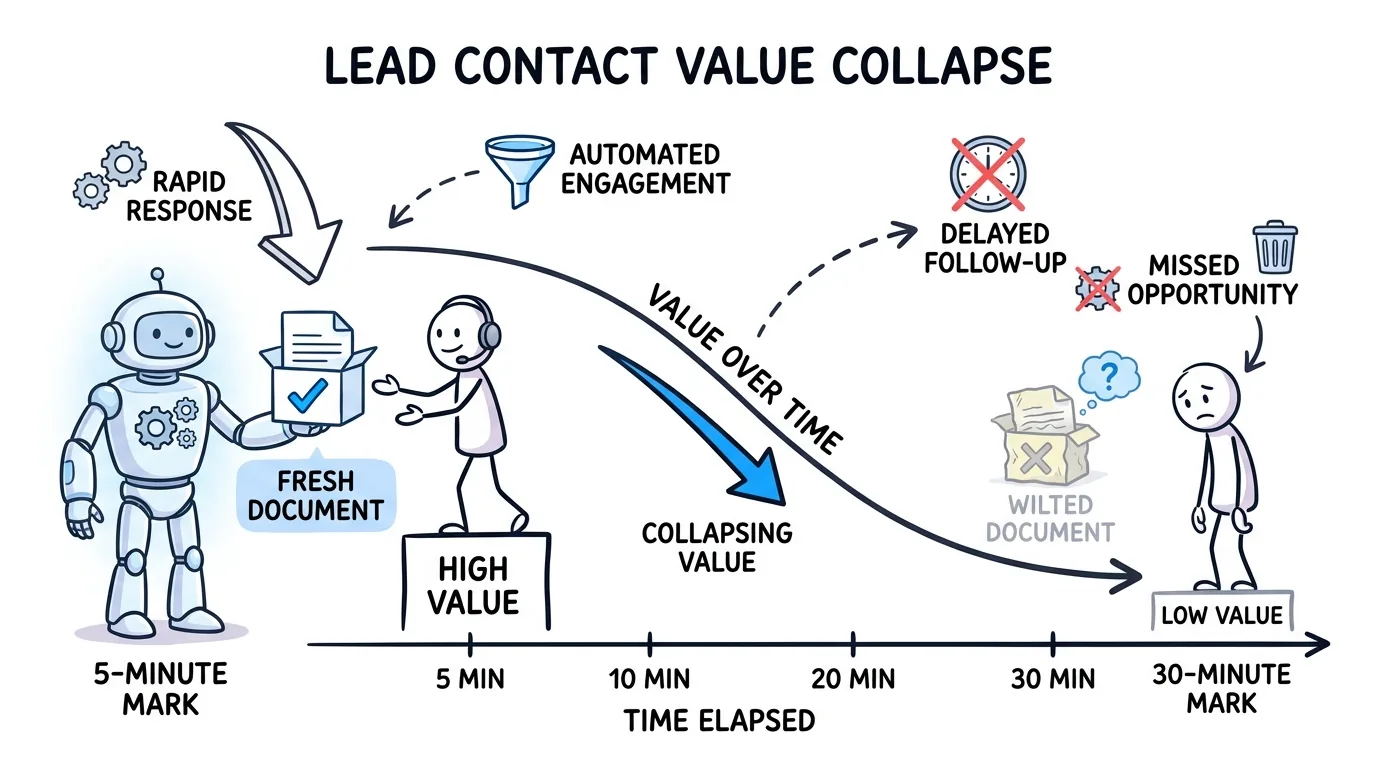
The foundational evidence comes from the Lead Response Management Study, where Dr. James Oldroyd analyzed three years of data covering more than 15,000 leads and over 100,000 call attempts across six companies. The headline finding: the odds of contacting a lead drop 100 times when you wait 30 minutes instead of five, and the odds of qualifying that lead drop 21 times over the same delay. A separate analysis found qualification odds fell fourfold between the 5-minute and 10-minute marks alone. The Harvard Business Review article "The Short Life of Online Sales Leads" reinforced this, reporting that firms contacting prospects within an hour were nearly seven times more likely to have a meaningful conversation than those who waited even 60 minutes longer. The lesson is unambiguous: lead decay is exponential. Minutes, not hours, are the unit of measurement that matters for lead response time.
A Proprietary Benchmark: Conversion Lift by Response Band
To make the curve concrete, here is a benchmark table framing how lead conversion rate shifts across response-time bands. The figures synthesize the published MIT and InsideSales findings into the buckets agencies actually operate in. Treat the sub-five-minute band as the baseline (100% index) and read each slower band as a relative drop.
| Response Band | Relative Contact Odds | Relative Conversion Index | What It Means for Agencies |
|---|---|---|---|
| Under 1 minute | Highest | ~120% | Buyer is still on the page; near-instant qualification |
| 1 to 5 minutes | Very high (baseline) | 100% | The proven sweet spot, the "5-minute rule" |
| 5 to 10 minutes | Drops sharply | ~25% | Qualification odds fall roughly 4x per MIT data |
| 10 to 30 minutes | Low | ~10% | Contact odds down ~100x vs. 5 minutes |
| 30+ minutes to hours | Minimal | Under 5% | Competitor has likely already responded |
The takeaway for a pay-per-lead operation: a lead routed and worked in under five minutes can be worth more than ten leads sitting in a queue for an hour. This is why speed to lead is a margin lever, not a vanity metric.
Why Manual Assignment Kills Speed
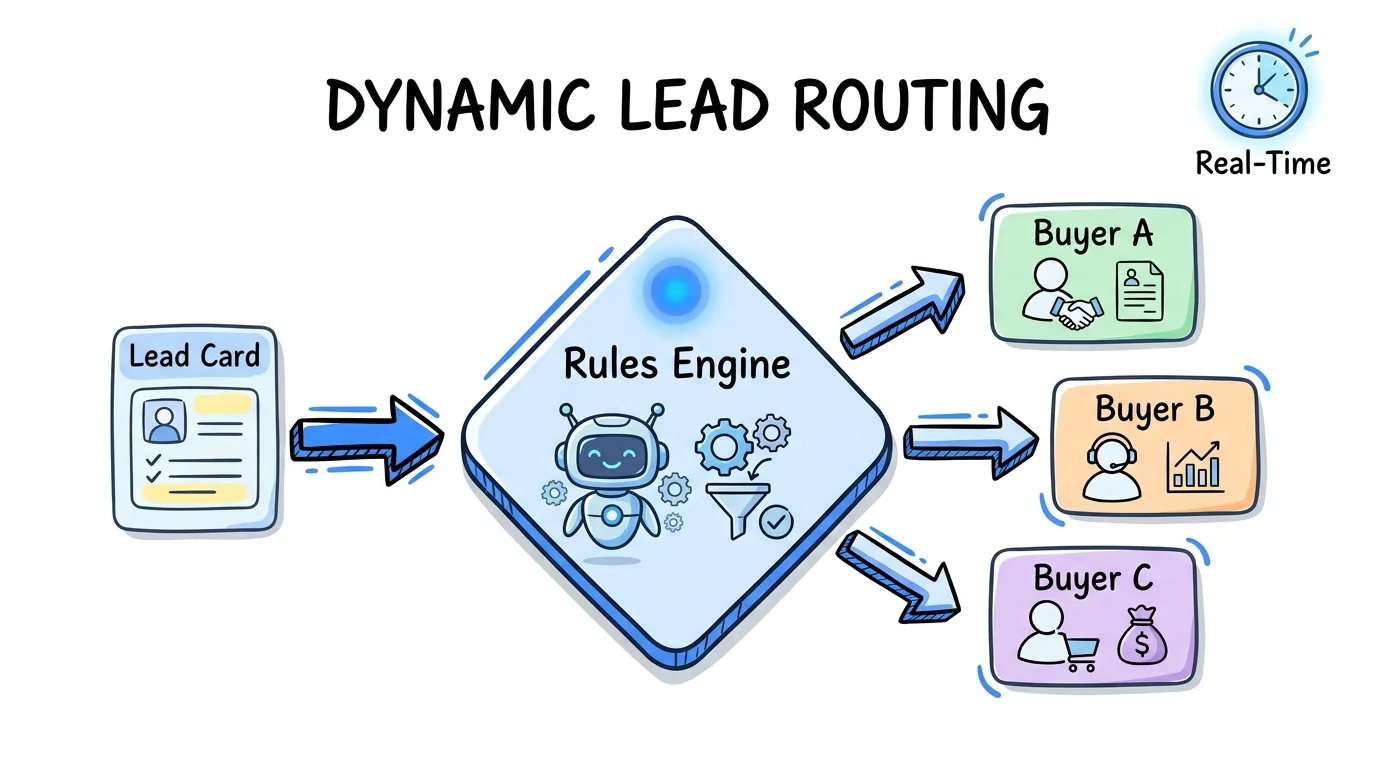
Most agencies do not lose the speed-to-lead race because their reps are lazy. They lose it because the auto-assignment layer is missing. A lead lands in a shared inbox, a spreadsheet, or a CRM list, then sits until someone manually reviews and assigns it. That handoff, multiplied across dozens of leads and several buyers, is where hours disappear. Compounding the problem: leads arrive 24/7, but manual triage only happens during business hours. A form filled at 9 p.m. Friday may not get touched until Monday, long past the conversion window. The fix is structural. When you replace human triage with rule-based automated lead routing, the assignment delay collapses to milliseconds. Setting a SLA for first contact only works if the routing that precedes it is instant; otherwise the clock is already running before a rep ever sees the lead.
How Instant Distribution Compresses Speed to Lead
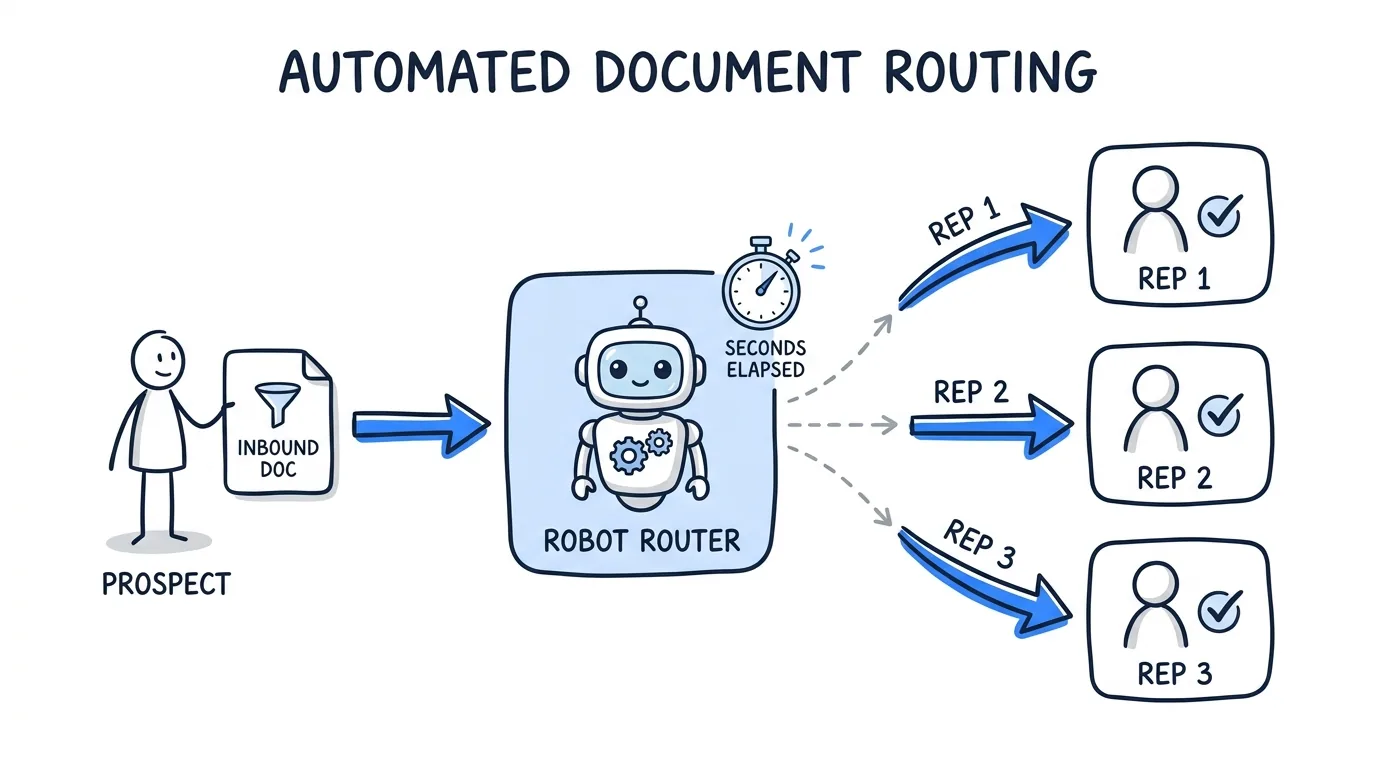
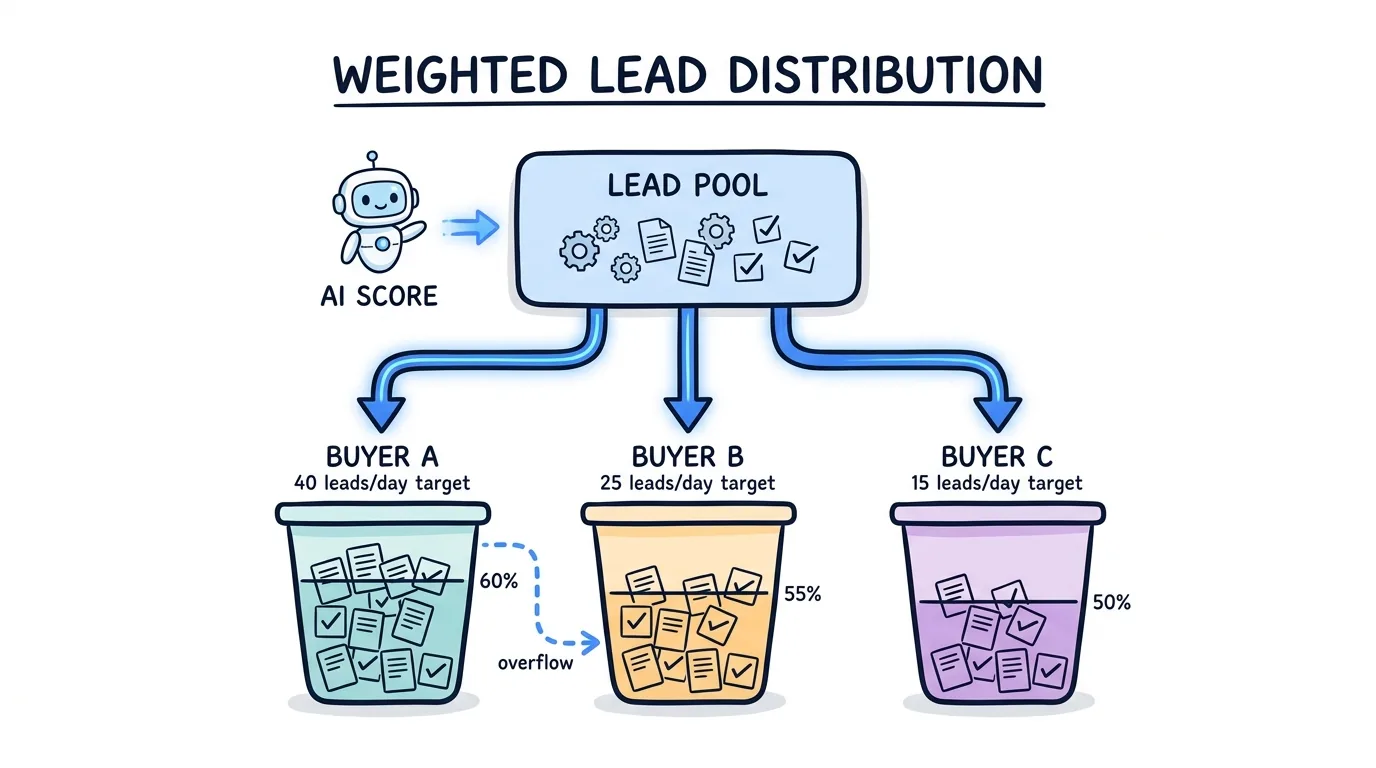
Lead Distro AI is built to eliminate the assignment delay entirely. The platform ingests every inbound lead through real-time webhook and API connections, scores it, and routes it to the right buyer or rep the instant it arrives, with no human in the loop. "The agencies that win on speed to lead are not the ones with the fastest reps," says Rafael Hernandez, Founder and CEO of Lead Distro AI. "They are the ones who deleted the manual handoff. Once routing is instant, your reps are dialing fresh intent instead of digging leads out of a queue." You can use round robin distribution to spread volume evenly across a buyer pool, weighted routing to favor your best closers, or priority waterfall for tiered buyers. Because delivery happens over real-time webhook delivery, the receiving system gets the lead in seconds and can fire an instant notification to trigger an immediate dial attempt. To see the routing engine in action, see how instant distribution works on a live demo. For the deeper mechanics of rule-based assignment, our guide to automated lead routing walks through every method, and our ranking of the best lead routing software compares the platforms on routing speed and price. The result: speed to lead measured in seconds, not the 42-hour industry average, so the leads you paid for actually convert.
FAQ
What is a good speed to lead time?
A good speed to lead time is under five minutes, and faster is always better. The MIT Lead Response Management Study found that responding within five minutes makes you 100 times more likely to contact the lead and 21 times more likely to qualify it versus a 30-minute delay. Elite teams aim for under one minute by automating routing and triggering an instant notification to a rep. Anything beyond an hour puts you behind the 78% of buyers who purchase from the first responder, per a Lead Connect survey.
Why does lead response time matter so much?
Lead response time matters because buyer intent is perishable. The moment someone submits a form, they are actively shopping and often comparing several providers at once. Harvard Business Review reported the average firm takes 42 hours to respond, by which point a competitor has usually already connected. Every minute of delay lowers your contact odds and lead conversion rate, turning leads you paid for into wasted spend. Fast response is the cheapest way to lift conversion without buying more leads.
How is speed to lead different from lead response time?
The two terms are used almost interchangeably, and both measure the gap between a lead arriving and your first contact attempt. Speed to lead is the broader strategic framing that treats first contact as a competitive race, while lead response time is the precise metric you track in minutes. In practice, if you are reporting a number, you are measuring response time; if you are talking about the discipline of responding fast, you are talking about the strategy. Both point to the same goal: shrink the window.
How can a distribution platform improve speed to lead?
A lead distribution platform improves speed to lead by removing manual assignment, the step where most delay happens. Instead of a lead sitting in a queue until someone reviews it, the platform ingests it through a webhook, applies routing rules like round robin or priority waterfall, and delivers it to the right buyer in milliseconds. That delivery can trigger an instant notification so a rep dials immediately. Lead Distro AI handles this end to end, compressing assignment from hours to seconds around the clock.
Does speed to lead apply to pay-per-call agencies too?
Yes. For pay-per-call agencies, speed is even more literal because the lead is often a live caller on the line. Instant routing connects that caller to an available buyer or agent before they hang up, which protects both lead conversion rate and the value of the call. The same real-time distribution logic that routes form fills applies to inbound calls, ensuring no caller waits in a queue while intent fades. Both pay-per-lead and pay-per-call models live or die on speed-to-contact.
Conclusion
Speed to lead is the rare growth lever that costs nothing to improve and pays back immediately. The data from MIT, InsideSales, and Harvard Business Review all converge on the same point: the first five minutes decide most outcomes, and the team that responds first usually wins. The bottleneck is almost never effort; it is the manual assignment layer that lets leads sit while their value decays. Lead Distro AI removes that layer by routing every inbound lead in real time to the right buyer or rep, so your lead response time is measured in seconds. Stop paying for leads that go cold in a queue.
Ready to close the speed-to-lead gap? Start routing leads in real time with a 7-day free trial and watch your first lead route in seconds.
About the Author
Founder & CEO of Lead Distro AI & Great Marketing AI
UC Berkeley graduate and former software engineer at Microsoft. Rafael built Lead Distro AI after managing over $10M in ad spend for performance marketing agencies (pay-per-lead and pay-per-call), including running campaigns for Neil Patel. He combines deep software engineering expertise with hands-on performance marketing experience to build tools that help these agencies scale profitably.
About Lead Distro AI
Lead Distro AI: Capture, Route, and Sell Every Lead, Call, and Appointment
The modern platform for pay-per-lead and pay-per-call agencies. Route, score, and deliver leads with AI-powered automation and real-time P&L tracking. Built for performance marketing agencies and lead buyers across legal, insurance, mortgage, solar, and home services verticals.
4 Distribution Methods
Waterfall, Round Robin, Weighted, Ping-Post
Ping-Post Auctions
Real-time bidding with sub-second routing
Real-Time P&L Reporting
Track revenue, costs, and profit per campaign
Call Tracking
Assign tracking numbers, record calls, and attribute conversions
Lead Scoring
Score every lead before routing to maximize conversion
Partner Portal
Self-serve dashboard for buyers to track leads