Ringba Pricing in 2026: Plans, Costs, and What Agencies Actually Pay
Ringba pricing starts at $147/mo billed monthly for its Business plan, plus usage (as of September 2026). See Ringba's plans and per-minute rates, and how they compare to Lead Distro AI for pay-per-call agencies.

Rafael Hernandez
Founder & CEO
Ex-Microsoft SWE · $10M+ PPL ad spend
I hope you enjoy reading this blog post. If you want to try Lead Distro AI for free, click here.
Author: Rafael Hernandez | Founder & CEO of Lead Distro AI
Ringba pricing in 2026 is a published monthly plan fee plus metered usage. Ringba's pricing page lists three plans: Business at $147/mo billed monthly ($127/mo billed annually), Professional at $297/mo billed monthly ($197/mo billed annually), and Enterprise at custom pricing (as of September 2026). Per-minute tracking, per-number fees, call recording, and transcription are billed on top of the plan. Verify current rates at ringba.com before purchasing, as pricing can change.
For pay-per-call networks and performance marketing agencies, Ringba's ring tree routing is, in our view, genuinely strong technology. Ringba describes itself as an inbound call tracking and analytics platform for marketers, brands, and pay per call.
Lead Distro AI takes a different approach. The platform starts at $147/mo for Call Tracking Only and $297/mo for the Starter full-platform plan, combining call tracking with web lead distribution in a single subscription. Call tracking costs (per-number monthly fee plus per-minute rate) sit on top of the flat subscription. A 7-day free trial is available with a credit card required.
Key Takeaways
- Ringba publishes its plan prices: Business is $147/mo billed monthly ($127/mo billed annually) and Professional is $297/mo billed monthly ($197/mo billed annually), with Enterprise priced custom, plus per-minute and per-number usage (as of September 2026). Verify at ringba.com.
- Ring trees are central to Ringba's pay-per-call offer: Ring Trees start on the Professional plan, and Real-Time Bidding and Ping/Post Call Trading are listed on Enterprise (as of September 2026).
- Ringba describes itself as an inbound call tracking and analytics platform for marketers, brands, and pay per call. Lead Distro AI routes both web leads and calls from one account.
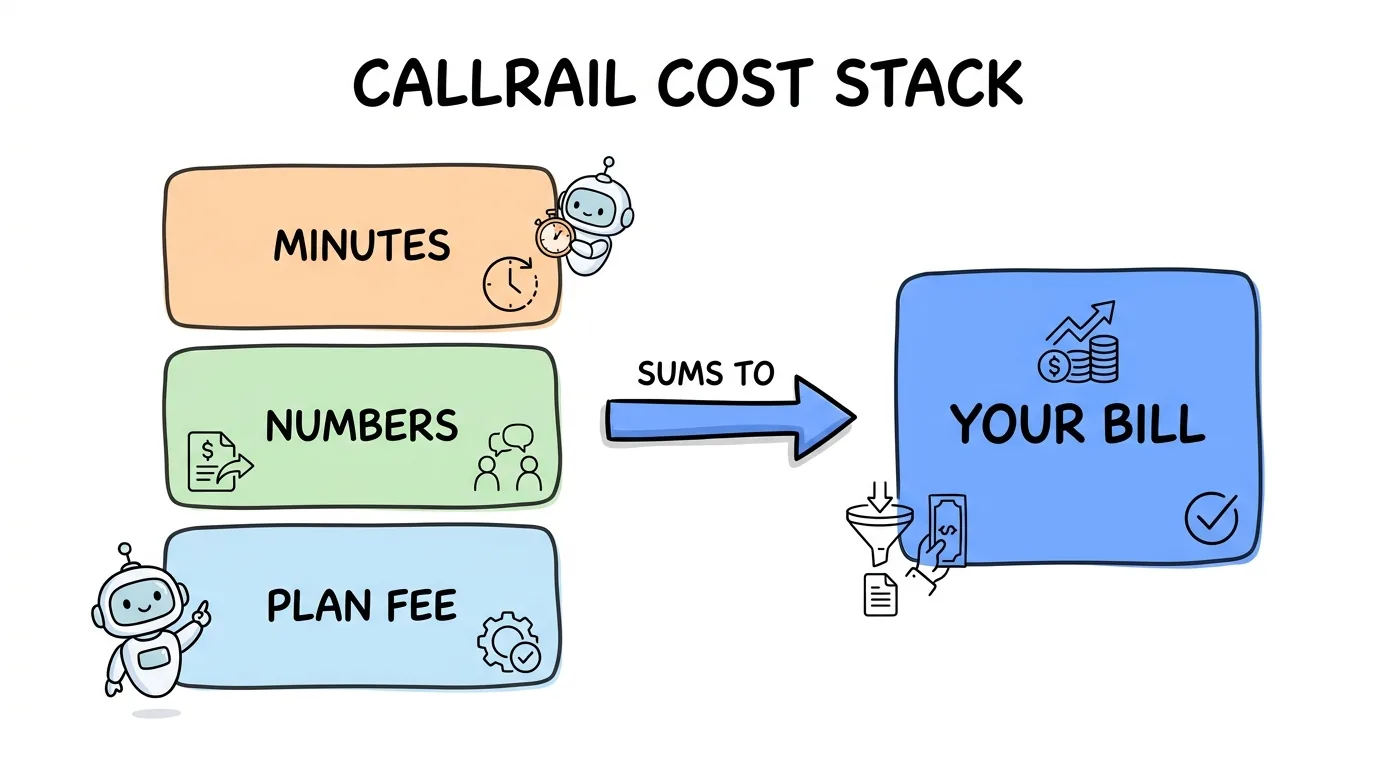
- Per-minute usage adds variable costs: Ringba bills tracking minutes, numbers, recording, and transcription on top of the plan fee, so the total grows with call volume.
- Lead Distro AI starts at $297/mo (Starter) with flat-rate platform pricing plus usage-based call tracking, and it handles both inbound calls and web form leads through the same routing engine.
- A 7-day free trial is available for Lead Distro AI. A credit card is required to activate the trial.
- The right choice depends on your channel mix: in our view, pure pay-per-call networks with high call volume are a natural fit for Ringba, while agencies running web leads alongside calls favor Lead Distro AI.
How Ringba Pricing Works in 2026
Ringba publishes three plans on its pricing page. Each one pairs a monthly plan fee with metered usage. All figures below are from Ringba's pricing page as of September 2026.
Business: $147/month billed monthly ($127/month billed annually). Usage: local tracking $0.055/min, toll-free tracking $0.06/min, local numbers $3/month, toll-free numbers $4/month, call recording $0.01/min, and transcription $0.04/min.
Professional: $297/month billed monthly ($197/month billed annually). Usage: local tracking $0.05/min, toll-free tracking $0.055/min, local numbers $2/month, toll-free numbers $3/month, call recording $0.005/min, and transcription $0.035/min. Professional adds White Label, Ring Trees, Predictive Routing (eRPC), and Revenue Recovery.
Enterprise: custom pricing. Enterprise adds Real-Time Bidding, Ping/Post Call Trading, a dedicated CSM, and a dedicated technical contact. Ringba also says it is happy to work with SLA requirements.
No contracts or setup fees: Ringba says it does not require contracts or charge setup fees, and its platform overview lists "No Minimums."
Ring tree technology: Ringba's Ring Tree® lets you sell calls to buyers inside your own private real-time bidding marketplace. Ringba pings the buyers, collects their bids, and transfers the call to the winning bid. Buyers can bid based on caller demographic and location data, and Ringba's partner management covers routing, capping, and financial rules for buyers and sellers.
IVR and call logic: Ringba offers a drag-and-drop IVR builder that lets agencies pre-qualify callers before routing. A caller might press 1 for auto accident claims and be routed to a personal injury buyer pool, or press 2 for general inquiries routed elsewhere.
Ping-post for calls: Ringba lists Ping/Post Call Trading and Real-Time Bidding on its Enterprise plan. This lets a network notify multiple buyers and let them bid on a call before it connects.
All Ringba pricing above is taken from Ringba's pricing page as of September 2026. Confirm current rates directly with Ringba before committing.
What Is NOT Included in Ringba's Base Price
Understanding ringba cost means understanding what the plan fee covers and what sits on top of it.
Per-minute usage: Tracking minutes are billed on top of the plan fee: $0.055 per local minute on Business and $0.05 on Professional (as of September 2026). For a high-volume pay-per-call agency routing thousands of calls per day, per-minute charges can easily exceed the plan fee and dominate the total ringba cost for the month.
Numbers, recording, and transcription: Each local or toll-free number carries a monthly fee, and recording, transcription, and Instant Caller Profile pulls ($0.15 per pull on Business) are metered separately. Ringba notes that transcription summarization, sentiment analysis, conversion detection, and other services may incur additional costs.
Ring Tree setup help: Professional includes a courtesy setup of 5 Ring Trees per month by Ringba's team, and additional ones are $100 each. Ring Trees you set up yourself are unlimited (as of September 2026).
TCPA Shield: Ringba lists TCPA Shield as available on all tiers for an additional fee.
Ringba Pricing vs Lead Distro AI
The table below compares Ringba against Lead Distro AI across the criteria that matter most to pay-per-call and pay-per-lead agencies. Ringba pricing is taken from Ringba's pricing page as of September 2026; confirm current rates at ringba.com before purchasing.
| Feature | Ringba | Lead Distro AI (Starter) | Lead Distro AI (Growth) |
|---|---|---|---|
| Base price | From $147/mo (Business, billed monthly) + usage (as of September 2026) | $297/mo flat | $497/mo flat |
| Call tracking | Usage-based (per-number + per-minute) | Usage-based (per-number + per-minute) | Usage-based (per-number + per-minute) |
| Ring tree routing | Yes (Professional plan and up) | No (Growth and up) | Yes (included) |
| Web lead distribution | Not verified | Yes (round robin, weighted, priority) | Yes (all 4 methods, adds ping-post) |
| Ping-post API for calls | Yes (Enterprise plan) | No (Growth and up) | Yes |
| Ping-post API for web leads | Not verified | No (Growth and up) | Yes |
| Free trial | Not verified | 7 days, credit card required | 7 days, credit card required |
| Best for | Large pay-per-call networks, performance marketing agencies | PPL + PPC agencies with both calls and form leads | High-volume agencies, multi-channel lead distribution |
Not verified: we could not confirm this on the vendor's own website as of September 2026. Check with the vendor.
Ringba is built for pay-per-call: in its own words, it was "built from the ground up for marketing professionals and pay per call." For an agency running a call network with dozens of buyers bidding on inbound calls, its ring tree and real-time bidding tools are built for that job.
Lead Distro AI is built for agencies running both inbound calls and web form leads from the same routing engine. A personal injury agency generating calls from paid search and form leads from Facebook can route both through the same distribution logic, track both in the same dashboard, and run ping-post on both call and form inventory.
For agencies comparing the two, the question is whether the lead mix is calls-only or calls-plus-forms. You can see how the dual-channel distribution works on the interactive product tour before starting a trial.
Who Ringba Is Best For
In our view, Ringba pricing and its ring tree model suit a specific buyer profile, and for that profile, it delivers genuine value.
Large pay-per-call networks: Ringba's ring trees, real-time bidding, partner management, and IVR tools are aimed at operations routing call volume to pools of competing buyers. If an agency runs a network with 20 or more active buyers bidding on inbound call inventory across multiple verticals, that is the core Ringba use case as we see it.
Performance marketing agencies running calls-only campaigns: Agencies generating inbound calls through paid search, radio, TV, or direct mail, where every incoming call is the lead (no form submissions), are a natural fit for Ringba's model. The per-minute pricing makes sense when calls are the primary inventory unit and volume is high enough that Professional's lower per-minute rates or a custom Enterprise plan pay off.
Agencies with existing billing relationships at Ringba: For teams already embedded in the Ringba ecosystem with existing buyer and publisher relationships configured in the platform, migration cost is a real consideration. If the ring tree setup is working and the vertical is calls-only, staying may make more sense than switching.
Who Should Consider Lead Distro AI Instead
Three situations consistently push agencies toward Lead Distro AI over Ringba, regardless of ringba pricing negotiations.
Agencies distributing web form leads alongside calls: Lead Distro AI handles both channels from the same routing engine, which means a PPL agency can run inbound call campaigns and Facebook lead form campaigns through one platform rather than two. See the full lead distribution platform comparison for how the feature sets stack up across multiple platforms.
Agencies that want one flat platform fee for leads and calls: Ringba and Lead Distro AI both charge a monthly plan fee plus call usage. Lead Distro AI's Starter plan at $297/mo is a flat platform subscription that also covers web lead distribution, with call tracking costs (per-number monthly fee plus per-minute rate) sitting on top. The platform fee does not change month to month based on call volume.
Agencies newer to pay-per-call infrastructure: Lead Distro AI is built for agency operators who need ring tree routing, round-robin and weighted distribution, and lead scoring without requiring deep technical configuration. If the agency is building its first pay-per-call operation, ease of setup matters alongside the ringba cost comparison.
If any of these situations apply, start a free 7-day trial of Lead Distro AI to see how call tracking and lead distribution work together in one platform. A credit card is required to begin.
FAQ
How much does Ringba cost per month?
Ringba publishes three plans: Business at $147/mo billed monthly ($127/mo billed annually), Professional at $297/mo billed monthly ($197/mo billed annually), and Enterprise at custom pricing (as of September 2026). Per-minute tracking, per-number fees, recording, and transcription are billed on top of the plan. Verify current ringba cost on Ringba's pricing page at ringba.com.
How much does Ringba charge per minute?
Ringba lists local tracking at $0.055/min on Business and $0.05/min on Professional, and toll-free tracking at $0.06/min on Business and $0.055/min on Professional (as of September 2026). Enterprise rates are custom. Local numbers are $3/month on Business and $2/month on Professional. Confirm current rates with Ringba before signing. Lead Distro AI's model is published at $147/mo (Call Tracking Only) or $297/mo (Starter) with per-number and per-minute usage costs disclosed upfront.
What is the difference between Ringba and Lead Distro AI?
Ringba describes itself as an inbound call tracking and analytics platform for marketers, brands, and pay per call, with ring trees and real-time bidding for calls. Lead Distro AI is a lead distribution platform that handles both inbound calls and web form leads through the same routing engine, with ring tree call routing, round-robin and weighted lead distribution, lead scoring, and ping-post API for both call and form inventory. Ringba charges a monthly plan fee (from $147/mo billed monthly, as of September 2026) plus usage; Lead Distro AI uses a flat monthly subscription with usage-based call tracking on top. A 7-day free trial is available for Lead Distro AI with a credit card required.
Is Ringba worth the price for small pay-per-call agencies?
Ringba's Business plan starts at $147/mo billed monthly plus usage, and Ring Trees start on the $297/mo Professional plan (as of September 2026). Smaller agencies should model their expected minutes and numbers before choosing a tier. Lead Distro AI's $297/mo Starter plan provides web lead distribution, and its $497/mo Growth plan adds ring tree call routing, with a 7-day trial (credit card required) to test the platform before committing. See the full pay-per-call software comparison for a side-by-side of platforms at different scale levels.
Does Ringba offer a free trial?
We could not confirm a current free trial on Ringba's website as of September 2026. Its Business and Professional plans have self-serve signup, and a demo is also available, so check with Ringba for current trial terms. Lead Distro AI offers a 7-day free trial that includes ring tree call routing, round-robin and weighted lead distribution, lead scoring, and ping-post API access. A credit card is required to start the trial. You can also explore the full feature set on the product tour before committing.
Conclusion
Ringba pricing in 2026 is a published plan fee plus usage: Business at $147/mo and Professional at $297/mo billed monthly, with Enterprise priced custom (as of September 2026). The ring tree is, in our view, a genuinely strong routing technology, and for agencies running pure call networks with multiple competing buyers, it covers the core use case well. Per-minute and per-number usage adds variability, so model your expected volume before choosing a tier.
For agencies distributing both calls and web form leads, Lead Distro AI combines ring tree call routing with full web lead distribution in one subscription, starting at $297/mo for lead distribution and $497/mo with ring trees. Start your 7-day free trial and route your first lead, call or form, in minutes. A credit card is required to activate the trial.
Evaluating Ringba but need to distribute web form leads too? Lead Distro AI handles both channels from one routing engine. Start your 7-day free trial for $297/mo. A credit card is required. Cancel anytime during the trial and you will not be charged.
About the Author
Founder & CEO of Lead Distro AI & Great Marketing AI
UC Berkeley graduate and former software engineer at Microsoft. Rafael built Lead Distro AI after managing over $10M in ad spend for performance marketing agencies (pay-per-lead and pay-per-call), including running campaigns for Neil Patel. He combines deep software engineering expertise with hands-on performance marketing experience to build tools that help these agencies scale profitably.
About Lead Distro AI
Lead Distro AI: Capture, Route, and Sell Every Lead, Call, and Appointment
The modern platform for pay-per-lead and pay-per-call agencies. Route, score, and deliver leads with AI-powered automation and real-time P&L tracking. Built for performance marketing agencies and lead buyers across legal, insurance, mortgage, solar, and home services verticals.
4 Distribution Methods
Waterfall, Round Robin, Weighted, Ping-Post
Ping-Post Auctions
Real-time bidding with sub-second routing
Real-Time P&L Reporting
Track revenue, costs, and profit per campaign
Call Tracking
Assign tracking numbers, record calls, and attribute conversions
Lead Scoring
Score every lead before routing to maximize conversion
Partner Portal
Self-serve dashboard for buyers to track leads