Construction Leads: How Agencies Price, Sell, and Route Them
How construction leads are priced, sourced, qualified, and distributed in 2026. Covers lead costs, exclusive vs shared, top sources, and real-time routing for agencies.

Rafael Hernandez
Founder & CEO
Ex-Microsoft SWE · $10M+ PPL ad spend
I hope you enjoy reading this blog post. If you want to try Lead Distro AI for free, click here.
Author: Rafael Hernandez | Founder & CEO of Lead Distro AI
Last Updated: September 2, 2026
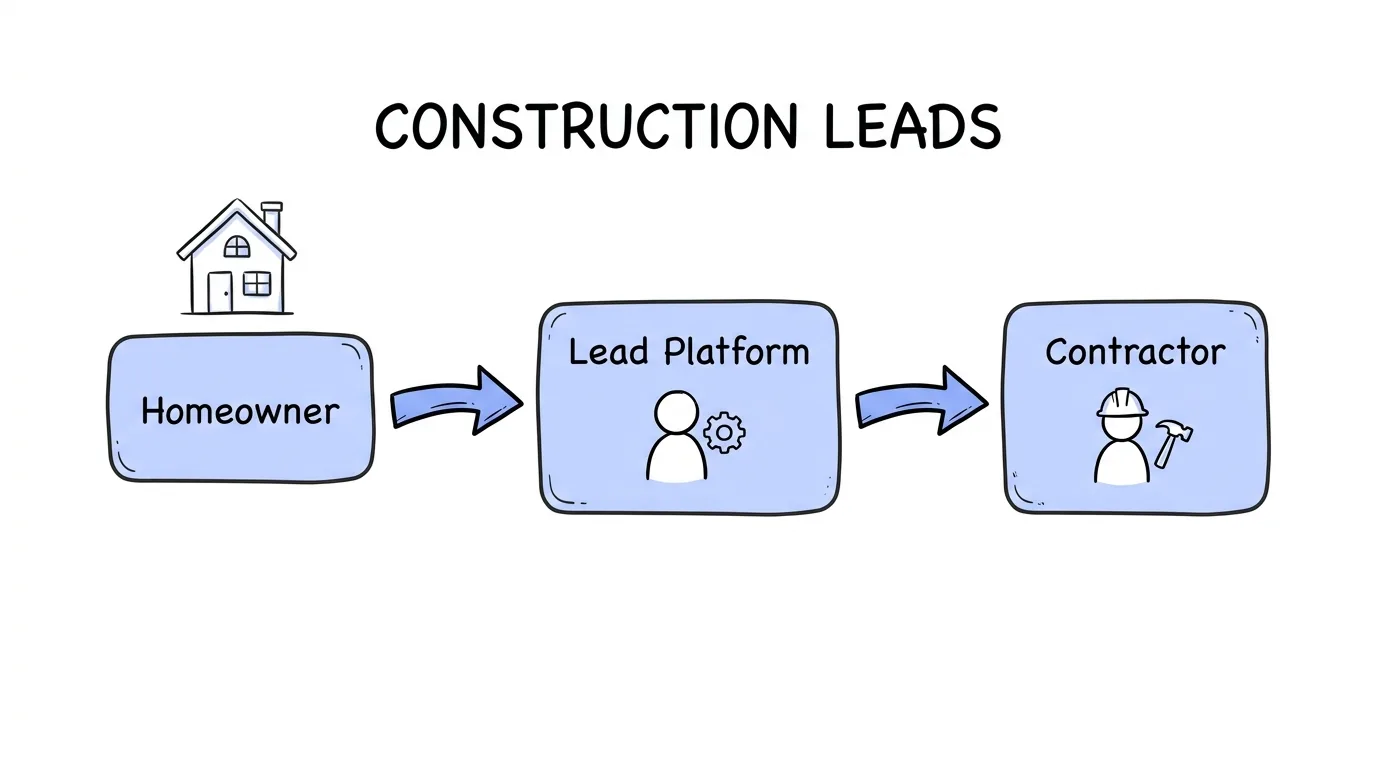
Construction leads are contact records from homeowners, property managers, or developers who are actively looking for a contractor to build, remodel, or repair something. In 2026 they typically cost $20 to $150 each, with commercial construction leads reaching $200 or more because a single won project can be worth six figures. The price swing comes down to three variables: project size, geography, and whether the lead is exclusive to one contractor or shared with three to five. Demand behind those leads is enormous. Total U.S. construction spending has been running above a $2 trillion seasonally adjusted annual rate, according to the U.S. Census Bureau's Construction Spending survey, and the Harvard Joint Center for Housing Studies puts homeowner improvement and repair spending near $500 billion a year in its Leading Indicator of Remodeling Activity.
Lead Distro AI does not sell leads. It is software for the companies that generate construction leads and route them to buyers. If you are a contractor looking to buy leads, this guide will help you judge price and quality, but you will need a lead vendor to buy from.
This guide covers construction lead generation end to end: what these leads actually are, what they cost, where to buy them, how to qualify them, and how pay-per-lead and pay-per-call agencies route them to the right contractor in seconds. If you are choosing which vertical to build an agency around, read it alongside our guide to the best lead generation niches.
Key Takeaways
- Construction leads average $20 to $150 each, with commercial project leads reaching $200 or more because average contract values dwarf residential work.
- Exclusive leads close 4x to 6x more often than shared leads in construction, which makes the exclusivity premium rational for any contractor whose average job clears $10,000.
- Google Local Services Ads is the fastest-growing source, followed by Angi and Facebook Lead Ads, because the homeowner initiates contact instead of being interrupted.
- Agencies distribute construction leads with ping post or round robin routing and deliver them in under five seconds, since response speed is the largest single driver of close rate.
- Project-size mismatch is the biggest quality problem. Filtering on a minimum budget question at intake removes most refund requests before they happen.
What Are Construction Leads?
A construction lead is a qualified request for work, not a name on a list. The useful way to segment them is by who is buying and what is being built.
Residential remodeling leads are the bulk of general contractor leads and cover kitchens, bathrooms, additions, decks, and basement finishes. Average project values run $15,000 to $90,000, and the homeowner is usually the sole decision maker alongside a spouse.
New construction leads come from homeowners building custom homes and from developers who need subcontractor leads for framing, concrete, electrical, and mechanical scopes. Sales cycles are long, often 60 to 180 days, but contract values are the highest in residential.
Repair and restoration leads are event-driven: storm damage, water intrusion, foundation issues. Urgency is high and the decision window is measured in days.
Commercial construction leads originate with property managers, facilities directors, and general contractors bidding out work. These buyers require bonding, insurance certificates, and often prequalification, so they should only route to specialist contractors.
Segmenting on intake is not paperwork. It determines price, routing rules, and which buyer in your network actually wants the lead. Well-segmented construction leads for general contractors carry a scope, a budget band, and a timeline, not just a phone number.
How Much Do Construction Leads Cost?
The benchmarks below reflect aggregated pricing across home services marketplaces and campaigns running on the Lead Distro AI platform. Use them as a starting band, then adjust for your market.
| Lead Type | Shared Lead | Exclusive Lead | Live Transfer |
|---|---|---|---|
| Repair / handyman scope | $12 - $25 | $22 - $45 | $40 - $70 |
| Residential remodeling | $20 - $45 | $45 - $95 | $85 - $140 |
| Custom home / new build | $30 - $60 | $60 - $130 | $120 - $190 |
| Commercial construction | $45 - $90 | $95 - $200 | $180 - $300 |
| Subcontractor / trade scope | $10 - $22 | $20 - $50 | $45 - $80 |
Two adjustments matter. Metro premiums of 30% to 50% apply in high-cost markets like Los Angeles, Seattle, Austin, and the Northeast corridor, where project values are structurally larger. Seasonality pushes exterior work such as roofing, siding, and concrete toward the top of the range from April through September, and toward the bottom in northern markets during winter.
"The mistake most new agencies make is pricing construction leads off the lead cost instead of the job value," says Rafael Hernandez, Founder and CEO of Lead Distro AI. "A general contractor closing one $60,000 remodel out of ten exclusive leads is happy paying $95 a lead. The same contractor will churn out of a $20 shared lead program in three weeks because the phone never gets answered first."
For a full model of margin, floor prices, and buyer caps, see how to price construction leads.
Where to Buy Construction Leads
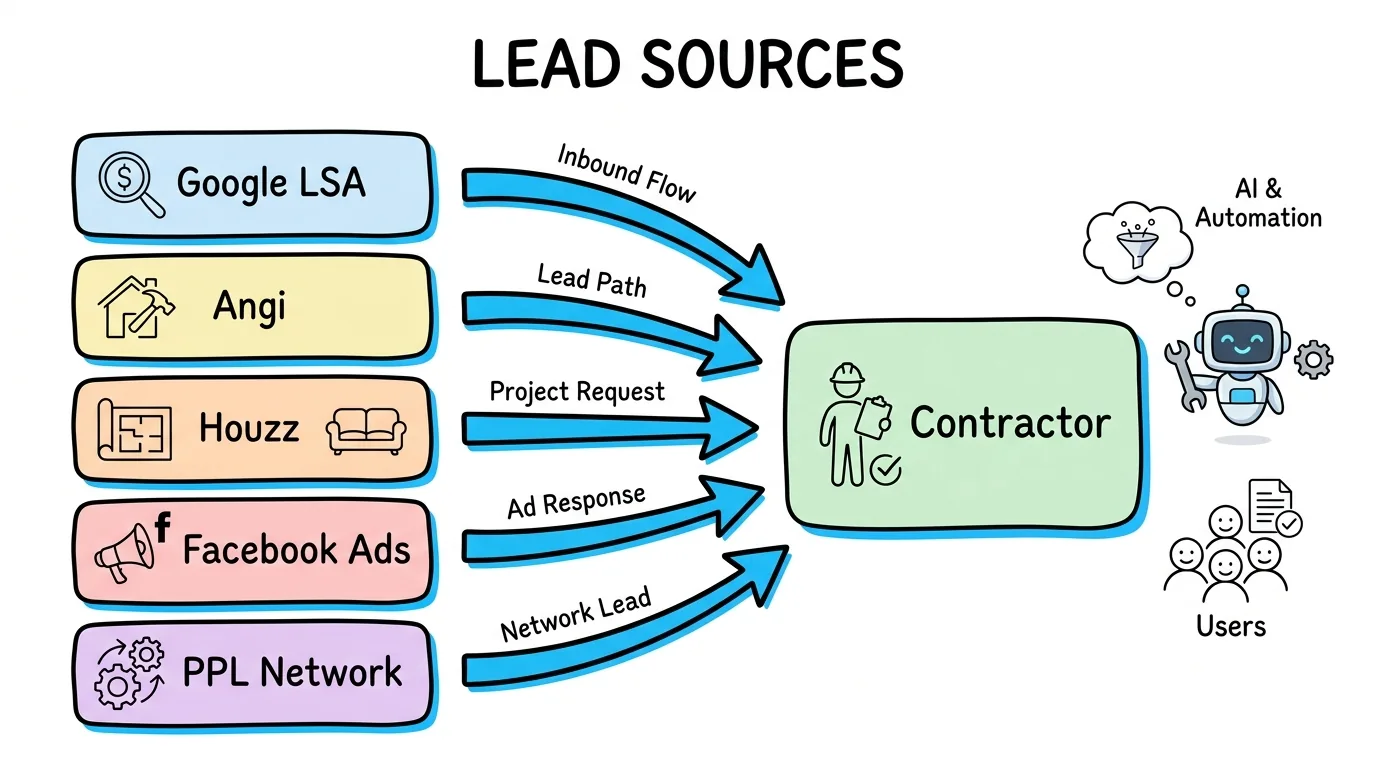
Google Local Services Ads is the highest-intent source available to contractors. You pay per verified lead rather than per click, and the Google Guaranteed badge lifts trust at the exact moment of choice. Google documents the pay-per-lead model and dispute process in its Local Services Ads help center.
Angi, Thumbtack, and HomeAdvisor deliver volume quickly, but leads are shared with three to five contractors by default. They are useful for filling capacity, not for building a book of business.
Houzz skews toward higher-budget remodeling and design-build work, which makes it a strong fit for contractors targeting $40,000-plus projects.
Facebook and Instagram Lead Ads are the cheapest per lead and the lowest intent. They work when paired with immediate follow-up and a hard budget qualifier on the form, and they fail without both.
Pay-per-lead networks and agencies aggregate all of the above and resell. This is where most contractor leads volume actually comes from, and it is the layer we build for. If your agency runs multiple trades, our home services lead generation guide maps the same source stack across HVAC, plumbing, and roofing.
Exclusive vs Shared Construction Leads
The single biggest lever on close rate is whether the contractor is competing against four other bids on the same phone call.
| Factor | Shared Leads | Exclusive Leads |
|---|---|---|
| Typical cost | $12 - $45 | $22 - $200 |
| Contractors receiving it | 3 to 5 | 1 |
| Typical close rate | 3% to 6% | 18% to 30% |
| Effective cost per job | Often higher | Usually lower |
| Best for | Filling idle crew capacity | Primary pipeline |
Shared general contractor leads look cheaper per record and are usually more expensive per signed contract. The math flips as soon as average job value passes roughly $10,000, which covers nearly all remodeling and new build work. Shared distribution still earns its place for low-ticket repair scopes and for contractors who need volume today. The deeper tradeoff analysis lives in our breakdown of exclusive vs shared construction leads.
How to Qualify Construction Leads
Most refund disputes in this vertical trace to one problem: the contractor received a lead for a job they do not do at a budget they cannot serve. Four intake filters remove almost all of it.
Budget range. Ask for a project budget band on the form, not an open text field. A homeowner selecting "under $5,000" should never route to a design-build firm with a $50,000 minimum.
Project type and scope. Kitchen, bath, addition, roof, foundation, commercial buildout. Scope drives routing more than geography does.
Timeline. "Ready to start in 30 days" and "planning for next year" are different products and should carry different prices.
Decision-maker and ownership. Renters cannot authorize construction. On commercial work, confirm whether the contact can sign or is collecting bids for someone who can.
Speed is the fifth filter, and it is not optional. The Harvard Business Review study on online sales leads found companies that responded within an hour were nearly seven times more likely to qualify the lead than those that waited even one hour longer. In construction, where homeowners commonly request three bids in one sitting, the first caller sets the anchor.
How Agencies Route Construction Leads
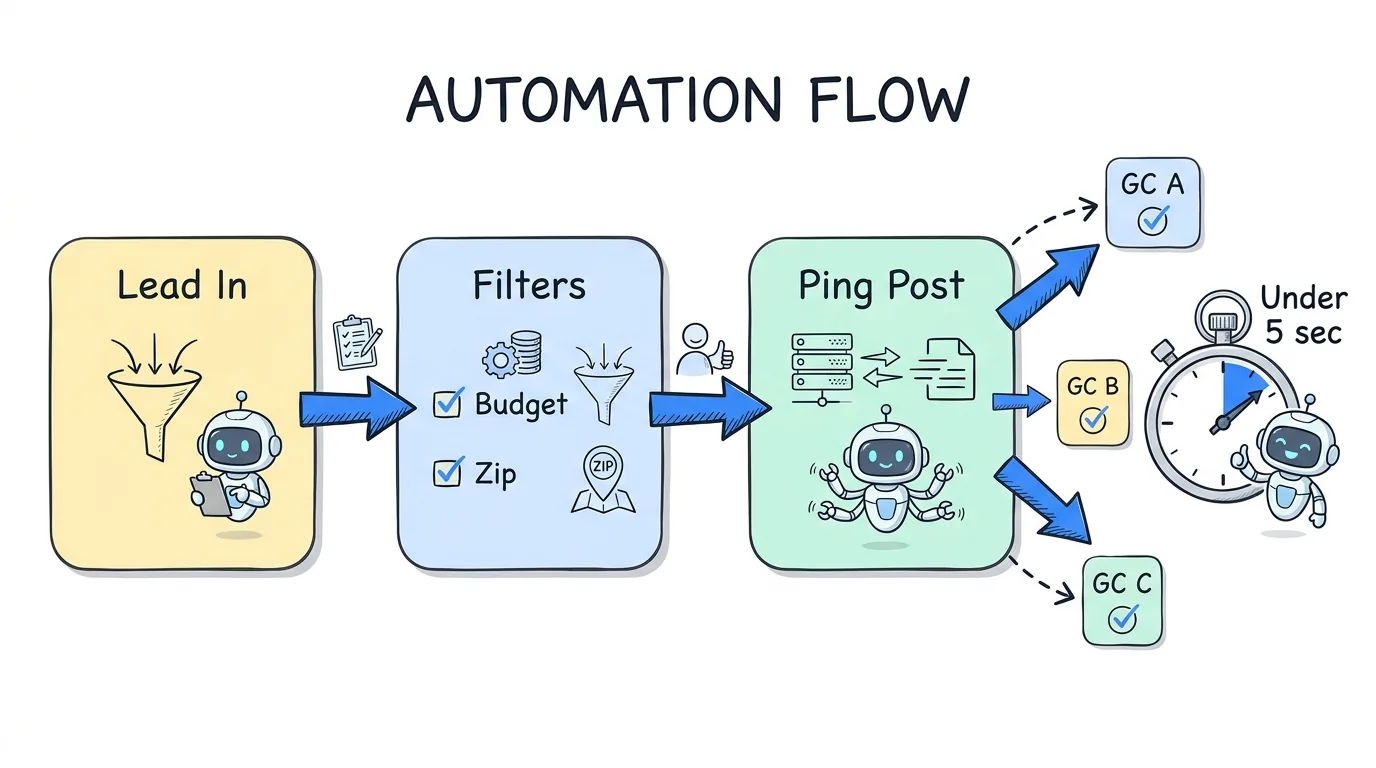
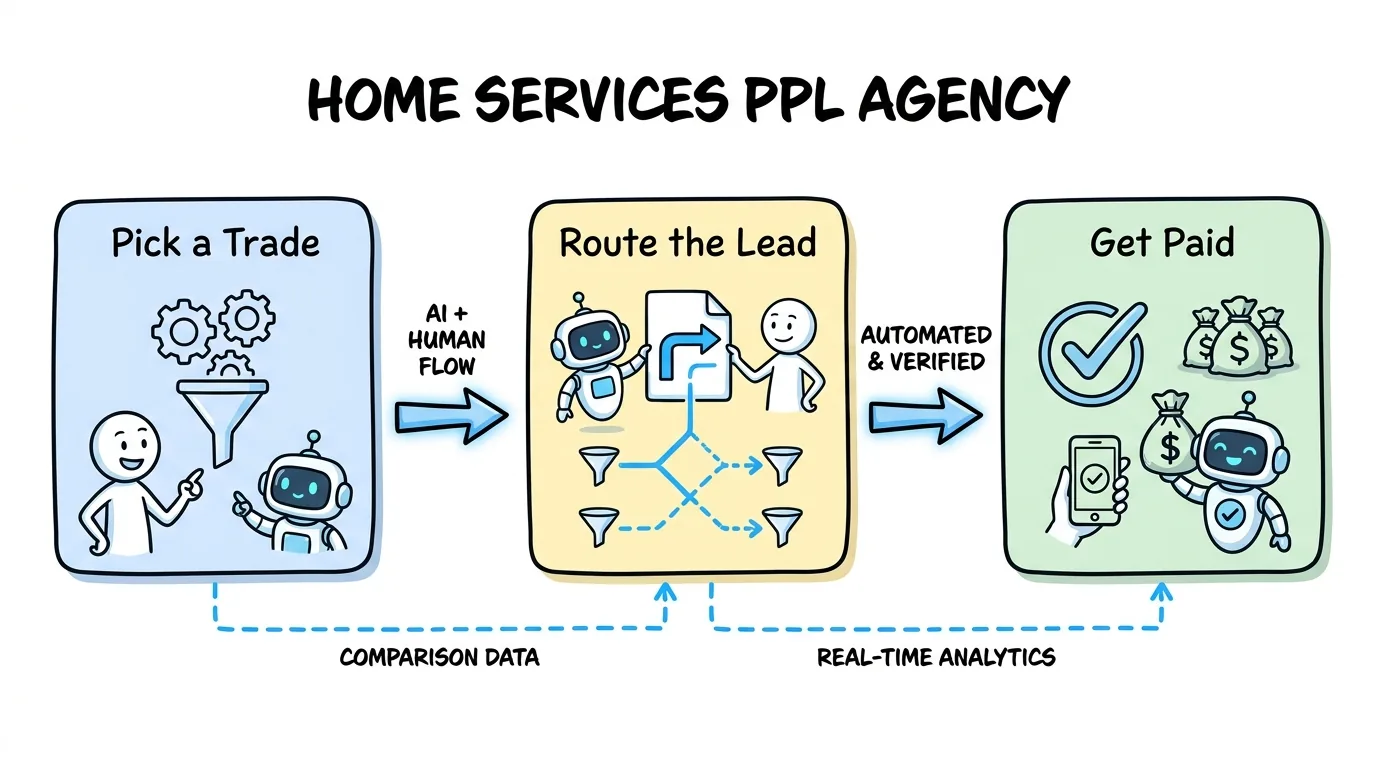
This is the operational core of a construction lead generation business. A lead arrives, gets validated and filtered, and is delivered to the buyer most likely to close it, all before the homeowner opens another tab.
Lead Distro AI supports four distribution methods: Round Robin, Weighted, Priority/Waterfall, and Ping Post. Construction agencies typically run round-robin lead distribution for steady residential remodeling volume so every general contractor in the rotation gets an equal share, then switch to Ping Post for commercial construction leads where buyers will bid well above the floor price for a single high-value opportunity.
Around that sit the controls that keep buyers renewing: zip code and radius matching so a contractor never pays for work outside their service area, daily and monthly caps so a small crew is not buried, budget-band filters, duplicate detection, and real-time profit and loss reporting per campaign. Pay-per-call agencies add call tracking on top, which is billed on usage with a monthly per-number fee plus a per-minute rate for inbound calls. See the full routing stack in the lead distribution platform for contractors.
Compliance for Construction Leads
Two rule sets govern construction lead generation. The first is the Telephone Consumer Protection Act, enforced by the Federal Communications Commission, which requires prior express written consent before autodialed or prerecorded marketing calls and texts. Practical requirements: a clearly worded consent checkbox that is not pre-ticked, the specific seller or sellers named on the form, timestamped consent records stored with each lead, and Do Not Call list scrubbing. Note that the FCC's one-to-one consent rule was vacated by the Eleventh Circuit in January 2025, so multi-seller consent language remains permissible, but consent still has to be express, written, and provable.
The second is state contractor licensing. Most states, including California, Florida, and Arizona, require a license for construction work above a dollar threshold. Routing a $60,000 addition lead to an unlicensed handyman creates liability for the homeowner and reputational damage for your network. Verify license numbers at onboarding, store the expiration date, and suspend routing when a license lapses.
FAQ
How much do construction leads cost?
Construction leads generally run $20 to $150 each. Shared residential remodeling leads sit at the low end around $20 to $45, exclusive remodeling leads run $45 to $95, and exclusive commercial construction leads reach $95 to $200 or more. Live transfers, where the homeowner is connected by phone in real time, carry the highest prices at $85 to $300 depending on scope. Metro markets add a 30% to 50% premium, and exterior trades price at the top of their band during peak season from April through September.
Where can I buy construction leads?
The main sources are Google Local Services Ads, Angi, Thumbtack, HomeAdvisor, Houzz, Facebook and Instagram Lead Ads, and pay-per-lead networks that aggregate and resell from all of them. Google Local Services Ads produces the highest intent because the homeowner initiates the contact and the Google Guaranteed badge builds trust before the call. Marketplaces such as Angi deliver volume fast but share each lead with three to five contractors. Most contractors end up with a mix of owned generation and purchased volume to cover capacity gaps.
Are construction leads worth it for small contractors?
Yes, when the math is run per signed job rather than per lead. A small remodeling contractor closing 20% of exclusive leads at $75 each pays roughly $375 in acquisition cost for a project often worth $30,000 or more. The failure mode is buying shared leads without a fast follow-up process, because a 4% close rate on a shared lead can cost more per job than an exclusive program. Start with a small exclusive volume, measure close rate for 60 days, then scale the source that actually produces contracts.
What is the best lead source for general contractors?
Google Local Services Ads is the strongest single source for general contractor leads because you pay per verified lead, the homeowner reached out first, and Google's badge reduces the trust gap. For contractors focused on higher-budget remodels, Houzz outperforms general marketplaces on project value. The most durable setup is a blend of about 60% owned generation through Local Services Ads, local SEO, and a Google Business Profile, plus 40% purchased leads from a pay-per-lead agency to fill crew capacity when owned volume dips.
How do agencies distribute construction leads?
Agencies use lead distribution software to validate, filter, and deliver each lead automatically, usually in under five seconds. A typical construction setup applies zip code and radius matching, a minimum budget filter, and project-type routing, then delivers through Round Robin for even volume sharing or Ping Post for high-value commercial work where buyers bid in real time. Daily caps prevent overselling to a single contractor, duplicate detection blocks resold records, and per-campaign profit and loss reporting shows which sources and buyers are actually profitable.
Conclusion
Construction leads remain one of the strongest verticals in performance lead generation because average job values are high, demand is anchored to a multi-trillion-dollar spending base, and homeowner urgency compresses the decision cycle. The operational fundamentals do not change with the trade: segment by project type and budget, price against job value rather than lead cost, favor exclusivity once average contracts pass $10,000, and deliver in seconds rather than minutes.
For agencies, the durable advantage is not the source. Anyone can buy Angi volume and resell construction leads for general contractors. It is the routing layer: filtering out mismatched leads before they cost you a refund, matching each lead to the contractor most likely to close it, and proving the margin per campaign with real numbers. That is exactly what a distribution platform is for.
Ready to start distributing construction leads with round robin routing, ping post bidding, and zip code filters? Lead Distro AI plans start at $147 per month for call tracking only and $297 per month for lead distribution, with ping post bidding from the $497 per month Growth plan. The free trial runs 7 days and a credit card is required, so you can cancel anytime before it ends.
About the Author
Founder & CEO of Lead Distro AI & Great Marketing AI
UC Berkeley graduate and former software engineer at Microsoft. Rafael built Lead Distro AI after managing over $10M in ad spend for performance marketing agencies (pay-per-lead and pay-per-call), including running campaigns for Neil Patel. He combines deep software engineering expertise with hands-on performance marketing experience to build tools that help these agencies scale profitably.
About Lead Distro AI
Lead Distro AI: Capture, Route, and Sell Every Lead, Call, and Appointment
The modern platform for pay-per-lead and pay-per-call agencies. Route, score, and deliver leads with AI-powered automation and real-time P&L tracking. Built for performance marketing agencies and lead buyers across legal, insurance, mortgage, solar, and home services verticals.
4 Distribution Methods
Waterfall, Round Robin, Weighted, Ping-Post
Ping-Post Auctions
Real-time bidding with sub-second routing
Real-Time P&L Reporting
Track revenue, costs, and profit per campaign
Call Tracking
Assign tracking numbers, record calls, and attribute conversions
Lead Scoring
Score every lead before routing to maximize conversion
Partner Portal
Self-serve dashboard for buyers to track leads