B2B SaaS Lead Routing: 8 Best Tools Ranked (2026)
B2B SaaS lead routing tools compared: LeanData, HubSpot, Salesforce, and 5 more. See which one fits your CRM and sales motion before you buy.

Rafael Hernandez
Founder & CEO
Ex-Microsoft SWE · $10M+ PPL ad spend
I hope you enjoy reading this blog post. If you want to try Lead Distro AI for free, click here.
Author: Rafael Hernandez | Founder & CEO of Lead Distro AI
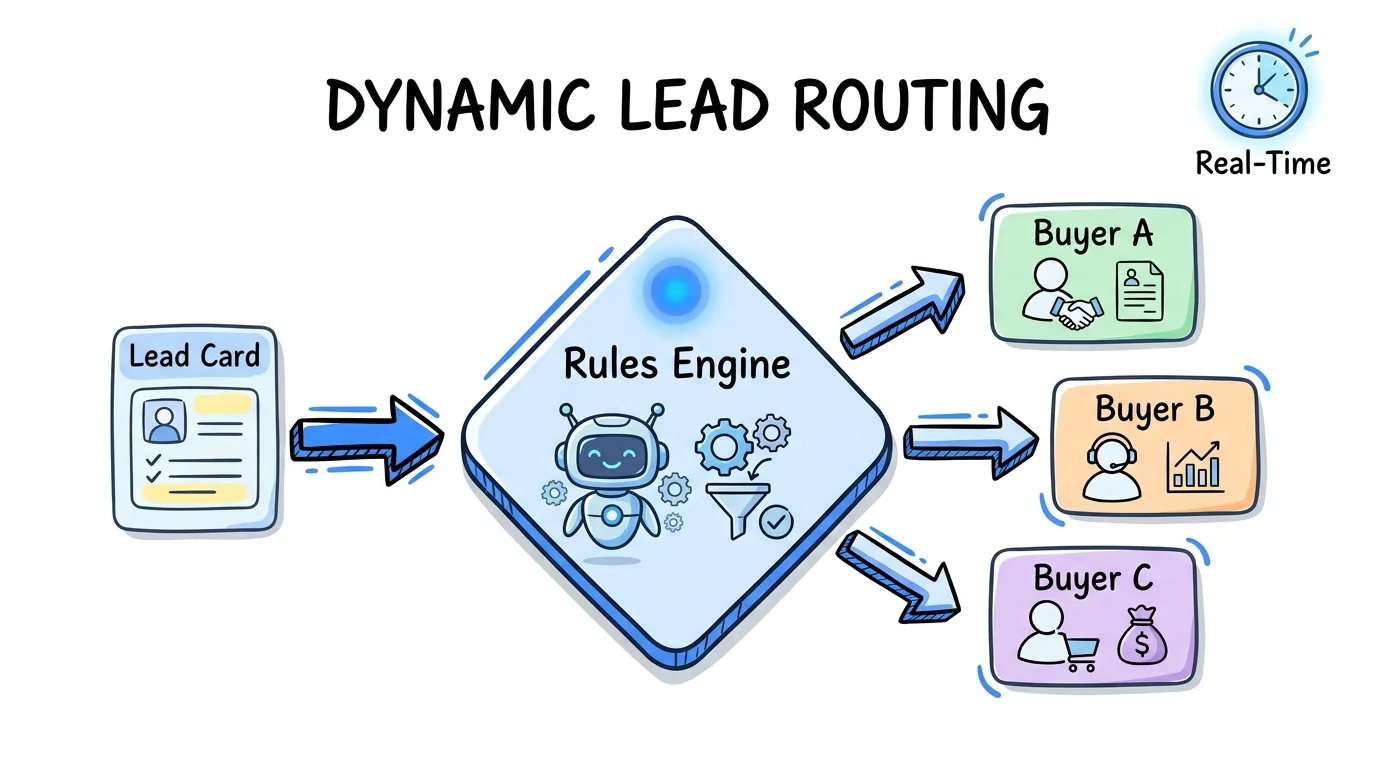
The best inbound lead routing software for B2B SaaS in 2026 depends almost entirely on the CRM you already run. If you live in Salesforce and care about account-based matching, our pick is LeanData. If your stack is HubSpot, HubSpot Operations Hub Enterprise is the cleanest path. For RevOps teams that want configurable round robin and territory logic inside Salesforce, we would shortlist Distribution Engine by NC Squared. And for B2B SaaS companies routing demo requests or trials to external partners, resellers, or multiple buyer accounts, Lead Distro AI handles multi-buyer routing to external destinations.
Speed-to-lead remains the biggest lever in B2B SaaS sales. Inbound MQLs contacted within five minutes are 21x more likely to qualify than leads contacted after 30 minutes (InsideSales LRM Study). The tools below were evaluated on CRM-native fit, round robin and capacity controls, SLA enforcement, account matching, and lead scoring, for a 20 to 200 person revenue team.
Key Takeaways
- There is no single "best" tool. LeanData wins for Salesforce ABM, HubSpot Operations Hub wins for HubSpot-native shops, and Distribution Engine wins for configurable Salesforce routing.
- Speed-to-lead beats sophistication. A simple round robin that responds in under five minutes outperforms a complex routing tree that delays handoff by hours.
- Account matching is the B2B SaaS differentiator. Inbound MQLs from existing target accounts must route to the account owner, not into the round robin pool.
- Lead scoring is becoming table stakes in 2026. Lead Distro AI's rule-based scoring evaluates fit and intent before routing.
- Chili Piper earns a spot for demo-request motions. In our view, fast booking and SDR-to-AE handoff matter as much as the routing rules themselves.
What Makes B2B SaaS Lead Routing Different?
B2B SaaS lead routing is not the same problem as agency or pay-per-lead distribution. Volume is lower, deal sizes are higher, and account ownership creates strict rules about who can touch a given lead. Five characteristics define the problem.
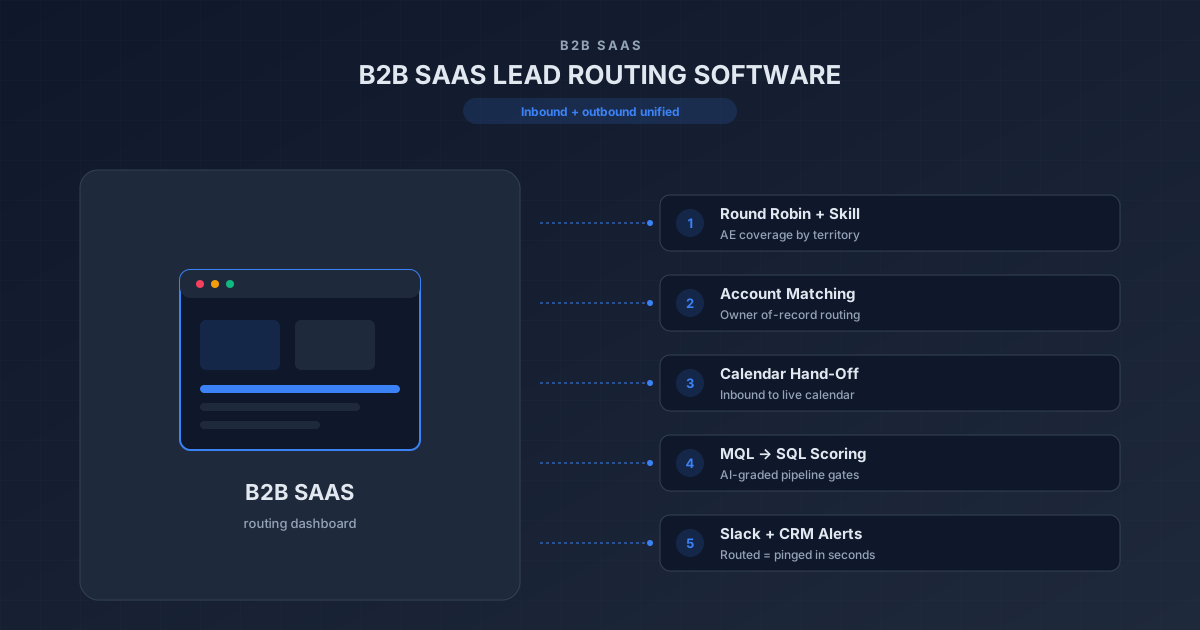
Account ownership comes first. If an inbound demo request lands from someone at an existing target account, the lead must go to the named account owner. Matching by email domain, fuzzy company name, and parent/subsidiary relationships is table-stakes.
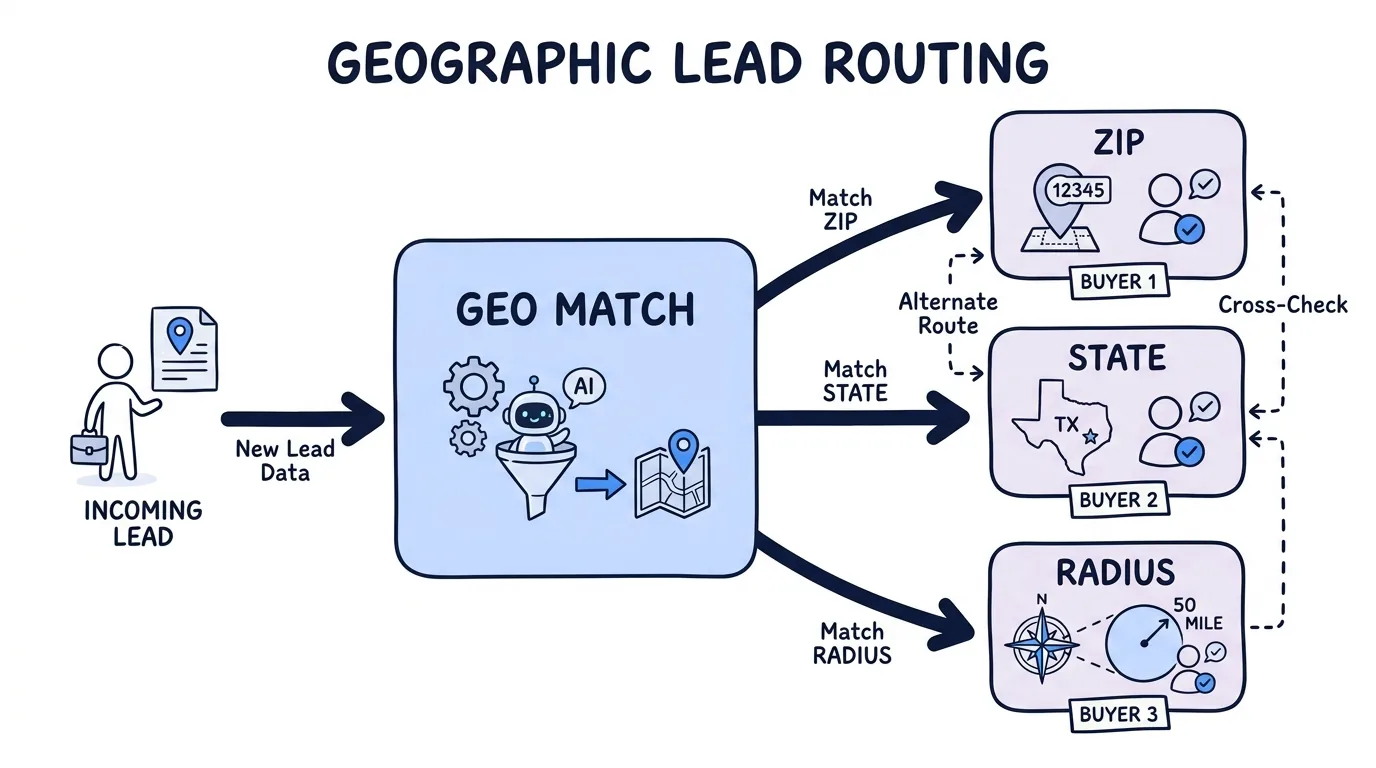
Territory rules layer on top. Geographic territory, segment (SMB, mid-market, enterprise), product line, and vertical are common splits. Most orgs run a matrix of two or three together.
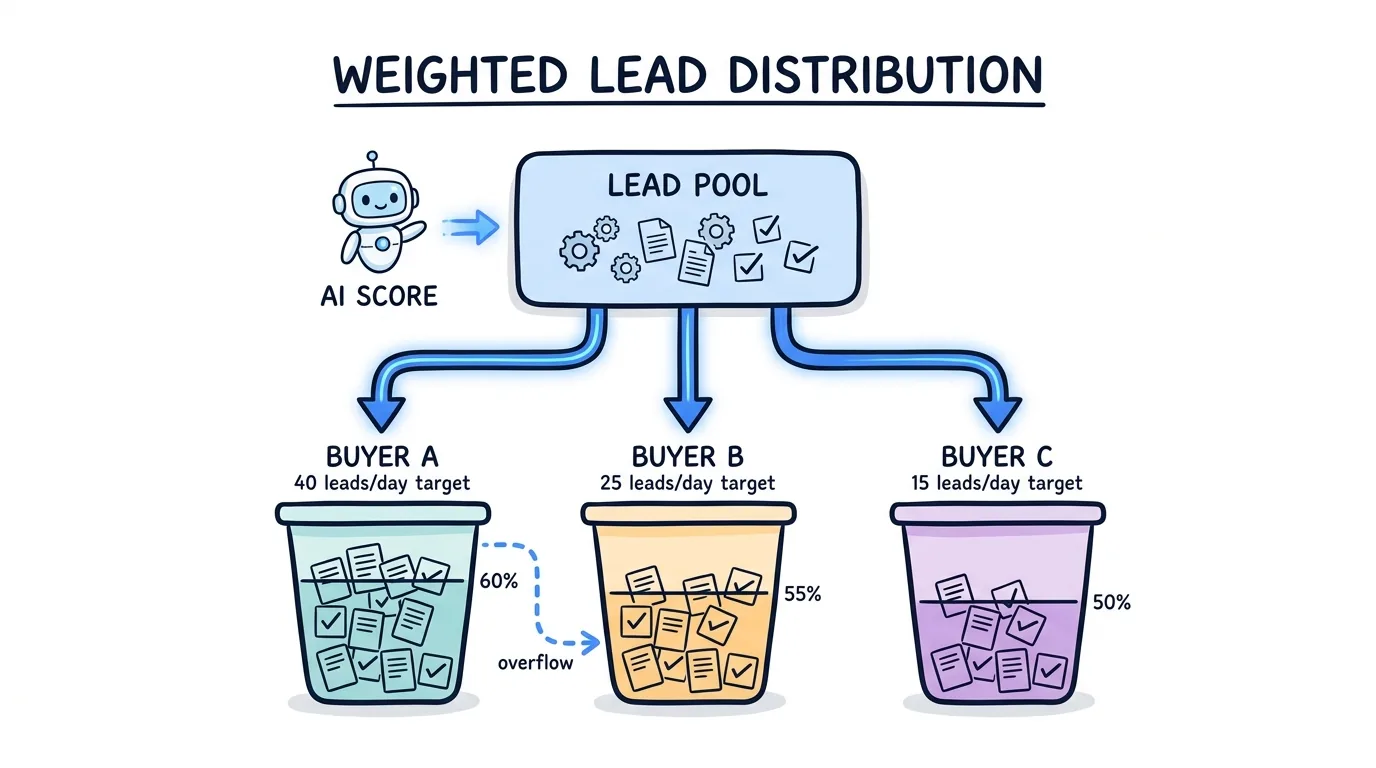
Round robin is for net-new accounts only. Once account match and territory rules fail to find an owner, the remaining leads split round robin across the AEs in that segment.
SLA timers are mandatory. Inbound MQLs have an SLA, typically 5 to 15 minutes for first touch, with a timer that escalates if the assigned rep does not act.
The MQL to SQL handoff is auditable. Marketing, RevOps, and finance all need to see who got which lead, when, and why.
Key Features for B2B SaaS Lead Routing in 2026
Before comparing tools, the feature checklist a RevOps team should evaluate against:
- CRM-native integration with Salesforce or HubSpot (not just webhook delivery)
- Account matching with fuzzy logic, email domain mapping, parent/subsidiary support
- Territory and segment rules with matrix logic across geography, size, product, and vertical
- Round robin with capacity controls so reps on PTO or at capacity skip the queue
- Lead scoring that evaluates fit and intent before routing
- SLA timer with auto-escalation on miss
- Audit trail of every routing decision with reasons
- Source coverage for forms, chat, and calendar bookings (Chili Piper, Drift, etc.)
- Reporting on speed-to-lead, conversion by rep, and rule performance
The 8 Best Inbound Lead Routing Software for B2B SaaS in 2026
1. LeanData: Best for Salesforce ABM and Account Matching
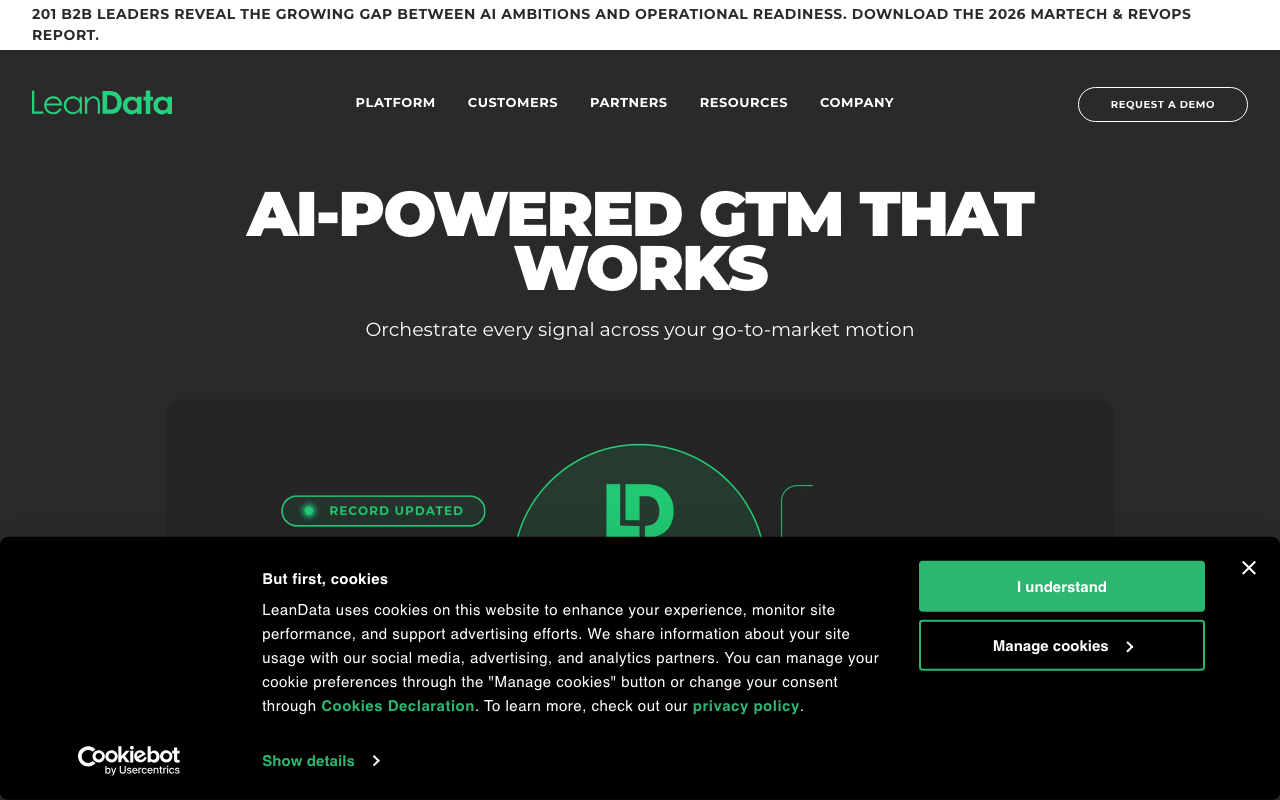
In our view, LeanData is the pick for B2B SaaS teams that route leads inside Salesforce and run account-based marketing programs.
Best for: Mid-market and enterprise B2B SaaS companies running Salesforce, ABM programs, and segmented sales teams.
2. HubSpot Operations Hub Enterprise: Best for HubSpot-Native Shops
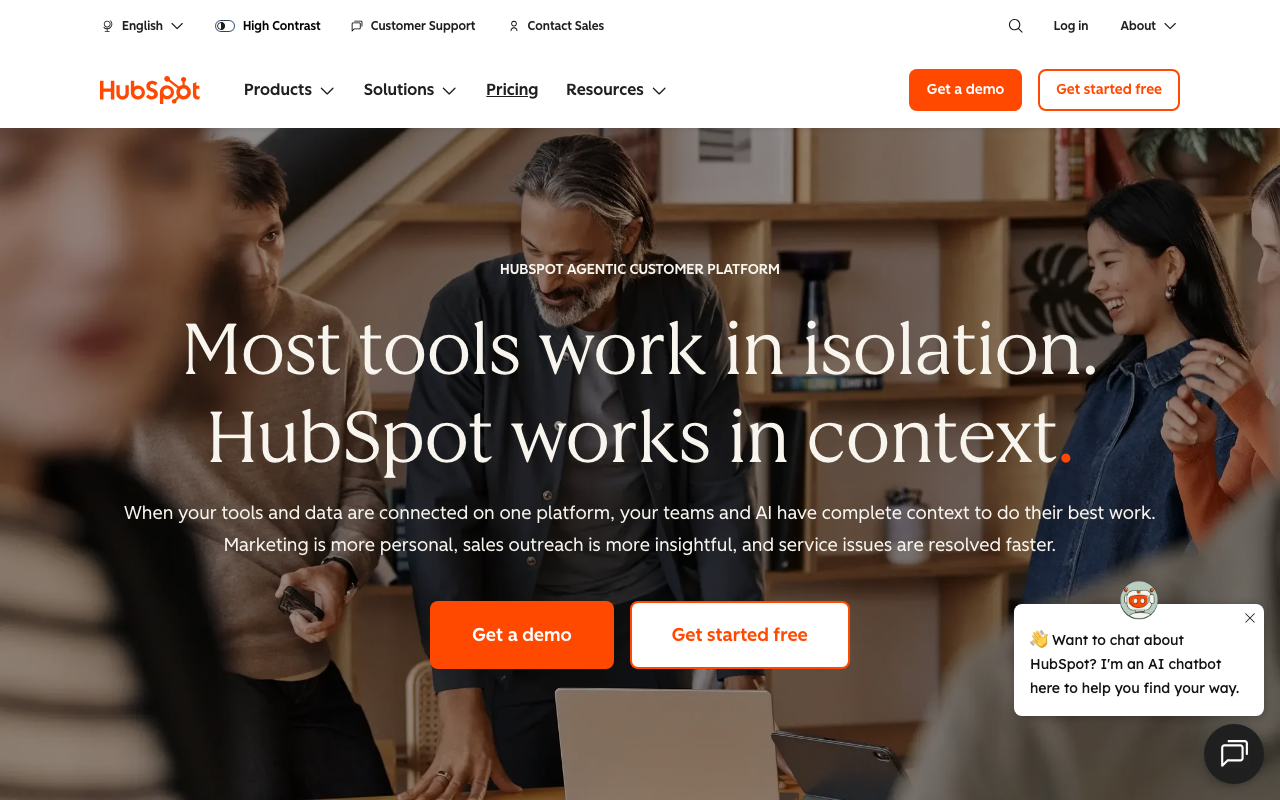
If your CRM is HubSpot, we think the path of least resistance is HubSpot Operations Hub Enterprise, because it keeps routing work inside the CRM your team already uses.
Pricing: See the HubSpot pricing page.
Best for: Companies fully on the HubSpot stack who do not want a third-party routing layer.
3. Salesforce Einstein + Sales Cloud: Best for Enterprise Sales Cloud
In our view, Salesforce Einstein with Sales Cloud makes sense for enterprise teams that already run Sales Cloud and want to stay inside Salesforce (see our Salesforce Flow alternatives guide).
Pricing: See the Salesforce pricing page.
Best for: Enterprise Salesforce shops on Sales Cloud Enterprise that do not want a third-party routing tool.
4. Distribution Engine by NC Squared: Best for Configurable Salesforce Routing
In our view, Distribution Engine is a strong option for Salesforce teams that want configurable routing rules when account matching is not the core need.
Pricing: See NC Squared pricing.
Best for: Salesforce B2B SaaS teams that need configurable round robin and territory routing.
5. LeadAngel: Best for Salesforce Round Robin with Matched Assignment
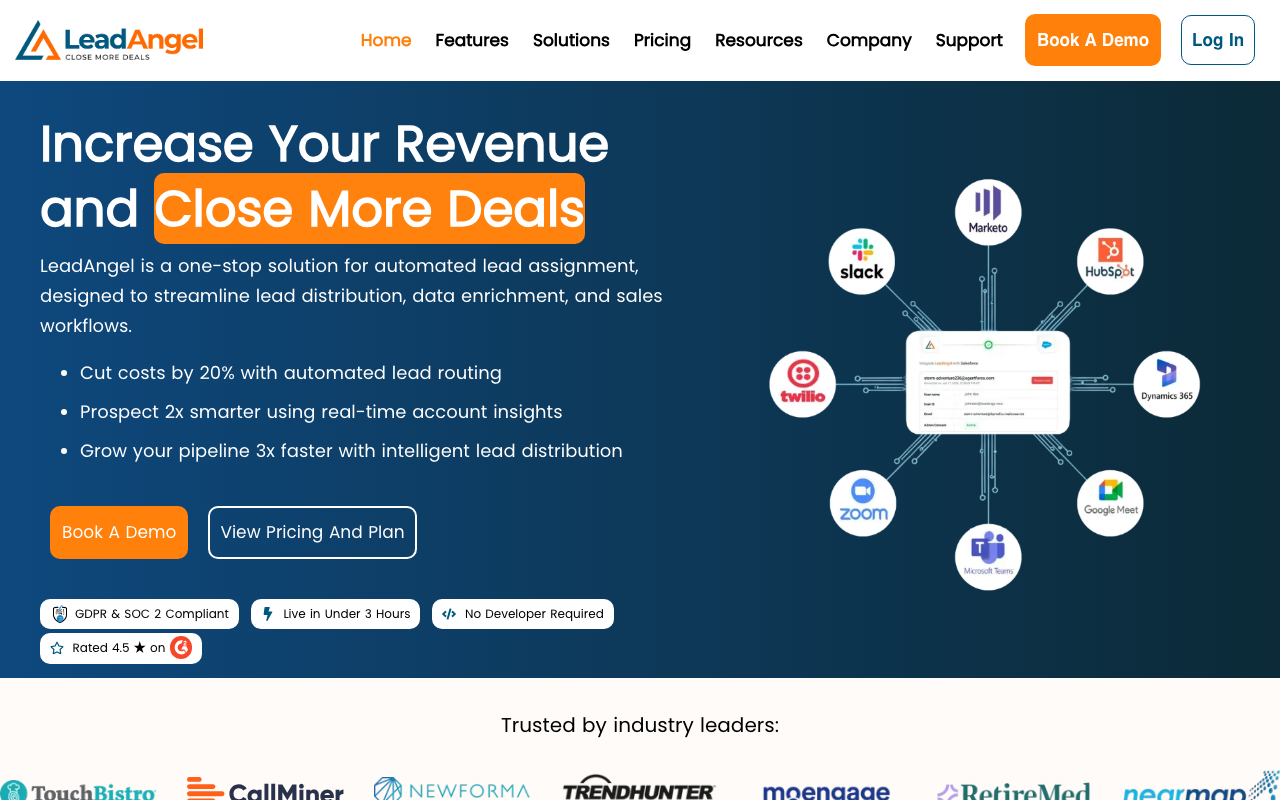
LeadAngel is a Salesforce-native routing tool that combines lead-to-account matching with round robin assignment.
Key features: lead-to-account matching; round robin, weighted round robin, and territory routing; data dedupe; a Salesforce-native app listed on AppExchange.
Pricing: No published prices (contact sales), as of September 2026.
Best for: Salesforce B2B SaaS teams that want lead-to-account matching with round robin assignment.
6. Chili Piper: Best for SDR-to-AE Handoff and Instant Booking
Chili Piper makes this list for teams running a demo-request motion. In our view, getting a qualified prospect onto the assigned AE's calendar fast is the biggest speed-to-lead lever in B2B SaaS.
Pricing: See Chili Piper pricing.
Best for: Any B2B SaaS team running a demo-request motion, regardless of the underlying routing engine.
7. Lead Distro AI: Best for Multi-Buyer Routing and External Endpoint Delivery
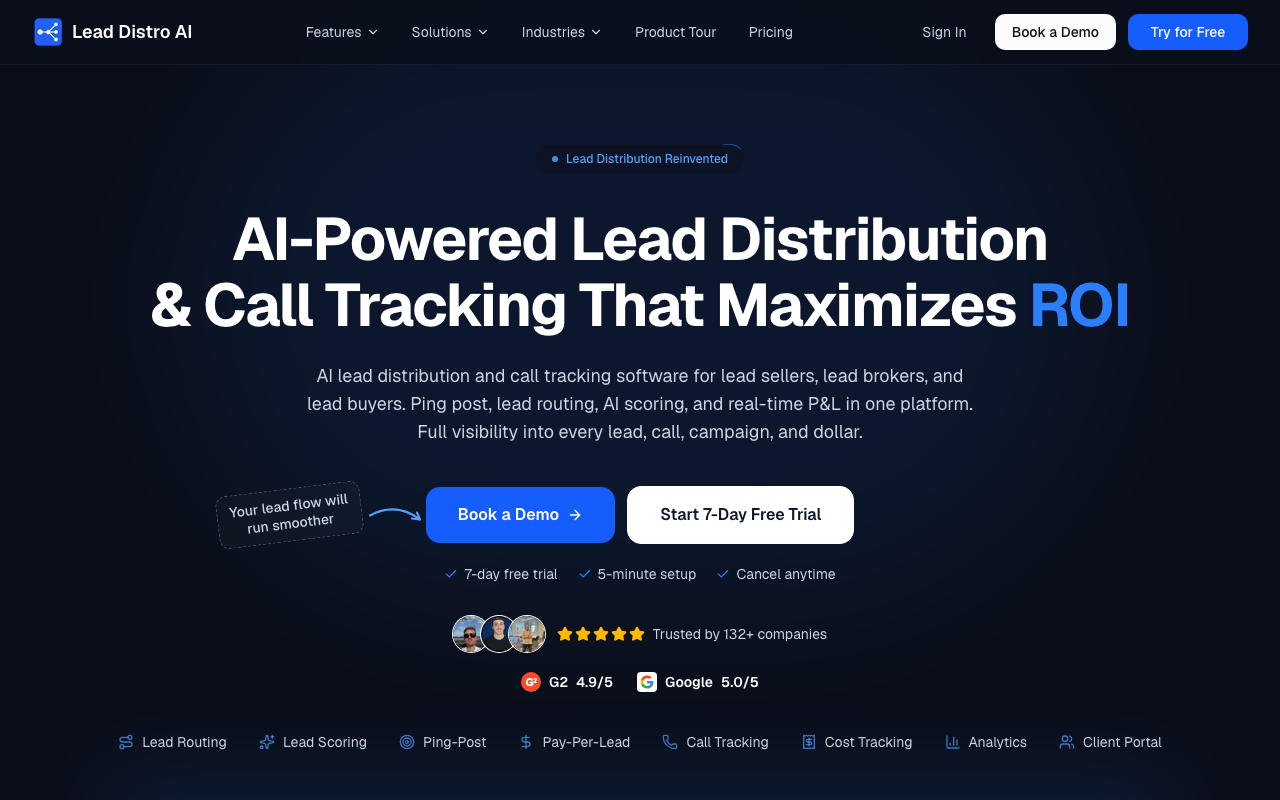
Lead Distro AI's smart lead routing engine fits the B2B SaaS use case where leads route to multiple external destinations, not just one internal sales team. Common cases: routing partner-sourced leads to channel partners, distributing trial signups across resellers, splitting demo requests between an internal team and a co-sell partner, or routing leads from an acquired product to a legacy team during integration.
Key features: Four routing methods (waterfall, round robin, weighted, ping-post); rule-based lead scoring; webhook delivery to Salesforce, HubSpot, or any CRM; buyer-level cap, schedule, and filter controls; real-time audit log and per-buyer P&L reporting.
Pricing: $297/mo Starter, $497/mo Growth, Scale by quote. See the pricing page.
Best for: B2B SaaS companies routing inbound demand to channel partners, resellers, or multiple internal teams, and any team that needs an external routing layer in front of their CRM. Take the interactive product tour.
8. RingLead: Best for Enrichment Plus Routing
In our view, RingLead is worth a look for teams that want data quality work and routing handled together.
Best for: Teams that want enrichment and routing in one stack.
Salesforce vs HubSpot vs External: Picking by CRM
The fastest way to shortlist is to start with your CRM.
| CRM Stack | Best Routing Tool | Why |
|---|---|---|
| Salesforce with ABM program | LeanData | Our pick for account matching |
| Salesforce, no ABM | Distribution Engine or LeadAngel | Our picks for round robin and territory routing |
| Salesforce, enterprise scale | LeanData or Einstein + Flow | Einstein for AI, LeanData for matching |
| HubSpot | HubSpot Operations Hub Enterprise | Native, no third-party layer needed |
| Multi-CRM or external partners | Lead Distro AI | Multi-buyer, webhook-based, external-first |
| Any CRM with demo-request motion | Add Chili Piper | Booking layer on top of routing |
Round Robin + Capacity + SLA: The B2B SaaS Routing Recipe
The non-negotiable trio for inbound MQL routing is round robin with capacity controls plus an SLA timer. Ask every vendor on your shortlist to show all three working together in a demo before you buy.
- Lead Distro AI: round robin, weighted, waterfall, and ping-post, with per-buyer caps, schedules, and minimum-quality thresholds.
AI vs Rule-Based Routing for B2B SaaS
Lead scoring is no longer optional. The question is whether your routing tool scores itself or consumes a score from elsewhere.
Lead Distro AI scores inside the routing flow. The score becomes a routing input: high-fit leads route to AEs, low-fit to nurture, medium-fit to SDRs. For most teams, keep scoring where the signal lives and let the routing tool consume it. See our AI lead routing guide for more.
FAQ
What is the best lead routing tool for a Salesforce-based B2B SaaS?
For Salesforce with an account-based program, our pick is LeanData. For Salesforce without ABM, we would shortlist Distribution Engine or LeadAngel.
Do I need both LeanData and Salesforce Einstein?
Not necessarily. Scoring and routing are separate jobs. If you only need basic round robin, start with what your CRM already gives you. If you need account matching, fuzzy company resolution, or complex territory logic, that is when we would evaluate a dedicated routing layer like LeanData.
How does Chili Piper fit into B2B SaaS lead routing?
We list Chili Piper for teams running a demo-request motion that want a booking and handoff layer next to their routing engine. Confirm its current booking and routing features with Chili Piper before you decide how it fits your stack.
What is the cheapest B2B SaaS lead routing tool?
Lead Distro AI starts at $297/month (billed monthly) for external and multi-buyer routing. LeadAngel does not publish prices (as of September 2026). For the other tools, check each vendor's own pricing page for current rates.
How long does it take to set up B2B SaaS lead routing?
It depends on the tool and how complex your rules are. LeadAngel says teams can be live in under 3 hours. Lead Distro AI is typically live in under a week.
Can Salesforce Flow handle inbound MQL routing on its own?
It depends on your needs. Once you need fuzzy account matching, capacity controls, PTO rules, or SLA escalation, we would evaluate a dedicated routing tool such as LeanData, Distribution Engine, or LeadAngel. See our Salesforce Flow alternatives breakdown.
Conclusion
There is no universal "best" inbound lead routing software for B2B SaaS in 2026. The right tool matches your CRM, your account structure, and your sales motion. Salesforce ABM shops pick LeanData. HubSpot shops pick Operations Hub. Mid-market Salesforce teams without ABM pick Distribution Engine or LeadAngel. Demo-request motions add Chili Piper. Teams routing to external partners or multiple buyer accounts pick Lead Distro AI.
What does not change across stacks: route fast, match accurately, score before routing, audit every decision. The teams that get those four things right turn inbound MQLs into pipeline. For agencies and lead brokers routing to external buyers rather than internal AEs, our best lead routing software guide covers the 7 platforms purpose-built for multi-buyer distribution.
See how Lead Distro AI fits into a B2B SaaS routing stack. If you route inbound demo requests, trials, or MQLs to external partners, multiple internal teams, or across CRMs, start a 7-day free trial or take the interactive product tour. Cancel anytime within the 7 days.
About the Author
Founder & CEO of Lead Distro AI & Great Marketing AI
UC Berkeley graduate and former software engineer at Microsoft. Rafael built Lead Distro AI after managing over $10M in ad spend for performance marketing agencies (pay-per-lead and pay-per-call), including running campaigns for Neil Patel. He combines deep software engineering expertise with hands-on performance marketing experience to build tools that help these agencies scale profitably.
About Lead Distro AI
Lead Distro AI: AI-Powered Lead Distribution & Call Tracking That Maximizes ROI
The modern platform for pay-per-lead and pay-per-call agencies. Route, score, and deliver leads with AI-powered automation and real-time P&L tracking. Built for performance marketing agencies and lead buyers across legal, insurance, mortgage, solar, and home services verticals.
4 Distribution Methods
Waterfall, Round Robin, Weighted, Ping-Post
Ping-Post Auctions
Real-time bidding with sub-second routing
Real-Time P&L Reporting
Track revenue, costs, and profit per campaign
Call Tracking
Assign tracking numbers, record calls, and attribute conversions
Lead Scoring
Score every lead before routing to maximize conversion
Partner Portal
Self-serve dashboard for buyers to track leads