Workers Comp Leads: Generation, Scoring, and Distribution Guide
Learn how to generate, score, and distribute workers compensation leads. Covers lead sources, pricing, qualification criteria, and distribution methods.

Rafael Hernandez
Founder & CEO
Ex-Microsoft SWE · $10M+ PPL ad spend

I hope you enjoy reading this blog post. If you want to try Lead Distro AI for free, click here.
Author: Rafael Hernandez | Founder & CEO of Lead Distro AI
In the legal lead generation industry, few verticals are as consistent as workers compensation. Injured workers are actively seeking legal representation or help filing a workers compensation claim. For law firms, lead brokers, and pay-per-lead agencies, these leads represent one of the most valuable verticals in legal marketing. The Bureau of Labor Statistics reported approximately 2.8 million nonfatal workplace injuries and illnesses in 2023, creating a massive pool of potential claimants every year. Workers compensation is a $100+ billion industry in the United States, and the average claim costs roughly $41,000 according to the National Council on Compensation Insurance (NCCI). Whether you generate workers comp leads through Google Ads, SEO, Facebook campaigns, or referral networks, the ability to score, qualify, and distribute leads to the right attorneys in real time determines your profitability. This guide covers everything you need to know about sourcing, pricing, qualifying, and routing workers comp leads at scale.
Lead Distro AI does not sell leads. It is software for the companies that generate workers compensation leads and route them to buyers. If you are a law firm looking to buy leads, this guide will help you judge price and quality, but you will need a lead vendor to buy from.
Key Takeaways
- Workers comp leads come from individuals injured at work who need legal help filing claims or pursuing benefits.
- The most effective generation channels include Google Ads, SEO content marketing, Facebook lead forms, referral networks, and union partnerships.
- Lead pricing varies significantly: shared leads cost $20-$50, exclusive leads run $75-$200, and live transfers command $100-$350 per lead.
- Proper qualification requires checking injury type, employer size, state-specific laws, statute of limitations, and medical treatment status.
- Real-time lead distribution software with geographic matching and case type filters maximizes conversion rates for attorneys.
What Are Workers Comp Leads
These leads come from prospective clients who have suffered a workplace injury or occupational illness and are looking for an attorney to help them navigate the claims process. Common injuries include overexertion, slips and falls, repetitive strain injuries, and contact with objects or equipment. According to the National Safety Council, a worker is injured on the job every seven seconds in the United States. These leads are especially valuable because workers compensation cases often involve ongoing medical treatment, lost wages, and potential settlements that create high case values. Unlike personal injury leads from car accidents, workers comp leads typically involve employer negligence, unsafe working conditions, or OSHA violations. Lead brokers and agencies that specialize in this vertical need robust lead routing systems to match claimants with attorneys licensed in the correct jurisdiction.
How to Generate Workers Comp Leads
Generating high-quality leads in the workers compensation vertical requires a multi-channel strategy. Google Ads remains the top channel for intent-driven leads. Bidding on keywords like "workers comp lawyer near me" or "injured at work attorney" captures people actively searching for legal help. SEO content marketing targets informational queries such as "can I sue my employer for a workplace injury" and builds long-term organic traffic. Facebook and Instagram lead forms work well for awareness campaigns targeting workers in high-risk industries like construction, manufacturing, warehousing, and healthcare. Referral networks through unions, trade associations, and medical providers generate pre-qualified leads with high conversion rates. Union partnerships with organizations like SEIU, Teamsters, and local building trades councils provide direct access to injured workers. Successful agencies combine paid and organic channels, then use TCPA-compliant intake processes to verify each lead before distribution.
Workers Comp Lead Pricing
Pricing for this lead type varies widely depending on exclusivity, delivery method, and geographic market. Lead sellers and buyers need transparent pricing to calculate return on investment. Here is a breakdown of typical pricing by lead type:
| Lead Type | Price Range | Exclusivity | Delivery Method | Avg. Conversion Rate |
|---|---|---|---|---|
| Shared Leads | $20-$50 | Sold to 3-5 buyers | Email/CRM push | 5-10% |
| Exclusive Leads | $75-$200 | One buyer only | Real-time webhook | 15-25% |
| Live Transfers | $100-$350 | One buyer only | Warm phone transfer | 25-40% |
| Aged Leads | $5-$15 | Previously contacted | Bulk CSV/API | 2-5% |
Pricing also fluctuates by state. High-litigation states like California, New York, Florida, and Pennsylvania command premium rates. Agencies using Lead Distro AI can configure buyer-specific pricing rules and caps to maintain margin control across all lead types and geographies.
Lead Qualification Criteria for Workers Comp
Not every workplace injury produces a viable lead for attorneys. Proper qualification separates high-value prospects from unqualified inquiries and protects your buyer relationships. The five critical qualification factors are:
- Injury type and severity: Serious injuries like spinal cord damage, traumatic brain injuries, amputations, and repetitive stress disorders carry the highest case values. Minor cuts and bruises rarely justify attorney involvement.
- Employer size and coverage: Most states require employers with 3-5+ employees to carry workers compensation insurance. Sole proprietors and some small businesses may be exempt.
- State-specific laws: Every state has unique workers comp statutes affecting eligibility, benefit calculations, and claim procedures.
- Statute of limitations: Filing deadlines range from 30 days to 3 years depending on the state. Leads outside the window are worthless.
- Medical treatment status: Claimants who have already received medical treatment and have documented injuries convert at higher rates.
Agencies that enforce strict qualification criteria before routing leads to attorneys see 2-3x higher conversion rates on live transfers.
Distributing Workers Comp Leads to Attorneys
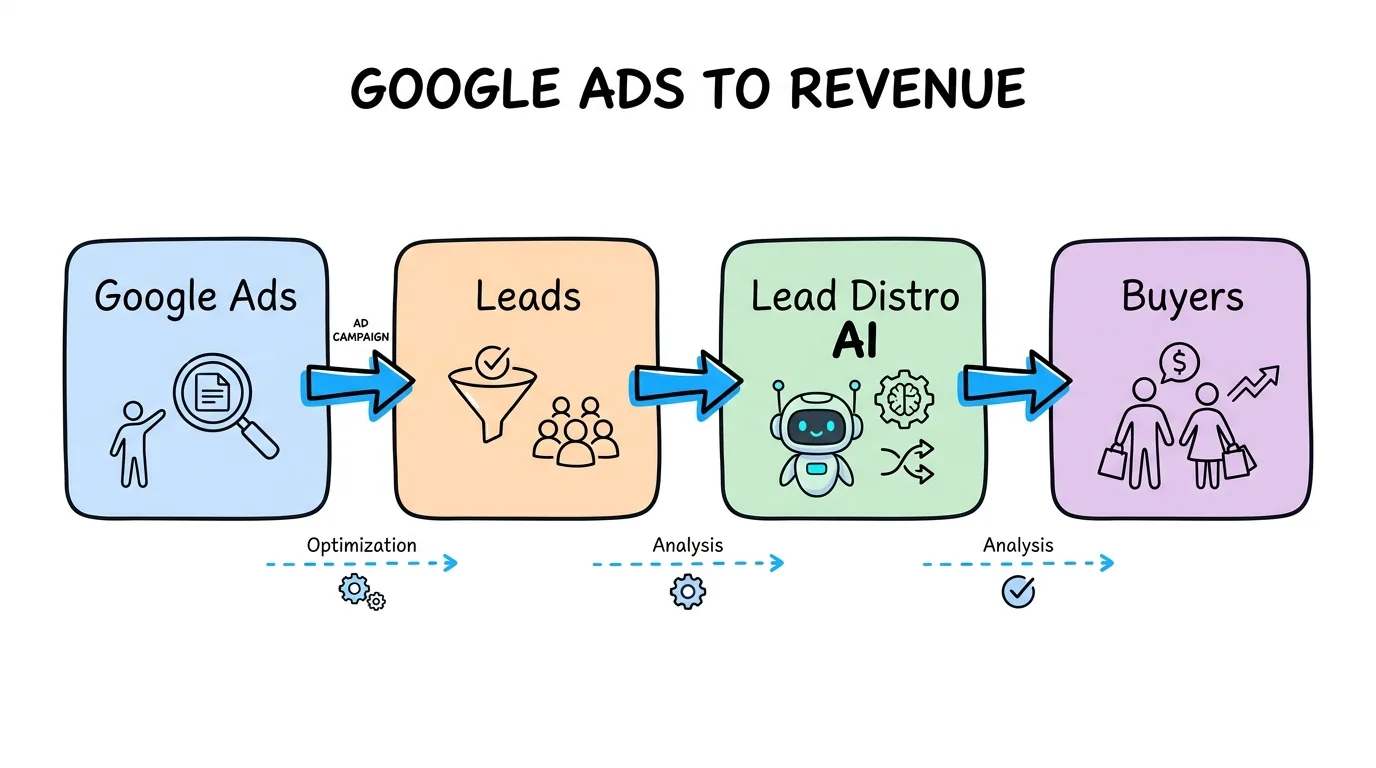
Effective distribution turns raw leads into signed cases. The best distribution systems match leads to attorneys based on multiple criteria simultaneously. Geographic matching ensures claimants connect with lawyers licensed in their state and practicing near their location. Case type filters allow buyers to specify which injury types they accept (e.g., construction accidents only, no repetitive strain). Daily and monthly caps prevent buyers from being overwhelmed and ensure even lead flow. Real-time delivery via webhook, API push, or automated lead routing gets leads to attorneys within seconds of submission. Speed-to-contact is critical: Harvard Business Review research shows that responding within five minutes increases contact rates by 900% compared to waiting 30 minutes. Lead Distro AI supports all four distribution methods (round robin, weighted, priority, and ping post) with real-time P&L tracking so you know exactly which leads generate profit. Start your free trial to see how automated distribution works for your workers comp operation.
State-by-State Workers Comp Laws
Workers compensation laws vary dramatically across all 50 states, and these differences directly impact lead value, qualification, and routing. Exclusive remedy doctrine applies in most states, meaning employees generally cannot sue their employer directly but must go through the workers comp system. However, some states allow third-party lawsuits when equipment manufacturers or contractors contribute to the injury. Statute of limitations ranges from 30 days for reporting in some states (Kansas, Colorado) to up to 3 years for filing a claim (New York). California, the largest market, requires employers to provide benefits regardless of fault and has a two-year filing window. No-fault coverage is standard in most states, meaning injured workers receive benefits regardless of who caused the accident. Texas is a notable exception where employers can opt out of the workers comp system entirely. Florida requires coverage for employers with four or more employees, while construction companies need coverage with just one employee. Pennsylvania, Illinois, and Ohio are other high-volume markets with distinct regulatory frameworks. For lead distributors operating across multiple states, configuring state-specific routing rules in your distribution platform is essential for compliance and buyer satisfaction. Workers comp is one of several high-value legal lead verticals where state-level routing makes a measurable difference in conversion rates.
FAQ
What are workers comp leads?
Workers comp leads are individuals who have been injured on the job and are seeking legal representation to file a workers compensation claim. These leads typically come from digital advertising, SEO, referral networks, or intake call centers. They are sold to personal injury attorneys and law firms that specialize in workplace injury cases. Quality workers comp leads include details like injury type, employer information, state of employment, and medical treatment status.
How much do workers comp leads cost?
Pricing ranges from $20 to $350 per lead depending on lead type and exclusivity. Shared leads sold to multiple buyers range from $20 to $50 each. Exclusive leads delivered to a single attorney cost $75 to $200. Live transfer leads, where the caller is connected directly to the attorney, command the highest prices at $100 to $350. Pricing also varies by state, with California, New York, and Florida leads costing more due to higher litigation volume.
How do you qualify a workers comp lead?
Qualifying a lead in this vertical involves verifying five key factors: the type and severity of the workplace injury, whether the employer carries workers compensation insurance, the specific state laws governing the claim, whether the statute of limitations has passed, and the claimant's medical treatment status. Leads with documented injuries, active medical care, and filed incident reports convert at significantly higher rates for attorneys.
What is the best way to distribute workers comp leads?
The best distribution method is through automated lead distribution software that matches leads to attorneys in real time based on geographic location, case type, buyer capacity, and bid price. Methods include round robin, weighted distribution, priority-based routing, and ping post auctions. Speed matters: contacting a lead within five minutes produces significantly higher conversion rates than delayed follow-up.
Which states have the most workers comp claims?
California, Texas, New York, Florida, Pennsylvania, Illinois, and Ohio consistently report the highest volumes of workers compensation claims. California leads the nation due to its large workforce, strict employer requirements, and two-year filing deadline. New York and Pennsylvania also generate significant claim volume because of their robust construction and manufacturing sectors. These states represent premium markets for workers comp lead buyers.
Conclusion
Workers comp leads represent a high-value vertical for legal lead generation agencies. With 2.8 million workplace injuries reported annually and an average claim value of $41,000, the opportunity for lead brokers and pay-per-lead operators is substantial. Success depends on generating leads through diverse channels, enforcing strict qualification criteria, and distributing leads to attorneys in real time with geographic and case type precision. The right lead distribution platform eliminates manual routing, reduces response times, and maximizes revenue per lead across every state you serve.
Ready to distribute leads faster and more profitably? Start your 7-day free trial and route your first lead in minutes.
About the Author
Founder & CEO of Lead Distro AI & Great Marketing AI
UC Berkeley graduate and former software engineer at Microsoft. Rafael built Lead Distro AI after managing over $10M in ad spend for performance marketing agencies (pay-per-lead and pay-per-call), including running campaigns for Neil Patel. He combines deep software engineering expertise with hands-on performance marketing experience to build tools that help these agencies scale profitably.
About Lead Distro AI
Lead Distro AI: AI-Powered Lead Distribution & Call Tracking That Maximizes ROI
The modern platform for pay-per-lead and pay-per-call agencies. Route, score, and deliver leads with AI-powered automation and real-time P&L tracking. Built for performance marketing agencies and lead buyers across legal, insurance, mortgage, solar, and home services verticals.
4 Distribution Methods
Waterfall, Round Robin, Weighted, Ping-Post
Ping-Post Auctions
Real-time bidding with sub-second routing
Real-Time P&L Reporting
Track revenue, costs, and profit per campaign
Call Tracking
Assign tracking numbers, record calls, and attribute conversions
Lead Scoring
Score every lead before routing to maximize conversion
Partner Portal
Self-serve dashboard for buyers to track leads