Ping Post Lead Generation: Maximize Revenue Per Lead
Ping post lead generation lifts revenue per lead 30 to 60 percent vs fixed-price selling. The 2026 playbook for publishers, affiliates, and PPL agencies.

Rafael Hernandez
Founder & CEO
Ex-Microsoft SWE · $10M+ PPL ad spend
I hope you enjoy reading this blog post. If you want to try Lead Distro AI for free, click here.
Author: Rafael Hernandez | Founder & CEO of Lead Distro AI
Ping Post Lead Generation: How Publishers Maximize Revenue Per Lead in 2026
Last Updated: May 15, 2026
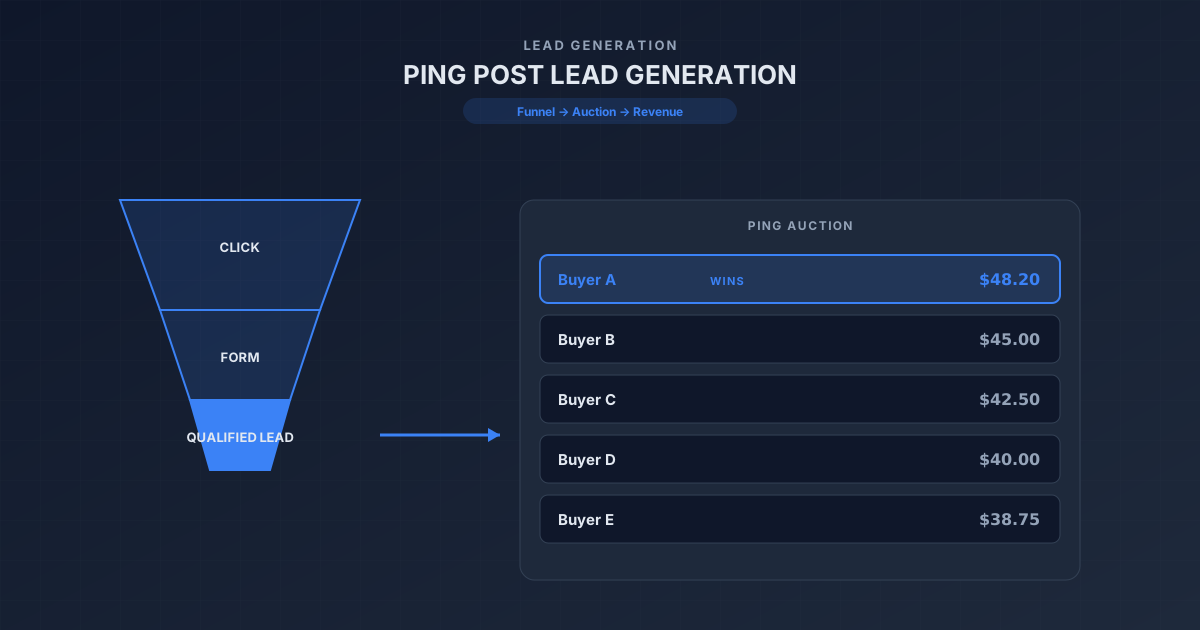
Ping post lead generation is the seller-side practice of monetizing inbound leads through a real-time auction instead of a flat rate. The publisher fires a partial-data ping to a buyer pool, each buyer bids inside 2 to 5 seconds, and the highest bidder above the floor wins the full lead. For lead generators, affiliates, and PPL agencies, this is how a $25 fixed-price lead becomes a $35 auction-cleared lead, and how a 60 percent fillrate becomes 95 percent. It is why ping post now accounts for the majority of US lead transactions in legal, insurance, and mortgage.
Start running your own ping post network with Lead Distro AI. For buyer-side mechanics, read what ping post is.
Key Takeaways
- Ping post lead generation lifts revenue per lead 30 to 60 percent versus fixed-price selling in competitive verticals (LeadsCouncil benchmarks).
- Over 60 percent of US lead transactions in legal, insurance, and mortgage now flow through ping post auctions (Performance Marketing Association, 2025).
- Publishers need three things to start: 5 plus active bidders, ping post software with bid-floor controls, and Jornaya or TrustedForm consent capture.
- Lead Distro AI's seller dashboard handles the multi-buyer ping tree, automated bid floors, and per-lead bid history starting at $297 per month.
- Fastest path: migrate one campaign at a time, starting with your highest-volume vertical where you already have 3 plus buyers.
Ping Post Lead Generation: The Quick Definition
Ping post lead generation is a two-step real-time auction the publisher runs every time a lead arrives. Step one is the ping: the seller sends partial non-PII data (vertical, ZIP, age band, intent qualifiers) to every eligible buyer at once. Step two is the post: the engine collects bids, applies the floor, and posts the full lead with PII to the winning buyer. From a seller perspective, this turns every lead into a price-discovery event. Buyers pay what the lead is worth, not what your rate card said last quarter.
Why Publishers Are Switching to Ping Post in 2026
The fixed-price era of lead selling is ending. Buyers want to bid on the leads that fit their funnel and decline the rest. According to the Interactive Advertising Bureau (IAB) 2025 Lead Generation Report, more than 70 percent of US lead networks now run at least one campaign through a ping post auction, up from 38 percent in 2022. The shift is fastest in legal, insurance, and mortgage where buyer LTV varies wildly by sub-vertical and consent age.
The seller-side advantage is simple. A fixed-price lead at $25 sold to one buyer earns $25. The same lead in a ping tree with five bidders often clears at $32, $38, or $45, because one buyer has an empty pipeline today and bids aggressively. Across a month, that delta compounds into 30 to 60 percent more lead seller revenue on the same traffic.
How Ping Post Beats Fixed-Price Lead Selling
Run the math. Generate 1,000 auto insurance leads per month and sell flat-rate at $18. Monthly revenue: $18,000. Fillrate is 80 percent because your one buyer caps daily volume, so 200 leads die unsold.
Route those same 1,000 leads through a 7-buyer ping tree with a $14 floor. Average clearing bid is $24. Fillrate climbs to 96 percent because at least one buyer almost always clears. New monthly revenue: 960 multiplied by $24, or $23,040. Same traffic, $5,040 monthly upside on one campaign. That is the lead seller revenue equation. Ping post is also how you escape the single-buyer trap: when one buyer owns your inventory, they own your pricing.
Ping Post vs Fixed-Price Selling
| Factor | Fixed-Price Selling | Ping Post |
|---|---|---|
| Revenue per lead | Locked at rate card. No upside. | 30 to 60 percent higher. Captures buyer competition. |
| Complexity | Low. One buyer, one rate. | Medium. Software, buyer pool, bid logic. |
| Fillrate | 60 to 80 percent (capped by buyer demand) | 90 to 98 percent (multiple buyers absorb spikes) |
| Buyer count | 1 to 3 direct buyers | 5 to 25 active bidders per vertical |
| Compliance burden | Lower (single buyer agreement) | Higher (per-buyer consent, Jornaya / TrustedForm) |
The complexity lift is real but bounded. Modern software handles it, which is why monetize leads ping post is the default playbook for any publisher generating more than 500 leads per month.
Setting Up Ping Post as a Lead Seller (5-Step Playbook)
1. Pick one vertical. Auto insurance, personal injury, debt relief, or solar: the buyer pools already exist.
2. Sign up for ping post software. Lead Distro AI gives you the seller dashboard, multi-buyer ping tree, automated floors, and Jornaya / TrustedForm pass-through on the Starter plan.
3. Recruit your buyer pool. Five active bidders minimum. Ask existing direct buyers to bid through your tree instead of buying flat.
4. Set a defensive floor. Start at 80 percent of your old fixed-price rate. Tune up as bidders compete.
5. Migrate one source first. Send 10 percent of traffic through ping post for a week, validate RPL and fillrate beat baseline, then migrate the rest.
For the broader sales motion, read how to sell leads. The same how to sell leads framework applies whether you run flat-rate or auction.
Building Your Buyer Pool
Your buyer pool is the engine of ping post for lead sellers. A 7-buyer tree with active bidders out-earns a 20-buyer tree where 14 are dormant.
Three sources work. First, existing direct buyers: ask them to bid through the auction instead of buying flat. Second, lead exchanges and marketplaces (see our lead marketplace guide). Third, vertical buyer directories like LeadsCouncil's member roster.
Onboard each buyer with a 1-page spec sheet: ping payload, bid format, post format, hours, daily caps, consent stack. Most teams integrate in under 48 hours. That is the operational backbone of ping post for lead sellers at scale.
Pricing Strategy: Floor Prices, Bid Caps, and Buyer Tiers
Bid floors are your margin protection. Too low gives away premium inventory. Too high collapses fillrate.
Set the floor at 70 to 80 percent of your historical fixed-price rate, then raise it 5 percent every two weeks if fillrate stays above 90 percent. Floors should vary by state, source, and consent age. A fresh lead with a Jornaya token deserves a higher floor than a 48-hour aged co-reg lead. Read how to price leads and use the lead pricing calculator for breakeven floors by vertical.
Buyer tiers are the next optimization. Tier 1 sees the ping first with a 50ms head start. Tier 2 sees leads only when Tier 1 declines. Rewards top-payers without locking out the pool.
Compliance for Ping Post Sellers
Ping post does not change your TCPA exposure, but it changes how consent travels. Every lead that posts to a buyer needs a verifiable consent record, which is why Jornaya LeadiD and ActiveProspect TrustedForm are the dominant consent vendors for ping post lead generation.
Per the FCC's 2024 TCPA one-to-one consent rule update, a single consent can no longer cover an unlimited buyer pool. Each buyer must be named at consent, or you must collect consent dynamically per auction outcome. Boberdoo's seller compliance blog is the tactical reference for the post-2024 ruleset.
Common Pitfalls and How to Avoid Them
Three mistakes show up constantly in publisher audits.
Floor too low. Sellers panic about fillrate and drop the floor to $5. RPL drops below the old fixed-price rate. Never go below 70 percent of baseline.
Buyer pool too small. Three buyers is a rotation, not an auction. Five active bidders minimum per vertical.
Ignoring bid analytics. Every platform logs which buyers bid what on which leads. Buyers who consistently win at the floor mean your floor is too low.
Verticals That Pay the Most for Ping Post Leads
Per LeadsCouncil 2025 fillrate benchmarks, the highest-RPL ping post categories in the US:
- Personal injury legal: $80 to $250 per lead, 92 percent fillrate
- Mortgage refinance: $35 to $90 per lead, 88 percent fillrate
- Auto insurance: $14 to $32 per lead, 96 percent fillrate
- Solar residential: $45 to $120 per lead, 84 percent fillrate
- Medicare supplement: $22 to $55 per lead (AEP/OEP only), 90 percent fillrate
Thin buyer pools (B2B SaaS, niche home services, regional debt) underperform in ping post. Stay fixed-price until your pool grows.
Tools You Need
The minimum stack to monetize leads ping post style:
- Ping post software with multi-buyer auction logic, configurable floors, and bid analytics: Lead Distro AI's ping post software covers all three.
- Consent capture: Jornaya LeadiD or ActiveProspect TrustedForm tokens on every form.
- Seller dashboard: real-time RPL, fillrate by buyer, bid history per lead. See Lead Distro AI's seller dashboard.
- Buyer relationship manager: payment terms, return policies, SLA tracking.
Alternatives include Boberdoo, LeadProsper, and Phonexa. Lead Distro AI is the only platform with AI lead scoring inside the auction, so buyers bid on quality-graded inventory and pay more.
Rafael Hernandez, Founder and CEO of Lead Distro AI: "Every publisher who switched from fixed-price to ping post in the last 18 months reports the same thing: 30 to 50 percent more revenue on the same traffic. The seller-side advantage is not subtle. The auction surfaces the true market price of your lead, and you keep all of it. Publishers losing in 2026 are still negotiating one buyer at a time on a spreadsheet."
Frequently Asked Questions
What is ping post lead generation?
Ping post lead generation is the publisher-side practice of selling each lead through a real-time auction instead of a fixed rate. The seller sends a partial-data ping to a buyer pool, collects bids in seconds, and posts the full lead to the highest bidder above the floor. It lifts revenue per lead 30 to 60 percent versus fixed-price and is the default monetization model in legal, insurance, and mortgage.
Is ping post more profitable than fixed-price lead selling?
Yes in competitive verticals. LeadsCouncil 2025 benchmarks show 30 to 60 percent higher revenue per lead and fillrates above 90 percent versus 60 to 80 percent for fixed-price. The auction surfaces the buyer with the highest current need. Exception: thin verticals with fewer than 5 bidders, where fixed-price still outperforms because there is no real competition.
How do I become a ping post lead seller?
Pick one vertical with an existing buyer pool (auto insurance, PI, mortgage, solar). Sign up for ping post software. Recruit 5 plus active buyers. Set a defensive floor at 70 to 80 percent of your old fixed-price rate. Migrate 10 percent of traffic first, validate RPL and fillrate beat baseline, then migrate the rest. Most publishers switch in under 30 days.
What software do I need to run a ping post operation?
Ping post software with multi-buyer auction logic, configurable bid floors per campaign and state, and per-lead bid history. Add Jornaya LeadiD or ActiveProspect TrustedForm consent capture and a seller dashboard for real-time RPL and fillrate. Lead Distro AI bundles all of this on the $297 Starter plan with a 7-day free trial. Boberdoo, LeadProsper, and Phonexa are the legacy alternatives.
How much can I earn per ping post lead?
Depends on vertical and pool depth. LeadsCouncil 2025: personal injury legal $80 to $250, mortgage refi $35 to $90, auto insurance $14 to $32, residential solar $45 to $120, Medicare supplement $22 to $55 during AEP/OEP. Across verticals, ping post leads average 30 to 60 percent more revenue than the same lead sold flat-rate.
Is ping post legal under TCPA?
Yes. The FCC's 2024 one-to-one consent ruling changed how sellers handle buyer disclosure. A single consent can no longer cover an unlimited pool. Each buyer in your ping tree must be specifically named at consent, or you must collect consent dynamically per auction outcome. Use Jornaya or TrustedForm to capture tokens and review disclosure quarterly against your buyer roster.
Can I sell the same lead to multiple buyers via ping post?
Yes. The multi-sale or shared lead model is standard in insurance and mortgage. The auction posts to the top 2 to 4 bidders simultaneously, and each pays their own bid. Multi-sale lifts RPL further but is not right everywhere (personal injury legal is almost always exclusive). Configure exclusive vs shared per campaign.
Conclusion
Ping post lead generation is the highest-leverage upgrade for any publisher selling more than 500 leads per month. It lifts revenue per lead 30 to 60 percent, pushes fillrate above 90 percent, and ends the single-buyer pricing trap. Pick a vertical, sign up for ping post software, recruit 5 plus bidders, set a defensive floor, migrate one source at a time. Lead Distro AI's $297 Starter plan is the fastest way to run your first auction this week.
Stop selling leads at flat rates. Start your 7-day free trial of Lead Distro AI and run your first ping post auction on the same day you sign up.
About the Author
Founder & CEO of Lead Distro AI & Great Marketing AI
UC Berkeley graduate and former software engineer at Microsoft. Rafael built Lead Distro AI after managing over $10M in ad spend for performance marketing agencies (pay-per-lead and pay-per-call), including running campaigns for Neil Patel. He combines deep software engineering expertise with hands-on performance marketing experience to build tools that help these agencies scale profitably.
About Lead Distro AI
Lead Distro AI: AI-Powered Lead Distribution & Call Tracking That Maximizes ROI
The modern platform for pay-per-lead and pay-per-call agencies. Route, score, and deliver leads with AI-powered automation and real-time P&L tracking. Built for performance marketing agencies and lead buyers across legal, insurance, mortgage, solar, and home services verticals.
4 Distribution Methods
Waterfall, Round Robin, Weighted, Ping-Post
Ping-Post Auctions
Real-time bidding with sub-second routing
Real-Time P&L Reporting
Track revenue, costs, and profit per campaign
Call Tracking
Assign tracking numbers, record calls, and attribute conversions
AI Lead Scoring
Score every lead before routing to maximize conversion
Partner Portal
Self-serve dashboard for buyers to track leads