Lead Distribution Platform Requirements Checklist (7 Must-Haves)
A printable requirements checklist to take into vendor demos: the 7 must-have capabilities, what to avoid, and the exact questions to ask before you sign.

Rafael Hernandez
Founder & CEO
Ex-Microsoft SWE · $10M+ PPL ad spend
I hope you enjoy reading this blog post. If you want to try Lead Distro AI for free, click here.
Author: Rafael Hernandez | Founder & CEO of Lead Distro AI
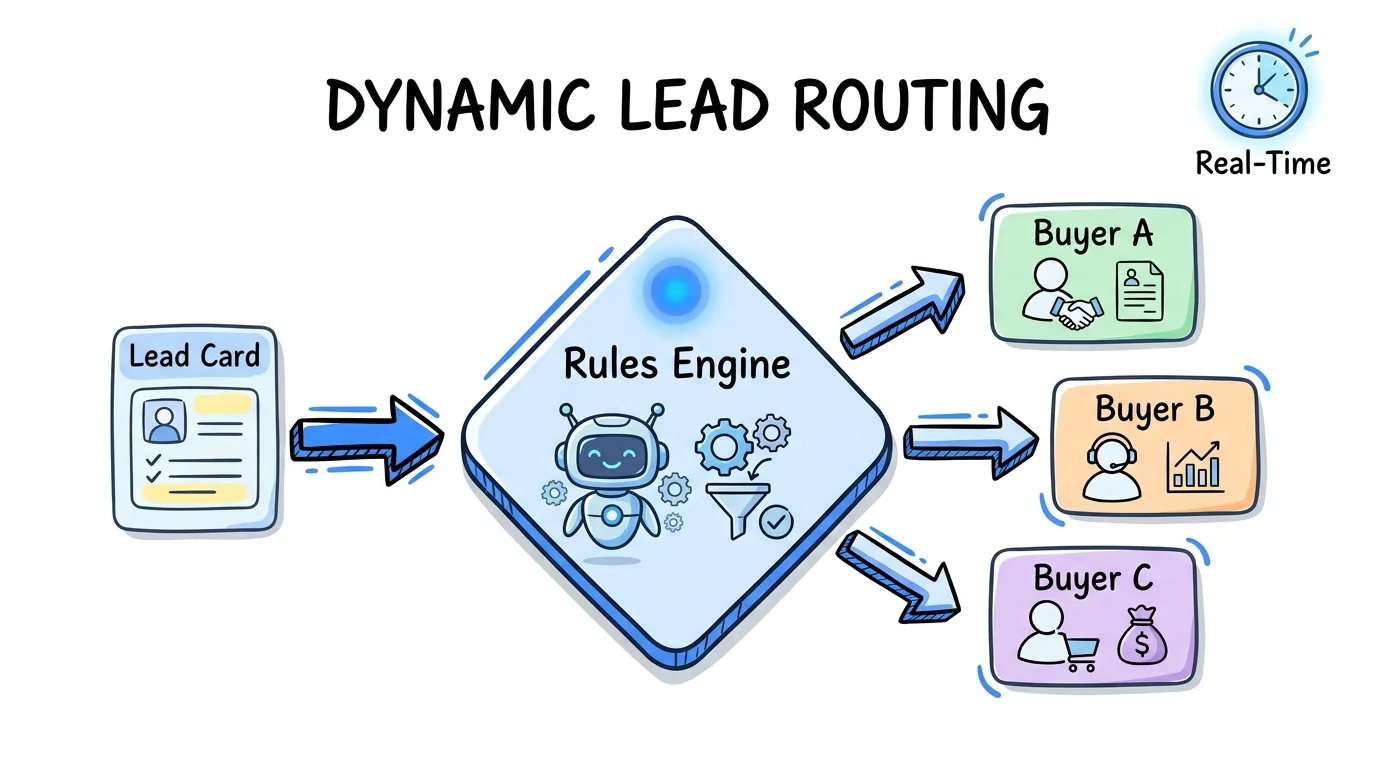
The most important thing to look for in a lead distribution platform is routing speed: how fast does a qualified lead get from the capture form to the buyer's inbox or CRM? Research from the Lead Response Management Study found that contacting a lead within 5 minutes produces 9x higher qualification rates than waiting 30 minutes. Every minute your platform takes to route a lead is a minute of contact-rate decay.
Beyond speed, the right platform depends on your business model. A pay-per-lead agency with 12 external buyers needs ping post auction support. A single-market insurance operation needs TCPA compliance tooling. A mortgage aggregator running refinance and purchase leads simultaneously needs separate buyer pools with different qualification filters. There is no single right answer, but there are seven features that separate platforms that scale from ones that break.
This guide covers each criterion with what to look for, what to avoid, and the questions to ask before signing a contract. At the end, there is a printable checklist you can bring into vendor calls. If you are still shortlisting vendors, start with the ranked comparison of the best lead distribution software, then bring this checklist to the demos.
Key Takeaways
- Routing speed is the most important feature: sub-200ms delivery is the standard. Slow delivery destroys contact rate regardless of lead quality.
- Distribution method flexibility (round robin, weighted, waterfall, ping post) matters because the right method depends on your buyer mix, and that changes as you scale.
- Buyer management tools (caps, payouts, acceptance rate tracking, and fallback rules) determine whether you can profitably run more than 3 buyers simultaneously.
- TCPA compliance tooling (TrustedForm, Jornaya, duplicate detection) is a baseline requirement in any regulated vertical. Absent tools here is a litigation risk, not just a product gap.
- Spanish-language routing is a hard requirement if you operate in MVA, insurance, or mortgage verticals serving Hispanic markets. Ask every vendor how they handle it.
1. Routing Speed and Delivery Time
Routing speed is not a nice-to-have. According to the Lead Response Management Study (published in the Harvard Business Review), contacting a lead within 5 minutes produces 9x higher qualification rates than a 30-minute delay, and leads become 21x more likely to enter the sales process when contacted within 5 minutes vs 30.
Every second between form submit and buyer delivery is decaying lead quality. The industry standard for modern ping post platforms is sub-200 milliseconds from lead receipt to buyer ping. Anything over 500ms is a sign the platform was not built for real-time distribution.
What to ask in your vendor call:
- What is your median and p99 lead delivery latency?
- Is routing latency end-to-end (form to buyer CRM), or only the internal routing step?
- What happens to delivery speed under 5x normal volume?
Red flags: vendors who cite batch processing windows, platforms that deliver via email rather than webhook or API, and platforms that cannot provide actual latency metrics.
2. Distribution Method Flexibility
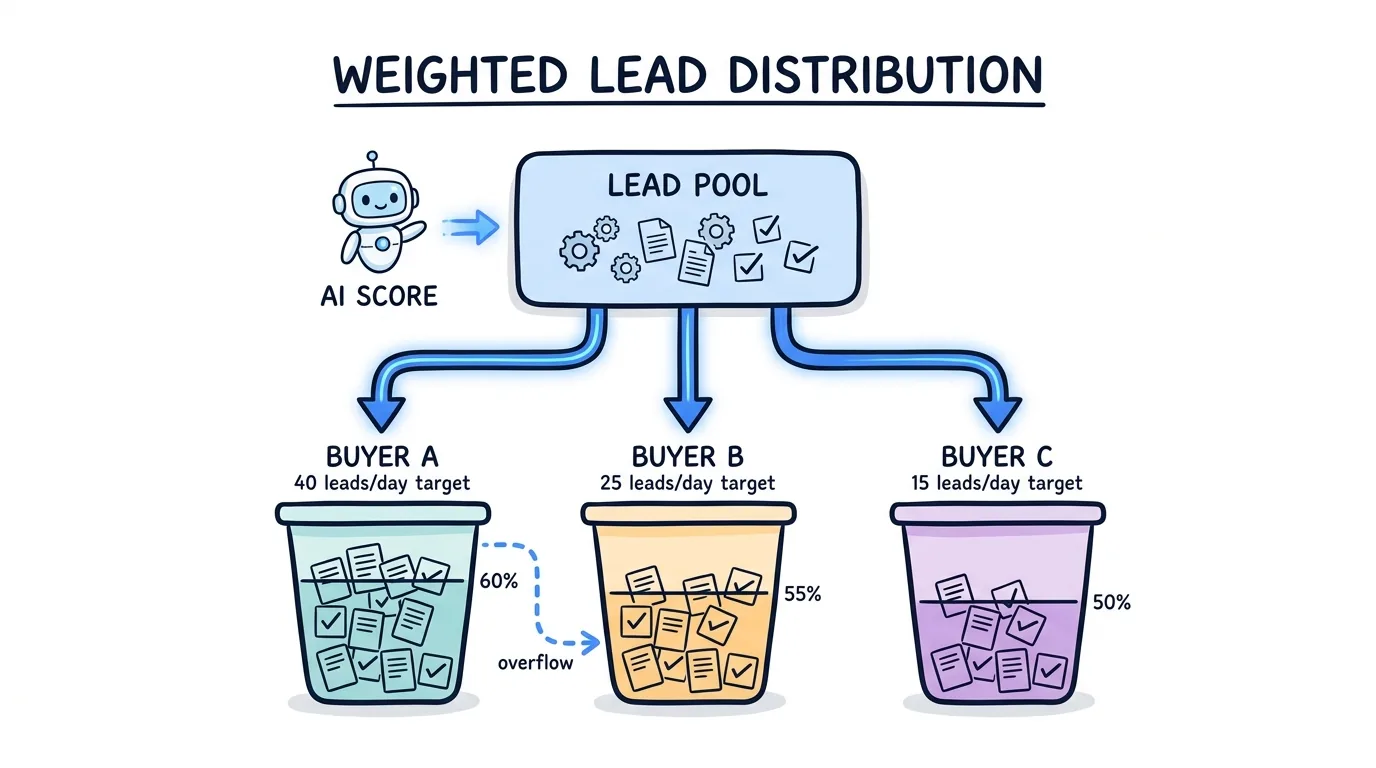
The right distribution method depends on your buyer structure. As your business evolves, the right method changes too. You should not have to switch platforms every time your buyer mix changes.
The four methods every serious platform should support:
| Method | What It Does | Use When |
|---|---|---|
| Round robin | Equal-turn rotation across all buyers | Equal-cap pools, new buyer relationships |
| Weighted distribution | Percentage allocation per buyer | Different cap sizes or tier levels |
| Waterfall (priority) | Try buyer 1, fall to buyer 2 on rejection | Primary buyer with overflow |
| Ping post auction | Real-time bid from multiple buyers, highest accepted bid wins | Maximizing revenue per lead |
A platform that only supports one or two of these methods will require you to migrate when your operation outgrows the method. That migration costs time, money, and lead revenue during the transition.
What to ask:
- Do you support round robin, weighted, waterfall, and ping post in the same account?
- Can I switch methods on an active buyer pool without rebuilding the campaign?
- Does the platform support hybrid models (ping post with a waterfall fallback if the auction produces no bids)?
For a deeper comparison of methods, see automated lead routing rules for agencies and round robin lead distribution.
3. Buyer Management
Buyer management is where most platforms show their limitations. You need more than a contact list. A production lead distribution operation requires:
Daily and monthly caps per buyer. If a buyer's cap is 200 leads/day, the platform must stop routing to them at lead 201, automatically, without manual intervention.
Automated payouts. Manually invoicing buyers at month-end does not scale past 5 buyers. The platform should debit buyer accounts per lead accepted and generate payout reports automatically.
Acceptance rate tracking. If Buyer A accepts 85% of leads and Buyer B accepts 22%, you need to know. Low acceptance rates indicate a mismatch between the lead profile and the buyer's criteria, and they are usually fixable. But you cannot fix what you cannot see.
Rejection reason logging. When a buyer rejects a lead, why? "Out of territory," "over cap," "duplicate," and "does not meet criteria" are all different problems requiring different fixes.
Fallback rules. When all buyers in a pool reject a lead, the platform needs a fallback: route to a secondary pool, park for later review, or trigger an alert. Leads that fall through with no fallback are revenue wasted.
What to ask:
- How does cap management work? Is it automatic or manual?
- Can I see per-buyer acceptance rates in real time?
- What happens to a lead when every buyer in the pool rejects it?
- Is buyer payout calculation automated or manual?
4. TCPA and Compliance Tooling
TCPA (Telephone Consumer Protection Act) litigation is one of the highest-cost risks in the lead generation industry. A single TCPA class action can result in settlements of $500 per violation. At 50,000 leads, that is $25 million in exposure if consent is not properly documented.
TrustedForm or Jornaya LeadID certification captures the consumer's consent at the exact moment of form submission, with a time-stamped certificate that proves the consumer agreed to be contacted. Most sophisticated buyers in regulated verticals (insurance, mortgage, legal) require it before accepting a lead.
Duplicate detection prevents the same consumer from being sold twice within a window. The appropriate window varies by vertical: 90 days for legal, 30 days for insurance, 14 to 30 days for auto insurance. A platform that cannot configure per-vertical windows will either block legitimate re-shoppers or allow duplicates that harm buyer relationships.
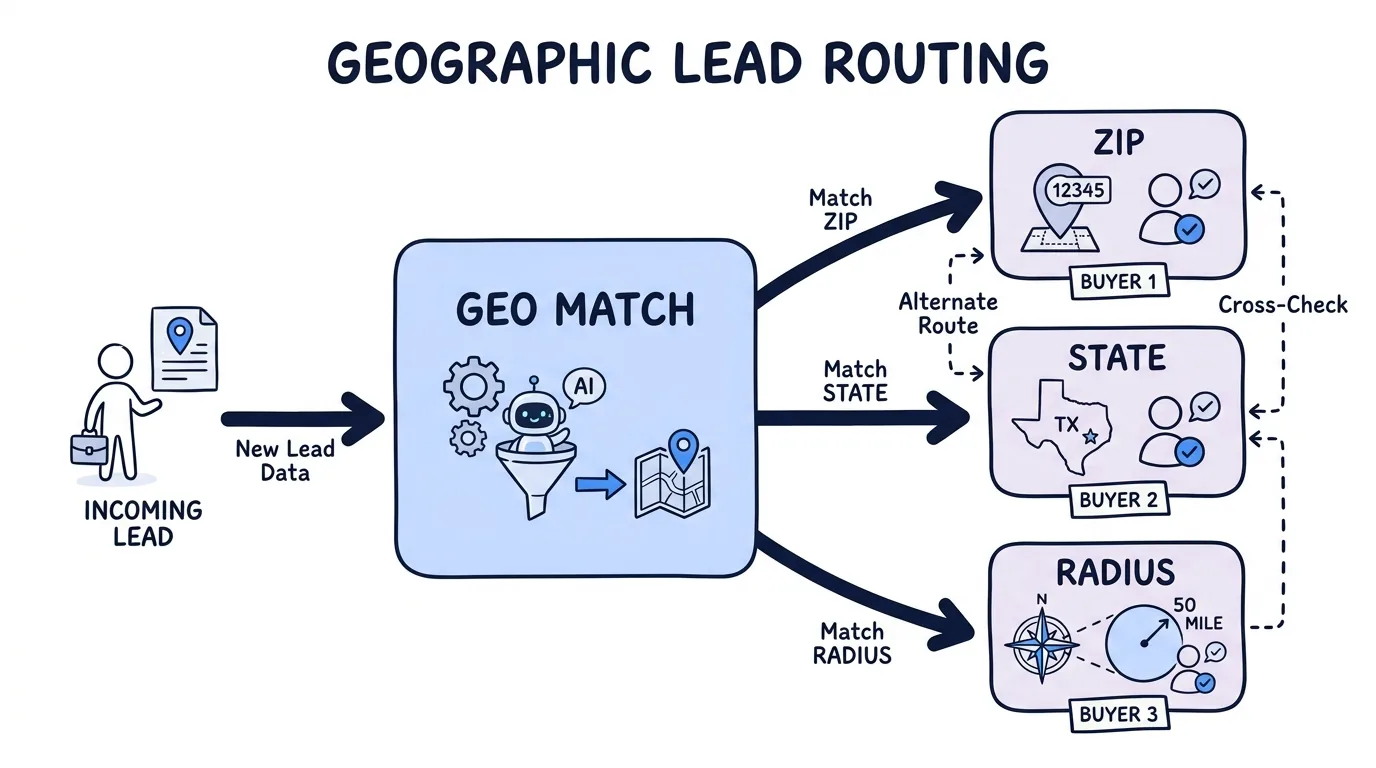
Geographic restrictions prevent leads from routing to buyers who are not licensed or permitted to do business in the lead's state. This is load-bearing in insurance and mortgage.
What to ask:
- Does the platform integrate with TrustedForm and/or Jornaya?
- Is the TrustedForm certificate ID passed through the ping payload to the buyer?
- What is the duplicate detection configuration? Is it configurable per campaign or per buyer?
- How does the platform handle geographic restriction at the buyer level?
5. Reporting and Analytics
You cannot optimize what you cannot measure. The minimum reporting a production lead distribution platform should provide:
Lead-level logging. Every lead: source, timestamp, qualification result, which buyers it was offered to, who accepted, the accepted bid price, and the final destination. Immutable audit trail, not just aggregates.
Acceptance rate by buyer and by source. The two most important performance signals in lead distribution. Low buyer acceptance = lead quality or criteria mismatch. Low source acceptance = bad traffic source.
Revenue per lead by source. Some sources produce leads that buyers bid higher on. Others produce cheap leads that buyers consistently reject. Revenue per lead by source tells you where to spend more ad budget.
Conversion reporting. If buyers share conversion data (lead closed, lead enrolled, call connected), the platform should accept it via postback and surface it alongside your distribution data. Conversion feedback closes the loop on what kinds of leads actually convert.
What to ask:
- Can I export lead-level logs? In what format?
- Does the platform show acceptance rate by buyer and by source in the same dashboard?
- Does the platform support conversion postback from buyers?
- How long is lead-level data retained?
6. Integrations and API
Your lead sources connect to the distribution platform via webhook or API. Your buyers receive leads via webhook or API. If either integration layer is brittle or limited, you will spend significant time on manual troubleshooting instead of growing your operation.
Inbound: the platform should accept leads from any form builder, call tracking system, or traffic source via a standard webhook or a properly documented REST API. Avoid platforms that require proprietary form builders or custom connectors for standard lead sources.
Outbound: the platform should deliver leads to any CRM, buyer system, or third-party call center via configurable outbound webhook or API. Look for field mapping flexibility: the platform should transform your standard lead schema into whatever field names the buyer's system requires.
API documentation. Is it public? Is it kept up to date? Can you test endpoints before signing a contract? A platform with poor API documentation will cause months of integration delays.
Zapier or middleware support. Not all buyers have a technical team to integrate via API. A Zapier integration or pre-built middleware connectors let non-technical buyers receive leads via Google Sheets, Slack, email, or CRM without developer work.
What to ask:
- How do I send a lead to your platform from my form builder or call tracking system?
- How does the platform deliver leads to a buyer's CRM? Is field mapping configurable?
- Is the API documented publicly? Can I review the docs before signing?
- Does the platform support outbound delivery via Zapier for non-technical buyers?
7. Spanish-Language and Multilingual Routing
Spanish-language lead volume in the U.S. has grown roughly 40% year-over-year since 2022, driven by personal injury, auto insurance, Medicare, and mortgage advertisers expanding into Spanish-speaking markets.
If you operate in any vertical that has a significant Hispanic customer segment, Spanish-language routing is a hard requirement, not an optional feature.
What "Spanish routing" actually means in a production platform:
- Spanish intake forms: the form itself is in Spanish, with Spanish-language field labels and consent language.
- Spanish IVR for inbound calls: when a Spanish-speaking consumer calls in on a tracked number, the IVR prompts in Spanish and qualifies in Spanish before routing.
- Spanish-speaking buyer pools: the platform can route Spanish-identified leads specifically to buyers who have Spanish-speaking intake staff. Routing a Spanish caller to an English-only intake rep destroys contact rate.
What to ask:
- Does the platform support Spanish-language intake forms with correct Spanish consent disclosures?
- Can I create a separate buyer pool for Spanish-speaking buyers with different routing logic?
- For call routing: is there Spanish IVR support, or just a note in the lead record?
A vendor may answer "we support Spanish" and mean only the third point above (a field in the record). Press for specifics on intake forms and buyer pool separation.
For a full comparison of platforms with native Spanish routing, see AI lead routing software.
Lead Distribution Platform Evaluation Checklist
Use this checklist during vendor calls. A platform that cannot confirm the majority of these items in a demo is not production-ready for a serious lead distribution operation.
Routing Speed
- Sub-200ms median lead delivery confirmed
- Latency metric is end-to-end (form to buyer CRM), not internal-only
- Burst-capacity handling without per-lead surcharges confirmed
Distribution Methods
- Round robin supported
- Weighted distribution supported
- Waterfall / priority routing supported
- Ping post auction supported
- Can switch methods without rebuilding the campaign
Buyer Management
- Daily and monthly caps per buyer with automatic enforcement
- Per-buyer acceptance rate tracking visible in dashboard
- Rejection reason logging available
- Automated payout calculation per accepted lead
- Fallback routing rule when all buyers reject
Compliance
- TrustedForm integration (certificate ID passes through ping payload to buyer)
- Duplicate detection with configurable window per campaign
- Geographic restriction at buyer level
- TCPA consent language templates available
Reporting
- Lead-level logs with full routing history exportable
- Acceptance rate by buyer and by source in same view
- Revenue per lead by source available
- Conversion postback from buyers supported
Integrations
- Inbound webhook from any form builder confirmed
- Outbound webhook to buyer CRM with configurable field mapping
- API docs publicly available and reviewed
- Zapier or middleware support for non-technical buyers
Spanish Routing
- Spanish-language intake forms with Spanish consent disclosures
- Spanish-speaking buyer pool with separate routing logic
- Spanish IVR for inbound call routing (if applicable to your operation)
FAQ
What is the most important feature to evaluate first?
Routing speed, followed by distribution method support. Everything else is usable without these two; with these two broken, no other feature compensates for the revenue loss.
How long does it take to set up a lead distribution platform?
A modern platform like Lead Distro AI should be operational in 1 to 3 days for a standard setup: one buyer pool, 3 to 5 buyers, one lead source via webhook. Complex setups with custom field schemas, multiple verticals, or enterprise buyer contracts take 1 to 2 weeks. Avoid platforms that quote "4 to 6 weeks for initial setup" for a standard configuration.
What is a reasonable contract length for a lead distribution platform?
Monthly billing with no long-term contract is standard for modern platforms. Avoid annual or multi-year contracts until you have run at least 90 days on the platform and confirmed it handles your buyer mix without issues. Some vendors offer meaningful discounts for annual prepayment, but confirm you have exit rights if the platform fails to meet its SLAs.
Do I need a separate platform for call routing vs form routing?
Not necessarily. Lead Distro AI handles both form-based ping post and call routing on the same platform. Some operations use Ringba specifically for call routing alongside a form-distribution platform. If most of your volume is calls, evaluate dedicated call routing platforms. If it is mixed, a unified platform reduces reporting complexity.
What is a typical platform fee for lead distribution software?
Pricing varies widely. As of September 2026, Lead Distro AI starts at $297/month (Starter) and $497/month (Growth), with Scale by quote, while other published plans range from a free starter tier (ClickPoint LeadExec, up to 250 leads) to $1,075/month and up (boberdoo). Call tracking features (per-number monthly fees, per-minute inbound rates) are billed on top of the platform subscription on Lead Distro AI.
Conclusion
The right lead distribution platform is the one that matches your buyer structure, handles your vertical's compliance requirements, and can grow with your volume without requiring a migration in 6 months. Use the checklist above as your evaluation framework. Any vendor who cannot answer the majority of these questions in a demo is not production-ready.
Lead Distro AI is built for pay-per-lead agencies, lead brokers, and pay-per-call operations that have outgrown manual routing. Round robin, weighted, and priority/waterfall distribution, TCPA compliance tooling, per-buyer acceptance tracking, and native Spanish routing are included on every plan starting at $297/month, and ping-post is added on the $497/month Growth plan.
Start a 7-day free trial and run your evaluation on real lead volume. Credit card required.
Ready to evaluate? Start a 7-day Lead Distro AI free trial and run the checklist against real lead volume. Or take the product tour to see all seven features in action before signing up.
About the Author
Founder & CEO of Lead Distro AI & Great Marketing AI
UC Berkeley graduate and former software engineer at Microsoft. Rafael built Lead Distro AI after managing over $10M in ad spend for performance marketing agencies (pay-per-lead and pay-per-call), including running campaigns for Neil Patel. He combines deep software engineering expertise with hands-on performance marketing experience to build tools that help these agencies scale profitably.
About Lead Distro AI
Lead Distro AI: Capture, Route, and Sell Every Lead, Call, and Appointment
The modern platform for pay-per-lead and pay-per-call agencies. Route, score, and deliver leads with AI-powered automation and real-time P&L tracking. Built for performance marketing agencies and lead buyers across legal, insurance, mortgage, solar, and home services verticals.
4 Distribution Methods
Waterfall, Round Robin, Weighted, Ping-Post
Ping-Post Auctions
Real-time bidding with sub-second routing
Real-Time P&L Reporting
Track revenue, costs, and profit per campaign
Call Tracking
Assign tracking numbers, record calls, and attribute conversions
Lead Scoring
Score every lead before routing to maximize conversion
Partner Portal
Self-serve dashboard for buyers to track leads