Lead Tracking Software for Agencies: Track Every Source and Buyer
Lead tracking software helps agencies track every lead source, status, and buyer in one pipeline. See the framework, tools, and metrics that matter in 2026.

Rafael Hernandez
Founder & CEO
Ex-Microsoft SWE · $10M+ PPL ad spend
I hope you enjoy reading this blog post. If you want to try Lead Distro AI for free, click here.
Author: Rafael Hernandez | Founder & CEO of Lead Distro AI
Last Updated: June 1, 2026
Lead tracking software is a platform that records every lead from the moment it enters your system through to the buyer or rep who closes it, so you always know the source, status, and outcome of each one. For an agency running pay-per-lead or pay-per-call campaigns, that visibility is the difference between knowing your margin and guessing at it. A good tool answers four questions for every lead: where did it come from, what did it cost, where did it go, and did it convert. Without that chain, you are buying leads at one price, routing them at another, and reconciling the gap weeks later when the budget is already spent.
Real-time visibility is what makes that chain useful. For agencies that distribute hundreds or thousands of leads a day, catching a bad source the same hour it goes sideways protects margin that a monthly spreadsheet review would have already lost.
This guide gives you a practical framework for tracking every lead source and buyer, compares the main tool options, and shows how Lead Distro AI does it natively. It sits inside our broader lead management software pillar, so start there if you want the full category overview first.
Key Takeaways
Lead tracking softwarerecords the full lifecycle of every lead, from source and cost through routing, status, and final outcome, in one place instead of five spreadsheets.- Agencies need source-level and buyer-level tracking, not just a generic CRM pipeline, because margin lives in the gap between lead cost and buyer revenue.
- A reliable
lead tracking systemenforces deduplication, lead-source attribution, and acceptance-rate tracking so you never pay twice for the same lead or route to a buyer who keeps rejecting. - The five metrics every agency should track are lead cost by source, acceptance rate by buyer, contact rate, close rate, and revenue per lead.
- Generic
sales lead tracking systemtools track reps; distribution-native tools track buyers, which is the dimension PPL and pay-per-call agencies actually sell against. - Lead Distro AI combines a
lead tracking crm, four routing methods, and real-time P&L reporting so the source-to-buyer chain is captured automatically, with no manual exports.
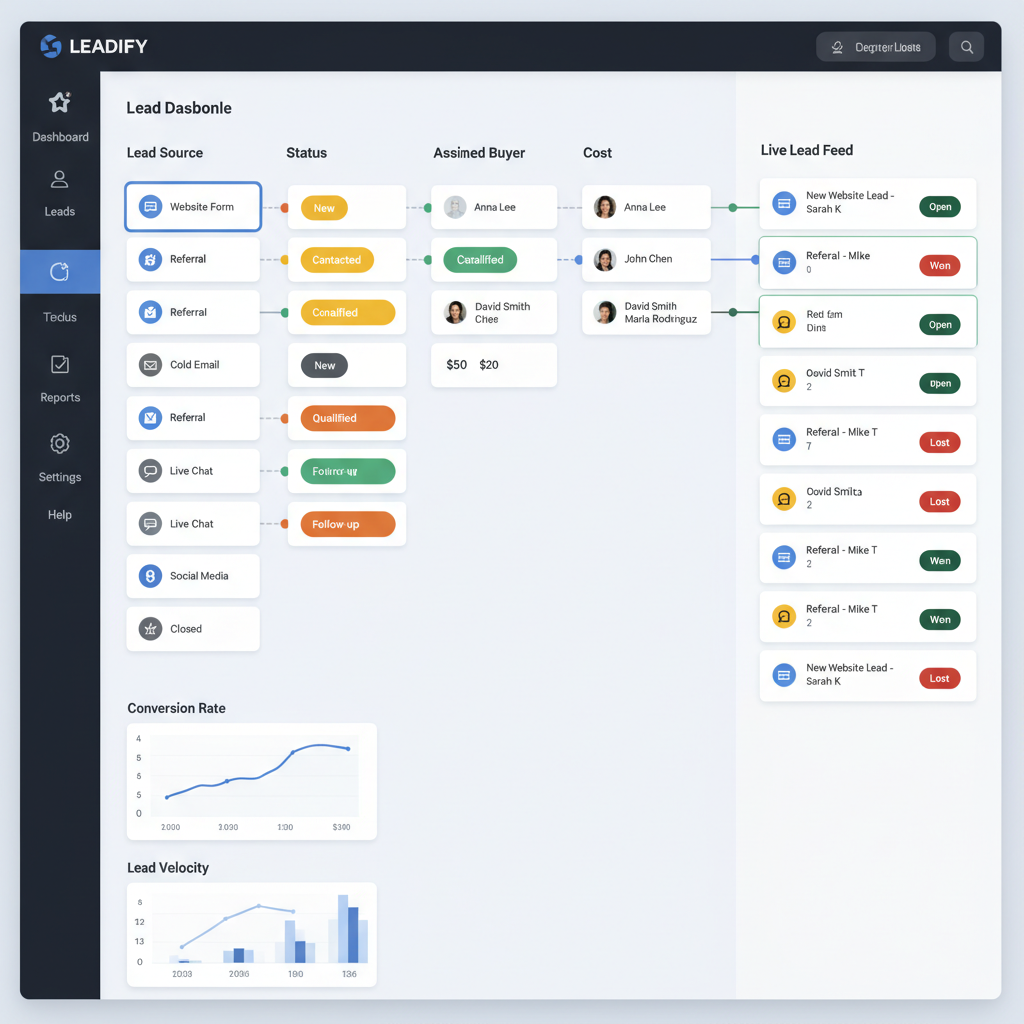
What Lead Tracking Software Actually Does
Lead tracking software captures and organizes the data generated as a lead moves from source to distribution to outcome. For an agency, that means recording four things on every contact record: the origin, the cost, the destination, and the result.
Lead-source attribution maps each lead back to the exact campaign, ad set, or partner that produced it, so you can calculate true cost per lead and compare it against downstream revenue. Status tracking shows where a lead sits right now: new, distributed, accepted, contacted, or closed. Buyer or rep assignment records who received the lead and what they did with it.
The result is a single pipeline view instead of a pile of disconnected exports. The Performance Marketing Association frames attribution as foundational to measurable performance spend, and a lead tracking system delivers it by tying every dollar in to a measurable outcome on the way out. With the lead management market projected by Grand View Research to keep growing at a double-digit rate through 2030, the tooling that captures this chain is becoming table stakes.
Why Agencies Need More Than a Generic CRM
A standard CRM tracks deals through a sales pipeline owned by one team. An agency distribution operation is different: you are not closing the lead yourself, you are selling or routing it to a buyer who closes it. That changes what your lead tracking software has to measure.
A generic sales lead tracking system tracks reps. A distribution-native tool tracks buyers, the external customers paying for your leads. You need acceptance rate, rejection reasons, return rates, and revenue per buyer, none of which a rep-focused CRM surfaces cleanly.
"Most agencies lose margin in the handoff, not the sale. If you can't see acceptance and rejection rates per buyer in real time, you're discovering bad routing at the end of the month instead of fixing it the same day," says Rafael Hernandez, Founder and CEO of Lead Distro AI.
That handoff visibility is why agencies outgrow general-purpose tools. To see how routing and tracking work together, see how Lead Distro AI routes leads across buyers in real time.
The Lead Tracking Framework: Source to Buyer
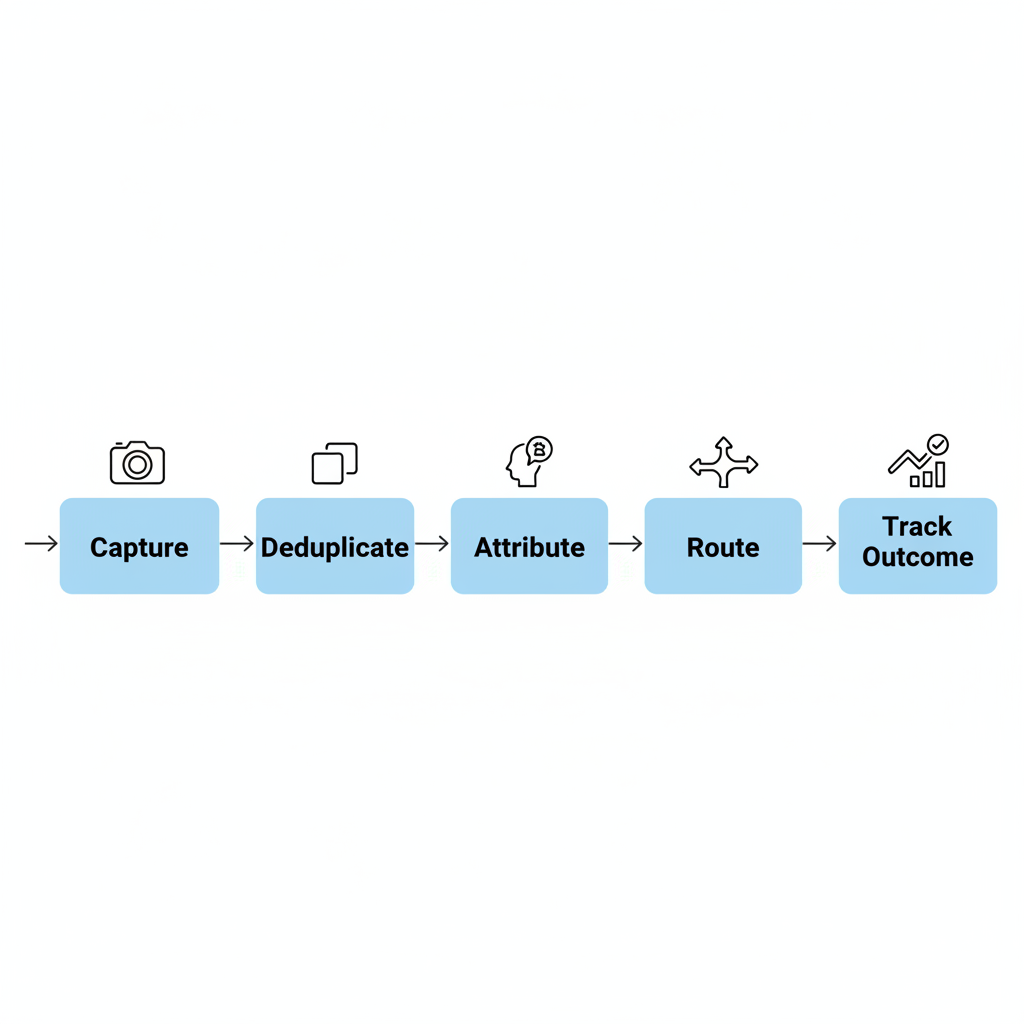
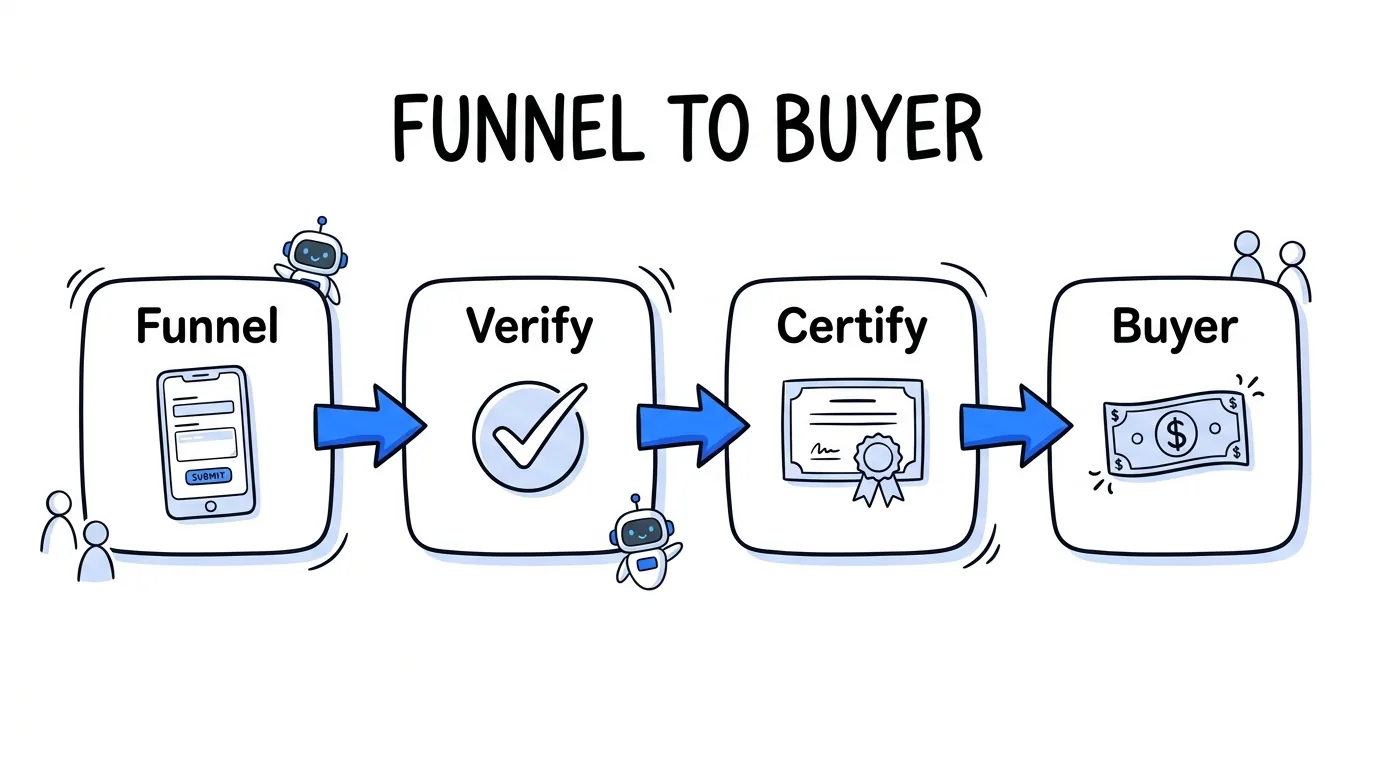
Effective tracking follows a repeatable sequence. Build your workflow around these five stages.
- Capture. Pull every lead in through a
lead capture form, webhook delivery, or API so nothing arrives untracked. The Lead Distro AI API host for inbound delivery isapp.leaddistro.ai. - Deduplicate. Run deduplication on intake so you never pay twice or route a duplicate to a buyer who already has it.
- Attribute. Tag each lead with its source, campaign, and cost the moment it lands, before routing.
- Route. Distribute via the right method (Round Robin, Weighted, Priority or Waterfall, or Ping-Post) with lead caps per buyer.
- Track outcome. Record acceptance, contact, and close so the source-to-buyer chain is complete.
Skipping any stage breaks the chain. A lead with no attribution is a cost you can't trace; an outcome with no buyer is revenue you can't credit.
The Five Metrics Every Agency Should Track
A tracking tool is only useful if it surfaces the numbers that drive decisions. These five matter most for PPL and pay-per-call agencies.
- Lead cost by source. What you paid per lead, per campaign. The denominator for every margin calculation.
- Acceptance rate by buyer. The share of routed leads a buyer accepts. A falling rate is the earliest warning that a buyer or source is deteriorating.
- Contact rate. How many leads were actually reached. A low rate usually signals a data quality or delivery-speed problem.
- Close rate. The buyer's conversion, which tells you whether your leads produce revenue downstream.
- Revenue per lead. What each lead earned, net of cost. This decides which sources to scale and which to cut.
Tracking these in a lead scoring and reporting layer lets you renegotiate supplier pricing and drop weak buyers with real data. Our related guide goes deeper on reporting.
Lead Tracking Software Compared
The market splits into three buckets, each tracking a different layer of the funnel: general CRMs, multi-channel trackers, and distribution-native platforms.
| Platform | Best For | Routing Built In | Starting Price | Free Trial |
|---|---|---|---|---|
| Lead Distro AI | PPL and pay-per-call agencies, brokers, buyers and sellers | Yes (4 methods + Ping-Post) | $297/mo (ping-post from $497/mo) | 7 days, card required |
| HubSpot CRM | In-house sales teams | Not verified | Not verified | Not verified |
| WhatConverts | Marketing attribution and call tracking | Call routing (Pro and up) | $30/mo (as of September 2026) | 14 days |
| Salesflare | Small B2B sales teams | Not verified | Not verified | Not verified |
Not verified: we could not confirm this on the vendor's own website as of September 2026. Check with the vendor.
In our view, general CRMs like HubSpot and Salesflare are built around reps and deals, and multi-channel trackers like WhatConverts are strong at source attribution and call tracking. A distribution-native lead tracking crm like Lead Distro AI follows the lead from source all the way to the buyer who paid for it.
How Lead Distro AI Tracks Every Lead
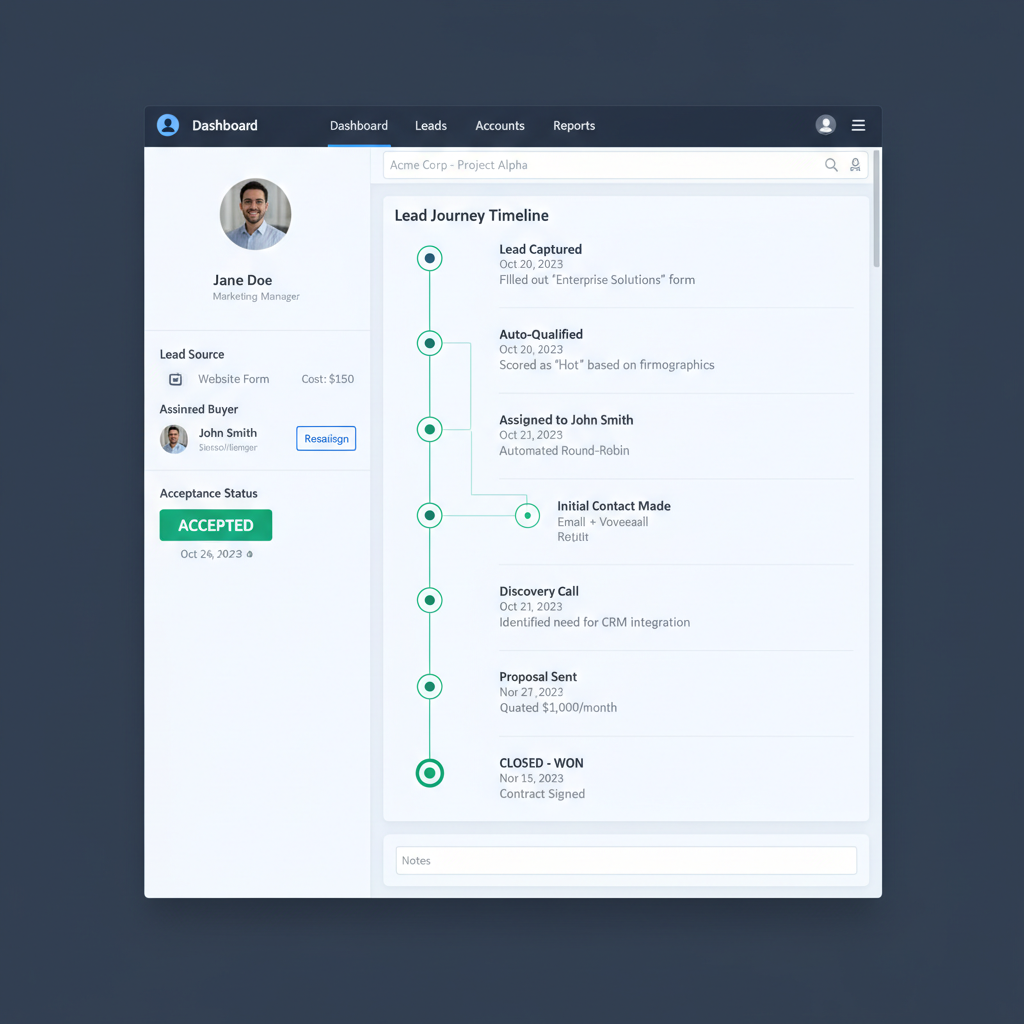
Lead Distro AI was built for the source-to-buyer chain rather than the single-team pipeline. Every lead that enters is automatically attributed to its source and cost, deduplicated on intake, and routed by your chosen distribution method with per-buyer caps.
From there, the platform records acceptance, rejection reasons, and outcomes per buyer, then rolls everything into a real-time P&L view. You see lead cost, buyer revenue, and net margin without exporting anything. Call tracking is available on a usage-based model (a per-number monthly fee plus a per-minute inbound rate) so pay-per-call agencies track phone leads in the same dashboard as form leads.
If you run distribution at volume, this is the difference between acting on data the same day and reconciling it weeks later. You can start a free trial of Lead Distro AI and route your first tracked lead in minutes.
FAQ
What is lead tracking software?
Lead tracking software is a platform that records the full lifecycle of every lead, from the source and cost it came in at through the buyer it was routed to and the final outcome. It centralizes lead-source attribution, status, and conversion data in one pipeline so agencies can calculate cost per lead, revenue per lead, and margin without stitching together spreadsheets. For distribution agencies, it also tracks buyer-level acceptance and rejection.
How is a lead tracking system different from a CRM?
A CRM tracks deals through a sales pipeline owned by your own reps, while a distribution-focused lead tracking system tracks external buyers who purchase your leads. A generic sales lead tracking system is built around rep activity and deal stages rather than buyer acceptance rate, rejection reasons, or revenue per buyer. Agencies that route or sell leads need that buyer dimension, which is why many outgrow general-purpose CRMs and adopt a distribution-native lead tracking crm instead.
What metrics should agencies track on every lead?
Agencies should track five core metrics on every lead: lead cost by source, acceptance rate by buyer, contact rate, close rate, and revenue per lead. Cost by source and revenue per lead define your margin, acceptance rate gives the earliest warning of a deteriorating buyer or source, and contact and close rates reveal data-quality and delivery-speed issues. Tracking all five lets you scale profitable sources, cut weak buyers, and prove ROI to clients with real numbers.
Can lead tracking software handle pay-per-call leads?
Yes. The right lead tracking software tracks phone leads alongside form leads in the same pipeline. Lead Distro AI offers call tracking on a usage-based model, a per-number monthly fee plus a per-minute rate for inbound calls, so pay-per-call agencies see call leads, source attribution, and buyer outcomes in one dashboard. This unified view matters because most agencies run both form and call campaigns and need a single source of truth across them.
How much does lead tracking software cost?
Pricing varies by category, and distribution-native platforms are priced for agency volume. Lead Distro AI starts at $297 per month with a 7-day free trial that requires a credit card, so you can cancel anytime during the trial and not be charged. When comparing costs, weigh the subscription against the margin a tracking system protects by catching bad sources and buyers in real time.
Conclusion
Lead tracking software is the backbone of any serious agency distribution operation. It records every lead from source to buyer, enforces deduplication and attribution, and surfaces the metrics that decide which sources to scale and which buyers to cut. Generic CRMs track reps; you need a tool that tracks buyers and routing too.
Lead Distro AI ties the whole chain together: four distribution methods, automatic source and cost attribution, buyer-level acceptance tracking, and real-time P&L reporting in one platform. To go deeper, read our lead management software pillar or our related guide on routing methods.
Ready to track every lead from source to buyer? Start your 7-day free trial and route your first tracked lead in minutes.
About the Author
Founder & CEO of Lead Distro AI & Great Marketing AI
UC Berkeley graduate and former software engineer at Microsoft. Rafael built Lead Distro AI after managing over $10M in ad spend for performance marketing agencies (pay-per-lead and pay-per-call), including running campaigns for Neil Patel. He combines deep software engineering expertise with hands-on performance marketing experience to build tools that help these agencies scale profitably.
About Lead Distro AI
Lead Distro AI: Capture, Route, and Sell Every Lead, Call, and Appointment
The modern platform for pay-per-lead and pay-per-call agencies. Route, score, and deliver leads with AI-powered automation and real-time P&L tracking. Built for performance marketing agencies and lead buyers across legal, insurance, mortgage, solar, and home services verticals.
4 Distribution Methods
Waterfall, Round Robin, Weighted, Ping-Post
Ping-Post Auctions
Real-time bidding with sub-second routing
Real-Time P&L Reporting
Track revenue, costs, and profit per campaign
Call Tracking
Assign tracking numbers, record calls, and attribute conversions
Lead Scoring
Score every lead before routing to maximize conversion
Partner Portal
Self-serve dashboard for buyers to track leads