Is Call Tracking Bad for SEO? Myths vs. Reality
Is call tracking bad for SEO? No, when done right. How dynamic number insertion, NAP consistency, and call tracking SEO actually work, with the myths debunked.

Rafael Hernandez
Founder & CEO
Ex-Microsoft SWE · $10M+ PPL ad spend
I hope you enjoy reading this blog post. If you want to try Lead Distro AI for free, click here.
Author: Rafael Hernandez | Founder & CEO of Lead Distro AI
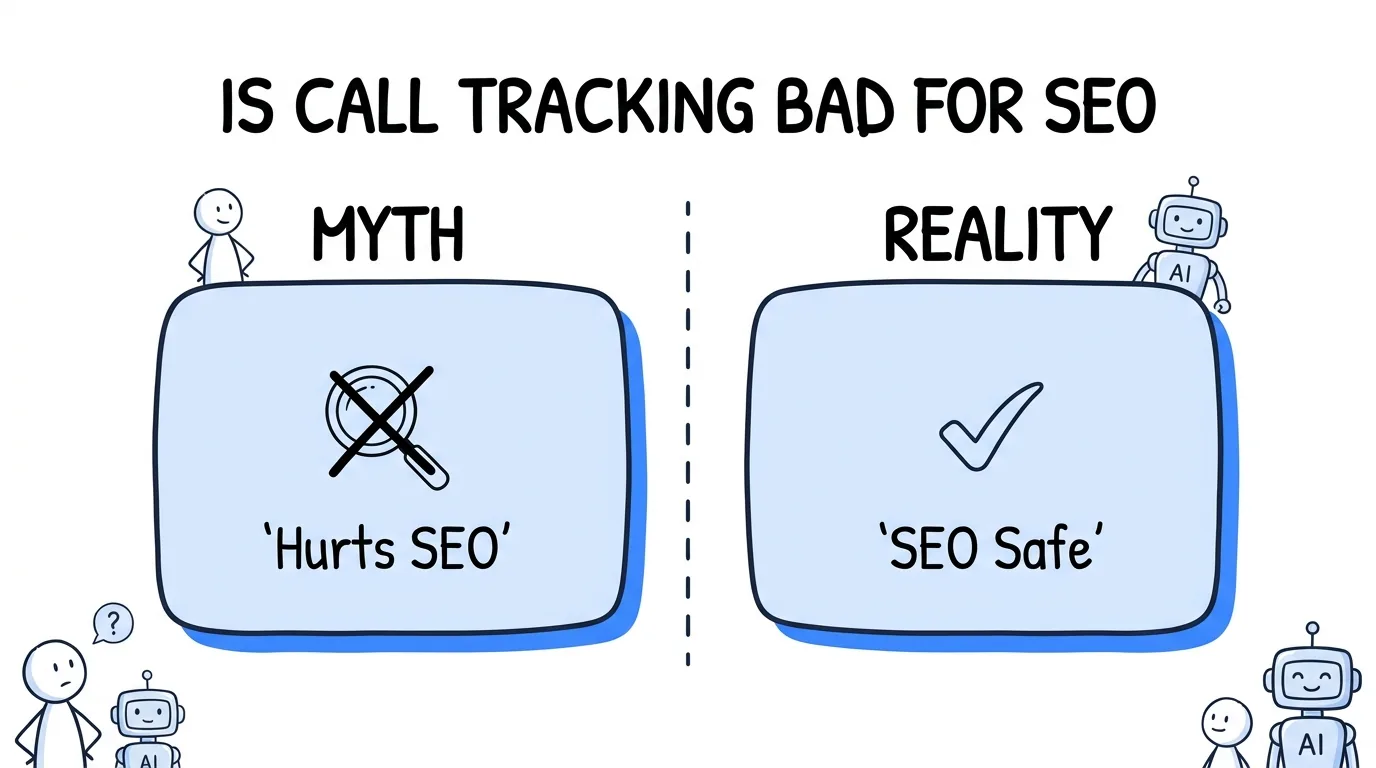
No, call tracking is not bad for SEO when it is implemented correctly. The fear comes from a real risk (showing search engines a different phone number than your business actually uses), but modern call tracking sidesteps it. Dynamic number insertion swaps the displayed number with JavaScript, so human visitors see a tracking number while Googlebot reads your real, hard-coded number in the HTML source. Your NAP consistency stays intact, and you get full call attribution. The only way call tracking hurts SEO is sloppy setup, such as hard-coding tracking numbers into your page or pasting them into directory listings.
This matters for any agency running call tracking on a client's site, especially local businesses like law firms and home-services contractors that depend on local search. As CallRail explains, search crawlers read the source HTML, not the JavaScript-swapped number. This guide debunks the three most common call tracking SEO myths, then shows exactly how to keep call tracking SEO-safe. If you want call tracking that follows these rules by default, Lead Distro AI tracks calls and data leads in one platform.
Key Takeaways
- Call tracking is not bad for SEO when you use dynamic number insertion correctly. The myth comes from outdated setups that hard-coded tracking numbers into pages.
- Googlebot sees your real number, not the tracking number, because dynamic number insertion swaps numbers with JavaScript that crawlers do not render.
- NAP consistency stays intact as long as your real local number lives in the HTML source and in every directory citation.
- Improper setup is the only real risk, such as putting tracking numbers in Google Business Profile, Yelp, or other directory listings.
- Page speed still matters, so use an asynchronous call tracking script that does not block rendering.
The Short Answer on Call Tracking and SEO
Call tracking and SEO coexist without conflict when the setup respects how search engines crawl. Plenty of agencies still ask, does call tracking hurt SEO, and the honest answer is only when it is set up wrong. The entire concern reduces to one question: does the search engine see a phone number that matches your business listings? With dynamic number insertion, the answer is yes.
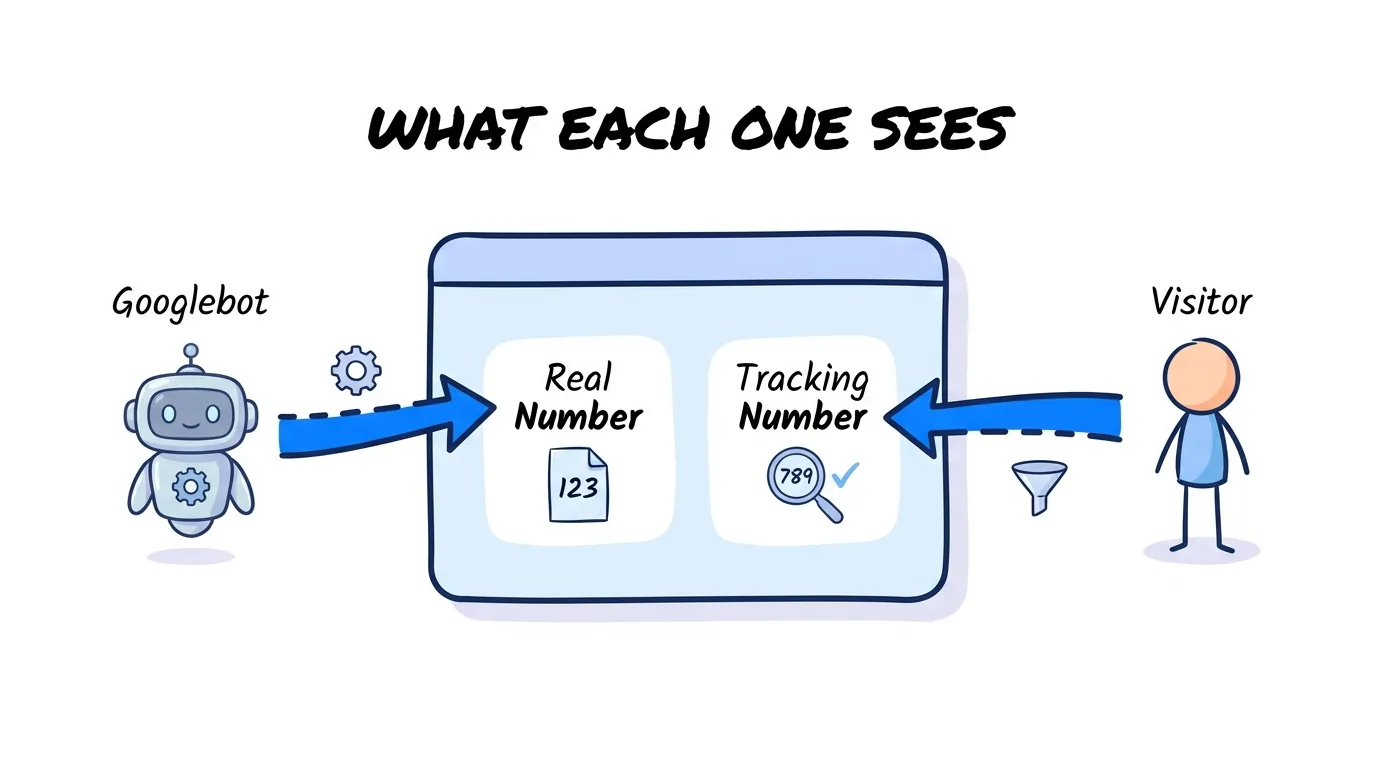
Here is why. Your website's HTML contains your real, permanent business number. A small JavaScript snippet runs in the visitor's browser and replaces that number on screen with a tracking number from a pool. Google's crawler reads the raw HTML and never executes the swap, so it indexes your real number. Sterling Sky's myth-busting analysis confirms this is the core reason call tracking SEO panic is overblown. The takeaway: the technology was built specifically to protect NAP consistency.
Myth 1: Dynamic Number Insertion Tanks Your Rankings
The myth says that swapping phone numbers confuses Google and drops your rankings. The reality is the opposite by design. Dynamic number insertion seo concerns assume the crawler sees the tracking number, but it does not.
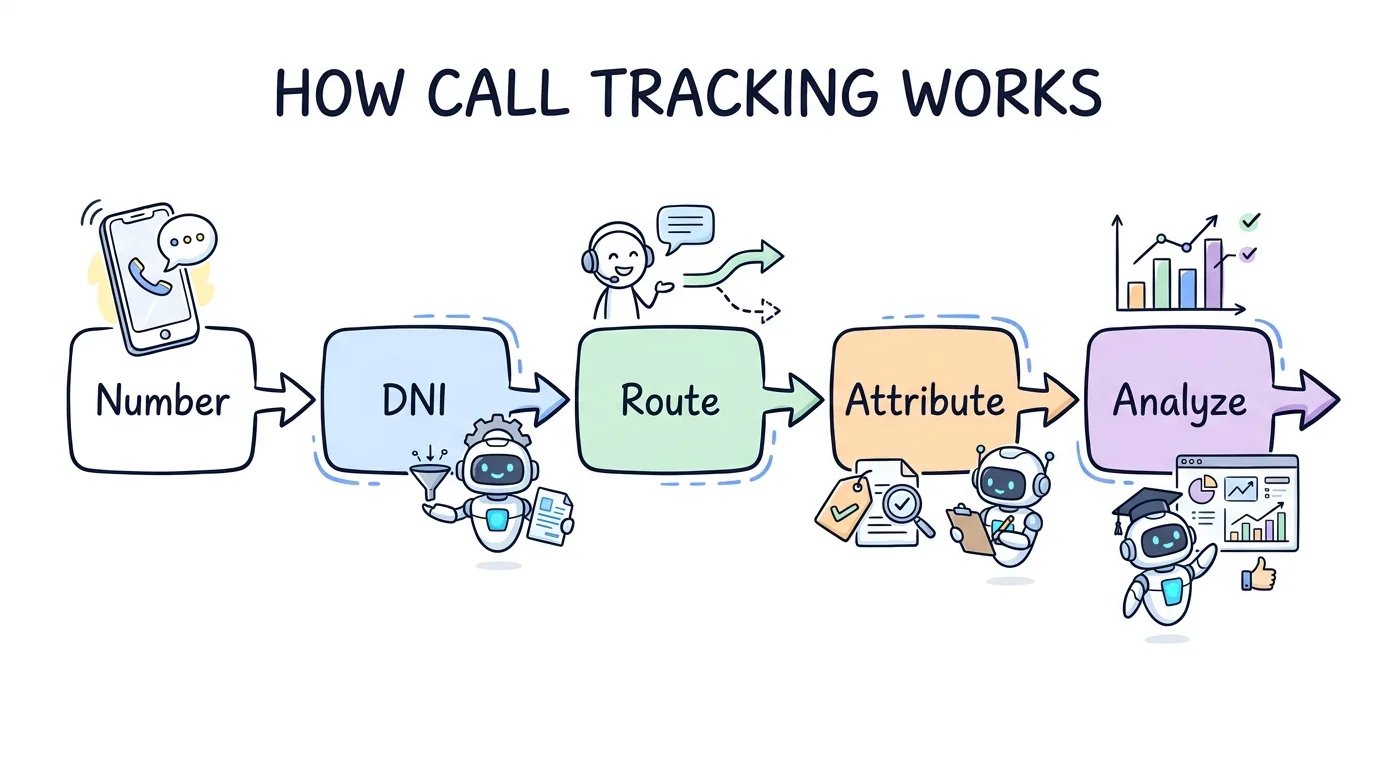
Googlebot crawls the server-rendered HTML, where your real number is hard-coded. The number swap happens client-side, after the page loads, only for human visitors with JavaScript enabled. So the version Google indexes for ranking and the version it cross-checks against your Google Business Profile both show your real number. Dynamic number insertion was engineered precisely so call attribution does not cost you visibility. For a full breakdown of how the swap works, see our guide to dynamic number insertion.
Myth 2: Tracking Numbers Break NAP Consistency
NAP consistency (Name, Address, Phone) is a local ranking signal, and the myth says call tracking shatters it. In reality, NAP consistency only breaks if you misuse tracking numbers, not if you use dynamic number insertion the way it is meant to be used.
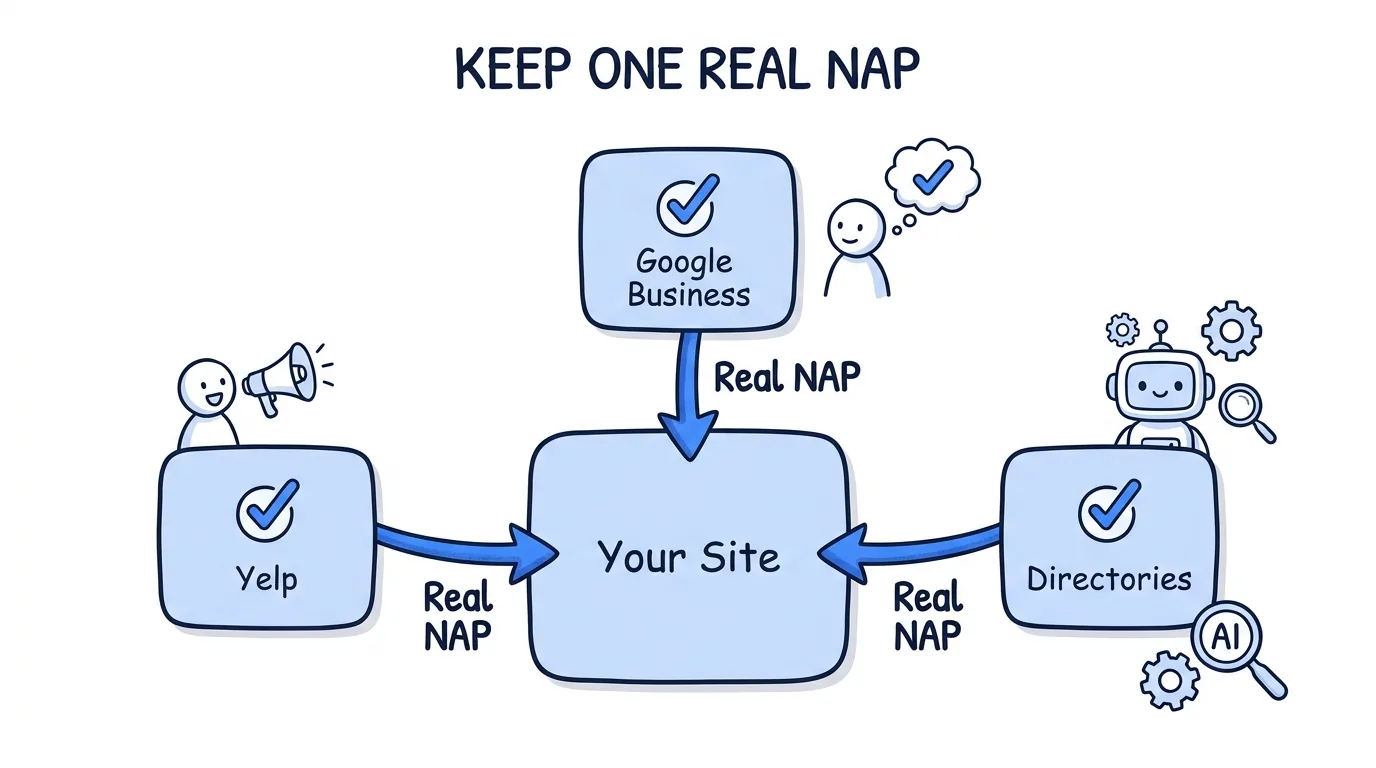
The rule is simple: keep your real local number everywhere a crawler or directory looks, and let dynamic number insertion handle only the on-page display for human visitors. WhatConverts' in-depth look lays out the same principle: your hard-coded HTML number and your directory citations must match your Google Business Profile. Do that and NAP consistency is never at risk. Break it (by listing a tracking number in citations) and you create the exact problem the myth warns about.
Myth 3: Call Tracking Slows Down Your Site
The third myth is that the call tracking script drags down page speed and, with it, rankings. Page speed is a genuine ranking factor, and a fast page also earns more AI citations, so the concern is worth taking seriously, but the fix is straightforward.
A well-built dynamic number insertion script loads asynchronously, meaning it does not block the page from rendering. The number swap happens after the core content paints, so visitors see your page at full speed and the script updates the number a fraction of a second later. The practical guidance: choose a provider with an async, lightweight script, and test your pages in PageSpeed Insights before and after. Properly implemented, the impact on Core Web Vitals is negligible, and the attribution upside is large.
Call Tracking SEO Best Practices
Doing call tracking and seo together is a matter of following a short checklist. Get these right and there is no downside.
- Use dynamic number insertion for on-site display, never hard-coded tracking numbers in the HTML.
- Keep your real local number in the HTML source, your Google Business Profile, and every directory citation.
- Never put a tracking number in citations like Yelp, Apple Maps, or industry directories.
- Load the script asynchronously so it does not hurt page speed.
- Verify after setup by viewing the page source (you should see your real number) and running a PageSpeed test.
Following this list is what separates call tracking that helps you measure ROI from call tracking that creates a self-inflicted SEO problem. For the mechanics behind each step, read how does call tracking work.
Myth vs Reality at a Glance
| Common Myth | The Reality |
|---|---|
| DNI makes Google see a fake number | Googlebot reads the hard-coded real number in HTML |
| Call tracking breaks NAP consistency | NAP stays intact if citations keep the real number |
| Tracking numbers must go in directories | Only the real local number belongs in citations |
| The script always slows your site | An async script has negligible speed impact |
| Call tracking and SEO cannot coexist | They coexist fully when implemented correctly |
For the foundational concept first, see what is call tracking, and for campaign-level attribution, see marketing call tracking.
How Lead Distro AI Keeps Call Tracking SEO-Safe
Lead Distro AI is built for pay-per-lead and pay-per-call agencies, plus lead brokers and lead buyers and sellers, and its call tracking follows the SEO-safe pattern by default. Dynamic number insertion runs as an asynchronous client-side swap, so your real number stays in the HTML for crawlers while visitors see a tracking number.
"The agencies that fear call tracking usually saw a botched setup once," says Rafael Hernandez, Founder and CEO of Lead Distro AI. "Done right, the crawler never even knows a swap happened. You keep your rankings and you finally know which campaign produced which call."
Beyond SEO safety, the platform routes calls with four distribution methods, scores every lead with AI in under a second, and reports revenue and margin in real time. Plans start at $297 per month, with call tracking priced on usage on top of the flat subscription. Explore call tracking or take the product tour.
Frequently Asked Questions
Is call tracking bad for SEO?
No, call tracking is not bad for SEO when implemented correctly. Dynamic number insertion swaps the displayed number with JavaScript that search crawlers do not execute, so Googlebot reads your real, hard-coded number in the HTML. Your rankings and NAP consistency stay intact. The only way call tracking hurts SEO is improper setup, such as hard-coding tracking numbers into the page or placing them in directory listings instead of your real local number.
Does dynamic number insertion hurt SEO?
Dynamic number insertion does not hurt SEO when set up properly. It uses client-side JavaScript to display a tracking number to human visitors only, while the page's HTML source keeps your real number. Because Googlebot crawls the source HTML and does not run the swap, it indexes your real number. Dynamic number insertion seo problems only appear if the script is misconfigured or tracking numbers leak into citations and structured data.
Will call tracking break my NAP consistency?
Call tracking will not break NAP consistency if your real local number stays in the HTML source, your Google Business Profile, and every directory citation. Dynamic number insertion only changes the on-page display for visitors, not the underlying data crawlers read. Problems arise only when someone lists a tracking number in directories instead of the real number. Keep one canonical real number in all citations and NAP consistency is preserved.
Does call tracking slow down my website?
Call tracking has a negligible effect on site speed when the dynamic number insertion script loads asynchronously. An async script does not block rendering, so the page paints at full speed and the number swaps a fraction of a second later. Since page speed is a ranking factor and faster pages earn more AI citations, choose a lightweight, async call tracking script and verify your Core Web Vitals in PageSpeed Insights after installation.
How do I use call tracking without hurting SEO?
Use dynamic number insertion for the on-site number display, keep your real local number hard-coded in the HTML and in every directory citation, never put a tracking number in Google Business Profile or other listings, and load the script asynchronously. After setup, view the page source to confirm your real number is present and run a PageSpeed test. Following this short checklist gives you full call attribution with zero negative SEO impact.
Does Lead Distro AI's call tracking affect SEO?
No. Lead Distro AI uses asynchronous dynamic number insertion, so your real number stays in the HTML for search crawlers while visitors see a tracking number. NAP consistency is preserved as long as your citations carry your real local number. You get accurate call attribution, AI scoring, and real-time reporting without trading away rankings. Plans start at $297 per month, with call tracking priced on usage on top of the flat subscription.
The Bottom Line
Is call tracking bad for SEO? No, the fear is a myth rooted in outdated implementations. Dynamic number insertion was built so crawlers see your real number while visitors see a tracking number, which protects NAP consistency and your rankings. The only real risk is sloppy setup, and the fix is a five-item checklist. Done right, call tracking and seo work together, and you finally get to see which campaigns drive the calls that close.
Want call tracking that is SEO-safe out of the box? Start your 7-day free trial of Lead Distro AI or take the product tour to see dynamic number insertion, routing, and call scoring in action.
About the Author
Founder & CEO of Lead Distro AI & Great Marketing AI
UC Berkeley graduate and former software engineer at Microsoft. Rafael built Lead Distro AI after managing over $10M in ad spend for performance marketing agencies (pay-per-lead and pay-per-call), including running campaigns for Neil Patel. He combines deep software engineering expertise with hands-on performance marketing experience to build tools that help these agencies scale profitably.
About Lead Distro AI
Lead Distro AI: AI-Powered Lead Distribution & Call Tracking That Maximizes ROI
The modern platform for pay-per-lead and pay-per-call agencies. Route, score, and deliver leads with AI-powered automation and real-time P&L tracking. Built for performance marketing agencies and lead buyers across legal, insurance, mortgage, solar, and home services verticals.
4 Distribution Methods
Waterfall, Round Robin, Weighted, Ping-Post
Ping-Post Auctions
Real-time bidding with sub-second routing
Real-Time P&L Reporting
Track revenue, costs, and profit per campaign
Call Tracking
Assign tracking numbers, record calls, and attribute conversions
AI Lead Scoring
Score every lead before routing to maximize conversion
Partner Portal
Self-serve dashboard for buyers to track leads