Best Lead Scoring Software in 2026: 9 Platforms Compared
The best lead scoring software in 2026, ranked for pay-per-lead agencies and lead brokers: Lead Distro AI, Salesforce Einstein, HubSpot, MadKudu, 6sense, and more.

Rafael Hernandez
Founder & CEO
Ex-Microsoft SWE · $10M+ PPL ad spend

I hope you enjoy reading this blog post. If you want to try Lead Distro AI for free, click here.
Author: Rafael Hernandez | Founder & CEO of Lead Distro AI
The best lead scoring software in 2026 is Lead Distro AI for pay-per-lead (PPL) agencies, pay-per-call agencies, lead brokers, and high-velocity lead buyers. Its lead scoring engine scores every inbound lead against the rules you configure, in under one second, then routes it via ping-post, round-robin, weighted, or priority logic. For B2B SaaS sales teams that live inside a CRM, start by checking the scoring options in that CRM. For account-based and product-led B2B teams, we suggest evaluating 6sense and MadKudu.
The category has split into two camps: predictive models trained on historical CRM data, and real-time engines built for lead velocity, where a lead has to be scored and routed before a buyer loses interest. Lead Distro AI is built for the second camp.
This guide compares the 9 best lead scoring software platforms in 2026 by use case. Lead Distro AI scores leads on rules you define and is built for agencies routing leads to buyers. For the other eight vendors, we could not confirm current features, prices, or trial terms on their own websites as of September 2026, so we share who each one fits in our view and the questions to ask before you buy.
Key Takeaways
- Lead scoring software ranks inbound leads before they reach a buyer, using either rules you define or a model trained on historical conversions.
- The best lead scoring software for PPL agencies and lead brokers is Lead Distro AI, which scores every lead against your own rules and then routes it, starting at $297/mo with a 7-day free trial.
- Predictive scoring needs history. A model trained on past conversions needs enough closed deals before its scores are accurate. Rules you define work from the first lead.
- In our view, 6sense and MadKudu are worth evaluating for account-based and product-led growth teams, respectively.
- Conversational lead scoring layers automated follow-up messages on top of scoring, which can help inbound-heavy teams.
- Scoring without distribution is incomplete for a PPL agency. If your scores live in one tool and your routing logic lives in another, you add API latency and sync gaps between the score and the buyer decision it is supposed to drive.
- Before you buy any scoring tool, confirm whether it can distribute leads to external buyers. If it cannot, budget for a separate distribution tool.
What Lead Scoring Software Does
Lead scoring software ranks each lead by how likely it is to be worth buying. Rule-based scoring applies thresholds you set (ZIP in a buyer's territory, phone and email valid, form completed in a plausible time). Predictive scoring instead learns from historical conversion patterns and retrains as new data arrives. Rules are transparent and work from the first lead; predictive models need history before they are accurate.
The category includes three subtypes:
- Predictive lead scoring uses supervised learning on historical CRM data.
- Real-time lead scoring scores leads as they arrive, often in under one second, so the score is ready before routing. Example: Lead Distro AI (rule-based).
- Conversational lead scoring combines scoring with two-way email or SMS engagement, scoring leads based on reply intent.
Per Forrester research on sales automation, lead scoring reduces lead response time and improves SDR pipeline accuracy when paired with workflow automation.
Lead Scoring Software Comparison Table
| Platform | Best For |
|---|---|
| Lead Distro AI | PPL agencies, lead brokers |
| Salesforce Einstein | Sales teams that work inside Salesforce |
| HubSpot Predictive Scoring | B2B SaaS marketing teams on HubSpot |
| MadKudu | Product-led growth SaaS teams |
| 6sense | B2B account-based revenue ops |
| Infer | Enterprises with years of CRM history |
| ZoomInfo Copilot | B2B sales teams that already use ZoomInfo |
| Conversica | Inbound-heavy teams focused on fast follow-up |
| ActiveCampaign | Email-nurture teams |
We could not confirm the other vendors' model types, integrations, prices, or free trials on their own websites as of September 2026, so this table lists fit only. Check with each vendor for current details. Lead Distro AI scores on rules you define in under one second, starts at $297/mo, and includes a 7-day free trial (credit card required).
The 9 Best Lead Scoring Software Platforms in 2026
For vendors 2 through 9, we could not confirm current features, prices, or trial terms on each vendor's own website as of September 2026. Each entry lists who we think the tool fits and the questions to ask the vendor before you buy.
1. Lead Distro AI
Best for: Pay-per-lead agencies, lead brokers, and lead buyers running high-volume inbound campaigns across legal, insurance, mortgage, solar, and home services.
Lead Distro AI is a lead scoring platform purpose-built for the PPL and pay-per-call industry. It evaluates each lead in under one second against the rules you configure, covering source quality signals, TrustedForm and Jornaya consent verification, vertical-specific fields, and the buyer requirements you set. Scored leads route automatically via ping-post, round-robin, weighted, or priority routing.
Key features:
- Sub-one-second rule-based lead scoring
- 4 routing methods (ping-post, round-robin, weighted, priority)
- Native TrustedForm and Jornaya verification
- Real-time buyer caps, schedules, and exclusivity rules
- Webhook delivery, Zapier, and call routing
- White-label client portals for agencies
Pricing: $297/mo (Starter), $497/mo (Growth), Scale by quote. 7-day free trial. See full pricing.
Limitations: Built for high-velocity transactional distribution. For account-based scoring across a long B2B buying cycle, a platform built for account-based marketing may fit better.
2. Salesforce Einstein
Best for: Sales teams that already work inside Salesforce.
Questions to ask: How much closed-deal history does the model need before its scores are reliable? What does it cost for your team, and can it route leads to external buyers or only to your own reps?
3. HubSpot Predictive Lead Scoring
Best for: B2B SaaS marketing teams that run their funnel on HubSpot.
Questions to ask: Which HubSpot plan includes predictive scoring, what does that plan cost, and how often do scores refresh?
4. MadKudu
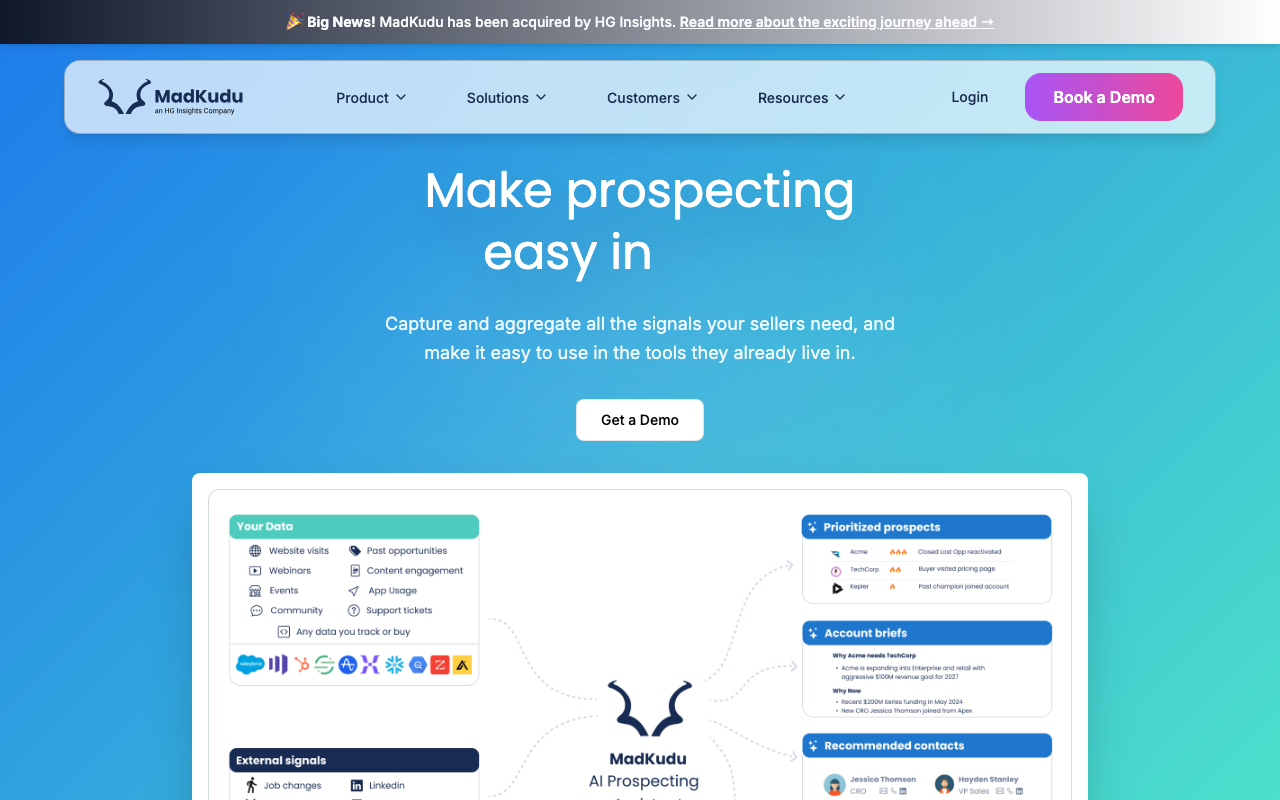
Best for: Product-led growth (PLG) SaaS companies that want to score product qualified leads (PQLs).
Questions to ask: Which product-usage and CRM data sources does it connect to, and how is it priced?
5. 6sense
Best for: B2B account-based revenue ops teams.
Questions to ask: What is the annual commitment, how long does onboarding take, and does it score individual leads or mainly accounts?
6. Infer
Best for: Enterprises with years of CRM history they want to put to work.
Questions to ask: Which CRMs and marketing platforms does it connect to today, and what does the current roadmap look like?
7. ZoomInfo Copilot
Best for: B2B sales teams that already use ZoomInfo data.
Questions to ask: Does it require a separate ZoomInfo data subscription, and how does it write scores into your CRM?
8. Conversica
Best for: Inbound-heavy teams that care most about fast follow-up.
Questions to ask: Which channels does it follow up on, how is it priced, and how much setup does it need for your vertical's disclaimers?
9. ActiveCampaign
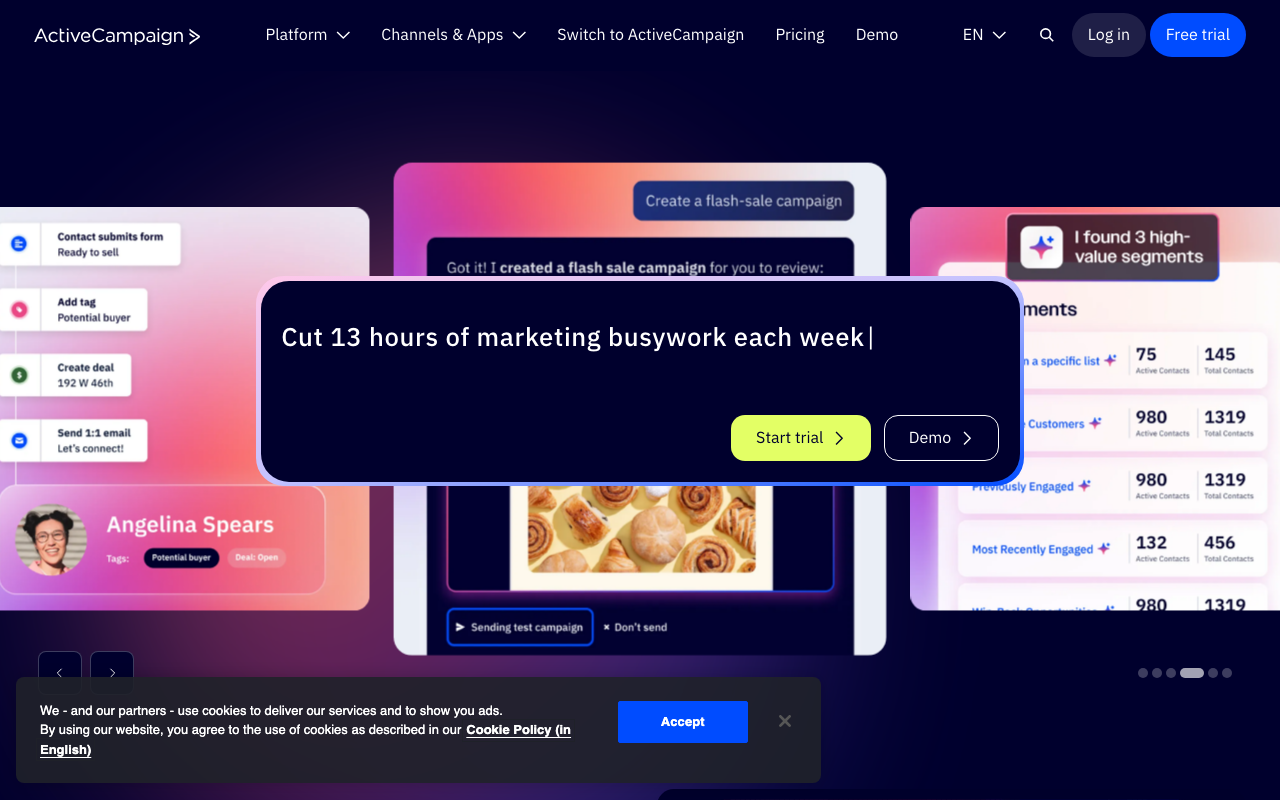
Best for: Marketing teams and small agencies that generate leads through email nurture and content marketing.
Questions to ask: How does its contact scoring work, what does it cost at your contact count, and can it send leads to external buyers?
Lead Scoring Software by Use Case
| Use Case | Best Platform |
|---|---|
| PPL agency selling leads to multiple buyers | Lead Distro AI |
| Lead broker / lead seller | Lead Distro AI |
| B2B SaaS marketing team on HubSpot | HubSpot Predictive Scoring |
| Salesforce-native enterprise sales | Salesforce Einstein |
| Product-led growth SaaS | MadKudu |
| Account-based marketing | 6sense |
| Inbound-heavy team focused on follow-up | Conversica |
| Sales team using ZoomInfo data | ZoomInfo Copilot |
| Email-nurture team | ActiveCampaign |
These picks are our opinion. Confirm current features and pricing with each vendor before you buy.
How to Choose Lead Scoring Software
The right lead scoring software depends on three questions.
First, where do your leads come from? If they come from your own forms, ads, and organic channels into your own CRM, scoring inside that CRM may be the right choice. If they come from third-party publishers, affiliates, or pay-per-call campaigns and need to route to external buyers, Lead Distro AI is purpose-built for that workflow.
Second, how fast do you need to act? The Harvard Business Review research by James Oldroyd found that the odds of qualifying a lead drop 21x when contact time slips from 5 minutes to 30 minutes. Lead Distro AI scores every lead in under one second, well inside that 5-minute window. Scoring that runs on a daily or hourly batch schedule is not built for that speed, so ask each vendor how often its scores refresh.
Third, what is your data volume? Predictive ML models need 500 to 1,000 historical conversions to train accurately. Rule-based scoring (Lead Distro AI) works from the first lead because you define the thresholds yourself. New agencies and high-velocity verticals avoid the cold start entirely that way.
Fourth, what does it cost at 5x your current volume? Per-seat and per-contact pricing scale with your team and your database, while Lead Distro AI plans start at $297/mo and are priced by monthly lead volume. Model the bill at 2x and 5x your current lead flow before you sign, and include the cost of the separate distribution tool you will still need if the scoring platform cannot route to buyers.
For a deeper breakdown of how the scoring models themselves work, see our lead scoring guide.
FAQ
How is lead scoring different from rule-based scoring?
Rule-based scoring assigns point values to attributes you choose (e.g., "+10 when the ZIP is inside the buyer's territory"). Predictive scoring instead trains a model on historical conversion outcomes and learns which attribute combinations predict conversion. Rules are transparent, work from the first lead, and change when you change them; a predictive model needs conversion history first, and you cannot see why it scored a lead the way it did.
Do I need a lot of data to use lead scoring?
For predictive ML, you typically need 500 to 1,000 closed conversions before models are accurate. For rule-based scoring (Lead Distro AI), you can start on day one: you set the thresholds that matter in your vertical and adjust them as you learn. New agencies avoid the cold start that way.
Can lead scoring replace TrustedForm or Jornaya?
No, lead scoring complements TrustedForm and Jornaya. TrustedForm and Jornaya verify TCPA consent and capture the original form. Your scoring rules then rank those verified leads by the quality signals you care about. Lead Distro AI integrates with both natively, so consent verification and scoring happen in one pass.
How much does lead scoring software cost?
Lead Distro AI starts at $297/mo for Starter, with a 7-day free trial (credit card required). We could not confirm the other vendors' prices on their own websites as of September 2026, so check each vendor's pricing page. When you compare prices, compare the full stack you need, not the scoring line item alone: if a scoring tool cannot distribute leads to external buyers, add the cost of a separate distribution tool.
Does lead scoring work for Medicare and senior insurance leads?
Yes, lead scoring works well for Medicare, ACA, final expense, and senior insurance leads. In regulated verticals, pair scoring with TCPA consent verification: Lead Distro AI integrates with TrustedForm and Jornaya. Your scoring rules rank each lead on intent and quality signals while TrustedForm or Jornaya proves consent.
How long does it take to set up lead scoring?
Rule-based systems can usually be configured in a few hours. Predictive ML platforms need historical data to train, typically two to four weeks of lead flow before the scores are trustworthy. Lead Distro AI's rule-based scoring works from day one because you define the thresholds up front rather than waiting for historical patterns to accumulate.
How does lead scoring integrate with my CRM?
Most lead scoring tools integrate via webhook, native API, or middleware (Zapier, Make). Lead Distro AI delivers scored leads via webhook or REST API, with Zapier connectors for Salesforce, HubSpot, GoHighLevel, and 50+ systems.
Conclusion
Lead scoring software has matured into a category of clearly differentiated tools. PPL agencies and lead brokers should pick a real-time engine built for distribution: in our view, Lead Distro AI is the strongest option, with sub-one-second rule-based scoring, four routing methods, and pricing that fits sub-$10M ARR agencies. B2B SaaS teams should start with the scoring options in their own CRM. Account-based teams should evaluate 6sense, PLG teams MadKudu, and inbound-heavy teams Conversica.
If you sell, route, or buy leads at volume, the cost of slow or inaccurate scoring is measured in lost revenue every day. Modern lead scoring closes that gap. See our companion guides on best lead distribution software, best lead management software, and AI lead routing for the full operational stack.
Ready to see lead scoring in action? Start your free 7-day trial of Lead Distro AI and score, route, and deliver leads in under one second. Start free trial or take the product tour first.
About the Author
Founder & CEO of Lead Distro AI & Great Marketing AI
UC Berkeley graduate and former software engineer at Microsoft. Rafael built Lead Distro AI after managing over $10M in ad spend for performance marketing agencies (pay-per-lead and pay-per-call), including running campaigns for Neil Patel. He combines deep software engineering expertise with hands-on performance marketing experience to build tools that help these agencies scale profitably.
About Lead Distro AI
Lead Distro AI: AI-Powered Routing for Your Leads, Calls, and Appointments
The modern platform for pay-per-lead and pay-per-call agencies. Route, score, and deliver leads with AI-powered automation and real-time P&L tracking. Built for performance marketing agencies and lead buyers across legal, insurance, mortgage, solar, and home services verticals.
4 Distribution Methods
Waterfall, Round Robin, Weighted, Ping-Post
Ping-Post Auctions
Real-time bidding with sub-second routing
Real-Time P&L Reporting
Track revenue, costs, and profit per campaign
Call Tracking
Assign tracking numbers, record calls, and attribute conversions
Lead Scoring
Score every lead before routing to maximize conversion
Partner Portal
Self-serve dashboard for buyers to track leads