Health Insurance Lead Generation: The Complete Guide for Agencies
Generate, price, and distribute health insurance leads in 2026. Pricing benchmarks by sub-vertical, pay per call rates, ping post mechanics, and TCPA compliance.

Rafael Hernandez
Founder & CEO
Ex-Microsoft SWE · $10M+ PPL ad spend
I hope you enjoy reading this blog post. If you want to try Lead Distro AI for free, click here.
Author: Rafael Hernandez | Founder & CEO of Lead Distro AI
Last Updated: May 27, 2026
Health insurance lead generation is the process of capturing contact information from consumers actively shopping for individual, family, ACA marketplace, Medicare Advantage, or employer-sponsored health coverage and connecting them with licensed insurance agents or carriers. According to the Centers for Medicare & Medicaid Services, ACA marketplace enrollment reached a record 23.6 million in 2026, making health insurance one of the highest-demand and highest-paying lead verticals available to pay-per-lead and pay-per-call agencies today. The average health insurance lead sells for $25 to $65 on an exclusive basis, and live transfers command $40 to $90 per call.
Lead Distro AI does not sell leads. It is software for the companies that generate health insurance leads and route them to buyers. If you are an agent looking to buy leads, this guide will help you judge price and quality, but you will need a lead vendor to buy from.
Whether you are generating health insurance leads for agents through Google Ads and Facebook campaigns, running pay per call IVR funnels, or operating a ping post auction for multiple buyers, the bottleneck is always the same: getting the right lead to the right licensed agent in the right state before the consumer shops elsewhere. This guide covers every stage of that workflow, from sourcing compliant leads to pricing benchmarks, TCPA rules, ping post mechanics, and how platforms like Lead Distro AI automate distribution at scale. Start your free trial and route your first health insurance lead in under five minutes.
Key Takeaways
- Health insurance leads are one of the most valuable in 2026, with exclusive leads selling for $25 to $65 and live transfers commanding $40 to $90 per call during ACA and Medicare enrollment seasons.
- ACA marketplace enrollment hit 23.6 million in 2026 (CMS), creating a year-round demand for leads with sharp spikes during Open Enrollment (November through January) and Special Enrollment periods.
- Pay per call converts 10 to 15 times higher than web form leads for health insurance because callers are already pre-qualified by intent and often transferred directly to a licensed agent.
- TCPA one-to-one consent (effective January 2025) is mandatory for health insurance leads. Every lead must carry a separate, explicit consent record for each seller, not a blanket third-party clause.
- Ping post bidding maximizes revenue per health insurance lead by running a real-time auction among multiple buyers, with the highest bidder getting first access and floor-price protection ensuring you never sell below cost.
- Lead Distro AI supports all four distribution methods (Round Robin, Weighted, Priority/Waterfall, Ping-Post) with sub-200ms delivery and built-in TCPA consent logging for insurance sub-verticals.
How Health Insurance Leads Are Generated
Health insurance lead generation operates across four primary channels. Each channel produces leads with different intent signals, compliance requirements, and cost structures.
Paid Search (Google Ads) captures the highest-intent traffic because the consumer is actively searching terms like "health insurance quotes" or "ACA marketplace plans." Cost per click ranges from $8 to $55 for health insurance keywords, and conversion rates on well-optimized landing pages sit between 8% and 15%. Google Ads leads carry strong intent but require significant daily budgets to compete during enrollment season.
Facebook and Instagram Ads work on an interruption model. Ads target lookalike audiences based on demographic data, and lead forms capture information without requiring the user to leave the platform. Facebook CPLs for health insurance range from $6 to $22, but intent quality is lower than paid search. Retargeting campaigns recover abandoned form visitors at a fraction of the initial CPL.
SEO and Content Marketing builds compounding lead volume over time. Ranking for queries like "health insurance for self-employed" or "best ACA plans in Texas" delivers zero-marginal-cost leads once the content ranks. The tradeoff is the three- to six-month ramp before ranking, making SEO a medium-term asset rather than an immediate volume driver.
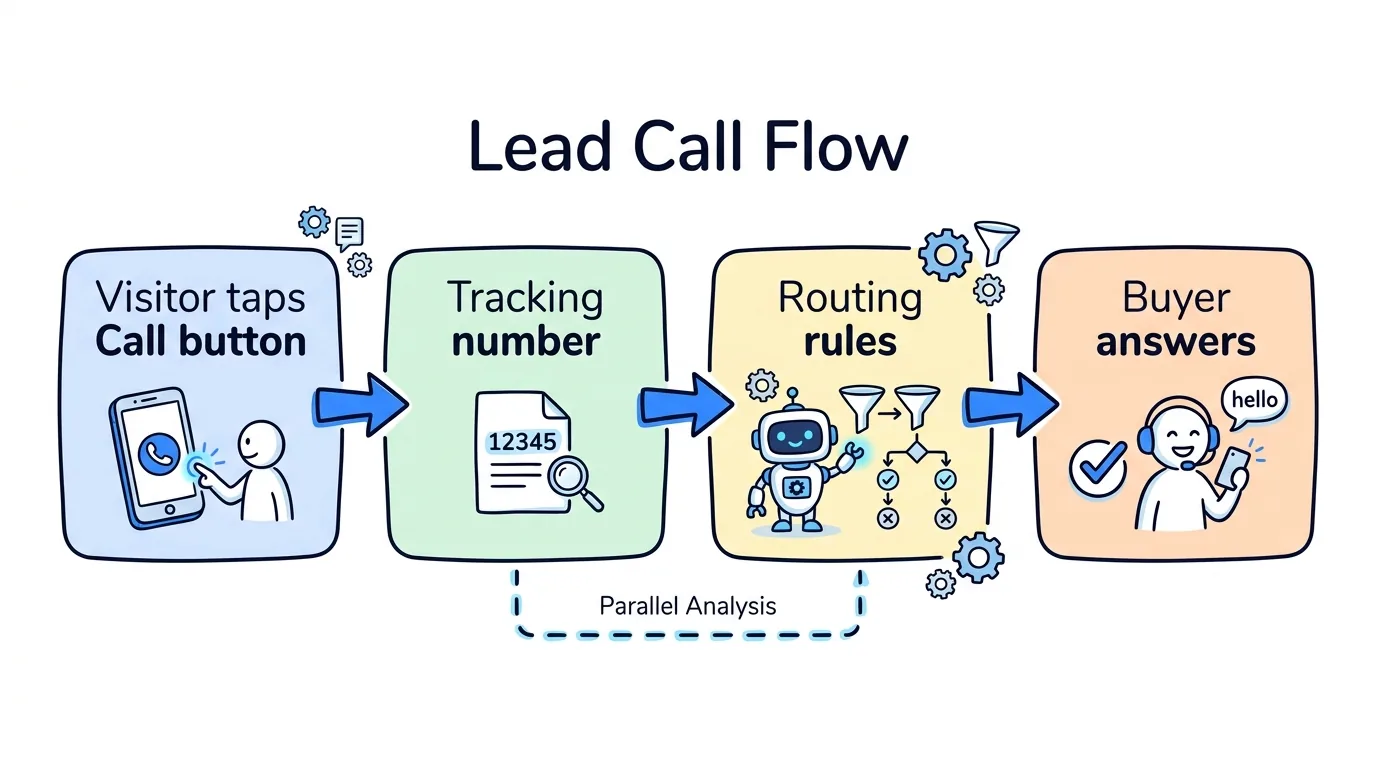
Inbound Pay Per Call is the fastest-growing channel for health insurance agencies. An IVR funnel qualifies callers by coverage type, ZIP code, and household income, then routes live calls to licensed agents. Callers arrive pre-screened, and agents close at rates 10 to 15 times higher than web form leads. See the pay per call for insurance agencies guide for setup details.
Types of Insurance Leads: Health, Life, Medicare, and Final Expense
Not all insurance leads serve the same buyer pool. Understanding sub-vertical differences helps agencies price correctly and route to the right carrier or agent.
Health Insurance Leads include ACA marketplace plans, short-term health policies, and group employer plans. ACA leads spike sharply during the November to January Open Enrollment Period (OEP) and during Special Enrollment Periods triggered by qualifying life events. The CMS 2026 open enrollment report confirmed 23.6 million enrollments, up from 21.4 million in 2025.
Life Insurance Leads are motivated by life events: marriage, new children, or home purchases. Policy values are higher than health but the sales cycle is longer. LIMRA research estimates that 100 million Americans remain uninsured or underinsured, representing a persistently large addressable market.
Medicare Advantage Leads are tied to the Annual Enrollment Period (AEP) from October 15 to December 7 and the Medicare Advantage OEP from January 1 to March 31. These are exclusively for buyers aged 65 and older, which reduces volume but increases average policy value. Medicare CPLs run 20% to 40% above standard health insurance leads.
Final Expense Leads target adults aged 50 to 85 seeking whole-life policies designed to cover burial and end-of-life expenses. These leads are lower-cost to generate ($10 to $30 exclusive) and are often sold via direct mail or phone campaigns alongside health insurance verticals.
Health Insurance Lead Pricing Benchmarks 2026
This table reflects current market CPL ranges by sub-vertical and lead type. These benchmarks are drawn from direct publisher data collected through the Lead Distro AI network as of Q2 2026.
| Sub-Vertical | Shared Lead | Exclusive Lead | Live Transfer / Pay Per Call |
|---|---|---|---|
| ACA Marketplace (Health) | $8 to $25 | $25 to $65 | $40 to $90 |
| Medicare Advantage | $12 to $30 | $35 to $85 | $55 to $110 |
| Medicare Supplement (Medigap) | $15 to $35 | $40 to $95 | $60 to $120 |
| Short-Term Health | $5 to $18 | $18 to $45 | $30 to $65 |
| Life Insurance (Term) | $10 to $30 | $30 to $80 | $50 to $120 |
| Final Expense | $5 to $15 | $15 to $40 | $25 to $55 |
Prices increase by 20% to 40% in California, Texas, and Florida due to carrier density and higher policy values. Leads generated during ACA OEP (November to January) and Medicare AEP (October to December) command a seasonal premium of 15% to 30%.
Pay Per Call for Insurance: Rates, Verticals, and Payout Models
Health insurance pay per call is the highest-value traffic model for insurance carriers and agents because callers self-select by intent. An inbound caller who pressed "1" to speak with a licensed agent converts at rates far exceeding web form submissions.
Payout rates for insurance pay per call in 2026:
| Call Type | Duration Requirement | Payout Range |
|---|---|---|
| ACA / Health Insurance | 90 seconds | $40 to $90 |
| Medicare Advantage | 90 to 120 seconds | $55 to $110 |
| Life Insurance | 120 seconds | $50 to $120 |
| Final Expense | 90 seconds | $25 to $55 |
Duration requirements protect buyers from paying for misdials or hang-ups. Most insurance call buyers require 90 to 120 seconds of connected talk time before a call is billable.
Two payout structures dominate:
- Revenue share. The call center takes a percentage (typically 20% to 40%) of the bound policy premium. This aligns incentives but creates delayed revenue and requires tracking infrastructure.
- Fixed per-call fee. The publisher earns a flat amount per qualifying call. Simpler to account for and preferred by most pay-per-call agencies running multi-vertical operations alongside
lead generation for health insurance.
"Health insurance pay per call campaigns are the most profitable traffic we run because the buyer pool is deep and the duration threshold is achievable," says Rafael Hernandez, Founder & CEO of Lead Distro AI. "Callers who reach a licensed agent with household income and ZIP code pre-screened close at 20% to 35%, which justifies $90 payouts easily."
Exclusive vs Shared Insurance Leads: Which Pays More?
The exclusive vs shared insurance leads decision is the most consequential pricing choice for health insurance publishers.
Shared leads are sold to two to five buyers simultaneously. They cost less ($8 to $25 for health insurance), move faster, and allow publishers to generate volume at lower CPCs. The downside is that agents competing for the same lead drive up contact attempts, and conversion rates fall to 3% to 8%.
Exclusive leads go to one buyer. Agents close at 10% to 20% because there is no competition on contact. Buyers pay $25 to $65 for health insurance exclusives, and the economics work when the close rate exceeds the cost premium by a factor of at least 1.5x.
Age-out pricing applies when leads are not contacted immediately. An exclusive health insurance lead that sits for 24 hours may be republished as a shared lead at 40% to 60% of the original price. Aged leads (more than 7 days old) sell for $2 to $8 but require consent re-confirmation under FCC rules.
For a complete breakdown of economics across lead models, read our guide to how ping post bidding works for insurance leads.
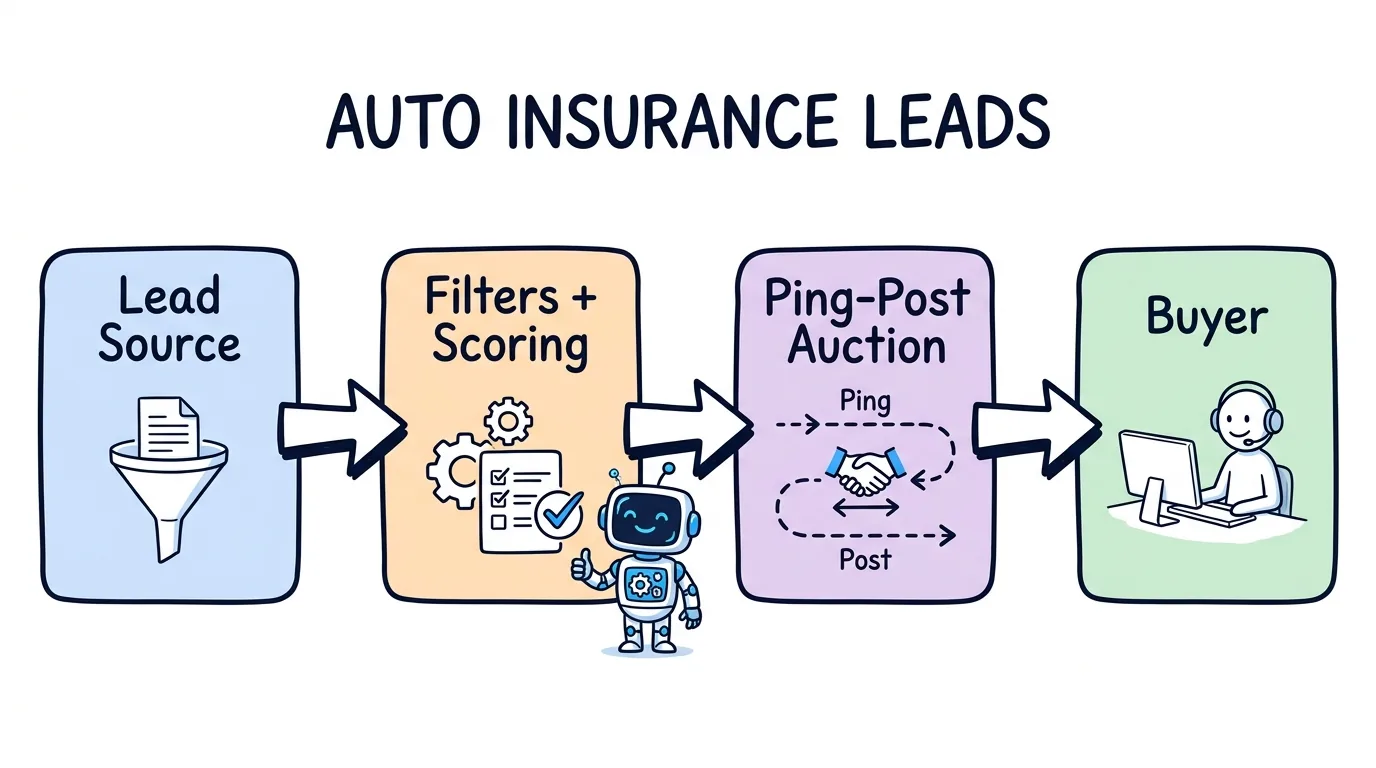
How Ping Post Works for Insurance Lead Sellers
Ping post is the dominant distribution model for high-volume health insurance lead operations because it maximizes revenue per lead through real-time competition among buyers.
The mechanics in four steps:
- Ping. When a consumer submits a health insurance quote form, the publisher sends a partial record (ZIP code, coverage type, age, household income, but not PII) to a ping post platform like Lead Distro AI. This partial record is enough for buyers to evaluate and bid.
- Bid. Multiple insurance carriers, agents, or lead aggregators respond with bid prices within 200 milliseconds. Each buyer has a pre-configured maximum bid, daily cap, and state licensing filter.
- Award. The platform awards the lead to the highest bidder above the seller's floor price. If no bid meets the floor, the lead enters a waterfall sequence or is held for a secondary auction.
- Post. The full lead record including name, phone, email, and consent certificate is delivered to the winning buyer via webhook or API.
Lead Distro AI completes this full cycle in under 200ms, logs every bid response for dispute resolution, and automatically respects daily caps so buyers never overpay for volume they cannot handle. You can see how Lead Distro AI handles insurance lead distribution in the interactive walkthrough.
TCPA Compliance for Insurance Lead Generation
TCPA violations carry fines of $500 to $1,500 per call, and the FCC's January 2025 one-to-one consent ruling makes compliance documentation non-negotiable for insurance lead operations.
What the one-to-one rule requires: Before January 2025, a single consent disclosure could cover multiple lead buyers under a broad third-party clause. Under the updated FCC rule, each seller or carrier who will contact the consumer must be named individually in the consent language at the time of the form submission. A consumer who consents to "insurance partners" is no longer sufficient. Each buyer must appear by name.
What this means for health insurance lead operations:
- Publishers must use consent management platforms like TrustedForm or Jornaya to capture and timestamp individual consent for each named buyer.
- Ping post platforms must route leads only to buyers who were explicitly named in the consent record. Lead Distro AI enforces this by matching buyer IDs in the ping post engine against the consent record's named-party list.
- DNC (Do Not Call) scrubbing against the National DNC Registry must happen before every outbound contact attempt.
- Time-of-day calling rules apply: outbound calls are prohibited before 8:00 AM or after 9:00 PM in the lead's local time zone.
For a full technical walkthrough of consent logging and DNC scrubbing, read our guide on TCPA compliance for insurance leads.
Consequences of non-compliance: In 2024, the FTC levied $100 million in penalties against lead generators operating non-compliant consent flows in the insurance vertical. Class action TCPA suits continue to be filed at record rates, with average settlements exceeding $3 million for mid-size lead generation operations.
How to Distribute Insurance Leads at Scale with Lead Distro AI
Running a health insurance lead operation at volume requires infrastructure that handles routing, compliance, bidding, and reporting without manual intervention. Lead Distro AI was built for exactly this workflow.
Distribution methods for insurance leads:
- Round Robin distributes leads equally across a pool of licensed agents, useful for in-house sales teams where every agent has the same capacity and state licenses.
- Weighted Distribution sends more leads to higher-performing agents or carriers based on configurable weights, so your best closers receive more volume.
- Priority/Waterfall routes the lead to your top buyer first, then cascades to secondary buyers if the primary rejects or is at cap. Common for agencies that have preferred carrier relationships alongside a spot market.
- Ping Post runs the real-time auction described above, maximizing revenue per lead on every submission.
Insurance-specific features in Lead Distro AI:
- State license verification. Each buyer's active state licenses are configured in their account. Leads from states the buyer is not licensed in are automatically skipped, preventing compliance violations.
- Sub-vertical filtering. ACA, Medicare Advantage, Medicare Supplement, and final expense leads route to buyer pools configured for each product type.
- TrustedForm and Jornaya integration. Consent certificates attach to every lead record and are logged in the audit trail.
- Seasonal scaling. During OEP and AEP, daily caps and buyer bids adjust in real time without requiring manual changes to routing rules.
- Call tracking integration. Pay-per-call campaigns route through the same platform as web form leads, giving a unified P&L view across both lead and call channels.
Plans start at $297 per month for the full distribution stack. For volume pricing and insurance-specific configuration, see pricing and plan details. To see every insurance feature in the platform, explore the interactive product tour.
Comparison: Insurance Lead Distribution Methods
| Method | Revenue per Lead | Complexity | Best For | TCPA Requirement |
|---|---|---|---|---|
| Direct Post (single buyer) | Fixed CPL | Low | Preferred carrier relationships | Standard consent |
| Round Robin | Fixed CPL / equal split | Low | In-house agent pools | Standard consent |
| Weighted | Fixed CPL / configurable | Medium | Mixed-performance buyer pools | Standard consent |
| Waterfall | Fixed CPL / cascade | Medium | Preferred + spot-market hybrid | Standard consent |
| Ping Post | Market price / auction | High | Multi-buyer networks, max revenue | Named-party consent per buyer |
Ping post delivers the highest revenue per lead but requires the most compliance infrastructure because every buyer in the auction must be named individually in the consent record. For agencies with 3 or more active insurance buyers, ping post pays for the compliance infrastructure within the first month of operation.
FAQ
What does a health insurance lead cost in 2026?
Health insurance lead costs in 2026 range from $8 to $25 for shared leads and $25 to $65 for exclusive leads. Live transfer or pay per call rates run $40 to $90 per qualifying call for ACA and standard health plans. Medicare Advantage leads carry a 20% to 40% premium over standard health leads, with exclusives reaching $85 and live transfers up to $110. Prices increase by 15% to 30% during Open Enrollment (November through January) and Medicare AEP (October to December). State premium pricing applies in California, Texas, and Florida.
How do health insurance pay per call rates work?
Health insurance pay per call rates are based on a per-call fee paid when a caller meets a minimum duration threshold, typically 90 to 120 connected seconds. A caller who hangs up before the threshold is not billable. Rates range from $40 to $90 per qualifying call for ACA plans and $55 to $110 for Medicare Advantage. Publishers generate inbound calls through Google Search ads, Facebook lead campaigns, or SEO-driven landing pages, then route them through an IVR that pre-screens for coverage type and ZIP code before connecting to a licensed agent.
What is a good conversion rate for health insurance leads?
A good conversion rate for health insurance leads depends on exclusivity. Exclusive leads should convert at 10% to 20% when agents follow up within five minutes of receipt. Shared leads typically convert at 3% to 8% because multiple agents are contacting the same consumer simultaneously. Live transfer calls from a pre-screened IVR funnel convert at 20% to 35% because the consumer is already on the line with an agent. Research from InsideSales.com shows that contacting a lead within five minutes makes qualification 21 times more likely than calling after 30 minutes, which is why sub-second delivery infrastructure matters.
How do I stay TCPA compliant for health insurance leads?
To stay TCPA compliant for health insurance lead generation, you must capture individual consent for each named buyer using a platform like TrustedForm or Jornaya. Under the FCC's January 2025 one-to-one consent rule, blanket third-party consent clauses are no longer valid. Each carrier or agent who will call the consumer must appear by name in the consent disclosure at the time the consumer submits the form. You must also scrub phone numbers against the National Do Not Call Registry before each contact attempt and comply with time-of-day calling restrictions (8 AM to 9 PM in the consumer's local time zone).
Is it better to buy exclusive or shared health insurance leads?
Exclusive health insurance leads are better for agents who can follow up within five minutes and have the budget to pay $25 to $65 per lead. The higher close rate (10% to 20% vs 3% to 8% for shared) justifies the price premium when agents are disciplined about speed-to-contact. Shared leads work for high-volume operations where the lower per-lead cost offsets the lower conversion rate, typically agencies running 200 or more leads per day across a large agent pool. For most mid-size agencies running 20 to 100 leads per day, exclusive leads deliver better unit economics.
How does ping post work for health insurance lead sellers?
Ping post for health insurance works by sending a partial lead record (ZIP code, coverage type, age, household size, and income) to multiple insurance buyers simultaneously. Each buyer responds with a bid within 200 milliseconds based on their configured parameters. The highest bid above the seller's floor price wins. The winning buyer then receives the full record including PII and the TrustedForm or Jornaya consent certificate. This real-time auction format typically generates 15% to 40% more revenue per lead compared to selling to a single buyer at a fixed price.
Conclusion
Health insurance lead generation is one of the most profitable verticals in pay-per-lead and pay-per-call today, with 23.6 million ACA enrollments driving year-round demand and seasonal spikes that reward agencies with the infrastructure to scale quickly. The key variables are lead quality (exclusive vs shared), distribution speed (sub-five-minute contact), compliance documentation (individual consent per buyer under the FCC one-to-one rule), and monetization model (fixed CPL vs ping post auction).
Lead Distro AI handles all four: real-time ping post auctions with sub-200ms delivery, TrustedForm and Jornaya consent logging, state license verification, and a unified P&L dashboard across lead and call channels. Start your free trial today and distribute your first health insurance lead at scale. Credit card is required for the 7-day trial, and you can cancel before the trial ends without being charged.
Ready to maximize revenue on every health insurance lead? Lead Distro AI runs real-time ping post auctions across your buyer pool with sub-200ms delivery and built-in TCPA consent logging. Start your 7-day free trial and distribute your first health insurance lead today.
About the Author
Founder & CEO of Lead Distro AI & Great Marketing AI
UC Berkeley graduate and former software engineer at Microsoft. Rafael built Lead Distro AI after managing over $10M in ad spend for performance marketing agencies (pay-per-lead and pay-per-call), including running campaigns for Neil Patel. He combines deep software engineering expertise with hands-on performance marketing experience to build tools that help these agencies scale profitably.
About Lead Distro AI
Lead Distro AI: AI-Powered Routing for Your Leads, Calls, and Appointments
The modern platform for pay-per-lead and pay-per-call agencies. Route, score, and deliver leads with AI-powered automation and real-time P&L tracking. Built for performance marketing agencies and lead buyers across legal, insurance, mortgage, solar, and home services verticals.
4 Distribution Methods
Waterfall, Round Robin, Weighted, Ping-Post
Ping-Post Auctions
Real-time bidding with sub-second routing
Real-Time P&L Reporting
Track revenue, costs, and profit per campaign
Call Tracking
Assign tracking numbers, record calls, and attribute conversions
Lead Scoring
Score every lead before routing to maximize conversion
Partner Portal
Self-serve dashboard for buyers to track leads