Mortgage Trigger Leads: What They Are, How They Work, and FCRA Rules in 2026
Mortgage trigger leads are credit bureau data sold when consumers apply for a mortgage. Learn what they are, FCRA compliance rules, pricing, and how to distribute them fast.

Rafael Hernandez
Founder & CEO
Ex-Microsoft SWE · $10M+ PPL ad spend
I hope you enjoy reading this blog post. If you want to try Lead Distro AI for free, click here.
Author: Rafael Hernandez | Founder & CEO of Lead Distro AI
Last Updated: May 27, 2026
Mortgage trigger leads are leads generated when a consumer applies for a mortgage and one of the three major credit bureaus — Equifax, TransUnion, or Experian — sells that credit inquiry data to competing lenders. The moment a hard pull happens during a mortgage application, the bureaus package that consumer's information into a trigger lead list and sell it to loan officers bidding for the same borrower. According to the Consumer Financial Protection Bureau, over 90% of mortgage shoppers compare multiple offers, which means every hard pull creates an immediate competitive window for lenders who buy trigger data.
Lead Distro AI does not sell leads. It is software for the companies that generate mortgage leads and route them to buyers. If you are a loan officer looking to buy leads, this guide will help you judge price and quality, but you will need a lead vendor to buy from.
The speed advantage is real but narrow. Studies from the Mortgage Bankers Association show that borrowers who receive a competing offer within five minutes of their credit inquiry are significantly more likely to switch lenders. If your buy mortgage trigger leads strategy relies on dialing days after the inquiry, you are competing on old ground. The entire value proposition of trigger leads collapses without a fast distribution system behind it.
Lead Distro AI was built for exactly this scenario: sub-200ms ping-post routing that gets trigger leads to your loan officers before the original lender finishes their pitch. This guide covers how trigger leads work, what FCRA and the FCC say about them, how to price and vet vendors, and how to build a compliant distribution stack that converts.
Key Takeaways
Mortgage trigger leadsare generated by credit bureaus when a consumer undergoes a hard credit pull during a mortgage application — the bureaus then sell that inquiry data to competing lenders under FCRA Section 604(c).- FCRA compliance is mandatory: buyers must have a permissible purpose (making a firm offer of credit), include a clear opt-out mechanism, and honor NCOA suppression lists.
- The FCC One-Voice Rule (January 2025) now requires one-to-one consent for each lender when contacting trigger lead prospects by phone or text — blanket consent from aggregated forms no longer satisfies the rule.
- Speed-to-contact is the primary conversion lever: borrowers contacted within five minutes are far more likely to engage than those reached hours or days later.
Mortgage trigger lead listsare sold by the credit bureaus directly (Equifax Triggers, TransUnion TriggerLink, Experian Triggers) and by dozens of third-party resellers at varying price tiers.- Lead Distro AI's ping-post engine routes trigger leads to buyers in under 200ms, making it one of the fastest distribution layers available for high-velocity mortgage prospecting.
How Mortgage Trigger Leads Work
When a consumer applies for a mortgage, their lender requests a credit report. This hard inquiry is logged by all three bureaus simultaneously. Under the Fair Credit Reporting Act, specifically 15 U.S.C. § 1681a(d)(1)(B), the bureaus are permitted to sell prescreened lists to creditors who want to make firm offers of credit to consumers whose credit profiles meet defined criteria. Mortgage consumer credit trigger data falls squarely into this category.
The process works in four steps. First, the original lender's credit pull is logged. Second, the bureau's trigger system flags the inquiry and runs the consumer's profile against subscriber criteria (credit score floor, LTV thresholds, property state). Third, the bureau packages the matched records into a trigger lead list file, often delivered within 24 hours. Fourth, lenders on the subscriber list receive the file and begin outreach.
This is the credit bureau trigger pipeline in its standard form. Third-party resellers buy bulk trigger data from bureaus and resell it as real-time mortgage leads with faster delivery windows, often under 30 minutes from inquiry to delivery.
Are Mortgage Trigger Leads Legal?
Mortgage trigger leads are legal under current federal law. FCRA Section 604(c)(1)(B) explicitly authorizes credit bureaus to sell prescreened lists for firm offers of credit. However, the legal landscape shifted in January 2025 and faces continued pressure in 2026.
FCRA requirements for buyers: You must have a permissible purpose (making a firm offer of credit), include a clear and conspicuous opt-out notice in every communication, honor the National Do Not Call Registry and the credit bureau opt-out registry (OptOutPrescreen.com), and retain records demonstrating compliance with your permissible purpose. FCRA trigger leads mortgage compliance is not optional and is actively enforced by the CFPB.
FCC One-Voice Rule (January 2025): The Federal Communications Commission's updated TCPA rules now require one-to-one consent for each individual lender when contacting consumers by phone or text using trigger data sourced from lead aggregators. The old practice of using consent granted on a third-party lead aggregator form to justify calls from multiple competing lenders no longer satisfies the rule. Each lender must independently obtain and document consent. FCC Docket 21-402 remains the controlling reference.
2026 Senate bill: The Homebuyers Privacy Protection Act (S.3502 in the prior session, reintroduced 2026) seeks to ban credit bureaus from selling FCRA trigger leads mortgage data entirely without explicit consumer opt-in. The bill has bipartisan support but has not passed as of this writing. Lenders relying heavily on trigger lead campaigns should monitor its progress.
"The combination of FCRA's firm-offer requirement and the FCC's updated one-to-one consent rule means that trigger leads are a compliance-heavy channel," says Kathleen Blatz, mortgage compliance attorney at Blatz Legal Group. "Lenders who don't have documented SOPs for trigger lead outreach are taking on real regulatory risk in 2026."
Mortgage Trigger Lead Pricing
Mortgage trigger lead lists pricing varies by sub-vertical, freshness, and exclusivity. The table below reflects estimated market rates from direct bureau programs and third-party resellers as of Q2 2026.
| Lead Type | CPL Range | Exclusivity | Typical Freshness |
|---|---|---|---|
| Purchase trigger (direct bureau) | $3 - $8 | Shared (5-10 buyers) | 24-48 hours |
| Refinance trigger (direct bureau) | $2 - $6 | Shared | 24-48 hours |
| HELOC trigger (reseller) | $5 - $15 | Shared or semi-exclusive | 2-24 hours |
| Reverse mortgage trigger | $8 - $25 | Semi-exclusive | 1-24 hours |
| Real-time exclusive trigger (reseller) | $20 - $60 | Exclusive (1 buyer) | Under 60 minutes |
Pre-screened mortgage leads (aggregated) | $10 - $40 | Semi-exclusive | Varies |
Direct bureau programs (Equifax TriggerPoint, TransUnion TriggerLink, Experian Mortgage Triggers) provide the highest data fidelity but slower delivery. Resellers offer faster delivery and smaller batch sizes, often with a ping post mortgage model where each lead is bid on in real time before being delivered exclusively to the winning buyer.
For agencies operating at volume, the economics favor exclusive real-time mortgage leads despite the higher CPL. The first-party vs third-party leads comparison matters here: first-party trigger data from bureau programs carries more compliance certainty than aggregated reseller lists where consent chains can be harder to document.
How to Buy Mortgage Trigger Leads: Vetting Vendors
Choosing the right trigger lead list provider is a compliance decision as much as a cost decision. The CFPB has issued warnings about trigger lead programs where consumers were contacted by lenders they never heard of shortly after applying for a mortgage, creating confusion and potential UDAAP exposure. Vet vendors on five criteria before you commit to a contract.
1. Data source transparency: Confirm whether the vendor sources directly from Equifax, TransUnion, or Experian, or whether they resell from a bulk aggregator. Direct bureau sourcing means cleaner suppression records and faster NCOA compliance. Ask for a data lineage certificate.
2. Consent documentation: Under the 2025 FCC rule, your vendor should provide documented proof of the consent chain for every lead, particularly for any trigger leads that include a phone contact path. Mortgage lead compliance audits now routinely request consent timestamps.
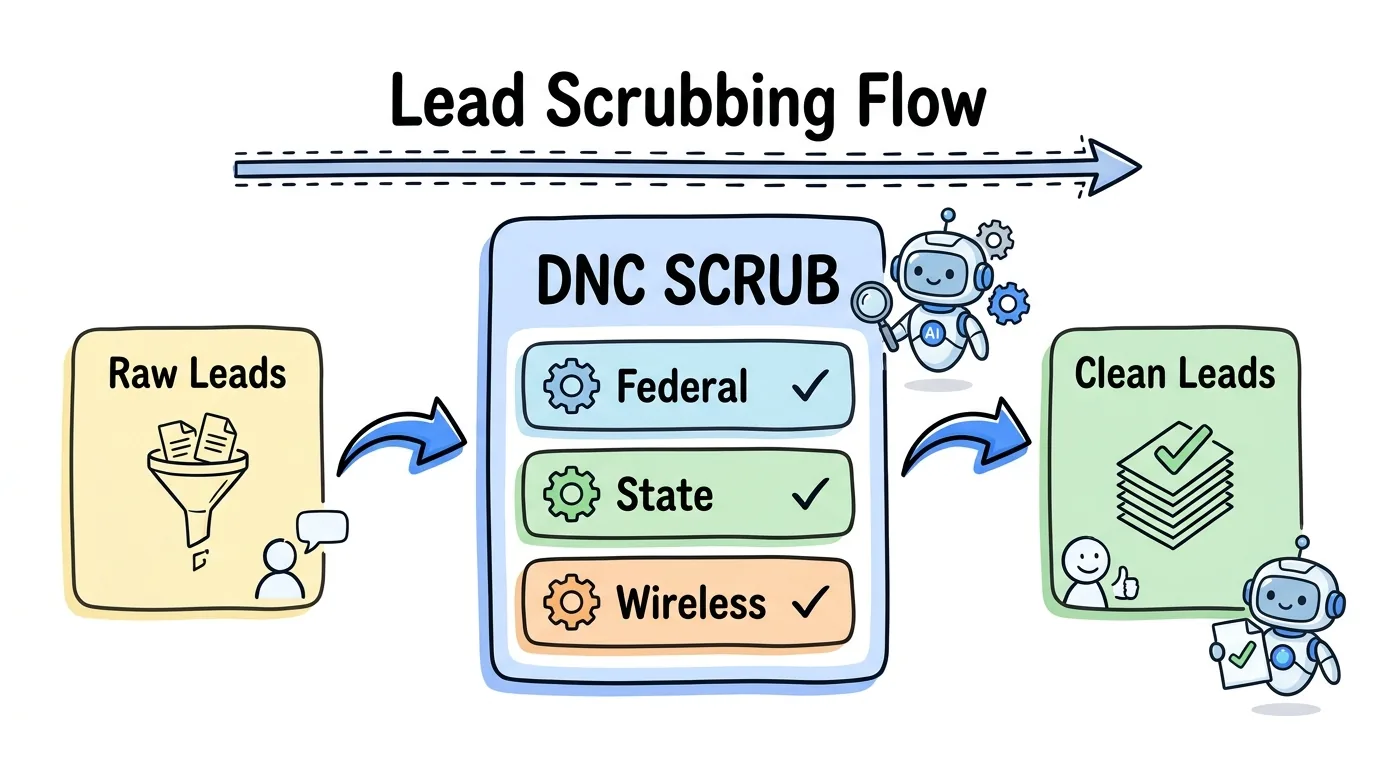
3. NCOA and FCRA opt-out suppression: Confirm the vendor scrubs against the OptOutPrescreen.com list before delivery. A reputable mortgage list broker runs this scrub automatically. Failure to suppress opted-out consumers is one of the most cited FCRA violations.
4. Delivery speed and format: Ask whether the vendor supports real-time delivery via webhook or API versus batch file delivery. For mortgage lead distribution at the sub-five-minute contact window, batch files are too slow. Require a maximum delivery time SLA.
5. Exclusivity and buyer caps: Clarify how many competing buyers receive the same lead. Shared refinance credit pull leads with 10 buyers dialing simultaneously create a poor consumer experience and lower conversion rates for all buyers.
Explore Lead Distro AI's product tour to see how real-time trigger lead routing, buyer cap management, and compliance audit logging work together in a single platform.
How to Distribute Trigger Leads Fast
The entire performance case for mortgage trigger leads rests on speed. Harvard Business Review research on lead response time found that responding within five minutes increases qualification odds by 100x compared to responding after 30 minutes. Trigger leads have a narrow contact window because the consumer is actively shopping and every competing lender is chasing the same inquiry.
Ping post mortgage distribution is the standard architecture for high-speed trigger lead routing. Here is how it works with Lead Distro AI:
- Receive the trigger lead via webhook or real-time API from your vendor (or directly from a bureau program).
- Ping buyers simultaneously. Lead Distro AI sends a real-time bid request to all qualified buyers in your distribution network, filtered by state licensing, lead type, daily caps, and current credit score thresholds.
- Accept the winning bid. The buyer with the highest qualifying bid and available capacity receives the lead POST in under 200ms from ping to post.
- Audit log every transaction. Every ping, every bid, and every post is timestamped and logged for
mortgage lead compliancedocumentation.
This is the architecture that makes a five-minute contact window achievable at scale. Without ping post lead distribution built into your stack, you are manually routing trigger leads through a spreadsheet while the consumer fills out another lender's application.
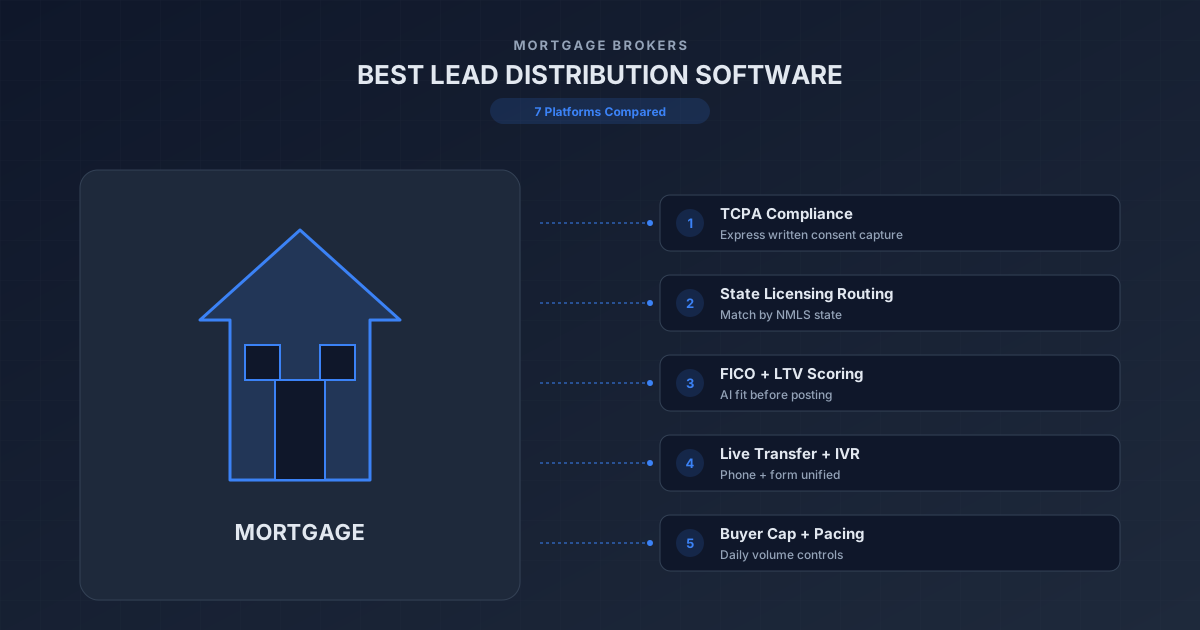
For loan originator leads running high volume, Lead Distro AI also supports Priority/Waterfall routing, which routes the trigger lead to your highest-value buyer first and falls to the next buyer if the cap is reached or the bid floor is not met. This maximizes your revenue per trigger lead while maintaining SLA commitments. Read more about how mortgage lead distribution connects to the broader mortgage lead generation strategy.
Mortgage Trigger Leads vs Other Lead Types
Before committing your prospecting budget to buy mortgage trigger leads, compare the channel against alternatives on the four dimensions that matter for loan officers: speed, cost, compliance burden, and conversion potential.
| Lead Type | Speed to Contact | Avg CPL | Compliance Burden | Conversion Rate |
|---|---|---|---|---|
| Trigger leads (exclusive real-time) | Under 5 minutes | $20-$60 | High (FCRA + FCC OVR) | 8-15% |
| Trigger leads (shared, bureau direct) | 24-48 hours | $3-$8 | High | 2-5% |
| Real-time direct leads (form submit) | Immediate | $30-$80 | Medium (TCPA OVR) | 10-20% |
| Aged leads (30+ days) | N/A | $1-$5 | Low | 1-3% |
Pre-screened mortgage leads (mail) | 3-7 days | $15-$40 | Medium | 1-4% |
The data shows that exclusive real-time trigger leads and first-party real-time form leads occupy similar conversion territory. The difference is intent quality: trigger leads catch consumers mid-application (high intent but not directed at you), while first-party leads come from consumers who explicitly requested a quote from your brand or your lead seller's form.
Purchase credit inquiry leads in competitive markets like California and Texas often perform better than national averages because purchase borrowers are more motivated and less rate-sensitive than refinance shoppers. Adjust your CPL tolerance by sub-vertical and state before comparing trigger leads to your other channels.
FAQ
What are mortgage trigger leads and where do they come from?
Mortgage trigger leads are consumer data records generated when a hard credit inquiry is placed during a mortgage application. Equifax, TransUnion, and Experian are authorized under FCRA Section 604(c)(1)(B) to sell this inquiry data to creditors who want to make firm offers of credit. The bureaus sell both directly through their own trigger programs and in bulk to third-party resellers, who repackage and resell the data. The consumer whose credit was pulled is unaware their information has been sold to competing lenders unless they have opted out at OptOutPrescreen.com.
Can consumers opt out of FCRA trigger leads mortgage programs?
Yes. Consumers can permanently opt out of prescreened credit offers, including mortgage trigger leads, by visiting OptOutPrescreen.com or calling 1-888-5-OPT-OUT. Once opted out, their information is removed from bureau prescreened lists and should not appear in any compliant mortgage trigger lead lists delivery. Lenders and their trigger lead vendors are required to suppress opted-out consumers before outreach. Failure to honor opt-outs is a direct FCRA violation and a top enforcement priority for the CFPB.
How fast do you need to respond to a mortgage trigger lead?
The industry benchmark is five minutes or fewer. Research consistently shows that lead conversion rates drop sharply after the first five-minute window and fall to near zero after 24 hours for actively-shopping mortgage consumers. Because trigger leads are generated at the moment of application, the consumer is highly engaged but is also likely being contacted by multiple lenders simultaneously. A ping post mortgage routing system with sub-200ms delivery is the standard architecture for hitting the five-minute window at scale. Manual routing or batch file delivery cannot compete in this timeframe.
Are mortgage trigger leads exclusive or shared?
Mortgage trigger leads can be either, depending on the vendor and program. Bureau direct programs typically sell the same inquiry data to multiple competing lenders, often 5 to 10 buyers per lead. Resellers offer semi-exclusive and fully exclusive options at higher CPL. For the best buy mortgage trigger leads results, exclusive real-time delivery is strongly preferred: you eliminate the race-to-dial problem and the consumer experience is less chaotic. With Lead Distro AI's ping-post engine, you can set buyer caps and bid floors that automatically enforce exclusivity at the distribution layer before a lead is posted.
Does the FCC One-Voice Rule apply to mortgage trigger leads?
Yes, as of January 2025. The FCC's updated TCPA rules require that each lender have individual, documented consent from the consumer before making a telephone or text contact using trigger lead data sourced from lead generators or aggregators. The prior practice of relying on blanket consent from a shared lead aggregation form is no longer sufficient. If you are buying pre-screened mortgage leads from a reseller and calling or texting them, you must ensure your consent documentation specifically names your company as a consented-to contact, not just the aggregator. Review FCC Docket 21-402 and consult a mortgage compliance attorney before launching or scaling a trigger lead campaign.
What is the difference between trigger leads and ping-post mortgage leads?
These are two different things that often work together. A mortgage trigger lead is a data type: a consumer record generated by a credit bureau inquiry. Ping post is a distribution architecture: a real-time bidding system where leads are offered to multiple buyers simultaneously before being sold to the highest qualifying bidder. Ping post mortgage workflows are frequently used to distribute trigger leads because the speed and bidding mechanics match the short contact window. You can use ping post to distribute any lead type, including form-based real-time leads, aged leads, and trigger leads. The combination of fresh consumer credit trigger data with a ping-post distribution layer is the fastest route to a contacted mortgage prospect.
Conclusion
Mortgage trigger leads remain one of the highest-intent prospecting channels available to loan officers in 2026, but the channel demands more compliance infrastructure than it did even two years ago. The FCC One-Voice Rule, pending Senate legislation, and active CFPB enforcement mean that buying trigger leads without a documented compliance program is a material risk. Done right, with vetted vendors, FCRA-compliant outreach, and a fast distribution system, trigger leads deliver a contact window that no other channel can match.
Lead Distro AI's sub-200ms ping-post engine, buyer cap management, and full audit logging are built for exactly this channel. Explore all the best lead distribution software for mortgage brokers to see how the platforms compare, or start your 7-day free trial and route your first trigger lead in minutes.
Ready to build a compliant, fast trigger lead distribution stack? Start your 7-day free trial and see how Lead Distro AI routes mortgage trigger leads in under 200ms. Credit card required.
About the Author
Founder & CEO of Lead Distro AI & Great Marketing AI
UC Berkeley graduate and former software engineer at Microsoft. Rafael built Lead Distro AI after managing over $10M in ad spend for performance marketing agencies (pay-per-lead and pay-per-call), including running campaigns for Neil Patel. He combines deep software engineering expertise with hands-on performance marketing experience to build tools that help these agencies scale profitably.
About Lead Distro AI
Lead Distro AI: AI-Powered Routing for Your Leads, Calls, and Appointments
The modern platform for pay-per-lead and pay-per-call agencies. Route, score, and deliver leads with AI-powered automation and real-time P&L tracking. Built for performance marketing agencies and lead buyers across legal, insurance, mortgage, solar, and home services verticals.
4 Distribution Methods
Waterfall, Round Robin, Weighted, Ping-Post
Ping-Post Auctions
Real-time bidding with sub-second routing
Real-Time P&L Reporting
Track revenue, costs, and profit per campaign
Call Tracking
Assign tracking numbers, record calls, and attribute conversions
Lead Scoring
Score every lead before routing to maximize conversion
Partner Portal
Self-serve dashboard for buyers to track leads