Lead Distribution API: How to Build Custom Integrations
Learn how lead distribution APIs work, what endpoints matter, and how to build custom integrations for automated lead routing and scoring.

Rafael Hernandez
Founder & CEO
Ex-Microsoft SWE · $10M+ PPL ad spend

I hope you enjoy reading this blog post. If you want to try Lead Distro AI for free, click here.
Author: Rafael Hernandez | Founder & CEO of Lead Distro AI
A lead distribution API is a set of programmatic endpoints that lets agencies automatically ingest, score, route, and track leads without manual intervention. For lead generation companies handling hundreds or thousands of leads per day, API-based distribution is the only way to maintain speed, accuracy, and scalability. The 2024 Salesforce MuleSoft Connectivity Benchmark Report found that organizations using API-led integrations deliver projects 2.5x faster, with the average enterprise now running 1,061 separate applications that need to exchange data.
This guide covers how lead distribution APIs work, the core endpoints you need, common integration patterns, and how to evaluate platforms based on API capabilities. Whether you are building a custom lead distribution stack or integrating with an existing platform, this is your technical reference. For the delivery half of the API (push notifications to buyers), see our companion guide on lead distribution webhooks.
Key Takeaways
- A lead distribution API automates the entire lead lifecycle: ingestion, validation, scoring, routing, and reporting through programmatic endpoints.
- Core endpoints include lead submission, buyer management, reporting, and webhooks, with real-time response times under 200 milliseconds for scoring and routing.
- Ping-post distribution relies entirely on API calls, where lead data is posted to multiple buyers simultaneously and the highest bidder wins the lead.
- API security requires multiple layers: API key authentication, IP whitelisting, rate limiting, and TLS encryption for all data in transit.
- The best platforms provide both REST APIs and webhook notifications, enabling push and pull integration patterns for maximum flexibility.
What Is a Lead Distribution API?
A lead distribution API is a programmatic interface that accepts incoming lead data (name, phone, email, case details), processes it through scoring and validation rules, and routes it to the appropriate buyer or sales representative in real time. Unlike manual lead management through spreadsheets or email forwarding, an API-based system handles the entire workflow in milliseconds.
The API acts as the central nervous system of a lead distribution operation. Lead sources (web forms, landing pages, call tracking platforms, affiliate networks) submit leads via HTTP POST requests. The distribution platform validates the data, runs it through lead scoring models, checks for duplicates, applies routing rules, and delivers the lead to the winning buyer, all within a single API transaction.
For agencies running ping-post distribution, the API is the mechanism that makes real-time bidding possible. A lead source pings multiple buyers with partial data, receives bids, and posts the full lead to the highest bidder.
Core Lead Distribution API Endpoints
Every lead distribution API should provide these five categories of endpoints:
Lead Submission
The lead submission endpoint accepts inbound leads via JSON payload. A typical request includes contact information, source tracking data, and case-specific fields:
{
  "first_name": "Maria",
  "last_name": "Garcia",
  "phone": "+15551234567",
  "email": "maria@example.com",
  "state": "TX",
  "case_type": "auto_accident",
  "injury_severity": "moderate",
  "accident_date": "2026-05-02",
  "source": "google_ads",
  "campaign_id": "camp_12345",
  "consent_timestamp": "2026-05-12T14:30:00Z",
  "ip_address": "192.168.1.1"
}
A typical successful response returns the canonical lead record, the score, the matched buyer, and the price:
{
  "lead_id": "ld_9f3c1a8b",
  "status": "accepted",
  "score": 87,
  "buyer_id": "buyer_456",
  "price": 175.00,
  "routing_decision": "ping_post_winner",
  "deduped": false,
  "created_at": "2026-05-12T14:30:01.184Z"
}
The API validates required fields, checks for duplicates against the prior 30 to 90 days of lead history, scores the lead, and returns the response above in a single round trip, typically in under 200 milliseconds.
Buyer Management
Buyer endpoints let you programmatically create, update, and configure lead buyers. This includes setting geographic filters, case type preferences, daily caps, pricing rules, and delivery methods. Agencies with 50 or more buyers need these endpoints to manage their network at scale without manual configuration.
Reporting and Analytics
The reporting API pulls performance data: leads delivered, acceptance rates, return rates, revenue per lead, and P&L by campaign, source, or buyer. Real-time reporting endpoints return data for the current day, while historical endpoints support date range queries. This data powers custom dashboards, automated alerts, and financial reconciliation.
Webhook Notifications
Webhooks push event notifications to your systems when lead events occur: lead delivered, lead accepted, lead returned, lead converted. They follow the same design principles as Stripe's webhooks and the open Standard Webhooks specification: a signed POST with an HMAC-SHA256 signature, a unique event ID for idempotency, a timestamp for replay protection, and an exponential-backoff retry policy when the receiver does not return a 2xx response.
A typical webhook request from Lead Distro AI looks like this:
POST /webhooks/leads HTTP/1.1
Host: buyer.example.com
Content-Type: application/json
Webhook-Id: evt_01HXR9P8N3K2WJ1Y6T0F4MZ8V7
Webhook-Timestamp: 1747054501
Webhook-Signature: v1,vXqd9mYx+1WnK9Yh7p0p3yY4j0aE9Q7m4Bt0wYwGn6w=

{
  "event": "lead.delivered",
  "lead_id": "ld_9f3c1a8b",
  "buyer_id": "buyer_456",
  "timestamp": "2026-05-12T14:30:01Z",
  "score": 87,
  "price": 175.00,
  "delivery_method": "webhook",
  "lead": { /* full lead payload, same shape as the submission response */ }
}
Receivers verify the signature server-side before trusting the payload. In Node.js this is a five-line check:
import crypto from "crypto";

function verifyWebhook(rawBody, headers, secret) {
  const id = headers["webhook-id"];
  const ts = headers["webhook-timestamp"];
  const signed = `${id}.${ts}.${rawBody}`;
 const expected = "v1," + crypto.createHmac("sha256", secret).update(signed).digest("base64");
  return crypto.timingSafeEqual(
    Buffer.from(headers["webhook-signature"]),
    Buffer.from(expected)
  );
}
The Webhook-Id header is the idempotency key: receivers should store it for at least 24 hours and treat duplicates as no-ops, since retries can fire any time the original delivery times out or returns a 5xx. For a deep dive on retry policy, replay-attack protection, and debugging patterns, read our dedicated guide on lead distribution webhooks. Webhooks eliminate polling, reduce API call volume by an order of magnitude, and enable real-time data sync between your distribution platform and downstream systems (CRMs, accounting software, analytics tools).
Ping-Post Endpoints
For real-time bidding distribution, the API provides separate ping and post endpoints. The ping endpoint sends partial lead data (state, case type, injury severity) to eligible buyers. Each buyer responds with a bid price and acceptance status. The post endpoint then sends the full lead data to the winning bidder. This two-step process happens in under 500 milliseconds.
API Authentication and Security
Lead data contains personally identifiable information (PII) and is subject to regulations including TCPA, CCPA, and state-level privacy laws. A lead distribution API must implement multiple security layers.
API Key Authentication is the baseline. Every API request includes a unique key in the Authorization header. Keys should be rotatable, revocable, and scoped to specific permissions (read-only for reporting, write for lead submission). A standard authenticated request looks like:
POST /api/v1/ingest HTTP/1.1
Host: app.leaddistro.ai
x-api-key: your_supplier_api_key
Content-Type: application/json
Idempotency-Key: form-submit-2026-05-12-14-30-00-a1b2c3
The Idempotency-Key header (following Stripe's convention) ensures the lead is created exactly once even if the network drops and the client retries, which is critical when a duplicate post would charge a buyer twice for the same lead.
IP Whitelisting restricts API access to known server IP addresses. This prevents unauthorized access even if an API key is compromised. For agencies with fixed infrastructure, IP whitelisting adds a critical second layer of security.
Rate Limiting protects the platform from abuse and ensures fair resource allocation. Lead Distro AI enforces 100 ingest requests per minute per supplier API key on standard plans (higher limits available on request), returning HTTP 429 with a Retry-After header (in seconds) when exceeded. Clients should implement exponential backoff with jitter, following the Google Cloud guidance: start at 1 second, double on each attempt, and cap at 32 seconds.
TLS Encryption ensures all data transmitted between client and server is encrypted. Every lead distribution API should enforce HTTPS 1.2 or higher exclusively, rejecting any unencrypted HTTP connections. The PCI DSS v4.0 standard, in force since March 31, 2025, now mandates TLS 1.2 minimum for any system processing payment-adjacent data, and lead data with buyer payment context falls under this umbrella.
For a detailed overview of compliance requirements when handling lead data, review our TCPA compliance guide.
Common Integration Patterns
Lead distribution APIs support several standard integration patterns that cover most agency workflows.
CRM Synchronization pushes accepted leads directly into buyer CRMs (Salesforce, HubSpot, Zoho, custom systems) via API or webhook. This eliminates duplicate entry and ensures the buyer's sales team sees the lead immediately.
Form Builder Integration connects web forms (Gravity Forms, Typeform, Unbounce, custom HTML) to the lead submission endpoint. When a prospect fills out a form, the data flows directly into the distribution system without a landing page redirect.
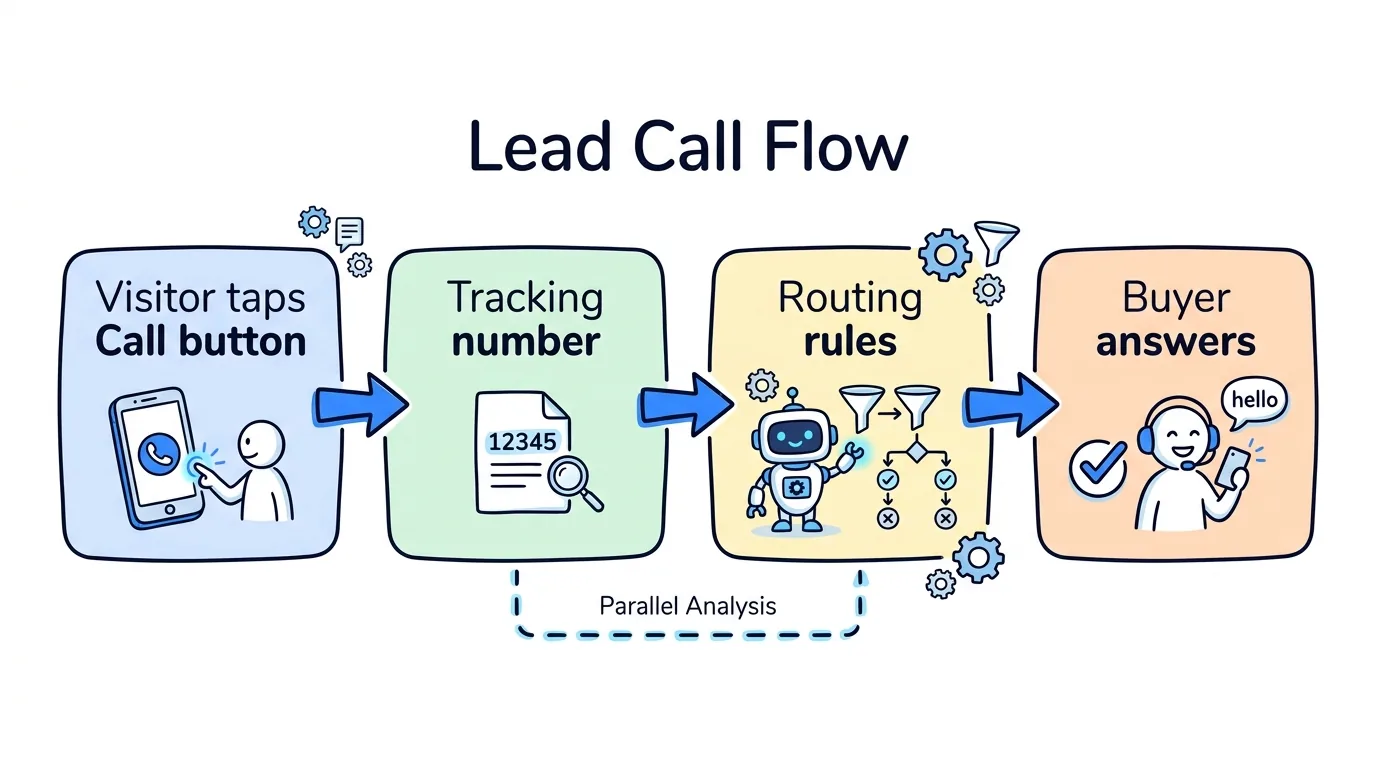
Call Tracking Integration routes inbound phone calls through tracking platforms (CallRail, Invoca, Retreaver) into the lead distribution API. The call recording, duration, and caller data are submitted as a lead with call-specific metadata.
Multi-Platform Distribution sends a single lead to multiple downstream systems simultaneously: CRM, email notification, SMS alert, and a buyer portal. The API handles fan-out delivery while maintaining a single source of truth for the lead record.
Affiliate Network Integration connects your distribution platform with affiliate tracking systems for attribution, payout calculation, and performance reporting. This is essential for agencies buying leads from multiple sources.
Choosing a Lead Distribution Platform with API Access
Not all lead distribution platforms offer the same API capabilities. Here is a comparison of API features across four major platforms:
| Feature | Lead Distro AI | Boberdoo | LeadProsper | LeadByte |
|---|---|---|---|---|
| REST API | Yes | Yes (API) | Yes | Yes |
| Webhook Notifications | Yes | Yes (50+ events) | Yes | Yes |
| Ping-Post Support | Yes (native) | Yes | Yes | Yes |
| Real-Time P&L API | Yes | Not verified | Yes (reporting and accounting endpoints) | Yes (reporting API) |
| Buyer Management API | Yes | Not verified | Not verified | Yes |
| API Documentation | Full docs | Not verified | Public API reference | Knowledge base |
| Rate Limits | 1,000/min | Not verified | Up to 300/min (varies by endpoint) | Not verified |
| Authentication | API Key + IP | API Key | API token | Not verified |
Not verified: we could not confirm this on the vendor's own website as of September 2026. Check with the vendor.
Lead Distro AI's API covers lead scoring, real-time P&L, and comprehensive webhook support. Explore the full feature set through the interactive product tour.
FAQ
What is a lead distribution API?
A lead distribution API is a set of programmatic endpoints that automates lead ingestion, scoring, routing, and tracking. Agencies use it to submit leads from web forms, call tracking platforms, and affiliate networks, then automatically route them to buyers based on geographic filters, case type rules, and pricing logic.
How does ping-post work via API?
Ping-post uses two API calls. The first call (ping) sends partial lead data to eligible buyers, who respond with bid prices. The second call (post) sends the complete lead to the highest bidder. The entire process completes in under 500 milliseconds, enabling real-time bidding for each lead.
What security features should a lead distribution API have?
A lead distribution API should implement API key authentication, IP whitelisting, rate limiting, and TLS encryption for all data in transit. Lead data contains PII governed by TCPA, CCPA, and state privacy laws. Multi-layered security prevents unauthorized access and ensures regulatory compliance.
Can I integrate a lead distribution API with my CRM?
Yes. Most lead distribution APIs support CRM integration via webhooks or direct API calls. When a lead is accepted and routed, the platform pushes lead data into Salesforce, HubSpot, Zoho, or any CRM with an API. This eliminates manual data entry and ensures real-time synchronization between systems.
How fast should a lead distribution API respond?
A lead distribution API should process lead submission, scoring, and routing in under 200 milliseconds for standard distribution and under 500 milliseconds for ping-post with multiple buyer responses. Speed directly affects lead conversion: leads contacted within 60 seconds convert at significantly higher rates.
How do I authenticate against the lead distribution API?
The standard pattern is a bearer token in the Authorization header (Authorization: Bearer ldk_live_....). Keys are scoped (read-only vs write) and rotatable from the dashboard. For production traffic, pair the bearer token with IP whitelisting so a leaked key alone is not enough to submit leads. Never embed live keys in client-side JavaScript or mobile apps; those callers should hit your backend, which then signs the request to the lead platform.
What rate limits apply to the lead distribution API?
Lead Distro AI applies 1,000 requests per minute per API key on standard plans, with custom limits available for enterprise. Rate-limited responses return HTTP 429 with a Retry-After header that tells the client how many seconds to wait before retrying. The correct client behavior is exponential backoff with jitter, capped at 32 seconds, per the Google Cloud retry guidance. Submitting in tight loops without backoff is the fastest way to get a key throttled to a lower tier.
How does webhook delivery work, and what happens if my server is down?
Lead Distro AI fires a signed POST to your registered endpoint the moment a lead is accepted, with an HMAC-SHA256 signature in the Webhook-Signature header and a unique Webhook-Id for idempotency. If your server returns a non-2xx response or times out (10 second budget), the platform retries with exponential backoff for 72 hours: roughly 1 minute, 5 minutes, 30 minutes, then hourly. After 72 hours the event is moved to a dead-letter queue and you are alerted. Detailed retry semantics live in the lead distribution webhook guide.
How do I handle idempotency when submitting leads?
Always send an Idempotency-Key header on lead-submission requests, set to a unique string per logical lead (UUID, form-submission ID, or a hash of the contact + timestamp). If the request times out and your client retries with the same key, the API returns the original response instead of creating a duplicate lead. The key is valid for 24 hours. This is the same convention Stripe uses and it eliminates the duplicate-charge category of integration bugs that plagues every lead platform without it.
Conclusion
A lead distribution API is the foundation of any scalable lead generation operation. It connects your lead sources, scoring logic, routing rules, and buyer network into a single automated pipeline. The difference between a manual operation and an API-driven one is the difference between handling 50 leads per day and 5,000.
Lead Distro AI offers a complete REST API with rule-based scoring, native ping-post support, real-time reporting, and signed webhook notifications. For the delivery half of the API (payload schema, signature verification, retry policy, idempotency) read the lead distribution webhook guide. Check the API documentation for endpoint details, or start your free trial to test the integration firsthand.
Last Updated: May 19, 2026
Ready to integrate your lead sources with automated distribution? Start your 7-day free trial and submit your first lead via API in minutes.
About the Author
Founder & CEO of Lead Distro AI & Great Marketing AI
UC Berkeley graduate and former software engineer at Microsoft. Rafael built Lead Distro AI after managing over $10M in ad spend for performance marketing agencies (pay-per-lead and pay-per-call), including running campaigns for Neil Patel. He combines deep software engineering expertise with hands-on performance marketing experience to build tools that help these agencies scale profitably.
About Lead Distro AI
Lead Distro AI: AI-Powered Lead Distribution & Call Tracking That Maximizes ROI
The modern platform for pay-per-lead and pay-per-call agencies. Route, score, and deliver leads with AI-powered automation and real-time P&L tracking. Built for performance marketing agencies and lead buyers across legal, insurance, mortgage, solar, and home services verticals.
4 Distribution Methods
Waterfall, Round Robin, Weighted, Ping-Post
Ping-Post Auctions
Real-time bidding with sub-second routing
Real-Time P&L Reporting
Track revenue, costs, and profit per campaign
Call Tracking
Assign tracking numbers, record calls, and attribute conversions
Lead Scoring
Score every lead before routing to maximize conversion
Partner Portal
Self-serve dashboard for buyers to track leads