Invoca vs CallRail (2026): Pricing, AI, and Who Wins
Invoca vs CallRail on 2026 pricing (CallRail from $50/mo billed yearly, Invoca by custom quote), Signal AI vs dynamic number insertion, attribution, and where Lead Distro AI fits.

Rafael Hernandez
Founder & CEO
Ex-Microsoft SWE · $10M+ PPL ad spend
I hope you enjoy reading this blog post. If you want to try Lead Distro AI for free, click here.
Author: Rafael Hernandez | Founder & CEO of Lead Distro AI
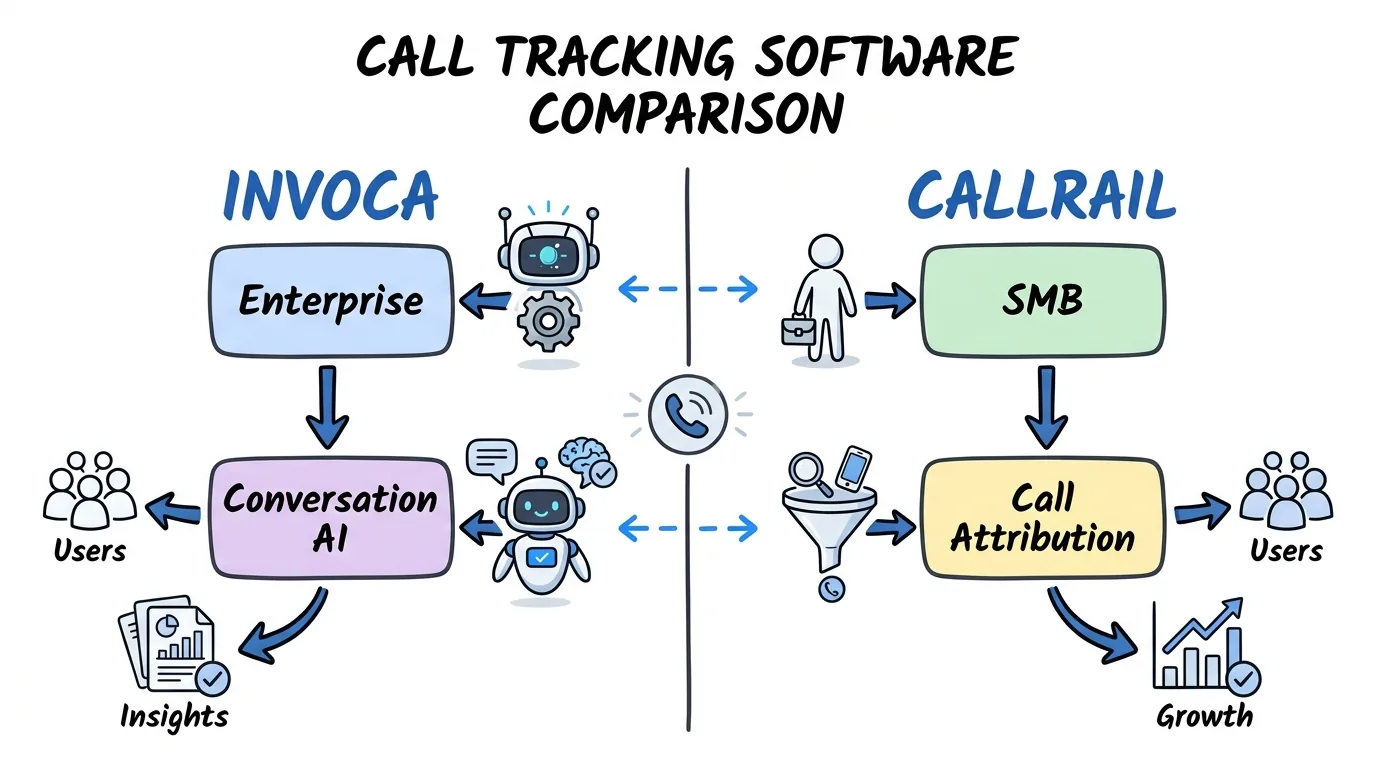
In the invoca vs callrail decision, Invoca is the better fit for enterprise marketing teams that run heavy paid media and need deep conversation intelligence, while CallRail is the better fit for small and mid-sized businesses and agencies that need affordable, accurate call attribution tied to Google Ads and SEO. Invoca leads on Signal AI, its industry-leading conversation intelligence, and its deep Google, Meta, and Microsoft Ads bid optimization integrations built for enterprise teams. CallRail leads on best-in-class dynamic number insertion, clean agency-friendly reporting, a published entry price of $50 per month billed yearly ($55 billed monthly), and a 14-day free trial with no credit card required (as of September 2026). This callrail vs invoca guide breaks down pricing, attribution, and who should pick which, plus where Lead Distro AI fits for pay-per-call agencies that monetize both calls and data leads.
Key Takeaways
- Invoca wins for enterprise conversation intelligence, with Signal AI for intent, outcome, and sentiment analysis and deep paid-media bid optimization integrations.
- CallRail wins for affordable SMB call attribution, starting at $50 per month billed yearly ($55 billed monthly, as of September 2026), with best-in-class dynamic number insertion and a 14-day free trial.
- Invoca prices by custom quote with no published prices; CallRail publishes plans from $50 to $195 per month billed yearly ($55 to $215 billed monthly), plus usage (as of September 2026).
- Pay-per-call agencies running both calls and web leads often want one platform for both, which is where Lead Distro AI fits: it routes calls and data leads from one account and scores every call and lead against your rules before routing.
- This is a fit decision, not a winner-take-all one: the right answer in the
invoca vs callrailquestion depends on company size, budget, and whether you also sell or broker leads.
Invoca vs CallRail: Quick Comparison
This table summarizes the invoca vs callrail head-to-head across the dimensions that matter most. Lead Distro AI is included as a unified third option for pay-per-call agencies that route both calls and data leads.
| Platform | Best For | Conversation Intelligence / AI | Pricing | Free Trial |
|---|---|---|---|---|
| Invoca | Enterprise marketing teams running heavy paid media | Signal AI | Custom quote, no published prices | Not verified |
| CallRail | SMBs and agencies needing call attribution | Premium Conversation Intelligence (Lead Conversion plans) | $50 to $195/mo billed yearly ($55 to $215 billed monthly), plus usage | 14-day, no credit card |
| Lead Distro AI | Pay-per-call AND pay-per-lead agencies | Lead scoring (pre-routing, calls and leads) | $297 to $497/mo flat, Scale by quote; call tracking usage-based | 7-day (card required) |
Competitor prices are as of September 2026. Not verified: we could not confirm this on the vendor's own website as of September 2026. Check with the vendor.
Pricing: Published Plans vs Enterprise Quotes
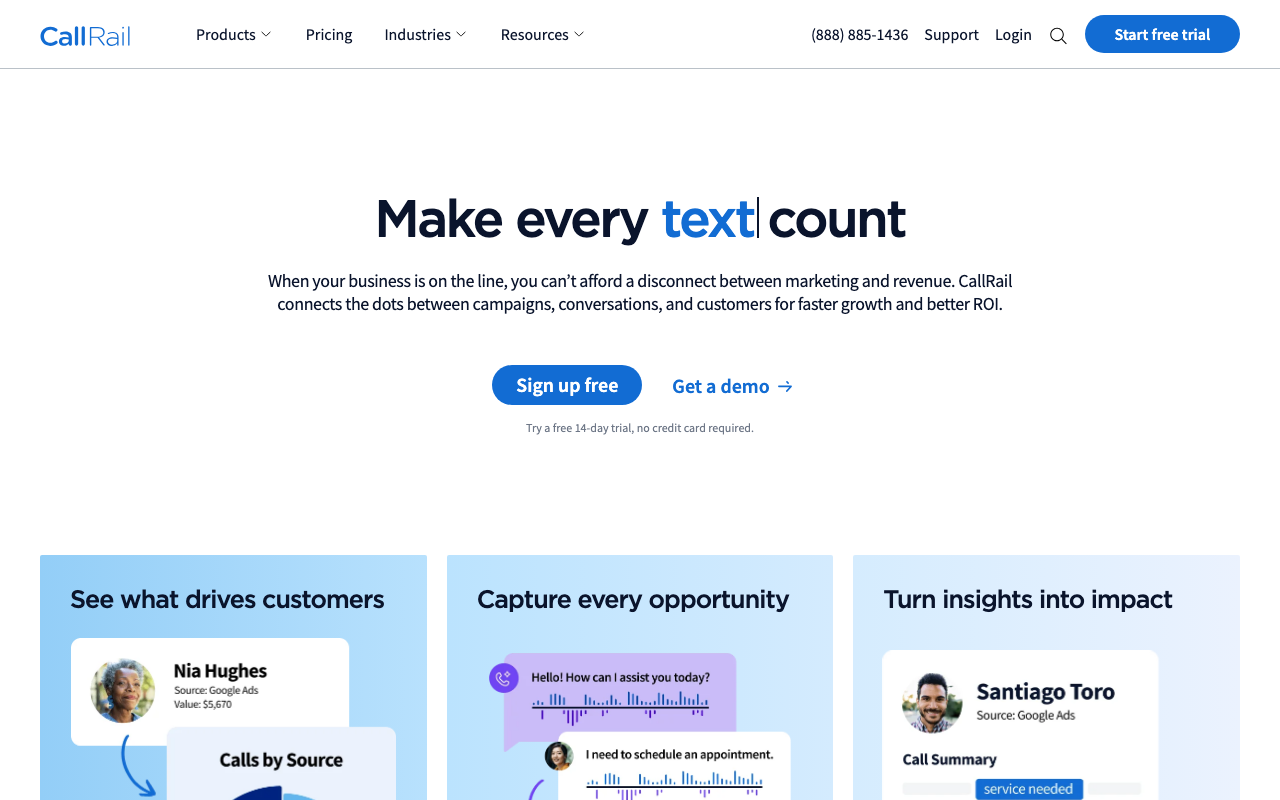
Pricing is the clearest split in the invoca vs callrail decision. CallRail publishes its plans: Lead Tracking starts at $50 per month billed yearly ($55 billed monthly) with 5 local numbers and 250 local minutes, Lead Tracking Complete (adds form tracking) is $95 billed yearly ($105 monthly), Lead Conversion (adds Premium Conversation Intelligence) is $150 billed yearly ($165 monthly), and Lead Conversion Complete is $195 billed yearly ($215 monthly), all as of September 2026. Additional local numbers run $3 each per month and extra local minutes $0.05 each on yearly plans ($0.06 on monthly), so the bill scales with usage. Invoca takes the enterprise route. It lists named tiers (Pro, Enterprise, and Elite, plus Performance Professional and Performance Enterprise for pay-per-call) but no prices; each tier says "Get Your Quote," and you fill out a form so Invoca can arrange a meeting. CallRail is self-serve with published prices; Invoca prices each deal by quote. For a deeper breakdown of how call tracking vendors bill, see our guide to call tracking software pricing.
Call Tracking and Dynamic Number Insertion
Both platforms track calls, but they optimize for different scales. CallRail offers best-in-class dynamic number insertion with source tracking and website number pools, swapping the phone number a visitor sees based on the source that sent them, which is what makes its keyword-to-call attribution so clean. It pairs that with call recording, transcription, and multi-touch attribution that ties calls back to specific campaigns and keywords. Invoca tracks calls too, but its center of gravity is the enterprise contact center and high-volume paid media, where call quality materially moves the profit and loss. You can explore how attribution feeds routing in our interactive product tour. For agencies, CallRail's number management and reporting are purpose-built for client work, while Invoca's tracking is one input into a much larger conversation-intelligence and bid-optimization machine. If your core need is attributing inbound calls to ad spend at SMB scale, CallRail is the more direct fit.
Conversation Intelligence: Signal AI vs Premium Conversation Intelligence
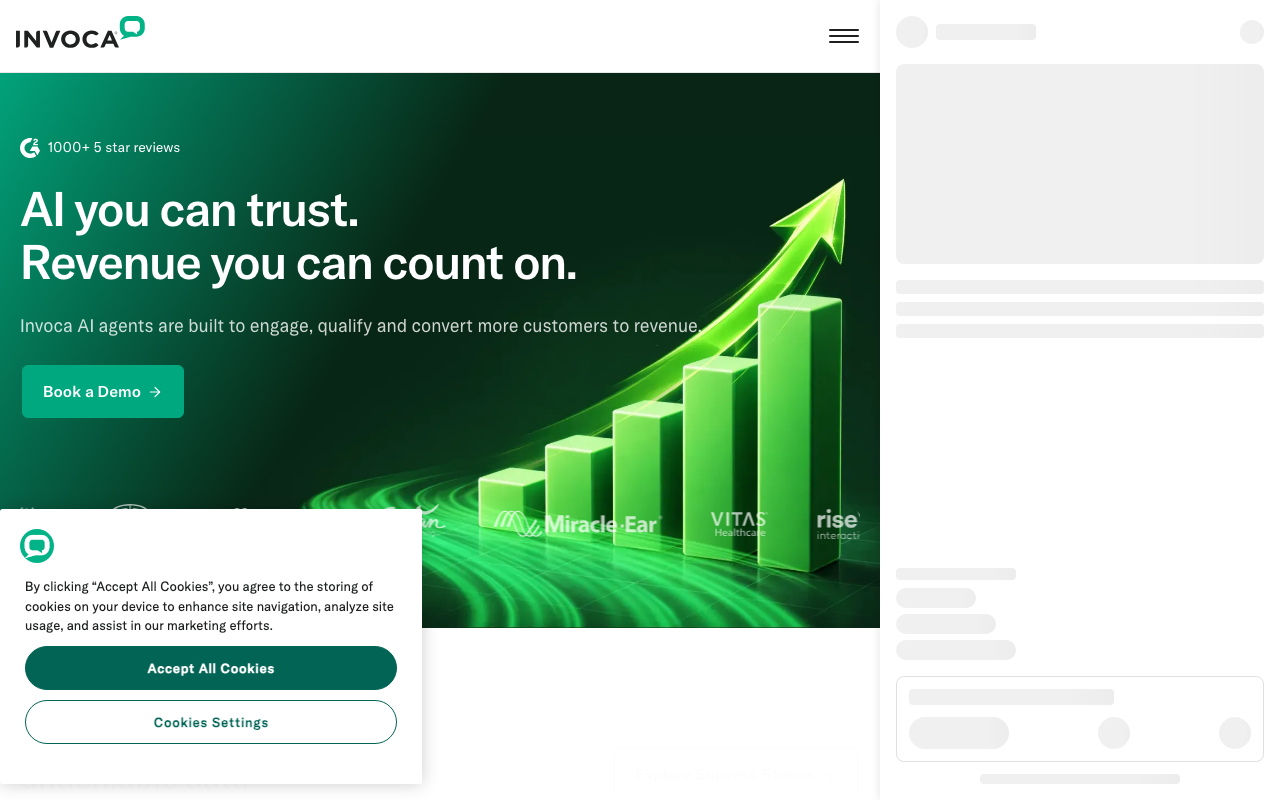
Conversation intelligence is where Invoca earns its enterprise price. Signal AI analyzes conversations in real time for intent, outcome, and sentiment, and Signal AI Studio lets teams build custom models trained on their own calls. Invoca also offers PreSense, which prioritizes and routes callers based on their intent and value. In our view, it is best in class at understanding what happened on a call. CallRail includes Premium Conversation Intelligence on its Lead Conversion plans (from $150 per month billed yearly, as of September 2026), adding call summaries, sentiment analysis, and automatic conversion tagging, and CallRail says its AI separates tire-kickers from the leads most likely to convert. The honest framing, in our view: Invoca's analysis is deeper and built for teams where a single call can be worth thousands, while CallRail's is lighter, cheaper, and sufficient for service businesses optimizing local lead flow.
Integrations and Attribution
Both platforms integrate with the major ad networks, but they aim at different buyers. Invoca offers deep Google Ads, Meta Ads, and Microsoft Ads integrations that feed call outcomes back into automated bidding so enterprise media teams can optimize spend on the calls that actually convert. CallRail integrates strongly with Google Ads, Microsoft Ads, and Meta Ads as well, with attribution and reporting tuned for agencies managing many client accounts. The practical difference is depth versus breadth of fit: Invoca's integrations are engineered for large in-house teams running millions in paid media, while CallRail's are designed for agencies and SMBs that need reliable attribution without an enterprise rollout. According to a Princeton study on generative engine optimization (KDD 2024), content with structured data and citations earns up to 40% more AI visibility (Princeton, 2024), a reminder that attribution data is only useful when it is clean enough to act on. Weigh which ad platforms and CRMs you already run, because that usually settles the integration question faster than any feature list.
Who Should Pick Which
The callrail vs invoca choice comes down to company size and budget more than feature checklists. Pick Invoca if you are an enterprise marketing team running heavy paid media, where call quality drives material profit and loss and you need Signal AI's conversation intelligence plus deep bid-optimization integrations. In our view it is overkill for a small business. Pick CallRail if you are an SMB or B2B service business (dental, HVAC, legal, home services) or an agency that needs accurate, affordable call attribution tied to Google Ads and SEO, with clean client reporting and a low entry price. For a wider field of options, our roundup of the best call tracking software compares both alongside their peers, and our lists of the best Invoca alternatives and best CallRail alternatives cover the closest substitutes for each.
Where Lead Distro AI Fits as a Third Option
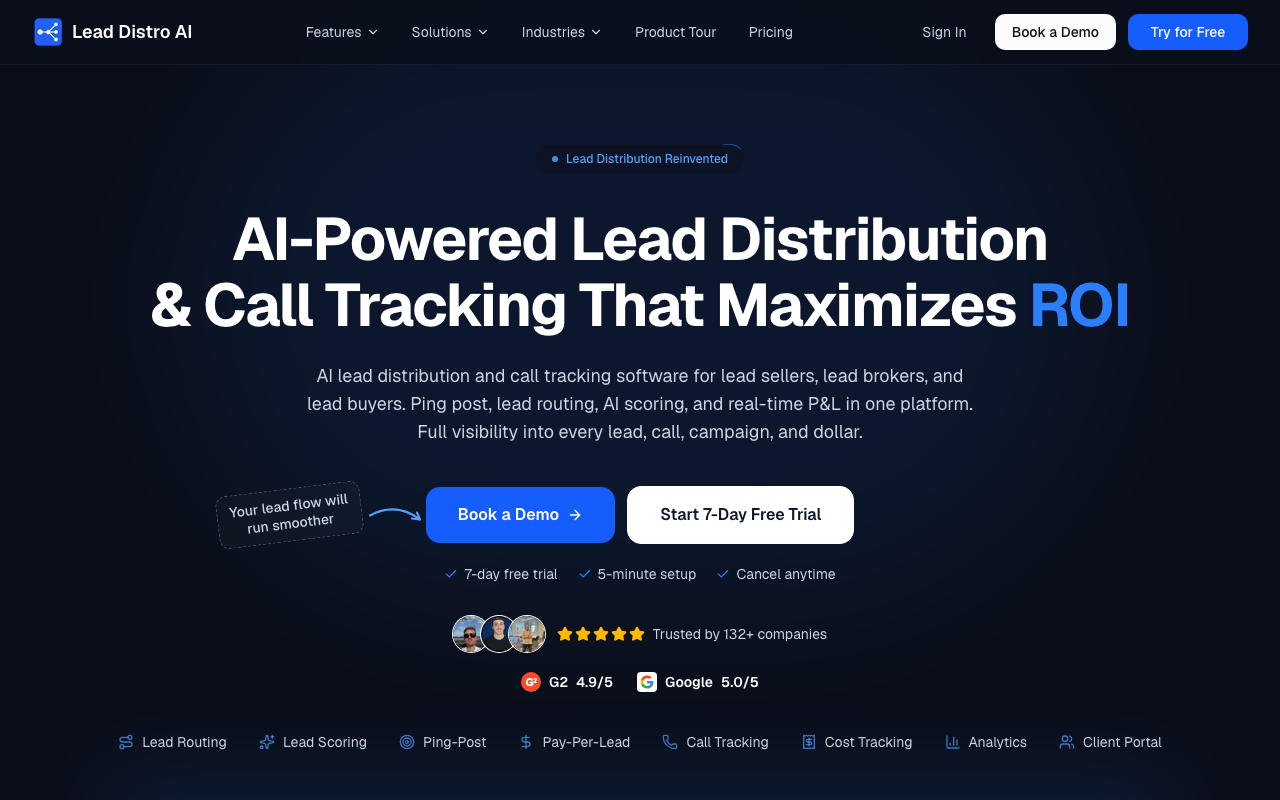
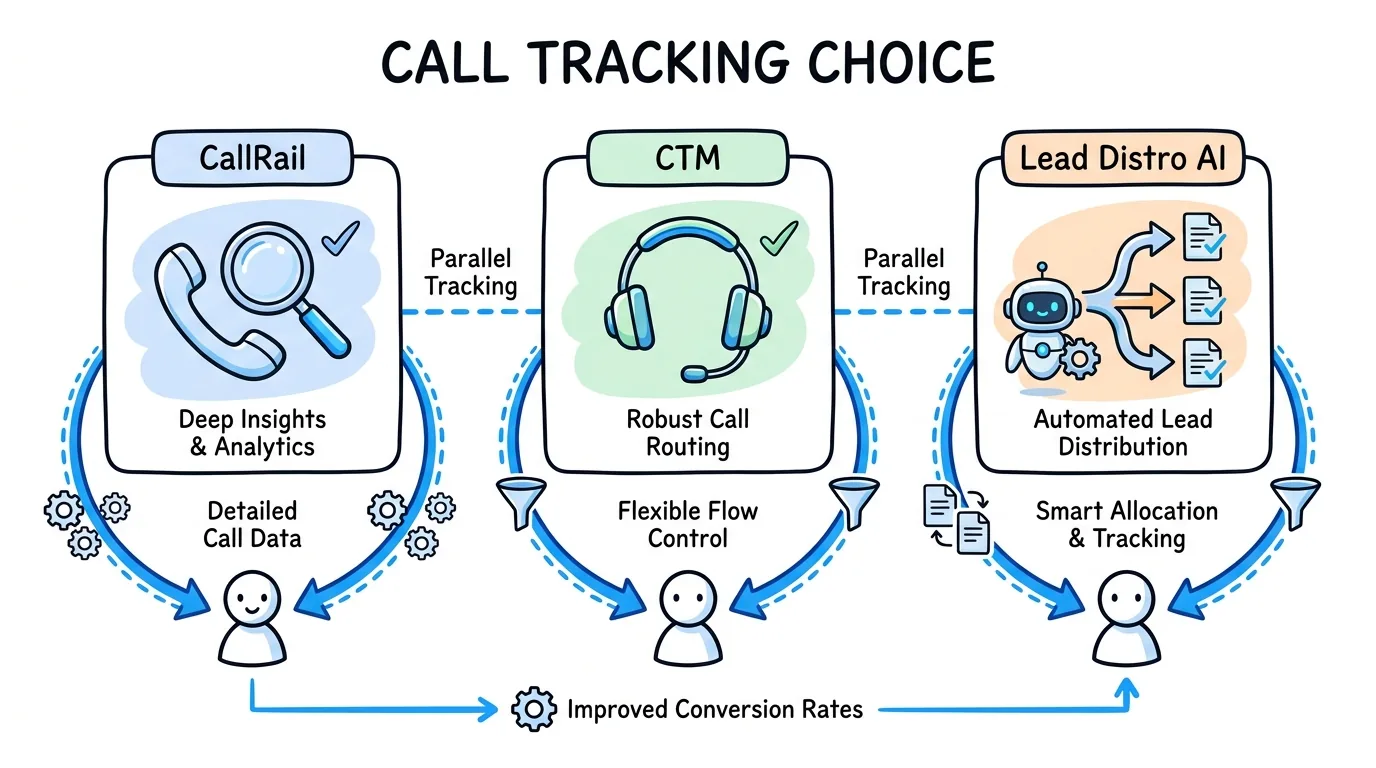
Pay-per-call agencies that monetize both inbound calls and web leads often want one platform for both. Lead Distro AI is built for agencies that monetize both inbound calls and web leads, so you run one platform instead of bolting a call tracker onto a separate distribution tool. It pairs pay-per-call ring tree routing with four data lead distribution methods (Round Robin, Weighted, Priority/Waterfall, and Ping-Post), lead scoring on every call and web lead in under one second, native TrustedForm and Meta CAPI integrations, a buyer portal, and a real-time profit and loss dashboard. Pricing is public and flat: $297 and $497 per month, and Scale is priced by quote for higher volume; call tracking is usage-based on top (a per-number monthly fee plus a per-minute rate). It is not a drop-in replacement for Invoca's Signal AI conversation intelligence, but for pay-per-call agencies routing calls plus data leads with lead scoring, it puts calls, data leads, and scoring in one account. Our guide to call tracking software for pay-per-call agencies explains why selling economics matter, or start a 7-day free trial to route your first call.
FAQ
Is Invoca better than CallRail?
Invoca is better for enterprise marketing teams that run heavy paid media and need deep conversation intelligence, while CallRail is better for SMBs and agencies that need affordable call attribution. Invoca's Signal AI offers, in our view, best-in-class conversation analysis and deep ad-platform bid integrations, and Invoca is priced by custom quote. CallRail wins on published pricing, self-serve setup with a 14-day free trial, and agency reporting. The right pick in the invoca vs callrail decision depends on your company size, budget, and whether call quality materially drives your profit and loss.
How much does CallRail cost compared to Invoca?
CallRail publishes its pricing: Lead Tracking starts at $50 per month billed yearly ($55 billed monthly) with 5 local numbers and 250 local minutes, Lead Tracking Complete (adds form tracking) is $95 billed yearly, Lead Conversion (adds Premium Conversation Intelligence) is $150 billed yearly, and Lead Conversion Complete is $195 billed yearly. Additional local numbers run $3 each monthly and extra local minutes $0.05 each on yearly plans ($0.06 on monthly), all as of September 2026. Invoca publishes no prices: every tier is quote-only, and you fill out a form so Invoca can arrange a meeting. CallRail is the easier one to price up front.
Do Invoca or CallRail distribute leads to buyers?
We could not confirm web form lead distribution to buyers on either vendor's own website as of September 2026, so check with each vendor. Invoca does sell pay-per-call and affiliate plans (Performance Professional and Performance Enterprise, priced by quote) for distributing calls to buyers in real time. CallRail's site describes call, text, and form tracking plus call routing through its call flow builder. Pay-per-call agencies that need to route and sell both calls and data leads from one account can use a distribution platform such as Lead Distro AI.
What is the difference between Invoca and CallRail conversation intelligence?
Invoca calls Signal AI industry-leading conversation analytics: it analyzes intent, outcome, and sentiment in real time, and Signal AI Studio lets teams train custom models on their own calls. CallRail includes Premium Conversation Intelligence on its Lead Conversion plans, adding call summaries, sentiment analysis, and automatic conversion tagging. In our view, Invoca's analysis is deeper and built for enterprise teams where a single call is worth thousands; CallRail's is lighter, cheaper, and sufficient for SMB lead flow.
Which call tracking software is best for pay-per-call agencies?
It depends on whether you also sell data leads. Invoca sells pay-per-call and affiliate plans by quote, and CallRail is built around call and lead tracking for businesses and agencies. Pay-per-call agencies that monetize calls and web leads usually need a platform with call routing, buyer payouts, and lead distribution in one. Lead Distro AI is built for that use case, pairing ring tree call routing with four data distribution methods, pre-routing lead scoring, and a real-time profit and loss dashboard, with a 7-day free trial that requires a credit card.
Conclusion
In the invoca vs callrail decision, there is no universal winner, only the right fit. Invoca is the enterprise choice for marketing teams running heavy paid media that need Signal AI conversation intelligence and deep bid-optimization integrations. CallRail is the SMB and agency choice for affordable, accurate call attribution with best-in-class dynamic number insertion and a published entry price of $50 per month billed yearly (as of September 2026). Both are excellent at the job they were built for. Pay-per-call agencies that sell both calls and data leads should look at a unified platform like Lead Distro AI. Compare the wider field in our best call tracking software roundup, then pick the tool that matches your scale.
Run both calls and data leads in one platform with lead scoring and a real-time P&L dashboard. Start your 7-day free trial and route your first call in minutes.
About the Author
Founder & CEO of Lead Distro AI & Great Marketing AI
UC Berkeley graduate and former software engineer at Microsoft. Rafael built Lead Distro AI after managing over $10M in ad spend for performance marketing agencies (pay-per-lead and pay-per-call), including running campaigns for Neil Patel. He combines deep software engineering expertise with hands-on performance marketing experience to build tools that help these agencies scale profitably.
About Lead Distro AI
Lead Distro AI: AI-Powered Lead Distribution & Call Tracking That Maximizes ROI
The modern platform for pay-per-lead and pay-per-call agencies. Route, score, and deliver leads with AI-powered automation and real-time P&L tracking. Built for performance marketing agencies and lead buyers across legal, insurance, mortgage, solar, and home services verticals.
4 Distribution Methods
Waterfall, Round Robin, Weighted, Ping-Post
Ping-Post Auctions
Real-time bidding with sub-second routing
Real-Time P&L Reporting
Track revenue, costs, and profit per campaign
Call Tracking
Assign tracking numbers, record calls, and attribute conversions
Lead Scoring
Score every lead before routing to maximize conversion
Partner Portal
Self-serve dashboard for buyers to track leads