Solar Lead Generation: How to Build a Profitable Solar Lead Business
Complete guide to solar lead generation. Covers lead sources, pricing by type, distribution to installers, and how to scale a solar lead operation profitably.

Rafael Hernandez
Founder & CEO
Ex-Microsoft SWE · $10M+ PPL ad spend
I hope you enjoy reading this blog post. If you want to try Lead Distro AI for free, click here.
Author: Rafael Hernandez | Founder & CEO of Lead Distro AI
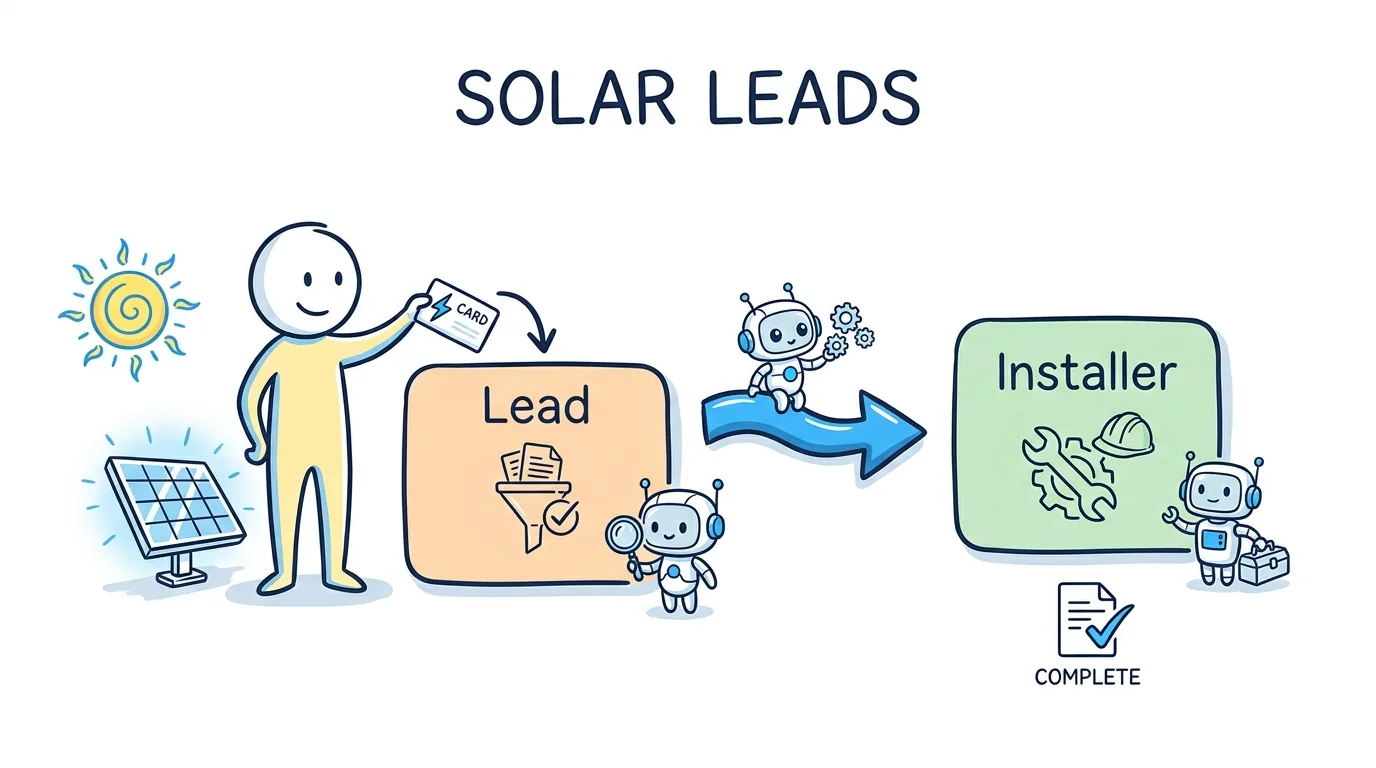
Solar lead generation is the process of capturing homeowners or business owners who have expressed interest in installing solar panels, then routing them to installers who can close the sale. According to the Solar Energy Industries Association (SEIA), the U.S. residential solar market installed 6.8 GW of capacity in 2025, a 21% increase over the prior year. That growth has created massive demand from installers who need qualified prospects. The average solar lead sells for $25 to $150 depending on type and exclusivity, and top solar lead generation companies earn $50,000 or more per month connecting homeowners with local installers.
Profitability in solar lead generation depends on how you source, qualify, and distribute solar leads. Installers who contact a lead within five minutes close at 9x the rate of those who wait an hour. The Inflation Reduction Act extended the 30% federal Solar Investment Tax Credit through 2032 under Section 25D of the Internal Revenue Code, which keeps residential solar economics favorable across all 50 states and supports continued lead demand through the next decade. This guide covers lead types, generation channels, pricing, distribution, quality metrics, and how to scale a solar lead generation business profitably.
Key Takeaways
- Solar leads fall into distinct categories (residential vs. commercial, exclusive vs. shared, appointment-set vs. raw), each with different pricing and installer expectations.
- The best solar lead companies combine paid ads with SEO and partnerships for a mix of high-intent and high-volume leads.
- Exclusive residential solar leads sell for $25 to $70, while appointment-set leads command $50 to $150.
- Geographic routing and installer capacity matching are essential because coverage areas and crew availability vary daily.
- Lead quality hinges on homeownership, roof condition, electric bill amount, and timeline. Installers stop buying from sources that deliver unqualified prospects.
Types of Solar Leads
Solar leads break into categories based on customer type, exclusivity, and buyer readiness.
Residential Solar Leads make up the bulk of the market. Homeowners are motivated by rising utility bills, federal tax credits, or environmental concerns. The 30% federal Investment Tax Credit (ITC) remains the single biggest driver of residential demand.
Commercial Solar Leads target business owners considering solar for commercial buildings. Lower volume but higher value because projects often exceed $100,000 in contract value.
Exclusive Leads go to one installer only. Installers pay a premium because they face no competition on that prospect.
Shared Leads are sold to three to five installers. They cost less but convert at lower rates.
Appointment-Set Leads include a confirmed meeting where an estimator visits the home. Highest-value type because they skip initial outreach.
Raw Form Leads are unverified submissions from landing pages. They require outbound calling to qualify.
| Solar Lead Type | Price Range | Close Rate |
|---|---|---|
| Exclusive Residential | $25 - $70 | 15% - 25% |
| Shared Residential | $10 - $25 | 5% - 10% |
| Appointment-Set | $50 - $150 | 25% - 40% |
| Commercial | $40 - $100 | 10% - 20% |
How to Generate Solar Leads
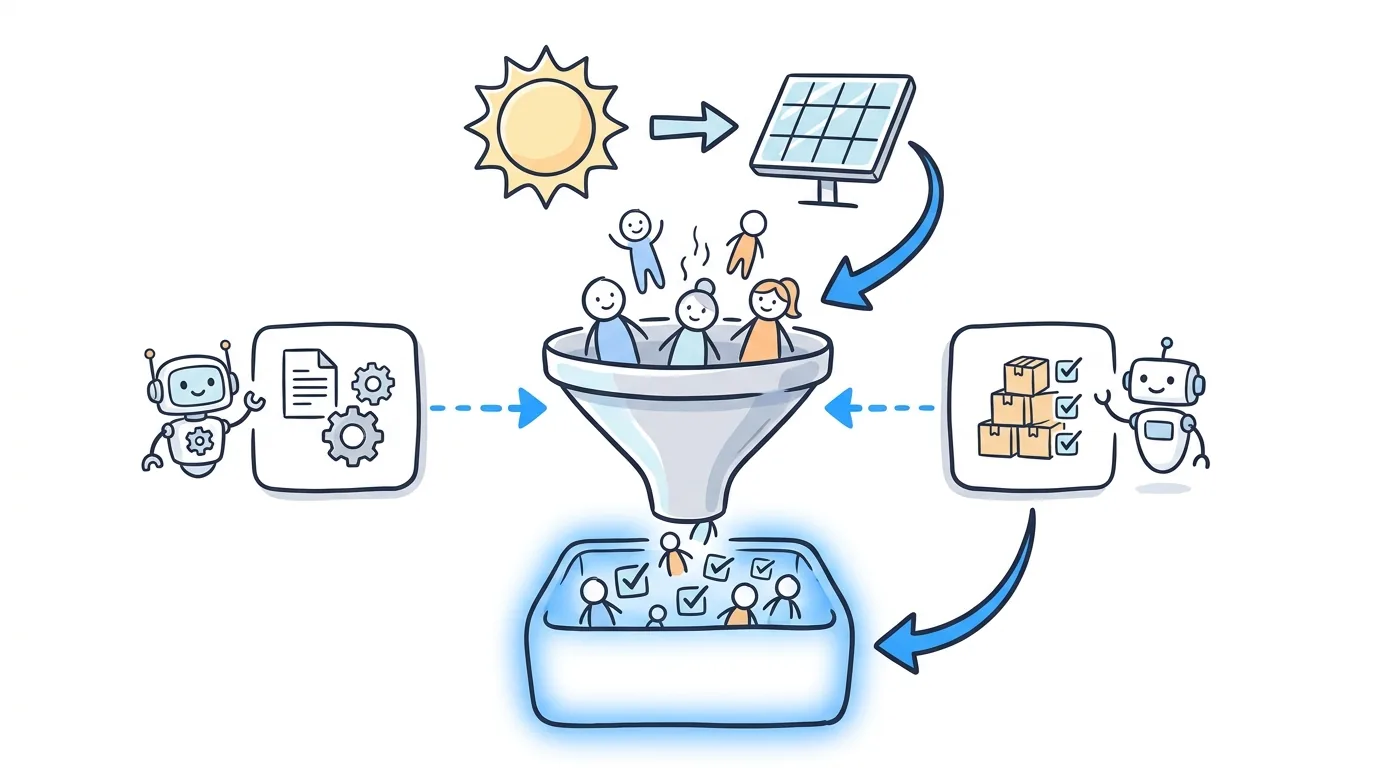
Six primary channels drive solar lead generation, each with distinct cost structures and quality profiles. The best solar lead generation strategies combine two or three channels to balance volume with intent.
Google Ads captures homeowners searching for "solar panel installation" or "solar companies near me." CPCs range from $8 to $35 in competitive markets. Google Ads produces the highest-intent solar leads because the searcher is already considering a purchase.
Facebook and Instagram Ads work for demand generation. Carousel ads showing before-and-after installations generate leads at $15 to $40 CPL. Intent is lower than paid search, but volume is higher.
Door-to-Door Sales remains highly effective. SEIA data shows door-to-door accounts for roughly 30% of residential solar sales. Leads are highly qualified because the rep pre-screens the homeowner on the spot.
Referral Programs from existing solar customers produce the highest-quality leads. Offering $250 to $500 referral bonuses for signed contracts creates a self-sustaining channel.
SEO and Content Marketing build organic traffic targeting "solar panel cost in [state]" or "is solar worth it." Organic solar leads have zero marginal cost once content ranks. Solar is one of the best lead generation niches for content-driven acquisition.
Home Improvement Partnerships with roofing companies and electricians create warm referral pipelines. A roofing company replacing a roof is the ideal time to introduce solar.
Solar Lead Pricing
Pricing depends on exclusivity, lead type, and geography.
| Lead Category | Shared Price | Exclusive Price | Appointment-Set |
|---|---|---|---|
| Residential (Standard) | $10 - $25 | $25 - $70 | $50 - $150 |
| Residential (High Credit) | $15 - $30 | $35 - $80 | $75 - $175 |
| Commercial (Small) | $20 - $45 | $40 - $100 | $80 - $200 |
| Commercial (Large) | $30 - $60 | $60 - $150 | $100 - $300 |
Geography drives pricing. Leads in California, Texas, Florida, and Arizona cost 20% to 40% more than the national average because these states have the highest solar adoption rates and installer density.
Seasonal patterns matter. Solar lead volume peaks in spring and summer. Winter months see lower volume but often lower CPAs, making it a smart time to build inventory.
For lead generation companies, the margin between acquisition cost and sale price is the business. A lead generated on Facebook for $20 and sold exclusively for $60 produces strong margins, but only if routed instantly. Use a lead pricing calculator to model margins.
How to Distribute Solar Leads to Installers
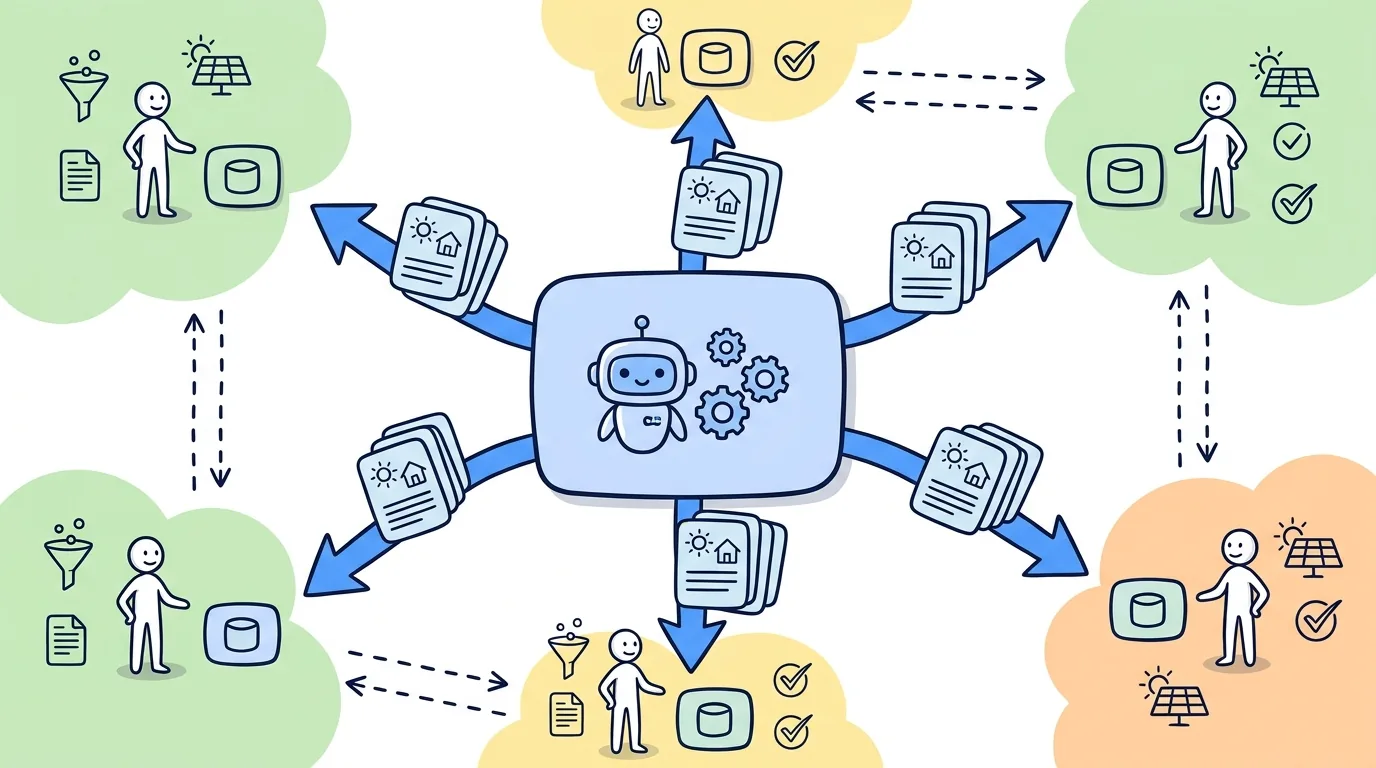
Distributing solar leads to the right installer at the right time determines whether those leads convert into signed contracts.
Geographic Routing by Zip Code and State is the foundation. Solar installers operate within specific service areas defined by driving distance from their warehouse. Your lead routing system must match each lead to installers who serve that zip code.
Installer Capacity Matching prevents oversaturation. A two-crew installer cannot handle 50 leads per week. Your distribution system should track each installer's pipeline and daily lead caps, pausing delivery when capacity is full.
Real-Time Delivery is non-negotiable. Leads contacted within five minutes convert at dramatically higher rates. Lead Distro AI delivers solar leads in under one second via API, email, SMS, and CRM push.
Compliance with State Solar Regulations varies by market. Some states require specific contractor licenses for solar installation (C-46 in California, for example). Your distribution rules should validate installer licenses before routing.
Round-Robin and Weighted Distribution balance lead flow across your network. Top-performing installers receive a larger share, while new installers get enough volume to prove their conversion ability.
Solar Lead Quality Metrics
Installers evaluate leads based on specific data points that predict whether a homeowner will sign a contract.
Homeownership Verification is the most basic filter. Renters cannot authorize a solar installation. Verify ownership through self-reported data and property records.
Roof Condition and Age affects installation feasibility. A roof older than 15 years often needs replacement before panels can be installed, adding $10,000 or more to the project and killing many deals.
Electric Bill Amount signals motivation and system size. Homeowners spending $150 or more per month on electricity are the sweet spot. Installers prefer leads with bills above $100 monthly.
Credit Score determines financing eligibility. Most solar loans and leases require a minimum score of 650. Leads below this threshold convert at significantly lower rates.
Timeline and Intent separate browsers from buyers. A homeowner who wants solar "within 3 months" is far more valuable than one "just researching." Include timeline questions on your lead capture forms.
What Installers Want: contact rates above 50%, verified homeowner data, complete fields (name, phone, email, address, electric bill, roof age), and transparent return policies. Companies that track these metrics through their distribution platform build stronger relationships and command higher prices.
Scaling Your Solar Lead Operation
Once profitable in one market, scaling requires deliberate expansion across geographies and installer networks.
Multi-State Expansion starts with high-opportunity markets. California, Texas, Florida, Arizona, and North Carolina account for over 60% of U.S. residential solar installations according to SEIA. Expand there first, then move to emerging markets where utility rates are rising.
Installer Network Growth is the supply side. Each new market requires recruiting three to five installers before generating leads there. The larger your roster, the more leads you can distribute without waste.
Seasonal Adjustments keep operations profitable year-round. Increase ad spend March through August when demand peaks. Use winter to build content and recruit new installers.
Utility Rate Targeting focuses on the most motivated homeowners. Areas where electricity rates exceed $0.15 per kWh produce leads that convert at 2x the rate of lower-cost markets.
Join our free community to connect with other lead generation operators scaling solar and home improvement verticals.
FAQ
How much do solar leads cost?
Shared residential leads cost $10 to $25, while exclusive leads run $25 to $70. Appointment-set leads are the most expensive at $50 to $150 because they include a confirmed meeting. Commercial leads range from $40 to $100 exclusive. Pricing varies by state, with California and Texas commanding the highest premiums.
What is the best way to generate solar leads?
Google Ads delivers the highest-intent leads from homeowners actively searching for solar. Facebook ads produce higher volume at lower CPL but lower intent. For the best long-term ROI, combine paid channels with SEO content. Door-to-door remains effective, accounting for roughly 30% of residential solar sales.
What is solar lead generation?
Solar lead generation is the process of capturing interested homeowners or businesses and routing them to solar installers who can close the sale. It spans six primary channels — Google Ads, Facebook, door-to-door, referrals, SEO, and home improvement partnerships — and is one of the most profitable verticals in the lead generation industry when distribution is handled correctly. The best solar lead generation operations combine two or three channels and use automated distribution to match each lead to an installer in their service area within seconds.
How do I start a solar lead generation business?
Start a solar lead generation business by picking one state with high utility rates and strong solar incentives (California, Texas, Arizona, or Florida are ideal), recruiting three to five installers as buyers, and generating leads through a single channel like Google Ads or Facebook. Price leads by type and exclusivity, distribute them in real time through a platform like Lead Distro AI, and reinvest profits into a second channel and additional markets as you scale.
How do I sell solar leads to installers?
Build a network of local installers, then offer leads on an exclusive or shared basis. Price based on geography, lead type, and exclusivity. Use automated distribution software to route leads in real time based on installer zip codes and capacity. Start with three to five installers per market.
What makes a high-quality solar lead?
Installers want verified homeowners with monthly electric bills above $100, roofs less than 15 years old, credit scores above 650, and a timeline of six months or less. Complete contact information and confirmed interest in solar are baseline requirements.
How fast should solar leads be contacted?
Within five minutes. Research shows that the first company to contact a lead wins the sale the majority of the time. Real-time delivery via API or CRM push gives installers the speed advantage. Leads contacted after 30 minutes close at a fraction of the rate of those reached quickly.
Conclusion
Solar lead generation is a high-growth vertical with strong margins when you nail the fundamentals: generate leads through Google Ads, Facebook, SEO, and partnerships, price by type and geography, and distribute instantly to qualified installers. The U.S. residential solar market continues to expand at 20%+ annually per SEIA, and every installer in the country needs more qualified prospects than they can generate themselves.
Whether you are building a solar lead generation business from scratch or adding solar to an existing operation, your distribution infrastructure determines profitability. Automate the routing, match installer capacity, and track close rates.
For a side-by-side of the major lead distribution platforms scored specifically on solar requirements, see best lead distribution software for solar companies covering TrustedForm for TCPA defense, ZIP-based ping-post bidding, live transfers, and Spanish-language IVR support across 7 platforms.
Ready to distribute solar leads to installers in real time with geographic routing and capacity matching? Start your free trial and route your first lead in under 60 seconds.
About the Author
Founder & CEO of Lead Distro AI & Great Marketing AI
UC Berkeley graduate and former software engineer at Microsoft. Rafael built Lead Distro AI after managing over $10M in ad spend for performance marketing agencies (pay-per-lead and pay-per-call), including running campaigns for Neil Patel. He combines deep software engineering expertise with hands-on performance marketing experience to build tools that help these agencies scale profitably.
About Lead Distro AI
Lead Distro AI: AI-Powered Lead Distribution & Call Tracking That Maximizes ROI
The modern platform for pay-per-lead and pay-per-call agencies. Route, score, and deliver leads with AI-powered automation and real-time P&L tracking. Built for performance marketing agencies and lead buyers across legal, insurance, mortgage, solar, and home services verticals.
4 Distribution Methods
Waterfall, Round Robin, Weighted, Ping-Post
Ping-Post Auctions
Real-time bidding with sub-second routing
Real-Time P&L Reporting
Track revenue, costs, and profit per campaign
Call Tracking
Assign tracking numbers, record calls, and attribute conversions
Lead Scoring
Score every lead before routing to maximize conversion
Partner Portal
Self-serve dashboard for buyers to track leads