Insurance Lead Generation 2026: The Complete Agency Guide
How to generate, buy, and distribute insurance leads in 2026: lead sources, pricing by line ($3-$80), AI tools, TCPA compliance, and routing strategies.

Rafael Hernandez
Founder & CEO
Ex-Microsoft SWE · $10M+ PPL ad spend
I hope you enjoy reading this blog post. If you want to try Lead Distro AI for free, click here.
Author: Rafael Hernandez | Founder & CEO of Lead Distro AI
Insurance lead generation is the process of capturing contact information from people actively shopping for policies and connecting them with licensed agents or carriers. The U.S. insurance industry collected $1.48 trillion in net premiums written in 2023, according to the National Association of Insurance Commissioners (NAIC), making it one of the largest lead generation verticals in the country. Agencies spend over $10 billion annually on customer acquisition across all lines, and the average insurance lead costs between $3 and $80 depending on line of business, exclusivity, and source.
Whether you generate insurance leads through paid ads, SEO, and AI-powered tools, or buy them from aggregators, the real advantage is in how you distribute them. Speed, geographic routing, and license-state matching determine whether a lead converts or goes cold. The Centers for Medicare & Medicaid Services reported that ACA Marketplace enrollment hit a record 21.4 million in 2024, more than doubling since 2020 (CMS, 2024), which has sustained extraordinary lead demand during Open Enrollment Periods through 2026. Lead Distro AI automates this entire workflow with sub-second delivery, license verification, and intelligent routing. This guide covers sourcing, pricing, distribution, compliance, and how AI is transforming insurance lead generation in 2026.
Key Takeaways
- The U.S. insurance market generates $1.48 trillion in annual premiums (NAIC, 2023), creating massive demand for qualified leads across auto, home, health, life, and commercial lines.
- The best agencies combine lead generation, buying, and AI-powered distribution, using paid search and SEO for quality while supplementing volume with purchased leads from aggregators.
- Lead distribution speed is the single biggest conversion lever. Research from InsideSales.com shows that contacting a lead within five minutes makes you 21x more likely to qualify them.
- AI lead generation tools are reshaping insurance in 2026. McKinsey estimates that AI applications in insurance could generate up to $1.1 trillion in annual value across the industry.
- TCPA violations carry fines of $500 to $1,500 per call, so documented prior express written consent is essential. The FCC's 2023 one-to-one consent rule was vacated by the Eleventh Circuit in January 2025 before it took effect, so the prior written-consent standard still governs.
Types of Insurance Leads in 2026
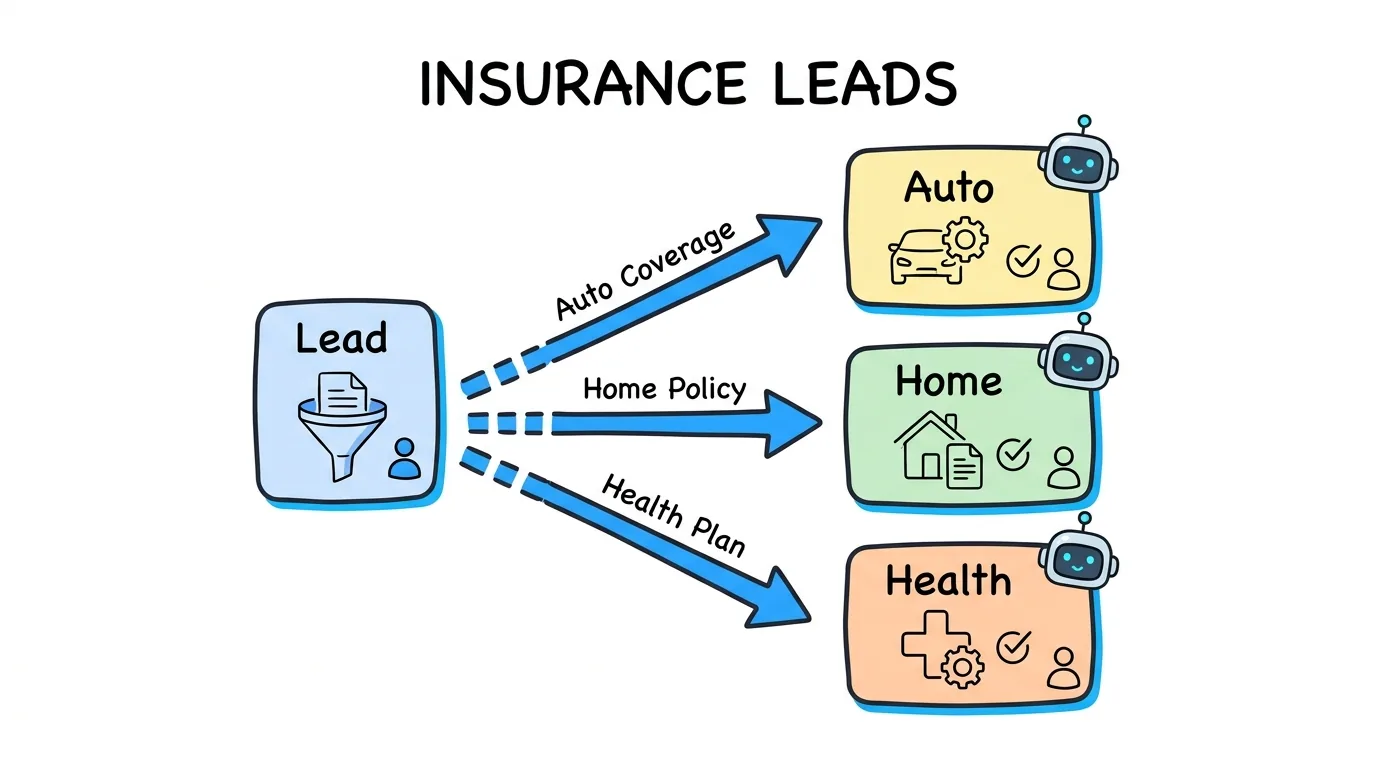
Insurance leads break into five major categories. Each has different buyer profiles, conversion expectations, and pricing structures. Understanding these differences is critical whether you are generating leads to sell or buying them for your own book of business.
Auto Insurance Leads are the highest volume category. With over 230 million licensed drivers in the U.S. (Federal Highway Administration, 2024), auto insurance is mandatory in 49 states. Leads are driven by policy renewals, rate shopping, and new drivers. The average auto insurance premium reached $1,771 per year in 2024, according to the Insurance Information Institute (III).
Home Insurance Leads correlate with real estate activity. New homebuyers need coverage before closing, making mortgage lender partnerships a reliable source. Rising premiums, which increased 33.8% from 2019 to 2023 according to S&P Global, are driving more consumers to shop around.
Health Insurance Leads spike during open enrollment (November through January) and qualifying life events. ACA marketplace, Medicare supplement, and group health leads each have distinct buyer pools. Over 21 million Americans enrolled through ACA marketplace plans in 2025, according to CMS.gov.
Life Insurance Leads require more nurturing. Buyers are motivated by major life events: marriage, new children, or home purchases. Policy values are high, but the sales cycle is longer. LIMRA reports that 100 million Americans remain uninsured or underinsured.
Commercial Insurance Leads target business owners seeking general liability, workers' comp, or professional liability coverage. These command premium pricing because policy values often exceed $10,000 annually.
| Insurance Type | Shared Lead Price | Exclusive Lead Price | Live Transfer Price |
|---|---|---|---|
| Auto | $3 - $15 | $15 - $40 | $30 - $60 |
| Home | $5 - $20 | $20 - $50 | $35 - $75 |
| Health / ACA | $8 - $25 | $25 - $65 | $40 - $90 |
| Life | $10 - $30 | $30 - $80 | $50 - $120 |
| Commercial | $15 - $50 | $50 - $150 | $75 - $200 |
Pricing varies by state and season. Leads from California, Texas, and Florida typically cost 20% to 40% more than the national average due to higher population density and policy values.
Insurance Lead Generation Methods Compared (2026)
Choosing the right channel depends on your budget, timeline, and quality expectations. Here is how the five primary methods compare across key factors.
| Method | Avg. Cost Per Lead | Lead Quality | Time to Results | Scalability | Best For |
|---|---|---|---|---|---|
| Paid Search (Google Ads) | $5 - $55 CPC | High intent | Immediate | High | Agencies with ad budgets |
| Social Media Ads | $3 - $25 CPL | Medium intent | 1-2 weeks | High | Auto, life awareness |
| SEO / Content Marketing | $0 marginal cost | High intent | 3-6 months | Very high | Long-term ROI |
| Referral Programs | $25 - $50 per bind | Very high trust | Ongoing | Low-medium | Individual agents |
| Purchased Leads (Aggregators) | $3 - $150 per lead | Variable | Immediate | Very high | Volume filling |
"The insurance agencies growing fastest in 2026 are not choosing between generating and buying leads. They are doing both, then using AI to route every lead to the right agent in real time." - Gia Campari, VP of Insurance Vertical, MediaAlpha (Insurance Marketing Conference, 2025)
How to Generate Insurance Leads in 2026
There are five primary channels for insurance lead generation, each with distinct cost structures and quality profiles.
Paid Search (Google Ads) captures high-intent shoppers searching for "cheap auto insurance quotes" or "home insurance near me." CPCs for insurance keywords average $5 to $55 depending on line of business, according to WordStream's 2025 Industry Benchmarks. The key is building landing pages that qualify leads before they submit.
Social Media Ads on Facebook, Instagram, and TikTok work for awareness and quote generation, particularly for auto and life insurance. CPLs run 30% to 50% lower than paid search, but intent is also lower. Video testimonials and educational content outperform direct response on these platforms.
Referral Programs leverage existing policyholders and business partners. Offering $25 to $50 per referral that binds creates a low-cost, high-trust channel. Real estate agents, car dealerships, and financial planners are natural partners.
SEO and Content Marketing build long-term organic traffic by targeting queries like "how much does renters insurance cost." Organic leads have no marginal acquisition cost once content ranks, making SEO the highest-ROI channel over time. According to BrightEdge, organic search drives 53% of all website traffic.
Lead Aggregators and Marketplaces supplement what you generate directly. Companies like QuoteWizard (owned by LendingTree), EverQuote, and MediaAlpha operate large-scale insurance lead marketplaces. Understanding how to sell leads through these channels opens a significant revenue stream. Knowing how to price leads correctly is the difference between margin and loss.
AI-Powered Insurance Lead Generation in 2026
AI is fundamentally changing how insurance leads are generated, scored, and distributed. McKinsey's 2024 Insurance Report estimates that AI applications could generate up to $1.1 trillion in annual value for the global insurance industry, with customer acquisition and underwriting as the two biggest areas of impact.
Lead scoring applies the rules you configure to every field on a lead to flag which ones are worth prioritizing. Instead of treating every lead equally, lead scoring lets you prioritize high-value leads and route them to your best closers. Lead Distro AI's scoring engine evaluates dozens of fields, including demographics, source, time of day, and policy type, against your rules to assign a real-time quality score before the lead is even delivered.
Conversational AI and Chatbots qualify insurance leads 24/7. AI chatbots on landing pages and social media can collect coverage needs, current policy details, and contact preferences before handing off to a human agent. Juniper Research projects that AI chatbots will handle 75% of insurance customer interactions by 2027.
Predictive Analytics for Lead Generation uses data models to identify when consumers are most likely to shop for insurance. Life events (moving, buying a home, having a child) create predictable windows for policy shopping. AI tools can target these moments across ad platforms and content channels.
AI-Powered Distribution matches each lead to the ideal agent based on license state, carrier appointments, performance history, and current capacity. This is the layer where Lead Distro AI excels: sub-second routing with built-in license verification and intelligent load balancing.
Buying vs. Generating Insurance Leads
Most successful agencies use both approaches. The mix depends on your budget, team size, and growth goals.
| Factor | Generating Leads | Buying Leads |
|---|---|---|
| Cost per Lead | Higher upfront (ad spend, content) | Predictable per-lead cost |
| Lead Quality | Higher (you control targeting) | Variable (depends on source) |
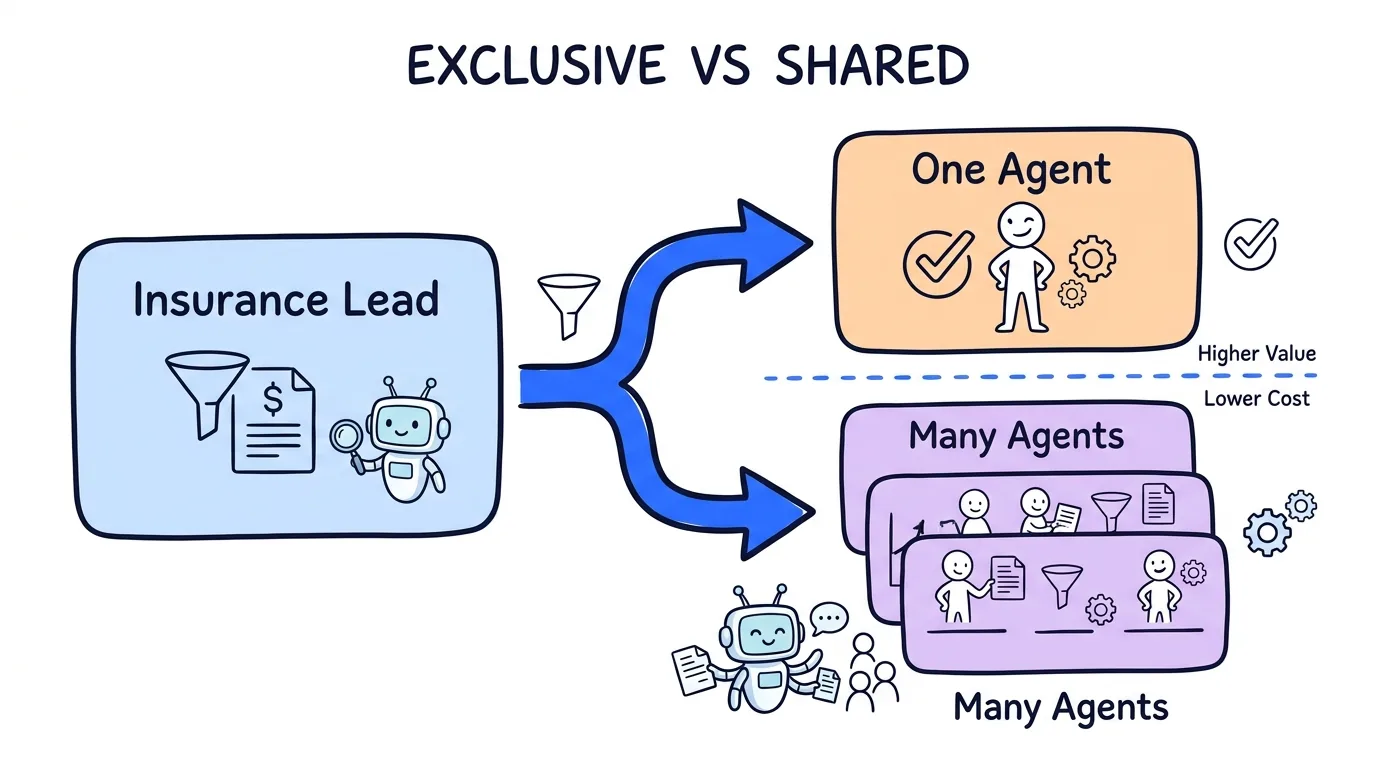
| Exclusivity | Always exclusive to you | Shared unless you pay premium |
| Scale Speed | Slower to ramp | Instant volume available |
| Control | Full control over messaging | Limited control |
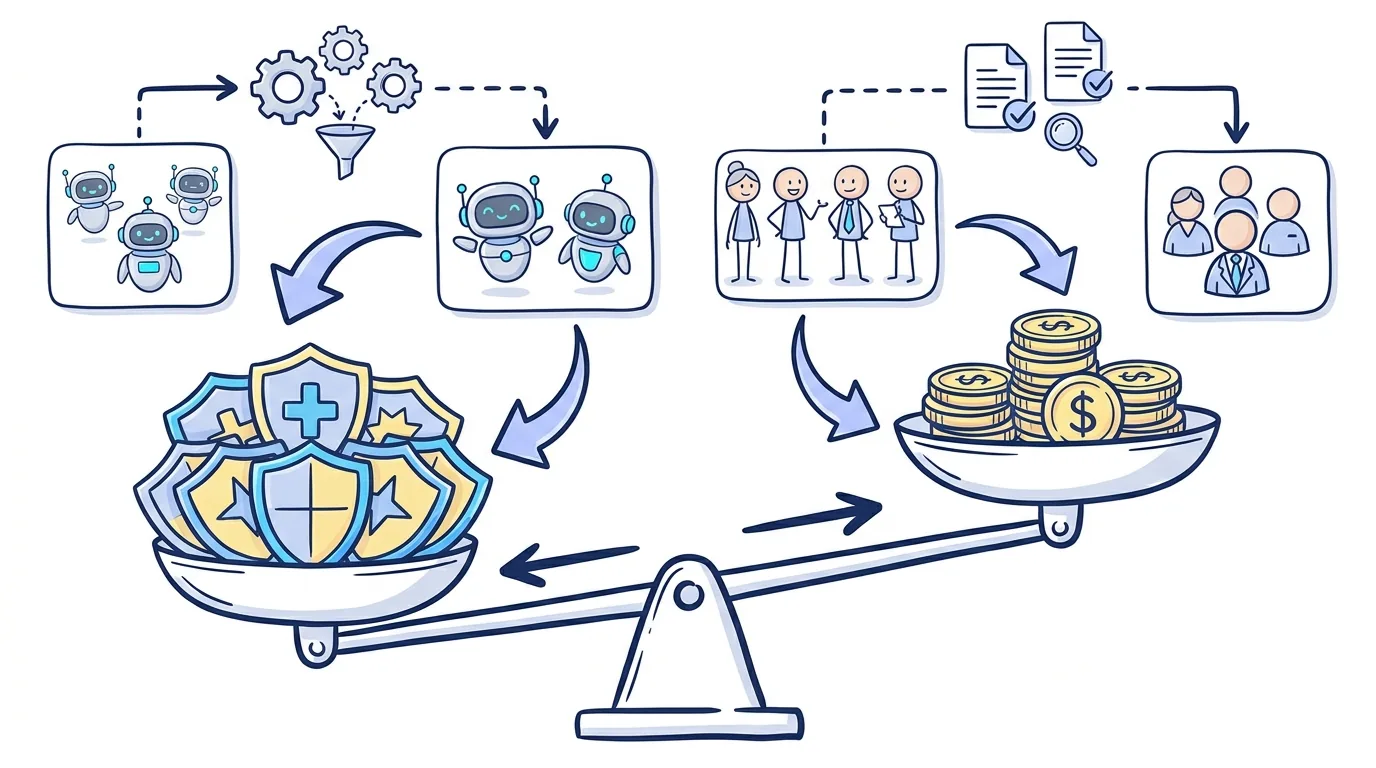
Generating your own leads gives you control over quality, messaging, and exclusivity. The downside is the upfront investment in ad spend, landing pages, and optimization before campaigns become profitable.
Buying leads provides immediate volume with predictable costs. The trade-off is that shared leads go to three to five competitors simultaneously. The best approach is generating your highest-value leads in-house while buying leads to fill capacity gaps. Learn more about the economics in our lead pricing guide.
How to Distribute Insurance Leads Effectively
Getting the right lead to the right agent at the right time is where margins are made or lost. This is the step most agencies underinvest in, and it is the biggest lever for improving ROI on every lead you generate or buy.
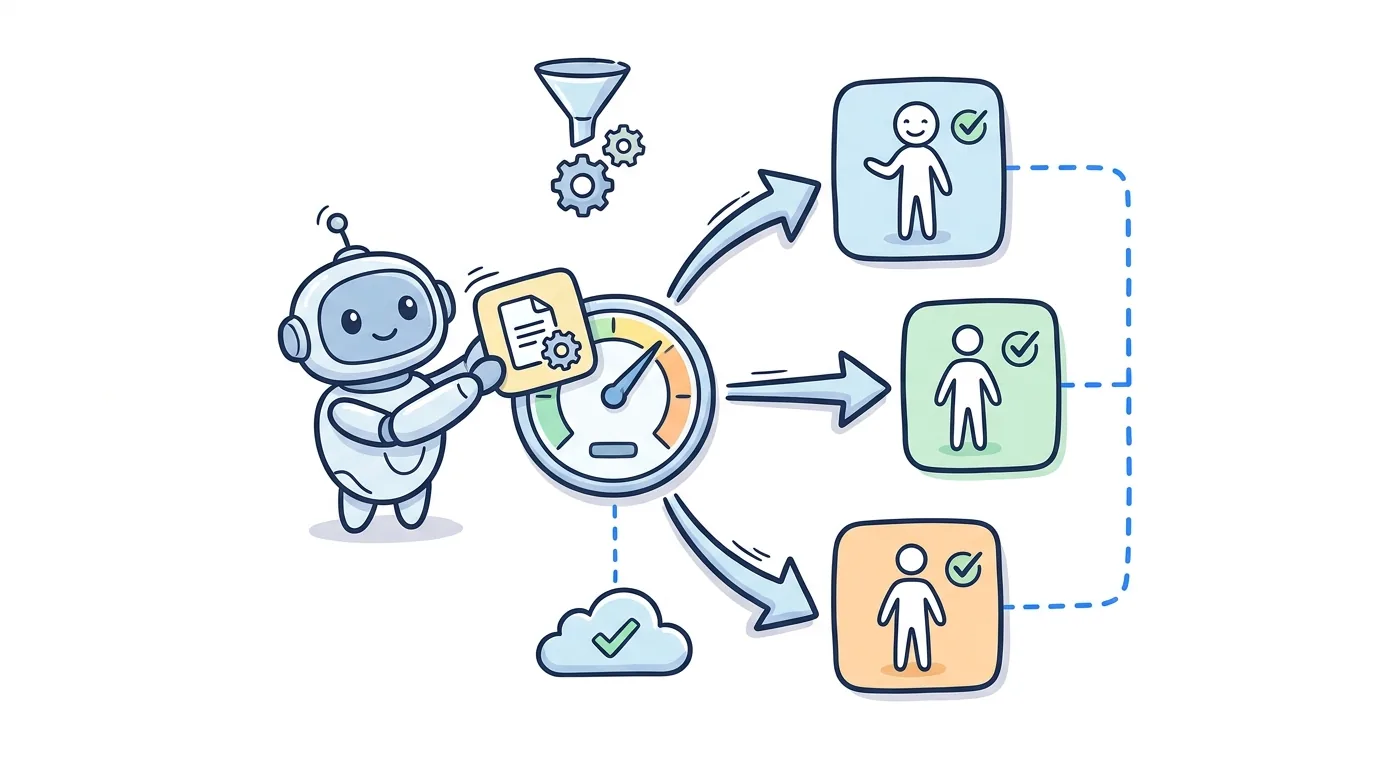
Geographic Routing matches leads to agents based on the prospect's location. A homeowner in Phoenix needs an agent licensed in Arizona who knows the local market. Your lead routing rules should map zip codes and states to specific agents or agent groups.
License-State Filters are mandatory in insurance distribution. Every state requires insurance agents to hold an active license before selling. Your distribution system must verify that the receiving agent is licensed in the lead's state before delivery. This is not optional.
Real-Time Delivery is the single biggest factor in insurance lead conversion. According to research published in Harvard Business Review, firms that contact leads within one hour are 7x more likely to qualify them. For insurance leads, sub-minute delivery through automated lead distribution software is the standard. Lead Distro AI delivers leads in under one second with built-in license verification and geographic matching.
Insurance Lead Quality Metrics
Agents and carriers evaluate lead quality on four metrics. Understanding these helps you price leads correctly and retain buyers long-term.
Contact Rate measures the percentage of leads that answer the phone. Benchmarks range from 40% to 60% for exclusive leads and 20% to 35% for shared leads. Low contact rates indicate stale data or poor form validation.
Quote Rate tracks how many contacted leads receive a formal quote. A healthy quote rate for auto leads is 30% to 45% of contacts.
Bind Rate is the ultimate metric, measuring how many quoted prospects purchase a policy. Bind rates for exclusive auto leads average 10% to 18%, while shared leads convert at 5% to 10%.
What Buyers Look For: consistent contact rates above 45%, accurate contact information, complete data fields (name, phone, email, zip, current coverage status), and transparent return policies for bad leads. Agencies that track these metrics through their distribution platform build stronger buyer relationships and higher retention.
Compliance for Insurance Lead Generation in 2026
Insurance lead generation is regulated at both the federal and state level. Getting compliance wrong can end your business. TCPA enforcement stayed aggressive through 2025, so agencies must document consent carefully and scrub Do-Not-Call lists.
TCPA (Telephone Consumer Protection Act) requires prior express written consent before calling or texting insurance leads. The FCC's 2023 one-to-one consent rule, which would have required separate consent for each individual seller, was vacated by the Eleventh Circuit in Insurance Marketing Coalition Ltd. v. FCC on January 24, 2025 before it took effect, so the prior express written consent standard still governs. For a detailed breakdown, read our TCPA compliance guide.
State Licensing Requirements dictate who can sell insurance in each state. Distributing leads to unlicensed agents is a compliance violation that can result in fines and license revocation. Your distribution system must validate agent licenses before routing.
Do-Not-Call (DNC) Lists must be scrubbed before outbound calling. Both the National DNC Registry and state-level lists apply. Scrub your lead lists within 31 days of each campaign.
Consent Documentation is your legal defense. Store the timestamp, IP address, consent language version, form URL, and lead source for every lead. Retain this data for at least five years. Thorough records are non-negotiable under the prior express written consent standard.
Lead Generation for Insurance Agents
Lead generation for insurance agents differs from agency-level lead gen in three important ways: the agent is typically working a smaller geographic territory, they represent a limited set of carriers, and they need leads that match their licensed states and appointed products. A lead that is perfect for one agent may be useless to another sitting at the next desk. This is why effective lead generation for insurance agents depends as much on distribution logic as it does on lead sourcing.
The best lead sources for individual insurance agents:
- Paid search on local geo-modified keywords ("auto insurance Phoenix AZ", "home insurance quotes Dallas"). CPCs are lower than national terms and intent is high because the searcher is in the agent's actual territory.
- Referral programs with existing policyholders, offering a $25 to $50 reward per referral that binds. Referred prospects close at 3x to 5x the rate of cold leads, according to Nielsen research on trust-based acquisition.
- Partnerships with local professionals (real estate agents for home insurance, auto dealerships for auto insurance, financial planners for life insurance). A single active partner can deliver 5 to 15 warm leads per month at zero marginal cost.
- Purchased shared leads from aggregators like QuoteWizard, EverQuote, and MediaAlpha to fill pipeline gaps, routed through a distribution platform that filters by the agent's licensed state and carrier appointments.
Speed, geographic precision, and carrier fit determine profitability. An agent who contacts a lead within five minutes, in a state they are licensed in, for a product one of their carriers actually writes, will close at 10x to 20x the rate of an agent working unfiltered shared leads. If you are running lead generation for insurance agents across multiple offices or states, the distribution layer is the bottleneck. Manual Excel-based routing breaks at 50+ leads per day. Lead Distro AI handles license-state filtering, carrier matching, and sub-second delivery automatically.
FAQ
How much do insurance leads cost in 2026?
Shared auto insurance leads cost $3 to $15, while exclusive auto leads run $15 to $40. Life insurance leads are the most expensive at $30 to $80 exclusive. Live transfers add a 2x to 3x premium over form leads. State, season, and lead freshness all affect pricing. California, Texas, and Florida leads typically cost 20% to 40% more than the national average.
What is the best channel for insurance lead generation?
Paid search delivers the highest-intent insurance leads because people are actively shopping for quotes. CPCs average $5 to $55 depending on the insurance line. For the best long-term ROI, combine paid search for immediate volume with SEO content that builds free organic traffic over time. Add purchased leads from aggregators to fill capacity gaps.
Should I buy insurance leads or generate my own?
Both. Generate your own insurance leads through paid search and SEO for quality and exclusivity, then buy leads from aggregators like QuoteWizard, EverQuote, or MediaAlpha to fill capacity gaps. Start with your core insurance line and geography, then scale with purchased leads.
How fast should insurance leads be contacted?
Within five minutes. InsideSales.com research shows leads contacted within five minutes convert at 21x the rate of those contacted after 30 minutes. The first agent to reach a prospect wins the quote opportunity 78% of the time. Automated lead distribution software like Lead Distro AI delivers leads in under one second.
How is AI changing insurance lead generation in 2026?
AI is transforming insurance lead generation through predictive lead scoring, conversational chatbots that qualify leads 24/7, and intelligent distribution that matches leads to the best agent based on license, carrier, and performance data. McKinsey estimates AI could generate up to $1.1 trillion in annual value for the insurance industry overall.
What is the best lead generation strategy for insurance agents?
The best lead generation for insurance agents combines three sources: geo-targeted paid search on the agent's licensed states, referral programs with existing policyholders, and purchased shared leads from reputable aggregators routed through a platform that filters by license and carrier. Expect to spend $3 to $40 per lead depending on line of business.
What compliance rules apply to insurance lead generation?
TCPA requires prior express written consent for calls and texts. The FCC's 2023 one-to-one consent rule was vacated by the Eleventh Circuit in January 2025 and never took effect, so the prior written-consent standard governs. Agents must hold active state licenses where the lead resides. DNC lists must be scrubbed before calling. Consent records, including timestamps, IP addresses, and form URLs, must be retained for at least five years.
Conclusion
Insurance lead generation is a high-volume vertical when you get the fundamentals right: generate quality leads through paid search, SEO, AI tools, and partnerships; price them by insurance line; and distribute them instantly to licensed agents in the right geography. The agencies winning in 2026 combine generation and purchasing, leverage rule-based scoring and automated routing, and get every lead to the right buyer in under one second with full compliance documentation.
Whether you generate leads, buy them, or run a hybrid model, your distribution infrastructure determines profitability. Automate the routing, enforce license-state compliance, and track bind rates to optimize every lead dollar.
For a side-by-side of the major lead distribution platforms scored specifically on insurance requirements, see best lead distribution software for insurance agencies covering TrustedForm, Jornaya, ping-post bidding, state licensing, sub-vertical filtering, and AEP/OEP scalability across 7 platforms. If you are launching the business itself rather than optimizing an existing one, our guide on how to start an insurance lead generation agency covers licensing requirements, startup capital, and choosing a sub-vertical before your first campaign goes live.
Ready to distribute insurance leads in real time with automated license-state filtering and rule-based scoring? Start your free trial and route your first lead in under 60 seconds.
About the Author
Founder & CEO of Lead Distro AI & Great Marketing AI
UC Berkeley graduate and former software engineer at Microsoft. Rafael built Lead Distro AI after managing over $10M in ad spend for performance marketing agencies (pay-per-lead and pay-per-call), including running campaigns for Neil Patel. He combines deep software engineering expertise with hands-on performance marketing experience to build tools that help these agencies scale profitably.
About Lead Distro AI
Lead Distro AI: AI-Powered Lead Distribution & Call Tracking That Maximizes ROI
The modern platform for pay-per-lead and pay-per-call agencies. Route, score, and deliver leads with AI-powered automation and real-time P&L tracking. Built for performance marketing agencies and lead buyers across legal, insurance, mortgage, solar, and home services verticals.
4 Distribution Methods
Waterfall, Round Robin, Weighted, Ping-Post
Ping-Post Auctions
Real-time bidding with sub-second routing
Real-Time P&L Reporting
Track revenue, costs, and profit per campaign
Call Tracking
Assign tracking numbers, record calls, and attribute conversions
Lead Scoring
Score every lead before routing to maximize conversion
Partner Portal
Self-serve dashboard for buyers to track leads